- The paper presents a deterministic online algorithm for embedding arbitrary metric spaces into fixed low-dimensional Euclidean spaces with polynomial distortion bounds.
- It employs innovative techniques such as the 2-path game and recursive decomposition to handle adversarial input sequences and non-planar graph metrics.
- The study achieves significantly improved distortion bounds for solid graphs, ultrametrics, and α-trees, challenging previous exponential distortion conjectures.
Deterministic Online Embedding of Metric Spaces into Low Dimensional Spaces
Introduction
The paper "Deterministic Online Embedding of Metric Spaces into Low Dimensional Spaces" (2607.10624) addresses the fundamental question of how to embed arbitrary metric spaces into low-dimensional Euclidean spaces in an online, deterministic fashion, where an adversarial input sequence of points must be embedded as they appear, and the adversary can adapt based on prior embeddings. This expands the theory of metric embeddings, moving beyond classic offline results (e.g., Johnson-Lindenstrauss, Bourgain) and probabilistic online settings, by directly confronting worst-case, deterministic adaptive online protocols for Euclidean embeddings with constant dimension d.
Problem Setting and Significance
The main challenge analyzed is the evolution of distortion in deterministic online embeddings for Euclidean spaces of constant dimension, in particular whether exponential distortion is necessary for d=2 (the plane), as is known for the line (d=1), or whether polynomial bounds suffice. Distortion is defined as the product of the maximum expansion and contraction over all pairs of embedded points. The paper also considers online deterministic embeddings of tree metrics (ultrametrics, HSTs, and generalizations like α-trees) and analyzes the gap between the online and offline settings, which is typically large, but is shown to be remarkably small here for certain classes.
Main Results: The 2-Path Game
A central technical device is the "2-path game," where two unit-length paths (horizontal and vertical) are to be embedded into a square, with their endpoints fixed on orthogonal sides. For offline embedding of q points, distortion O(q) is tight, but the paper shows that for the online deterministic setting, polynomial distortion O(q2) is achievable if q is known in advance, and O(q2log2+ϵq) for unknown q. This substantially refutes prior conjectures that the non-planarity of solid d=20 submetrics would force exponential distortion for deterministic online planar embeddings.
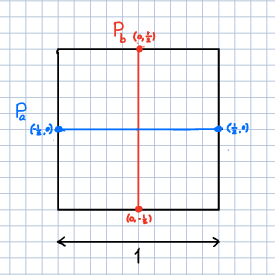
Figure 1: The horizontal (blue) and vertical (red) paths with fixed endpoints embedded in the square; endpoints constrain the allowed embeddings and complicate online placement.
Online Embedding of Solid Graph Metrics
Building upon the 2-path game, the authors develop deterministic online embedding algorithms for solid graph metrics—metrics arising from shortest paths in a fixed, edge-labeled graph. The embedding strategy involves:
- Preprocessing: Embed all "non-intersection" points in advance.
- Online phase: For each exposed point (potentially in a 1-intersection region), use the 2-path game algorithm or its d=21-path generalization to embed the point, ensuring non-crossing and separation.
For solid d=22, which is not planar and difficult to embed even offline, the paper achieves an online embedding of d=23 points with distortion d=24, polynomial in the number of exposed points, with a similar approach generalizable to other graphs and weighted cases.
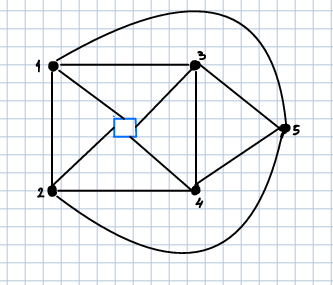
Figure 2: Embedding of metric in solid d=25, with the blue 1-intersection territory handling edge crossings using the 2-paths game algorithm; all other points mapped linearly along edges.
Embedding Tree Metrics: Ultrametrics and d=26-Trees
The paper next addresses deterministic online embeddings for ultrametrics and d=27-trees—a generalization of HSTs. For ultrametrics, the embedding can be performed online into d=28 with distortion d=29, closely matching optimal offline bounds, assuming d=10 is known. For d=11, constant distortion is achievable; for the line and plane, d=12 and d=13 distortion, respectively.
For d=14-trees, the embedding into d=15 achieves distortion d=16, again nearly matching offline performance. The procedures necessitate initial exposure of the root and exploit the recursive clustered structure of the metrics, ensuring that subtree embeddings remain tightly controlled.
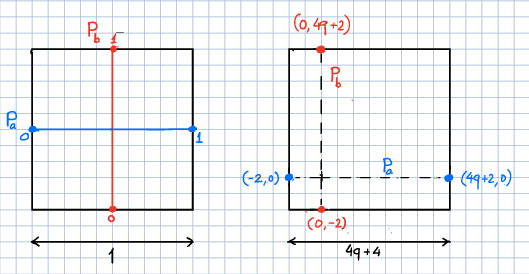
Figure 3: Paths with endpoints embedded in the grid, illustrating recursive handling of tree submetrics and activation of intervals for embedding.
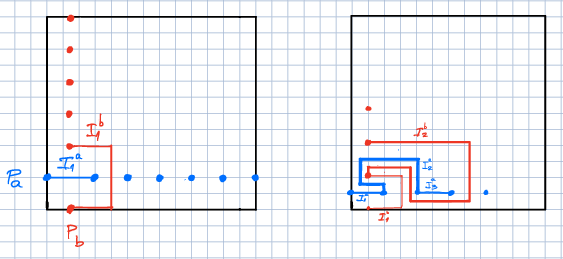
Figure 4: Activation of segments in response to online queries—embedding decisions for intervals adaptively activate next regions.
Technical Approaches
The paper's algorithms hinge on designing online protocols that:
- Maintain an invariant (e.g., only one active interval exists per color at any time in the 2-path game).
- Allocate geometric regions (rectangular or grid-aligned) to embed each metric segment or cluster, with careful handling of intersection points via specialized gadgets.
- Use recursive decomposition (e.g., conductance-based or low-diameter decomposition for graphs) to assign embedding regions, achieving improved distortion bounds.
- Employ shifted grid or spherical code embeddings for ultrametrics and recursively clustered metrics, balancing expansion and contraction.
- Exploit properties of tree metrics (natural order exposure) to control distortion in d=17-tree embeddings, even for adversarial exposure sequences.
These techniques are combined to systematically resolve traditional topological obstructions (e.g., graph non-planarity), defy prior expectations of exponential distortion, and propagate near-optimal embedding guarantees to more general metric classes.
Numerical Results and Contradictory Claims
The paper boldly contradicts previous beliefs by demonstrating that the deterministic online embedding of solid d=18 (and general solid non-planar graphs) into d=19 can be achieved with polynomial, not exponential, distortion. For tree metrics and ultrametrics, the deterministic online distortion closely matches the best possible offline distortion up to polynomial factors in α0 and α1, while for general metrics, exponential distortion is unavoidable in α2. The theoretical framework and detailed algorithms specify the distortion bounds for various classes:
| Metric Class |
Offline Distortion |
Online Deterministic Distortion |
| Solid α3 (planar) |
α4 |
α5 |
| Ultrametrics |
α6 |
α7 |
| α8-trees |
α9 |
q0 |
| General Metrics (q1) |
q2 |
q3 |
Implications and Future Directions
This work uncovers unexpected structure in online deterministic embeddings, showing that polynomial distortion suffices for broad metric classes, even in low-dimensional Euclidean spaces. The results facilitate effective applications in real-time data processing scenarios requiring dynamic geometric embeddings, such as online clustering, nearest neighbor queries, and principled dimensionality reduction in streaming environments.
The elimination of exponential lower bounds for graphs and trees opens the door to further theoretical developments. Potential future work includes:
- Characterizing the precise online/offline distortion gap for additional metric classes.
- Extending deterministic protocols to more general adversarial input models.
- Developing practical algorithms based on these theoretical insights for high-dimensional geometric data.
- Further analysis of embeddings into structured spaces such as Banach spaces or complex networks.
Conclusion
The paper makes authoritative contributions to the theory of deterministic online embeddings in low-dimensional Euclidean spaces. By harnessing combinatorial, geometric, and metric decomposition techniques, it achieves polynomial distortion bounds for solid graphs and tree metrics, overturning prior conjectures and providing nearly optimal algorithms for several important metric classes. These findings enrich both the practical and theoretical landscape of geometric data analysis and real-time streaming algorithms, and lay a foundation for further breakthroughs in online metric embedding theory.