- The paper introduces a DIG-augmented DSMC solver that interlaces standard particle methods with synthetic macroscopic corrections, accelerating convergence in rarefied gas simulations.
- The method integrates MPI-based particle transport and dynamic mesh re-partitioning for robust parallelization on unstructured 3D meshes.
- Numerical tests on lid-driven cavity, hypersonic sphere, Apollo capsule, and ISS scenarios demonstrate up to 362-fold core-hour and significant memory reductions in near-continuum conditions.
Parallel Simulation of Rarefied Gas Flows on Unstructured Meshes Using the DIG-Augmented DSMC Method
Introduction and Motivation
The paper presents a comprehensive study on an advanced parallel solver for rarefied gas dynamics, leveraging the Direct Intermittent General synthetic iterative scheme (DIG) coupled with Direct Simulation Monte Carlo (DSMC). Classical DSMC remains the standard for stochastic kinetic simulations in rarefied regimes but incurs prohibitive computational costs in near-continuum conditions due to requirements on mesh resolution and sampling. DIG introduces intermittent micro-macro coupling with synthetic macroscopic equations exhibiting asymptotic preservation, vastly accelerating convergence and obviating kinetic-scale restrictions. This hybrid acceleration is realized in three-dimensional flows on unstructured meshes, bringing together robust particle transport algorithms and dynamic load balancing in a high-performance parallel context.
DIG-DSMC Coupling and Methodological Advances
The solver retains standard DSMC routines—including molecular collisions, boundary interactions, transport, and energy relaxation—but interlaces them with periodic corrections from macroscopic synthetic equations. DSMC evolves for Ns steps, then samples moments (density, velocity, translational/rotational temperature, stresses, heat fluxes), which inform high-order term (HoT) corrections for the macroscopic model. These synthetic equations, closed via the Chapman-Enskog expansion and augmented with sampled HoTs, are solved iteratively, and their results recalibrate the particle population. The feedback loop ensures rapid convergence toward steady-state, systematically suppressing statistical noise.
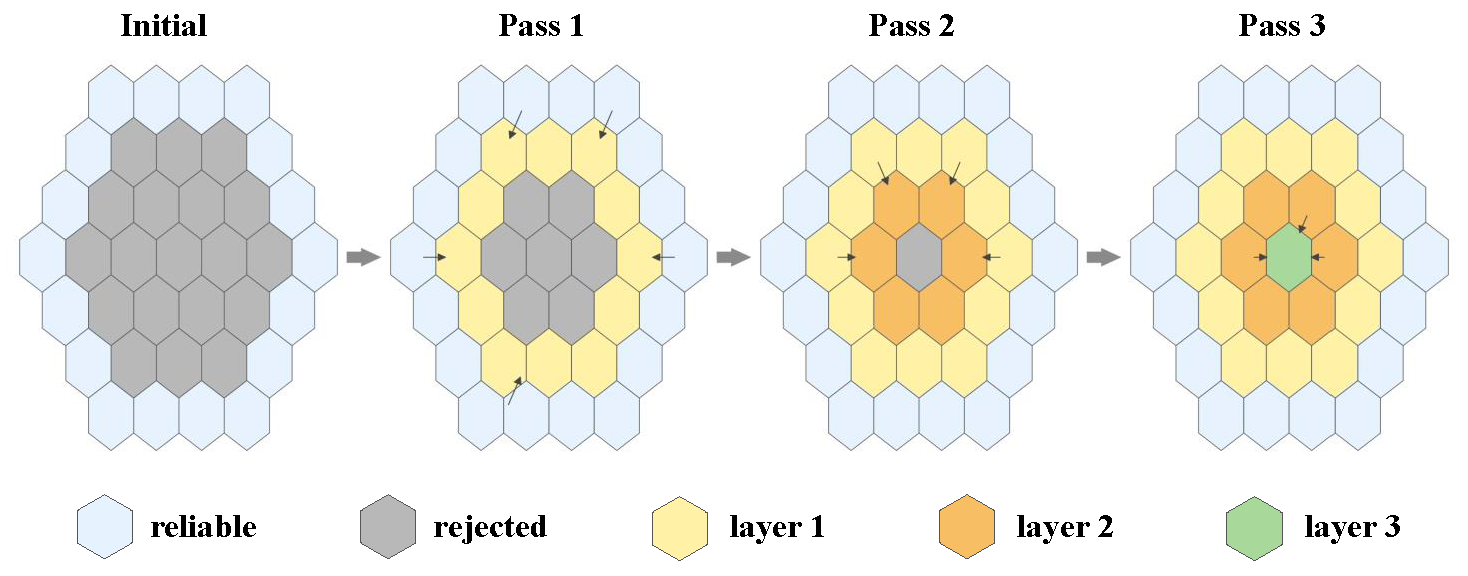
Figure 1: Illustration of the local reconstruction procedure for cells rejected by per-cell Knudsen number threshold, propagating reliable macroscopic information via neighbor averaging.
Stability is reinforced through per-cell admissibility via local Knudsen numbers—cells below a threshold accept direct macroscopic corrections; others undergo layered reconstruction from neighbors. Particle moments are exponentially averaged, optimizing noise reduction while retaining responsiveness.
Parallelization and Dynamic Load Balancing
The parallel architecture comprises a global storage process and multiple compute processes. Mesh partitioning facilitates the management of owned and ghost cells, using hybrid domain decomposition. Particles are packed in structure-of-arrays buckets per cell, enabling efficient local tracking and bulk migration across partitions.
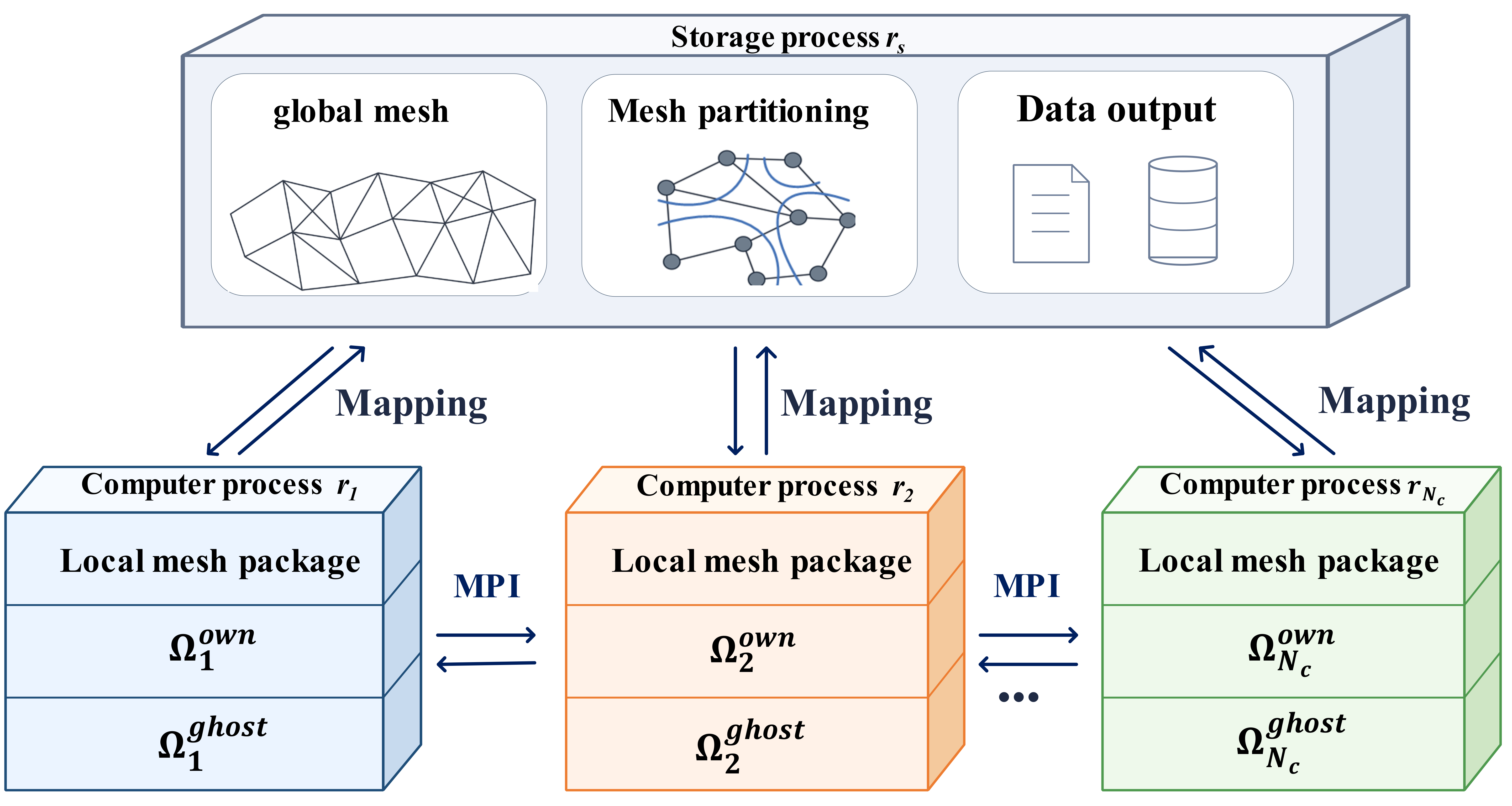
Figure 2: MPI process organization in the DIG solver, showing global mesh distribution and neighbor communication structure.
Particle transport employs face-based tracing; those crossing partition boundaries leverage ghost cell metadata to ascertain destination ownership and are batched for MPI communication. Batch transfer minimizes synchronization costs and message overhead.
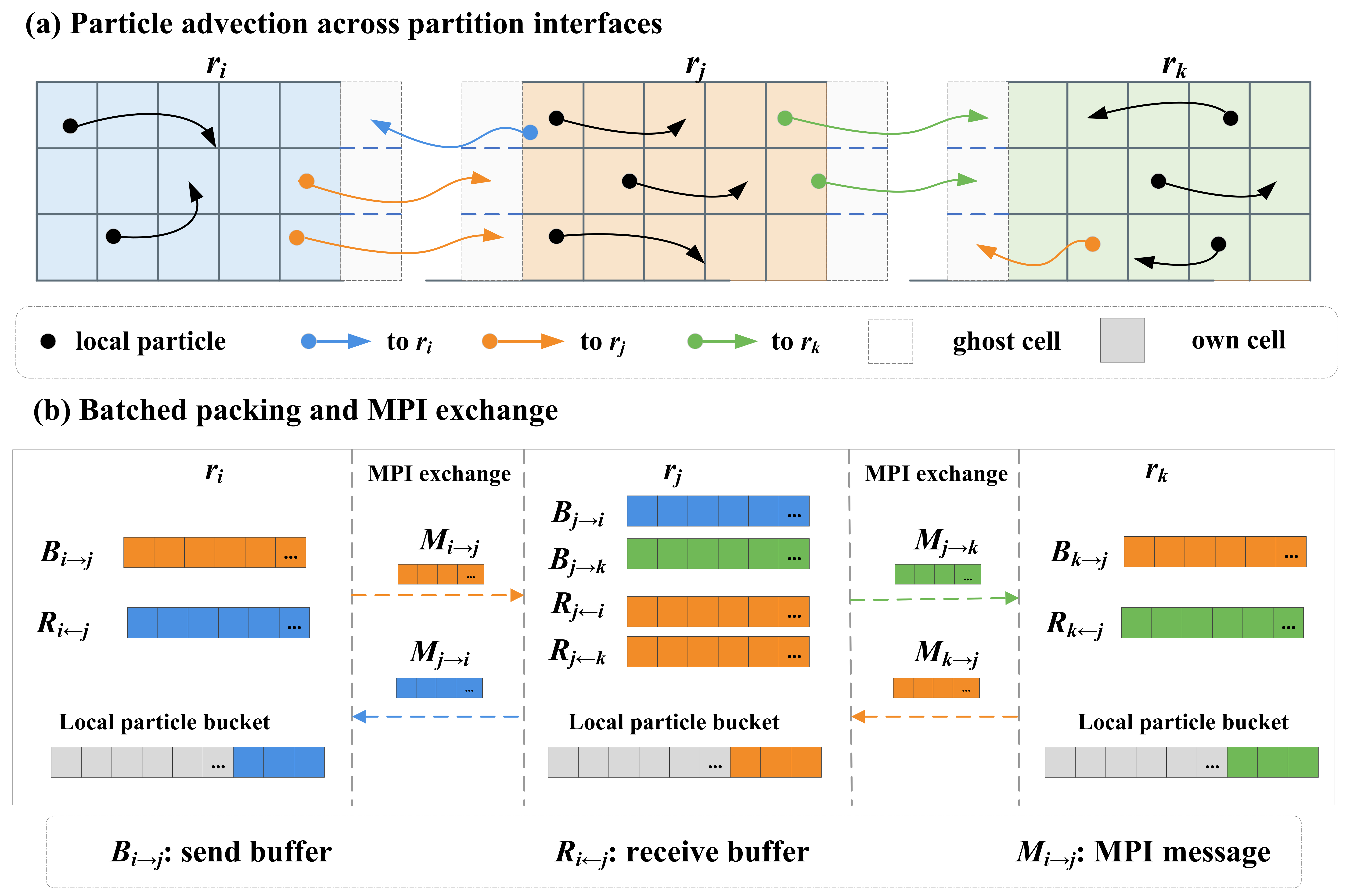
Figure 3: Particle migration and batched MPI communication algorithm: tracking, packing, transfer, and insertion into destination buckets.
Dynamic load balancing is driven by workload metrics—either particle count or timing statistics per cell. The global mesh is mapped to a weighted graph; partitions are computed via METIS, balancing computational load and minimizing inter-process migration by weighting edges according to particle crossing intensity. The Kuhn-Munkres assignment minimizes redundant data redistribution when partitions change.
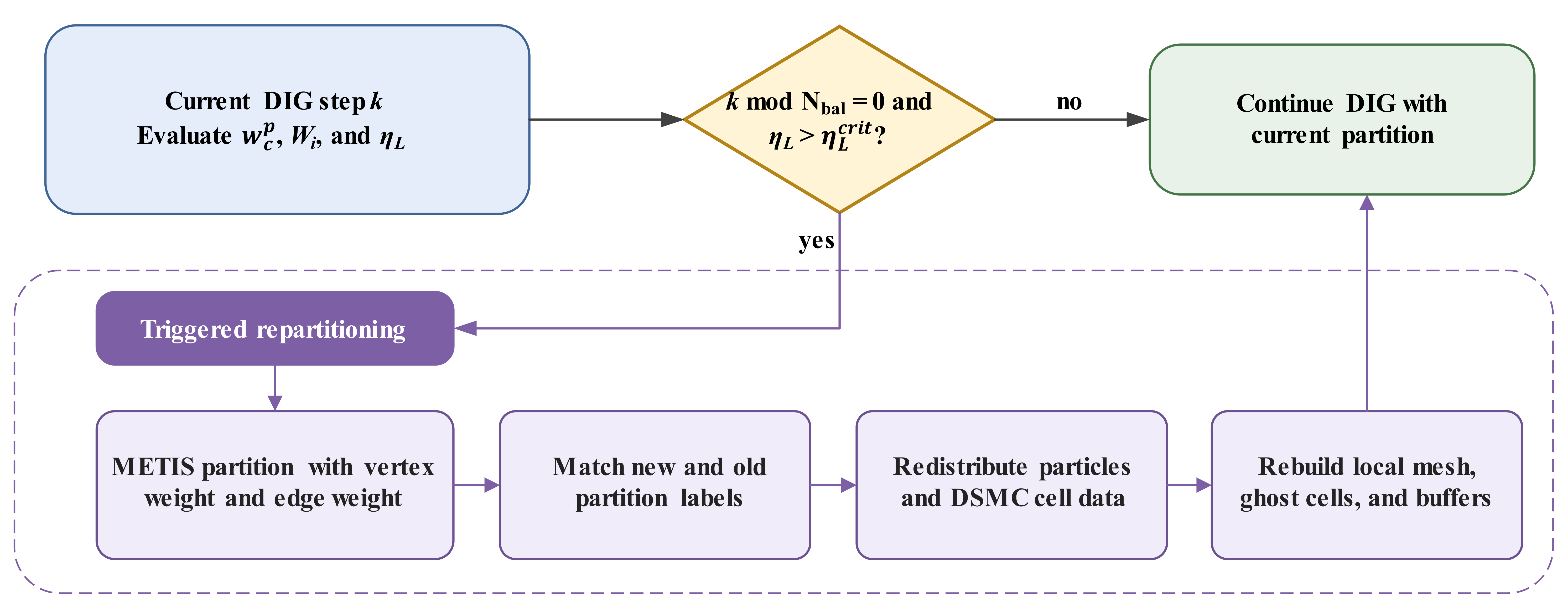
Figure 4: Flowchart of the dynamic mesh re-partitioning procedure executed when load imbalance exceeds a configurable threshold.
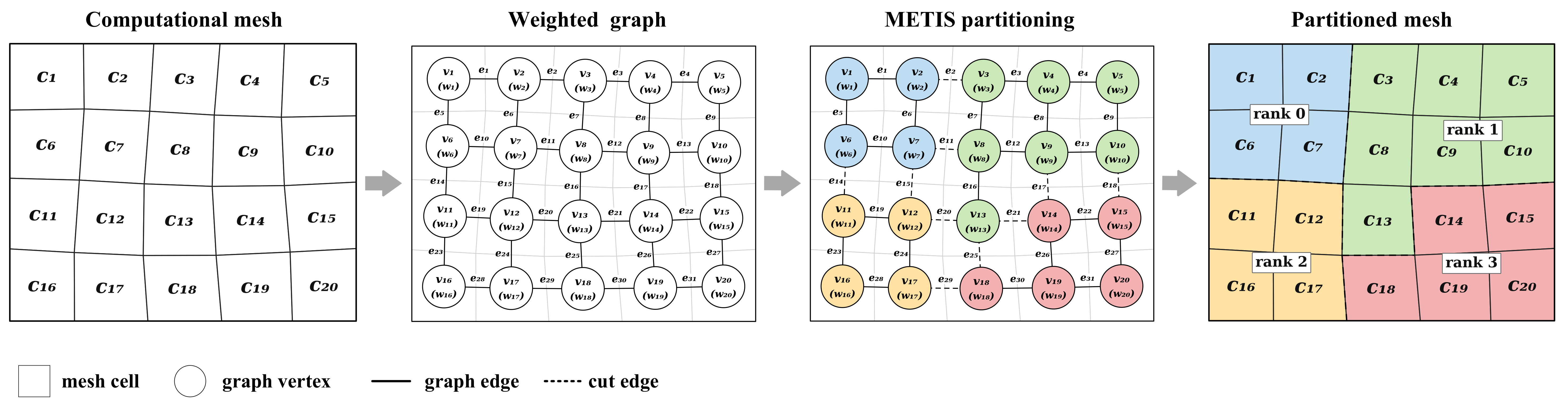
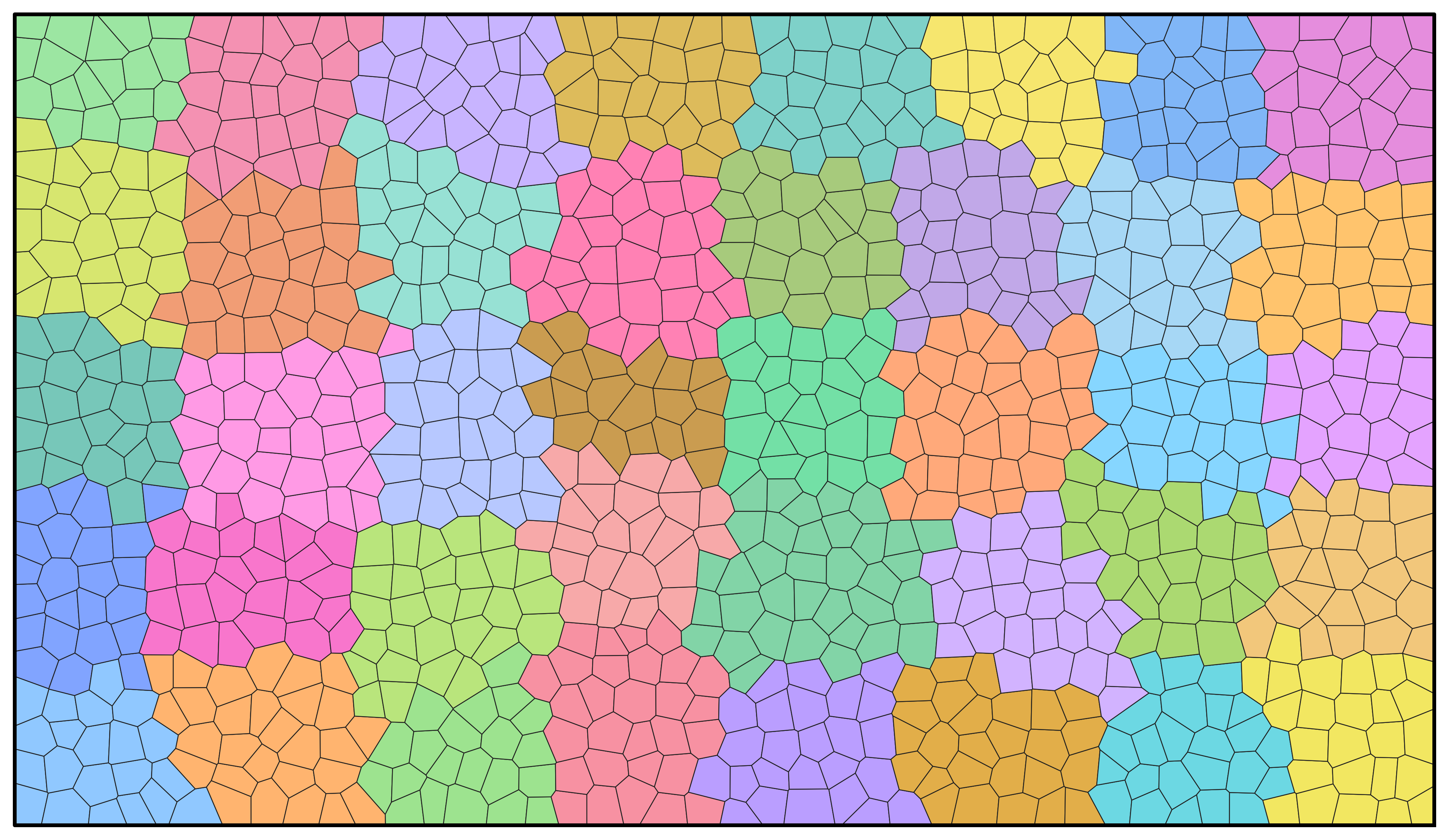
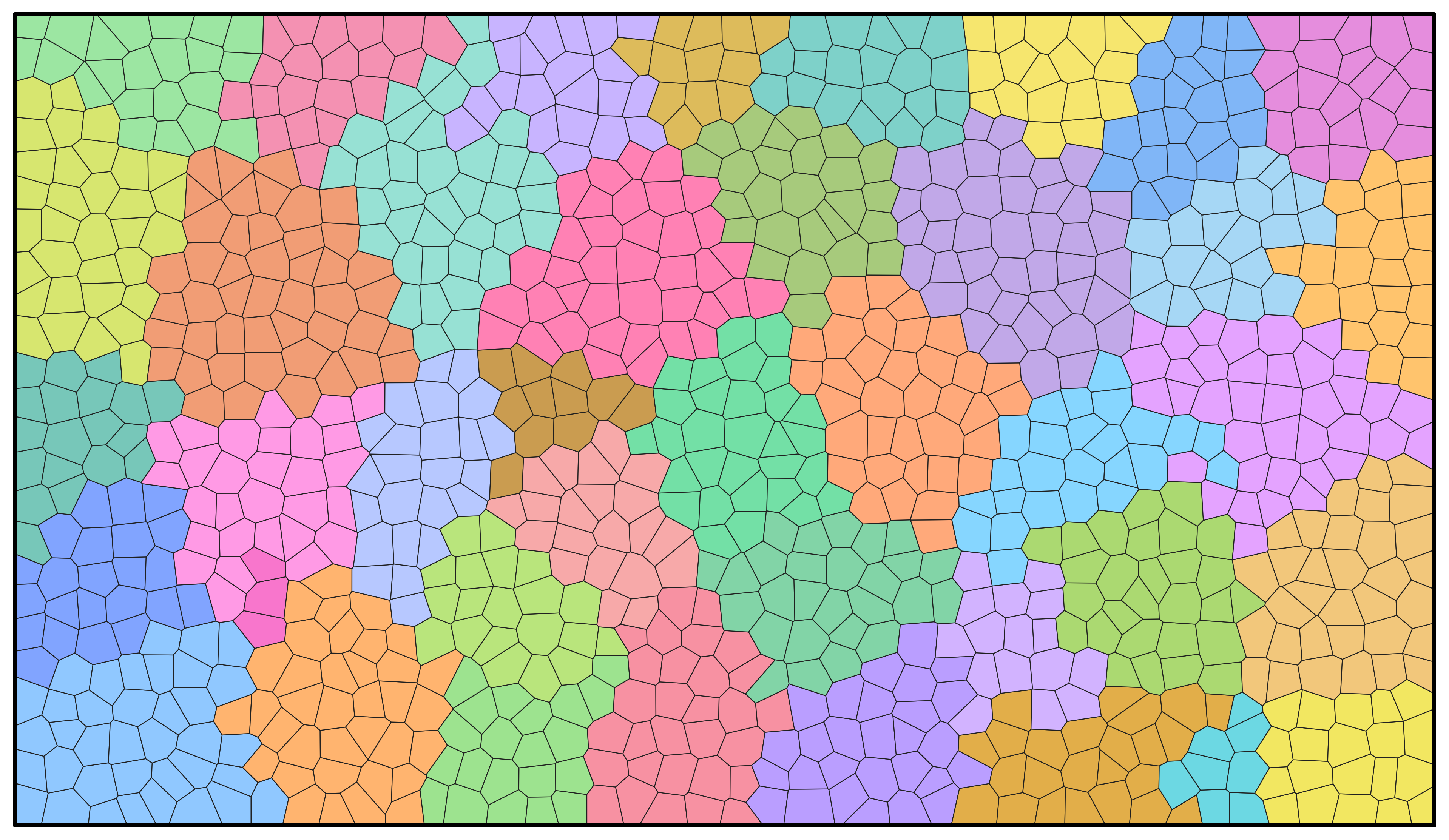
Figure 5: METIS-based graph partitioning: schematic, initial mesh partition, and re-partitioned mesh visualizations with Kuhn-Munkres algorithm for assignment.
Numerical Validation, Accuracy, and Efficiency
Validation spans canonical lid-driven cavity flow, hypersonic flow over a sphere, Apollo capsule reentry, and the International Space Station (ISS). All cases are simulated in nitrogen using variable hard sphere models for collisions and Borgnakke–Larsen for energy relaxation.
Lid-driven cavity: DIG achieves grid-independence and quantitatively matches SPARTA DSMC results across Knudsen numbers, especially at Kn=0.01 where conventional DSMC costs surge. The DIG solver reduces core-hour consumption by 362-fold and memory by 50-fold at near-continuum conditions.
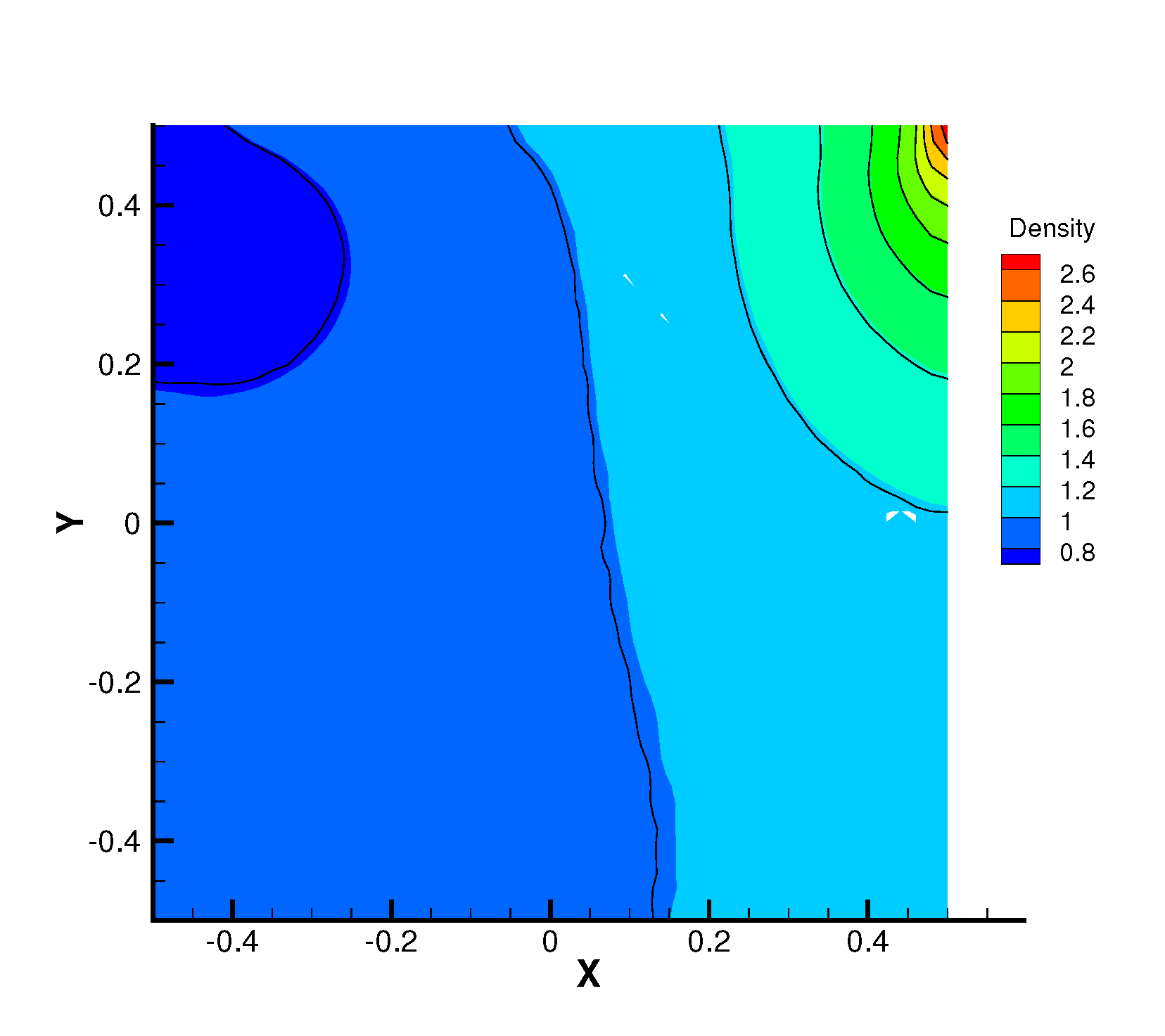
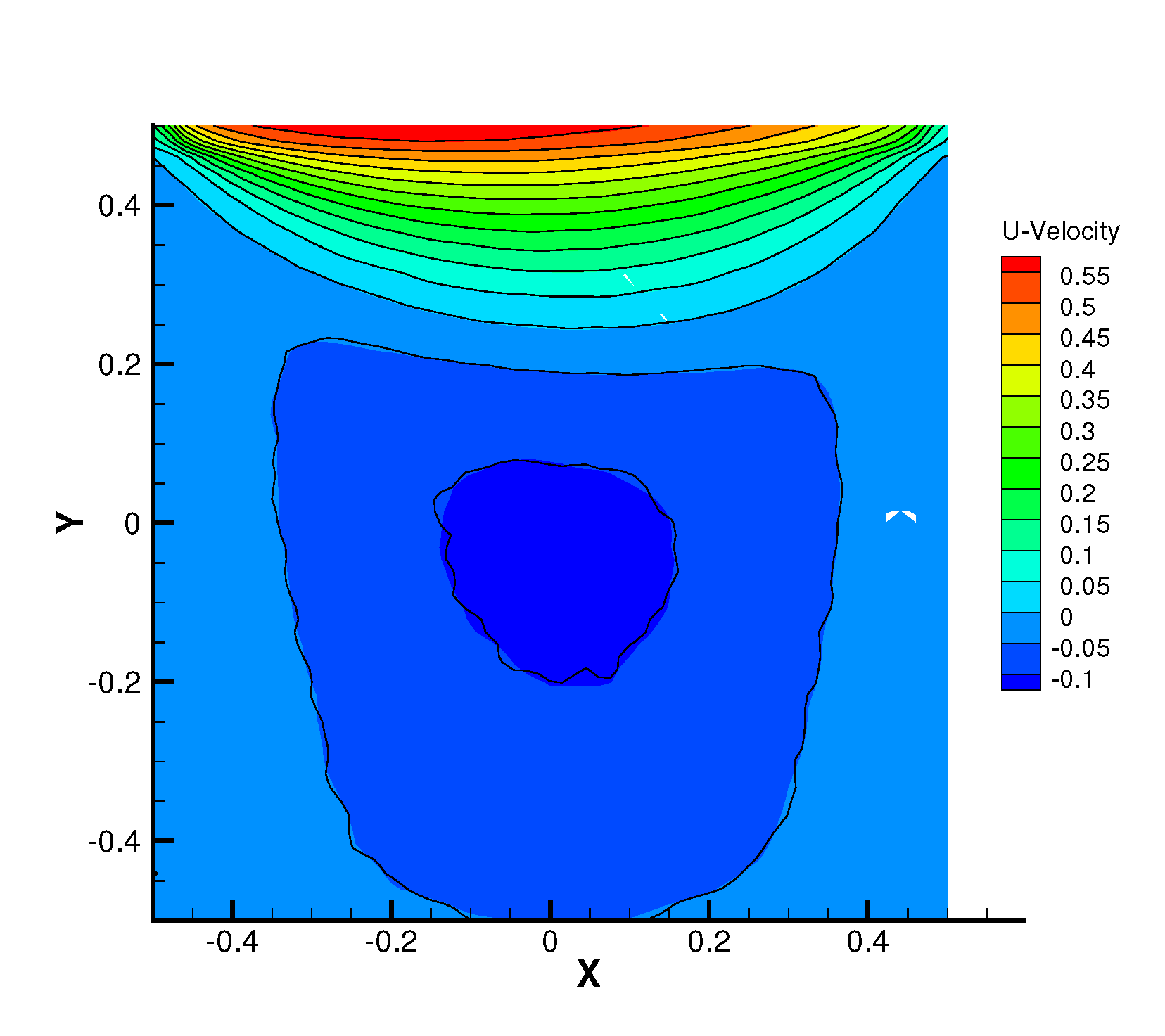
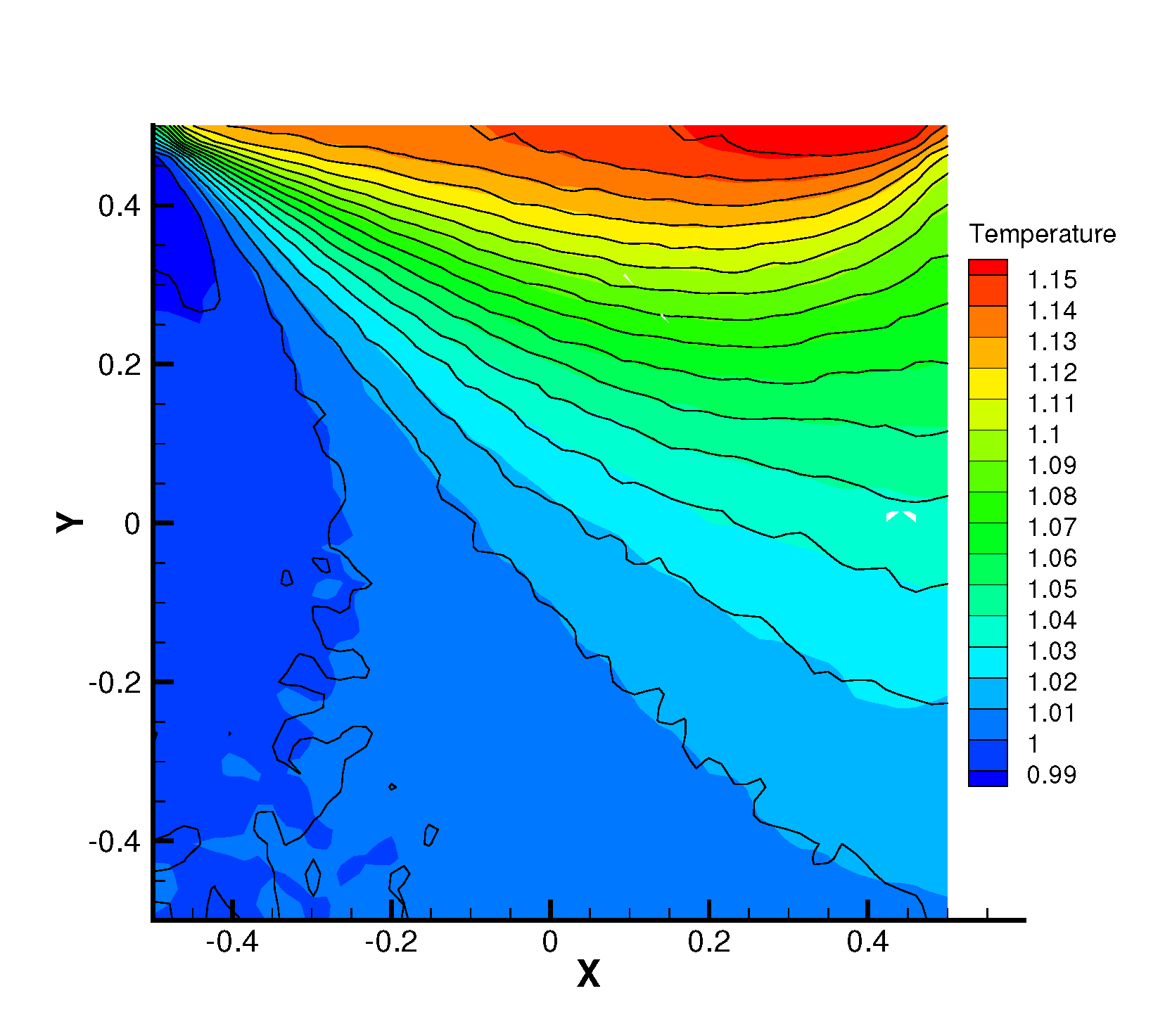
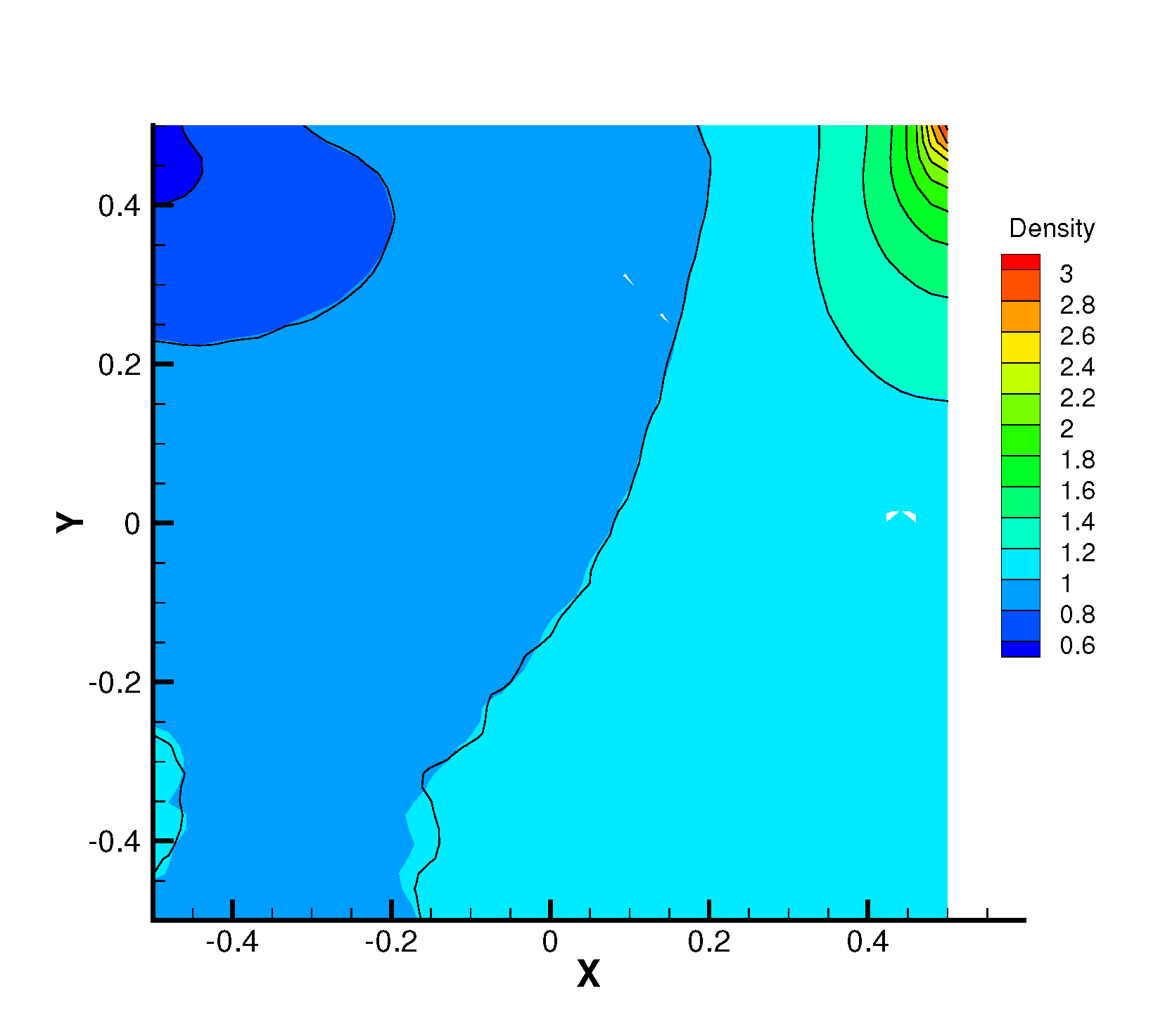
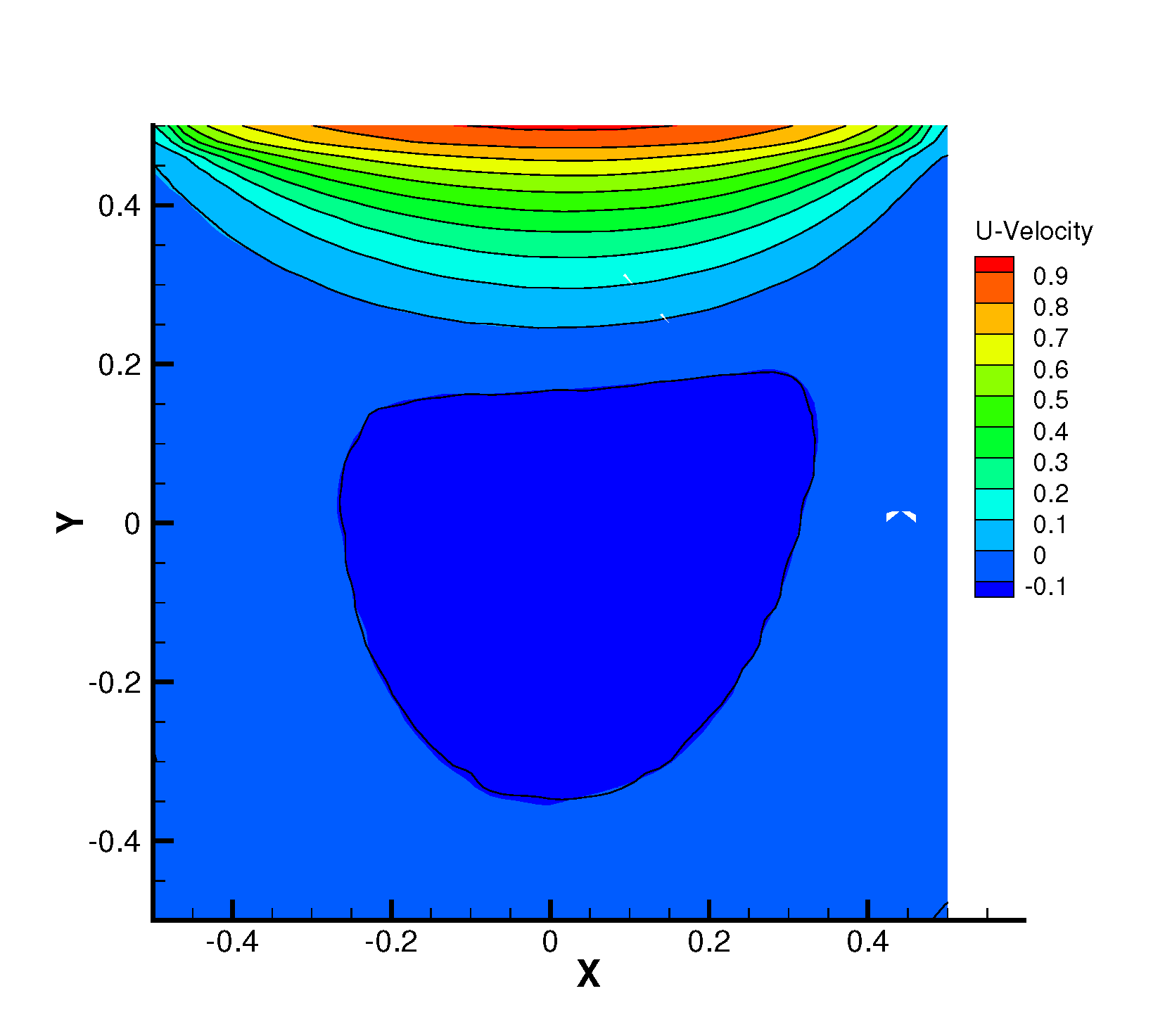
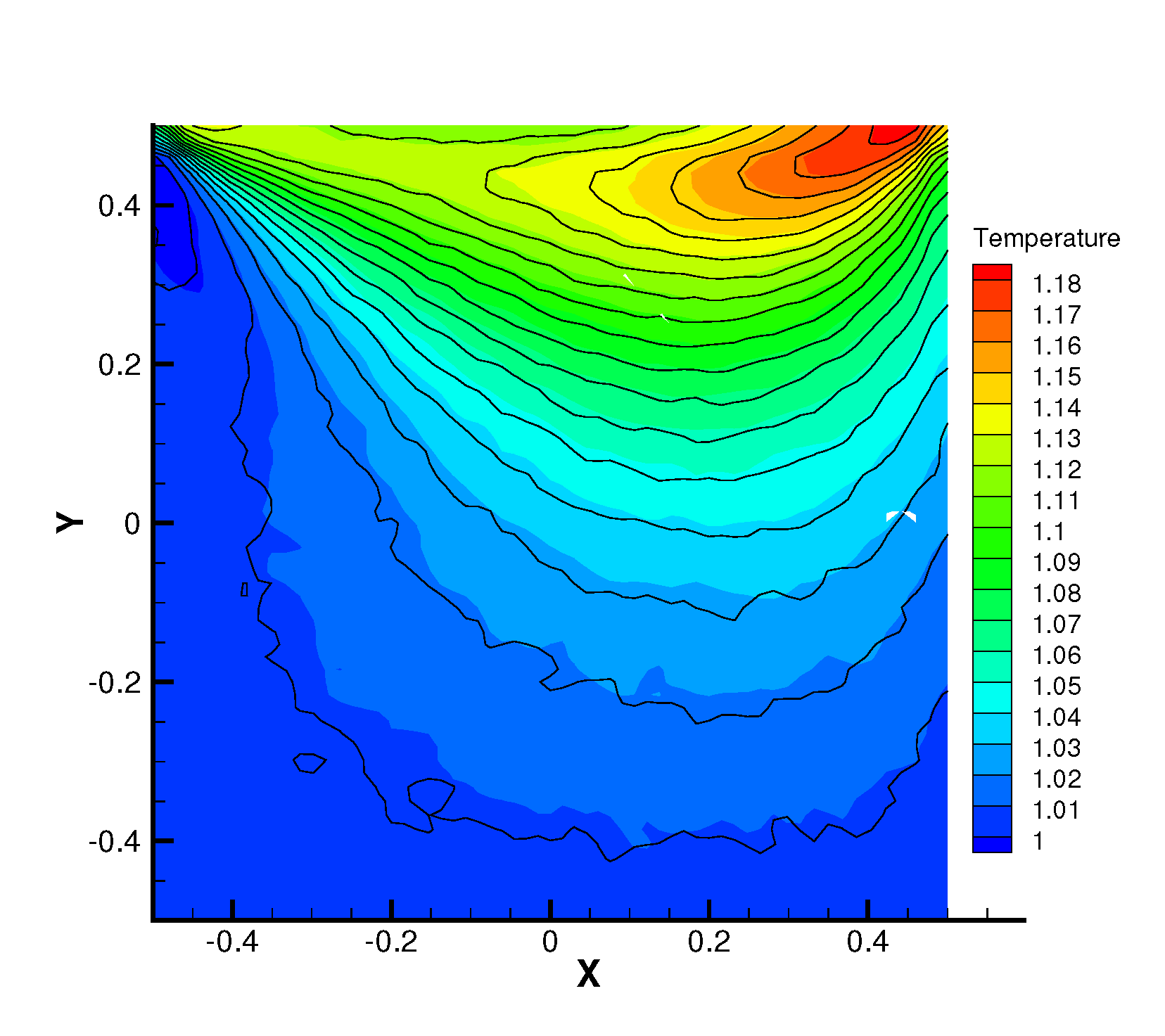
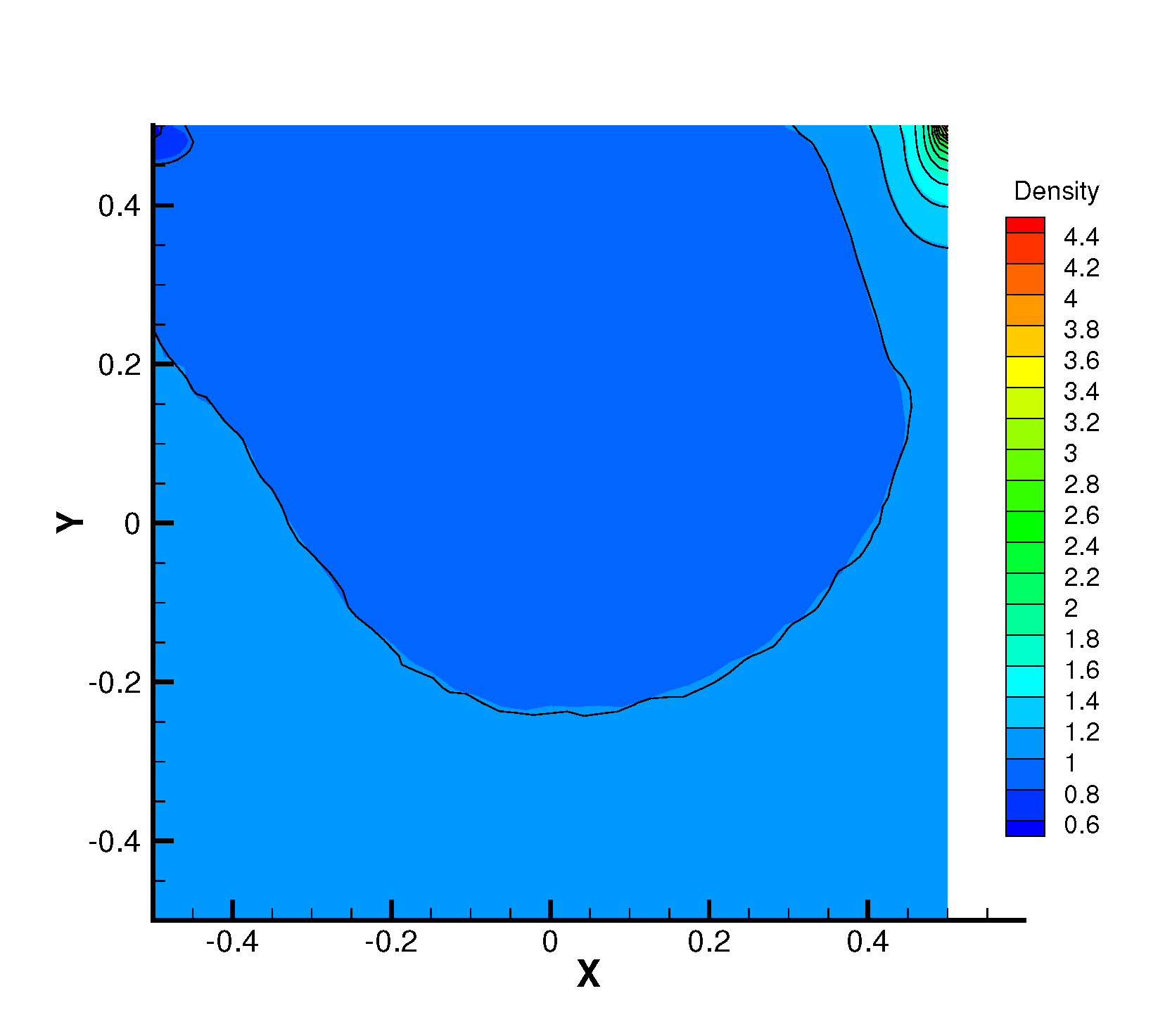
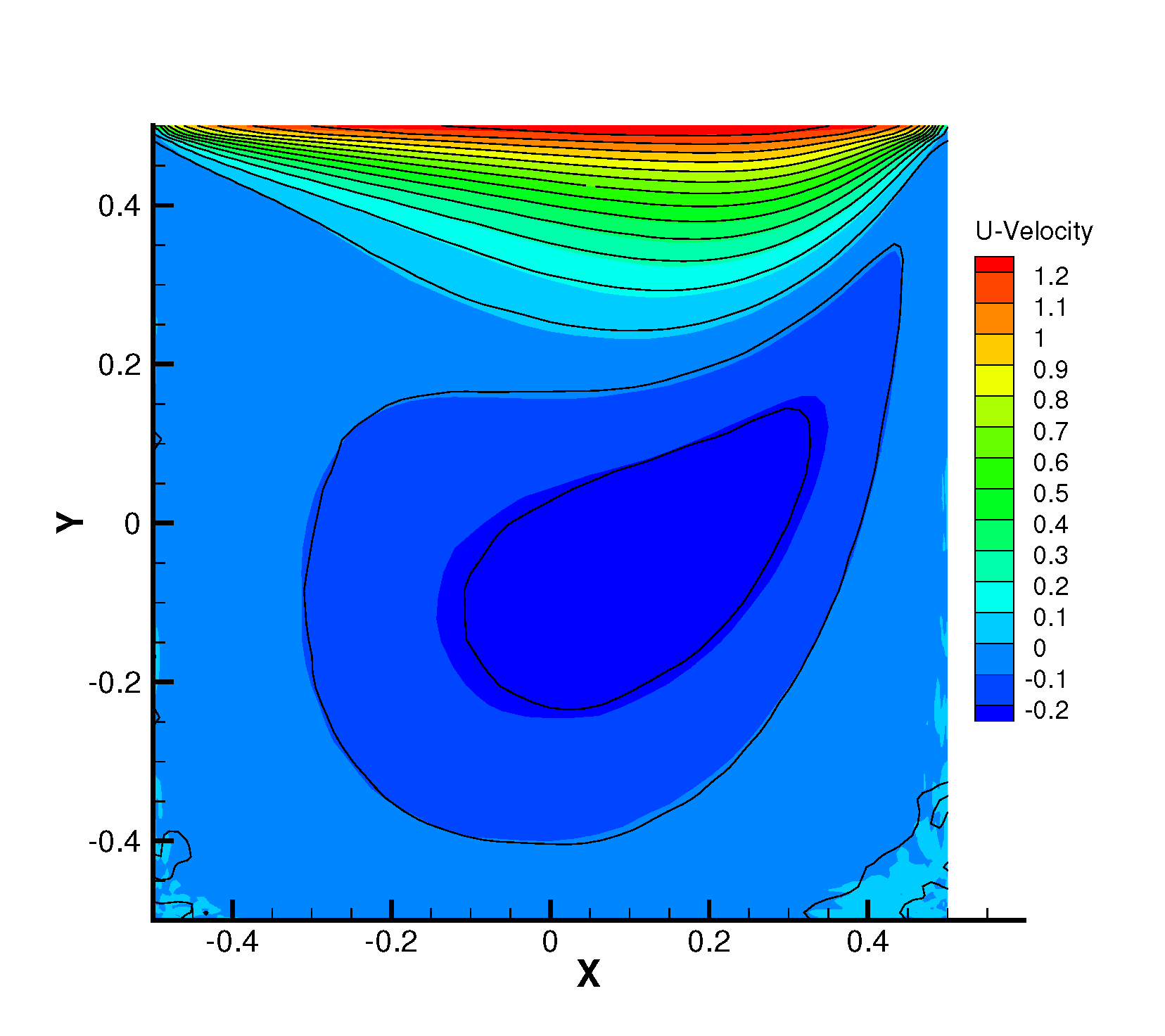
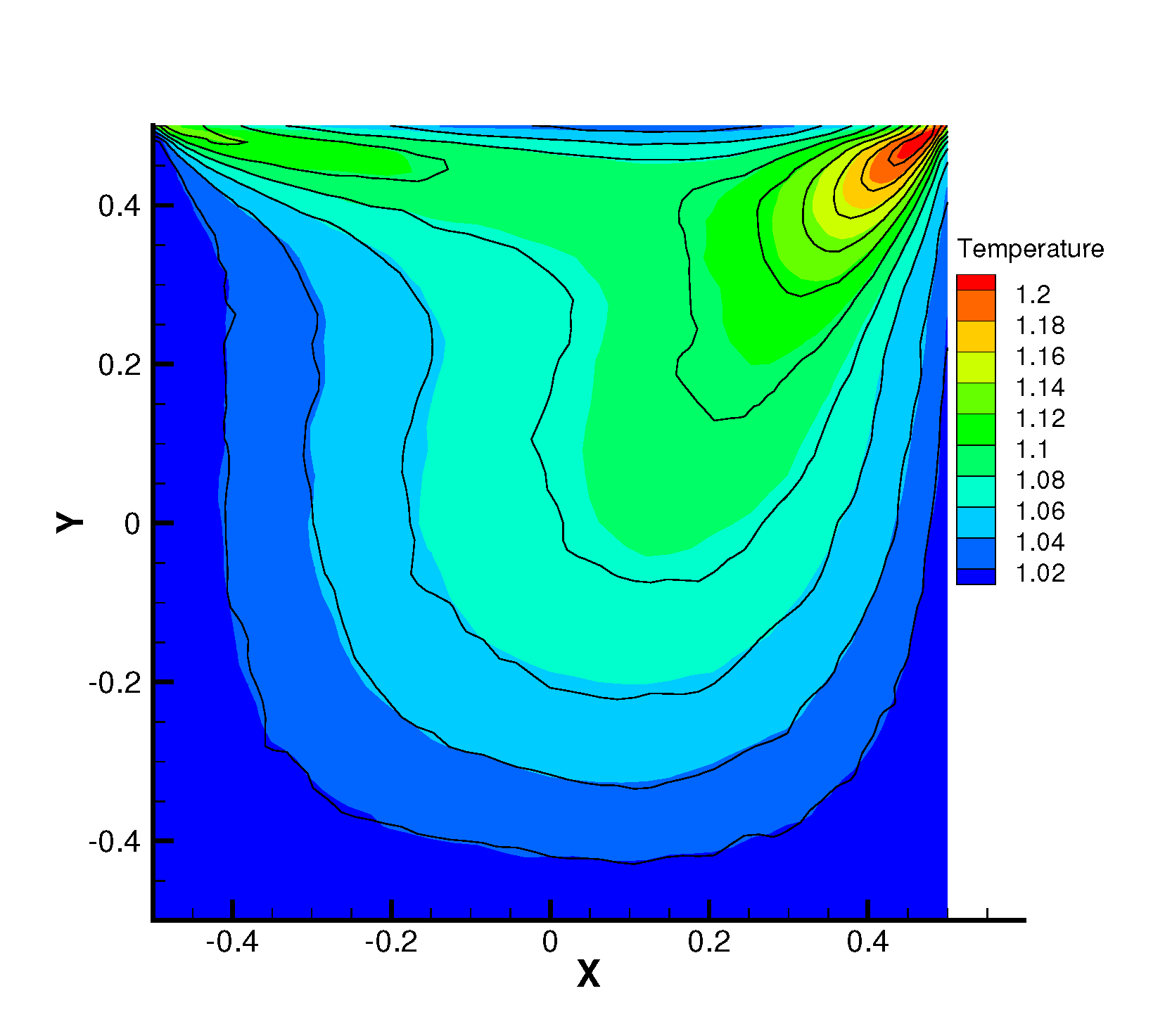
Figure 6: Comparison of cavity flow fields (density, velocity, temperature) from DSMC and DIG on the mid-plane.
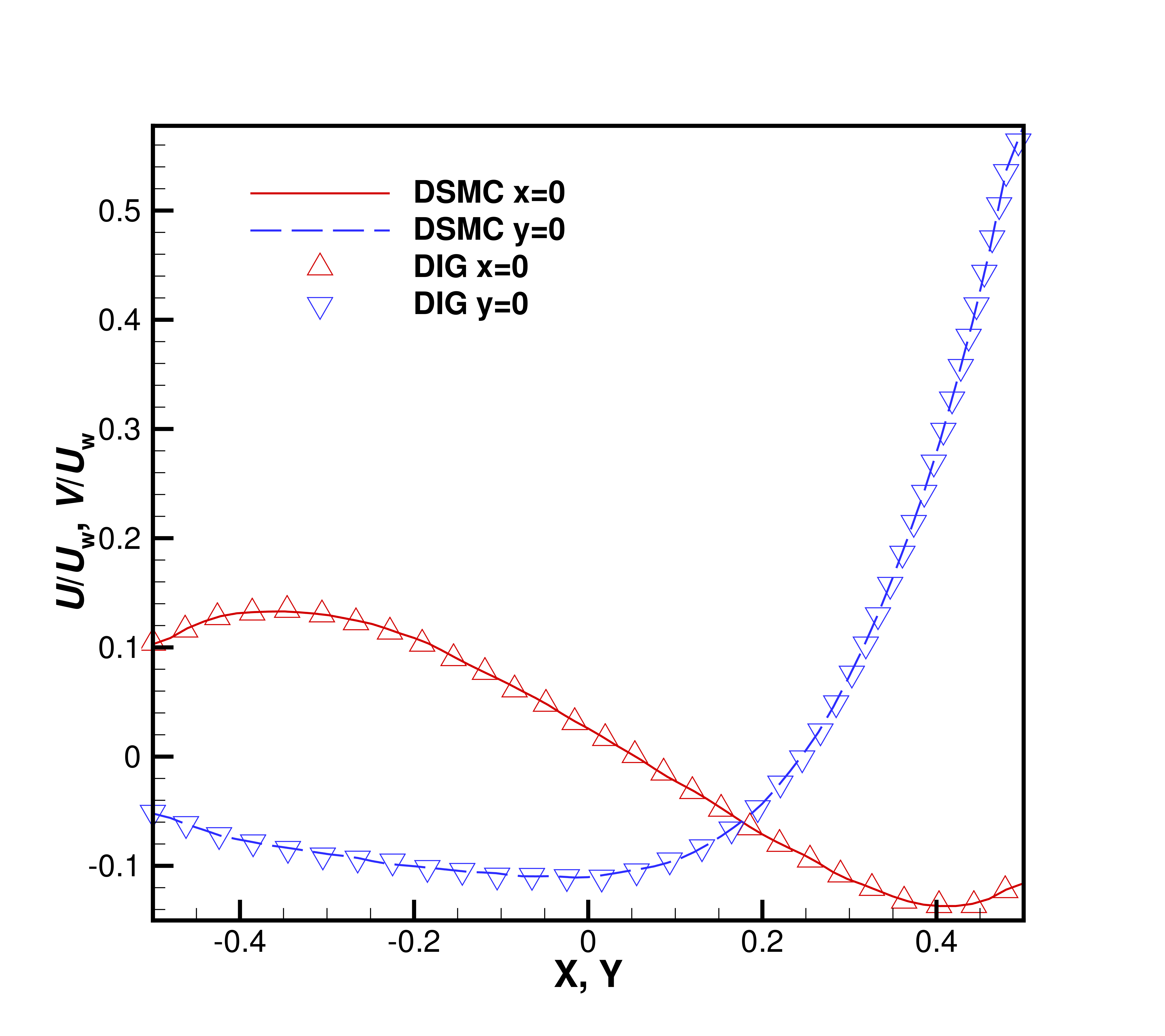
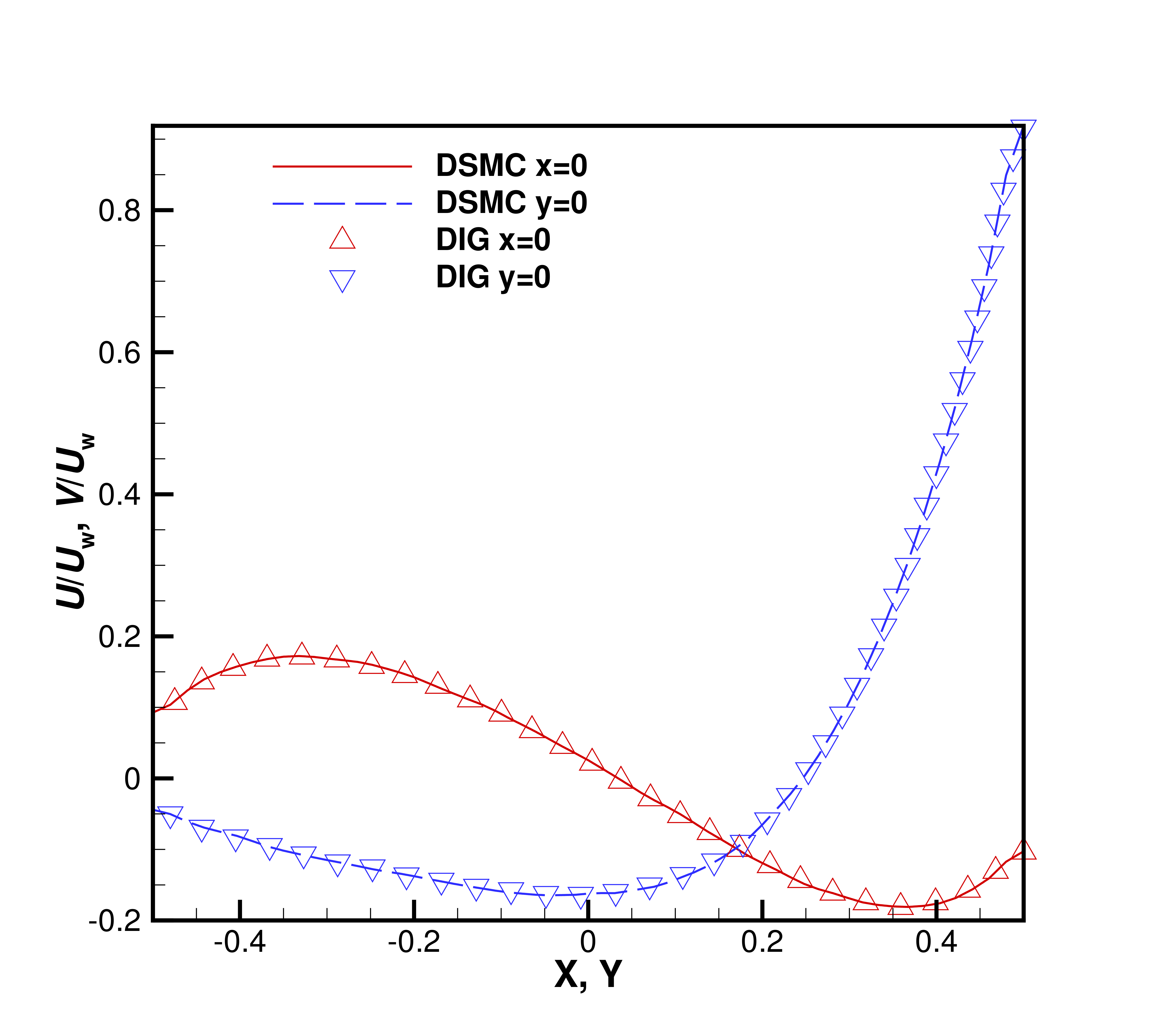
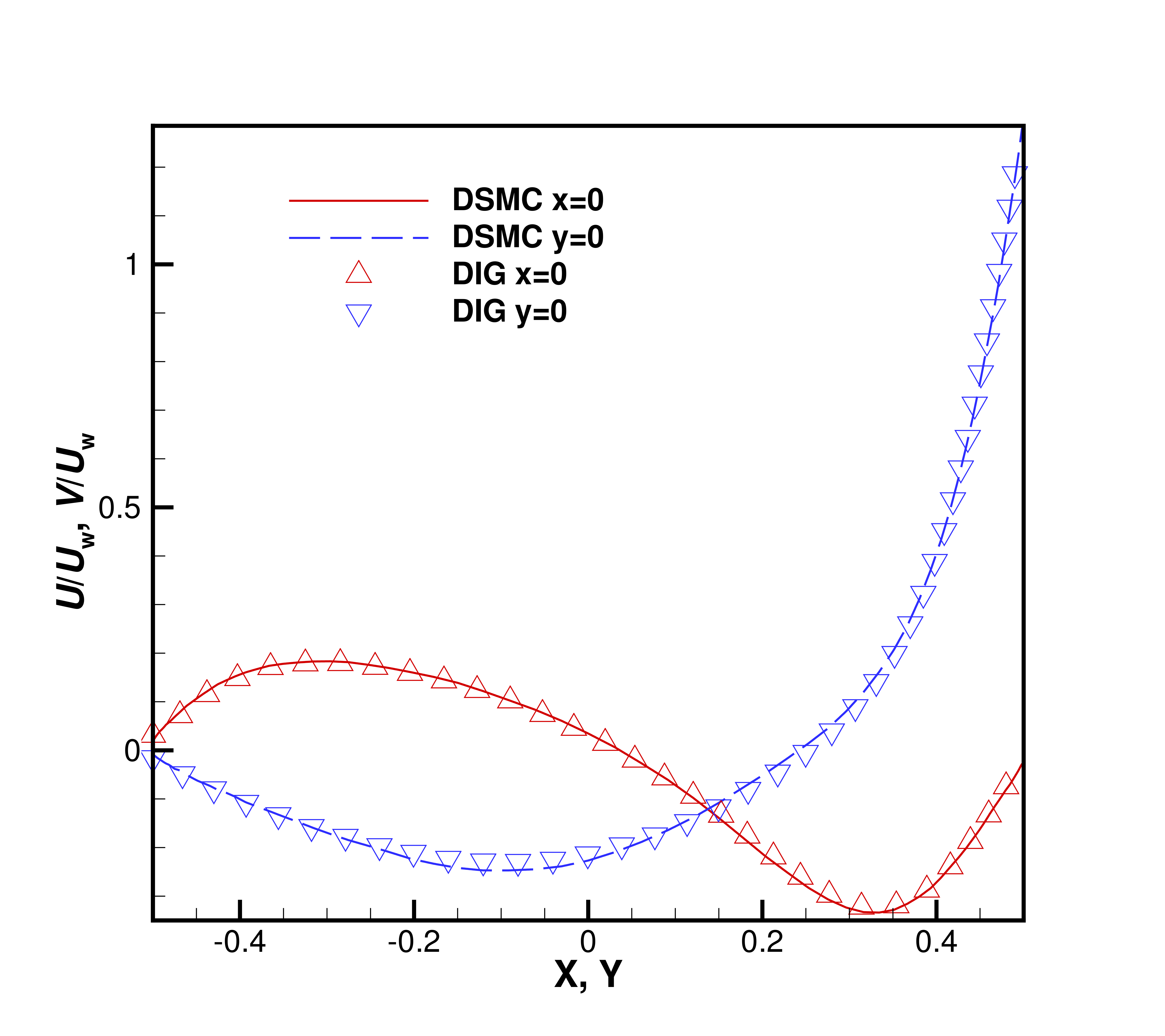
Figure 7: Velocity profile comparison along central axes in the cavity, illustrating close alignment of DIG and DSMC/SPARTA profiles.
Hypersonic sphere: DIG maintains accuracy as Knudsen decreases, resolving sharp gradients in density, Mach number, temperature, and stress. Surface pressure, shear, and heat flux predictions agree with reference DSMC and deterministic GSIS. For Kn=0.01, DIG outperforms axisymmetric DSMC in efficiency.
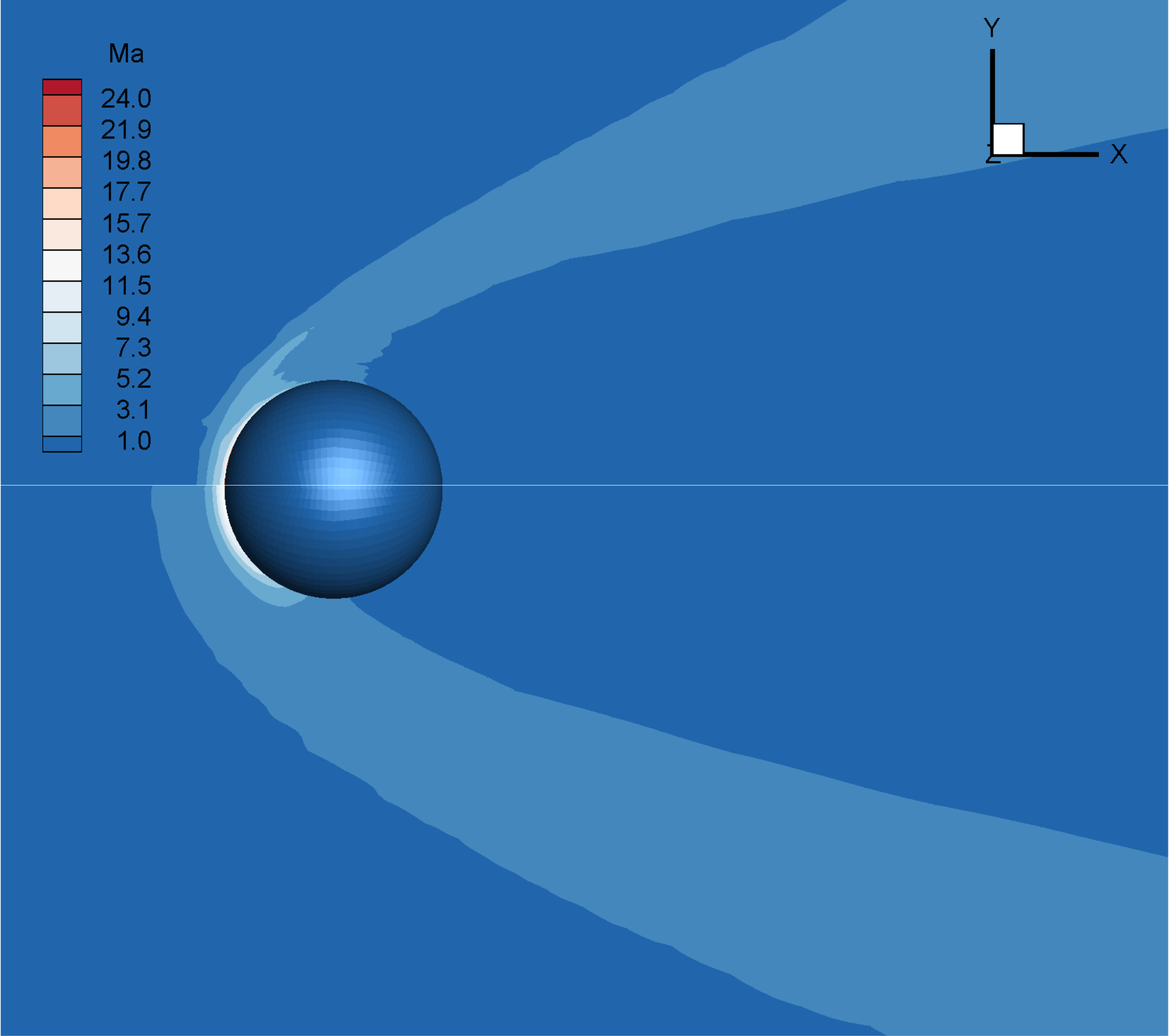
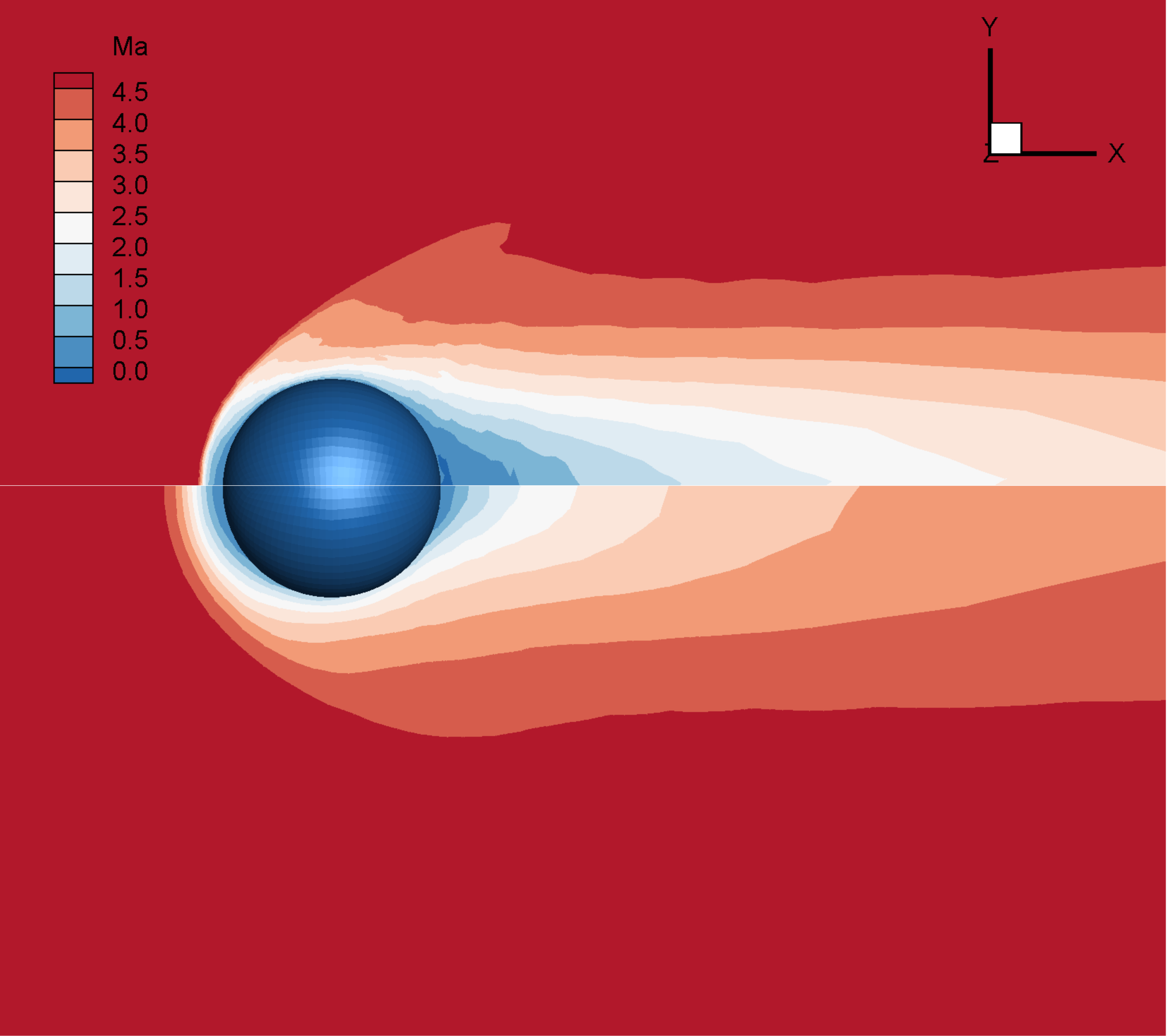
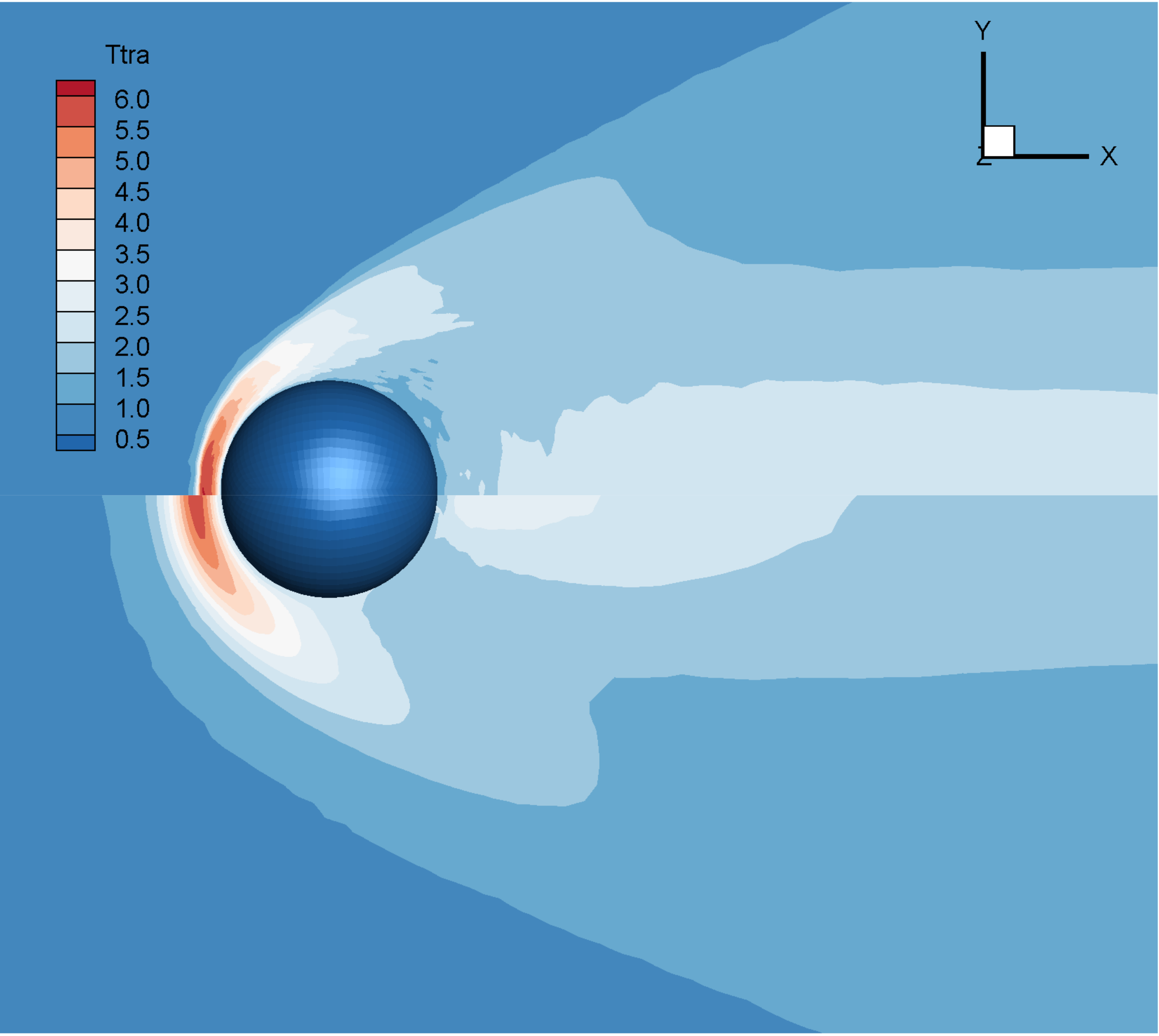
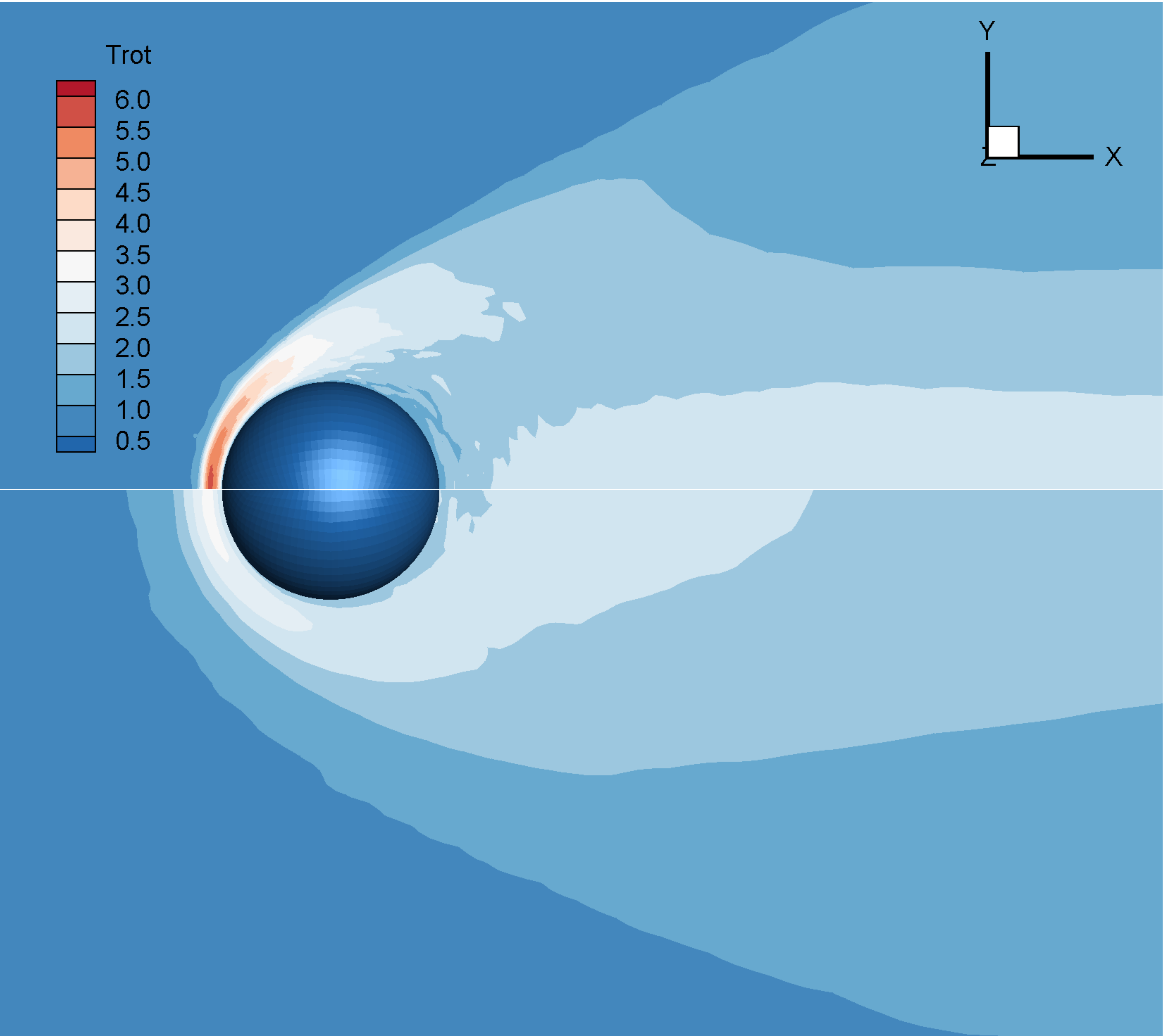
Figure 8: Contour fields for density, Mach number, translational and rotational temperature on the sphere mid-plane.
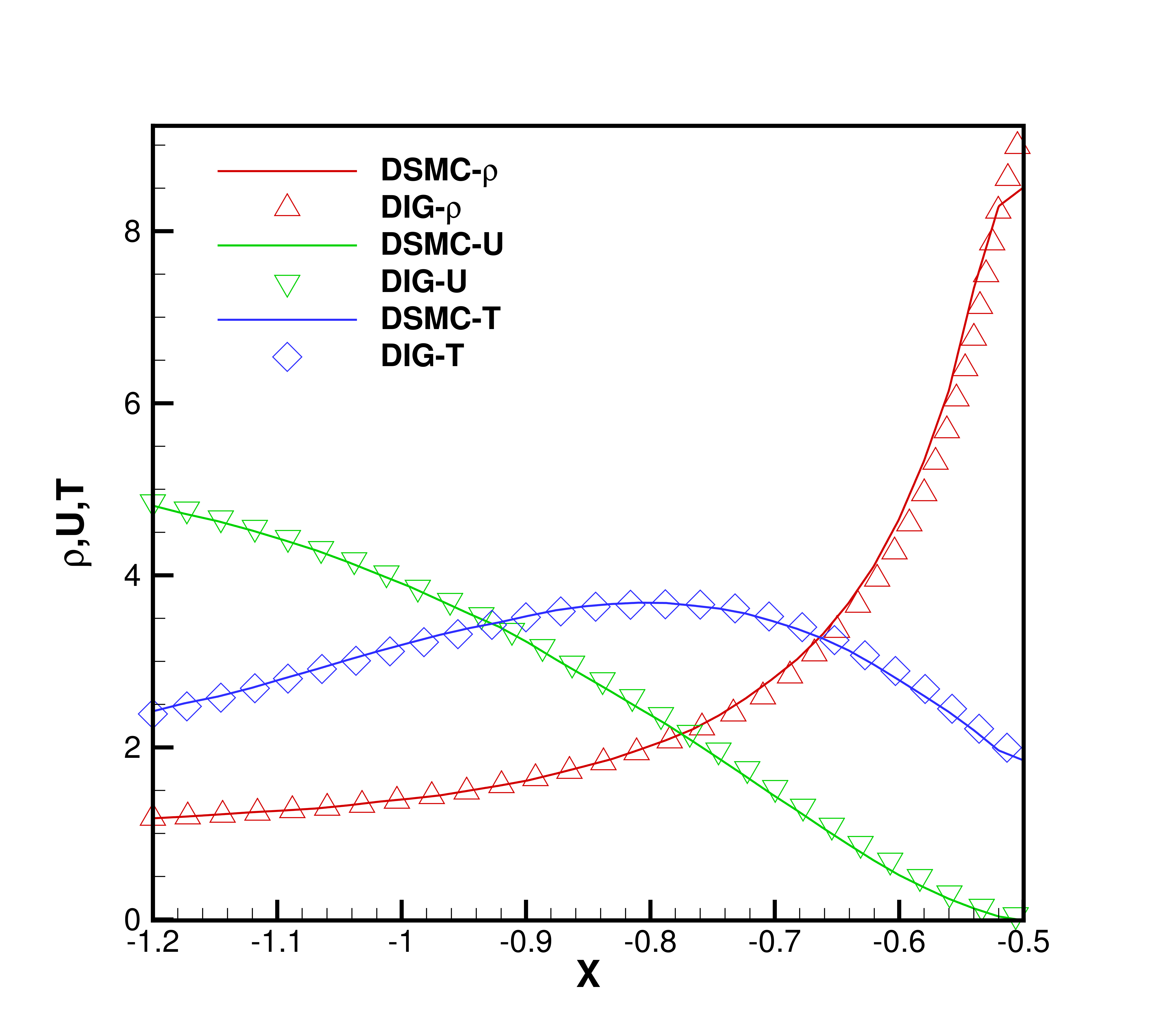
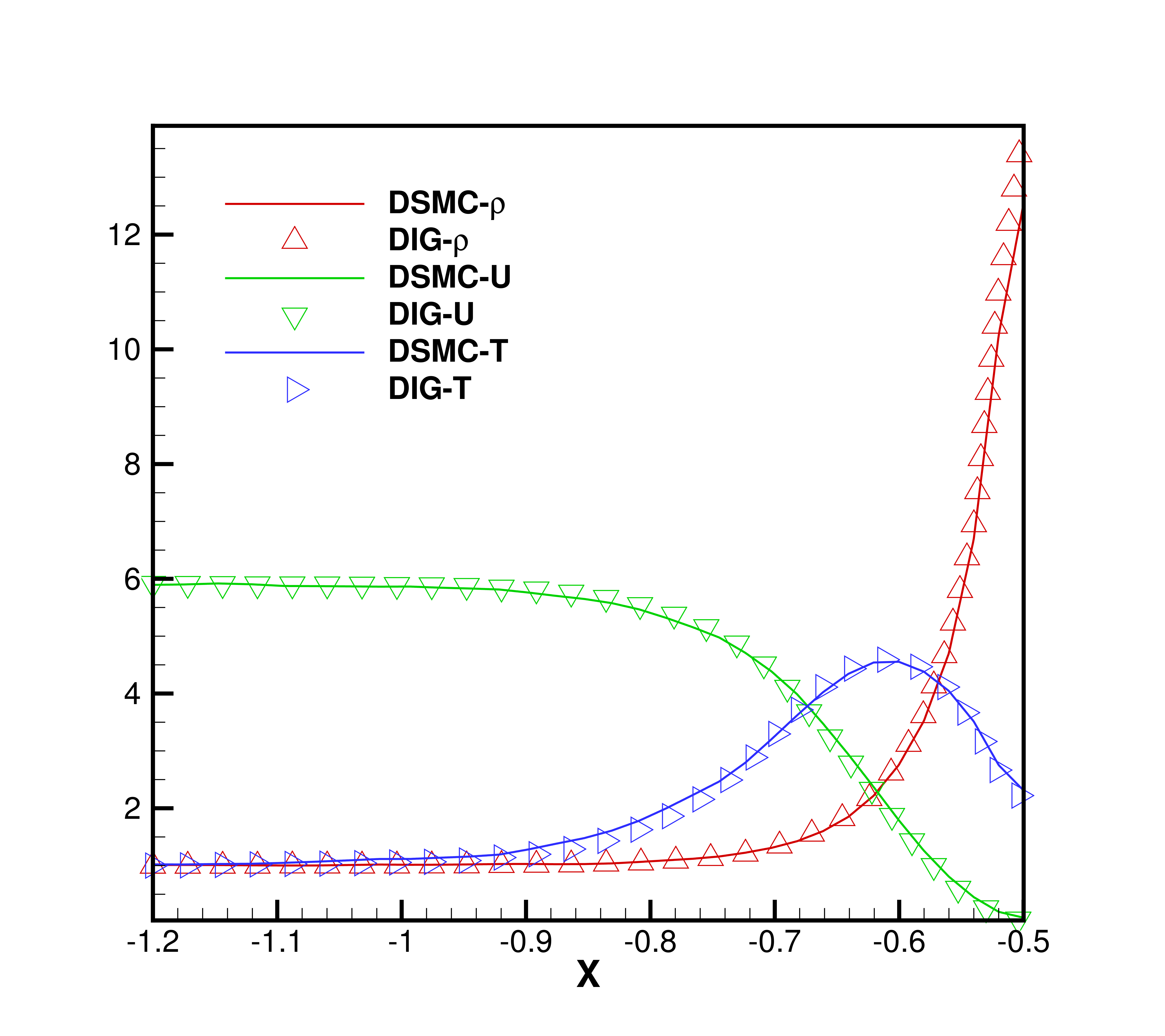
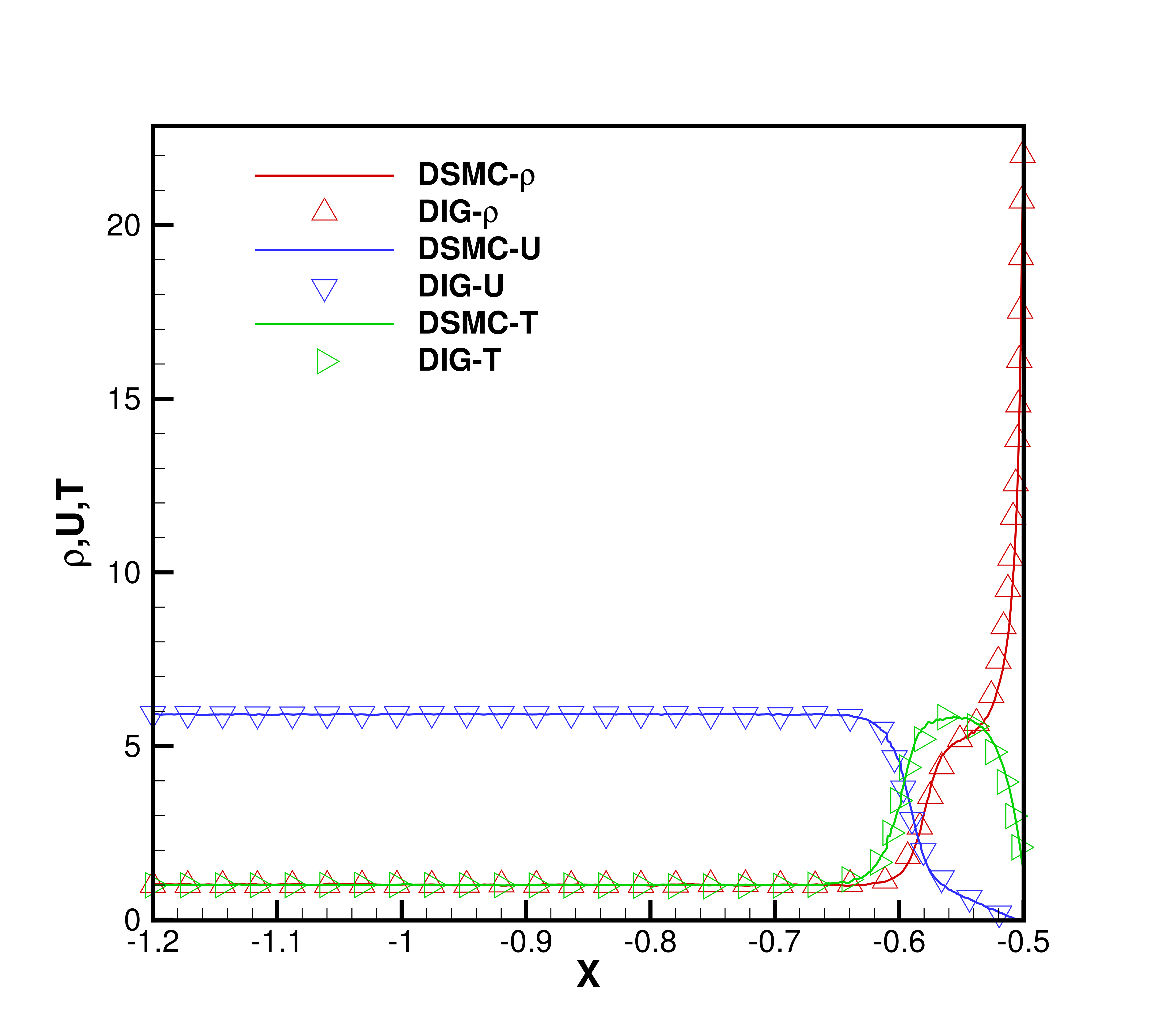
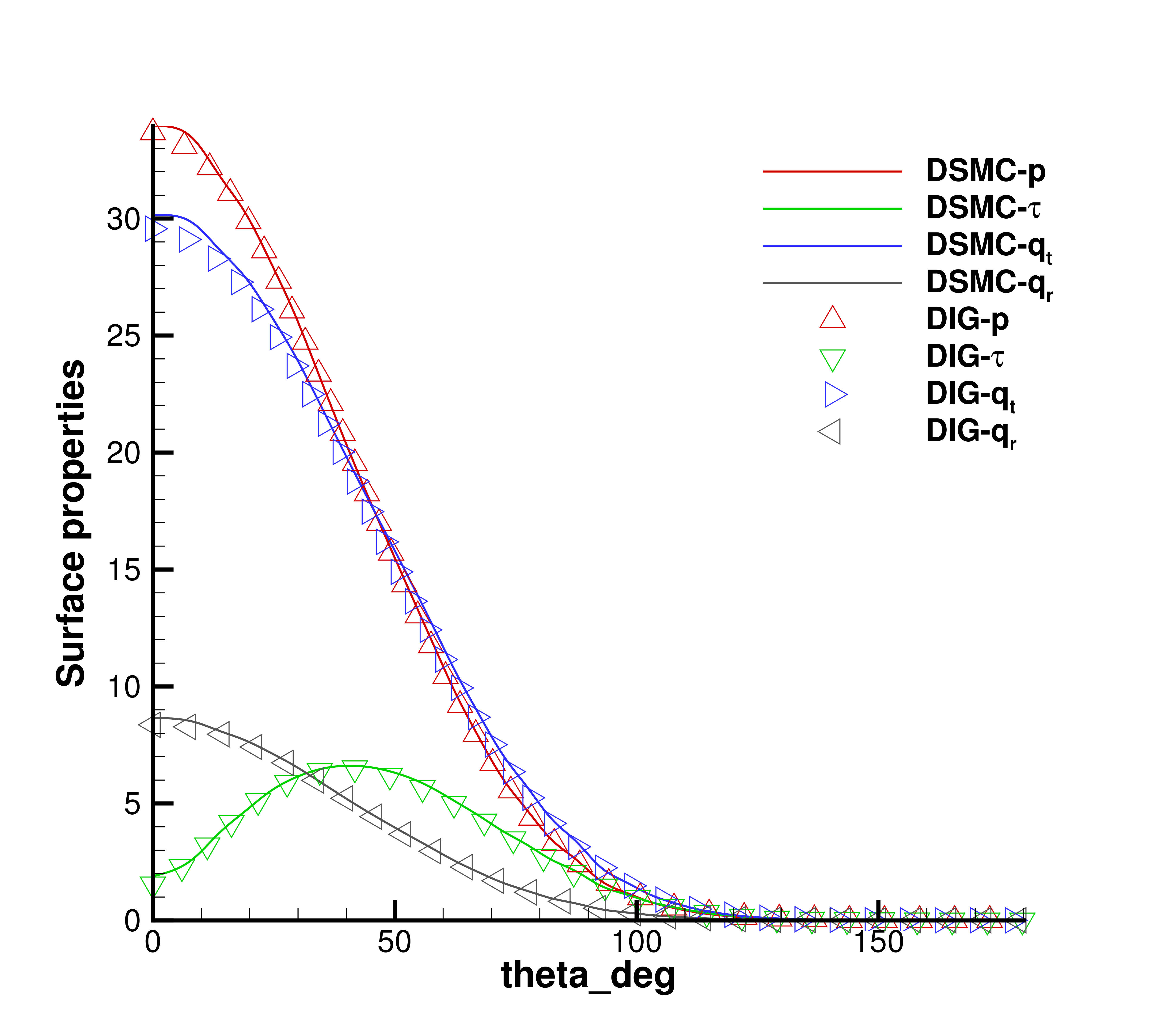
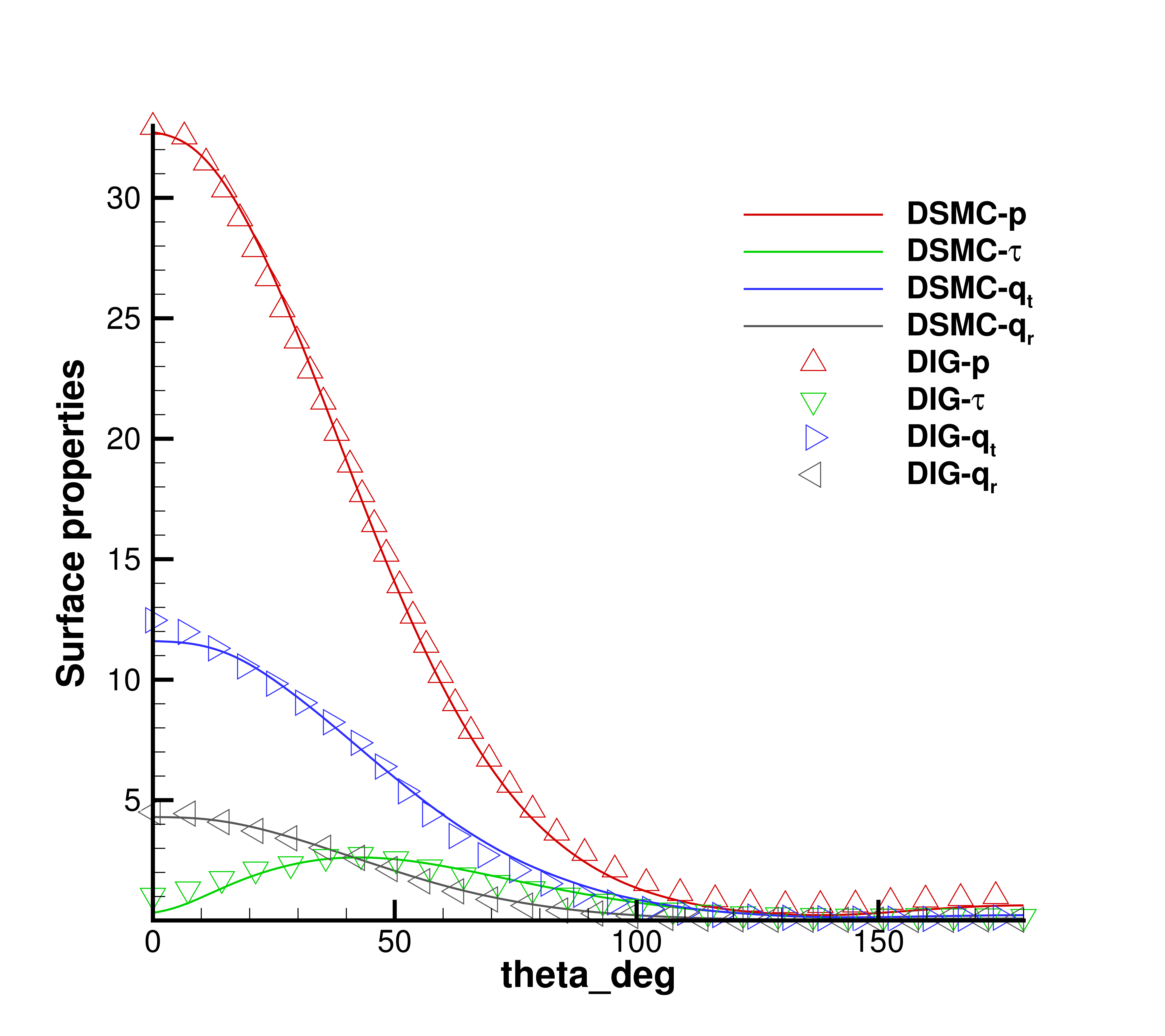
Figure 9: Stagnation line profiles and surface distribution of aerodynamic/wall quantities for sphere test at varying Kn.
Dynamic mesh partitioning demonstrates effective load balancing—particle distributions across MPI processes achieve near-uniformity when a stringent imbalance threshold is set.
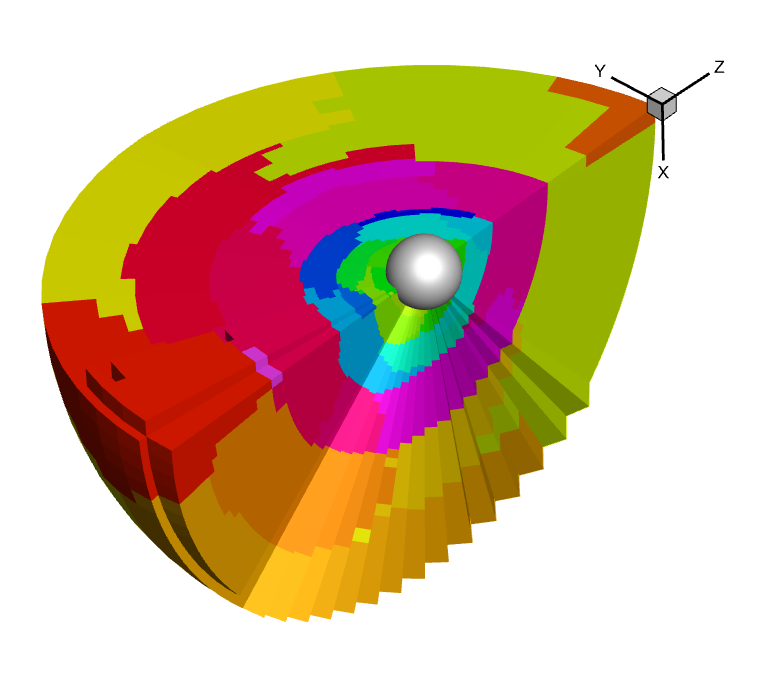
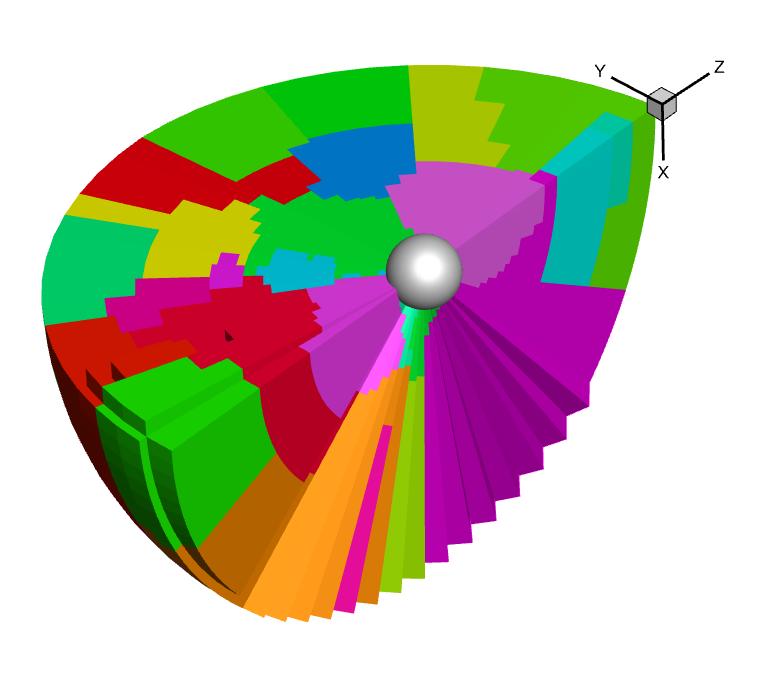
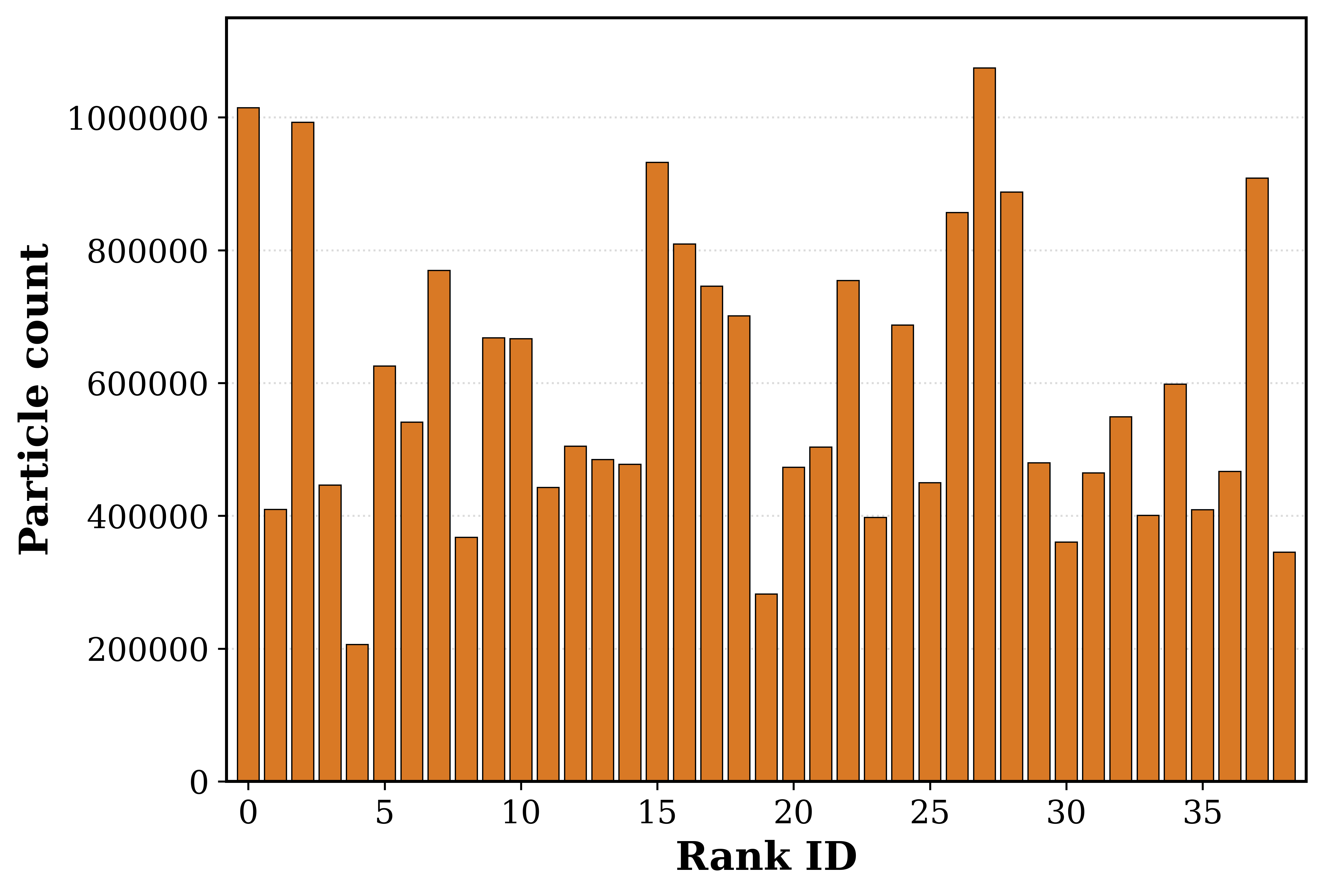
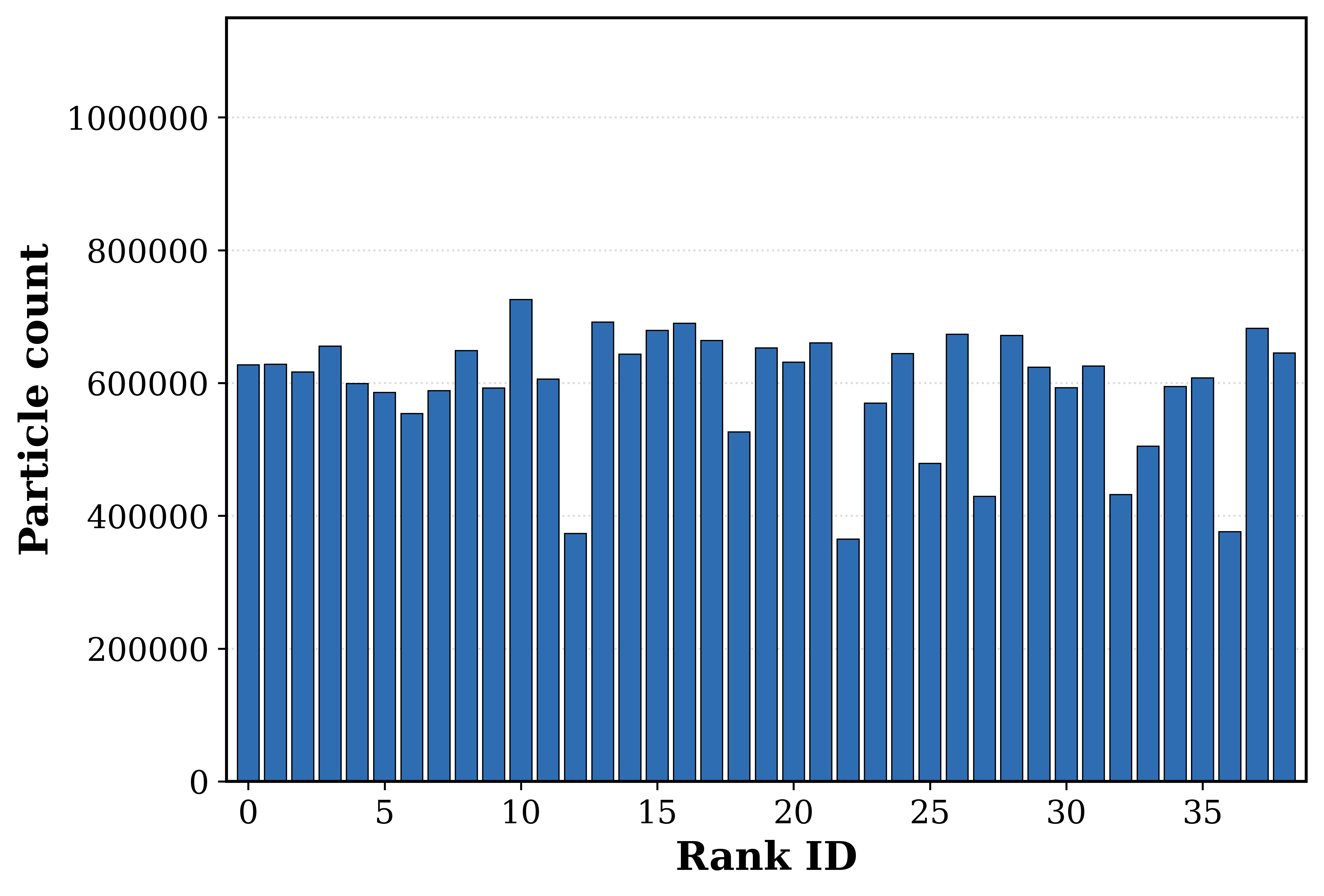
Figure 10: Initial and final mesh partitions and particle distributions after dynamic re-partitioning, emphasizing improved balance.
Apollo capsule: DIG enables full 3D solution in challenging geometries with substantial memory/time savings compared to SPARTA. At Kn=0.01, only deterministic GSIS serves as a viable reference; DIG achieves comparable convergence rates and accuracy, with vastly reduced memory demand.
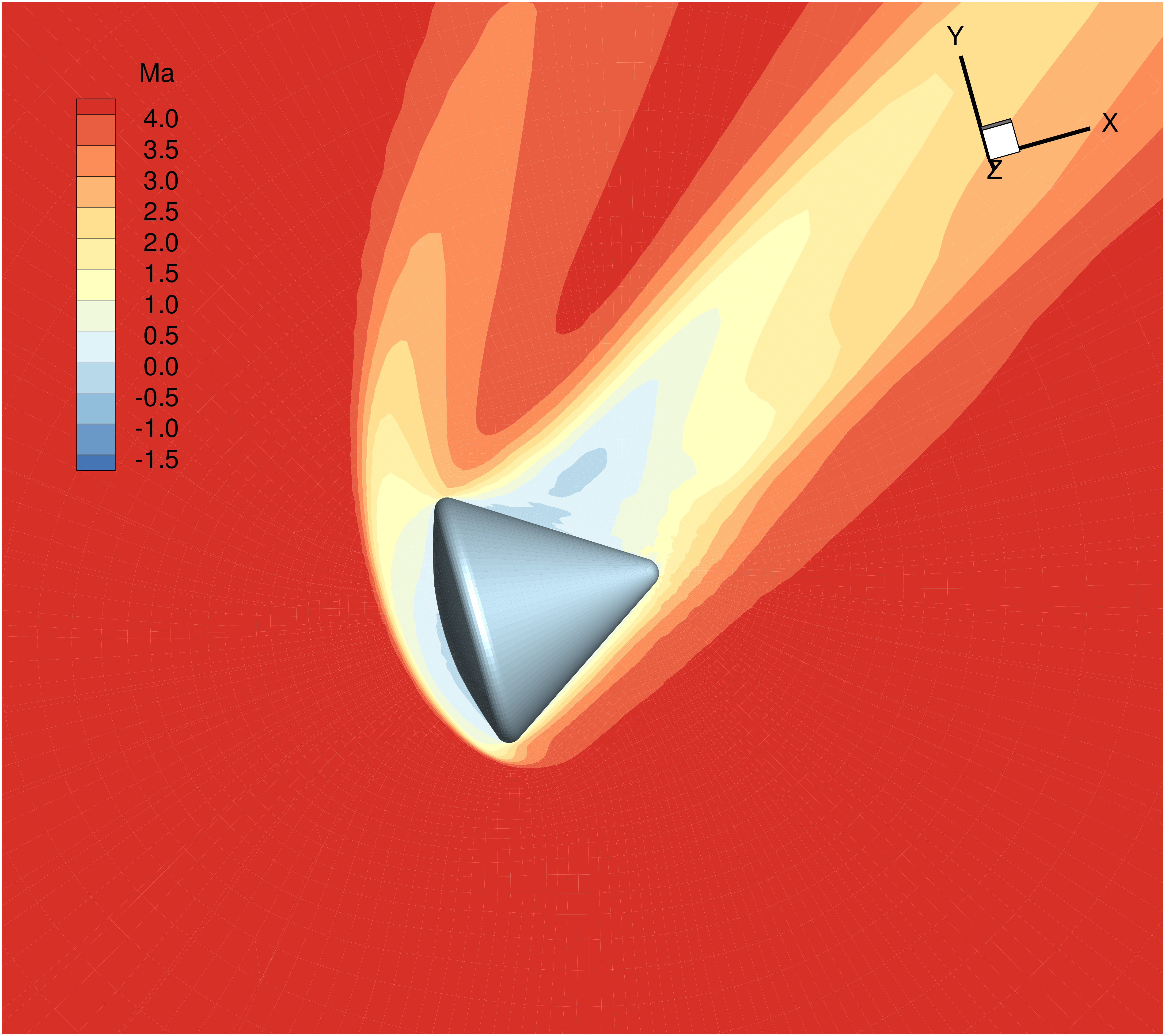
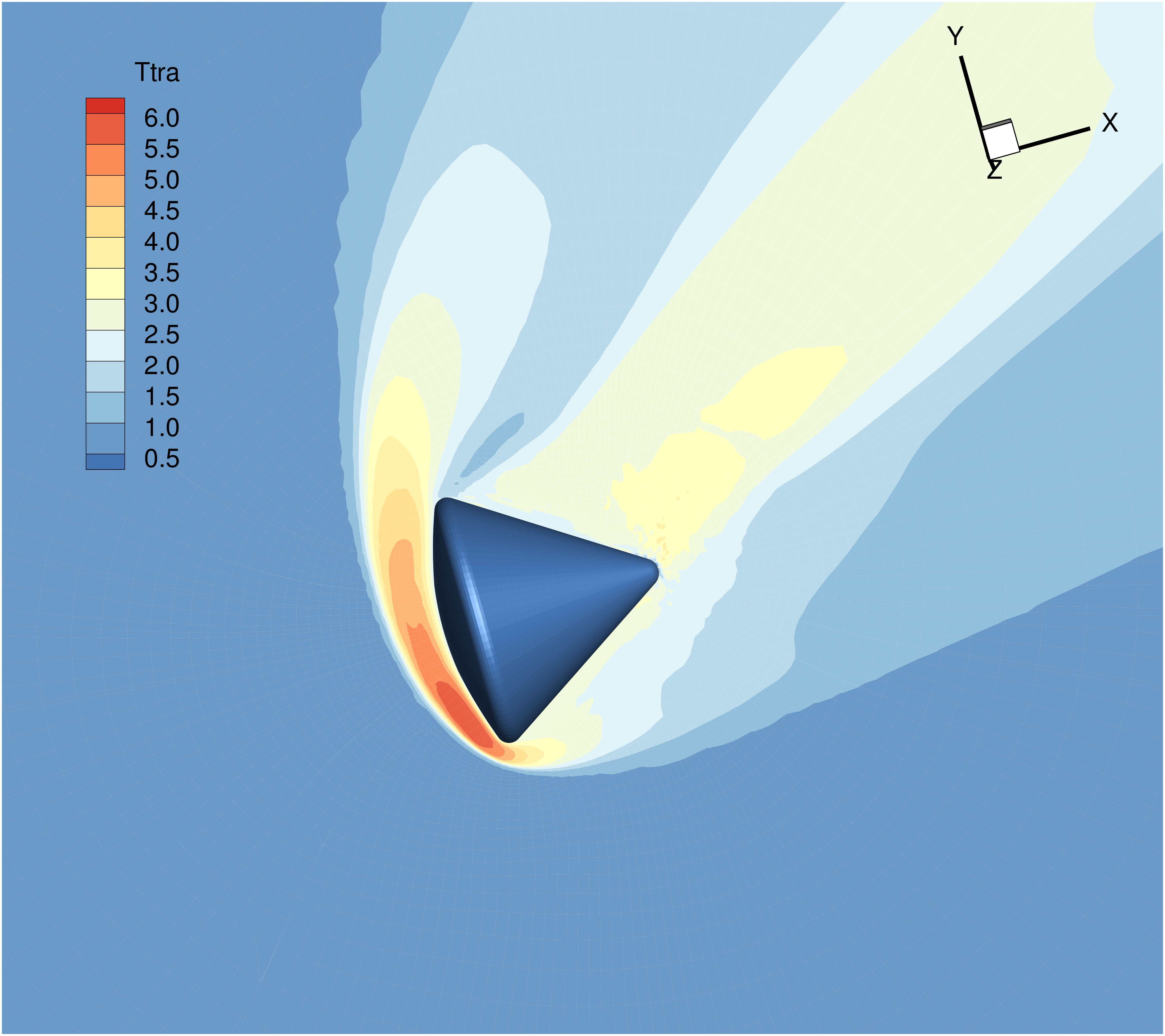
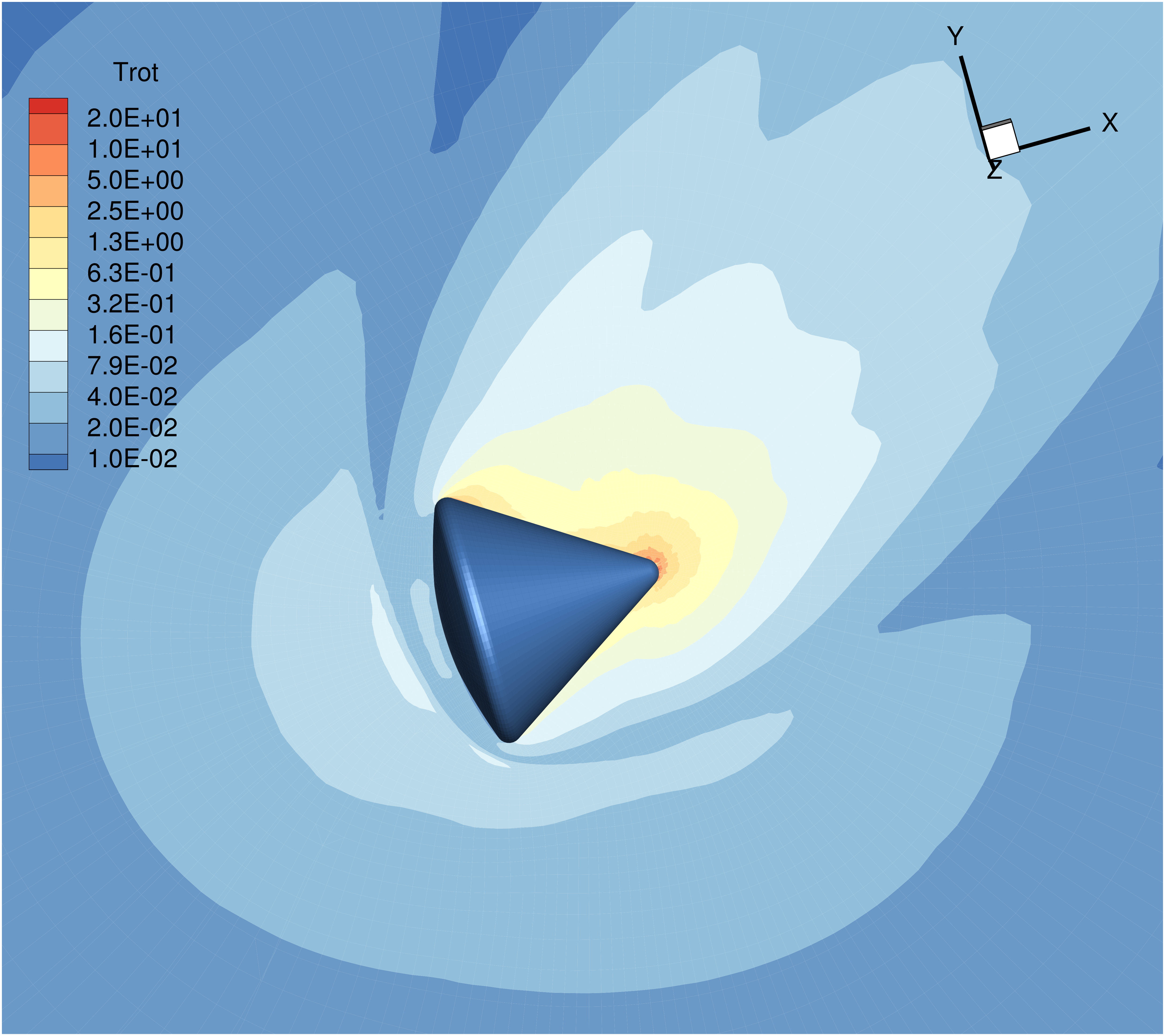
Figure 11: Mach number, temperature, and cell Knudsen fields for Apollo capsule simulation.
Comparisons along symmetry lines confirm fidelity across Knudsen numbers.
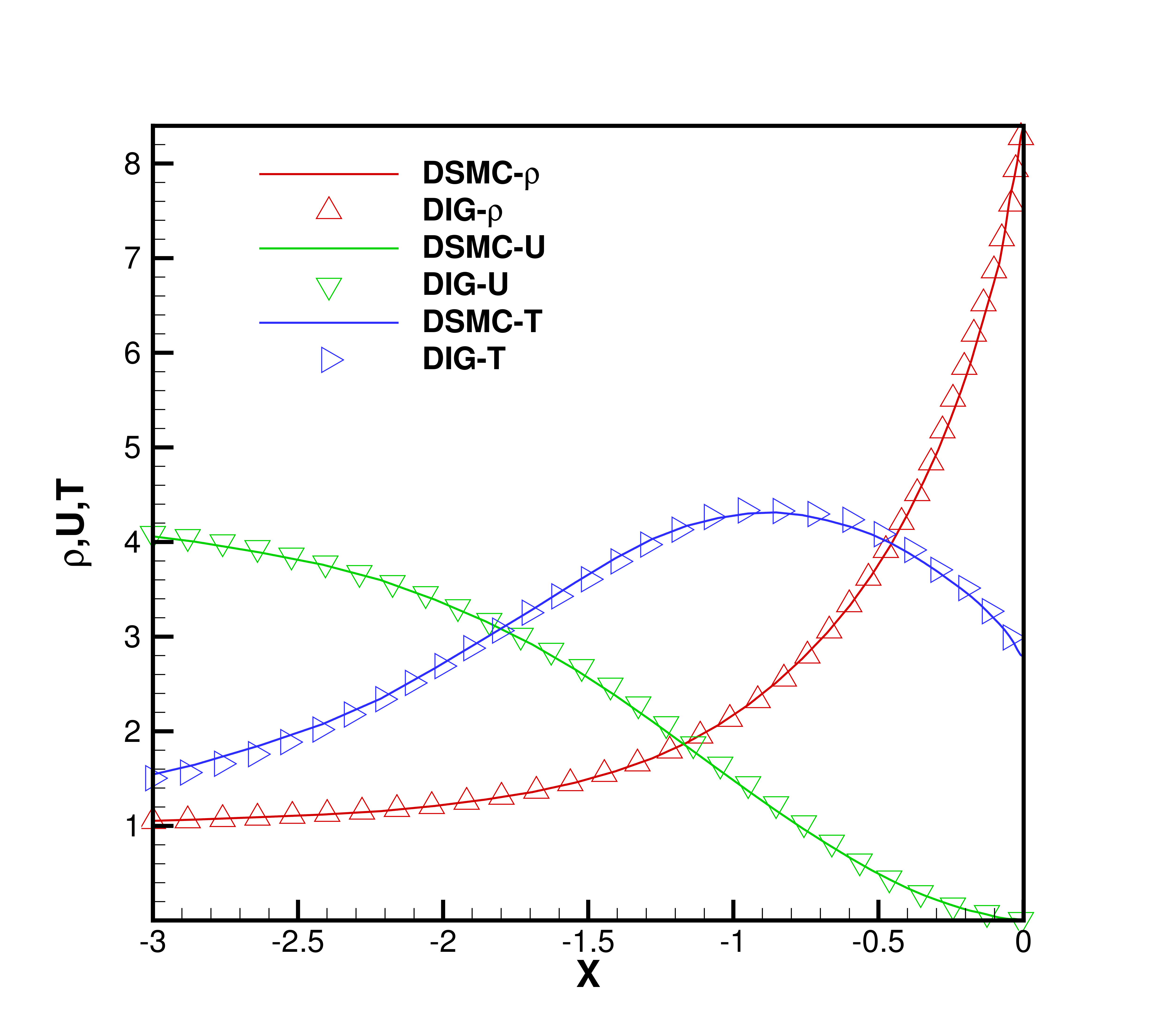
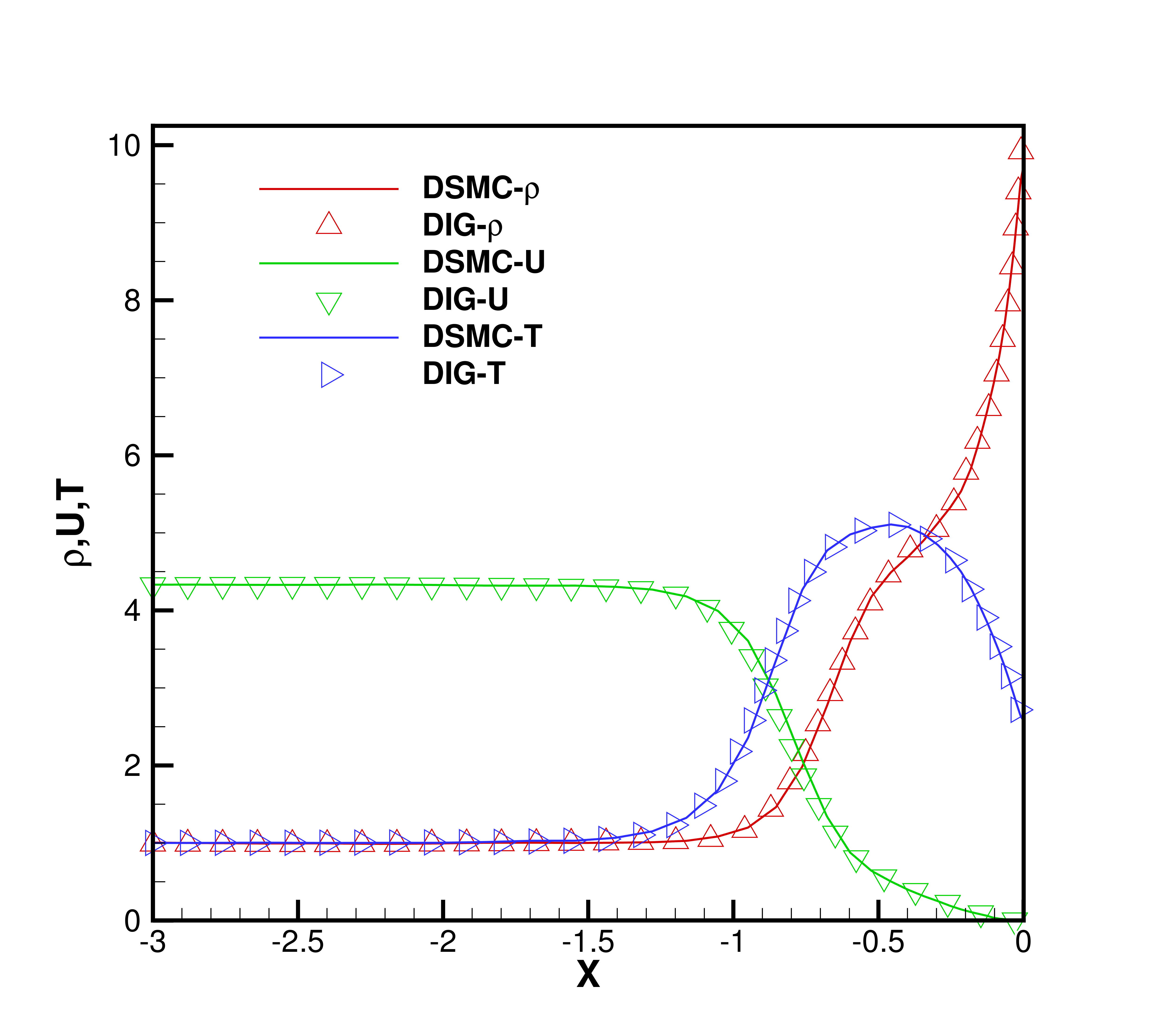
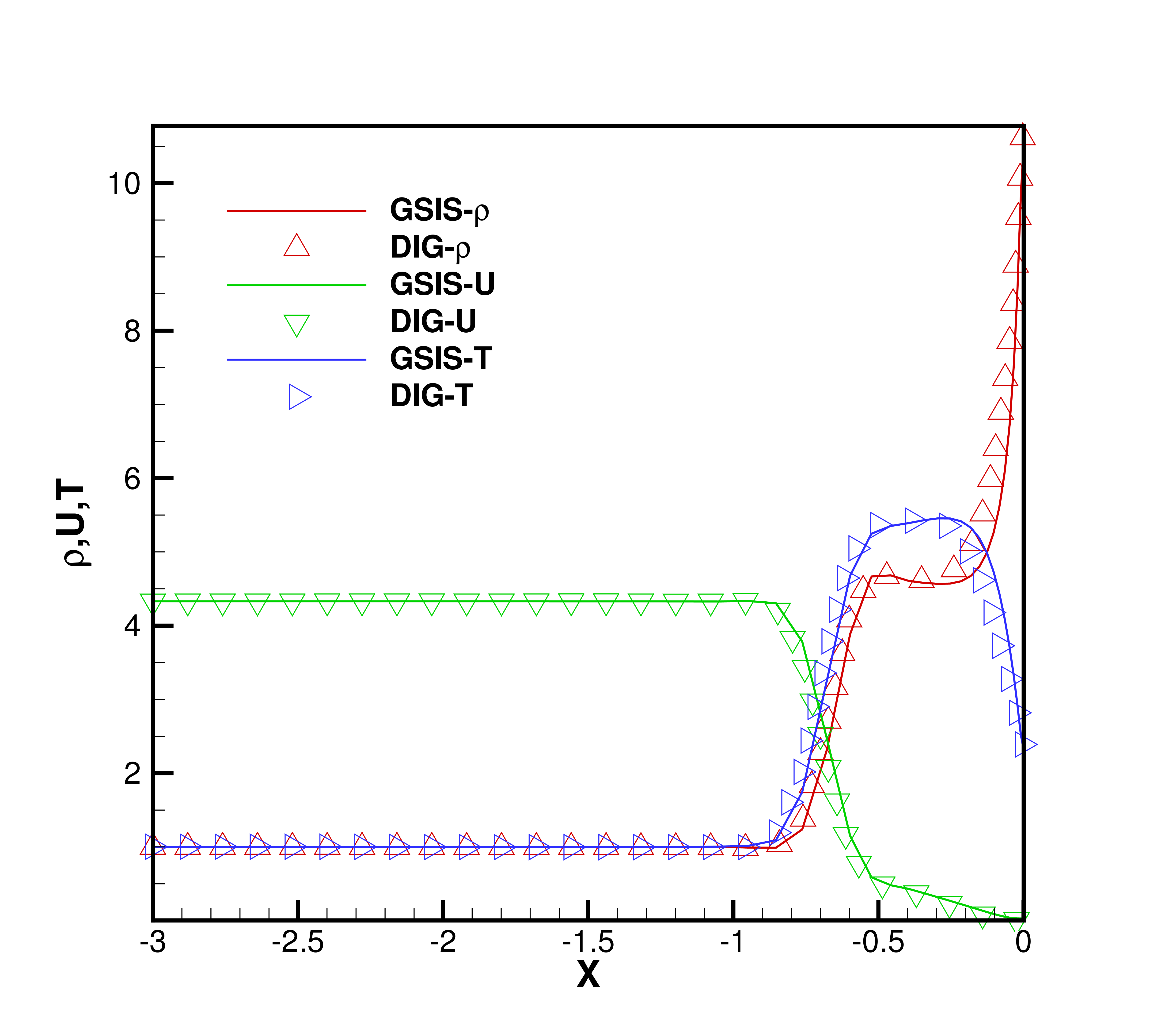
Figure 12: Profiles of density, velocity, temperature vs DSMC/GSIS along capsule symmetry.
ISS simulation: Utilizing an unstructured mesh with over 5 million cells, DIG attains large-scale, high-speed simulation capability with favorable scalability—reducing CPU hours and memory by factors of 8.2 and 63, respectively, compared to deterministic solvers for high Mach flows.
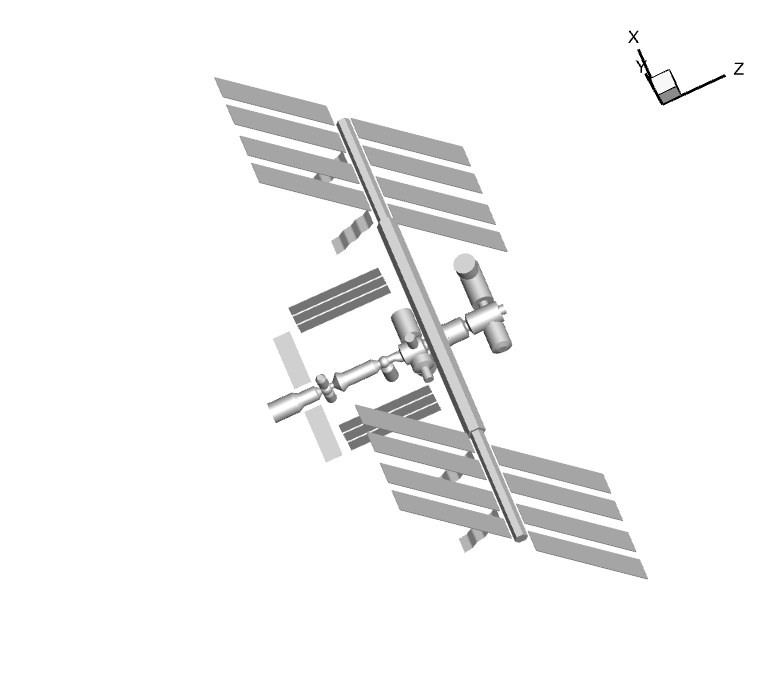
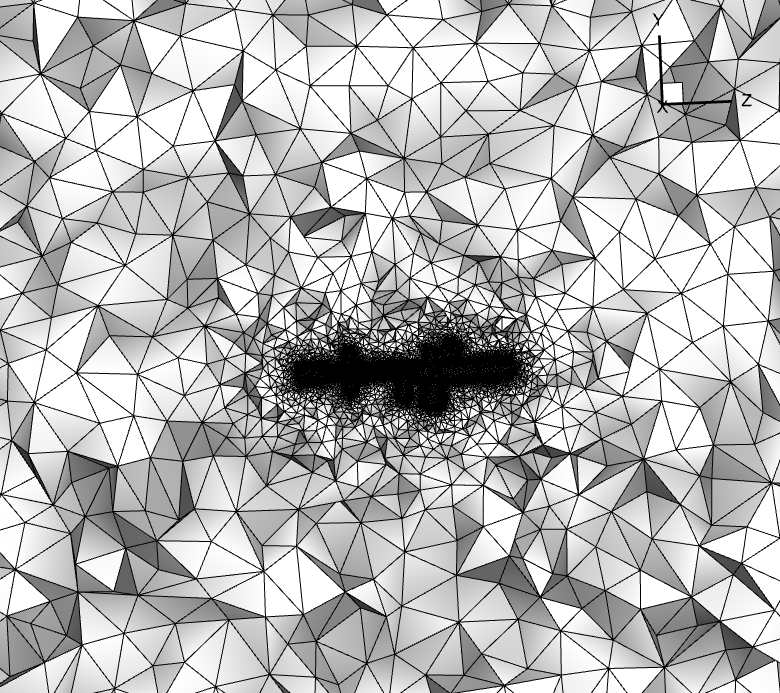
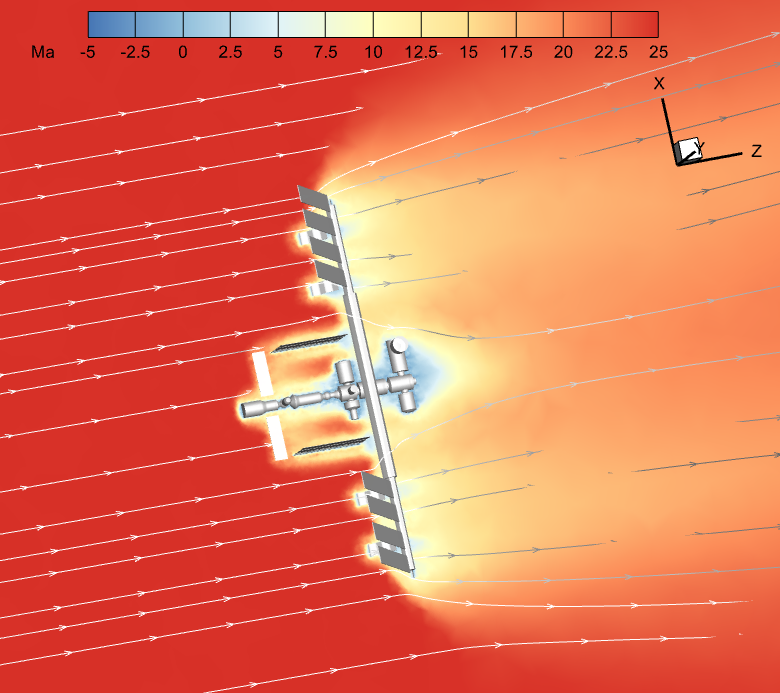
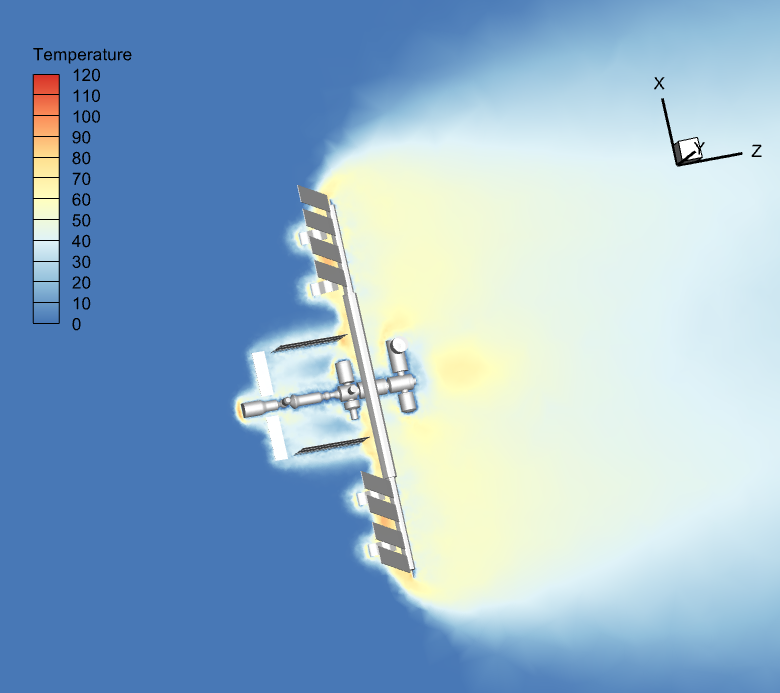
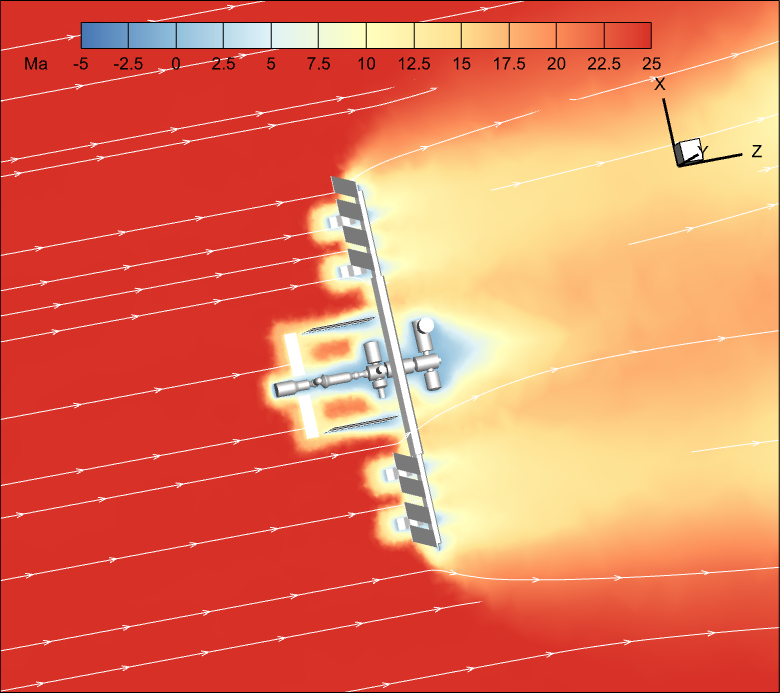
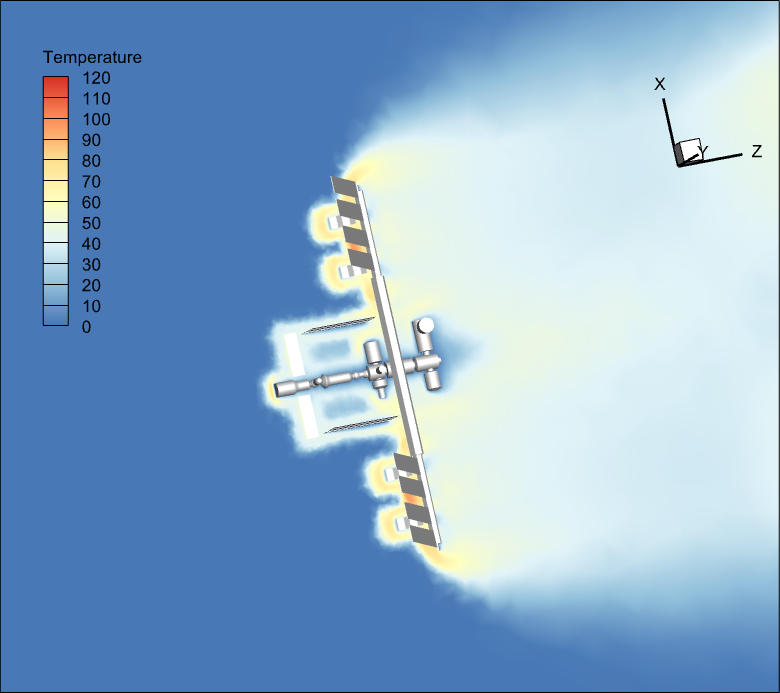
Figure 13: Geometric model, surface mesh, and Mach/temperature contours for the ISS in high-speed flow.
Practical and Theoretical Implications
The DIG-augmented DSMC approach removes kinetic-scale constraints, allowing macroscopically relevant resolutions for near-continuum flows, drastically saving computational resources while preserving particle-based physical fidelity. The parallel design ensures scalability in large, complex geometries with dynamic load balancing and robust MPI messaging. The method is immediately applicable to spacecraft reentry, vacuum system modeling, and micro-electromechanical devices with intricate 3D architectures. Efficient memory handling and dynamic partitioning make it suitable for exascale environments.
Theoretically, DIG bridges kinetic and continuum regimes efficiently. Its intermittent micro-macro correction ensures rapid convergence, even for stiff flows, and is extensible to multi-species, reactive, and radiative gas models. The stability enhancement via local reconstruction and averaging fosters robust coupling on highly irregular meshes.
Future Directions
Ongoing work aims to extend the solver to address chemically reacting and multi-component gases, supporting dissociation, ionization, and radiation processes without forfeiting DSMC completeness. Integration of more elaborate closure models and hybrid deterministic/stochastic formulations are anticipated to further accelerate convergence and memory efficiency for complex hypersonic flows.
Conclusion
The parallel DIG-augmented DSMC solver represents a significant technical advance for rarefied gas flow simulation, blending fast convergent micro-macro coupling with sophisticated parallelization and dynamic load balancing on unstructured meshes. It delivers robust accuracy across a wide range of Knudsen numbers, with documented computational savings and scalability in challenging 3D geometries. Practical relevance spans engineering, aerospace, and scientific domains requiring high-fidelity, large-scale rarefied flow modeling.