- The paper presents an analytic and numerical evaluation of axion-induced modifications to Casimir pressure between graphene plates under static magnetic fields.
- It employs the Kubo formalism and Lifshitz theory to derive resonant pressure conditions, emphasizing the impacts of doping and dissipation.
- Results show that high doping and multilayer graphene structures significantly enhance resonance, achieving sensitivity competitive with current axion limits.
Axion-Induced Casimir Interactions in Graphene Cavities
Introduction and Theoretical Framework
The paper "Axion-Induced Casimir Interaction Between Graphene Plates" (2607.07757) is a comprehensive theoretical investigation into axion electrodynamics in the context of Casimir interactions. This work explicitly calculates the axion-induced modification to the Casimir pressure in a planar cavity geometry where the confining interfaces are graphene sheets, with an emphasis on the electromagnetic response induced by axion dark matter in the presence of a static, external magnetic field.
A central point is the unique suitability of graphene for such a study. Unlike traditional metallic or dielectric materials where the electromagnetic response is governed by macroscopic dielectric functions, graphene allows a first-principles computational description via its polarisation tensor within finite-temperature QFT. This facilitates an analysis that includes effects from finite temperature, chemical potential (doping), and dissipation, all critical for realistic experimental scenarios.
The effective Lagrangian used incorporates the axion-photon coupling gaγγϕE⋅B, leading to a modification of Maxwell’s equations and the introduction of an axion-induced current source in the cavity. Within a static external magnetic field, an oscillating axion background can induce electromagnetic fields even in the absence of conventional charges. The observable consequence is a modification to the mechanical pressure between the graphene plates, which is the focus of this work.
Graphene Electrodynamics
The electromagnetic response of graphene is modeled via the Kubo formalism, where the conductivity tensor is expressed as the sum of intraband (Drude-like) and interband transition contributions, both dependent on the chemical potential μ, temperature T, and dissipation parameter Γ. The conductivity is crucial as it directly determines the graphene's reflectivity and thus the condition for resonant enhancement of the axion-induced field within the cavity.
At low frequencies and high doping, the conductivity is intraband-dominated, enhancing graphene’s reflectivity. As frequency increases, interband transitions become important, with a distinctive minimum in conductivity emerging near ω∼2μ, after which the high-frequency regime approaches the universal value σ0=e2/(4ℏ) Figure 1.
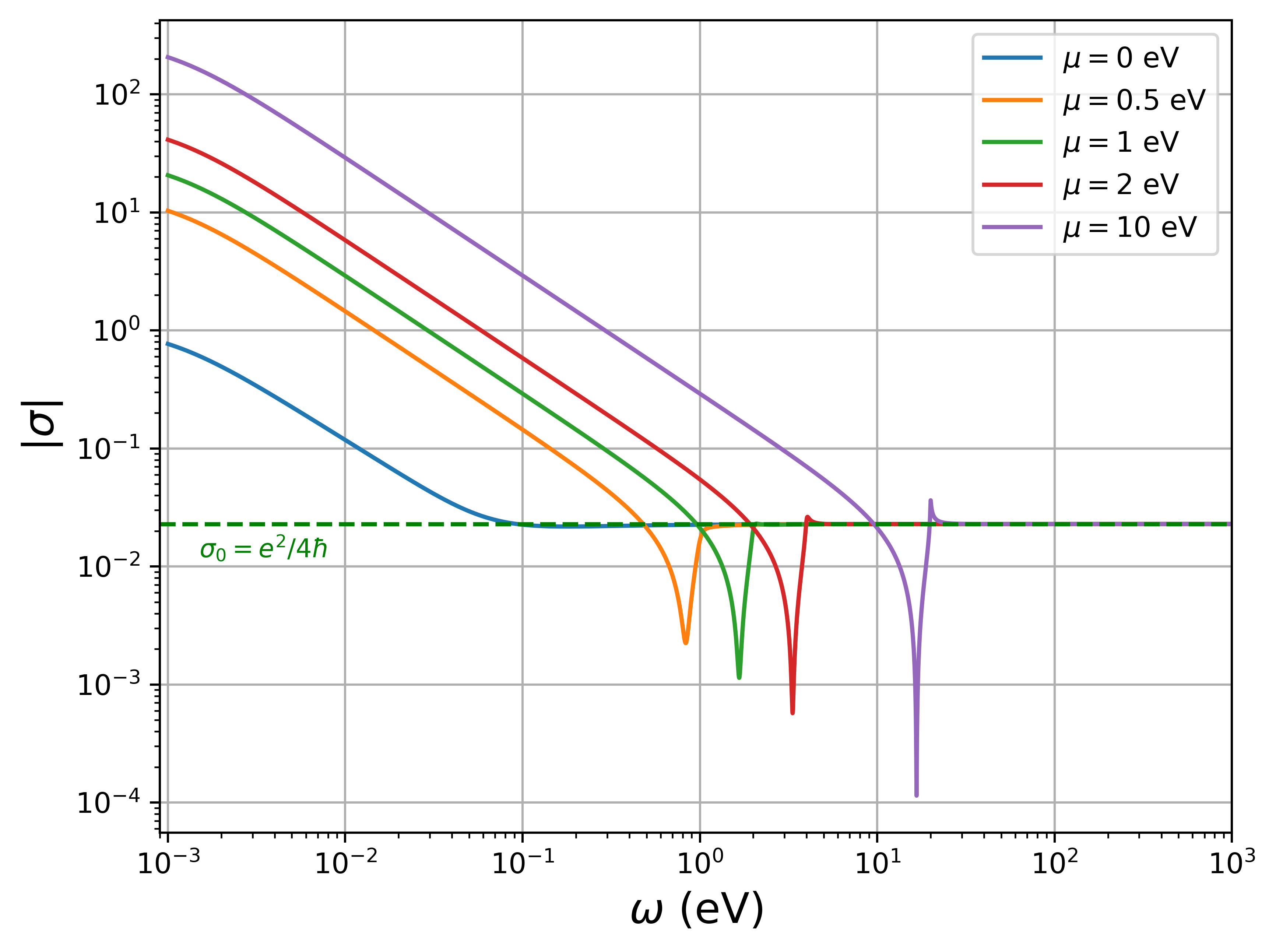
Figure 1: Magnitude of the conductivity in the Kubo formalism as a function of frequency, at T=300 K and Γ=10−3 eV. Enhanced doping shifts the intraband/interband crossover to higher frequencies, increasing low-frequency conductivity.
Casimir Effect with Graphene Plates
The Casimir pressure in the graphene–graphene cavity is computed with the Lifshitz formalism, where the response functions (polarisation tensor or, equivalently, the Kubo conductivity) are evaluated along the imaginary frequency axis for the Casimir background, but at real frequency (ω=ma) for axion-induced effects. Thus, both the conventional and axion-induced pressures are consistently grounded in the same microscopic model.
At cryogenic temperatures and high doping, the graphene Casimir pressure transitions from the d−4 typical of the quantum regime to the high-temperature μ0 regime, with the crossover location and magnitude strongly enhanced for increasing μ1 (Figure 2 and Figure 3).
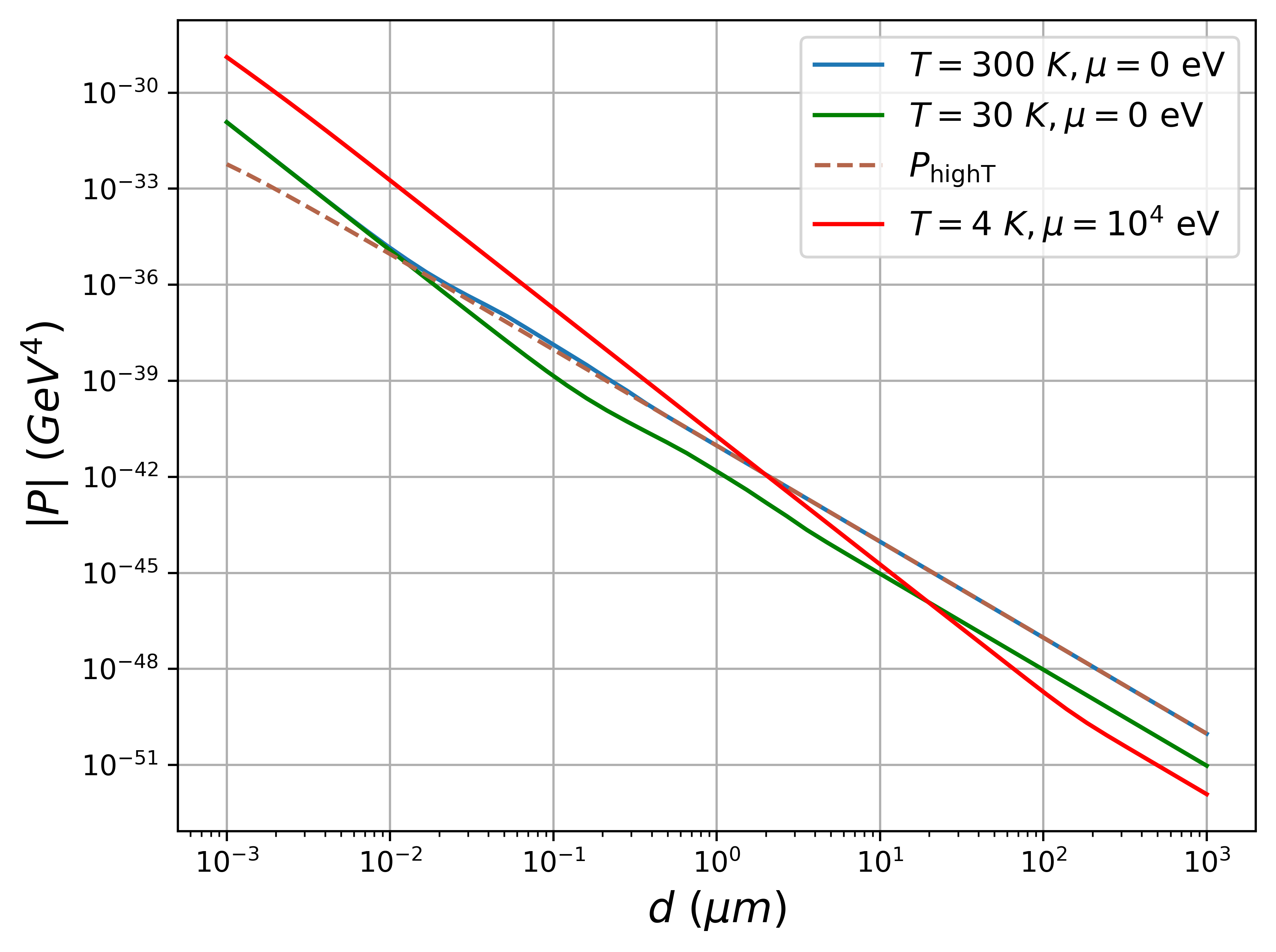
Figure 2: Magnitude of the Casimir pressure between two freestanding graphene sheets as a function of separation for several temperatures and chemical potentials. Enhanced doping increases the pressure at fixed μ2.
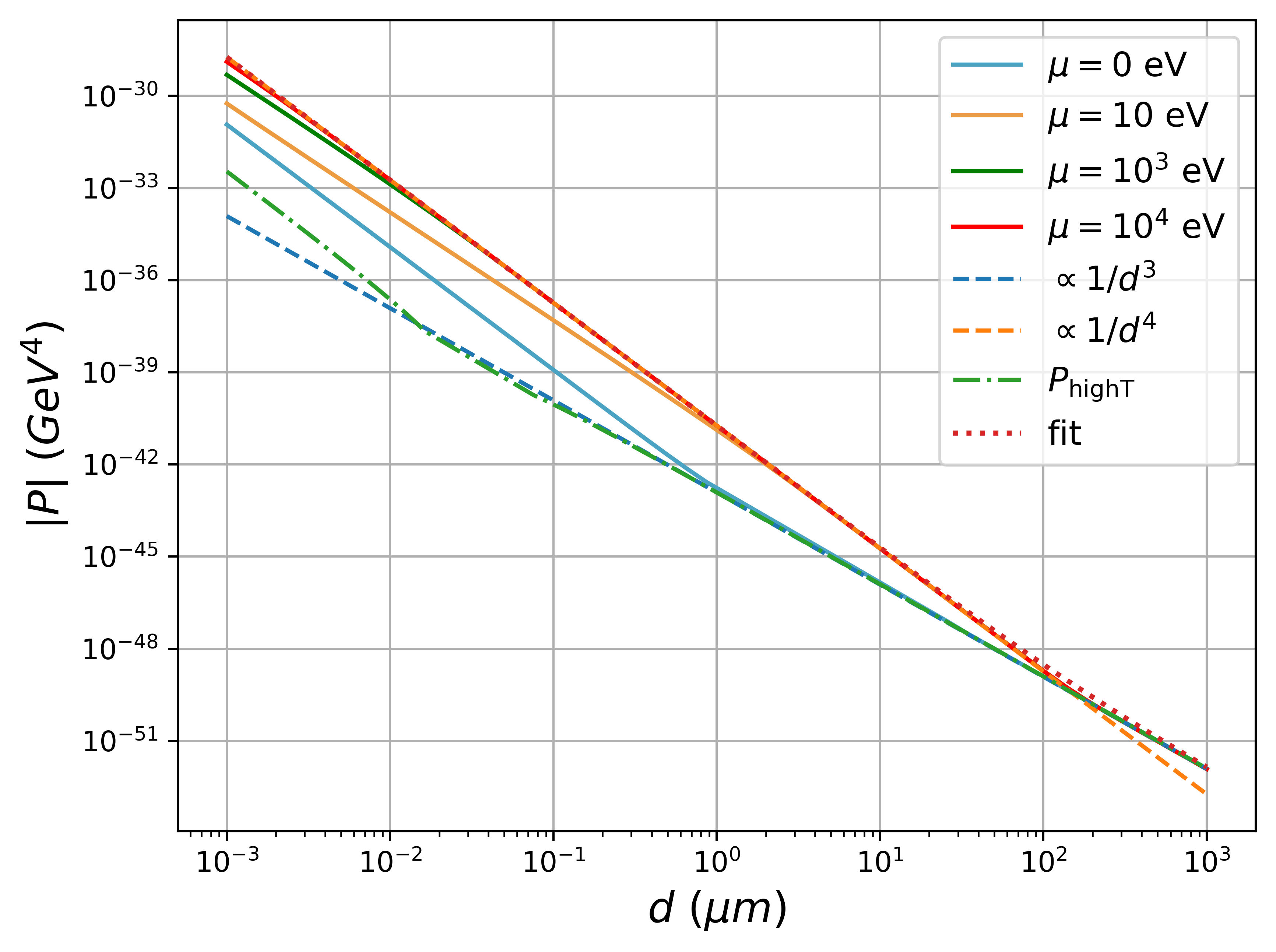
Figure 3: Casimir pressure at μ3 for a range of μ4, with dashed lines indicating analytic asymptotics. The pressure is highly sensitive to μ5 at small separations but converges at large μ6.
Analytic Solution for Axion-Induced Pressure and Resonant Enhancement
Using Green's functions with the relevant boundary conditions, a closed-form analytical expression for the axion-induced pressure is derived. The boundary conditions are set by the graphene conductivity and the field configuration imposed by the axion-induced current. The solution reveals that the pressure spectrum exhibits resonances at discrete separations μ7 set by the axion Compton wavelength and the phase of the graphene reflection coefficient.
The resonance condition is
μ8
where μ9 is the graphene reflection coefficient at T0. These resonant peaks in induced pressure can vastly exceed the off-resonant background, and both the position and sharpness of the resonances are controlled by T1 and T2. The pressure magnitude near resonance follows a Lorentzian profile whose height is maximized as T3 and T4 increases. Critically, the double-pole (resonant) contribution rapidly dominates the pressure for high doping, with the single-pole (non-resonant) term suppressed Figure 4.
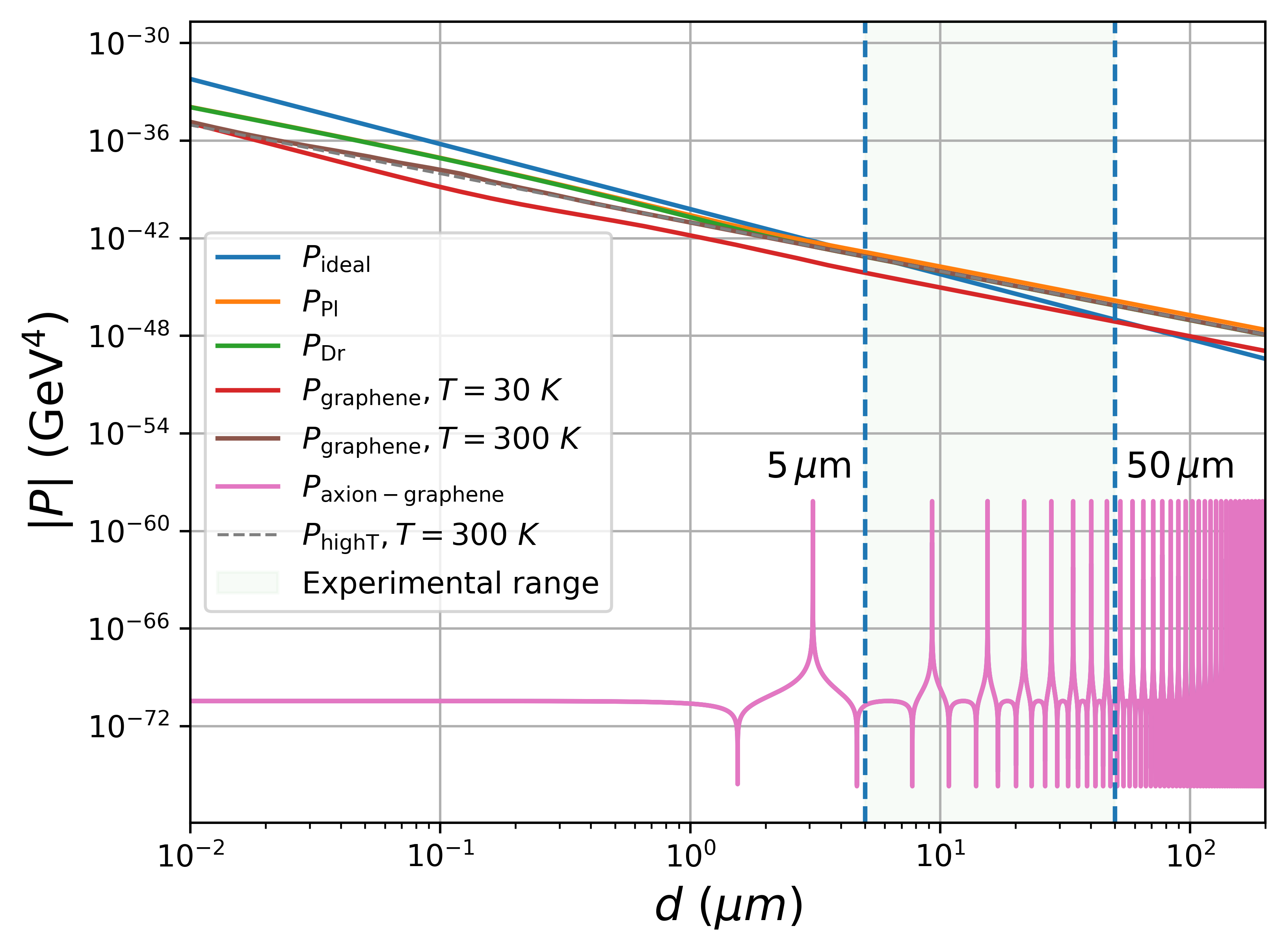
Figure 5: Magnitude of the axion-induced and various Casimir background pressures as a function of separation T5. The axion resonance is sharply enhanced compared to backgrounds for appropriately tuned T6 and small T7.
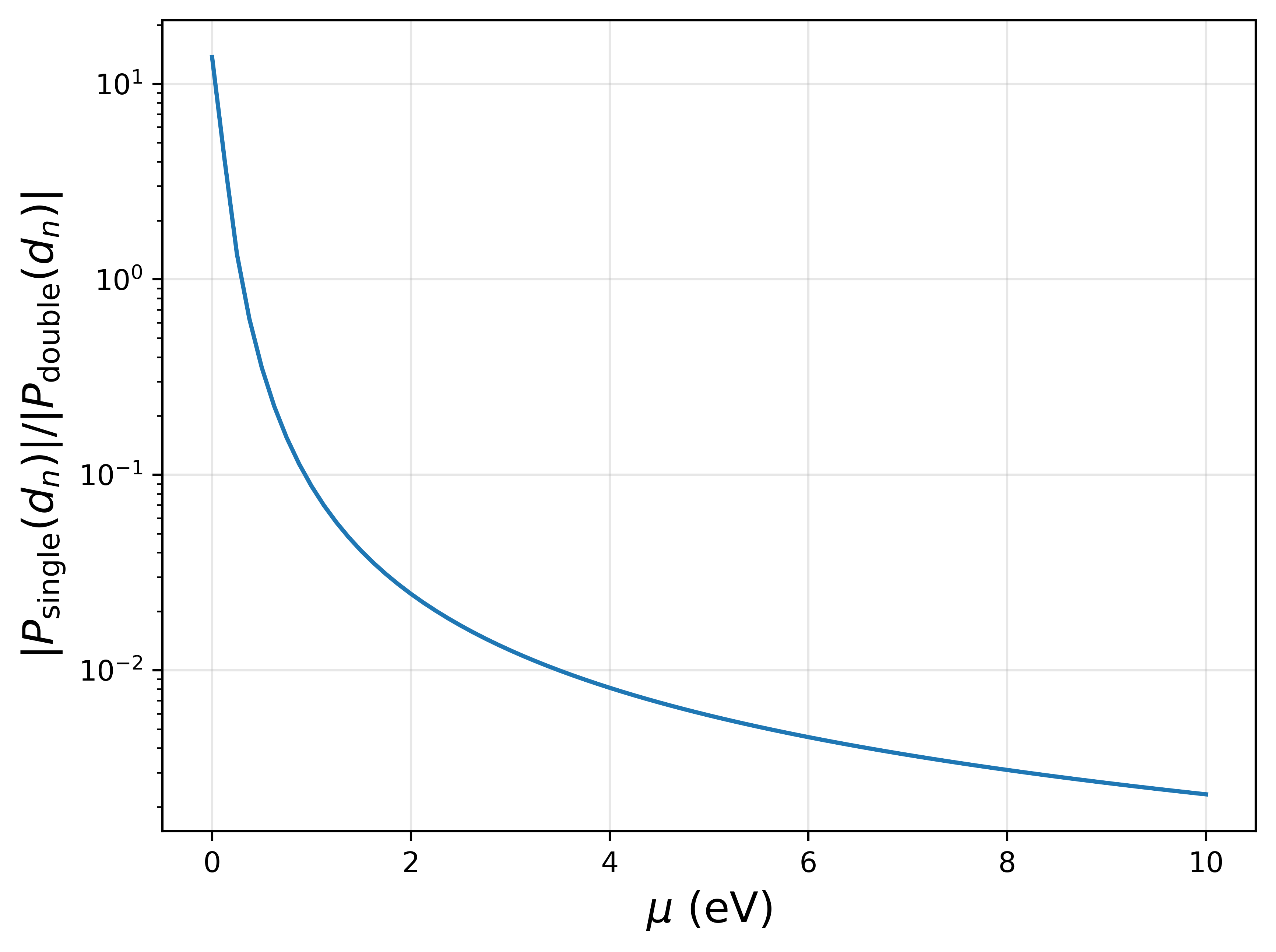
Figure 4: Ratio of single-pole to double-pole contributions to the axion-induced pressure as a function of T8. The resonant double-pole term quickly dominates with increasing doping.
Parameter Dependence: Doping, Dissipation, and Mass
The enhancement effect is highly sensitive to graphene's electronic properties. Increasing T9 narrows the resonance (reducing the linewidth parameter Γ0 via increasing cavity reflectivity) and amplifies the peak pressure; conversely, increasing Γ1 broadens the resonance and suppresses the peak (Figures 12, 13, 15).
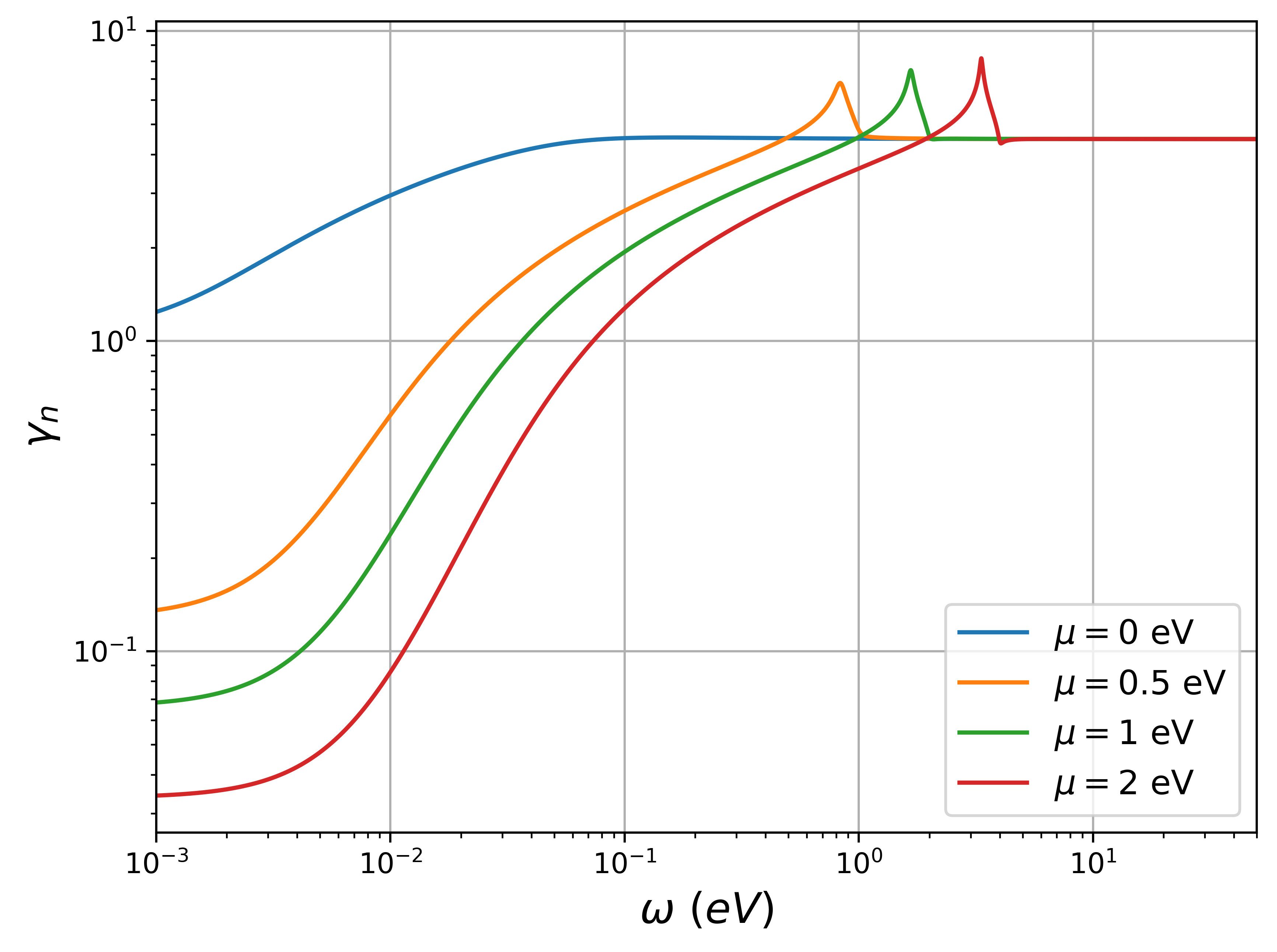
Figure 6: Resonance linewidth as a function of frequency for various Γ2. Narrower linewidths at high Γ3 indicate sharper, more coherent resonances.
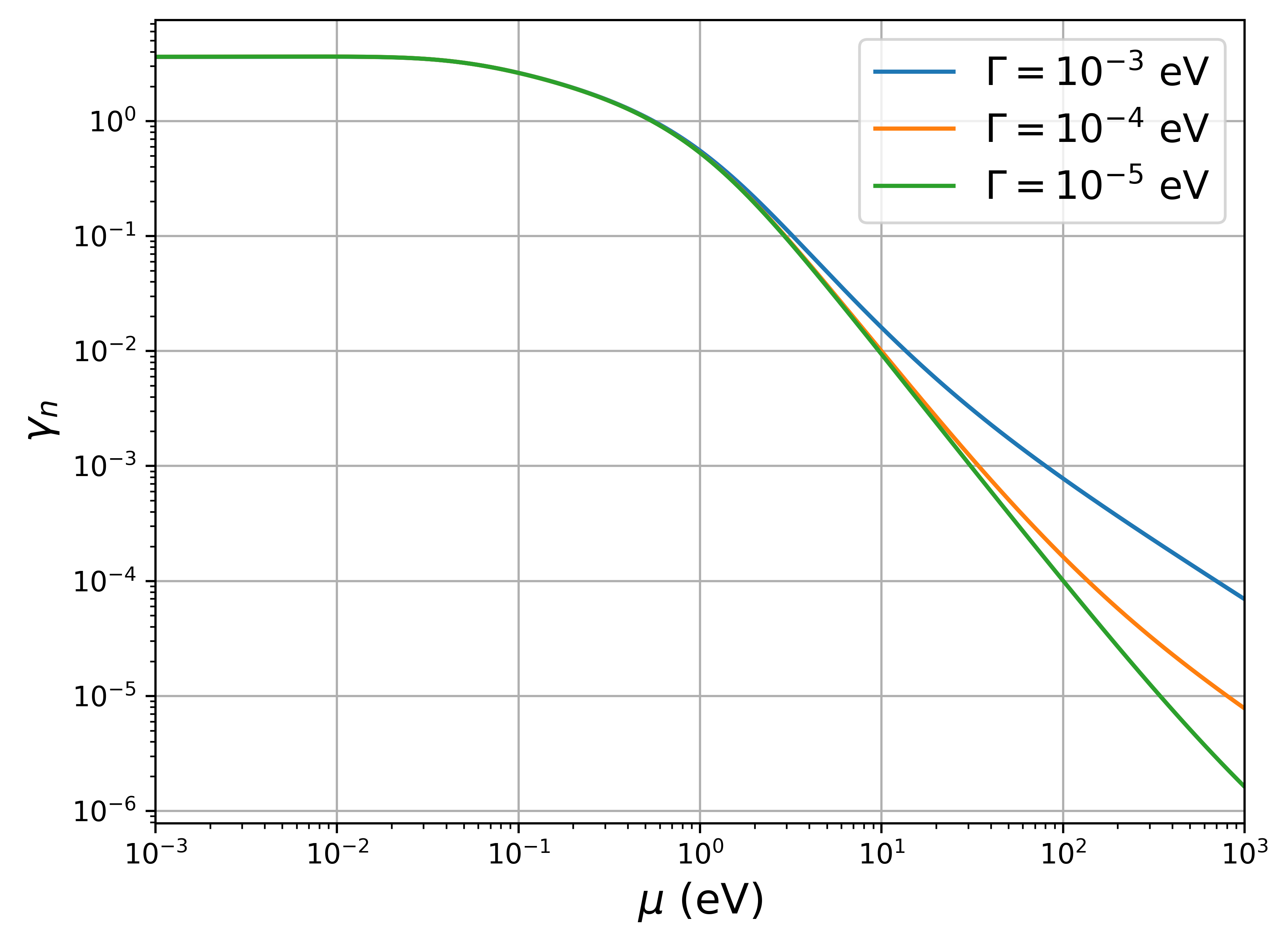
Figure 7: Linewidth Γ4 vs Γ5. Reflectivity and narrowness increase at large doping (decreasing Γ6), especially at low Γ7.
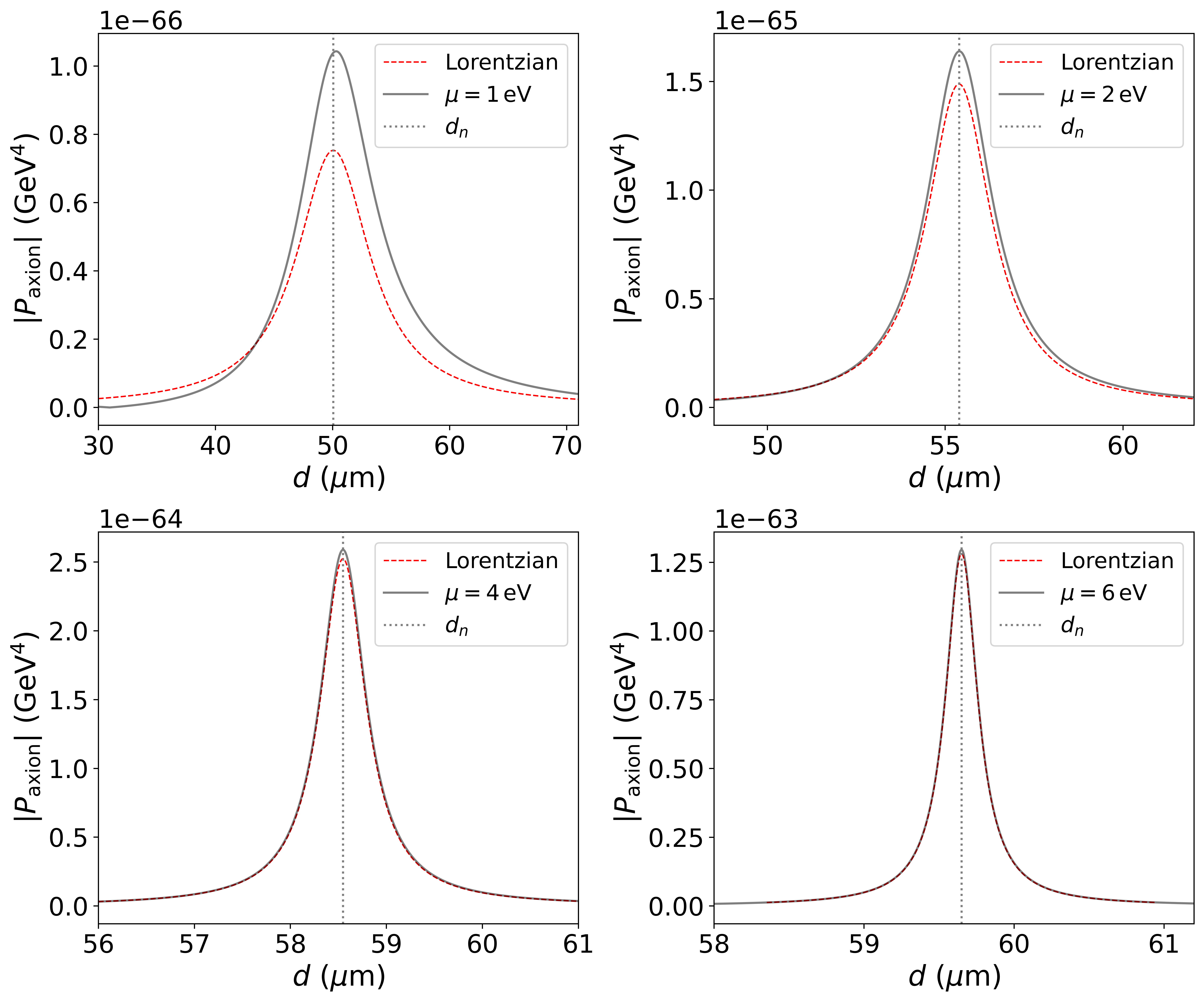
Figure 8: Lorentzian resonance profiles for different Γ8. Larger doping yields sharper and higher resonances, approaching the ideal local resonance approximation.
The frequency dependence is also important: as Γ9 increases, the signal moves to higher frequency (lower ω∼2μ0), where the conductivity and hence resonance enhancement become suppressed Figure 9.
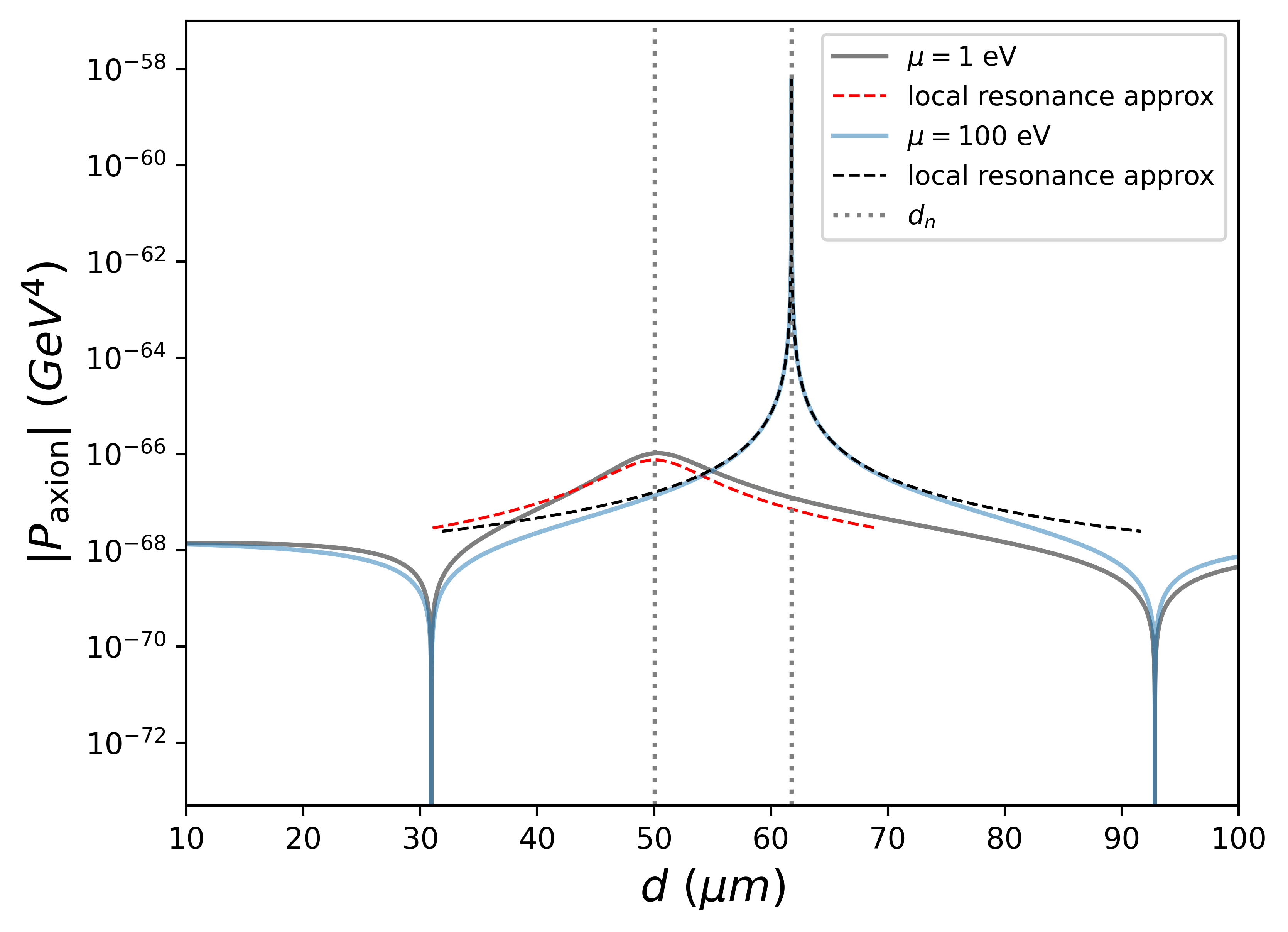
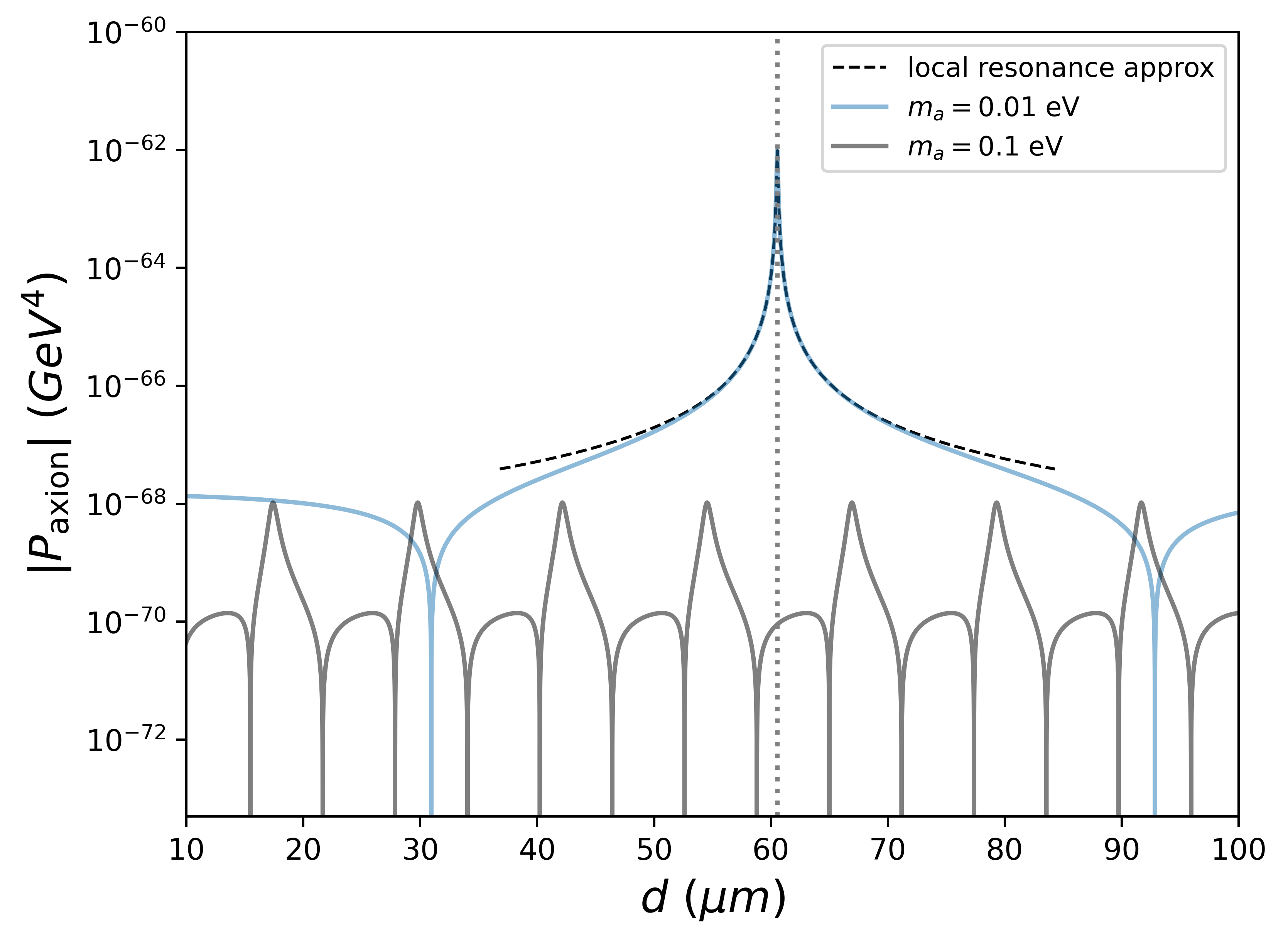
Figure 9: Axion-induced pressure vs separation for fixed ω∼2μ1 and varying ω∼2μ2 (upper) and for fixed ω∼2μ3 and varying ω∼2μ4 (lower). Peak heights drop with increasing ω∼2μ5 due to reduced conductivity.
Projected Sensitivity and Experimental Considerations
Projected exclusion limits on the axion-photon coupling ω∼2μ6 are evaluated by comparing the maximal axion-induced pressure at resonance to the conventional Casimir background, setting a benchmark sensitivity at the 1% pressure deviation level. The analysis assumes realistic plate separations (ω∼2μ7m), strong but feasible magnetic fields, and varies ω∼2μ8, ω∼2μ9, σ0=e2/(4ℏ)0, and number of graphene layers.
Key findings include:
- Lowering temperature strongly suppresses Casimir backgrounds while leaving axion-induced peaks unaffected, especially for large σ0=e2/(4ℏ)1, so cryogenic operation is highly advantageous Figure 10.
- Stacks of electronically decoupled graphene layers (multilayer graphene) can mimic the effect of extremely high doping in monolayers, with the resonant pressure scaling quartically with the number of layers due to simultaneous narrowing of the resonance and enhancement of the effective conductivity Figure 11.
- Achievable sensitivity approaches or exceeds current laboratory and some astrophysical constraints in optimal scenarios, especially with low dissipation Figure 12.
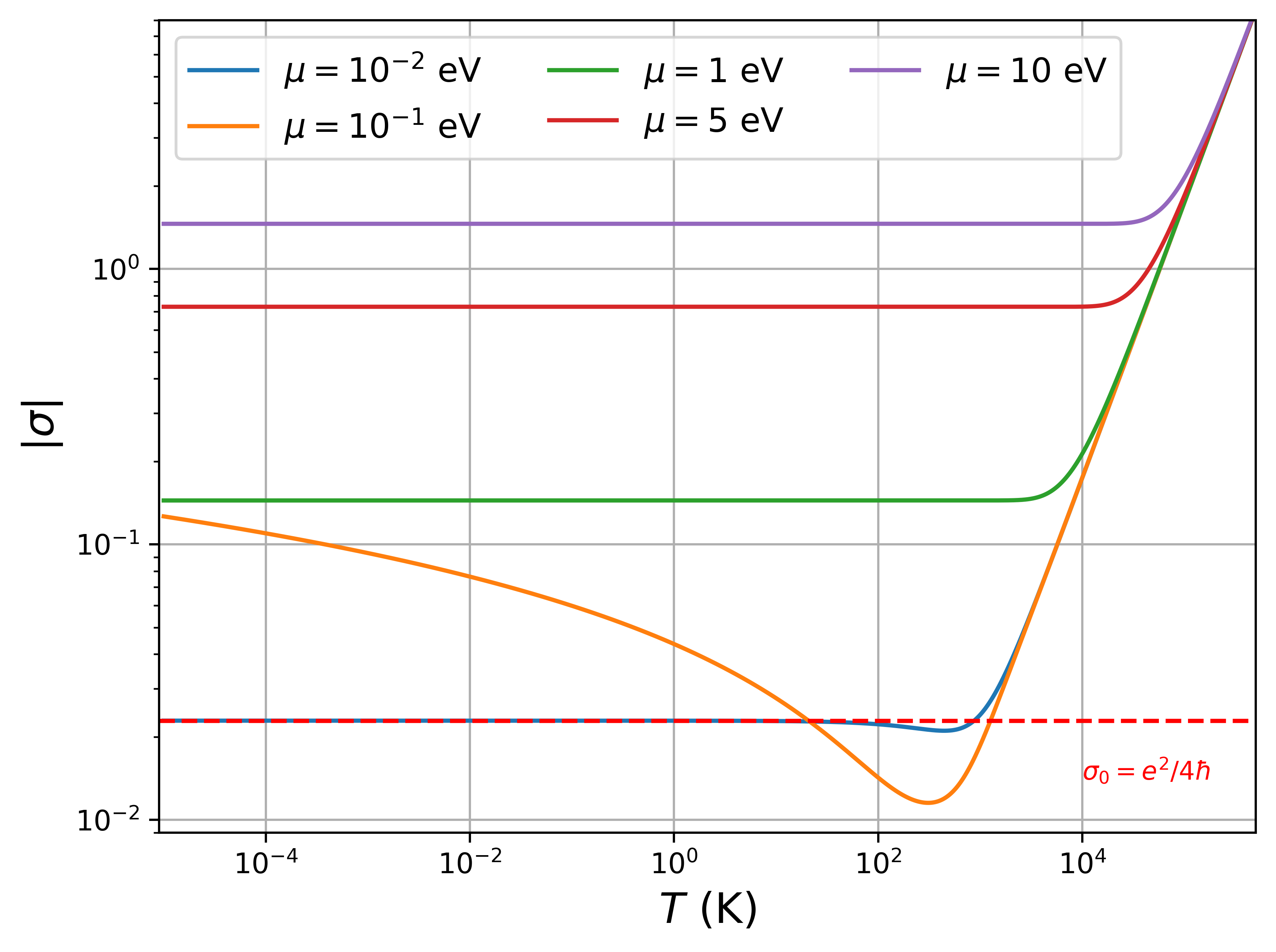
Figure 10: Conductivity σ0=e2/(4ℏ)2 as a function of σ0=e2/(4ℏ)3 at fixed σ0=e2/(4ℏ)4; for high σ0=e2/(4ℏ)5, σ0=e2/(4ℏ)6 is temperature-independent at low σ0=e2/(4ℏ)7, while Casimir backgrounds remain σ0=e2/(4ℏ)8-dependent.


Figure 12: Projected sensitivity to σ0=e2/(4ℏ)9 for plausible experimental parameters, compared to state-of-the-art limits and QCD axion models. Lowering T=3000 and increasing the number of graphene layers yields significant improvement.
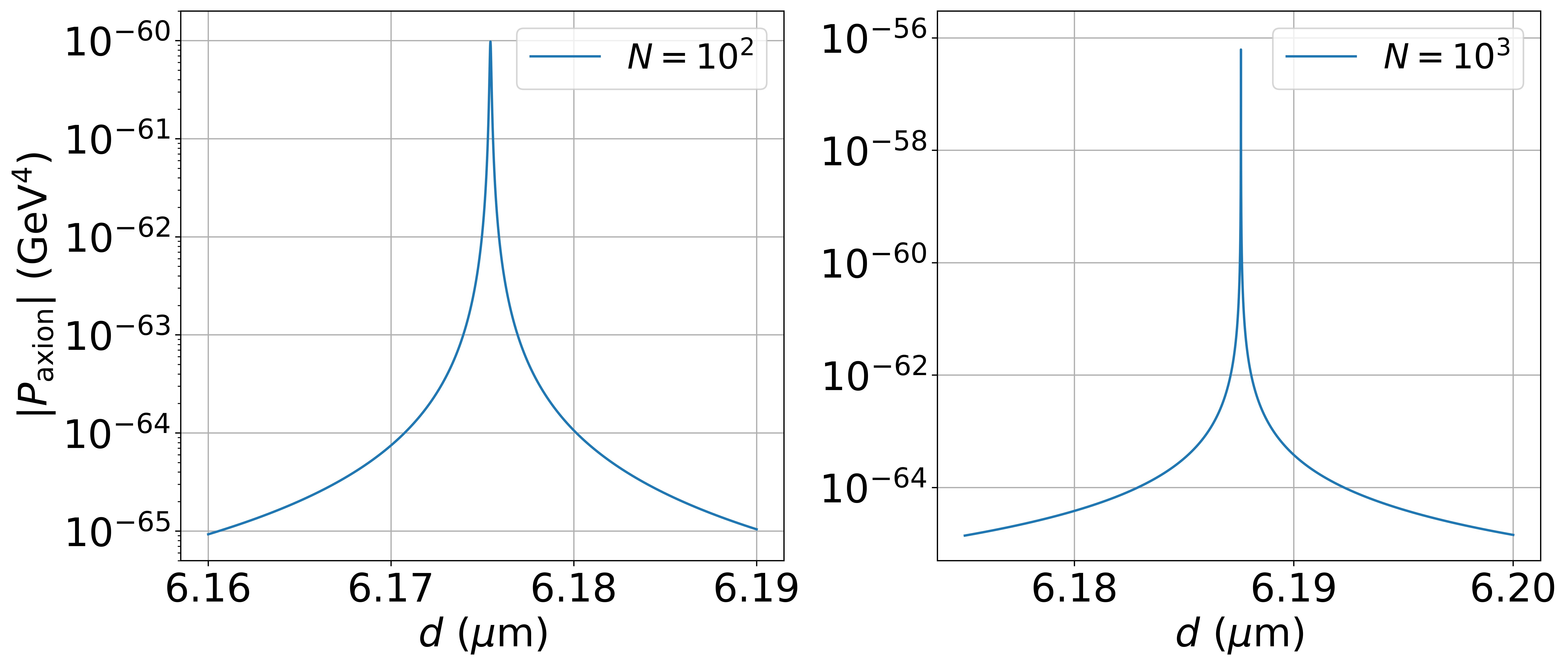
Figure 11: Resonant enhancement for multilayer graphene stacks (T=3001, T=3002) showing quartic scaling of the peak axion-induced pressure with T=3003.
Implications and Outlook
The study provides the first detailed, analytic and numerical characterization of resonantly enhanced axion-induced Casimir pressures in graphene-based cavities, linking the search for axion/ALP dark matter to precision condensed matter and quantum vacuum phenomena. It establishes:
- Theoretical tools (Kubo-formalism conductivity, full Green's function with realistic material conditions) necessary for predicting observable effects in experimental setups employing 2D materials.
- That maximizing doping (chemical potential) and minimizing dissipation are critical to reaching competitive or surpassing existing axion-photon coupling constraints.
- That multilayer architectures can be leveraged for quartic enhancement in signal, potentially mitigating practical challenges associated with ultra-high monolayer dopings.
- That finite temperature effects, particularly operating well below room temperature, offer further gains in the achievable signal-to-background ratio.
From a practical standpoint, this motivates the development and optimization of high-quality, highly-doped, low-loss multilayer graphene cavities, incorporating advanced force measurement protocols under strong magnetic fields and at cryogenic conditions. Future research may extend this framework to include nonlocal response, more complex stacking/disorder, alternative 2D materials, or exploration of different geometries.
Conclusion
This work advances the theoretical underpinnings required to exploit the unique optoelectronic tunability of graphene for dark matter detection via Casimir force measurements. By mapping the full parametric dependence of the resonantly enhanced axion-induced pressure, it sets the stage for experimental programs aiming to probe ALPs in an as-yet-unconstrained region of parameter space, leveraging developments in both material science and precision measurement.