- The paper presents a comprehensive analysis of radio-selected Euclid-dark galaxies in EDF-N, distinguishing between AGN and star formation contributions through deep LOFAR imaging and extensive multi-wavelength data.
- Methodologies include flux ratio diagnostics, brightness temperature measurements, and SED fitting, revealing high redshifts (mean z≈3.4), extreme star formation rates, and significant AGN influence in 30–40% of sources.
- Results underscore the effectiveness of combining wide-field radio surveys with deep Euclid data to identify heavily obscured, massive galaxies that are key to understanding concurrent galaxy and black hole evolution.
Properties and Nature of Radio-Selected Euclid-Dark Galaxies in the Euclid Deep Field-North
Introduction
The study presents an analysis of a sample of radio-selected galaxies undetected in the optical and near-infrared (NIR) bands of the Euclid Quick Data Release 1 (Q1), hereafter referred to as Euclid-dark (E-dark) galaxies, within the Euclid Deep Field-North (EDF-N) (2607.07296). The main objective is to characterize the physical properties and astrophysical nature of these optically/NIR-obscured galaxies, with an emphasis on decoupling their star formation- and AGN-linked radio emission contributions by leveraging deep LOFAR 144 MHz and multi-wavelength photometry.
The identification and census of optically/NIR-obscured galaxies is crucial for a comprehensive understanding of massive galaxy assembly and cosmic star formation rate density (SFRD) at z>2. Previous efforts, predominantly in smaller fields (e.g., COSMOS, GOODS-N), have demonstrated that radio selection can efficiently recover dusty, high-redshift galaxies missed by shallower or shorter-wavelength surveys. This work capitalizes on the wide area and unique sensitivity of Euclid and LOFAR to systematically assemble one of the largest contiguous samples to date, employing sub-arcsecond LOFAR imaging and extensive multi-band ancillary data.
Sample Selection and Multi-Wavelength Data
The initial sample consists of 1051 LOFAR-detected sources (5σ, 32 μJy beam−1, 6ʺ FWHM, 10 deg2), lacking optical counterparts down to yAB=23.9 but detected with Spitzer/IRAC. A multi-stage selection—incorporating cross-matching, stringent visual inspection, and exclusion of blended or confused sources—yields 166 E-dark candidates. Of these, a sub-sample of 88 "isolated" E-dark sources minimizes contamination and allows the most robust assessment of intrinsic source properties.
The final sample leverages, in addition to LOFAR, comprehensive EDF-N imaging: Euclid VIS and NIR bands ($\IE, \YE, \JE, \HE$), deep CFHT/UNIONS, Subaru/HSC optical data, Spitzer/IRAC, WISE, Herschel/SPIRE, and JCMT/SCUBA-2 850 μm coverage. A cross-match with the high-resolution (0.3ʺ, 32 μJy beam−1, 2.5 x 2.5 deg2) ILT-LOFAR survey enables the examination of radio compactness and source structure.
Identification and Characterization of E-Dark Sources
Morphological Classification
The radio/MIR/Euclid images are examined to distinguish truly isolated E-dark sources from those affected by blending, proximity to bright objects, or image artifacts. Representative examples of these morphological classes demonstrating the selection fidelity are provided:
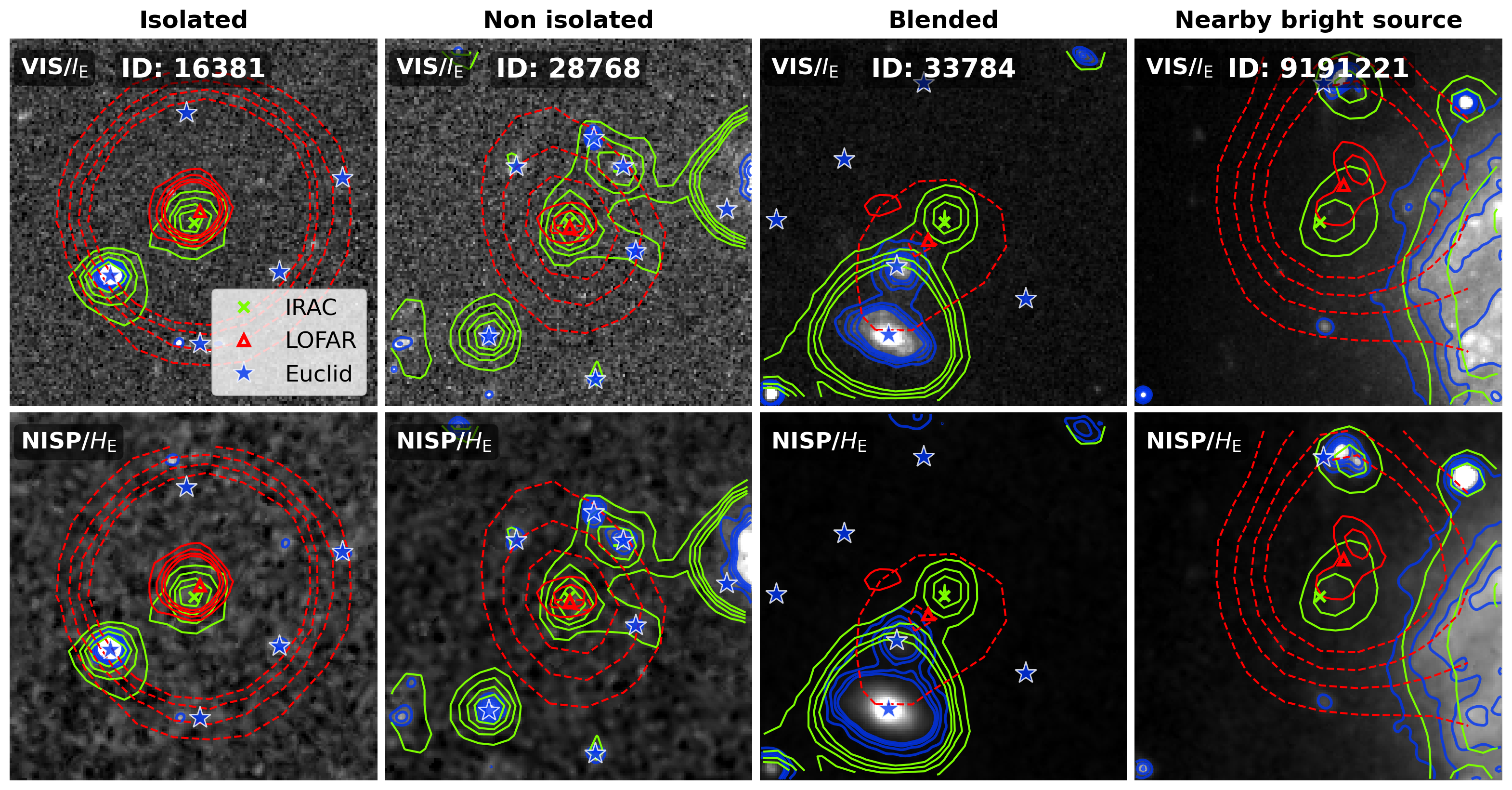
Figure 1: Examples of four E-dark sources illustrating the classification used in this work: isolated, blended, and sources affected by nearby bright objects.
Flux Ratio and Compactness
The ratio of LOFAR flux densities between high (0.3ʺ)- and low (6ʺ)-resolution images is used as a diagnostic for radio emission compactness. Sources with ratios consistent with unity (r>0.87) indicate highly concentrated emission, suggestive of AGN-dominated radio processes, while lower ratios indicate extended, star-formation-dominated emission.
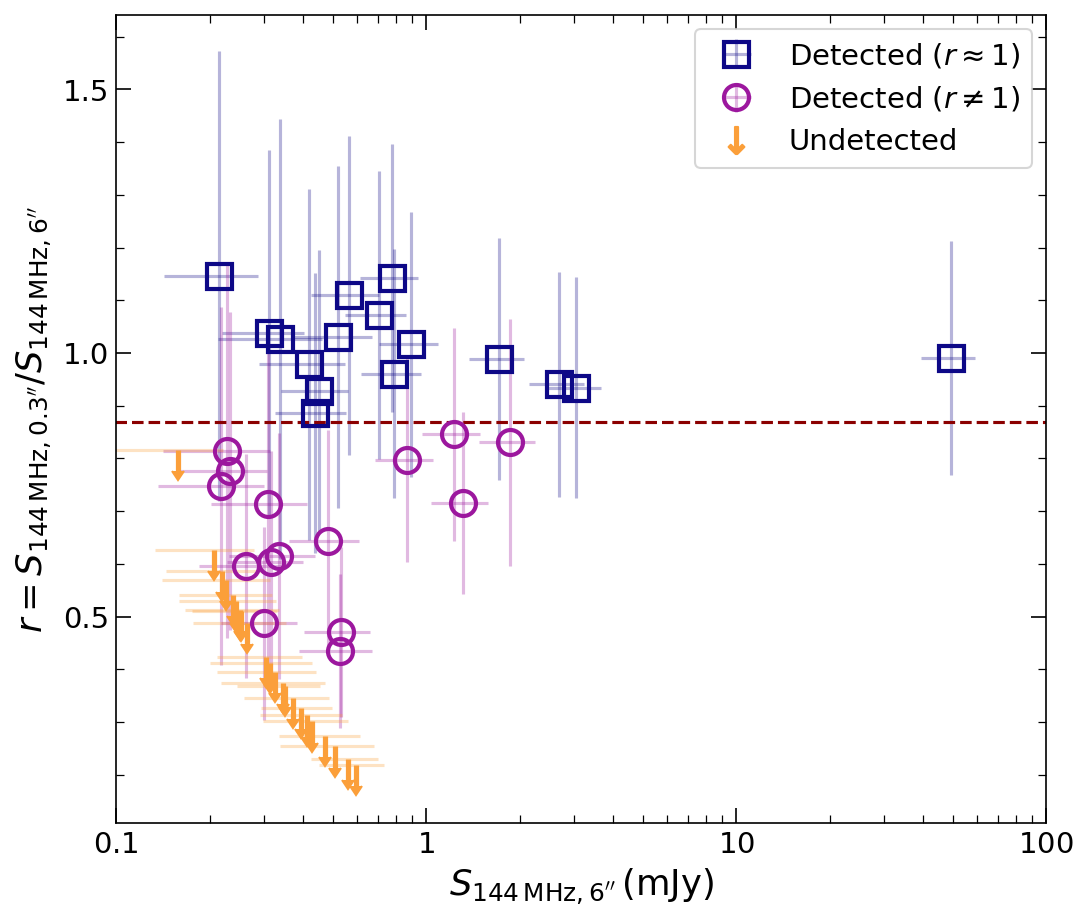
Figure 2: Ratio between 144 MHz LOFAR fluxes at high and low resolution versus the low-resolution flux density, with flux ratios consistent with unity denoted.
Redshift and Radio Luminosity Distribution
The sample redshifts, derived via SED fitting, span 0.4≤z≤5.0 (mean z=3.4), and radio luminosities −10, comparable to earlier compact, dusty, high-−11 populations.
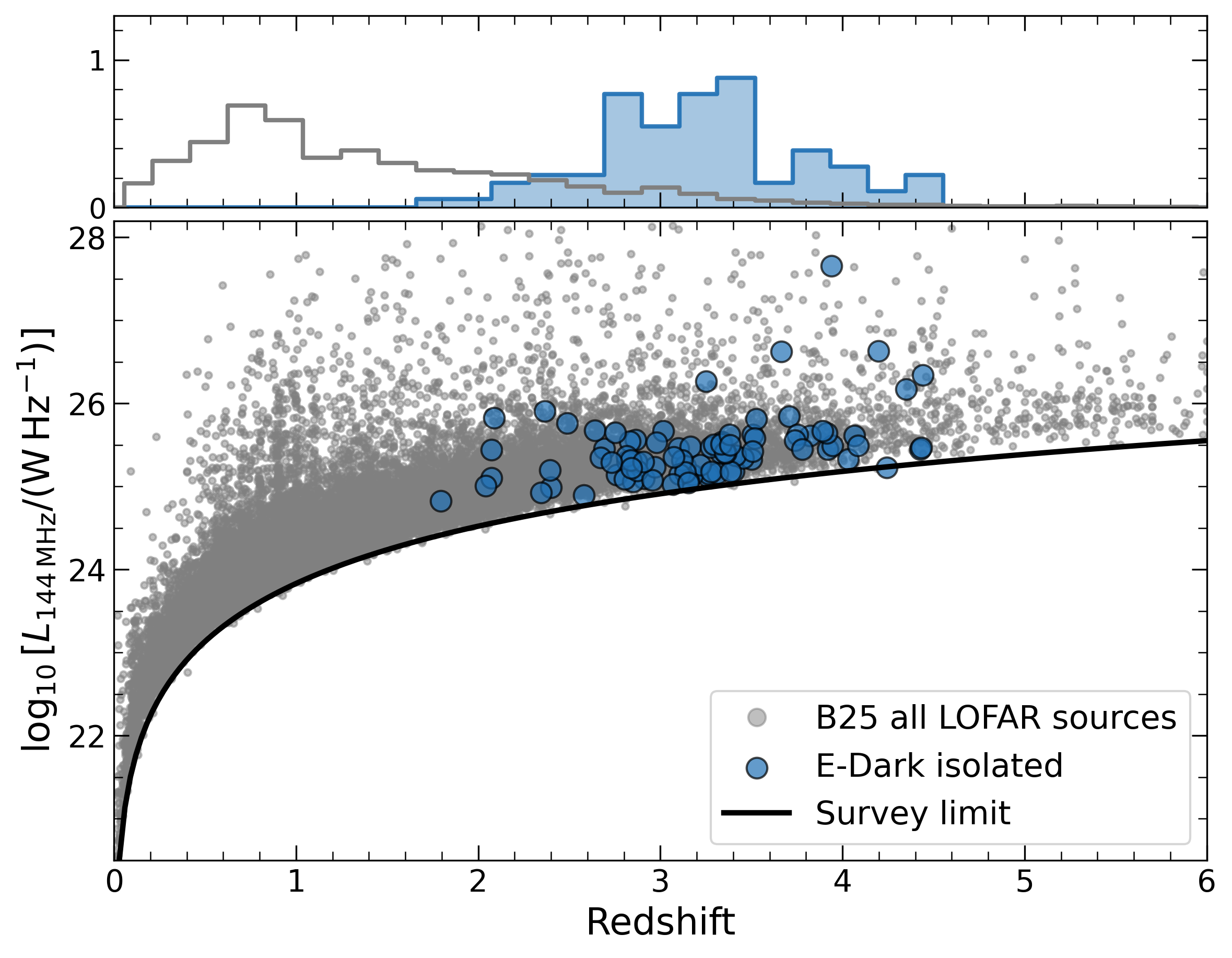
Figure 3: Radio luminosity of the isolated E-dark sources as a function of redshift alongside the full LOFAR parent sample.
Brightness Temperature Diagnostics
Brightness temperature (−12) is computed for sources with compact LOFAR emission to discriminate AGN and star-formation processes. −13 K (at 144 MHz) robustly indicates AGN activity, while lower values are compatible with circumnuclear starbursts.
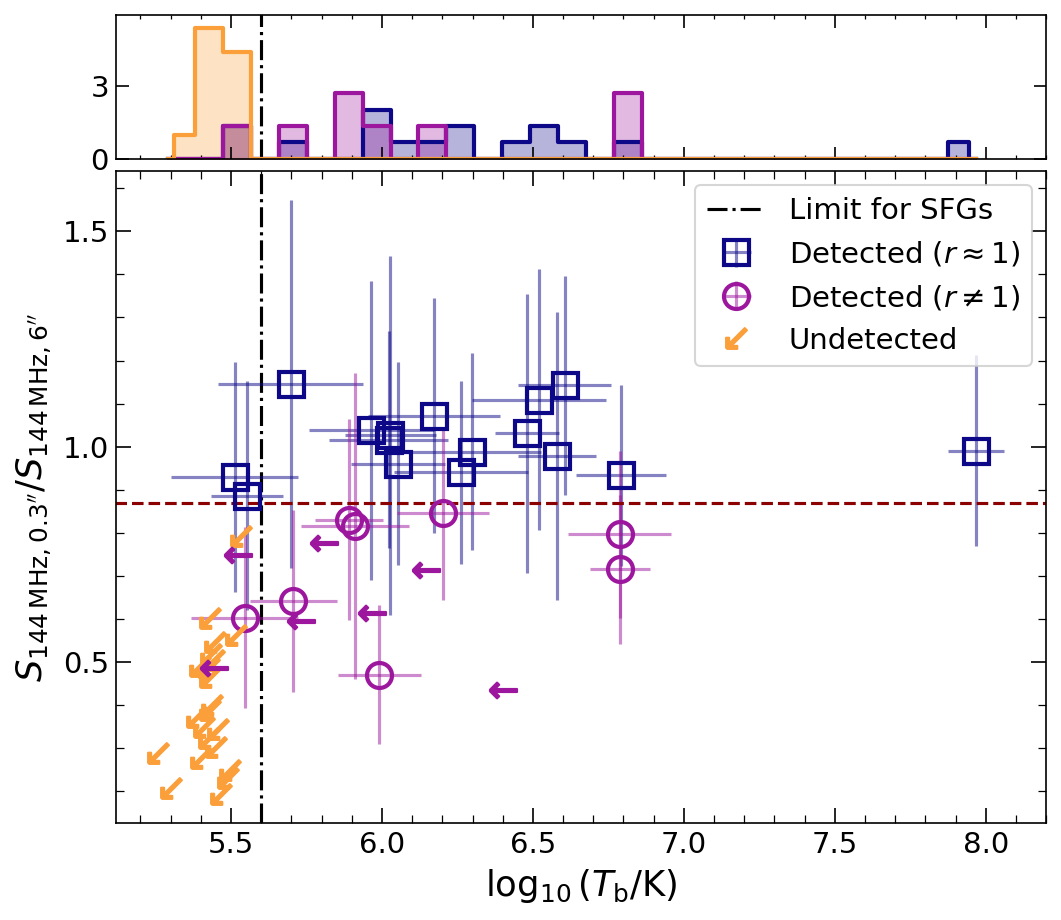
Figure 4: High/low-resolution LOFAR flux ratio versus brightness temperature, with the AGN/SF threshold highlighted.
Infrared–Radio Correlation and AGN Fractions
Deviation from the expected IR/radio correlation (IRRC) provides an orthogonal AGN diagnostic. The sources are grouped by their offset from the IRRC (−14) as a function of redshift, providing a measure of AGN fraction (−15):
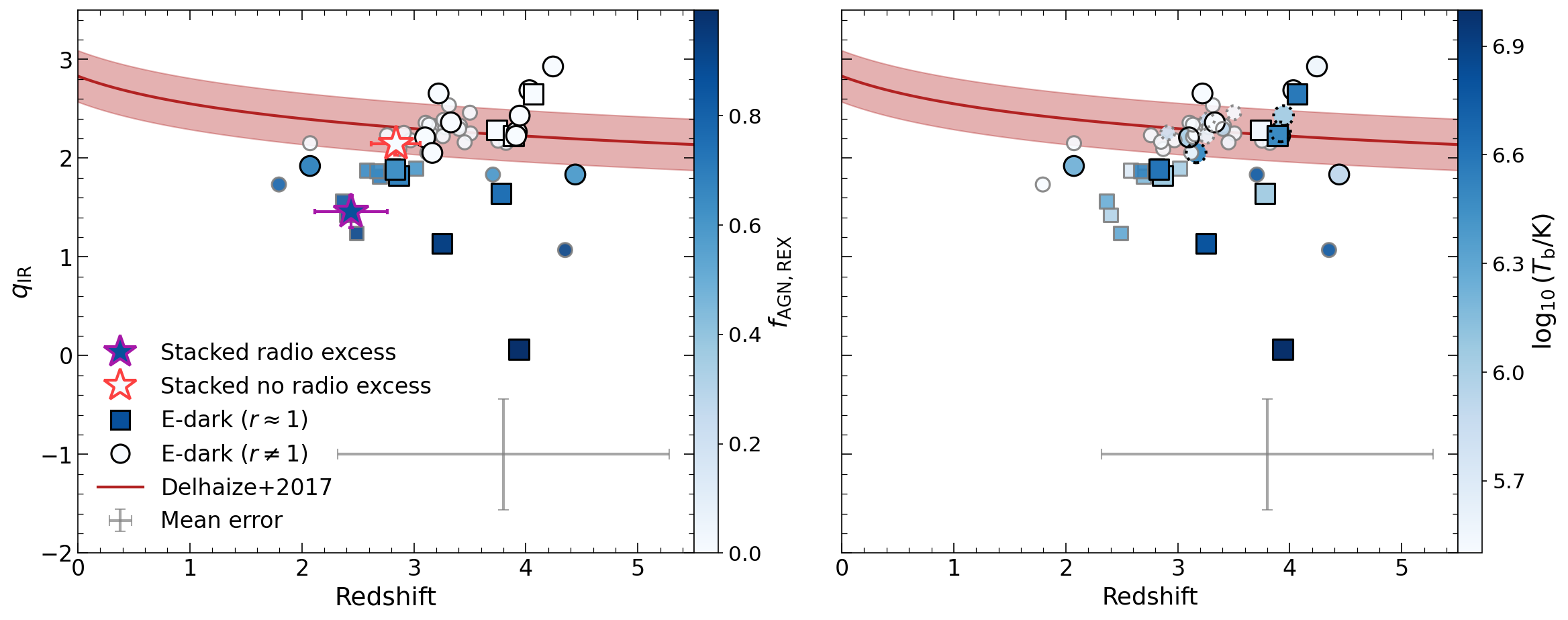
Figure 5: IRRC versus redshift, color-coded by AGN fraction, illustrating distinct AGN-dominated outliers.
The Venn diagram (Figure 6) summarizes the overlap between AGN tracers—radio excess, high −16, and radio compactness—quantifying the robustness of AGN classification.
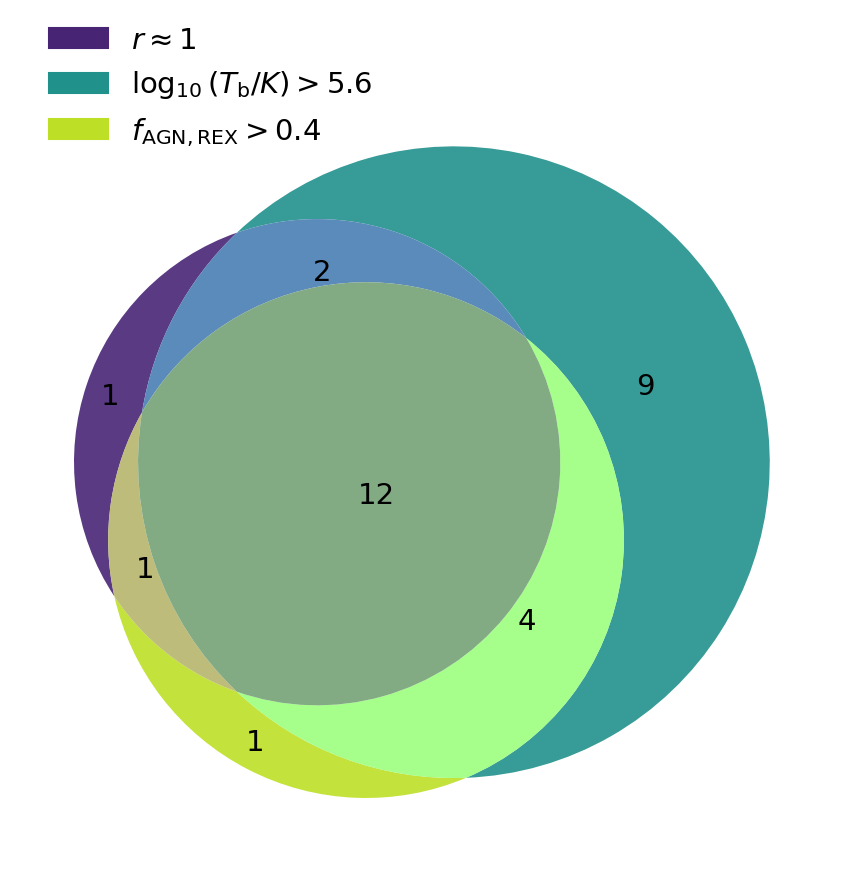
Figure 6: Overlap of AGN diagnostics among the E-dark sample.
Physical Properties of Euclid-Dark Galaxies
FIR-Detected Subset
For the 26 sources with FIR photometric detections, SED fitting (CIGALE) yields:
- Median −17 (substantially obscured)
- −18
- SFRs with −19
- 20 (ULIRG regime)
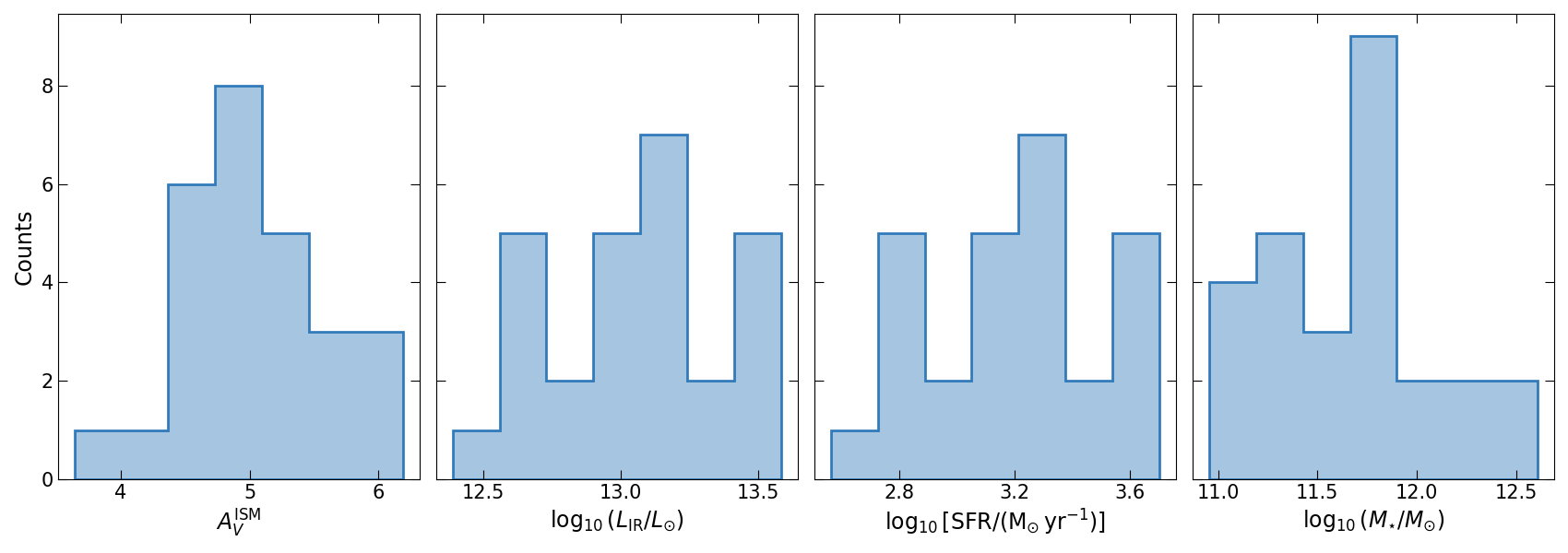
Figure 7: Distributions of dust extinction, IR luminosity, SFR, and stellar mass for FIR-detected E-dark sources.
These systems occupy the "starburst" locus above the main sequence, overlapping with the most massive, obscured submm populations.
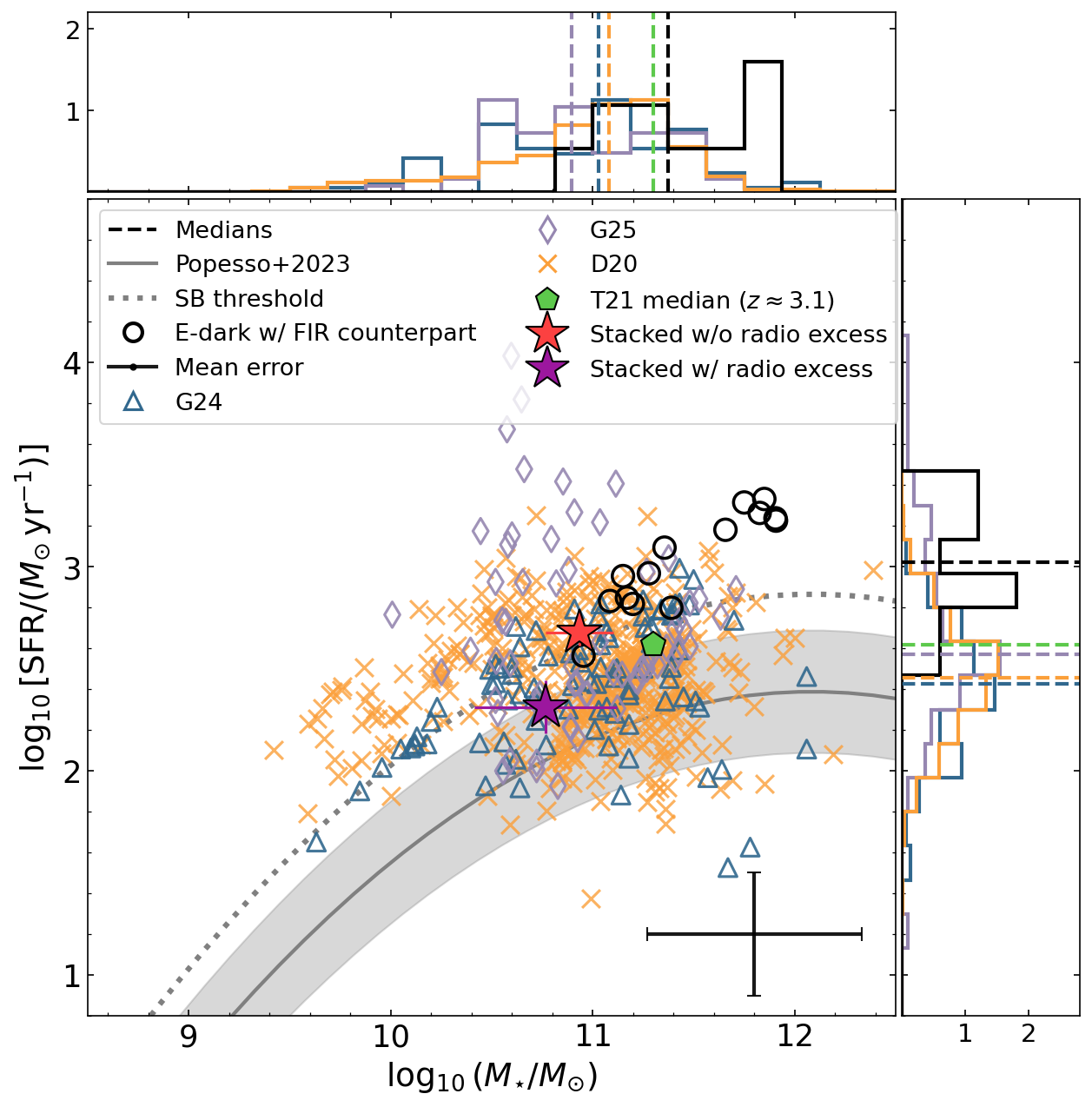
Figure 8: SFR versus stellar mass for 21, showing E-dark sources compared with literature main sequence and dusty galaxy samples.
Stacking Analysis
Median stacking across photometric bands (UV–mm) is performed for sources grouped by radio excess, to probe statistical properties of the faint population.
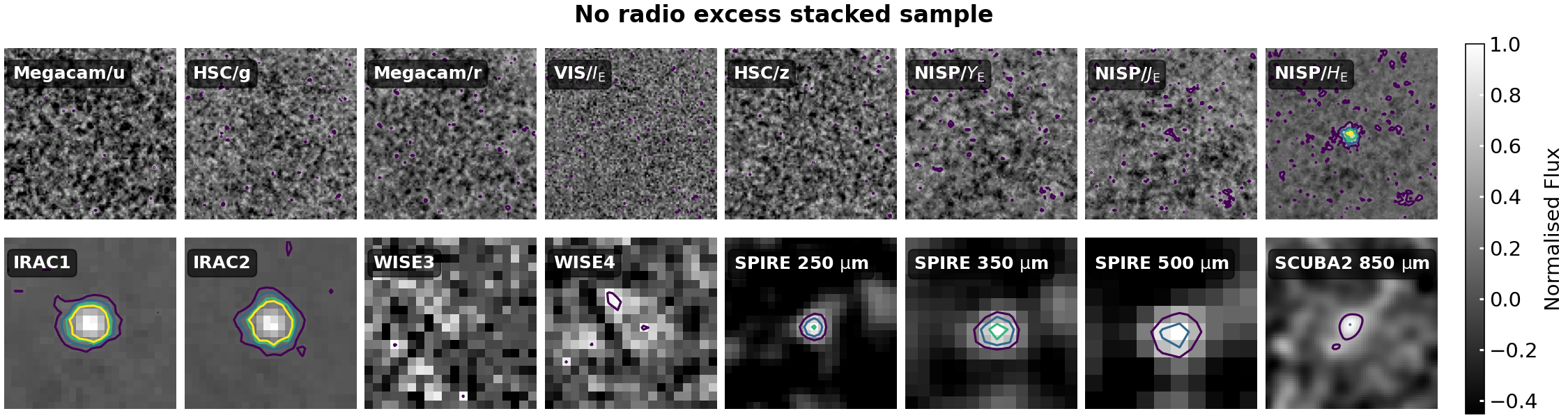
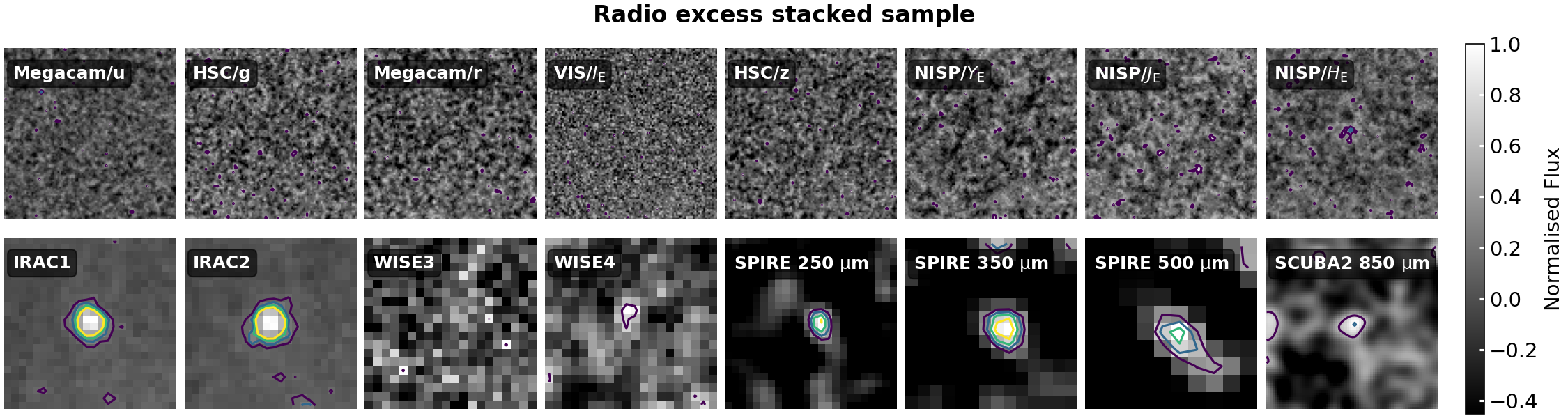
Figure 9: Median-stacked images from UV to FIR for sources without (top) and with (bottom) radio excess.
Resulting best-fit SEDs demonstrate that both stacked samples are obscured and massive; the main distinction remains in the magnitude of the radio excess.
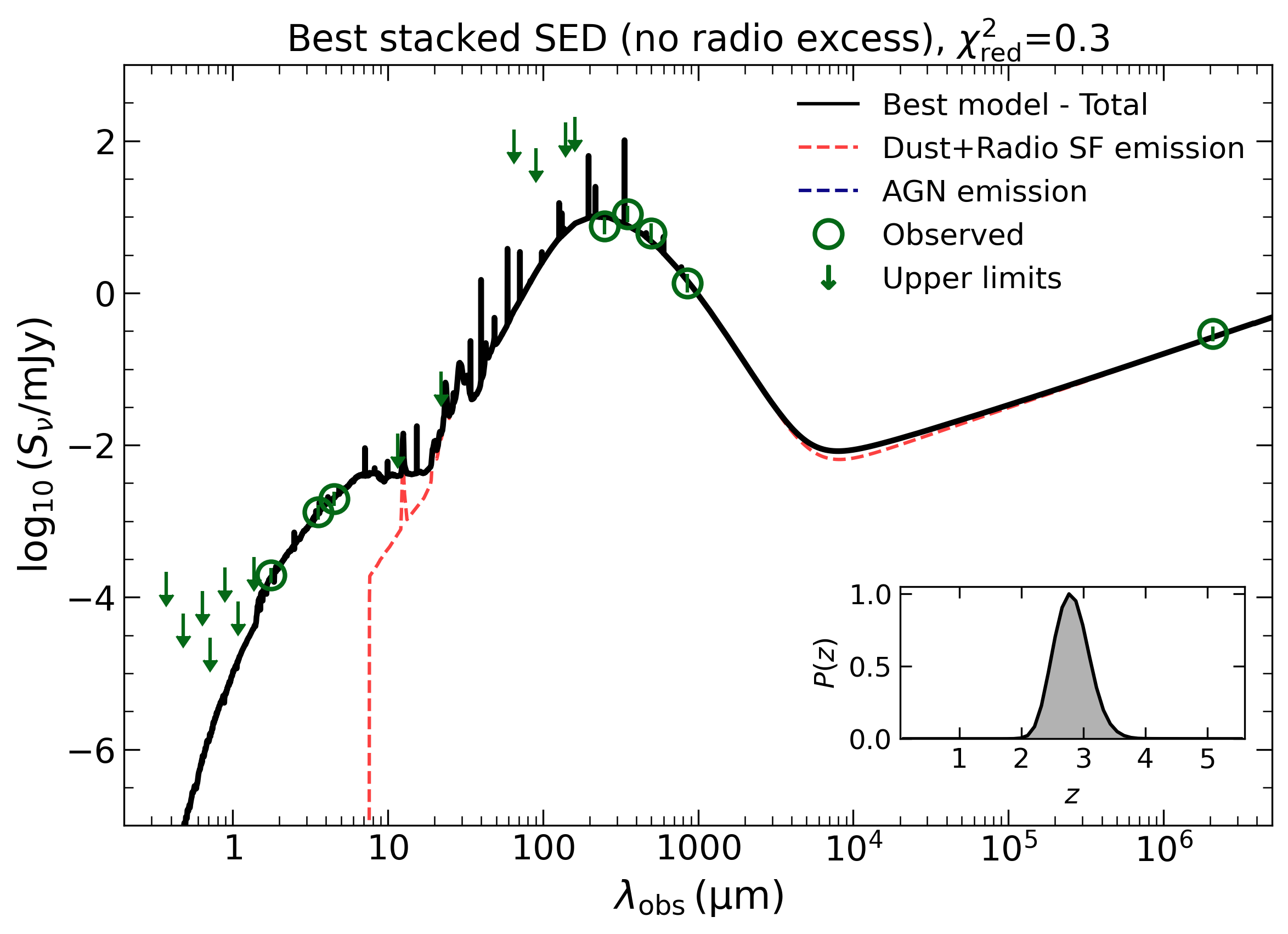
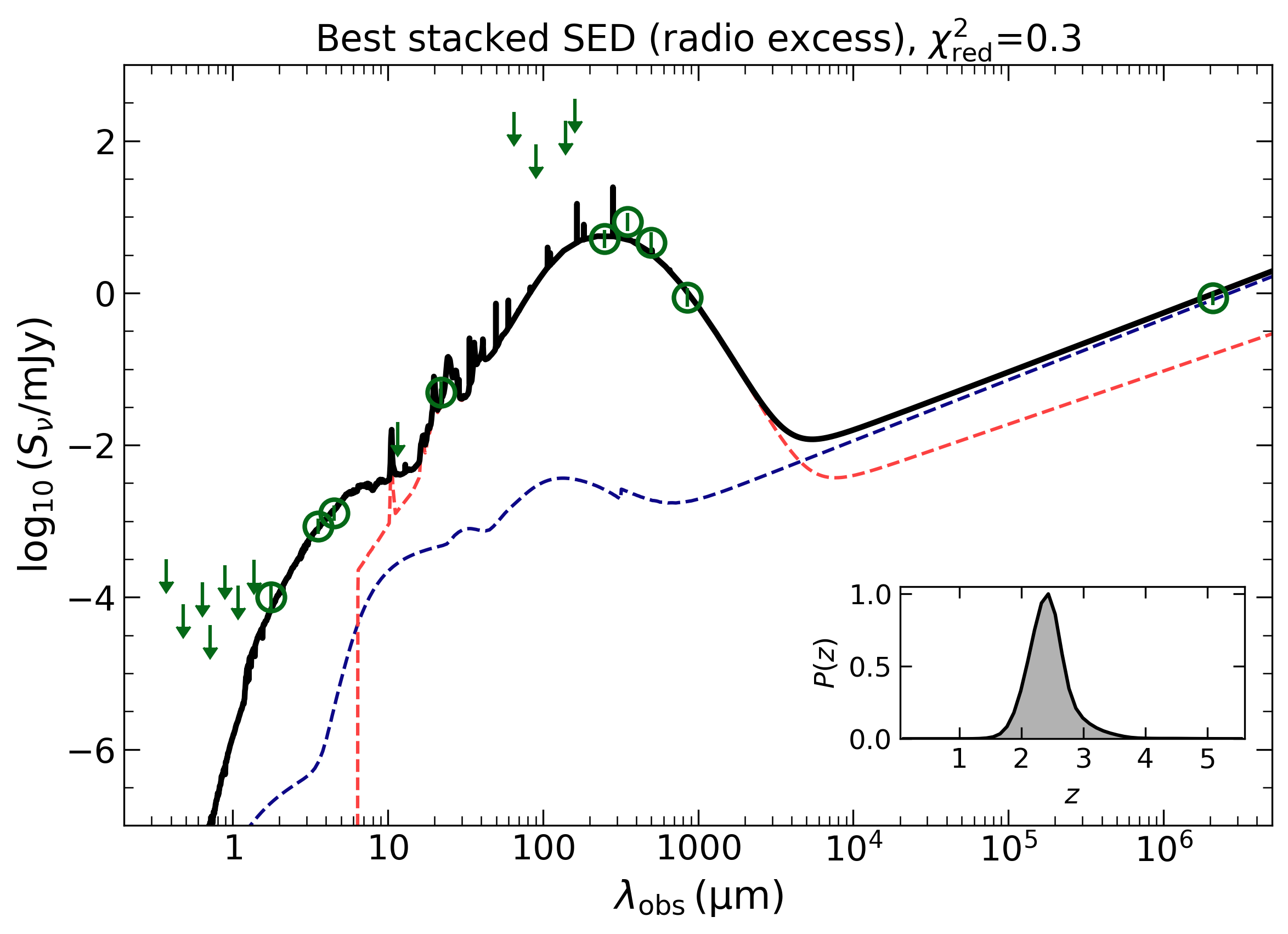
Figure 10: Best-fit SEDs from CIGALE for the median stacked photometry, decomposing AGN and SF/dust contributions.
Comparison to Previous Optically/NIR-Dark Populations
Relative to COSMOS and GOODS-N samples, the surface density of E-dark galaxies is lower (17 deg22) in EDF-N, resulting mainly from shallower IRAC coverage and marginally shallower LOFAR sensitivity, leading to a selection favoring the radio-luminous high-SFR/high-mass extreme.
Comparisons to other RS-NIR dark catalogues show the E-dark galaxies probed here are, on average, brighter in the radio continuum, as evidenced by the 3 GHz flux density histograms.
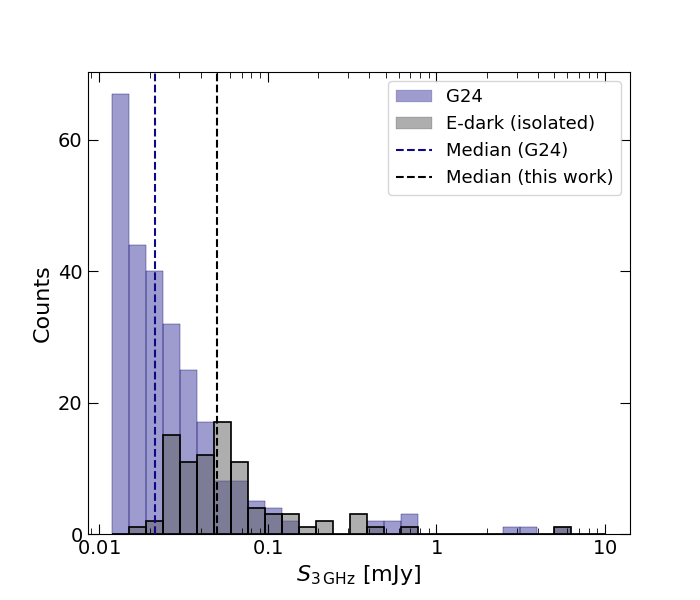
Figure 11: Comparison of 3 GHz flux density distributions between the isolated E-dark sample and literature RS-NIR dark galaxy samples.
Population Demographics and Galaxy–AGN Co-Evolution
The fraction of AGN-dominated E-dark sources is 30–40% (radio excess and/or 23 selection), higher than previous deep field studies, attributable to the wider area and flux-limited sample. The E-dark population shows an increased coexistence of intense star formation and AGN activity, an epoch where galaxy and black hole growth are thought to be tightly coupled.
Conclusion
This work demonstrates the efficacy of wide-field, radio-based selection in assembling statistically significant samples of highly dust-obscured, high-24 galaxies inaccessible to even deep Euclid imaging. The results reveal a heterogeneous E-dark population, frequently consisting of heavily dust-enshrouded, massive starbursts with substantial AGN contribution—potentially capturing key phases of concurrent galaxy and supermassive black hole growth.
The findings highlight the synergy of radio and Euclid surveys, and set the stage for future, deeper Euclid data (and JWST/MIRI follow-up) to further clarify the FIR-submm spectral properties, AGN contributions, and cosmic SFRD implications of the most obscured galaxy populations.