ProxyPose: 6-DoF Pose Tracking via Video-to-Video Translation
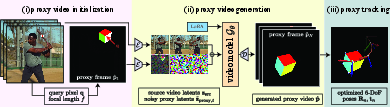
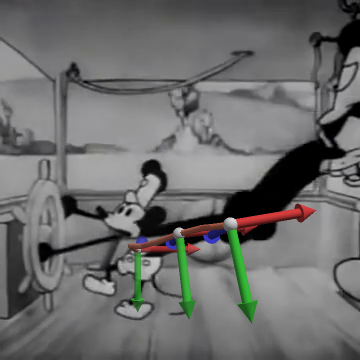
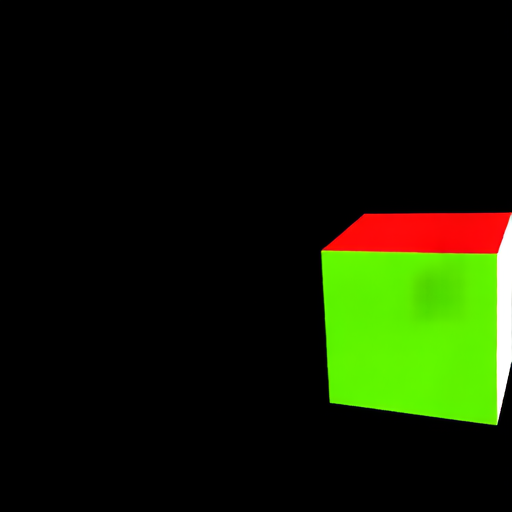
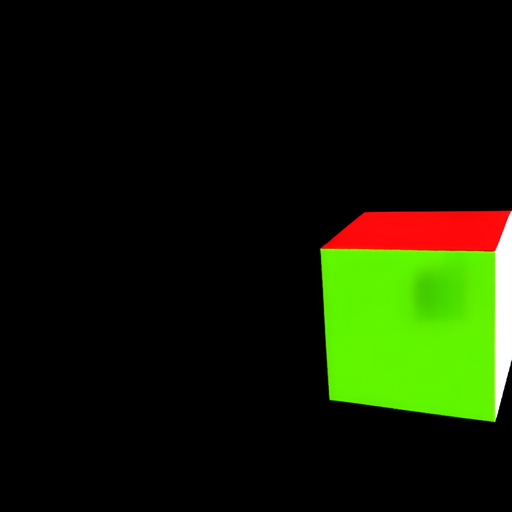
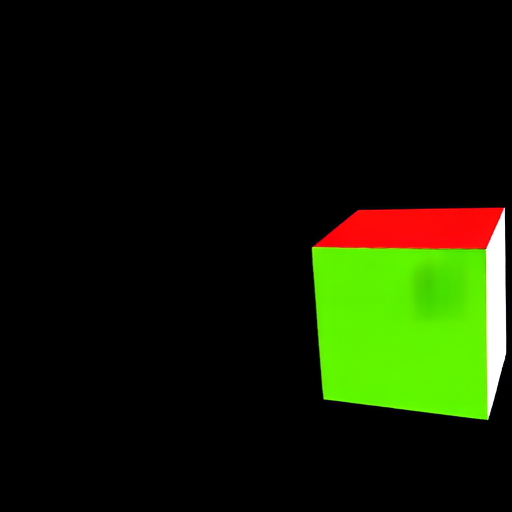
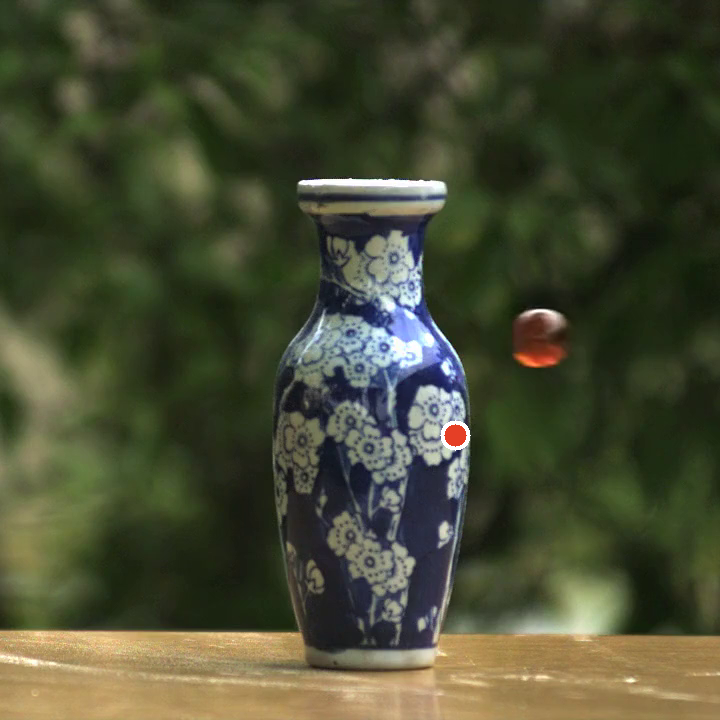
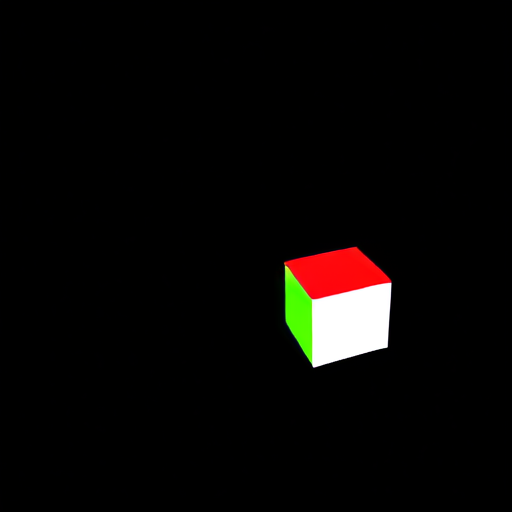
Abstract: Tracking the six-degree-of-freedom (6-DoF) pose of objects and surfaces from monocular video is a long-standing problem in computer vision. To tackle this problem, existing methods require inputs beyond the video itself-such as 3D models, depth maps, object masks, or task-specific learned features-and they struggle with textureless, transparent, reflective, or deformable surfaces. Here, we introduce ProxyPose, which recasts 6-DoF pose tracking as video-to-video translation. Given only a video and a single marked pixel in the first frame, a fine-tuned video diffusion model translates the input into a proxy video-a synthetic video depicting a colored polyhedron undergoing the same local rigid-body motion as the surface region at the marked pixel. Because the proxy's geometry and appearance are known by construction, recovering its full 6-DoF trajectory reduces to classical pose estimation with off-the-shelf solvers. This formulation leverages large-scale video pre-training to absorb the hardest aspects of pose tracking-handling challenging materials, occlusions, and deformations-into the translation step, while operating at the pixel level with no assumptions about object identity, boundaries, or global rigidity. ProxyPose achieves state-of-the-art 6-DoF pose tracking accuracy without the additional inputs required by competing methods and after fine-tuning the video model only on synthetic data. We further demonstrate that ProxyPose extends to face tracking, camera pose estimation, and challenging in-the-wild scenes that are beyond the reach of existing approaches. Project page: https://ruihangzhang97.github.io/proxypose/.

Paper Prompts
Sign up for free to create and run prompts on this paper using GPT-5.
Top Community Prompts
Explain it Like I'm 14
ProxyPose: A simple explanation for teens
What is this paper about?
This paper shows a new way to track how something in a video moves in 3D. The authors call their method ProxyPose. It can follow the 3D “pose” (where something is and how it’s turned) of a tiny region on a surface using only a regular video and a single click on the first frame. It does not need a 3D model, depth camera, or object masks.
“6-DoF pose” means six ways something can move:
- 3 positions: left–right, up–down, forward–back
- 3 rotations: tilt, turn, and roll
What questions does the paper ask?
- Can we track full 3D motion from just a normal video plus one marked pixel?
- Can we avoid special tools like 3D models, depth maps, and heavy segmentation?
- Can this work on difficult things like shiny, transparent, textureless, or bending objects, where older methods usually struggle?
How does ProxyPose work?
Here’s the main idea in everyday terms: stick a virtual “sticker” onto the video that’s easy to track, make it move exactly like the spot you clicked, then measure the sticker’s 3D motion.
To do this, ProxyPose does two stages:
- Translate the video into a “proxy video”
- You give the system a video and click one pixel on the first frame.
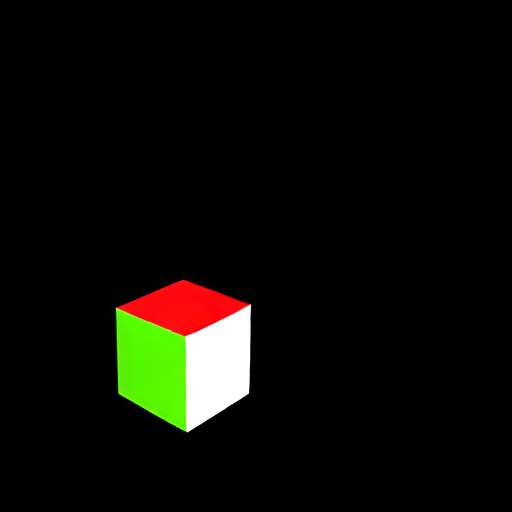
- A powerful video AI (a fine-tuned “diffusion” model—imagine an artist that starts from noise and repeatedly improves a video) generates a new video where a colored 3D cube appears on a black background.
- The trick: that cube moves in exactly the same way as the surface around your clicked pixel. Think of it like the AI replaces the real scene with a simple, clean scene (the cube) that mimics the same motion.
- Recover the cube’s 3D motion with plain geometry
- Because the cube’s shape and face colors are known, the computer can easily find its corners in each frame.
- With those corners, a standard math method figures out the cube’s position and orientation in every frame. This yields the full 6-DoF motion for your chosen point in the original video.
After that, they smooth the motion over time so the track doesn’t jitter. If you click multiple points on the same rigid object (like a mug), the method can combine those tracks to get even better accuracy.
A few helpful explanations:
- Video diffusion model: a generative AI that learns how videos look and move. It can turn noisy inputs into realistic video, and here it’s fine-tuned to output the cube proxy that matches the input’s motion.
- Video-to-video translation: turning one video (the real one) into another video (the cube proxy) that keeps the same motion.
- Pose solver (PnP and bundle adjustment): standard geometry tools that take 2D image points of a known 3D shape and compute where that shape is and how it’s rotated in 3D. Think of solving a puzzle by matching the cube’s corners to the image.
What did they find, and why does it matter?
The authors tested ProxyPose on well-known benchmarks and on challenging internet videos. In short:
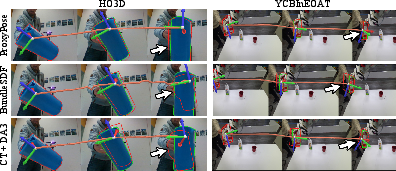
- It’s very accurate and stable: It matched or beat other top methods on two standard datasets for moving objects (HO3D and YCBInEOAT).
- It needs less extra stuff: Competing methods often need 3D models, depth maps, or object masks. ProxyPose works with just video plus one click.
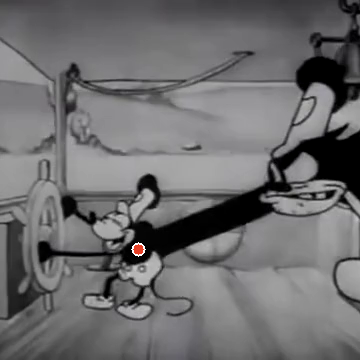
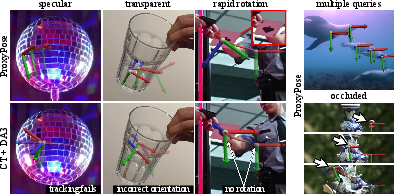
- It handles hard cases: It tracked motion on shiny, see-through, textureless, fast-moving, or even non-rigid (bendy) surfaces, and it worked on unusual videos (like cartoons).
- It’s flexible: With multiple clicked points on a rigid object, accuracy improves. It also extends to face pose tracking and can even estimate the camera’s motion by tracking background points.
Why this matters: Many practical tasks—robotics, AR/VR, sports analysis, video editing—need reliable 3D motion from ordinary videos. A method that works on tricky materials and needs no special hardware or 3D models opens the door to broader, easier use.
What are the implications?
This paper suggests a new direction: use big video generators (already trained on tons of videos) as the backbone for 3D understanding, not just for creating pretty visuals. By turning a hard tracking problem into a simple “track-the-cube” problem, the heavy lifting is done by the video model, and the final 3D math stays simple and reliable.
Limitations to keep in mind:
- It recovers motion relative to the first frame (so absolute scale or exact world position may need extra info).
- The number of frames processed at once is limited by the video model.
- It helps to know or estimate the camera’s focal length (they use a reasonable default or estimate it automatically).
Overall, ProxyPose shows that generative video models can make 3D tracking more robust, simpler, and more widely usable—especially in messy, real-world scenes where older methods falter.
Knowledge Gaps
Unresolved knowledge gaps, limitations, and open questions
Below is a focused list of what remains missing, uncertain, or unexplored in the paper, phrased to guide follow-up research:
- Scaling to long videos: how to extend beyond the backbone’s generation length (e.g., sliding windows, recurrent conditioning, overlap-and-blend), while preventing temporal drift and ensuring pose continuity across chunks.
- Absolute pose and scale recovery: concrete strategies to lift relative outputs to absolute 6-DoF and metric scale (e.g., known object size, fiducials, IMU, SfM/SLAM constraints), and quantitative evaluation of such integrations.
- Camera intrinsics and distortion: sensitivity to errors in focal length, principal point, skew, aspect ratio, and lens distortion; methods to jointly estimate intrinsics or self-calibrate from the proxy outputs.
- Rolling shutter and motion blur: robustness under rolling-shutter cameras and heavy blur; whether the generative prior can be adapted (or augmented) to model these readout and blur effects.
- Runtime and efficiency: the current 5.5-minute inference for 50 steps on an H100 is far from real-time; need for acceleration (e.g., distillation, consistency models, adaptive step schedulers, smaller backbones) and analysis of accuracy-vs-speed trade-offs.
- Domain shift and generalization: despite synthetic-only fine-tuning, quantitative evaluation on real videos with specular, transparent, low-light, or heavy-noise conditions is limited; need controlled benchmarks and failure-rate measurements in these regimes.
- Stochasticity and reliability: variability across random seeds, sampling parameters, and classifier-free guidance scales; strategies for ensemble averaging or determinization and their effect on pose stability.
- Proxy design choices: effect of proxy geometry (cube vs other polyhedra), size
s_cube, face color palette, and background choice on detection robustness, PnP stability, and error under occlusion/blur. - Joint multi-query generation: current pipeline generates proxies independently and fuses with bundle adjustment; explore a single-pass multi-proxy generation with explicit rigidity constraints to reduce compute and improve consistency.
- Query selection and sensitivity: how click placement (e.g., near edges, on non-rigid regions, or at low contrast) impacts accuracy; automated or active selection of high-quality query points without masks.
- Local rigidity assumption: limits when the tracked surface undergoes strong non-rigid deformation or slippage; quantify patch size over which the local rigid model is valid and methods to adaptively re-anchor or split patches.
- Decomposition of camera vs scene motion: beyond static backgrounds, how to simultaneously estimate camera motion and multiple independently moving objects from a few queries without masks.
- Long-term occlusions: how long and how frequently occlusions can be spanned by the generative prior; define metrics and conduct stress tests for occlusion length and reappearance with appearance changes.
- Uncertainty estimation: no mechanism to quantify confidence from the generator or the PnP stage; develop uncertainty-aware PnP, pose covariances, and outlier rejection tailored to proxy detections.
- Robustness of proxy detection: failure cases of OpenCV-based segmentation and corner detection on generated proxies (e.g., color bleeding, compression artifacts); learned or hybrid detectors for greater reliability.
- Fairness and dependence on auxiliary models: comparisons use Depth Anything 3 for depth when needed by baselines and also to estimate focal length; analyze how this choice affects baselines and report sensitivity to depth/FOC errors for all methods.
- Backbone dependence and reproducibility: results shown with Wan-14B; assess portability to open-source video models, dependence on model size/data, and performance vs backbone choice.
- Cross-modality support: qualitative-only results for event/single-photon cameras; formalize preprocessing and adapters for non-RGB inputs and evaluate quantitatively.
- End-to-end training with geometric feedback: investigate using reprojection or pose-consistency losses to fine-tune the generator jointly with (or to supervise) the proxy generation, potentially improving geometric fidelity.
- Handling symmetric/ambiguous motions: characterize scenarios where local appearance yields ambiguous 3D orientations; evaluate whether proxy colors and geometry sufficiently disambiguate and propose constraints when they do not.
- Multiple objects and interaction: simultaneous tracking of many regions/objects without requiring masks or manual association; handling inter-proxy occlusions and consistent identity over time.
- Streaming and memory constraints: memory usage for long/high-res videos and multi-proxy settings; mechanisms for token sparsification, keyframe conditioning, or low-rank state caching.
- Practical deployment: robustness to video compression artifacts, frame-rate variability, and consumer camera pipelines; guidelines for focal-length estimation without external models and for automatic parameter selection (e.g.,
s_cube, smoothness weights).
Practical Applications
Overview
ProxyPose reframes monocular 6-DoF tracking as video-to-video translation: a fine-tuned video diffusion model turns an input video and a single marked pixel into a “proxy” video where a colored cube undergoes the same local rigid motion as the selected surface region. Because the proxy has known geometry and appearance, classical PnP and bundle-adjustment recover 6-DoF trajectories without 3D models, masks, or depth. The approach works on textureless, reflective, transparent, and non-rigid scenes; it also extends to face tracking, camera pose estimation from background points, and even non-standard sensors (event, single-photon).
Below are actionable, real-world applications, grouped by immediacy and linked to sectors, with notes on likely tools/workflows and feasibility dependencies.
Immediate Applications
The following can be deployed now for offline or near–real-time workloads using a modern GPU, with minimal integration effort.
- Media/VFX and Post-production (software)
- Shot-specific 6-DoF motion tracking for compositing and matchmoving of small or deforming regions (e.g., shiny/transparent props, animated content, legacy or internet footage).
- Tools/workflow: After Effects/DaVinci/Blender plugin that lets an artist click a pixel, generates the proxy video, and exports frame-by-frame poses to drive 3D elements or motion graphics.
- Assumptions/dependencies: Offline GPU (e.g., ~5–6 min per 50-step sequence on an H100 as reported), manual prompt (click), approximate focal length or simple estimation, relative pose (absolute scale requires a reference).
- Markerless face region tracking to drive head-pose–aware overlays and light rigs without a face-specific model.
- Tools/workflow: “Head pose from any video” add-on for Blender/Unreal; CSV/FBX pose export.
- Assumptions/dependencies: Locally rigid head region near the query; lighting and occlusions manageable by the model.
- Sports analytics and Biomechanics (sports, healthcare)
- Bat/racket/club tip and handle tracking, ball or limb-segment motion profiling from broadcast or training footage.
- Tools/workflow: Coaching app that ingests phone videos, lets a coach place queries, and outputs kinematic plots and aligned trajectories for performance analysis.
- Assumptions/dependencies: Relative motion is often sufficient; absolute speed/force metrics need scale/time calibration; offline inference latency acceptable in coaching workflows.
- Robotics logs and dataset curation (robotics, academia)
- Post hoc 6-DoF tracking for manipulation logs when CAD models/masks are unavailable or parts are glossy/transparent.
- Tools/workflow: ROS node or Python tool to process recorded RGB feeds, export time-synced object poses, and augment datasets for policy learning.
- Assumptions/dependencies: Offline processing; relative pose per sequence; simple focal-length estimate; locally rigid region around the query.
- Rapid generation of labeled 6-DoF tracks for training perception modules without building full 3D reconstructions.
- Tools/workflow: Batch pipeline that produces pose annotations and uncertainty scores (from PnP/bundle-adjustment residuals).
- Assumptions/dependencies: GPU throughput and storage for proxy videos; annotation QA on difficult frames.
- Manufacturing QA from recorded video (manufacturing, industrial software)
- Pose verification of reflective/transparent parts on benches or slow-moving lines using single monocular cameras.
- Tools/workflow: Operator tool that processes inspection clips, compares nominal vs. measured 6-DoF deviations, and flags outliers.
- Assumptions/dependencies: Offline or near–real-time acceptable; absolute scale via a simple gauge or AprilTag at frame 1; controlled FOV estimate.
- AR/Visualization precomputation (AR/VR, software)
- Offline anchoring of AR content to specific surface regions in prerecorded experiences or museum installations.
- Tools/workflow: Unity/Unreal editor plugin that precomputes tracks and binds virtual content to the recovered motion.
- Assumptions/dependencies: Pre-render pipeline (not live); relative pose adequate for visual consistency.
- Camera-motion recovery when SfM fails (software, academia)
- Recover camera trajectories from background points in low-texture, dynamic, or cloudy scenes where feature matching breaks.
- Tools/workflow: “Fallback camera solve” in editorial/VFX or research code that aggregates multiple query points and runs bundle adjustment.
- Assumptions/dependencies: Multiple static-background queries; relative camera motion unless a scale anchor is provided.
- Cross-modality analysis (academia)
- Motion study from event camera or single-photon videos using the same interface.
- Tools/workflow: Research scripts that read non-standard video frames and run ProxyPose as-is.
- Assumptions/dependencies: Acceptable zero-shot transfer demonstrated; further fine-tuning may improve robustness.
- Education and DIY motion studies (education, daily life)
- Simple motion experiments (pendulums, tops, paper planes) from smartphone videos without markers.
- Tools/workflow: Lightweight desktop app that exports pose CSVs and interactive plots.
- Assumptions/dependencies: Offline inference; user click; approximate FOV.
- Forensics and Policy analysis support (public sector, policy)
- Relative motion reconstruction from incident videos (e.g., body cams, security cams) when reflective/transparent objects are involved.
- Tools/workflow: Analyst tool that preserves chain-of-custody, logs parameters (focal estimate, prompts), and exports interpretable trajectories with uncertainty.
- Assumptions/dependencies: Relative, not absolute, poses by default; documented reproducibility; careful handling of generative step in evidentiary contexts.
Long-Term Applications
These require further research, engineering for speed/scale, or stronger guarantees (e.g., absolute scale, formal robustness), but are natural extensions of the paper’s findings.
- Real-time, on-device 6-DoF tracking (software, robotics, AR)
- Closed-loop control for manipulation, drones, or AR glasses with ≤30 ms latency.
- Potential tools/products: Distilled or hybrid models (teacher: diffusion, student: lightweight encoder) running on edge GPUs/NPUs; ROS2 real-time nodes; mobile SDKs.
- Assumptions/dependencies: Model distillation/quantization, streaming inference, and windowed tracking across long videos; robust focal-length self-calibration.
- Dense per-pixel 6-DoF fields and non-rigid reconstruction (software, academia, healthcare)
- Estimating a field of local rigid motions to enable segmentation-free scene flow, non-rigid mesh recovery (e.g., soft tissue, cloth), and markerless mocap.
- Potential tools/products: “Video-to-motion-field” services; surgical video analyzers; animation retargeting tools without markers.
- Assumptions/dependencies: Many simultaneous prompts or a fully convolutional variant; long-range temporal memory; priors for deformation consistency.
- Generalized camera/scene reconstruction without explicit 3D models (software, mapping)
- Combine many local tracks to solve for camera trajectories and coarse scene structure in reflective/low-texture environments (SfM alternative).
- Potential tools/products: “Generative-in-the-loop” reconstruction pipelines for cultural heritage, inspection, and mobile scanning.
- Assumptions/dependencies: Global scale/metric constraints; robust multi-query bundle adjustment; handling of long sequences beyond model’s native frame window.
- Surgery and industrial teleoperation assistance (healthcare, manufacturing, robotics)
- Tracking instruments or tools made of reflective steel/glass, and deforming tissues/materials, to guide operators in real time.
- Potential tools/products: OR console overlays; remote QA dashboards for manipulation.
- Assumptions/dependencies: Real-time constraints, stringent reliability, validation and certification; modality-specific fine-tuning.
- Sports broadcast and in-stadium analytics (sports, media)
- Live overlays (spin axes, swing planes, release angles) from broadcast cameras without installing new sensors.
- Potential tools/products: Broadcast AR graphics powered by live proxy-tracking; coaching tablets with live metrics.
- Assumptions/dependencies: Low-latency inference and resilient focal calibration; multi-camera fusion for absolute scale.
- Autonomous navigation in challenging visual conditions (mobility, drones)
- Robust ego-motion and obstacle pose cues in reflective corridors, glass atriums, or foggy/cloudy scenes.
- Potential tools/products: Perception stacks that fuse generative-tracking outputs with IMU/LiDAR; reflective-surface handling modules.
- Assumptions/dependencies: Real-time performance; safety-critical verification; multi-sensor integration.
- Native models for alternative sensors (academia, hardware)
- Training/evaluating video-to-proxy translation directly on event cameras or single-photon streams for fast, low-light tracking.
- Potential tools/products: Event-camera SDKs with built-in 6-DoF proxy tracking.
- Assumptions/dependencies: Sensor-specific datasets and pretraining; latency-aware architectures.
- Standardized “Generative-in-the-loop Perception” frameworks (policy, standards, software)
- Guidelines, audits, and benchmarks for using generative models inside perception stacks (e.g., disclosure, uncertainty reporting, robustness testing).
- Potential tools/products: Compliance toolkits that log randomness seeds, prompts, and calibration; standardized KPIs for legal or regulatory review.
- Assumptions/dependencies: Multi-stakeholder standards; reproducibility safeguards and watermarking.
- Edge acceleration and cost reduction (semiconductors, cloud)
- ASIC/FPGA kernels for video-diffusion blocks and proxy detection to reduce power/latency and enable mobile deployment.
- Potential tools/products: NPU extensions; cloud APIs with tiered latency/cost.
- Assumptions/dependencies: Stable model architectures; sufficient demand to justify silicon investment.
- Turnkey platforms and integrations (software)
- “ProxyPose-as-a-Service” APIs and plugins across creative suites, game engines, robotics stacks, and labeling tools.
- Potential tools/products: Adobe/Blackmagic plugins; Unity/Unreal components; Label Studio/Supervisely annotators; ROS packages.
- Assumptions/dependencies: Productization (UX, batching, caching), licensing for backbone models/assets, and multi-GPU scaling.
Notes on Feasibility and Common Dependencies
- Inputs and supervision: Single monocular video and one or more user clicks; approximate focal length or automatic estimation; relative pose by default (absolute scale/pose needs a reference).
- Compute and latency: Current reference inference is minutes per clip on a high-end GPU; immediate uses are offline. Real-time uses need optimization/distillation.
- Motion model: Local region should be approximately rigid; multi-query bundle adjustment improves rigidity-constrained tasks.
- Robustness: Strong on transparent/specular/textureless surfaces and occlusions due to video priors, but performance depends on the pre-trained video model’s capacity and the fine-tuning domain.
- Licensing and governance: Use of pre-trained backbones (e.g., Wan-14B) and synthetic assets should respect licenses; evidentiary uses require reproducibility and audit trails.
These applications directly leverage the paper’s core innovations: translating hard low-level vision challenges into a generative proxy domain, then solving geometry with simple, reliable tools.
Glossary
- 6-DoF: Six degrees of freedom describing 3D pose with three translations and three rotations; used to denote full rigid-body motion. Example: "6-DoF pose tracking"
- Absolute rotation error (ARE): Evaluation metric measuring the angular difference between predicted and ground-truth orientations (in degrees). Example: "absolute rotation error (ARE)"
- Absolute translation error (ATE): Evaluation metric measuring positional deviation between predicted and ground-truth translations (often in millimeters). Example: "absolute translation error (ATE)"
- Bundle adjustment: Nonlinear optimization that jointly refines poses (and optionally structure) to minimize reprojection error over many frames and observations. Example: "multi-query bundle adjustment"
- CAD: Computer-Aided Design; precise 3D geometric models or primitives used for pose estimation and alignment. Example: "CAD primitive"
- Camera intrinsic matrix: 3×3 matrix encoding internal camera parameters such as focal length and principal point used for projection. Example: "camera intrinsic matrix"
- Classifier-free guidance: Diffusion-model conditioning technique that blends conditional and unconditional predictions to improve fidelity. Example: "Classifier-free guidance."
- Diffusion Transformer (DiT): Transformer architecture used to parameterize the velocity/denoising fields in diffusion or flow-matching models. Example: "diffusion transformer (DiT)"
- Focal length: Camera parameter controlling the scale of perspective projection, often expressed in pixels for pinhole models. Example: "focal length"
- Flow matching: Training objective that learns a continuous velocity field transporting noise to data, enabling diffusion-like generation. Example: "flow-matching objective"
- Frobenius norm: Matrix norm (square root of sum of squares of entries) used here to measure rotational change magnitude. Example: "Frobenius norm of the rotation logarithm"
- Levenberg–Marquardt: Trust-region method for nonlinear least squares used to refine pose sequences. Example: "Levenberg--Marquardt"
- Low-Rank Adaptation (LoRA): Parameter-efficient fine-tuning method that inserts low-rank updates into pretrained weights. Example: "low-rank adaptation (LoRA)"
- Monocular depth estimation: Predicting scene depth from a single RGB camera input. Example: "monocular depth estimation"
- Perspective-n-Point (PnP): Estimating camera or object pose from 2D–3D correspondences between image points and known 3D points. Example: "Perspective--Point (PnP)"
- Perspective projection: Mapping from 3D points to 2D image coordinates under the pinhole camera model. Example: "perspective projection"
- Proxy video: Synthetic video of a known, easily detectable object whose motion mirrors the local motion at a queried pixel in the source video. Example: "proxy video"
- Relative pose errors (RPE-t, RPE-r): Metrics that evaluate frame-to-frame translation and rotation drift in a pose sequence. Example: "relative pose errors in translation (RPE-t) and rotation (RPE-r)"
- Reprojection error: Pixel-space discrepancy between observed image points and projections of their corresponding 3D points under an estimated pose. Example: "reprojection error"
- Rotary positional embedding: Positional encoding technique (RoPE) that represents token positions via rotations, improving attention over sequences. Example: "rotary positional embedding"
- Rotation logarithm: Log map from SO(3) to its Lie algebra that linearizes small rotations for optimization. Example: "rotation logarithm"
- Structure from Motion (SfM): Recovering 3D structure and camera/object motion from 2D image sequences. Example: "structure from motion (SfM)"
- Variational autoencoder (VAE): Probabilistic encoder–decoder that maps images or videos to latent representations and reconstructs them. Example: "variational autoencoder (VAE)"
- Video diffusion model: Diffusion-based generative model operating on video sequences to synthesize temporally coherent frames. Example: "video diffusion model"
- Video-to-video translation: Transforming an input video into a related output video conditioned on content or prompts. Example: "video-to-video translation"
Collections
Sign up for free to add this paper to one or more collections.