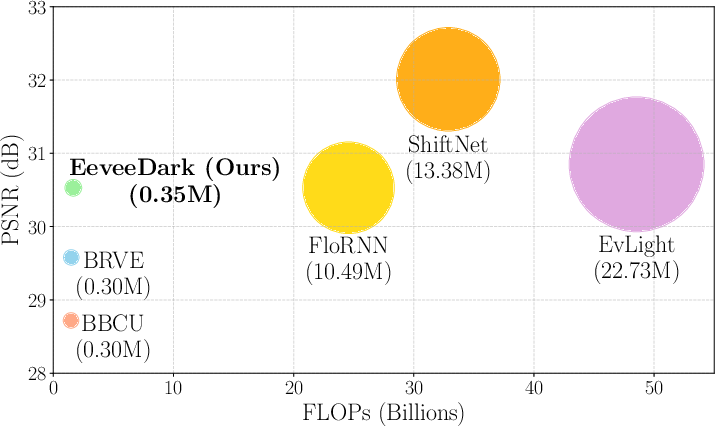
- The paper introduces a novel BNN framework that fuses RAW Bayer frames with event streams for temporally coherent low-light video enhancement.
- It employs modality-specific binary encoders, a multi-modal fusion block, and an event-guided skip gate to balance restoration quality with computational efficiency.
- Experimental results demonstrate superior PSNR, SSIM, and temporal consistency while significantly reducing FLOPs and energy consumption compared to full-precision models.
EeveeDark: A Binary Neural Framework for Low-Light Video Enhancement via Event-Guided Sensor-Level Fusion
Introduction and Problem Statement
The paper "EeveeDark: A Binary Neural Framework for Low-Light Video Enhancement via Event-Guided Sensor-Level Fusion" (2607.06217) addresses the persistent challenge of high-quality video enhancement under extreme low-light conditions, a domain critical for robust robotic and autonomous visual systems. Standard enhancement algorithms struggle to reconcile restoration performance, temporal consistency, and efficiency, especially for edge devices with stringent resource constraints. Existing methods leveraging event cameras alongside frame-based imaging have made advances, but remain hindered by computational inefficiency, dependence on processed RGB inputs (losing raw sensor information), and generalization limitations. Binary Neural Networks (BNNs) offer computational savings via 1-bit quantization, but previous attempts at binarized video enhancement have suffered from notable quality degradation.
Architectural Contributions: EeveeDark Design
EeveeDark is introduced as the first BNN-based framework that fuses asynchronous event stream data and sensor-level RAW Bayer frames for temporally coherent, efficient low-light video enhancement. Its architecture is structured in five main modules:
- Modality-Specific Binary Encoders: Separate binary encoders, each using distribution-aware binarized convolutions (with only the input layer in full-precision) process RAW frames and event voxel grids, promoting efficiency without fully discarding input detail.
- Efficient Multi-Modal Fusion Block: Fused features are generated by concatenating spatial (RAW) and temporal (event voxel) encodings. The fusion utilizes both binarized and 1×1 full-precision convolutions, combining computational efficiency and preservation of high-frequency information.
- Shift Encoder with Recurrent Embeddings: Temporal dynamics are captured using cyclic channel shift operations, propagating and aligning recurrent embeddings across frames, followed by binarized downsampling for hierarchical multi-scale context extraction.
- Event-Guided Skip Gate (EGSG): This component utilizes interpolated and projected event features to generate per-channel attention maps, modulating shifted features via element-wise multiplication. EGSG selectively enhances dynamic content and suppresses redundancy, efficiently leveraging event distinctions.
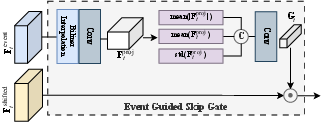
Figure 1: Illustration of the Event-Guided Skip Gate, where event voxel features modulate shifted frame features to improve dynamic region emphasis.
- Shift Decoder and Restoration Module: The decoder cycles features between stationary and shiftable components, temporally propagates and spatially aligns them via shift kernels, and finally reconstructs enhanced RAW frames using a full-precision head.
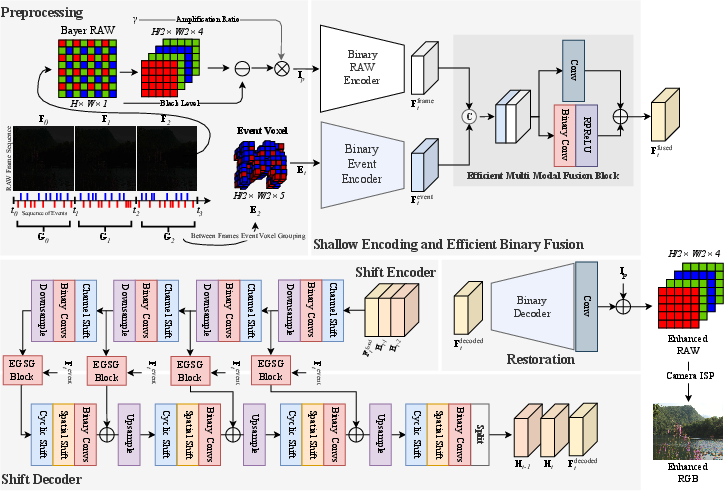
Figure 2: Schematic overview of the entire EeveeDark pipeline highlighting modality encoding, fusion, shift-based propagation, and sensor-level restoration.
The model is trained end-to-end on the Charbonnier loss, which is shown to be robust for extreme low-light scenarios.
The EeveeDark model was extensively evaluated on synthetic and real-world datasets, across multiple benchmarks, and compared to both full-precision and BNN-based alternatives:
- Quantitative Performance:
- Qualitative Analysis:
- On LLRVD, EeveeDark outputs cleaner results with better preservation of structure and less flicker than BBCU or BRVE, and avoids the static-region artifacts present in EvLight.
- On the HUE dataset, EeveeDark generalizes robustly, maintaining detail and color that other binarized networks oversmooth or full-precision networks distort.
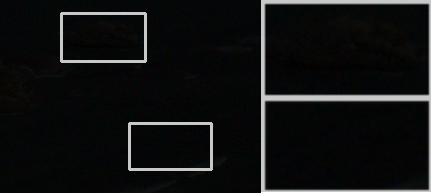
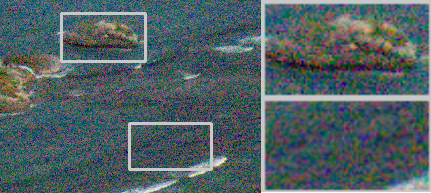
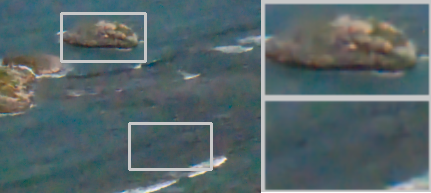
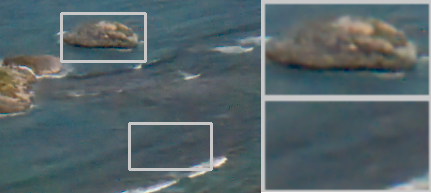
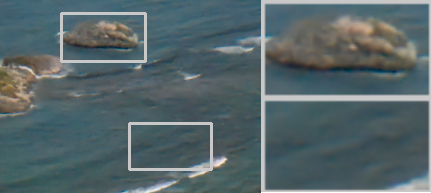
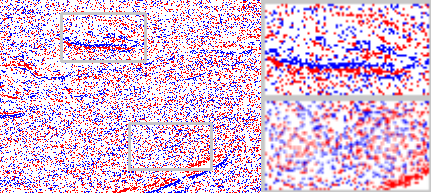
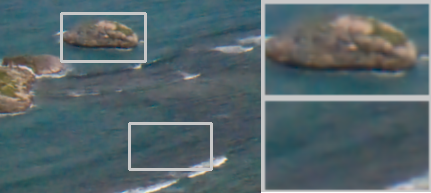
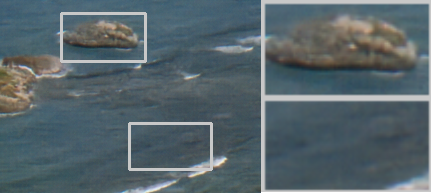
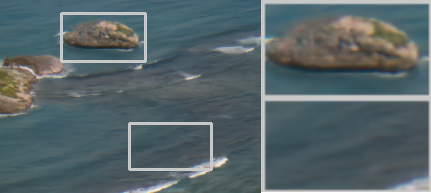
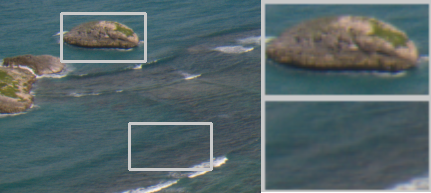
Figure 4: LLRVD visual comparisons, where EeveeDark demonstrates improved spatial detail and temporal smoothness.
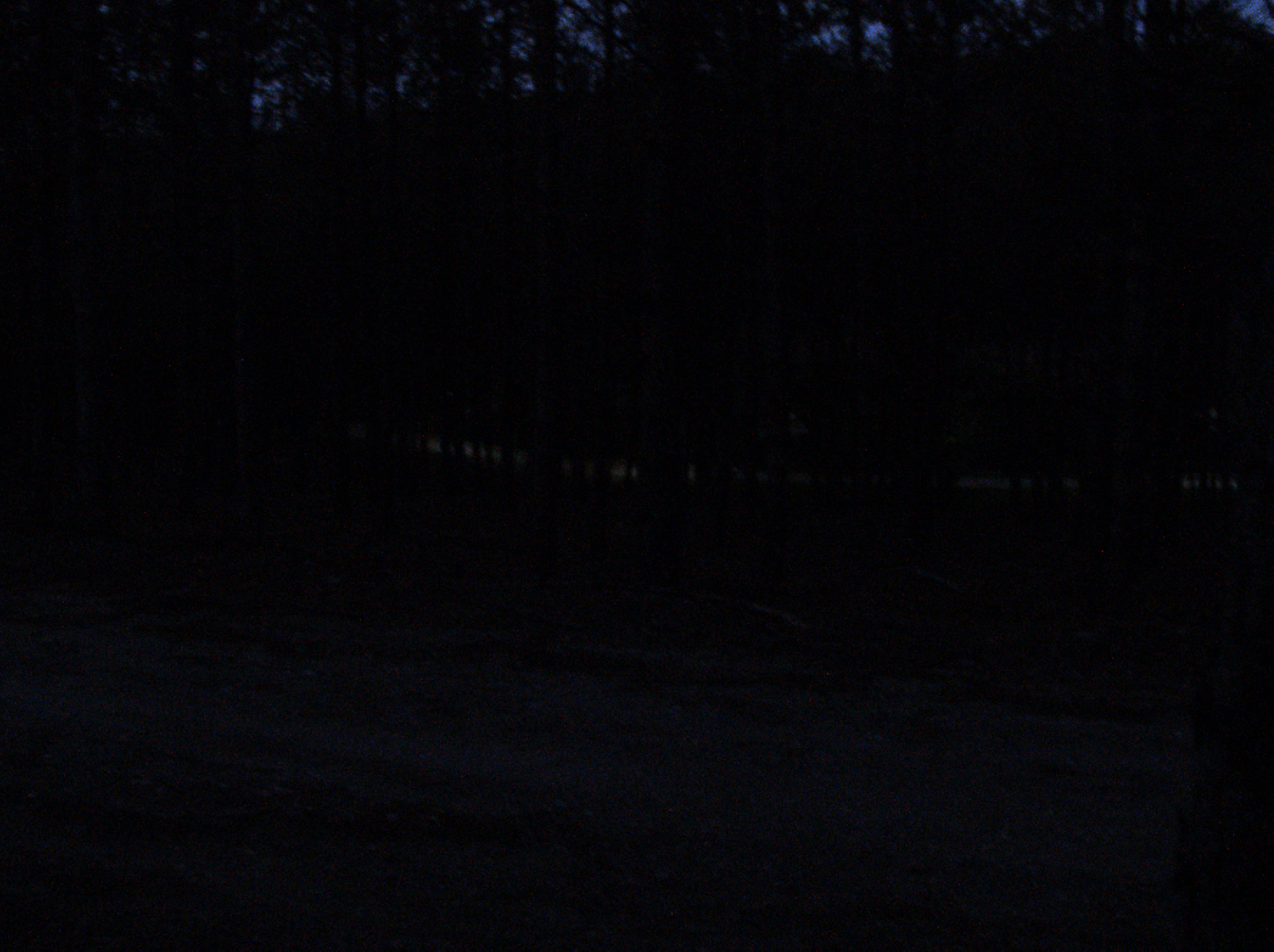
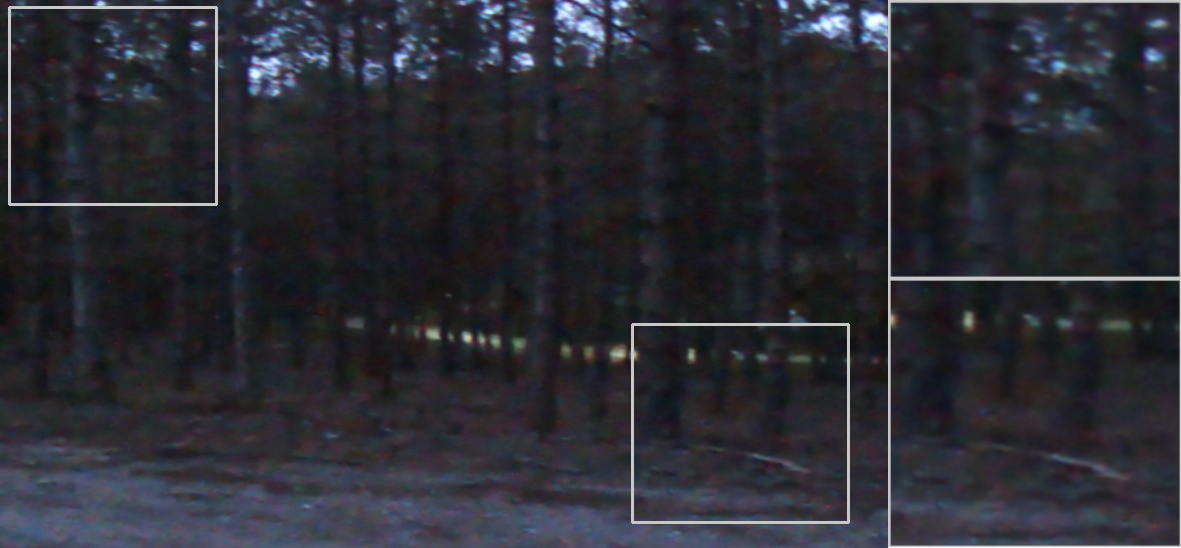
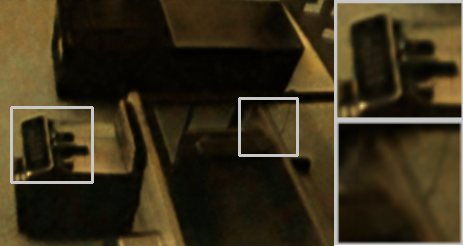
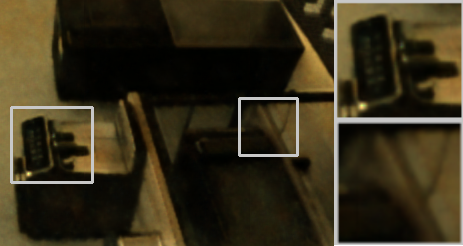
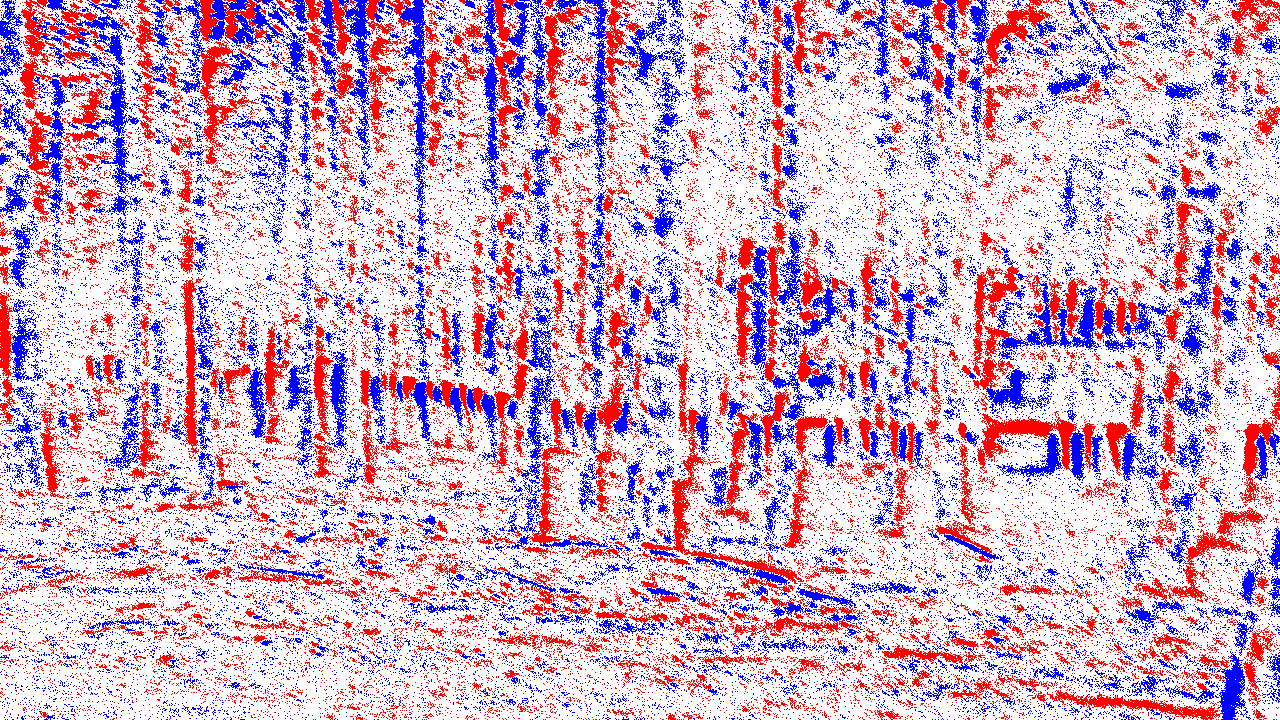
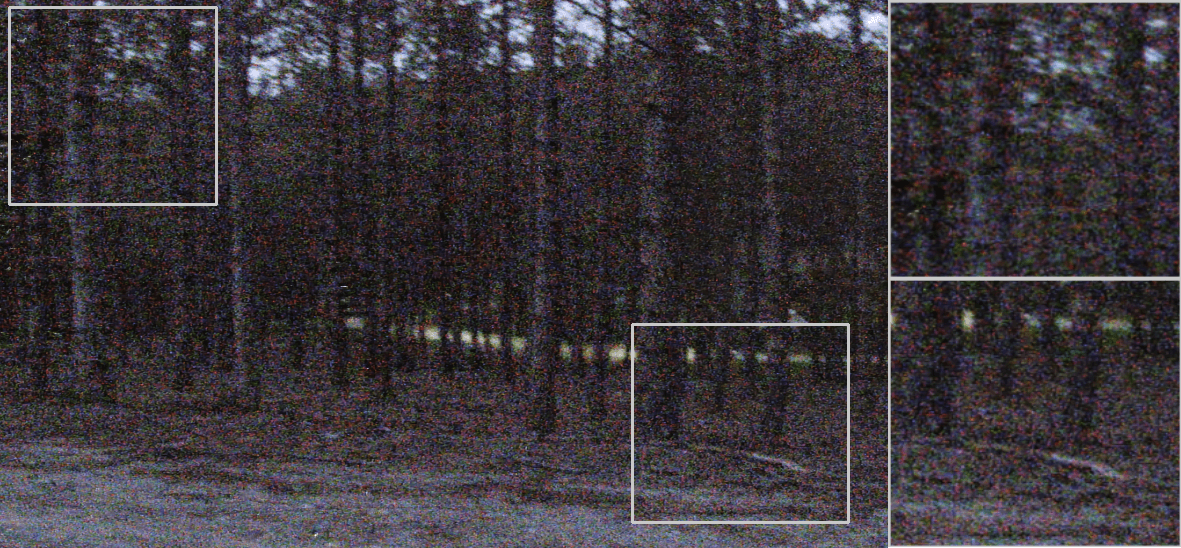
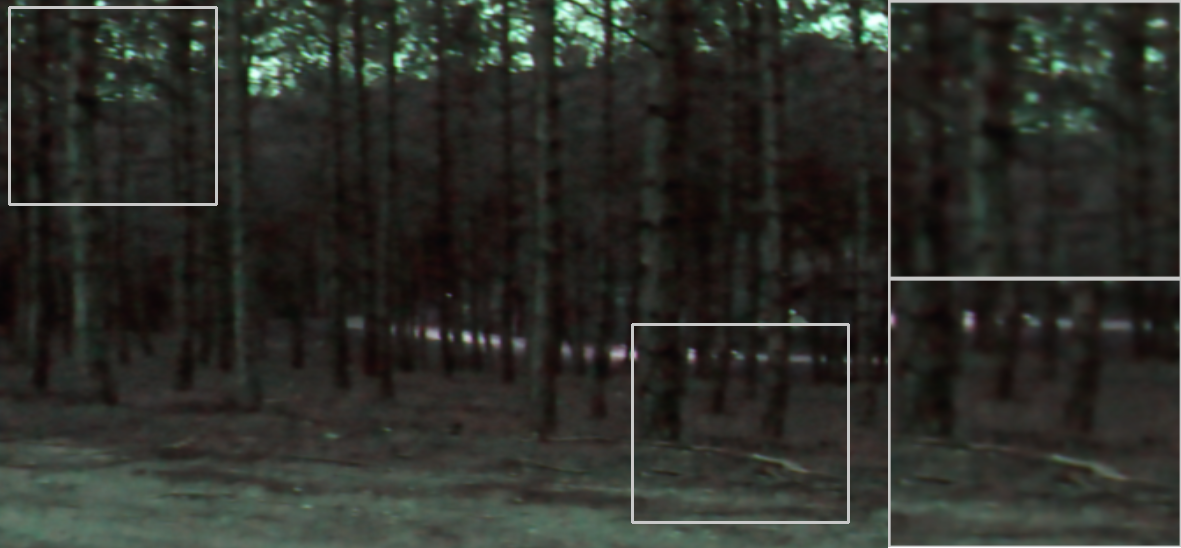
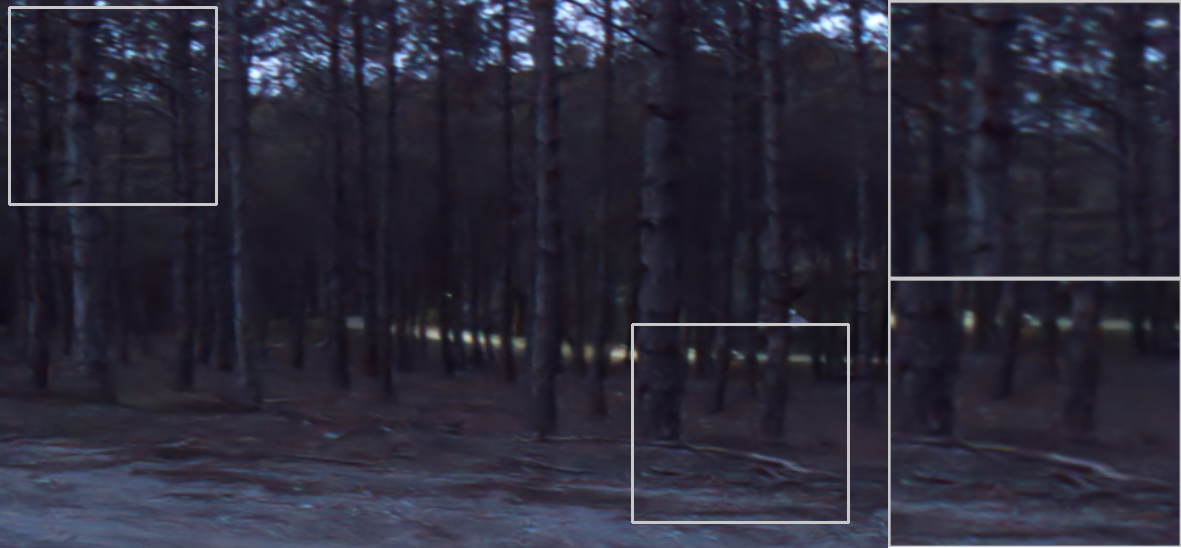
Figure 5: HUE dataset outputs, highlighting EeveeDark’s real-world robustness and balanced enhancement.
- Temporal Consistency:
- Ablation and Downstream Task Impact:
- Ablations indicate the importance of the event encoder and EGSG for temporal and perceptual improvements.
- When used as a preprocessing step for object detection, monocular depth estimation, and visual SLAM, EeveeDark-enhanced videos significantly improve downstream performance metrics compared to low-light or BRVE-enhanced baselines.
Resource Efficiency and Trade-offs
EeveeDark’s core advance is in pushing the quality-efficiency Pareto frontier for low-light video enhancement. It offers a compelling balance:
- Efficiency: With only 0.78 mJ per frame and ≈588 ms latency, EeveeDark is highly suited for resource-constrained platforms.
- Performance: While full-precision models provide slightly higher absolute visual quality, the marginal gains do not justify their up to 20–30× higher computational and energy costs in many deployment scenarios.
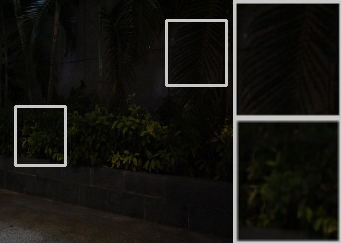
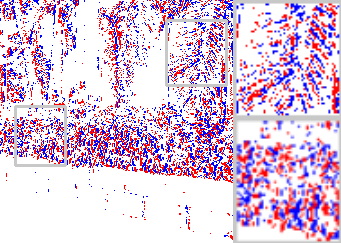
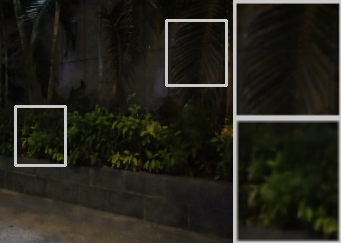
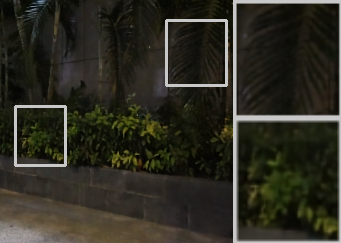
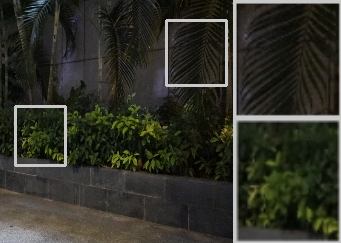
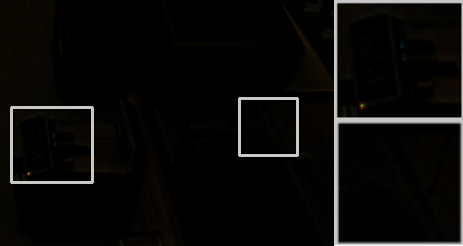
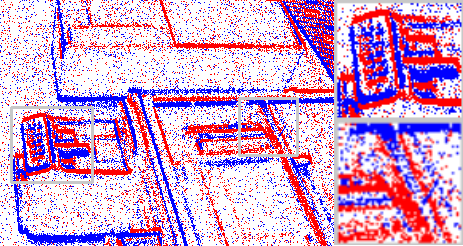
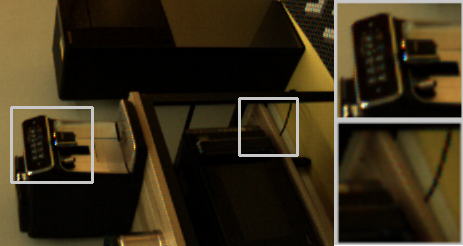
Figure 7: SDE and SDSD dataset comparisons, where EeveeDark restores finer structural details and local contrast relative to BRVE at similar cost.
Limitations and Failure Modes
While EeveeDark achieves robust performance overall, there are scenarios where it is less effective:
- Static/Low-motion Scenes: When scene dynamics are minimal, event streams offer few useful cues, reducing EGSG’s contribution and resulting in lesser enhancement.
- Extreme Low-Photon Regimes: At extreme darkness with both noisy RAW and sparse events, color fidelity and denoising degrade.
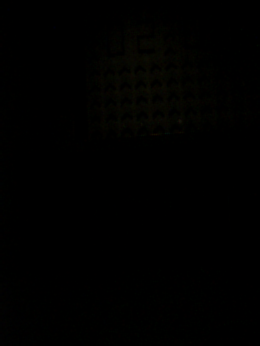
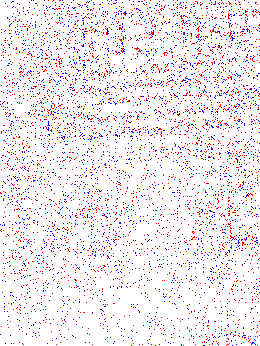
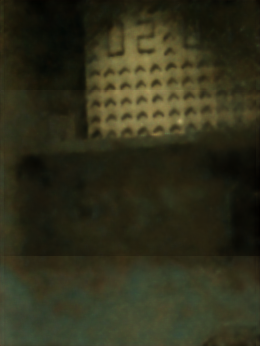
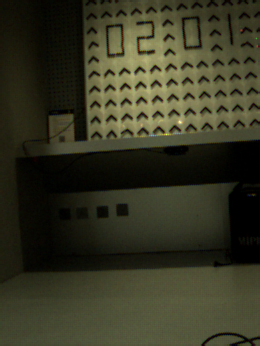
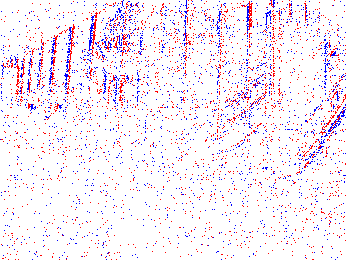
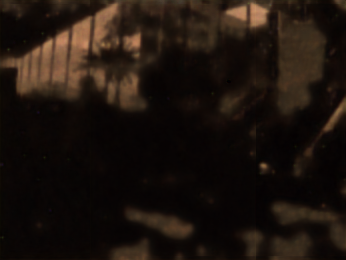
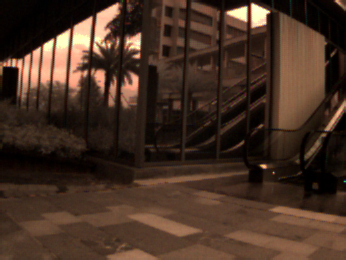
Figure 8: Failure cases in static scenes or extreme low-light where event guidance fails, leading to diminished restoration.
Implications and Future Directions
EeveeDark demonstrates that BNN architectures, when judiciously combined with raw sensor and event-guided spatiotemporal fusion, can bridge much of the perceptual gap to full-precision models in practical low-light video enhancement applications. This carries several implications:
- Resource-Constrained Deployment: The approach is particularly advantageous for robotics and embedded systems where energy and compute are premium.
- Event-Raw Fusion: This paradigm can catalyze research in other multi-modal, event-driven perception frameworks, potentially expanding to night-time navigation, autonomous driving, and security.
- Generalization and Real-World Transfer: By relying on sensor-level fusion, models like EeveeDark may adapt better to real-world deployment and out-of-distribution conditions.
Areas for future work include more principled fusion strategies under static conditions, improved event simulation for synthetic data augmentation, and further miniaturization or hardware co-design for real-time, on-chip inference.
Conclusion
EeveeDark establishes a new state of the art among BNN frameworks for low-light video enhancement by introducing efficient, sensor-level event-RAW fusion and a novel event-guided gating module. The model secures a superior trade-off between restoration quality and computational requirements, is validated both quantitatively and qualitatively across multiple public and real-world datasets, and has demonstrable benefits for downstream robotics and autonomy tasks. The framework’s limitations highlight opportunities for enhanced event utilization and extreme low-light adaptation, shaping a clear trajectory for future research integrating efficiency, perceptual fidelity, and multi-modal temporal reasoning in vision systems.