- The paper introduces a framework using extended Leaver’s continued fraction method and automatic differentiation to compute quasinormal mode spectra in non-vacuum settings.
- It reveals how anisotropic pressure via the Kiselev metric modifies horizon structure and oscillation frequencies, impacting stability and gravitational wave signatures.
- The results highlight the interplay between black hole charge, the fluid parameter, and scalar perturbations, offering insights for future gravitational wave modeling.
Charged Black Holes in Anisotropic Fluid: Horizon Structure and Quasinormal Modes
Introduction
The study addresses the dynamics and observable features of charged black holes (BHs) embedded in astrophysical environments modeled by an anisotropic fluid, specifically those described by the two-component Kiselev metric. This setup generalizes the Reissner-Nordström (RN) scenario by incorporating a matter distribution with anisotropic pressure and w=−1/3, a regime relevant for mimicking dark matter, cosmic string condensates, or global monopole networks. The paper focuses on classifying the horizon structure in this geometry and determining the quasinormal mode (QNM) spectrum of massless charged scalar perturbations—quantities of direct interest for gravitational wave (GW) astrophysics and black hole spectroscopy.
The authors develop a robust numerical framework, based on a nontrivial extension of Leaver’s continued fraction method with automatic differentiation for enhanced accuracy near extremality, complemented by a sixth-order Wentzel-Kramers-Brillouin (WKB) perturbative analysis. The paper thus provides both a systematic spectral analysis and a methodological platform for future studies of non-vacuum black hole perturbations.
Kiselev Metric and Horizon Classification
The Kiselev metric is an exact, static, spherically symmetric solution to Einstein’s field equations with an energy-momentum tensor that can be decomposed into electromagnetic and anisotropic fluid parts. Special cases reduce to RN and Schwarzschild geometries; the two-component case of interest here has:
f(r)=1−K−r1+r2Q2,
where K is the strength of the anisotropic fluid and Q is the black hole’s charge. The horizon structure is determined by the roots of f(r), which depends sensitively on both K and Q.
Key structural results:
- For 0≤K<1, subextremal black holes possess two horizons (event and Cauchy) provided (1−K)Q2<1/4.
- For K→1, the spatial region outside the event horizon expands and the solid-angle deficit characteristic of a global monopole or string network becomes evident.
- The metric is quasi-asymptotically flat with a locally vanishing curvature at infinity but a global solid-angle deficit.
The horizon positions and their dependence on f(r)=1−K−r1+r2Q2,0 and f(r)=1−K−r1+r2Q2,1 are visualized through the radial profile of f(r)=1−K−r1+r2Q2,2 and a three-dimensional map of the root locus in parameter space.
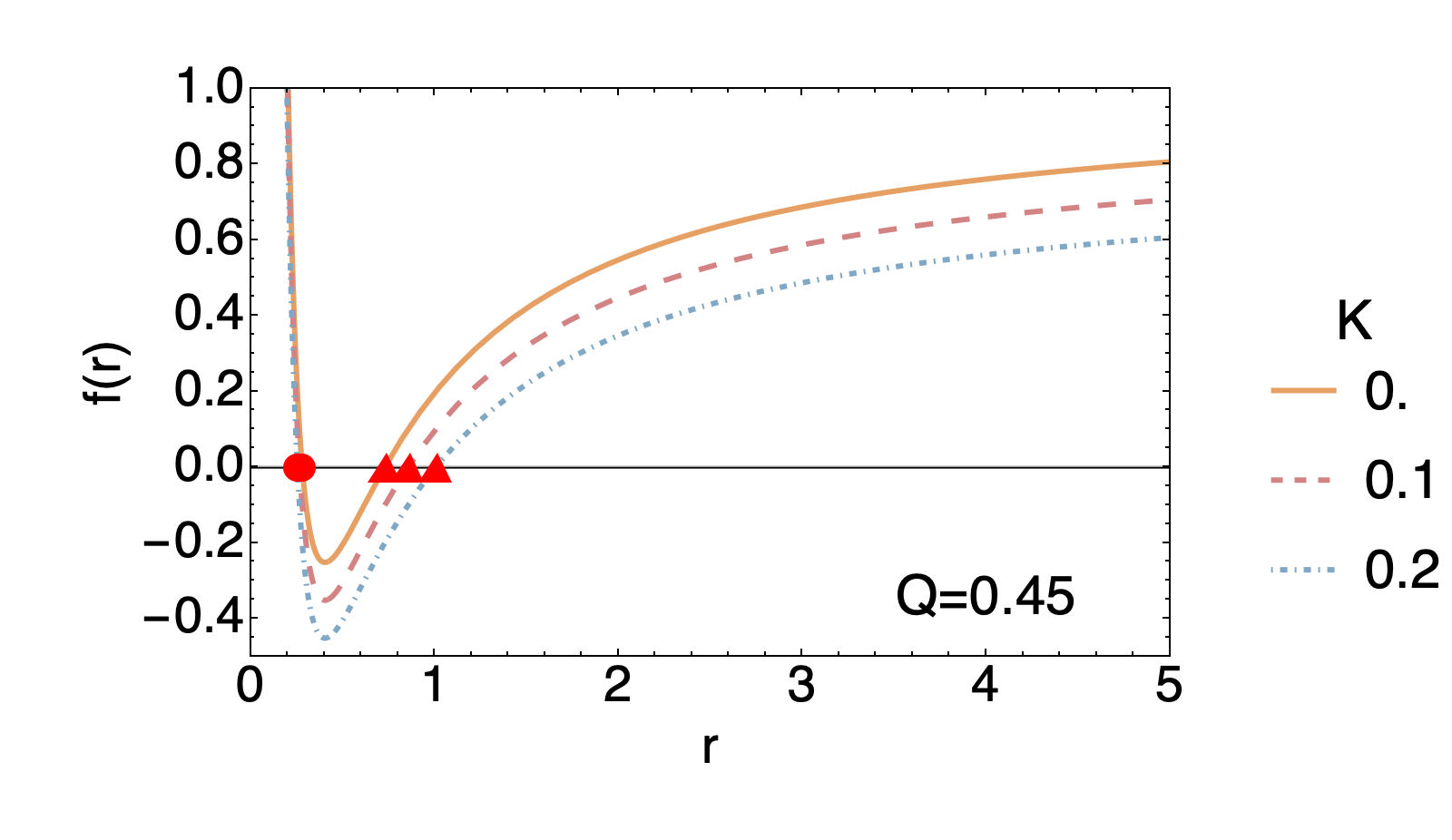
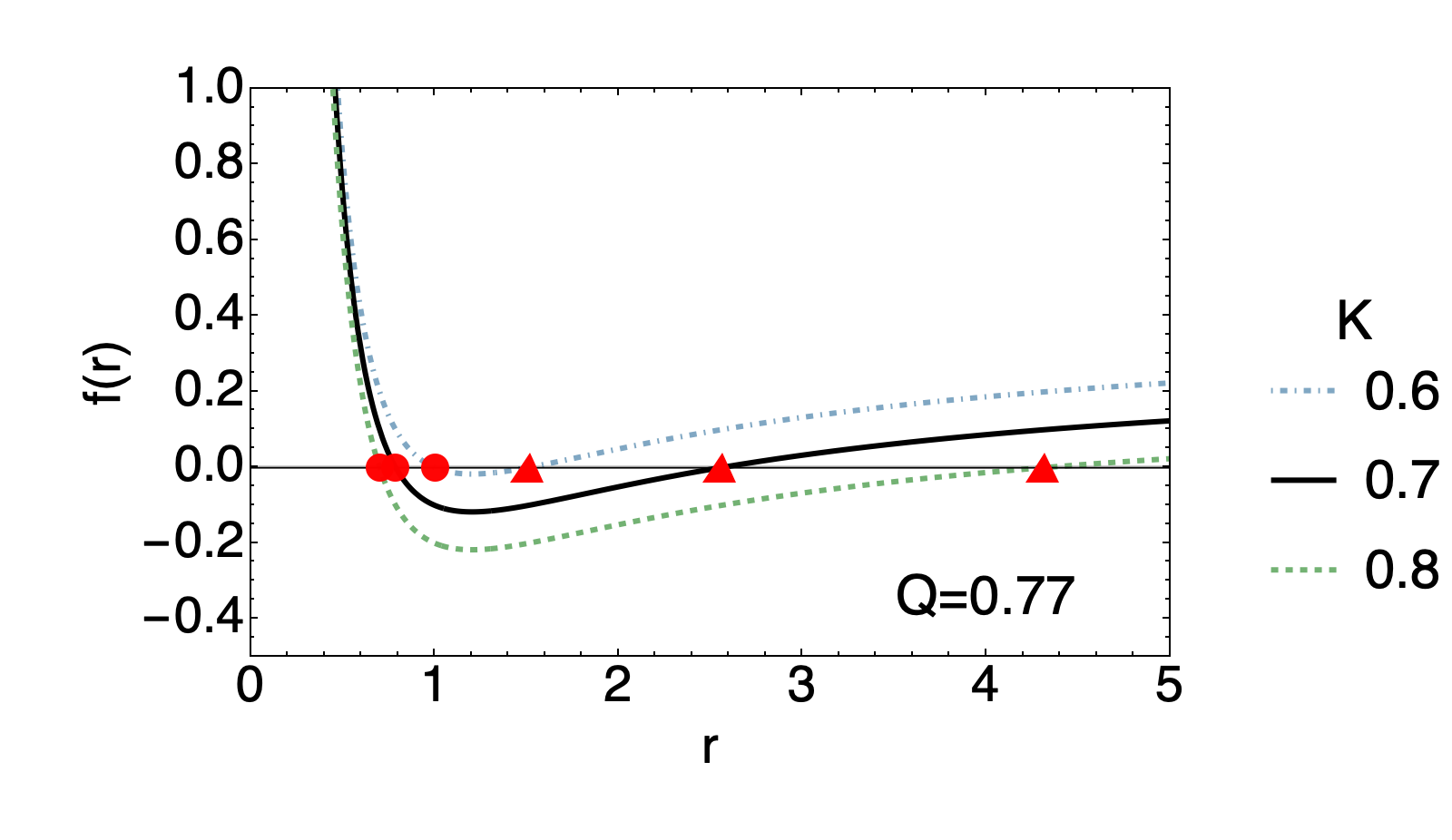
Figure 1: Radial profile of the metric function f(r)=1−K−r1+r2Q2,3 as a function of the fluid parameter f(r)=1−K−r1+r2Q2,4 and black hole charge f(r)=1−K−r1+r2Q2,5, with event and Cauchy horizons indicated.
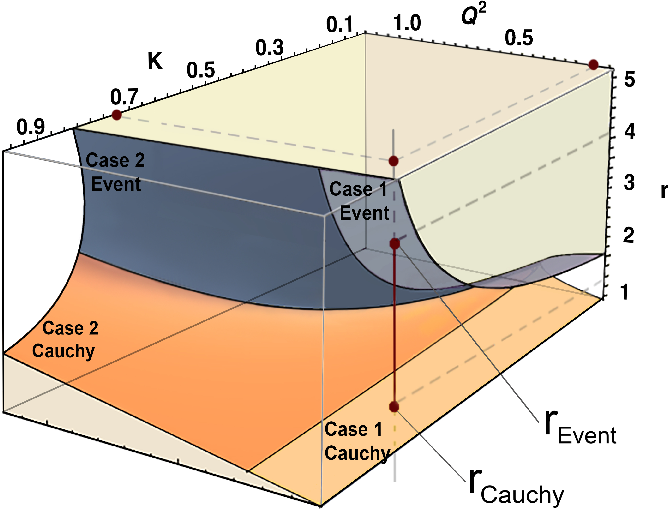
Figure 2: Visualization of the roots of f(r)=1−K−r1+r2Q2,6 in the f(r)=1−K−r1+r2Q2,7 parameter space distinguishing accessible and inaccessible regions.
An effective energy-momentum tensor analysis cements the physical viability criterion: f(r)=1−K−r1+r2Q2,8 is required by the dominant energy condition to avoid negative energy densities or superluminal propagation.
Scalar Field Dynamics and Effective Potential
The propagation of a massless, charged scalar field is governed by a Klein-Gordon equation in the Kiselev background, which is reducible (after separation of variables) to a Schrödinger-like equation:
f(r)=1−K−r1+r2Q2,9
where K0 is the tortoise coordinate, K1 the complex mode frequency, K2 the electrostatic potential from the BH charge, and K3 the geometric effective potential. K4 can possess only a maximum outside the event horizon, which forms a single-barrier potential familiar from standard QNM theory, but its height, width, and peak position are strongly dependent on both K5 and K6.
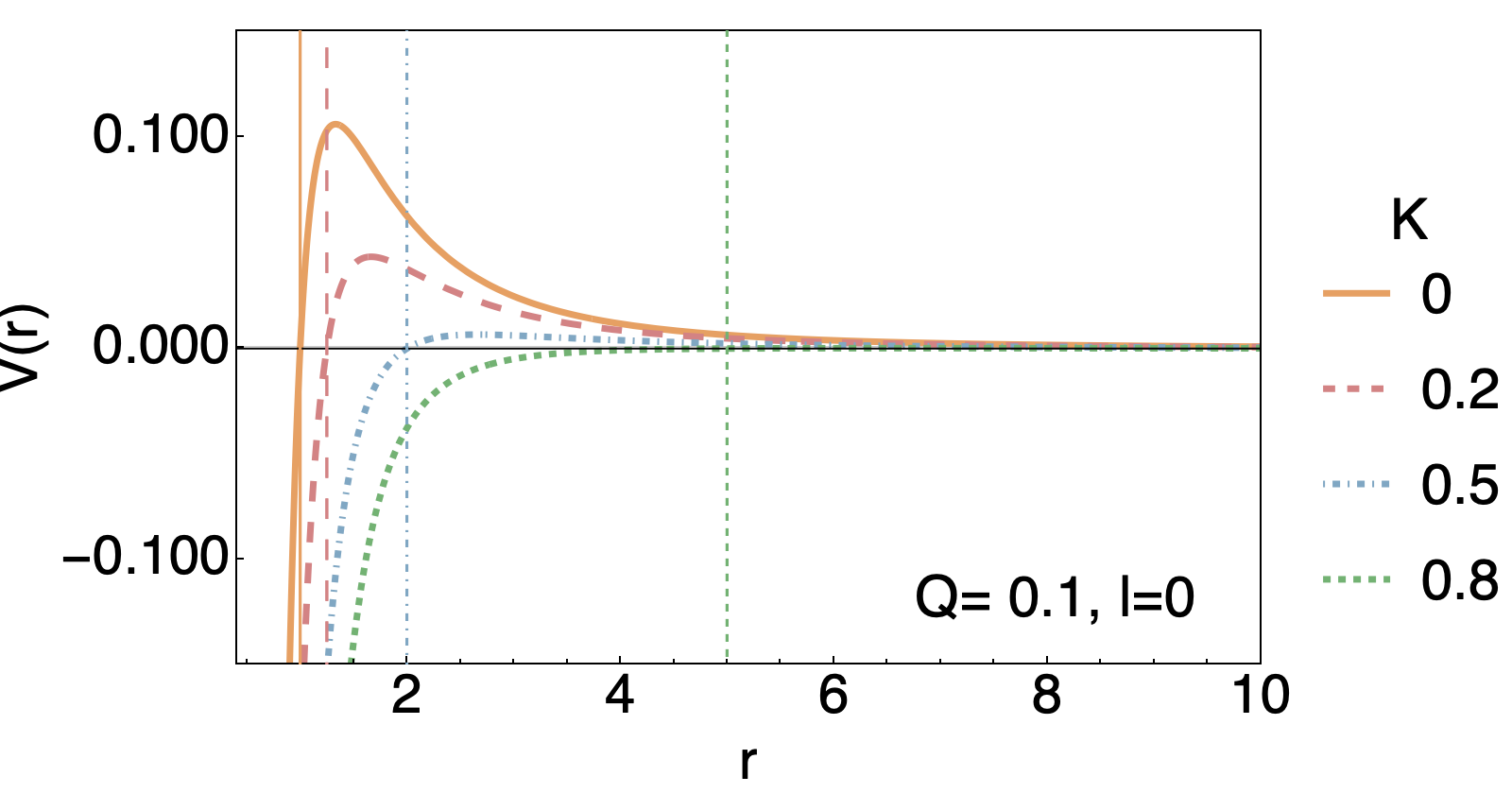
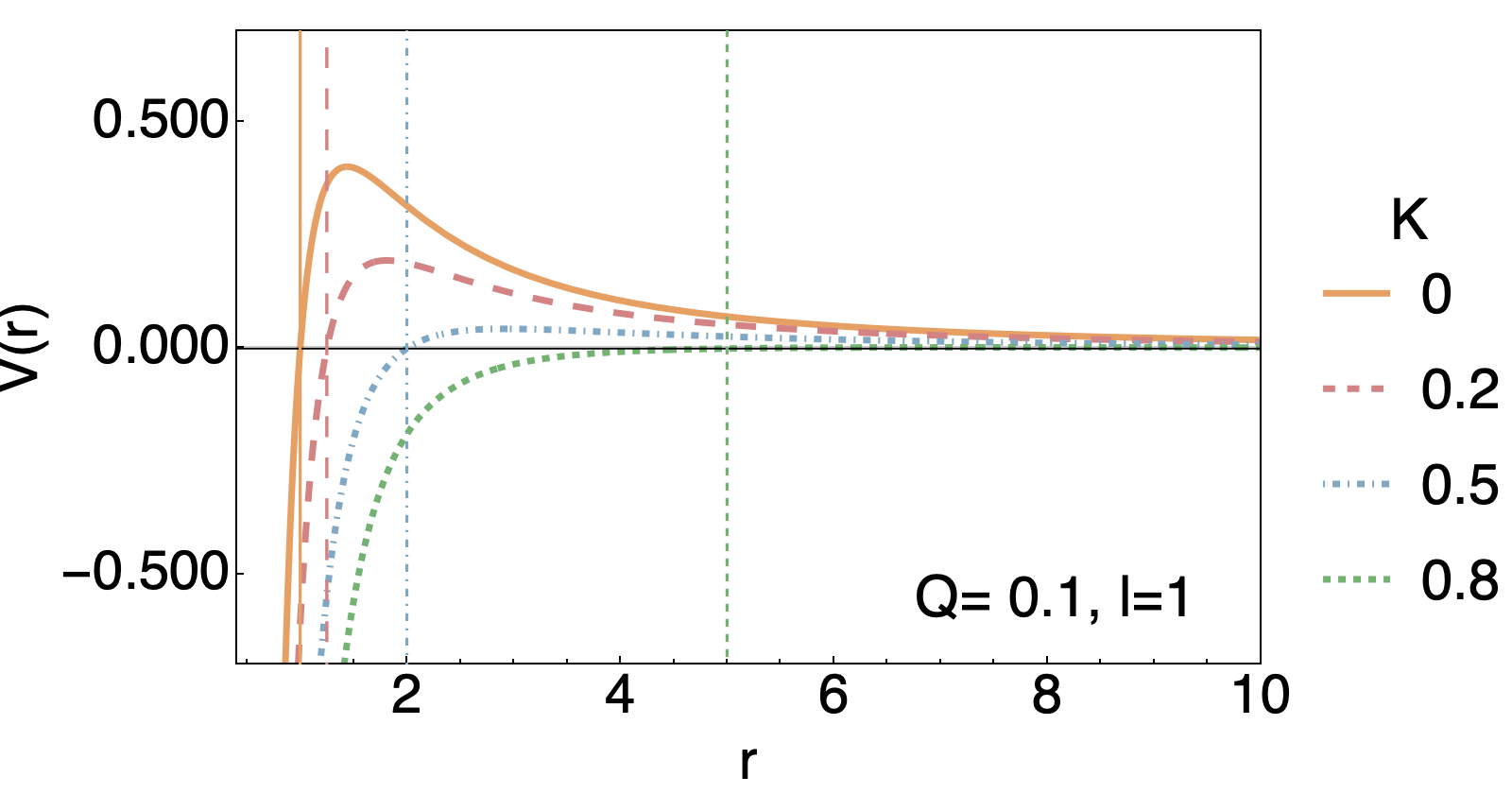
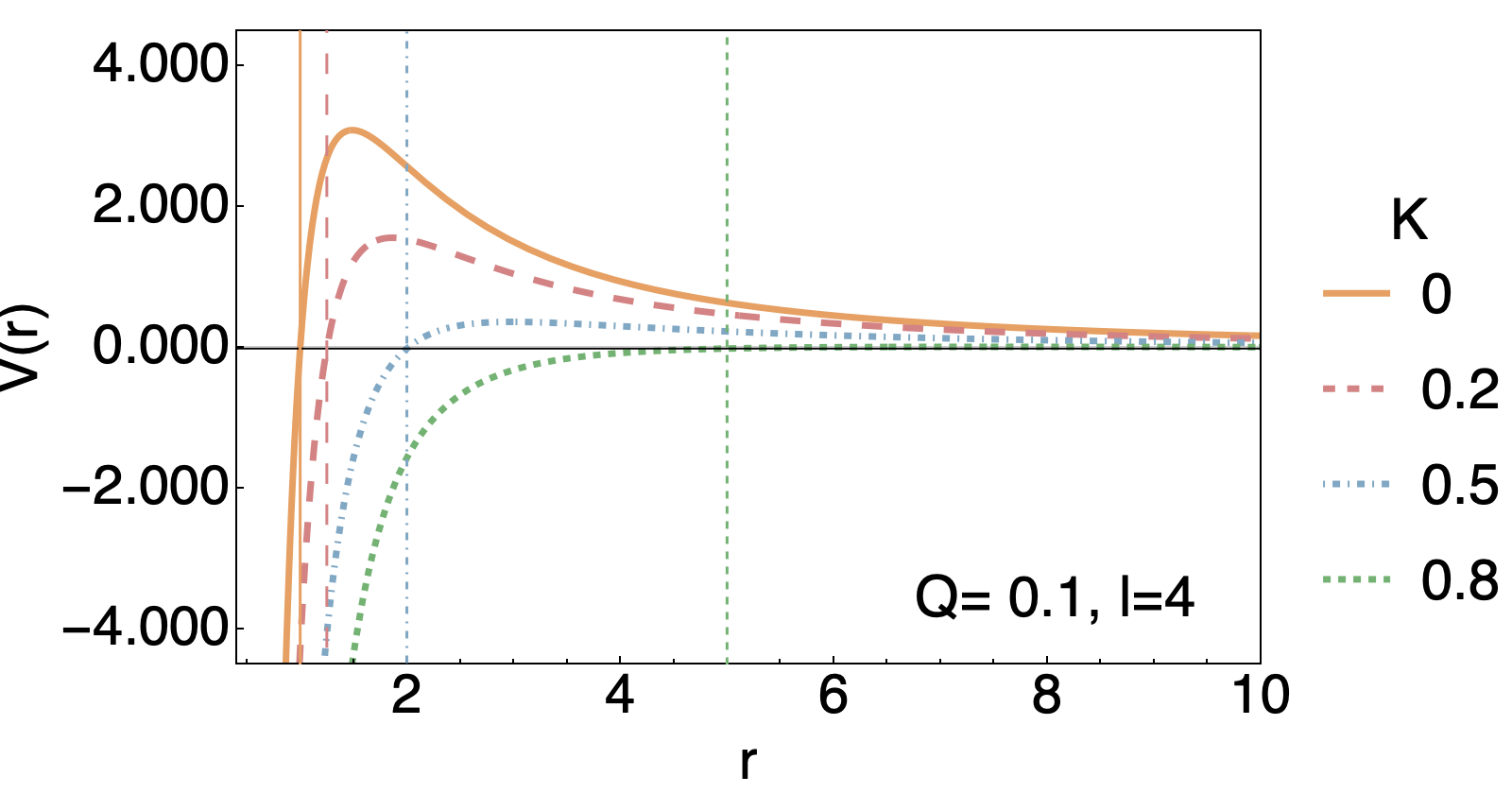
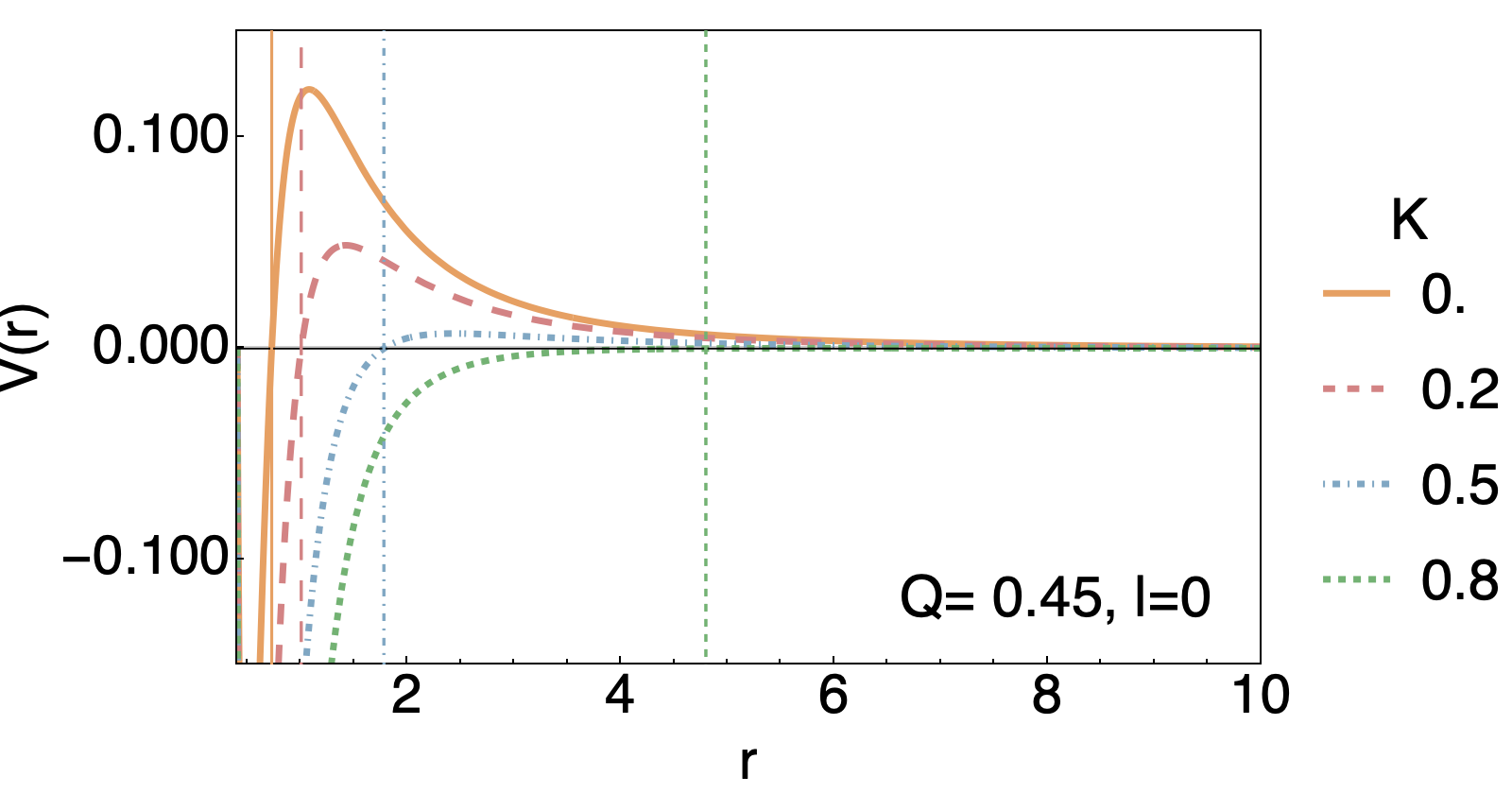
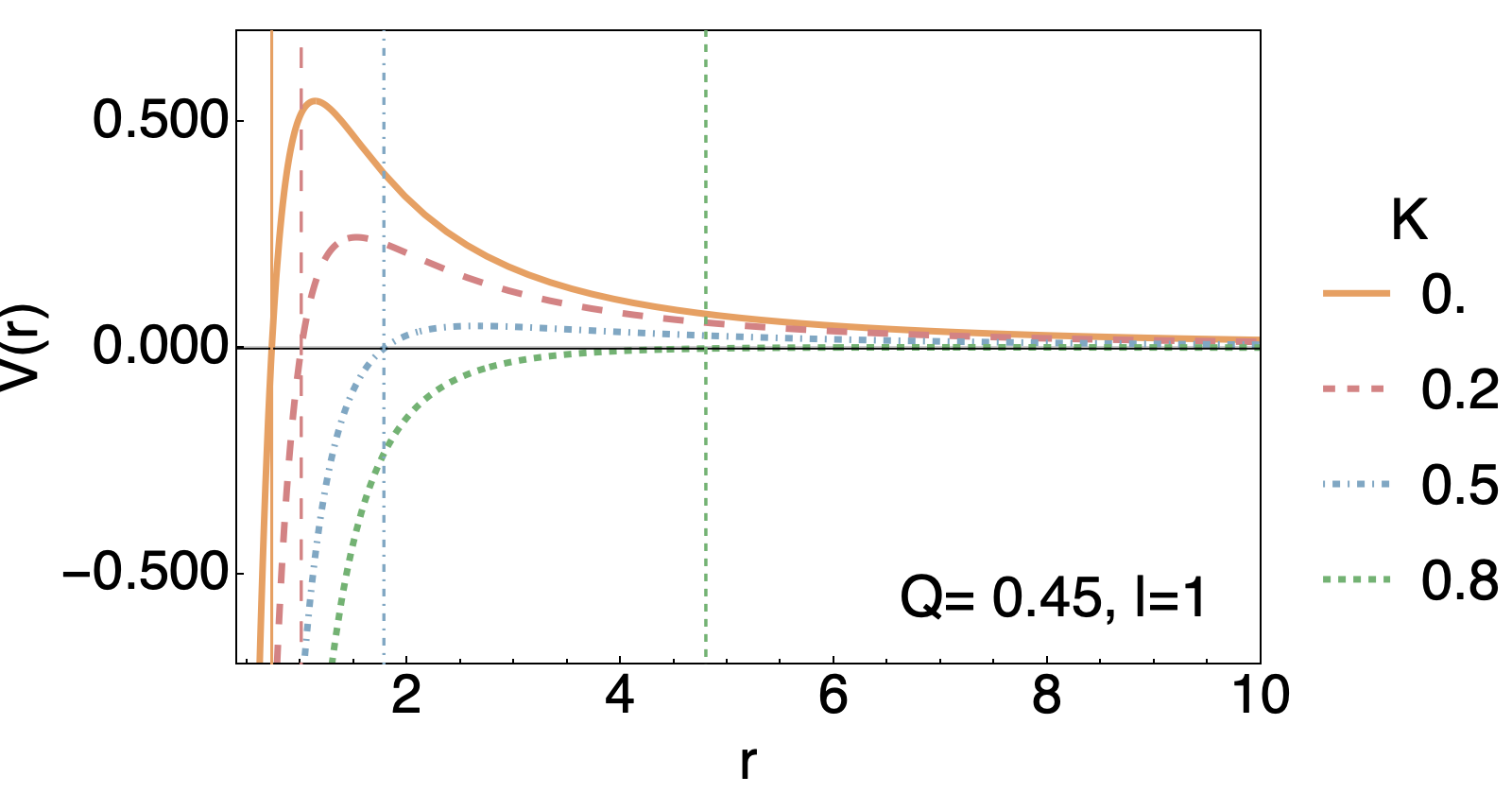
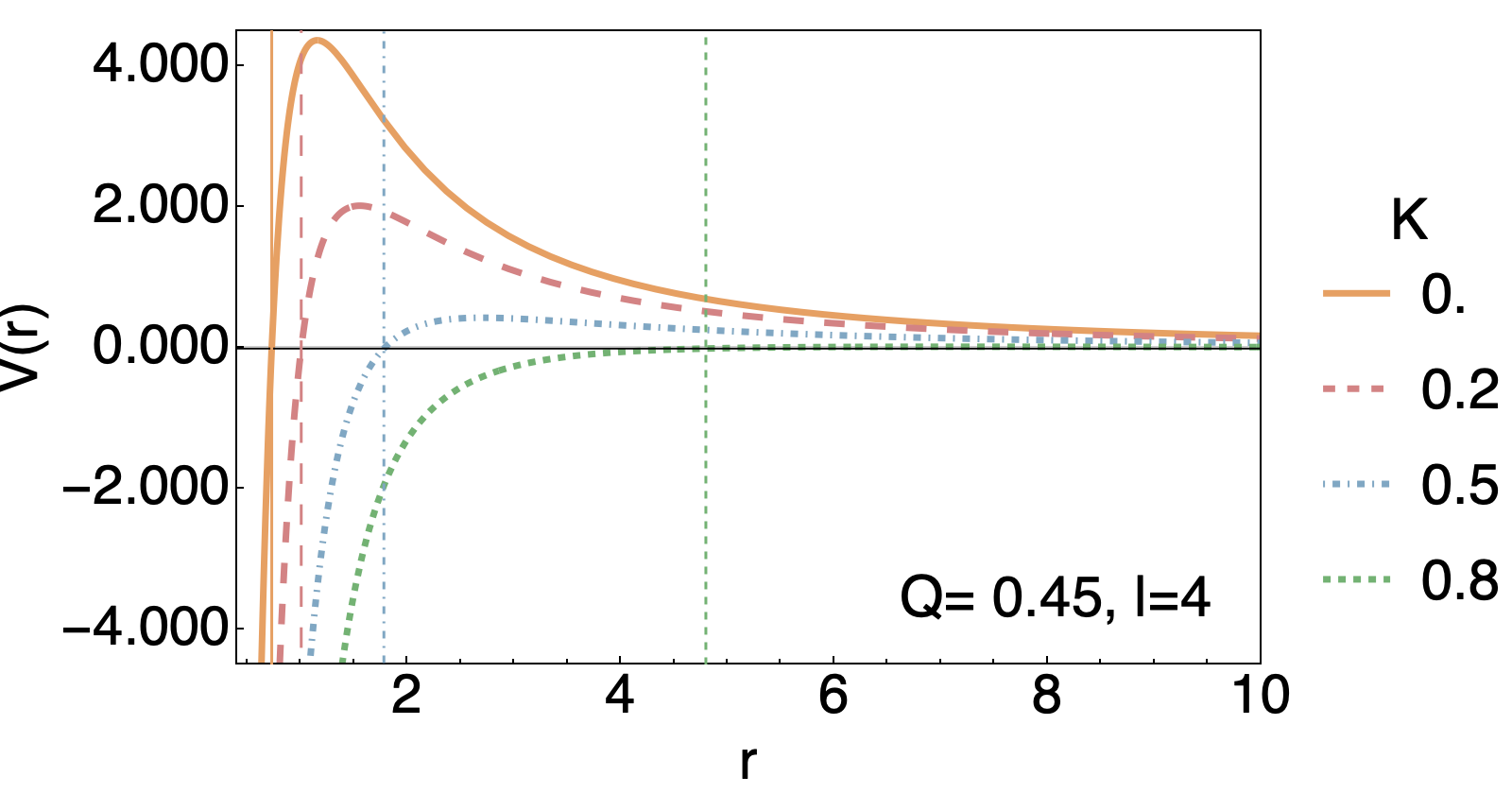
Figure 3: Effective potential profiles for different K7, demonstrating the broadening and suppression of the potential barrier as K8 and with increasing K9. The location of the event horizon is indicated for each case.
Quasinormal Mode Spectrum: Methodology
Extended Leaver’s Continued Fraction and Automatic Differentiation
The core computational challenge is the construction and solution of the characteristic equation for QNM frequencies, derived from a generalized Frobenius power series expansion at the event horizon. The resulting recurrence has four terms due to the background's complexity, which are systematically reduced to a tri-diagonal (three-term) form amenable to Leaver’s method. The transcendental equation for QNM frequencies is then:
Q0
To overcome the loss of numerical stability near extremality (where roots cluster or become nearly degenerate), the authors implement automatic differentiation using PyTorch and an L-BFGS optimizer. The method minimizes Q1 and reliably converges to double-precision roots, even in challenging parameter regimes. Numerical validation demonstrates high accuracy compared to established Schwarzschild and RN spectra.
Sixth-Order WKB as Analytic Control
A sixth-order WKB approximation is implemented for comparison, constructed around the real part of the frequency-dependent effective potential. Correction terms up to the sixth order are included as per Konoplya’s prescription. While quantitatively accurate for small Q2, the WKB method diverges from the continued fraction results as Q3 increases due to the increasing frequency dependence and flattening of the potential barrier.
Results: Spectral Features and Parameter Dependencies
Uncharged Scalar Field:
- Increasing Q4 at fixed Q5 increases the real part of the fundamental QNM and decreases the damping rate, consistent with zero-damped mode trends near extremality.
- Increasing Q6 at fixed Q7 suppresses both oscillation frequency and damping: the potential barrier moves outward and flattens, leading to longer-lived perturbations and lower frequency (see Table~1 and Figure 3).
Charged Scalar Field:
- The presence of charge-induced interaction (Q8) modifies both the real and imaginary parts of the frequency in a nontrivial manner; for large Q9, the effect of f(r)0 on the spectrum is suppressed.
- The spectrum can bifurcate into two branches (for positive and negative f(r)1) that experience avoided crossings as f(r)2 is varied (“mode repulsion”), with the fluid parameter modifying the topology of these branches.
Mode Stability:
- For all physically viable f(r)3, no unstable (Imf(r)4) modes are found, indicating stability against charged scalar perturbations.
- Overtones and higher multipoles exhibit increased real part and decreased imaginary part of the QNM frequencies, consistent with expectations from eikonal arguments.
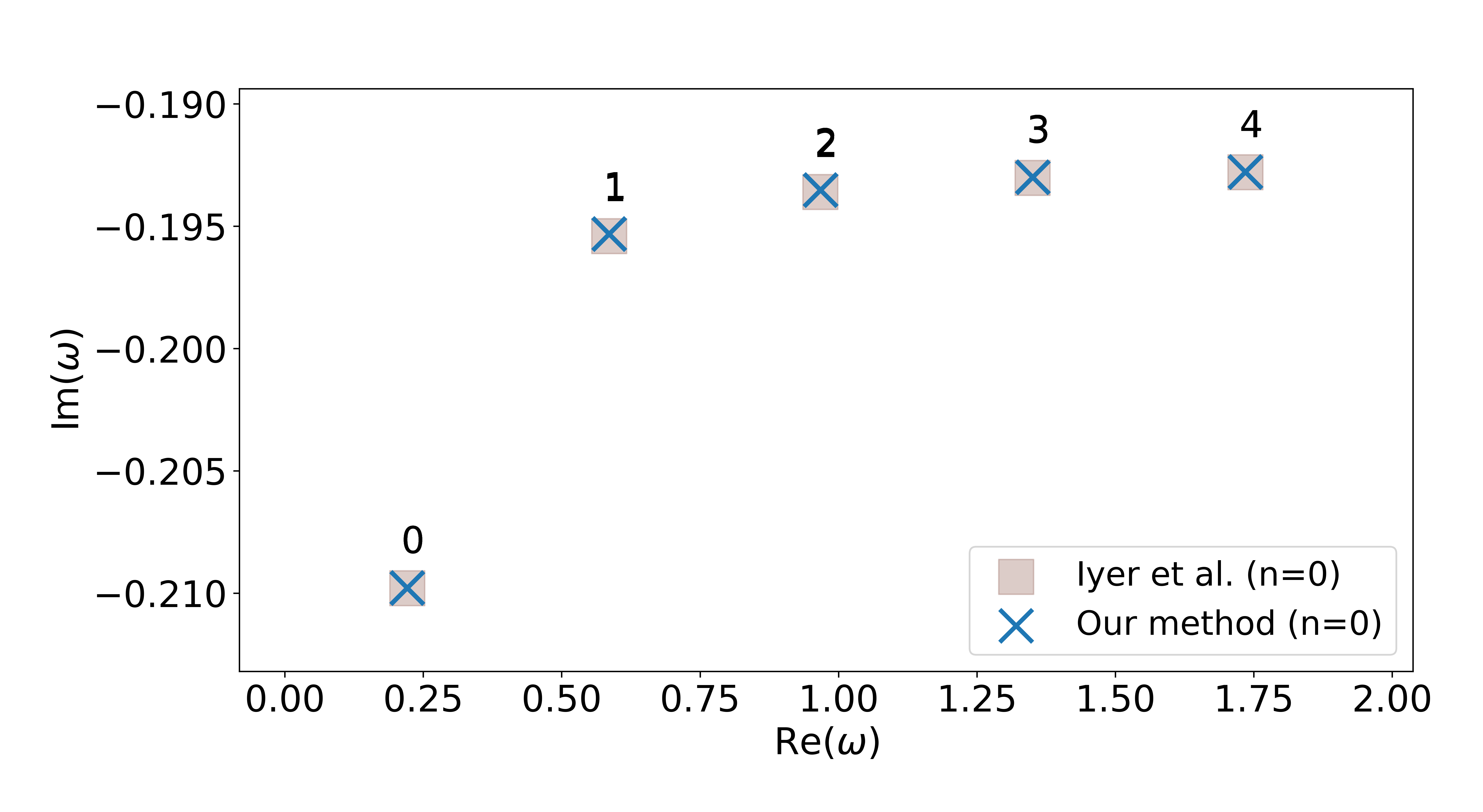
Figure 4: Spectrum of fundamental QNMs for Schwarzschild, showing benchmark agreement with literature and numerical convergence.
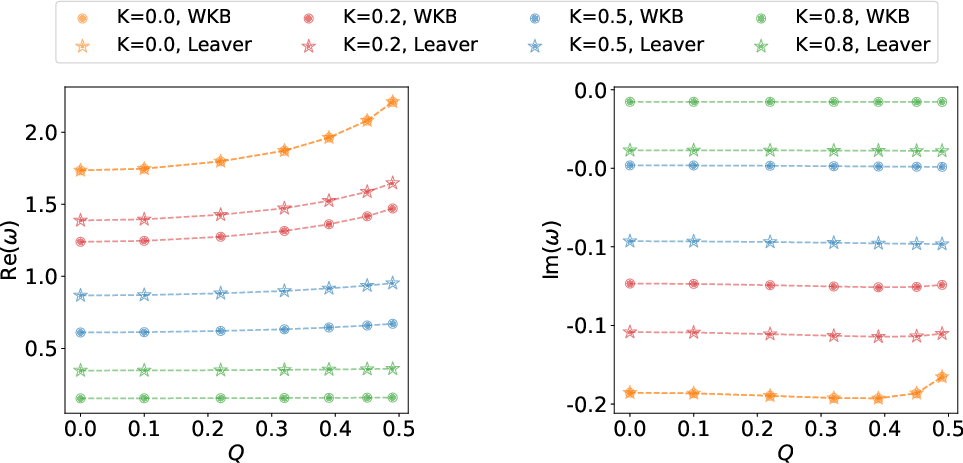
Figure 5: Real and imaginary components of the monopole QNM as functions of f(r)5 and f(r)6, benchmarking against prior results (for f(r)7) and illustrating the systematic trend with environmental matter.
Fluid Parameter and Physical Surface Gravity
An analytic scaling is established: as f(r)8, the surface gravity at the event horizon vanishes (implying a cold, extremal horizon) and the scattering region is displaced outward, further suppressing mode frequencies and damping rates.
Numerical Error and Sensitivity
Error analyses demonstrate exponential convergence in truncation-order for both the traditional and automatic differentiation implementations, reaching machine precision at modest truncation depth. Sensitivity analysis via dimensionless coefficients reveals that f(r)9 and the multipole K0 exert the largest influence on QNM frequencies, with K1 and K2 comparatively subdominant.
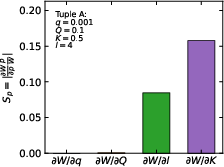
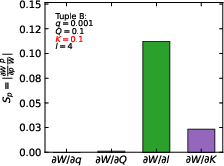
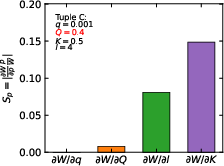
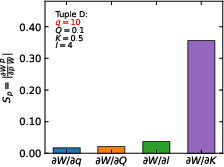
Figure 6: Sensitivity coefficients K3 for the WKB characteristic equation as a function of K4 evaluated at representative parameters.
Implications and Outlook
The study demonstrates concretely that the presence of environmental matter with anisotropic pressure can significantly alter both the horizon structure and the dynamical mode spectrum of charged black holes. Practically, this implies that high-precision gravitational wave ringdown modeling in realistic (non-vacuum) BH environments must account for such effects—notably, both observed frequencies and decay rates may encode information about ambient dark matter, cosmic strings, or similar energy-momentum sources.
The numerically robust framework developed herein is extendable to broader non-vacuum geometries and can accommodate further perturbative generalizations (e.g., massive fields, gravitational perturbations). The analytic results provide baseline trends; however, for precise waveform modeling, especially near extremal geometries or with high environmental matter content, full numerical spectral computations as developed in this paper are essential.
Future work should examine massive fields, gravitational/Proca perturbations, and the precise nature of long-lived modes and their connection to horizon geometry in the K5 limit. Incorporating higher-order WKB with Padé resummation for frequency-dependent potentials also remains an open technical direction.
Conclusion
This comprehensive investigation demonstrates that embedding black holes in realistic anisotropic environments modulates QNM frequencies, horizon properties, and stability, and that the suppression and reorganization of spectral features are controlled continuously by the fluid parameter K6. The methodological advances—automatic differentiation combined with spectral continued fraction solvers—offer a flexible platform for tackling non-vacuum QNM problems in strong gravity. For observational GW tests, these results emphasize the need to account for environmental matter when extracting fundamental astrophysical parameters from ringdown signals.

