- The paper presents a novel framework that unifies causal inference for non-i.i.d. data using group equivariance.
- It details how leveraging symmetry, such as spatial or reverse-complement invariances, improves effect identification and estimation.
- Empirical results demonstrate that Bayesian GCMs outperform traditional methods in calibrating estimates, reducing bias, and tightening credible intervals.
Geometric Causal Models: Unified Causal Inference via Symmetry and Group Theory
Introduction and Motivation
Traditional causal inference frameworks predominantly assume i.i.d. data, which rarely align with the dependencies found in real-world scientific datasets—ranging from spatially correlated environmental measures to networks and genomics. "Geometric Causal Models" (2607.05153) presents a principled and general framework for non-i.i.d. causal inference by exploiting symmetries and invariances formalized via group theory. Geometric Causal Models (GCMs) unify classical i.i.d. causal methods, spatial, array, and network causal models within one mathematical apparatus, showing how equivariant mechanisms and structured probabilistic modeling yield identification and estimability of causal effects even under substantial dependence.
Theoretical Foundations: Symmetries, Groups, and Equivariance
GCMs rest on the observation that although observational units may be dependent, the causal mechanisms governing their interactions often exhibit symmetries: spatial translation, network permutation, or DNA reverse-complementation. These symmetries are mathematically captured as group actions, with the causal mechanisms required to be equivariant: transforming the input via a group action must equivalently transform the output.
This equivariance is formalized for structured variables indexed over a domain Ω, with the symmetry group G acting via index transforms or broader set symmetries. GCM mechanisms thus generalize standard SCMs by making the functional dependencies not only stochastic but invariant/equivariant under G. This extends the setting from i.i.d. models (G as the permutation group) to general structured data—spatial (G as translations), arrays (G as row/column permuted), and more.
GCMs are defined as structural causal models where the causal mechanisms are G-equivariant and exogenous noise is i.i.d. across the index set. This leads, after integrating out noise, to joint distributions over structured variables that are invariant under group actions. The framework flexibly encompasses both ergodic (learnable from a single infinite sample) and non-ergodic cases, with a detailed analysis showing when ergodicity holds as a function of the mixing properties of G and Ω.
Crucially, the work proves that ergodicity—a key property enabling the inference of the full data-generating distribution from a single realization—holds under mild assumptions for broad classes of G and G0. Causal effect identification proceeds via standard tools such as do-calculus; completeness is preserved when G1 contains only index transforms, and, due to enhanced symmetry, strict identification may be enabled in non-i.i.d. and even ill-posed settings (e.g., instrumental variables) if the symmetry group is sufficiently rich.
Identification and Estimation
The authors delineate three primary stages for causal inference under GCMs:
- Observation: Learning the invariant measure from one realization using ergodicity.
- Identification: Applying the Markov decomposition (preserved under symmetry) and do-calculus for functionals of the observational distribution.
- Estimation: Using finite data and Bayesian machinery—motivated by ergodic decomposition theorems—to consistently estimate causal effects, framing credible sets in terms of asymptotic normality and group symmetric CLTs.
Further, the paper introduces estimation strategies where geometric deep learning architectures enforce group equivariance for both outcome and propensity models, ensuring consistent, efficient learning from finite and dependent samples.
Numerical Results and Empirical Evaluation
The GCM framework is evaluated across several simulated and semisynthetic domains, with notable empirical findings summarized below.
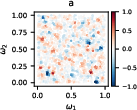
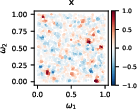
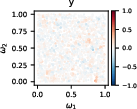
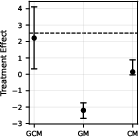
Figure 1: Spatial GCM simulation study showing observed treatment, confounder, outcome, and the estimated treatment effect under various models.
- Spatial Data: A translation-equivariant Gaussian process GCM (Figure 1) fitted using Bayesian inference outperforms both standard i.i.d. models and geometric models lacking confounding correction in estimating treatment effects. The credible intervals for GCMs achieve better calibration and lower mean squared error.
- Array Data: In matrix-structured data with per-row and per-column latent confounders, Bayesian GCMs achieve more accurate effect estimates than baselines ignoring the array structure or misspecifying the mediator structure, as shown by tighter credible intervals and reduced bias.
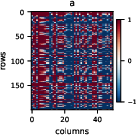
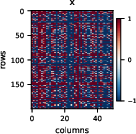
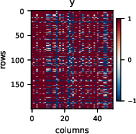
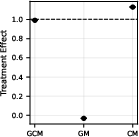
Figure 2: Summary metrics—average estimation error and interval coverage—for spatial GCMs across multiple simulations.
- Genomic Application: The framework is instantiated for functional genomics, with the genome sequence as treatment and genomic "track" as outcome, exploiting both translation and reverse complement symmetries. Standard S-learner neural outcome models and new R-learner–style representations are evaluated; propensity modeling via DNA LLMs further reduces regularization bias, particularly in the presence of outcome model misspecification.
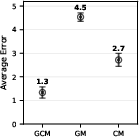
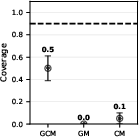
Figure 3: Empirical MSE for CATE estimation in genomic track prediction under different symmetry and estimation strategies.
- Numerical results demonstrate that enforcing more symmetries (reverse complement, translation) in model architectures is beneficial under complex or misspecified outcome mechanisms, but can show nontrivial interactions with causal estimator choices (e.g., S- vs. R-learners).
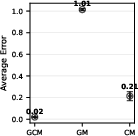
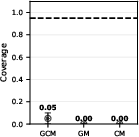
Figure 4: Empirical comparison of array-structured GCM simulations, showing improved coverage and accuracy for properly structured GCMs.
Claims, Implications, and Limitations
Key Claims
- GCMs unify and generalize causal inference with dependent data by employing symmetry groups to encode invariance and interference, enabling formal causal identification and estimation in settings not amenable to standard i.i.d. theory.
- Causal identification is possible, and strictly enhanced, under strong symmetry: Certain effects non-identifiable in the classical permutation-invariant case (e.g., under instrumental variable confounding) become identified when the symmetry group is enlarged, e.g., to infinite orthogonal groups.
- Empirical superiority: GCM estimation outperforms both classical and naively structured models, particularly regarding credible interval calibration and effect estimation bias under confounding and interference—this is supported by simulation studies across spatial, array, and genomics settings.
Practical and Theoretical Implications
The GCM formalism enables principled causal analysis for spatially structured, networked, and high-dimensional data, particularly relevant in genomics, materials science, and environmental science, where dependence structure encodes critical domain knowledge. Integration with geometric deep learning implies access to scalable, expressive function classes with built-in invariance, enhancing both estimation quality and out-of-sample generalization.
On a theoretical level, the ergodicity and amenability requirements motivate careful consideration of positivity and locality for valid estimation, especially as the domain grows or as group symmetries become "large".
Limitations and Future Directions
The identification results rest on assumptions of infinite domains and groups (ergodicity), and finite interference (locality). Real data may be finite or weakly non-ergodic. Extending partial or semiparametric identification to finite settings is a key open direction. Moreover, GCMs assume the symmetry group and causal graph are given a priori; automating their discovery via data–driven invariance learning, and aligning group discovery with scientific knowledge, is an active and promising area.
Extensions beyond index transforms—rotations, reflections, Lorentz invariance—have immediate applications in molecular and physical sciences; the GCM theory handles these through enhanced symmetry, requiring only invariance of exogenous noise.
Conclusion
Geometric Causal Models constitute a rigorous and comprehensive framework for causal inference with structured and dependent data, leveraging group-theoretic symmetries to regularize, identify, and estimate causal effects. By combining theoretical guarantees from ergodic theory with practical estimation via geometric deep learning and Bayesian inference, GCMs provide a new template for causal discovery and effect estimation in scientific domains characterized by complex dependencies and invariances. Future work will expand their applicability through automated symmetry discovery, domain-specific prior construction, and integration with large-scale scientific machine learning systems.