- The paper introduces a Reverse Kelly AMM that inverts the Kelly Criterion to derive a convex, risk-adjusted interest rate function based on real-time default probabilities.
- It demonstrates through Monte Carlo simulations that the model improves capital efficiency and stabilizes LP yields under both normal and adverse economic conditions.
- The study integrates explainable AI for real-time risk prediction and smart contract optimizations to ensure reproducibility, security, and transparency on blockchain platforms.
Dynamic Risk Pricing in DeFi: The Reverse Kelly Automated Market Maker
Introduction and Motivation
Modern Decentralized Finance (DeFi) lending protocols primarily utilize over-collateralization and utilization-linked interest rate curves (e.g., Aave, Compound), which fundamentally restricts access to under-collateralized real-world assets such as corporate invoices and severely limits capital efficiency. This paper presents a rigorous alternative: the Reverse Kelly Automated Market Maker (rkAMM), which mathematically prices credit risk rather than relying on heuristics or static thresholds. By inverting the Kelly Criterion, it discovers a closed-form, convex interest rate as a function of real-time default probabilities and targeted LP yield, providing a deterministic and theoretical foundation for risk-adjusted lending on permissionless blockchains.
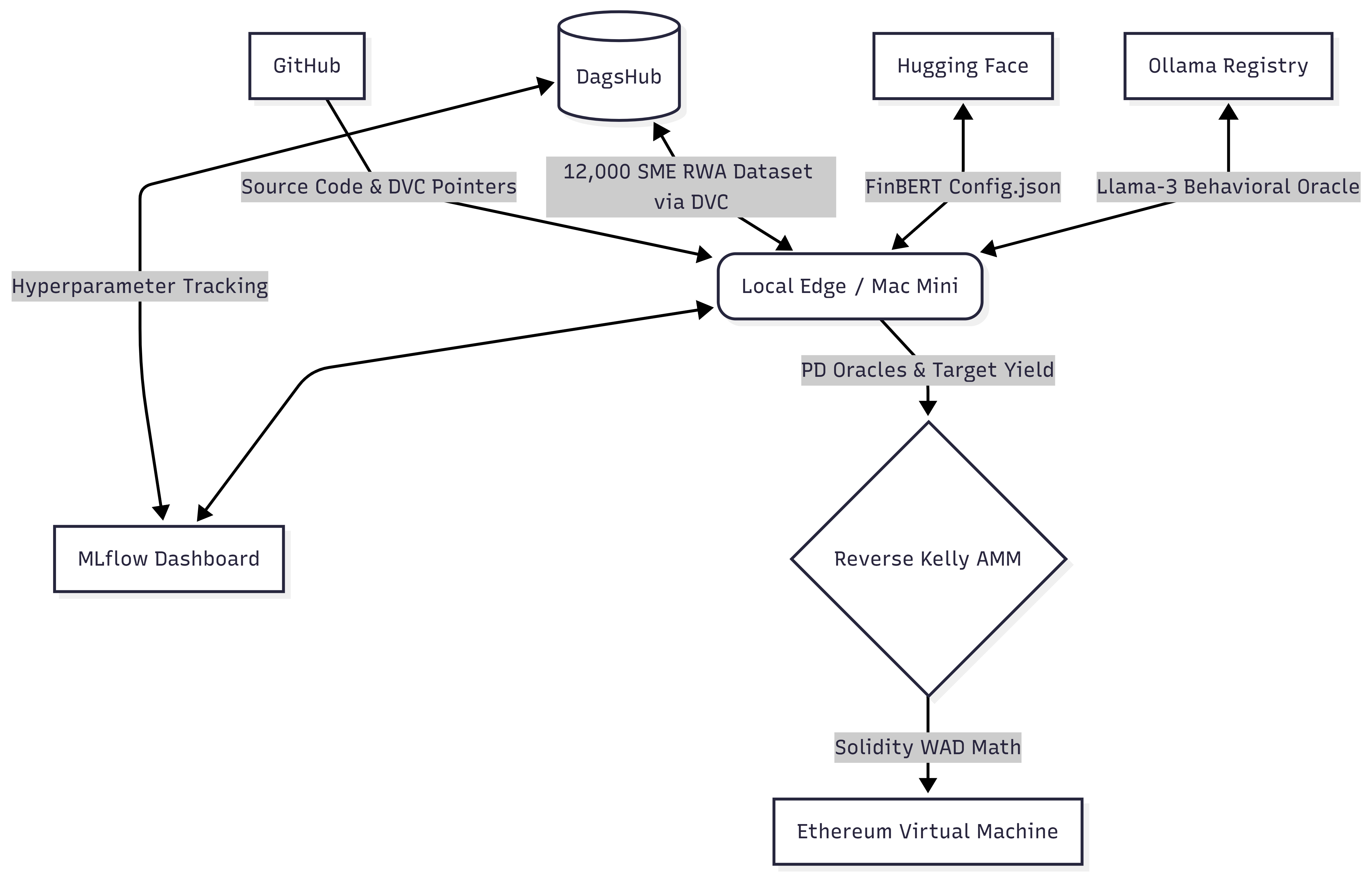
Figure 1: Open-Science Decentralized Tech Stack Orchestration.
The paper's system is architected as an open, reproducible tech stack, integrating explainable AI for credit risk prediction, smart contract optimization for gas efficiency, and robust data/model versioning.
Mathematical Foundations: Inverting the Kelly Criterion
The classical Kelly Criterion prescribes optimal capital allocation when outcome probabilities and payoffs are known, maximizing the asymptotic growth rate of wealth in repeated bets. In DeFi lending, however, the principal (bet size) is fixed, while the payoff (interest rate) must compensate for observed risk to ensure solvency and target LP yield.
The main contribution is the derivation and convexity proof of the Reverse Kelly rate function:
r=1−PDy+PD
where y is the policy target net yield and PD the estimated loan-specific probability of default. This functional form explicitly prices default risk, increases interest rates asymptotically as PD→1, and ensures that riskier loans are priced out of the pool, protecting LP capital and guaranteeing solvency.

Figure 2: Logic flow for the Reverse Kelly Convex Bonding Curve.
Analytical scrutiny of the first and second derivatives establishes strict convexity in PD, distinguishing this approach from prevailing linear or piecewise rate models.
Decentralized Edge-AI and Data Infrastructure
The interest rate discovery pipeline relies on edge inference, fed by explainable AI (XAI) risk models executed locally with zero-marginal inference costs. Off-chain infrastructure orchestrates Hugging Face (FinBERT) and Ollama (Llama-3) models for default risk and behavioral signal extraction, managed via MLflow for hyperparameter tracking and DVC/DagsHub for immutable, auditable data versioning.
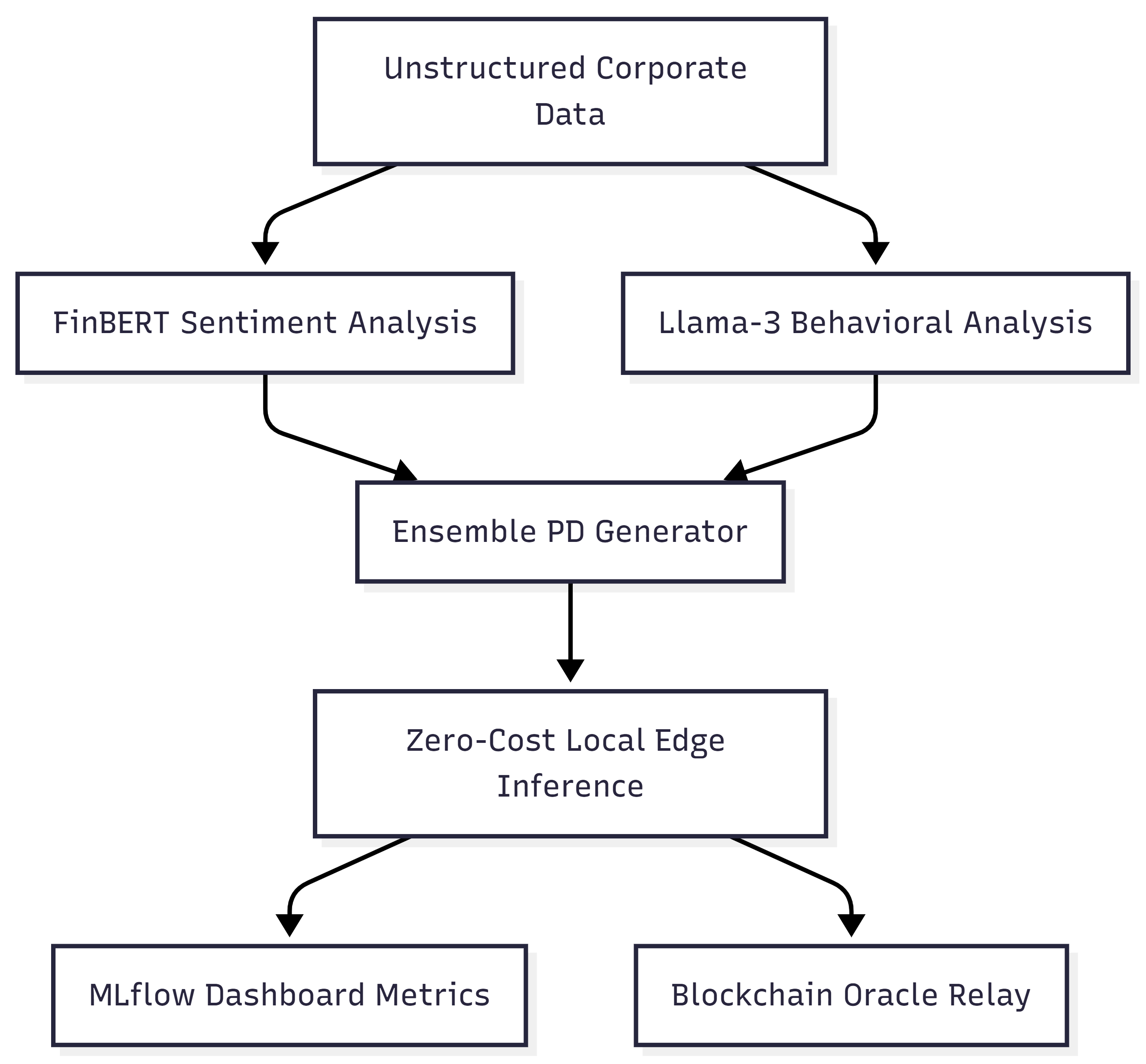
Figure 3: Edge Inference Pipeline for Zero-Cost PD Oracles.
This approach enables transparent, reproducible generation of default probabilities while eschewing centralization or reliance on often-costly traditional oracle services.
Smart Contract Design and EVM Optimization
Deploying the rkAMM within the EVM context requires gas-efficient implementation of nontrivial convex mathematical operations. The authors achieve this via WAD (1018-scaled) fixed-point arithmetic, ensuring precision and security. Solidity contracts are explicitly engineered to avoid division-by-zero and truncation pitfalls, employing OpenZeppelin patterns to mitigate reentrancy and other on-chain attack vectors.
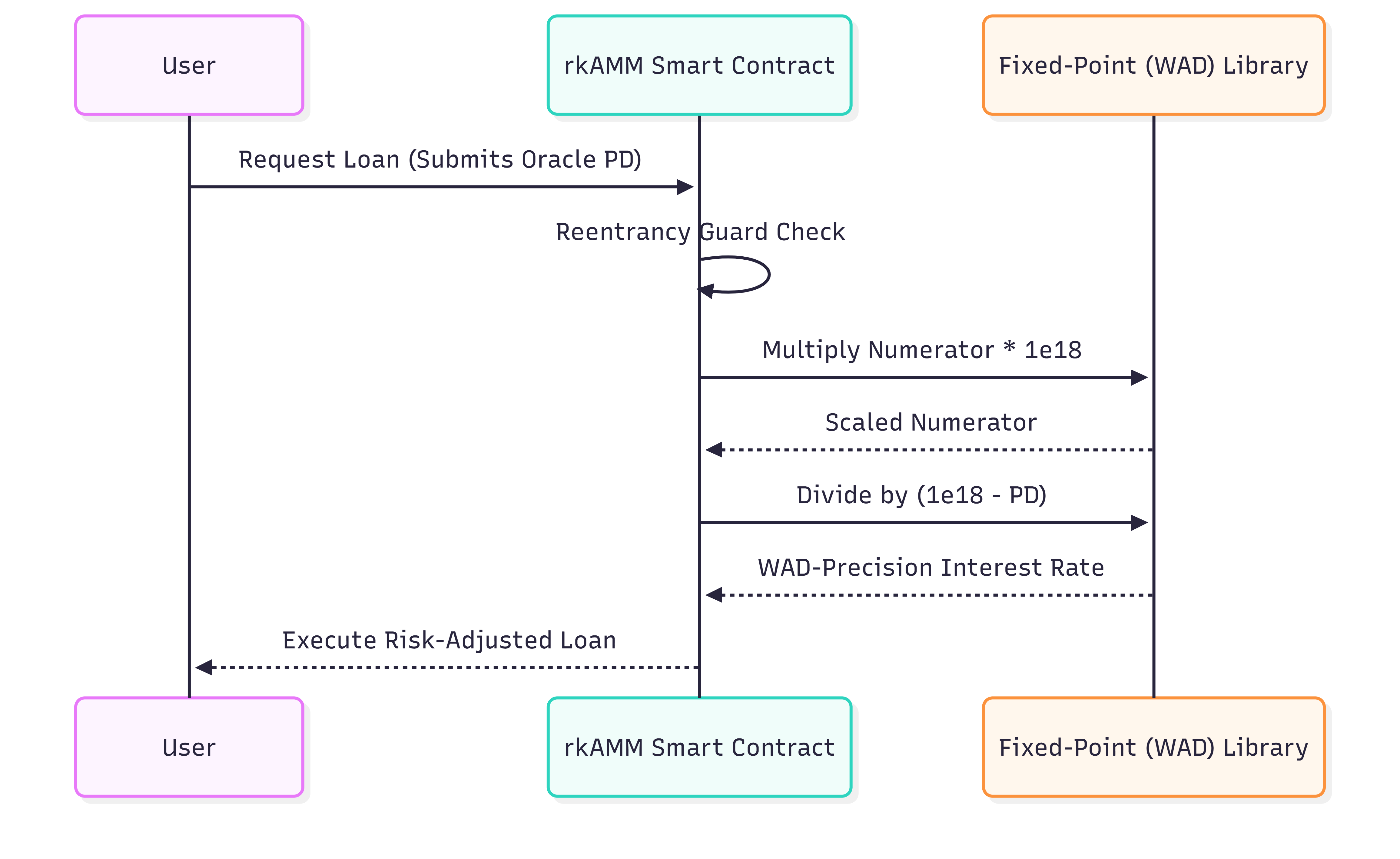
Figure 4: EVM Sequence Diagram utilizing WAD Mathematical Operations.
A key security insight is the architectural decoupling of oracle-fed PD from on-chain liquidity, eliminating the vector for flash-loan rate manipulation.
Empirical Results: Capital Efficiency under Macroeconomic Stress
Extensive Monte Carlo simulations provide strong empirical evidence that rkAMM achieves substantially higher capital efficiency and LP solvency than static utilization-based protocols—even under macroeconomic stress. The simulation draws SME loan PDs from a real-world-calibrated Beta distribution, shifting the mean to represent shocks and adverse selection scenarios.
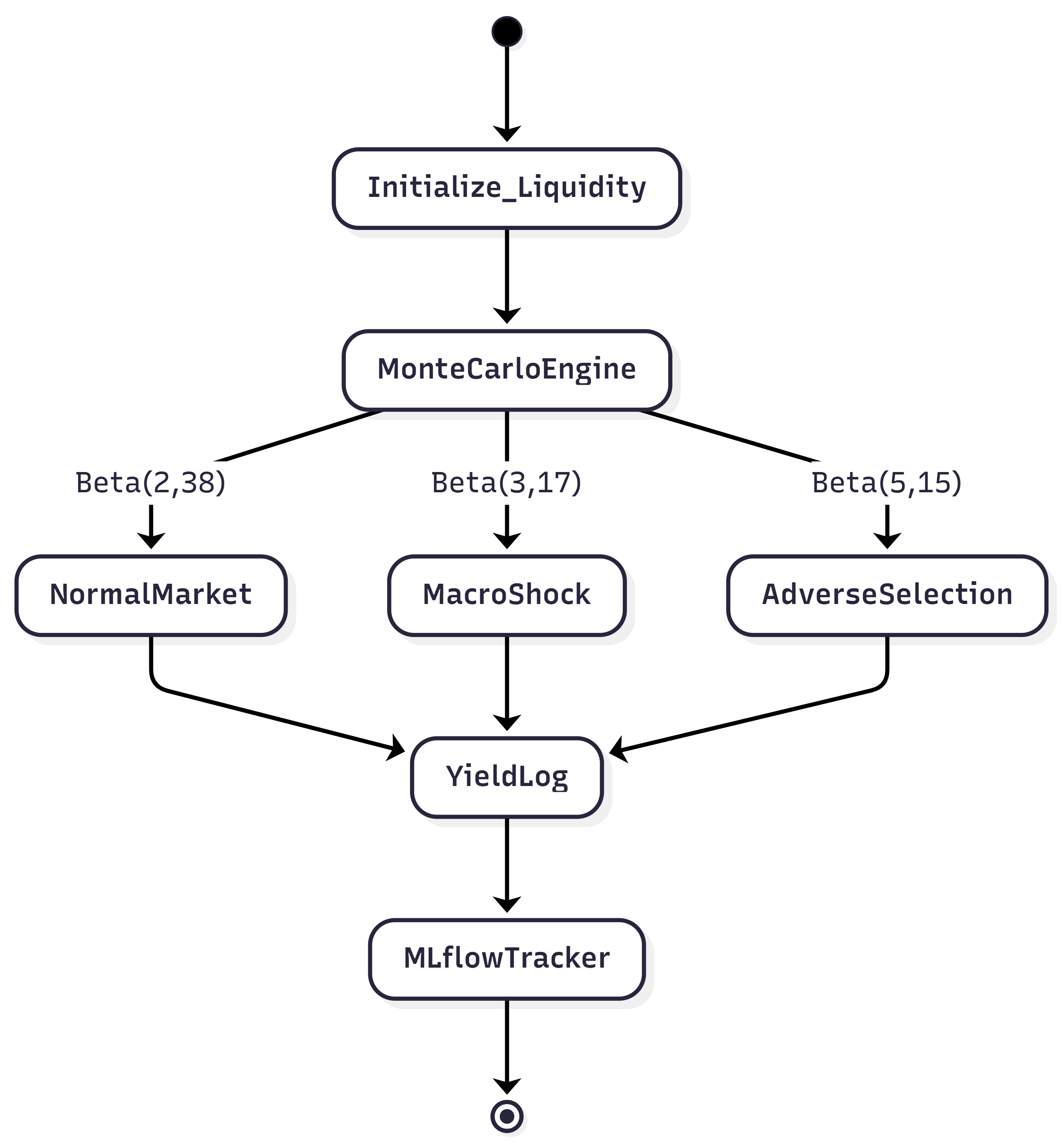
Figure 5: Monte Carlo state transition logic mapped to Beta distribution macroeconomic shocks.
Notable numerical findings include:
- Under “normal” conditions (PD≈5%), rkAMM delivers an 11.98% realized LP yield (vs 3.08% for a static curve).
- Under adverse macroeconomic shocks (PD≈15%), static protocols become insolvent (yield: −7.03%), while rkAMM maintains solvency at 11.42%.
- rkAMM’s convex rate function rationed credit efficiently: loan approval dropped to 71.9% during tail-risk selection, protecting pooled capital and securing positive net yields.
These results robustly validate the asserted superiority of the Reverse Kelly mechanism over existing interest rate discovery heuristics in DeFi. Particularly, the model demonstrates endogenous, risk-driven credit rationing without any discretionary governance intervention.
Limitations and Future Directions
While the infrastructure achieves zero-marginal cost for off-chain inference and maximizes openness/reproducibility, it introduces latency—oracle updates are asynchronous and may lag during acute market shocks or connectivity failures. The researchers acknowledge the need for next-generation decentralized, verifiable inference networks (e.g., DePIN, zkML approaches) to harden the system against liveness and censorship risk.
Furthermore, the assumption of zero recovery on default, while conservative, may understate potential LP yield in practice—future work could extend the framework to convertible/recovery-adjusted loss models.
Theoretical and Practical Implications
The rkAMM resolves a major bottleneck in decentralized credit risk pricing, supplants ad-hoc over-collateralization, and theoretically enables DeFi protocols to absorb traditionally “unbanked” real-world SME lending at scale. By binding lending rates to formal, strictly convex risk pricing, the model provides a transparent and rational basis for protocol solvency, addresses the 2T supply chain finance gap, and advances the foundational financial engineering in blockchain-integrated credit markets.
The architecture’s open-source, end-to-end versioned pipeline has practical implications for auditability, regulator engagement, and future integration with trustless, composable DeFi primitives.
Conclusion
This paper advances the state-of-the-art in DeFi lending by introducing a mathematically optimal, convex risk pricing mechanism—the Reverse Kelly Automated Market Maker—enabling scalable, risk-adjusted integration of under-collateralized real-world assets. Its rigorous financial, AI, and smart contract engineering provides a sustainable template for decentralized lending that is capital-efficient, transparent, and aligned with robust protocol solvency even under tail-risk macroeconomic shocks. Future research will target further decentralization of risk inference and dynamic integration of additional real-world asset classes.

