- The paper introduces LGAD sensors for real-time dosimetry, achieving per-pulse dose measurement at microsecond resolution.
- It compares two techniques—spike counting at low dose rates and area integration at high dose rates (up to 1800 Gy/s for electrons and 150 Gy/s for protons).
- It reveals that readout electronics limitations, rather than sensor physics, primarily constrain the dynamic range in FLASH radiotherapy.
LGAD-Based Beam Monitoring Across Conventional and FLASH Dose Rates for Radiotherapy
Introduction
The paper "Beam monitoring for radiotherapy from conventional to FLASH dose rates using Low Gain Avalanche Silicon detectors" (2607.03940) presents a comprehensive study on the implementation of Low Gain Avalanche Detectors (LGADs) for real-time, high-rate beam dosimetry in clinical radiotherapy. The focus is on addressing the emerging requirements of FLASH radiotherapy (FLASH-RT)—characterized by ultra-high dose rates (UHDR)—where traditional ionization chambers prove inadequate due to saturation effects and insufficient temporal resolution. The work evaluates the performance of LGADs against both electron and proton beams at a range of clinically relevant dose rates, introducing new methodologies for instantaneous beam monitoring on microsecond timescales.
Detector Architectures and Experimental Setup
Two LGAD sensors were employed—LGAD 1 (KU/CERN) and LGAD 2 (BNL)—with an additional reference silicon diode. LGAD 1 consists of a 2.9×0.5 mm² active area and is read out with a dual-stage trans-impedance amplifier, while LGAD 2 (1.3×1.3 mm²) is interfaced with a GHz-bandwidth, 35 dB gain, GALI-S66+ amplifier chain. Both readout systems originated from high-energy physics timing applications. All detectors were positioned along the beam axis at various distances (z=0–270 cm), receiving either 7 MeV electron or 70 MeV proton beams from clinical accelerators. The time profiles were logged through high-speed oscilloscopes, with reference doses acquired via calibrated ionization chambers.
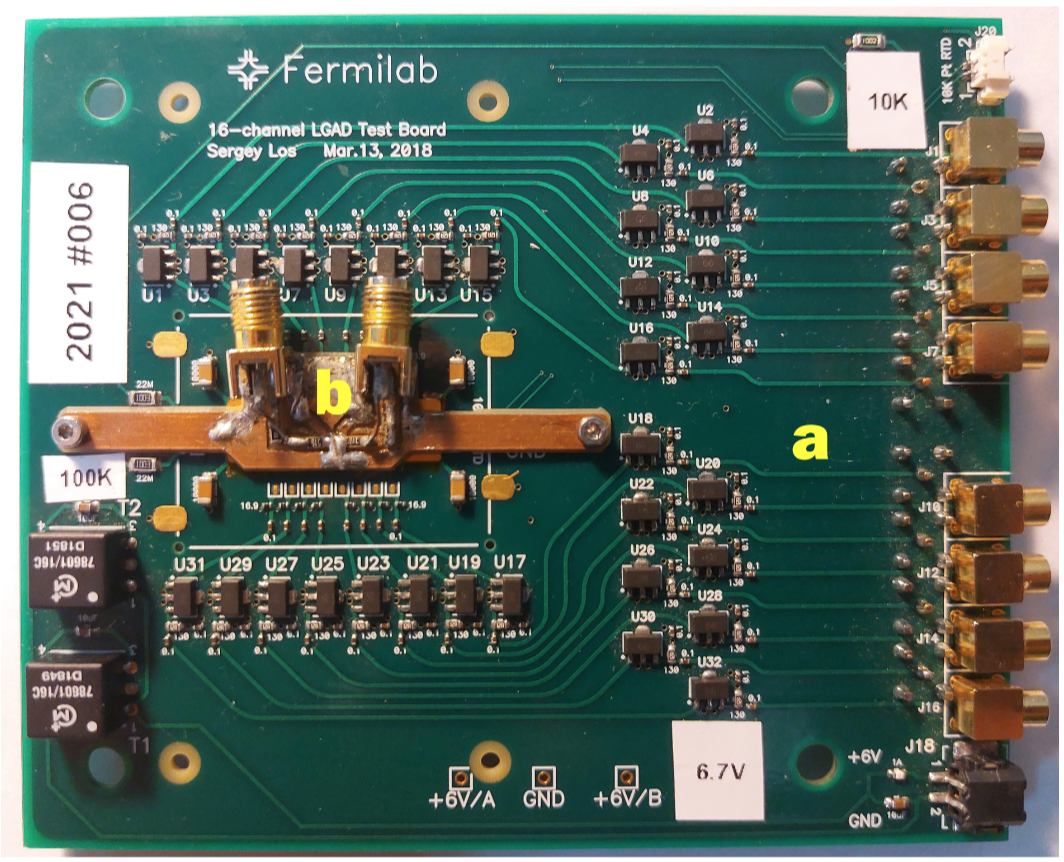
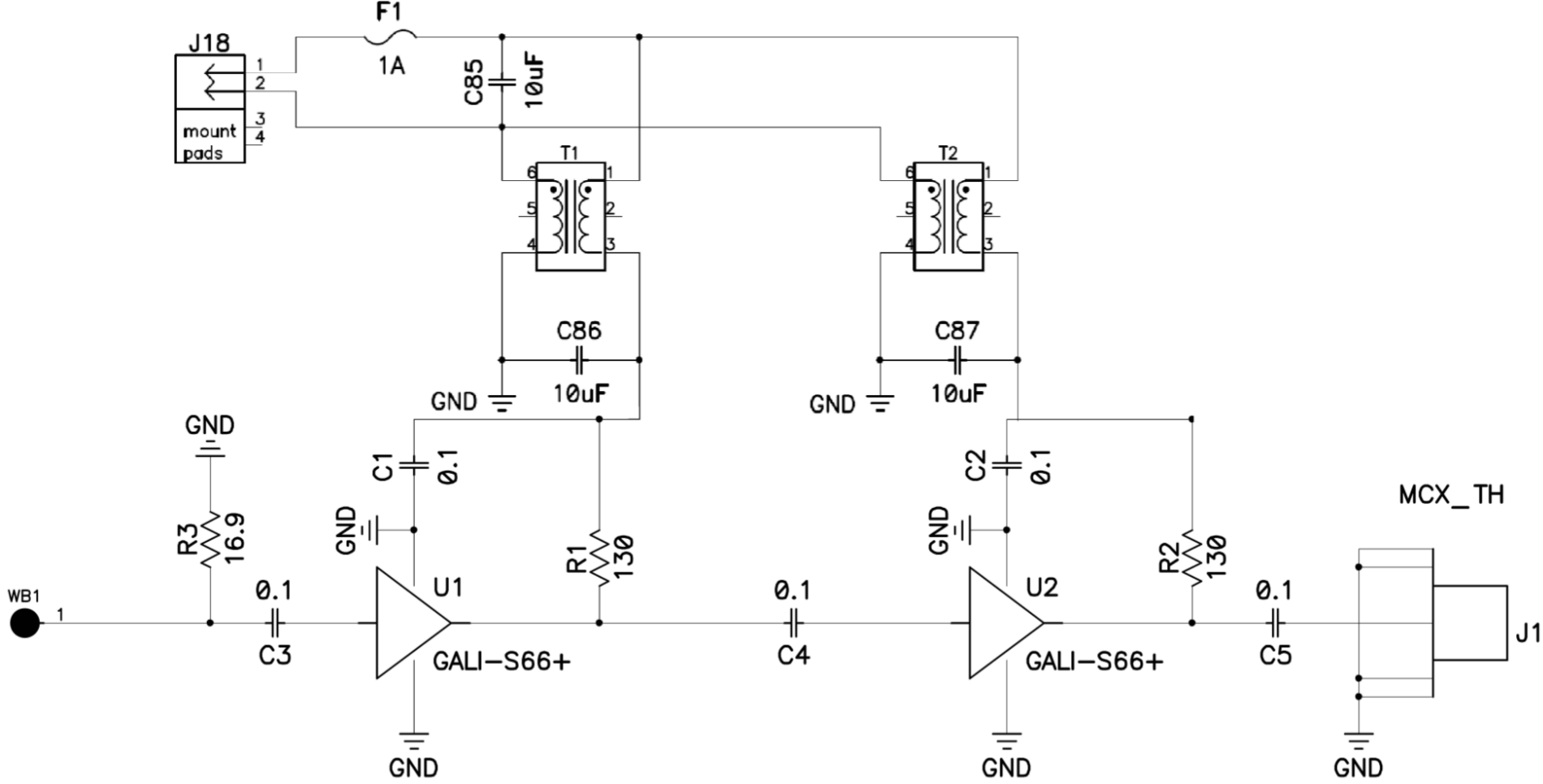
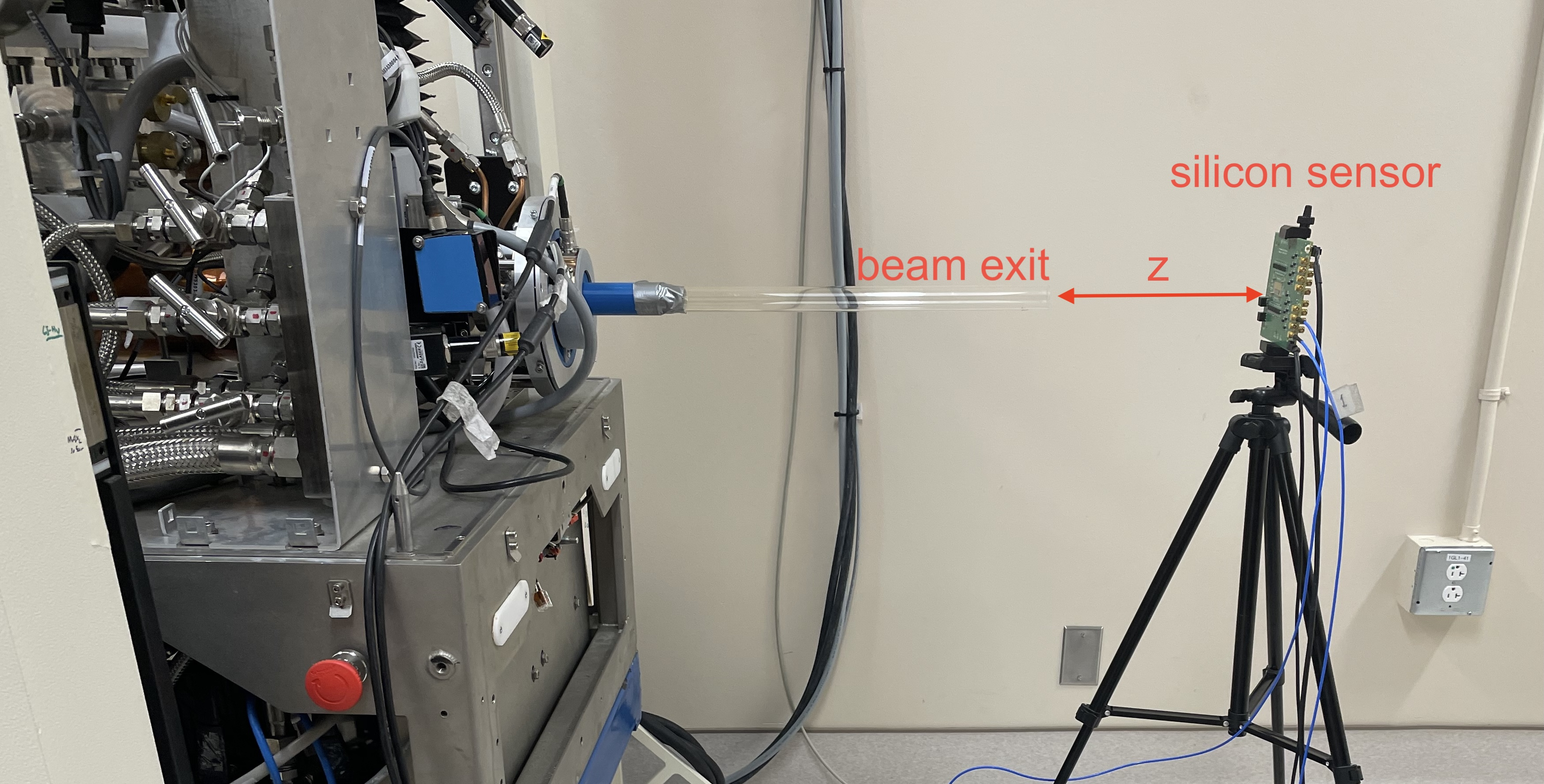
Figure 1: Top: Schematic and photograph of the LGAD 2 and diode board with two-stage amplifier; bottom: experimental setup for beam–detector alignment and data acquisition.
This configuration permits detailed investigation of the full acquisition chain, explicitly encompassing not only sensor response but also the electronic amplification stages, bandwidth, and digitization.
Measurement Methodologies
Two primary methods for instantaneous dose assessment were developed:
Spike Counting
At low dose rates, the nanosecond-scale response of LGADs allows registration of individual particle-induced spikes in the oscilloscope waveform, enabling direct particle counting. This method, however, becomes inapplicable above ≈1–2 Gy/s (for the given sensor areas) due to superposition of spikes—i.e., pile-up leads to signal overlap, precluding discrimination of individual particle events. Thus, spike counting serves primarily as a diagnostics tool for verifying pulse structure and beam presence at low intensities rather than as a dosimetry method in high-fluence regimes.
Area Integration
For clinically relevant and FLASH dose rates, the authors devised an area integration technique, measuring the total signal charge during the active window of each pulse. Two implementations were realized:
- Fixed Integration Window: The window is centered on the signal maximum with a duration matched to the expected pulse width.
- Dynamic Baseline Integration: The integration window is selected algorithmically based on signal drop-off, with baseline calculated dynamically on both flanks of the pulse to compensate for negative offsets possibly induced by RF pickup or amplifier behavior.
Area integration not only extends the measurable dose regime by more than two orders of magnitude but also facilitates per-pulse dosimetry at microsecond resolution.
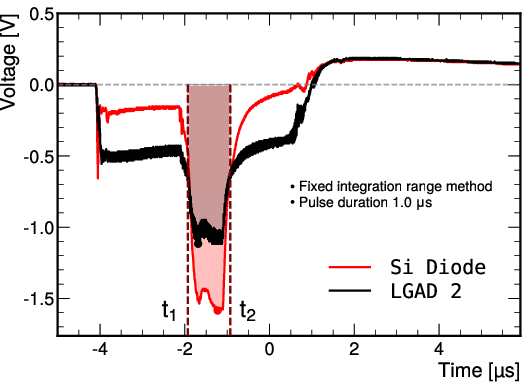
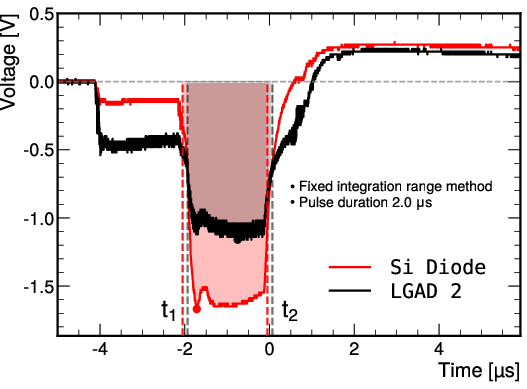
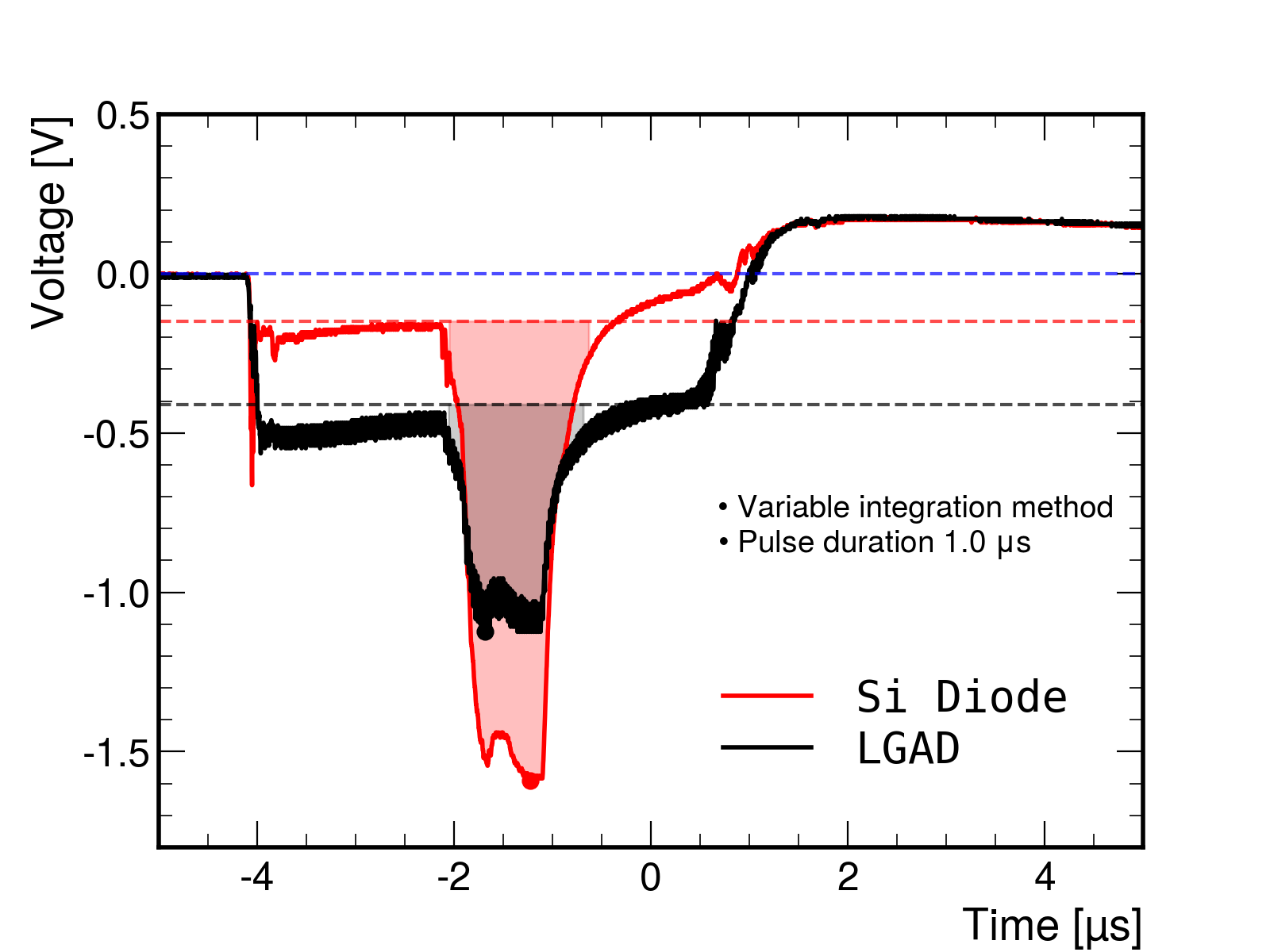
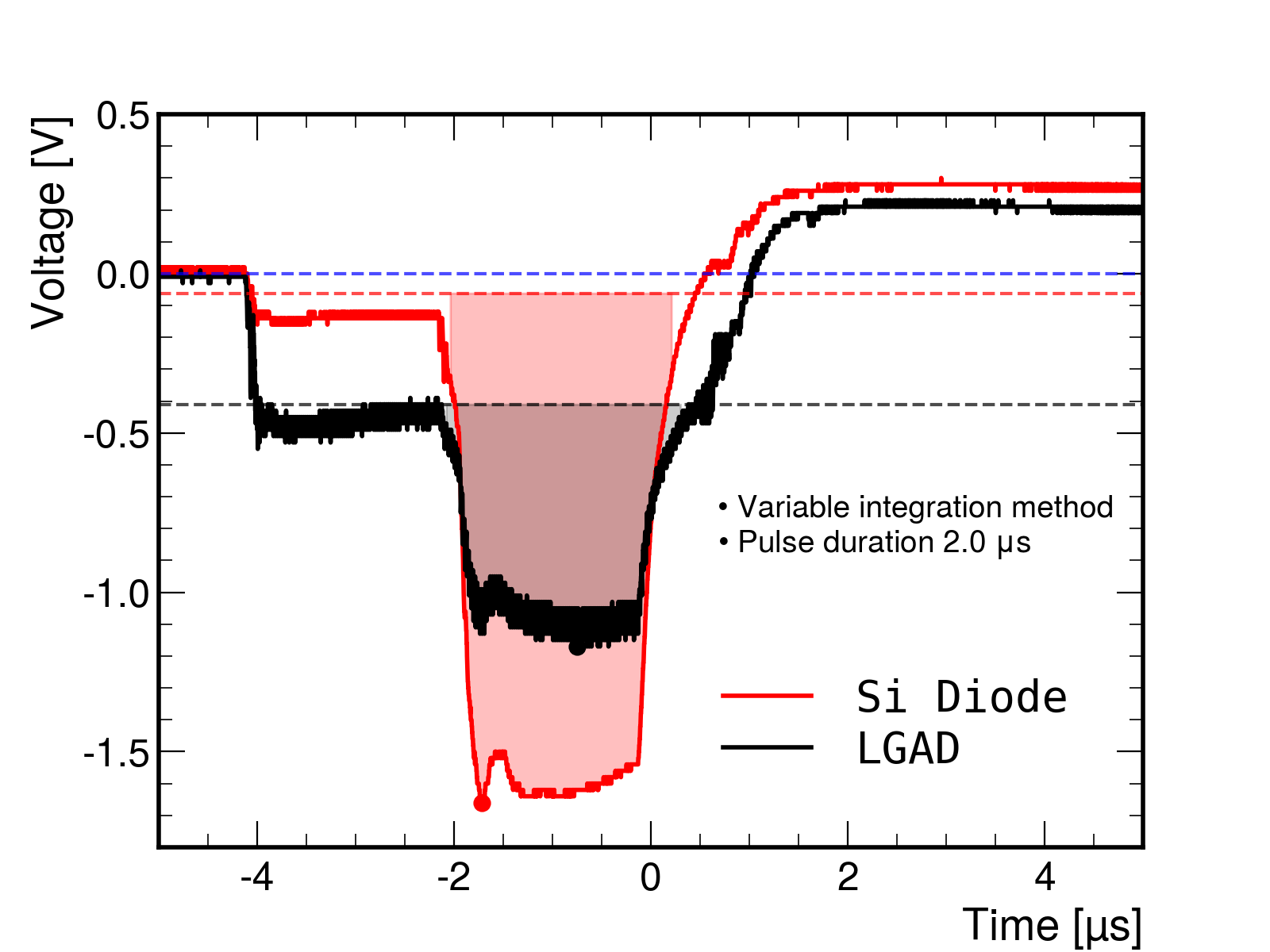
Figure 2: Baseline-corrected LGAD 2 and silicon diode waveforms for 1 and 2 μs pulses, demonstrating performance of full integration (top) and dynamic baseline (bottom) methods.
Results: Electron Beams
The correlation of integrated LGAD output (charge) with independently measured dose rates was assessed up to ≈1800 Gy/s for electrons. Both the fixed and dynamic integration methods yielded robust linearity up to ~450 Gy/s, above which the response increasingly deviated from linear behavior, manifesting as a reduction in slope but without a saturation plateau throughout the accessible dose range.
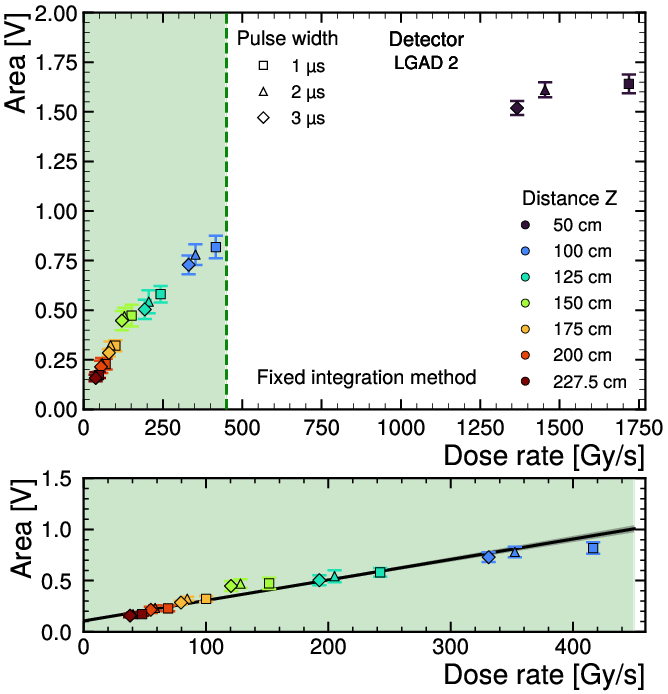
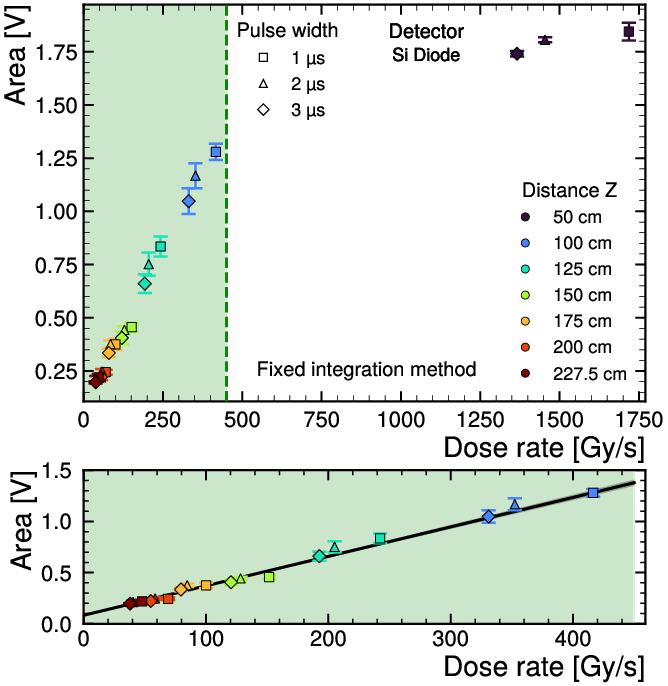
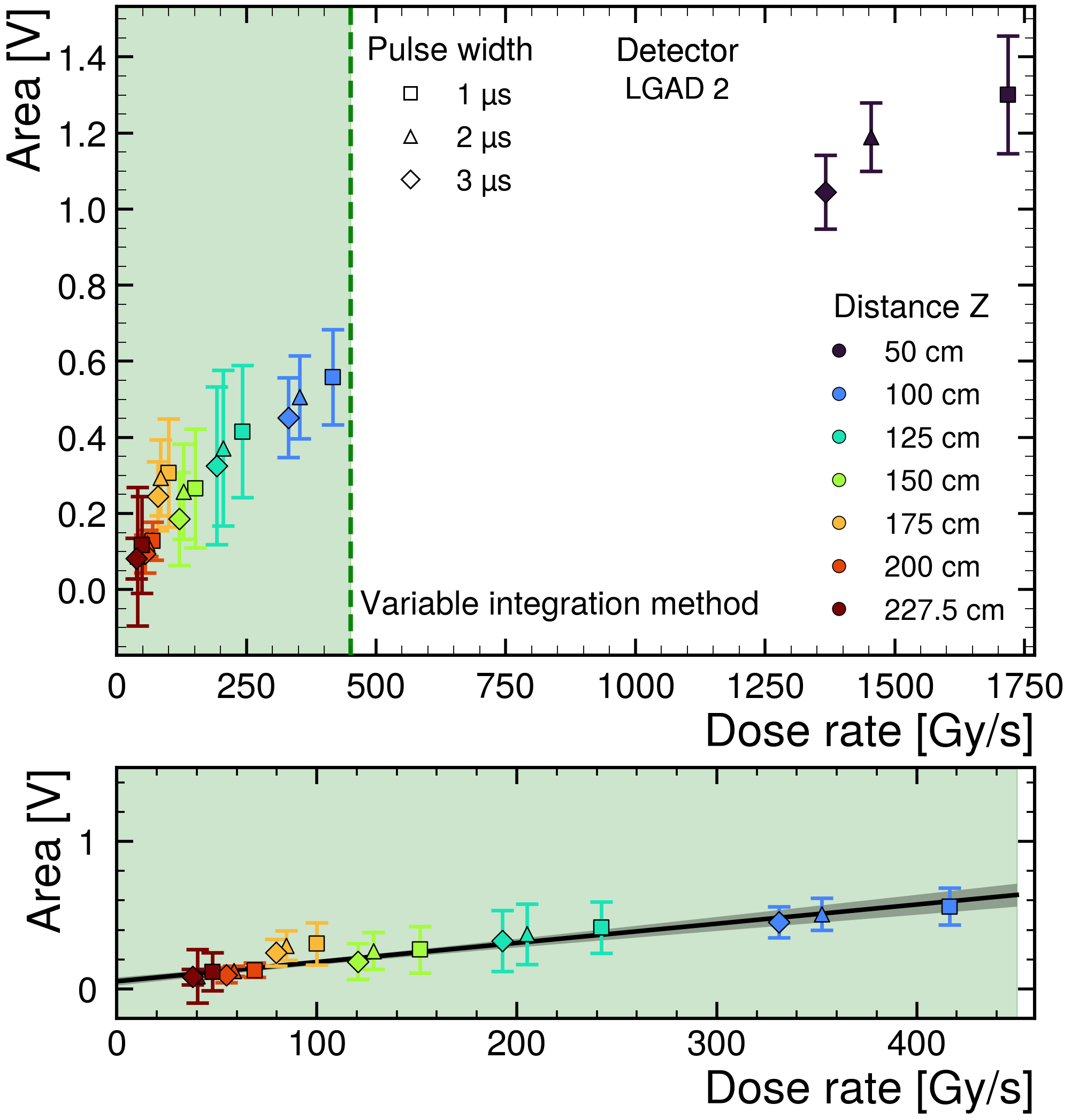
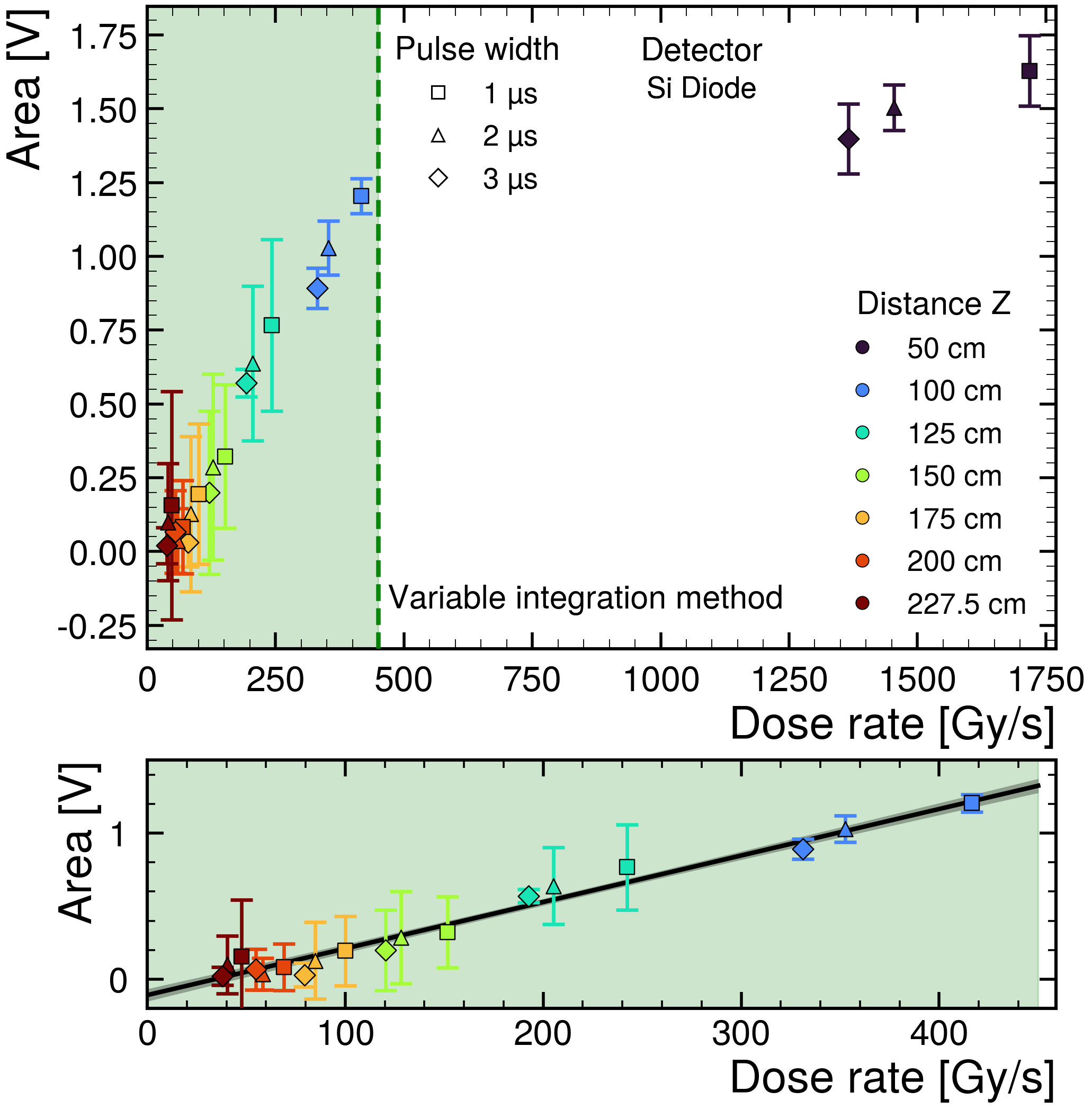
Figure 3: Dose–response curves for LGAD 2 and silicon diode under electron irradiation, comparing full and variable integration methods; linearity holds to ≈450 Gy/s with a broad extension of measurable range at reduced sensitivity above.
This extended dynamic range—subject to calibration—suggests that the area integration method can provide instantaneous dose measurement across both conventional and FLASH-RT regimes, barring limitations imposed by the readout chain.
Results: Proton Beams
LGAD 1 was evaluated under proton beam irradiation, with measurements demonstrating linear correspondence to the ion chamber benchmark up to ≈12 Gy/s, beyond which a moderated (compressed) slope persisted to at least ≈150 Gy/s. The onset of non-linearity was correlated with the increasing probability of simultaneous multi-particle incidence within the nanosecond scale signal window, essentially outpacing the electronics’ ability to resolve independent charge depositions.
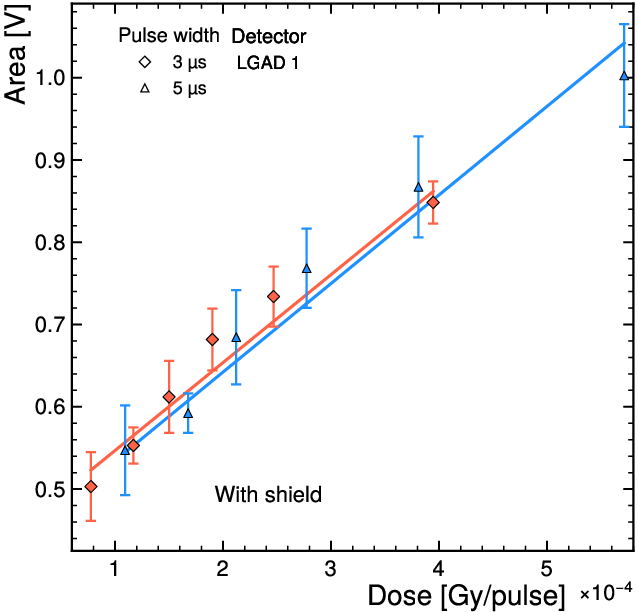
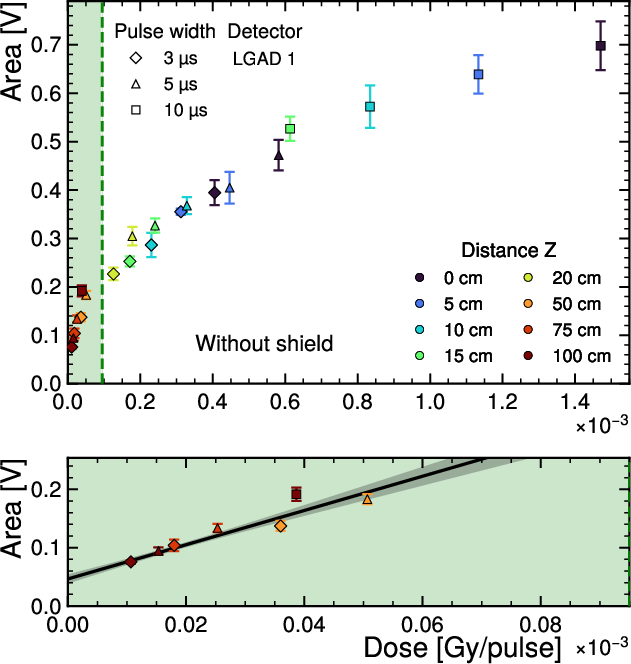
Figure 4: LGAD 1 area-based response to proton beams, with and without shielding, showing good linearity up to ≈12 Gy/s and extended but compressed measurable regime beyond that point.
Engineering Constraints and Readout Limitations
A salient finding is that the primary bottleneck in dynamic range and linearity is not attributable to the intrinsic silicon sensor physics, but rather to the readout electronics—particularly, their analog bandwidth and current handling capacity. This is evidenced by the continued monotonic response (absence of a true plateau) as well as comparative performance with other fast detector technologies (e.g., SiC diodes). Notably, improved bandwidth and reduced active area are projected to extend linear measurable range significantly, and future efforts should focus on electronics redesign.
Active Area Mapping and Position Sensitivity
A secondary result involves mapping the LGAD 1 response using a picosecond-scale laser scan, revealing modest spatial non-uniformity. This enables potential for sub-millimeter beam position resolution, supporting the feasibility of integrated position-sensitive beam monitors for clinical use.
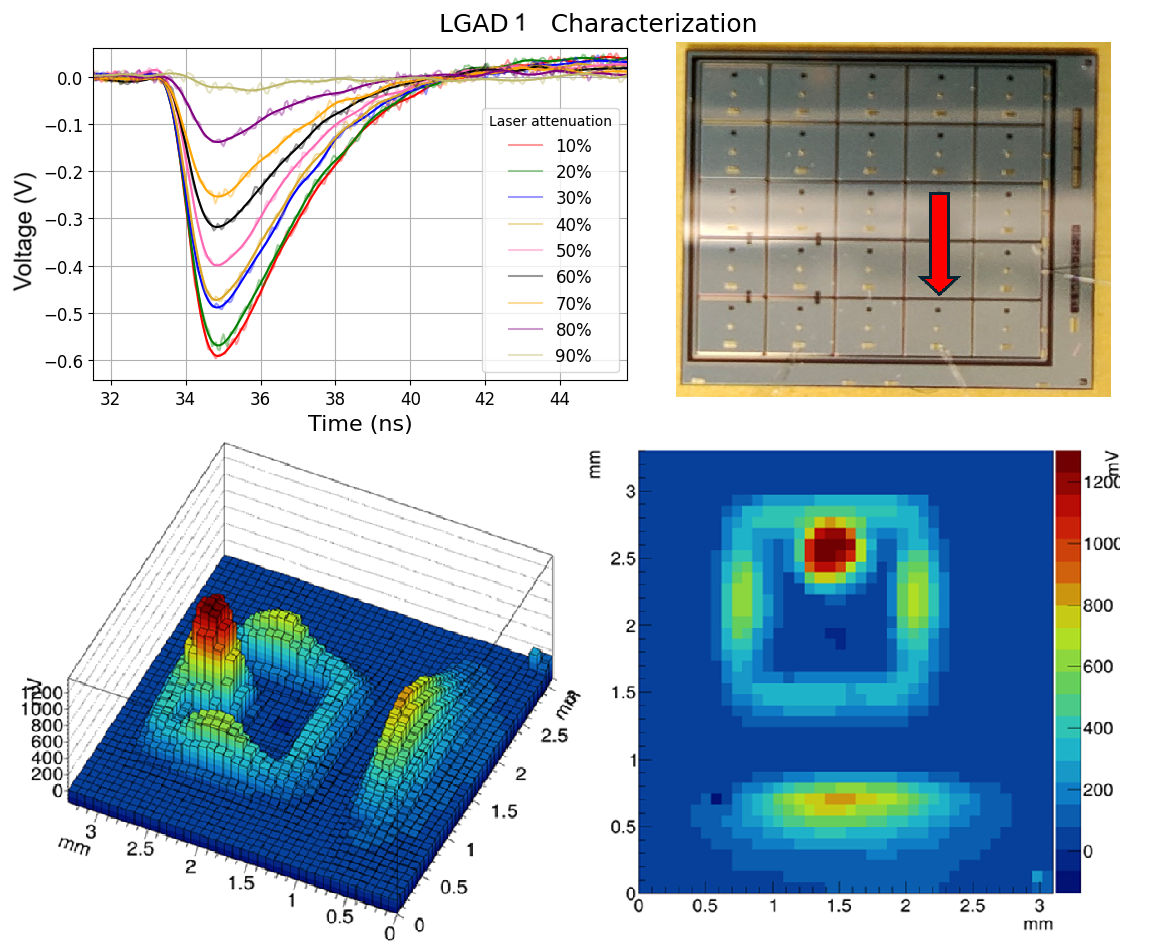
Figure 5: Laser scan across LGAD 1 active area; bottom panel shows non-uniformity that enables ~0.1 mm beam position determination.
Implications and Future Directions
LGAD-based dosimetry demonstrably supports per-pulse, microsecond-scale measurement across the full suite of dose rates encountered in both conventional and FLASH clinical contexts, with strong implications for real-time beam interruption and fault detection systems. The research clearly delineates the immediate engineering path: amplify dynamic range and speed in the electronics, potentially supplemented by sensor miniaturization, to match or exceed the projected FLASH-RT dose requirements.
Further practical advances are anticipated in:
- Real-time feedback systems for instantaneous beam cutoff on deviation from prescribed dose.
- Integration of position-sensitive LGAD arrays for both intensity and spatial distribution monitoring.
- Systematic studies on aging, radiation damage, and temperature dependence affecting long-term clinical reliability.
- Adoption of these silicon-based approaches as a robust alternative to gas-based ionization chambers for FLASH-RT deployment.
Conclusion
This study establishes LGADs as practical, high-speed sensors for beam monitoring in the FLASH-RT regime, bridging current limitations of ionization chambers. The area integration method achieves instantaneous, per-pulse dose readout up to 1800 Gy/s for electrons and 150 Gy/s for protons, with linearity bounded by readout electronics rather than the detectors. The roadmap for future systems is clear: focus on advanced front-end electronics to fully leverage the inherent speed and stability of silicon avalanche detectors for clinical radiotherapy at all dose rates.
Reference:
"Beam monitoring for radiotherapy from conventional to FLASH dose rates using Low Gain Avalanche Silicon detectors" (2607.03940)

