- The paper introduces semiclassical Langevin methods to capture time-crystalline order and finite-size scaling in dissipative quantum spin models.
- The paper benchmarks its approach against mean-field and exact Lindblad dynamics, showing nontrivial scaling with varying interaction ranges.
- The study demonstrates that quantum noise sustains persistent oscillations beyond mean-field predictions, marking a dynamical phase boundary.
Semiclassical Langevin Dynamics of Long-Range Dissipative Time Crystals
Introduction
The paper "Semiclassical Langevin dynamics of long-range dissipative time crystals" (2607.03486) presents a comprehensive analysis of time-crystalline phases in open quantum spin models under long-range interactions and dissipation, using a semiclassical Langevin approach. The study focuses on two paradigmatic nonequilibrium systems: a spin-$1/2$ chain with long-range dissipative channels and a spin-1 chain with local dissipation but power-law long-range Hamiltonian interactions. The work rigorously benchmarks the semiclassical Langevin methods against both mean-field solutions and exact Lindblad dynamics, and systematically characterizes the finite-size scaling signatures for time-crystal order.
Model Definitions and Semiclassical Langevin Approach
A central methodological component of the work is the semiclassical Langevin formalism derived from the quantum Langevin equation for spin models subject to Lindblad dissipative dynamics. For both spin-$1/2$ and spin-1 systems, the authors systematically construct sets of stochastic differential equations for local observables (Pauli and Gell-Mann variables, respectively), incorporating site-dependent, spatially correlated noise from the dissipators.
This approach captures deterministic mean-field behavior in the thermodynamic (L→∞) limit, along with the scaling of quantum noise effects at finite size. Unlike discrete truncated Wigner approximations, the method does not require a sampling of the initial conditions for the observables, exploiting rapid effective memory loss of the initial state in these dissipative many-body models.
Spin-1/2 Model with Power-Law Lindblad Operators
The first investigated system is a spin-$1/2$ chain with Hamiltonian H^=J∑iσ^ix and dissipation via engineered Lindblad operators with power-law spatial range. Specifically,
L^j=l=1∑Lfjl(α)σl+,
where fjl(α) decays as a power law with exponent α, tuning from fully collective (α=0) to local damping (α→∞). The key diagnostic observable is the averaged longitudinal magnetization $1/2$0, and the criterion for boundary time crystal (BTC) behavior is the divergence of the magnetization oscillation lifetime with system size.
In the fully collective regime, the time-crystalline oscillations are undamped in the thermodynamic limit and correspond to a persistent limit cycle predicted by mean-field theory. Finite $1/2$1 introduces finite-size decay and more complex fluctuation dynamics.
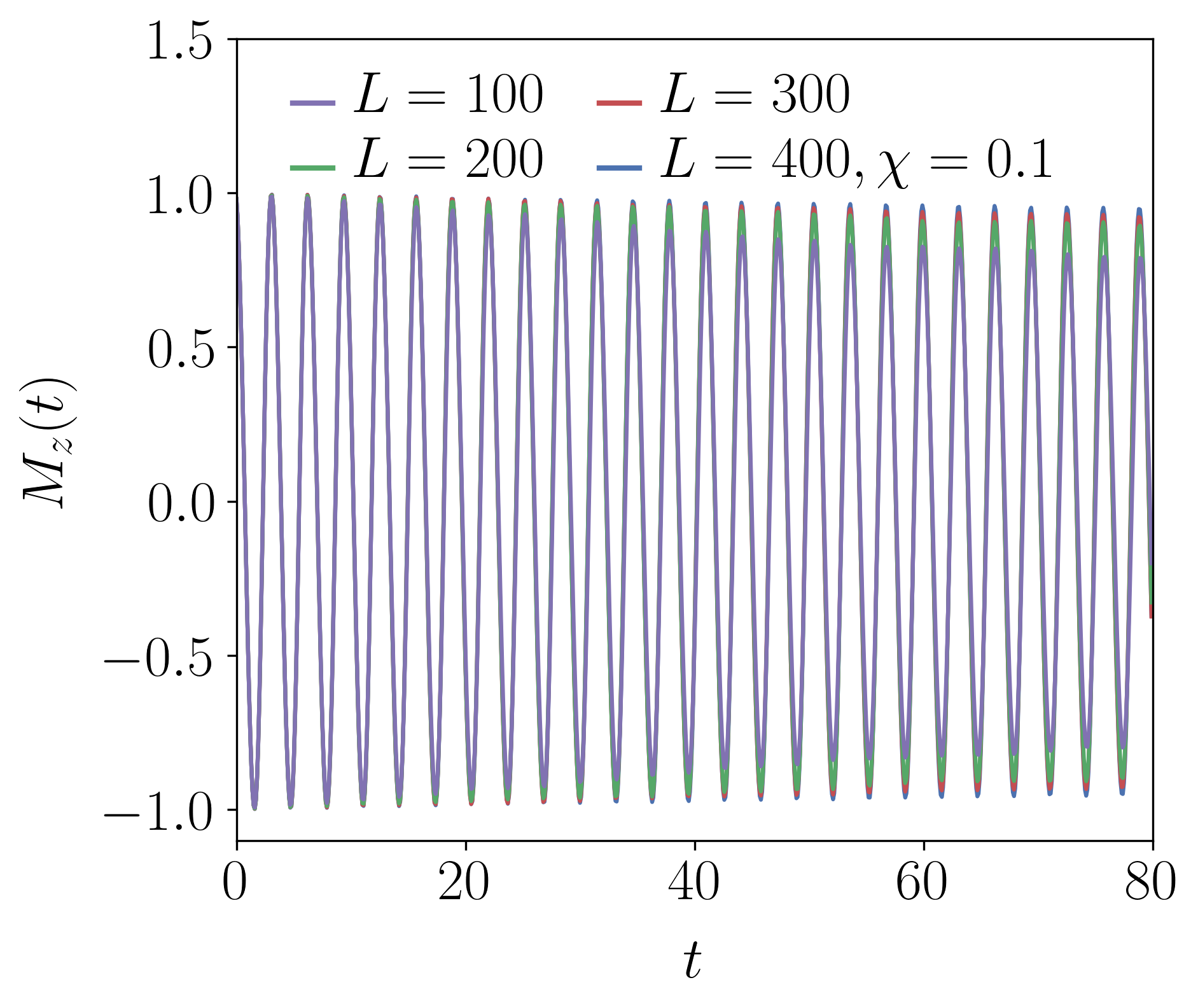
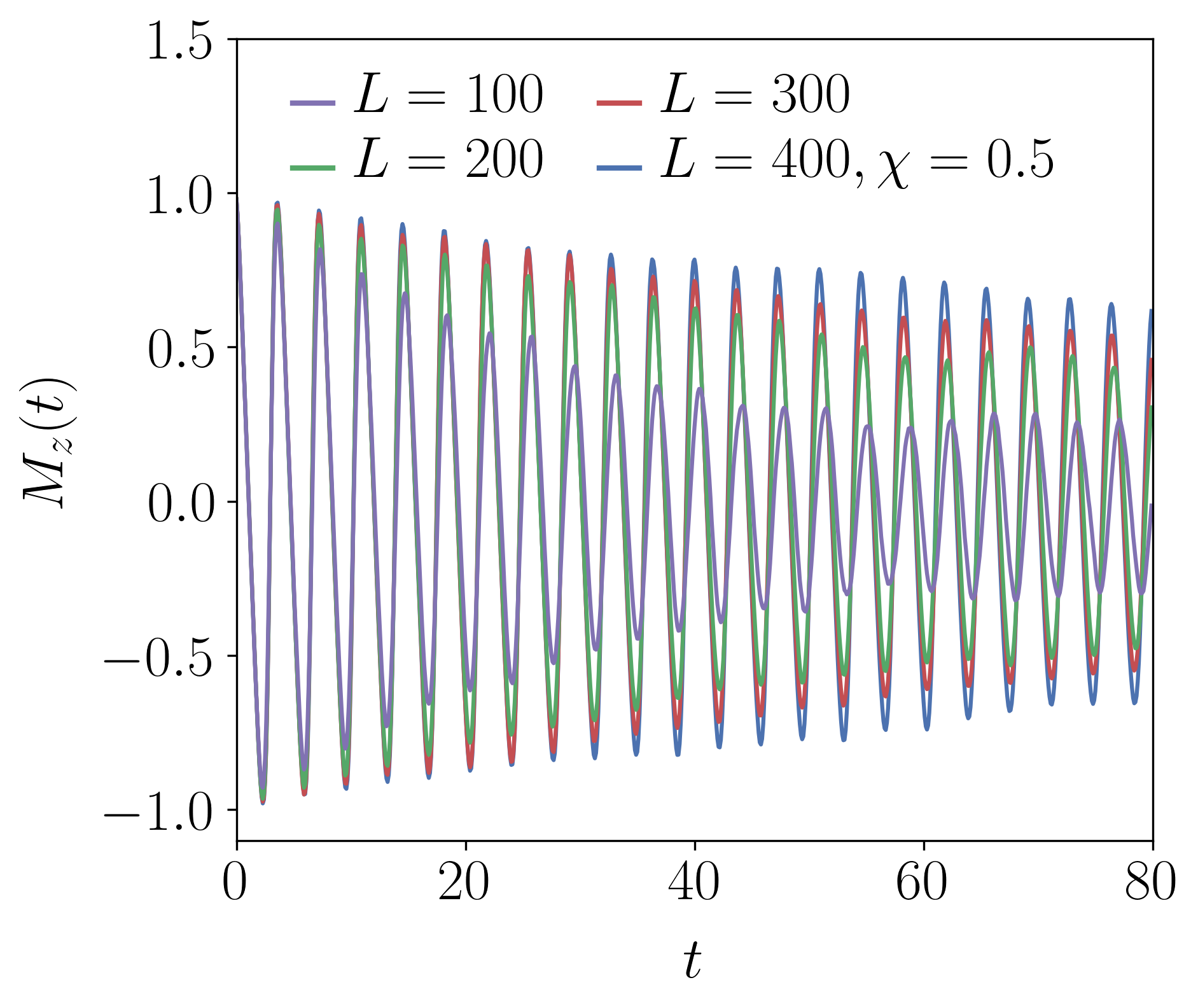
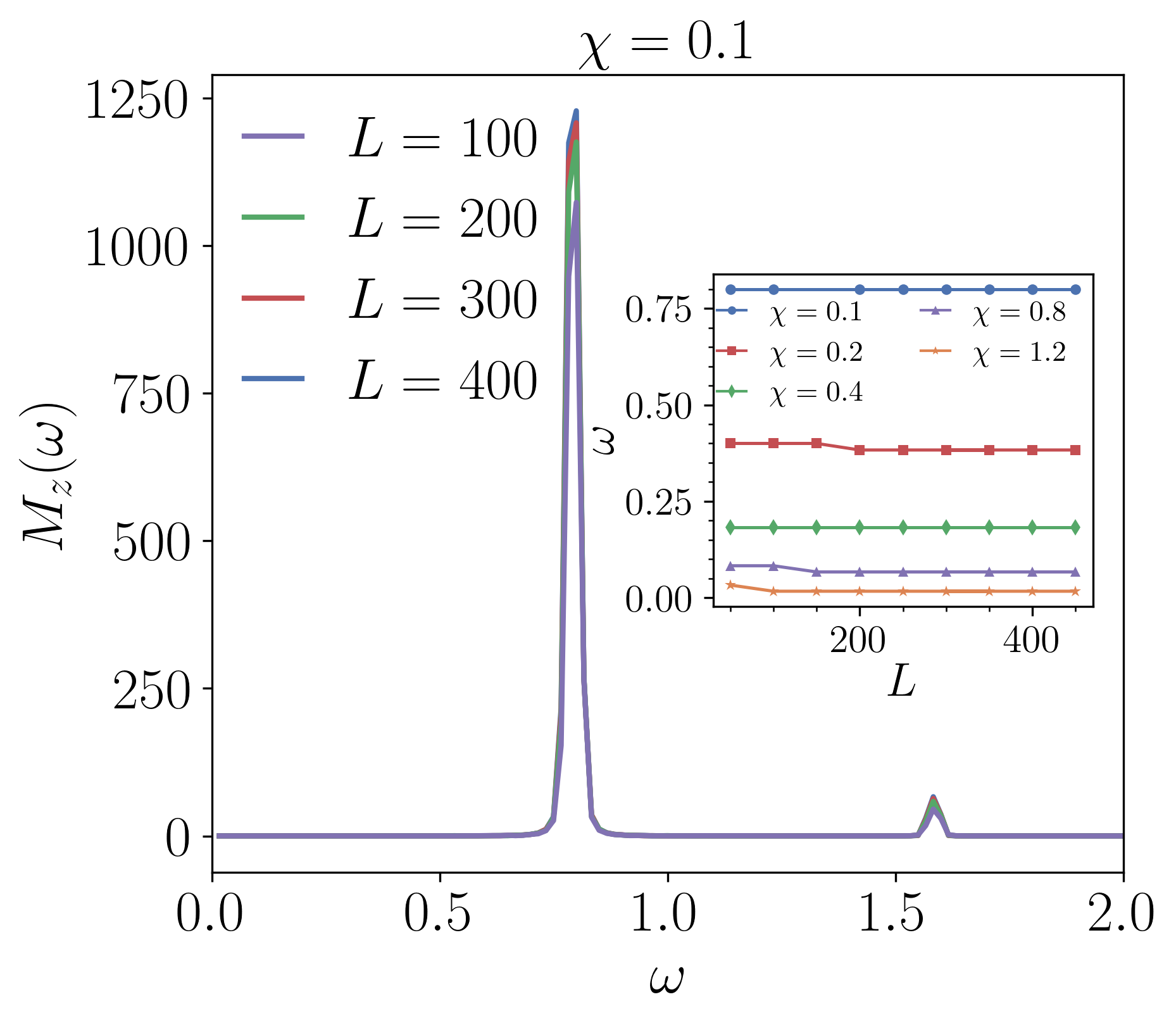
Figure 1: Time evolution and Fourier spectrum of magnetization $1/2$2 in the collective limit; persistent oscillations with a dominant frequency are stabilized as $1/2$3 increases ($1/2$4).
The authors perform a finite-size scaling analysis, extracting the decay constant $1/2$5 of the oscillation envelope maxima, fitting $1/2$6. A positive exponent $1/2$7 signals BTC order.
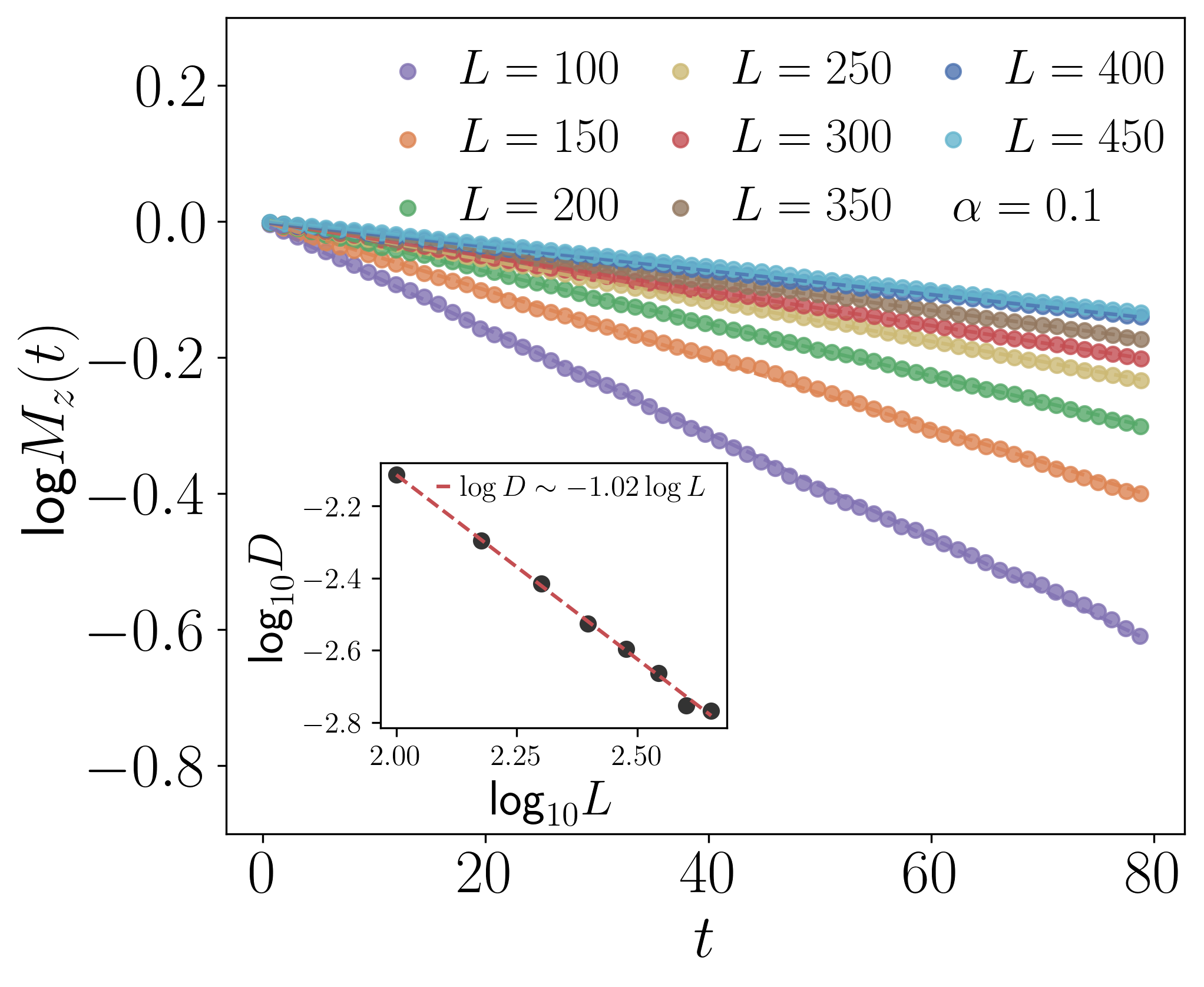
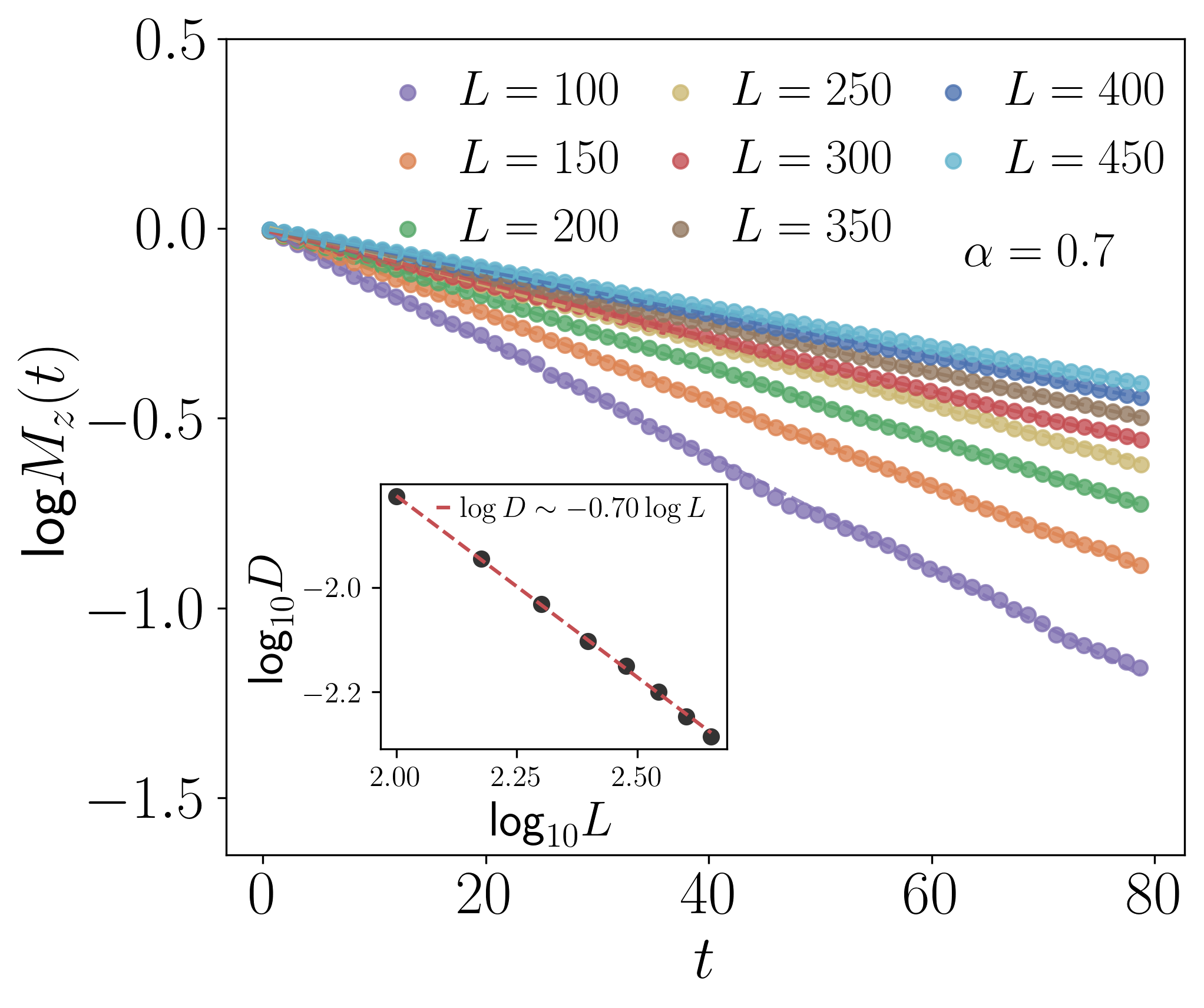
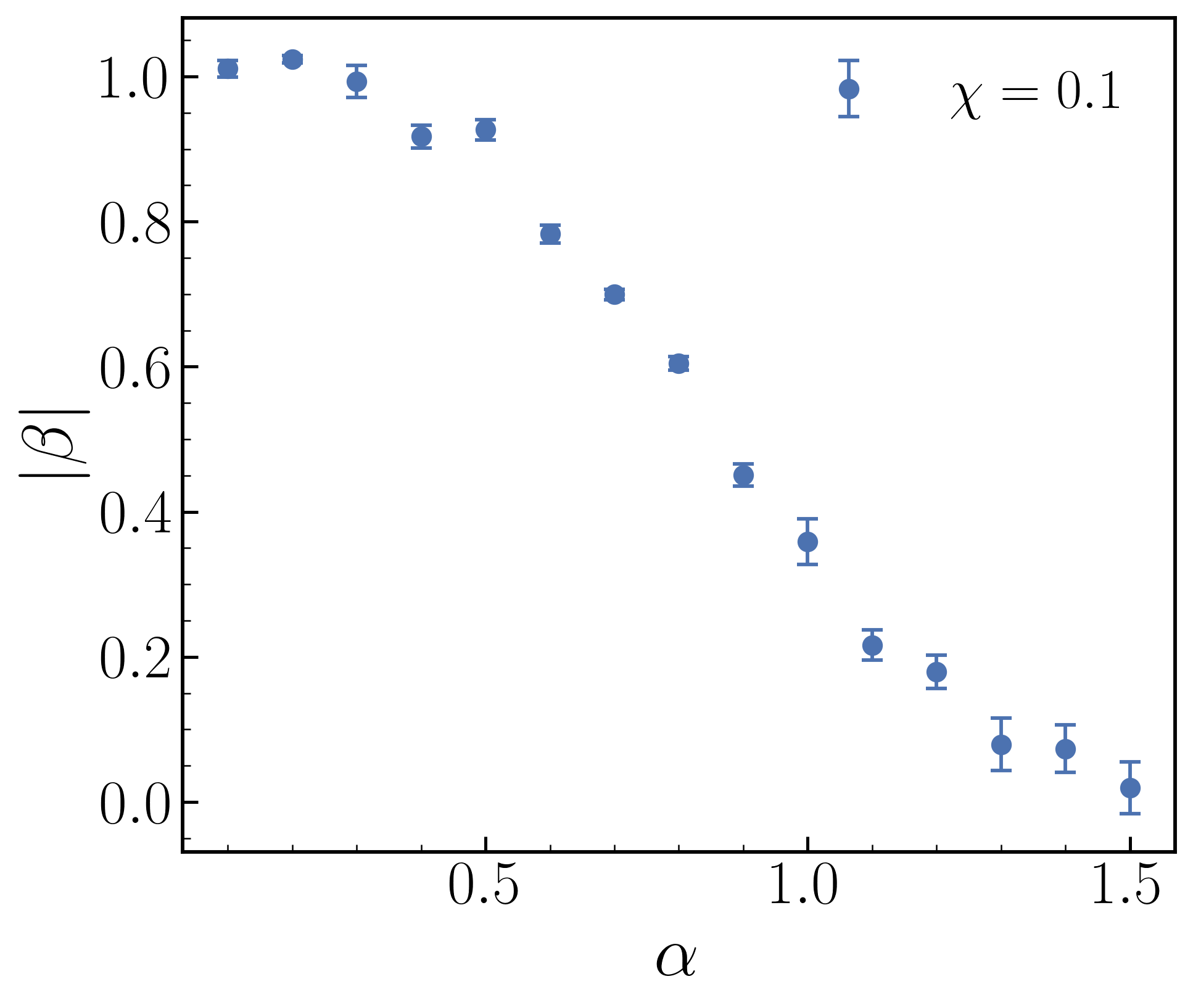
Figure 2: Systematic scaling analysis of the finite-size decay of the oscillatory envelope as the range exponent $1/2$8 is increased, signaling the suppression of time-crystal order for larger $1/2$9.
A strong numerical result of the study is the direct evidence that the BTC phase, as characterized by L→∞0, persists not only for L→∞1 (where mean-field theory is asymptotically exact), but also up to L→∞2. This provides explicit support that quantum fluctuations retain time-crystalline oscillations beyond the regime of mean-field validity, contradicting previous analyses that predicted only stationary behavior in this regime based on mean-field approaches (2607.03486).
Spin-1 Model: Local Dissipation and Long-Range Hamiltonian Interactions
The second system—a spin-1 chain—features a Hamiltonian with power-law interactions and strictly local dissipation (L→∞3). The semiclassical variables in this sector are the expectation values of the eight Gell-Mann matrices, with dynamics described by nonlinear stochastic equations.
This scenario consolidates the physical dichotomy between dissipation-induced and interaction-induced collectivity. The signature of time-crystal order is again the persistent oscillatory dynamics of the averaged magnetization L→∞4 as L→∞5.
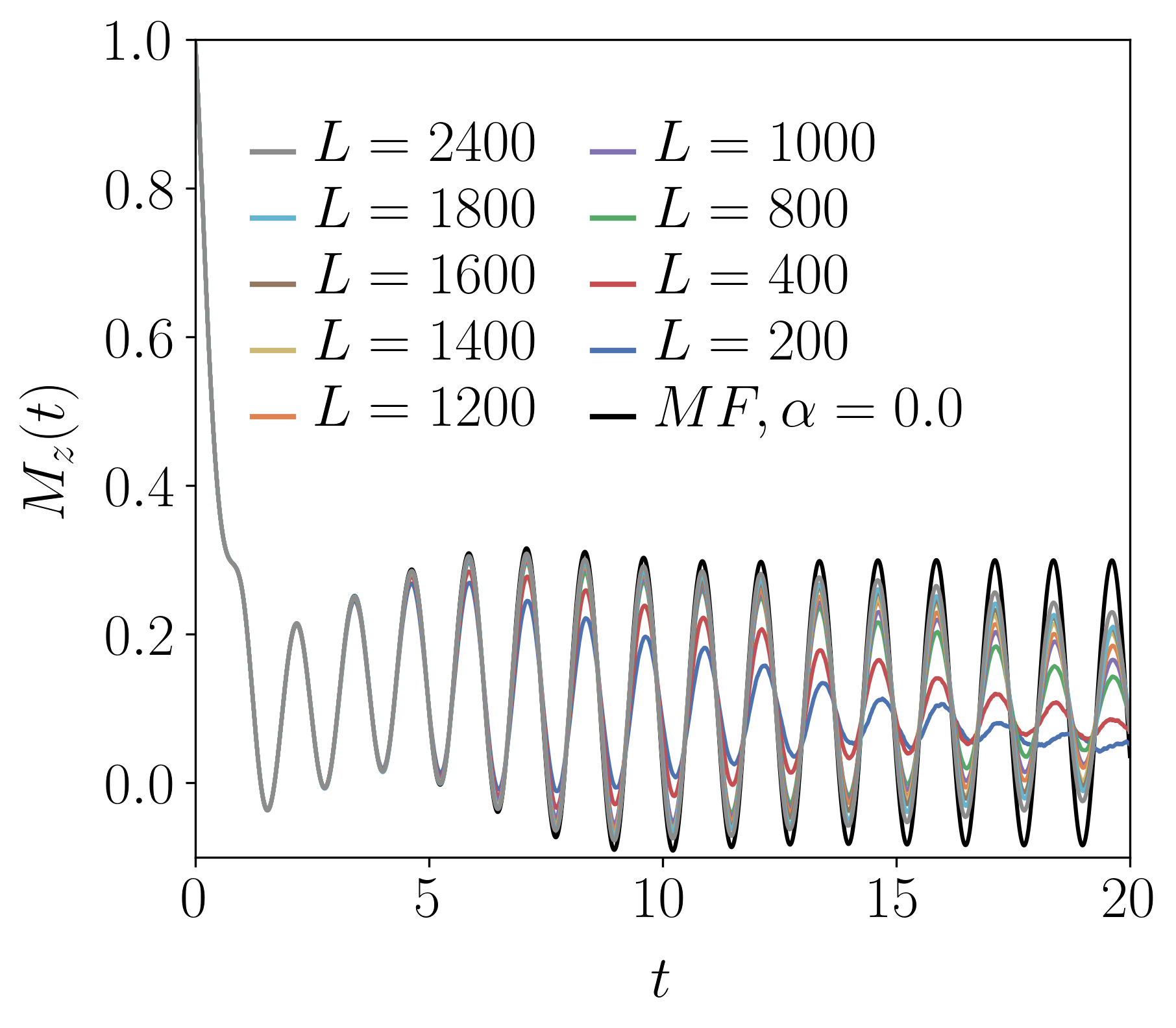
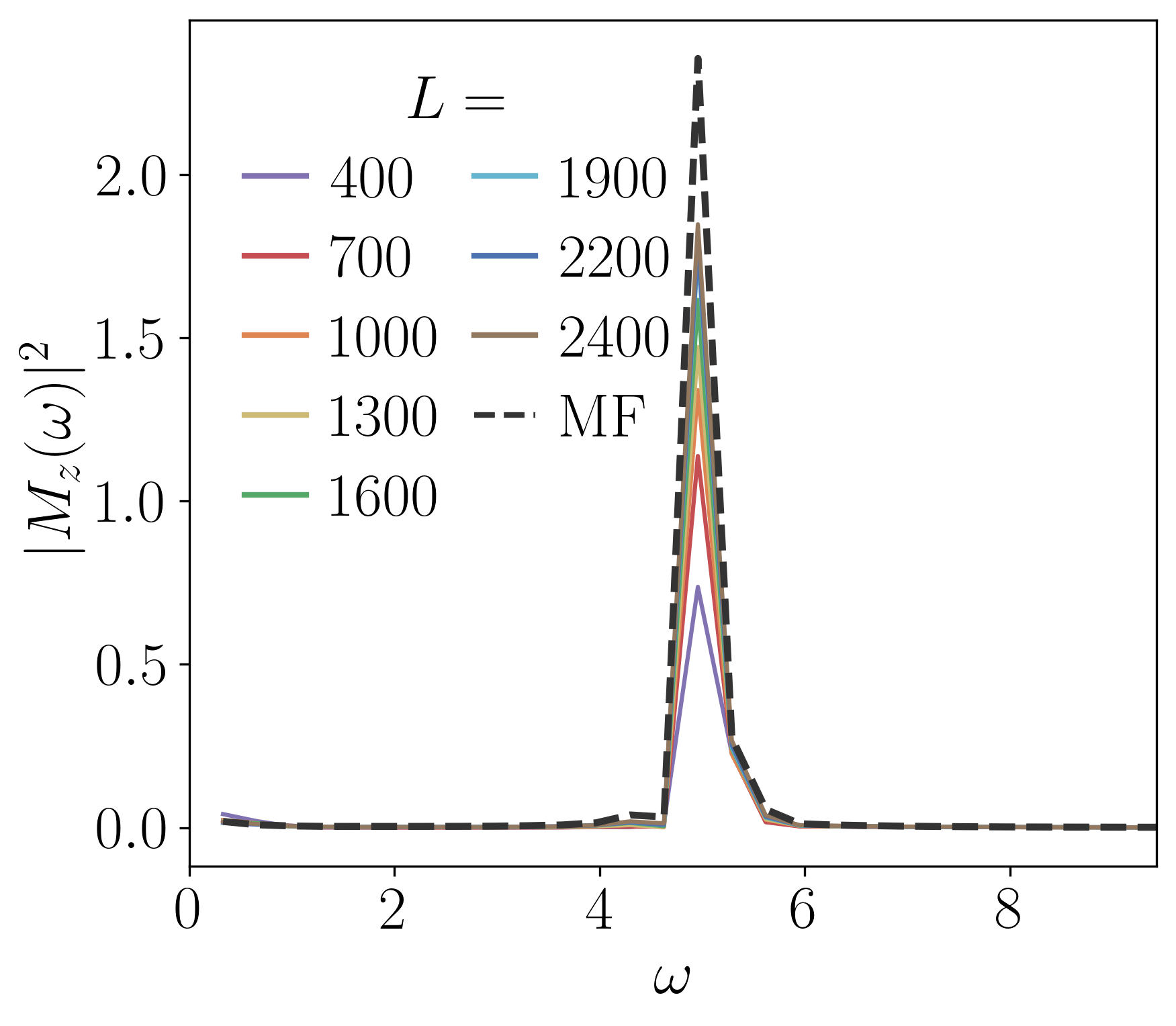
Figure 3: Time evolution and frequency analysis of L→∞6 in the spin-1 model with fully connected interactions (L→∞7); finite-size results approach the mean-field limit cycle.
For intermediate interaction exponents L→∞8, the authors probe time-crystalline behavior through two complementary finite-size scaling diagnostics: (i) the deviation time L→∞9 beyond which the finite-size trajectory-averaged dynamics drifts from the mean-field prediction, and (ii) the scaling of the dominant Fourier peak height $1/2$0.
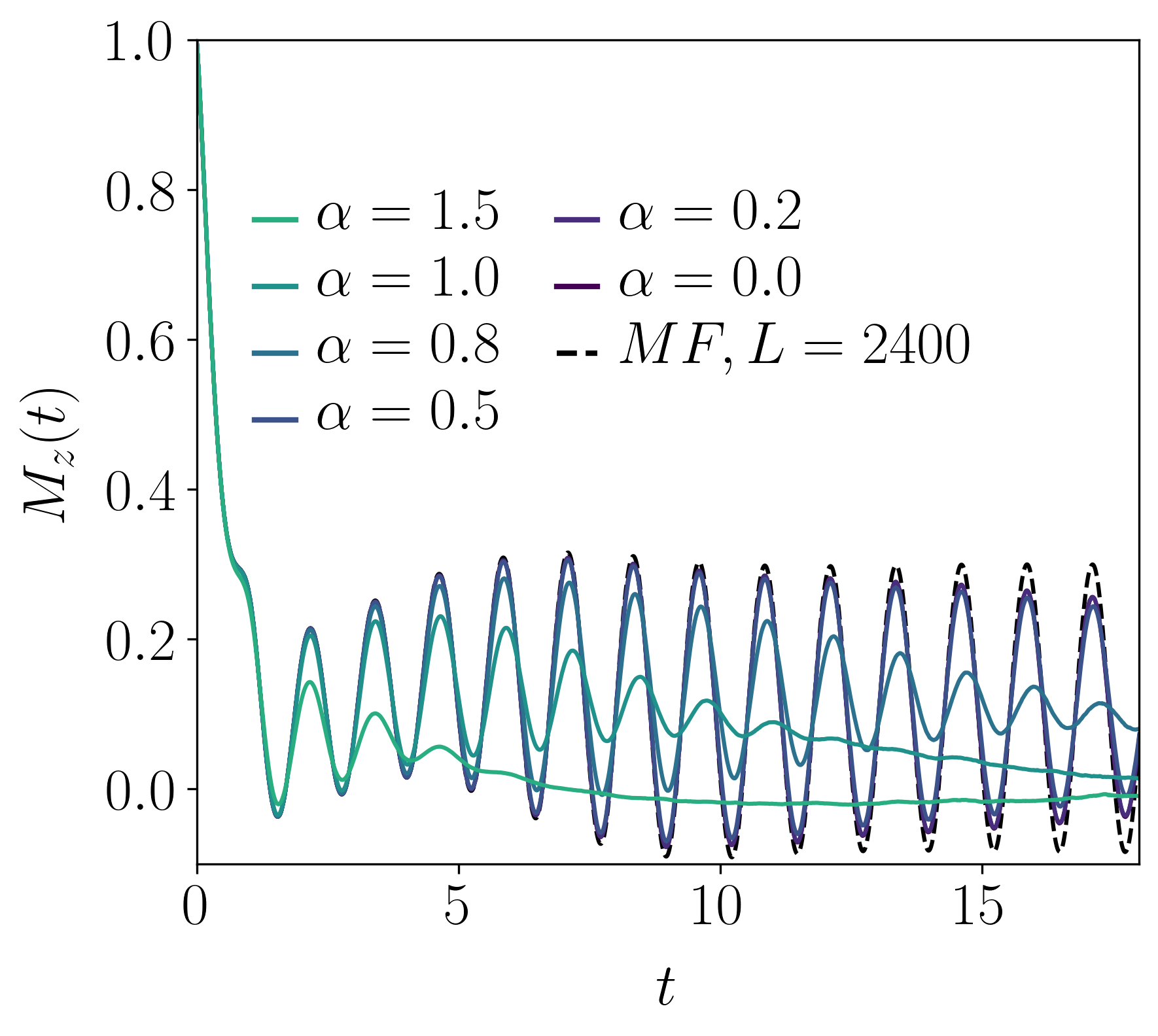
Figure 4: Magnetization damping for various values of $1/2$1 at large system size ($1/2$2); the transition from mean-field-like persistent oscillations to rapid decay as $1/2$3 increases beyond one.
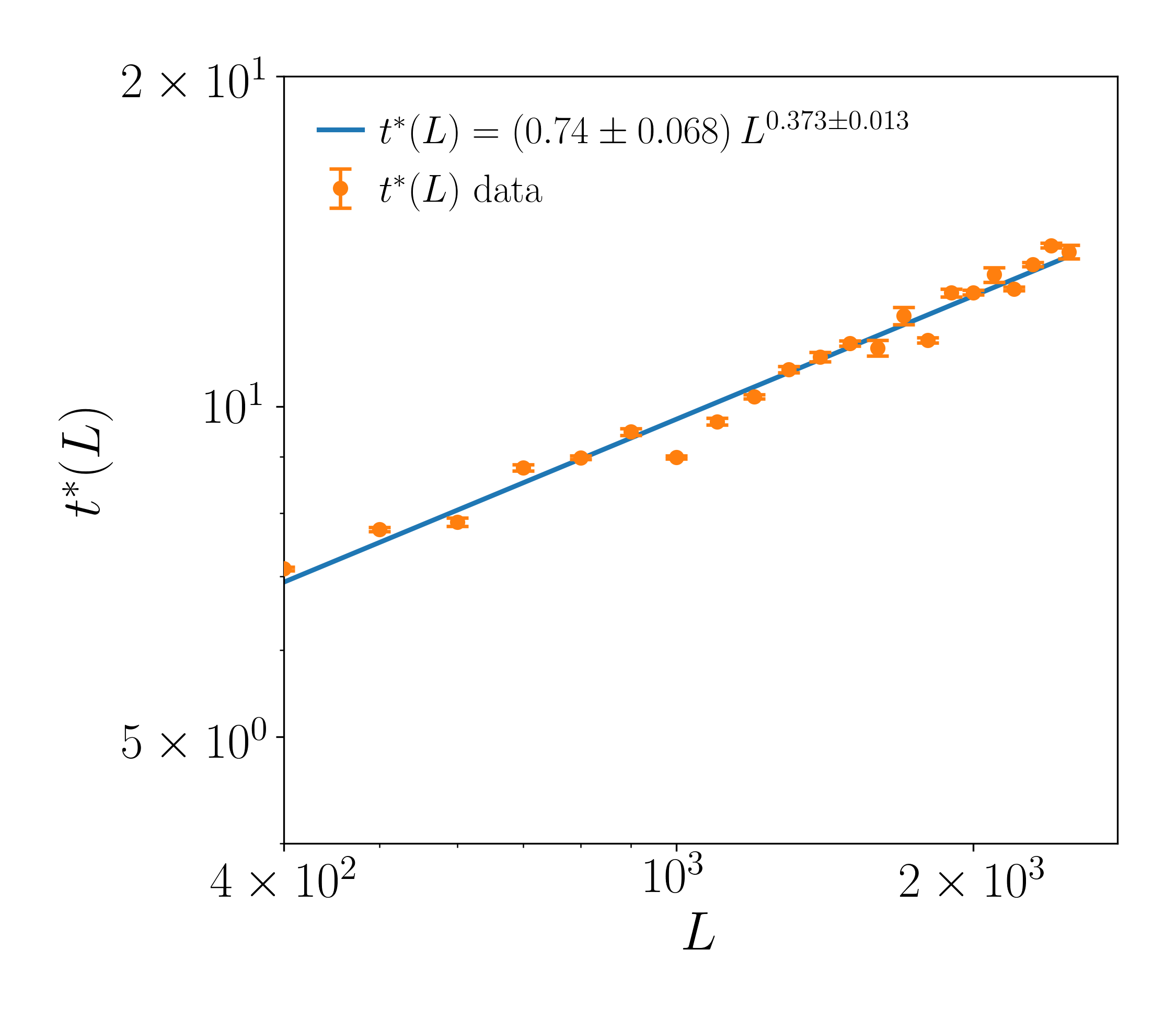
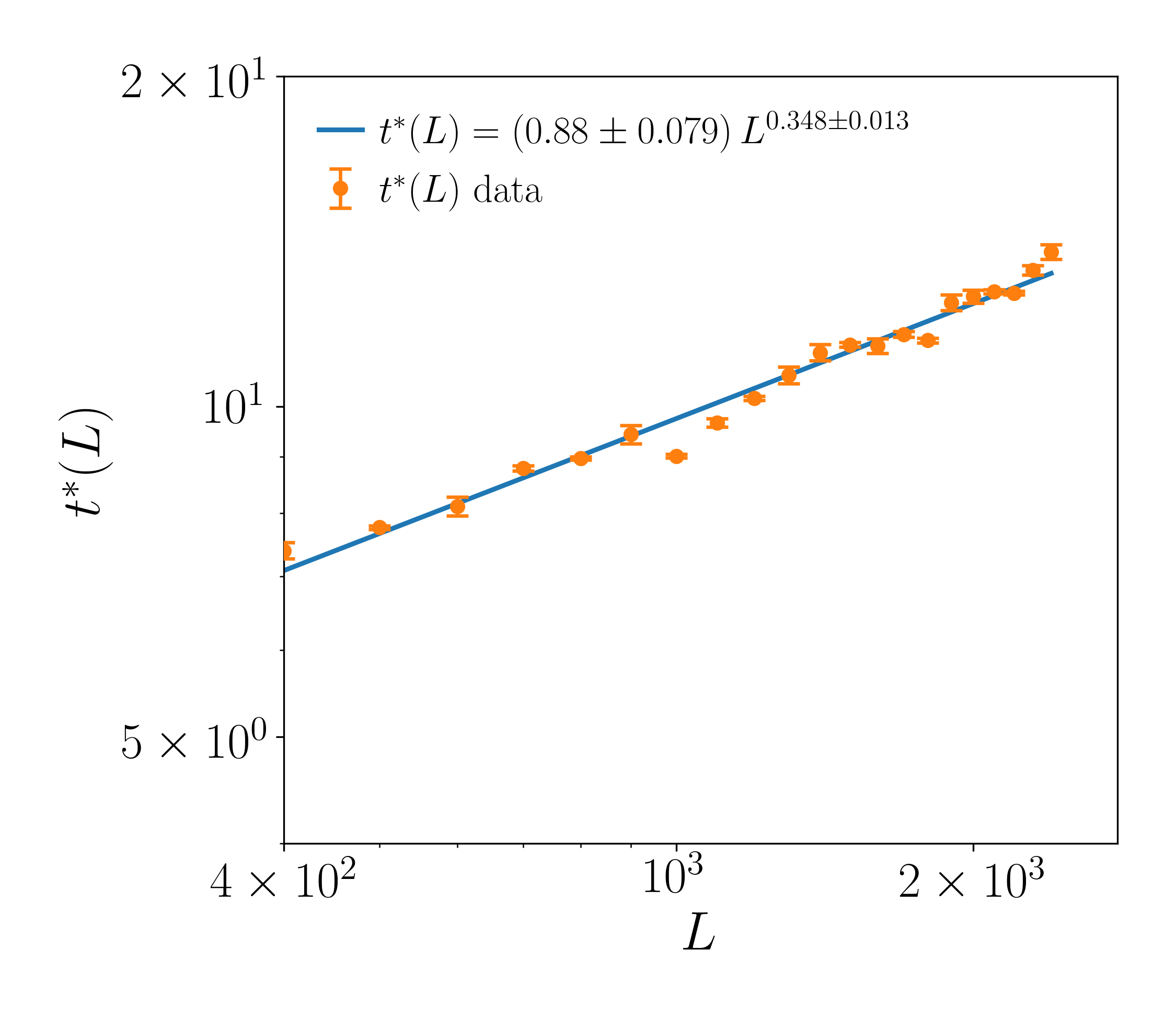
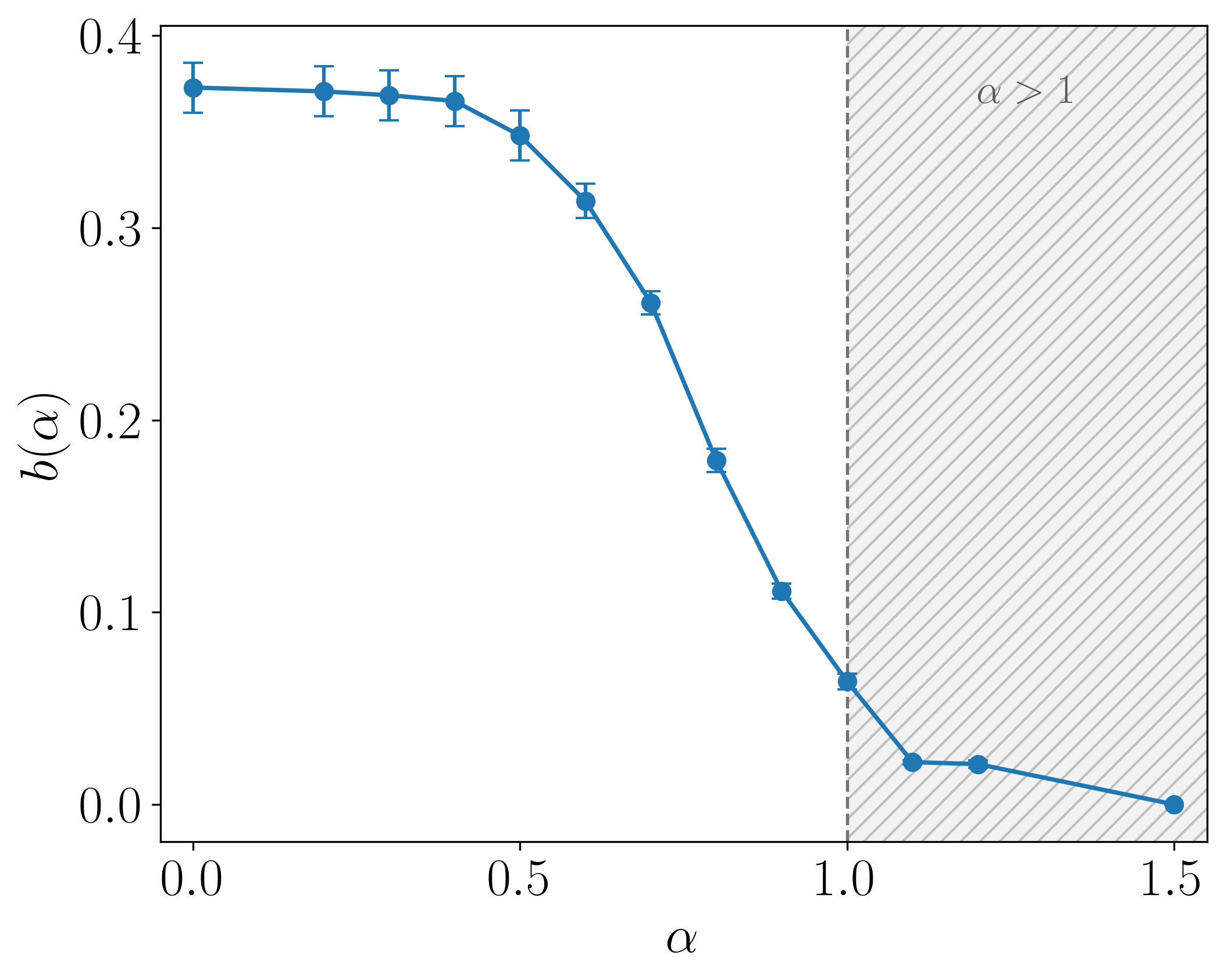
Figure 5: Finite-size scaling of the deviation time from mean-field dynamics $1/2$4 for $1/2$5 and $1/2$6 and its exponent $1/2$7; $1/2$8 collapses near zero at the BTC threshold.
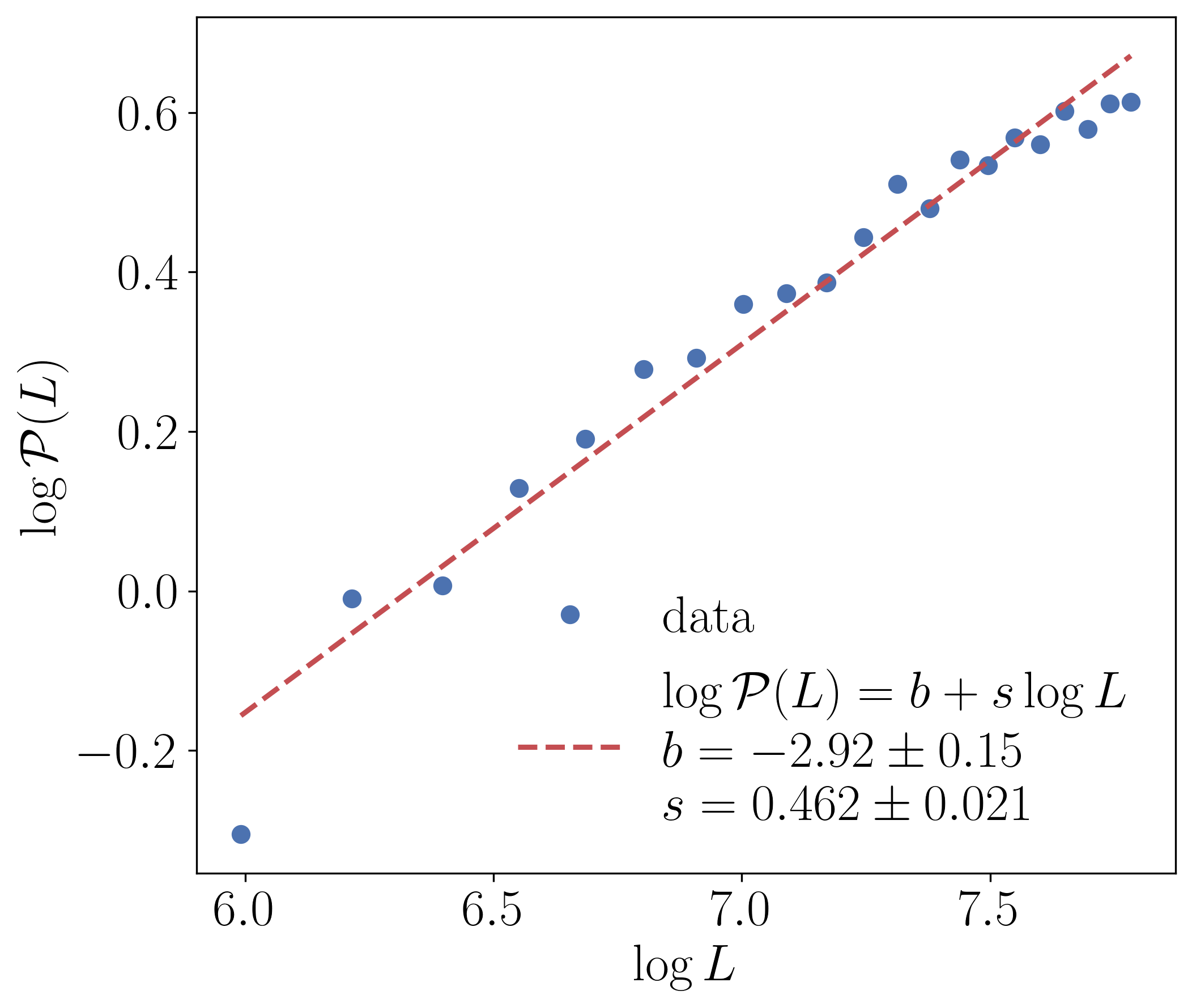
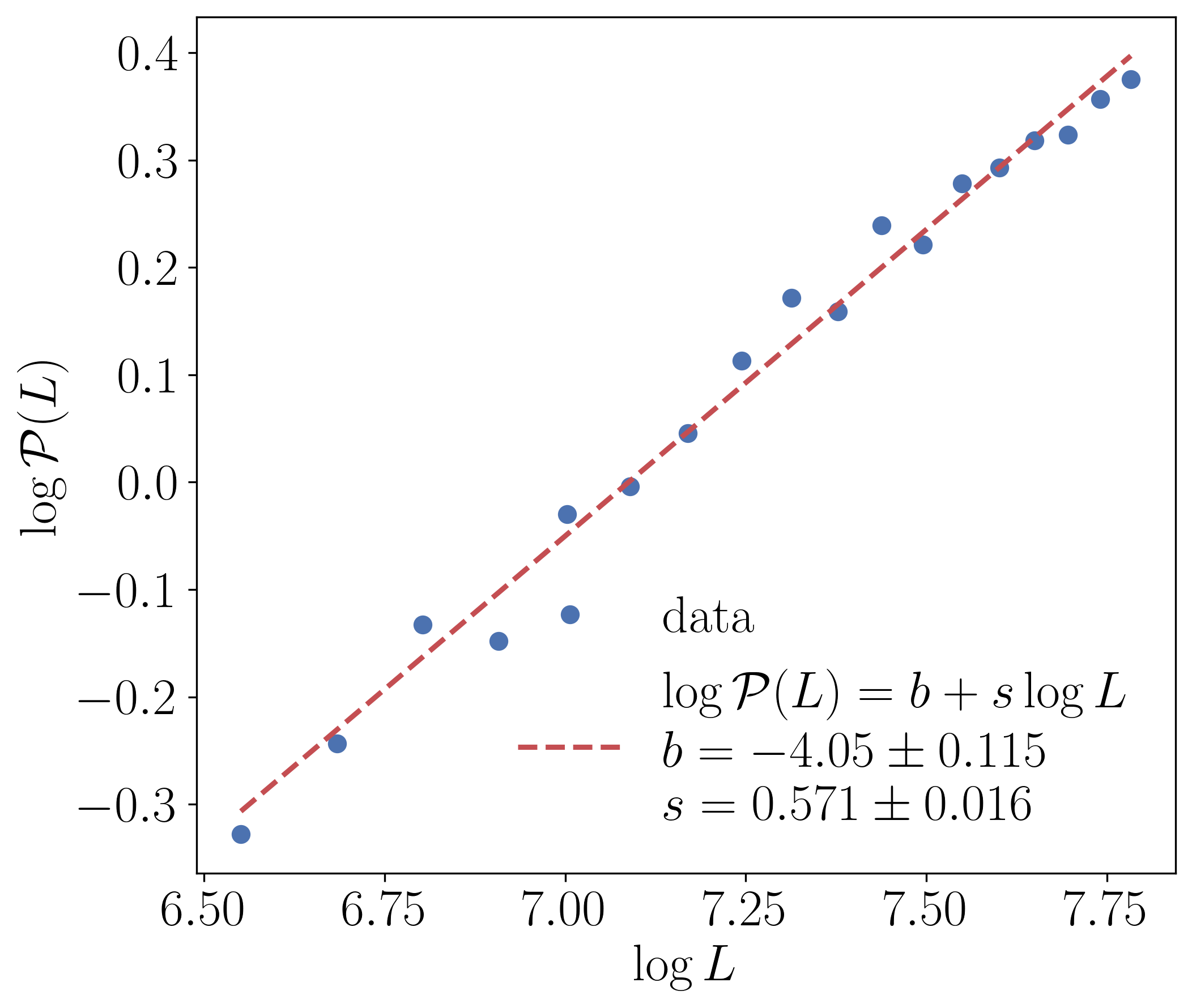
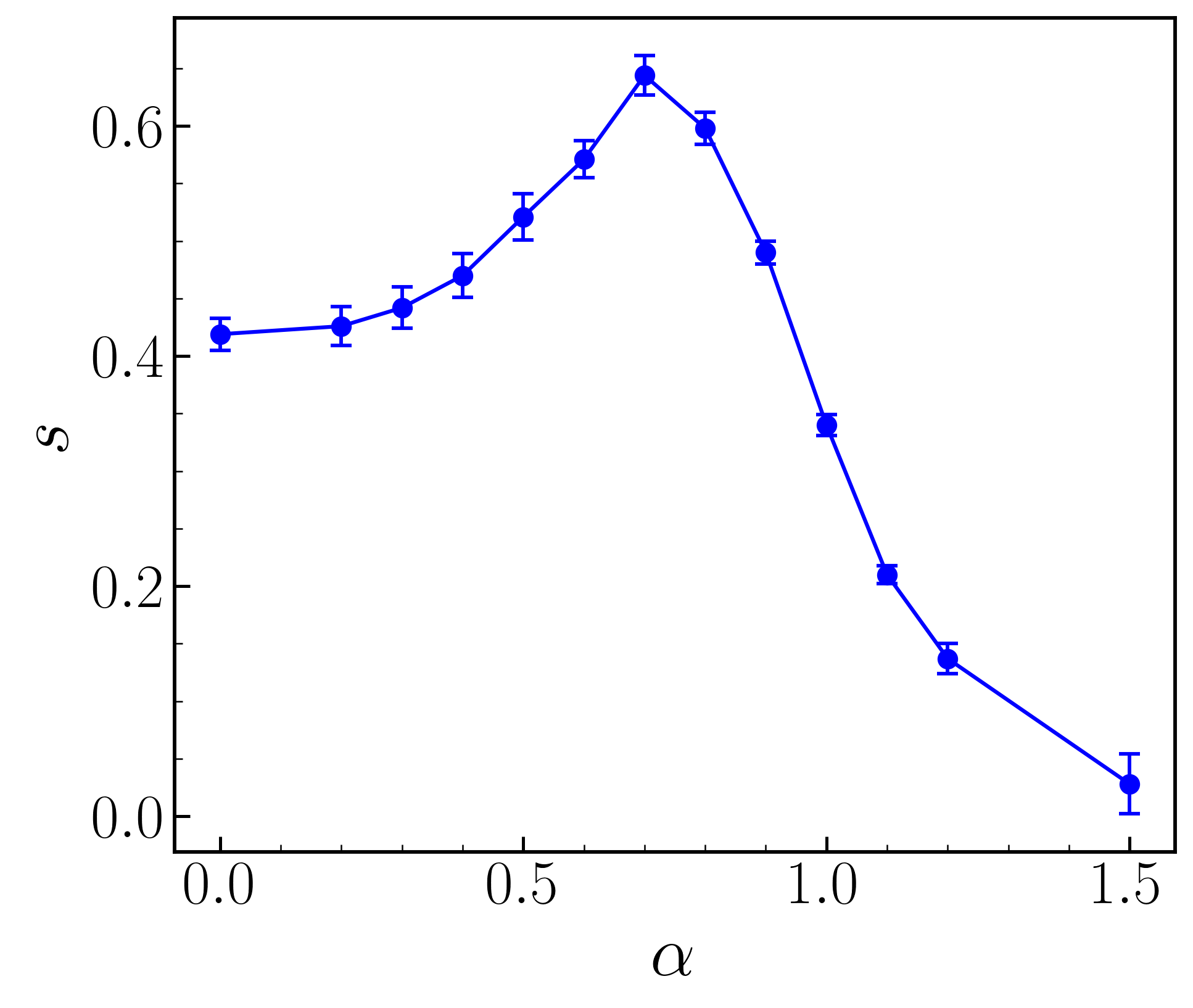
Figure 6: Scaling of the Fourier-peak height across $1/2$9; H^=J∑iσ^ix0 indicates a time-crystalline phase, which persists up to H^=J∑iσ^ix1.
The authors demonstrate that both H^=J∑iσ^ix2 and H^=J∑iσ^ix3 exhibit robust algebraic scaling for H^=J∑iσ^ix4, corresponding to a diverging lifetime and macroscopic amplitude of oscillatory order. As H^=J∑iσ^ix5 exceeds this threshold, both exponents vanish, consistent with the rapid relaxation to stationary states, and marking the dynamical phase boundary for dissipative time-crystal order.
Comparison with Exact Dynamics and Theoretical Benchmarks
The semiclassical Langevin equations are benchmarked meticulously against exact Lindblad evolution in the accessible small-H^=J∑iσ^ix6 regime (see Figure 7), and, in the infinite-range spin-1 limit, against mean-field equations (see Figure 8). The method accurately reproduces both the persistence of limit cycles at large H^=J∑iσ^ix7 in the collective regime and the finite-size scaling crossovers.
Implications, Limitations, and Outlook
The work establishes that semiclassical Langevin dynamics provide a quantitatively accurate and computationally tractable framework to characterize time-crystalline order and its finite-size scaling in both long-range dissipative and Hamiltonian-interacting quantum spin systems. Theoretical implications include:
- Finite-size scaling exponents serve as unambiguous signatures of macroscopic time-translation symmetry breaking inaccessible to mean-field or short-time diagnostics.
- Persistence of BTC order beyond mean-field thresholds indicates that quantum noise, as captured by Langevin corrections, can support macroscopic oscillations even when the thermodynamic limit dynamics is not mean-field.
- Nontrivial dependence of scaling exponents on H^=J∑iσ^ix8 highlights the subtle interplay between interaction/dissipation range and dynamical stabilization against quantum fluctuations.
On a practical level, the results guide the design of driven-dissipative quantum simulators and experiments—particularly in realizing and stabilizing time-crystalline order in systems with tunable-range interactions or engineered dissipation.
Limitations include the inherent semiclassical nature of the method, which may not accurately capture quantum correlations at shorter ranges or near dynamical criticality, and the breakdown of mean-field-based finite-size diagnostics outside strict collective regimes.
Conclusion
This work articulates a coherent framework for analyzing long-range dissipative time crystals using semiclassical stochastic methods. The results quantitatively map the parameter regimes for BTC robustness, provide precise finite-size scaling laws, and clarify the breakdown of mean-field theory in genuine quantum regimes. The semiclassical Langevin approach thus bridges the gap between exactly solvable and fully quantum treatments, laying the groundwork for both future analytic investigations and experimental design of nonequilibrium symmetry-breaking phases.

