- The paper introduces a model-agnostic effective Lagrangian for a 146 GeV scalar mediating charged lepton flavor violation.
- It employs Bayesian MCMC to extract posterior distributions for seven couplings, reconciling the CMS LHC excess with stringent low-energy bounds.
- The analysis outlines experimental prospects from Mu2e, COMET, and HL-LHC to decisively probe the parameter space of the scalar mediator.
Charged Lepton Flavor Violation from a 146 GeV Scalar: Bayesian Analysis and Experimental Prospects
Motivation and Model Construction
Charged lepton flavor violation (cLFV) is a clear signal of physics beyond the Standard Model (SM), as the SM's contributions are suppressed to negligible levels by the GIM mechanism. CMS reported a local excess at 146 GeV in searches for lepton-flavor-violating (LFV) decays into eμ, with global significance 2.8σ and a cross-section σ(pp→ϕ→eμ)≃3.89 fb, but no analogous signal in h→eμ or from ATLAS.
To probe the compatibility of this anomaly with stringent constraints from low-energy cLFV experiments, the paper formulates a model-agnostic effective Lagrangian for a real scalar mediator ϕ (mass Mϕ=146 GeV) with seven couplings: κgg (gluons), three diagonal Yukawas (Yee, Yμμ, eμ0), and three off-diagonal Yukawas (eμ1, eμ2, eμ3). This parameterization encompasses ggF production, all di-lepton decay modes at the LHC, and low-energy observables, enabling a global consistency test independent of UV completion.
Observable Channels and Effective Operators
The scalar eμ4 mediates cLFV in two distinct regimes:
- LHC Production via Gluon Fusion: The cross section is determined by eμ5 and partial widths (all Yukawa couplings contribute through the total width). The CMS anomaly constrains the combination eμ6.
- Low-Energy cLFV Processes:
- eμ7 conversion in nuclei (Figure 1): tree-level via the effective eμ8 operator, sensitive to eμ9.
- Muonium-antimuonium oscillation (Figure 2): tree-level exchange, 2.8σ0.
- Three-lepton decays (2.8σ1, 2.8σ2): off-diagonal × diagonal Yukawa.
- Radiative LFV decays (2.8σ3, 2.8σ4): loop-level, mixing products (2.8σ5).
- Semileptonic 2.8σ6 LFV: 2.8σ7, hadronic matrix element.
The constraints from experiments such as MEG II, Mu3e, Mu2e, COMET, Belle II, STCF, and HL-LHC cover several orders of magnitude, demanding a specific arrangement of couplings to reconcile the CMS excess with null results elsewhere.
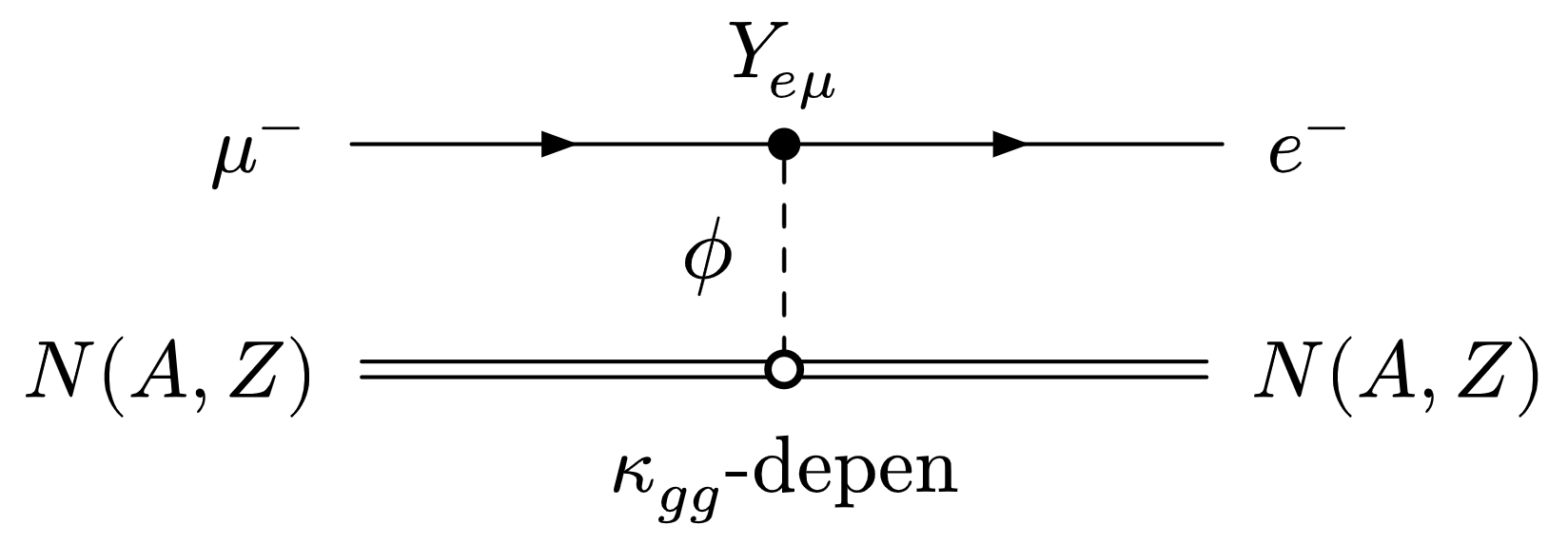
Figure 1: Diagram for 2.8σ8 conversion via scalar exchange, illustrating the effective 2.8σ9 operator's contribution to cLFV.
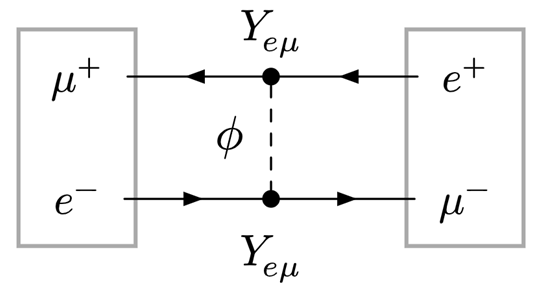
Figure 2: Diagram for scalar-mediated σ(pp→ϕ→eμ)≃3.89 fb0 oscillation via tree-level σ(pp→ϕ→eμ)≃3.89 fb1 exchange.
Bayesian MCMC Analysis: Likelihood Construction and Results
The analysis utilizes a Bayesian Markov Chain Monte Carlo (MCMC) scan over log-uniform priors for all seven couplings, maximizing sensitivity to potential parameter regions. The likelihood incorporates both the CMS σ(pp→ϕ→eμ)≃3.89 fb2 signal and all current low-energy cLFV constraints with their respective uncertainties. The result is a multidimensional posterior that exposes distinct preference modes for the model parameters.
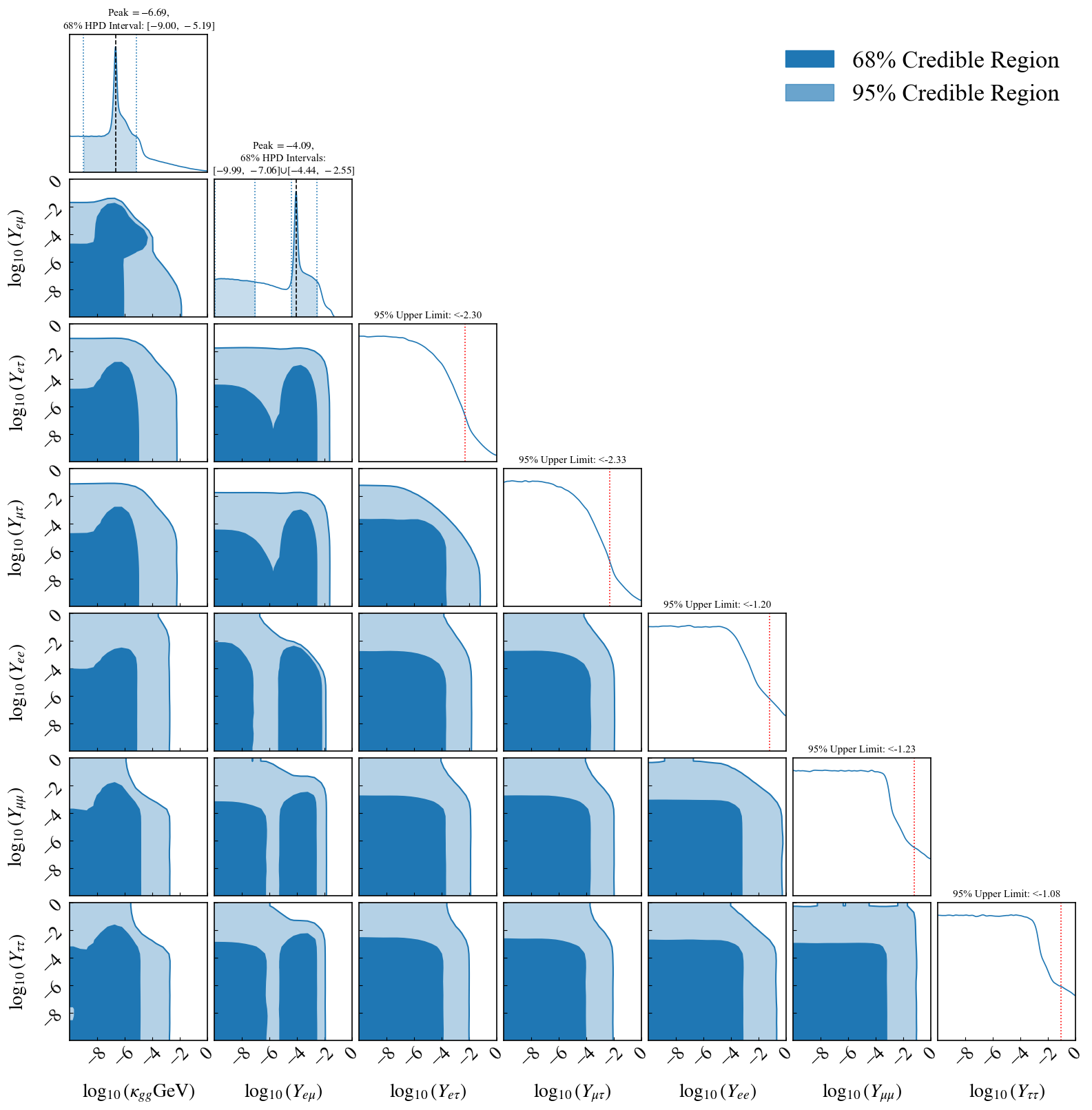
Figure 3: Numerical results of the MCMC analysis, showing the corner plot for seven parameters. Two modes for σ(pp→ϕ→eμ)≃3.89 fb3 (one near zero, one peaked) reflect the competing effects of the CMS excess and low-energy exclusions.
Key findings from the posterior:
- Bimodality in σ(pp→ϕ→eμ)≃3.89 fb4: Regions include a tiny-coupling mode favored by null cLFV searches and a non-zero mode around σ(pp→ϕ→eμ)≃3.89 fb5 dictated by the CMS anomaly.
- Preferred Gluon Coupling: σ(pp→ϕ→eμ)≃3.89 fb6, with σ(pp→ϕ→eμ)≃3.89 fb7 HPD interval σ(pp→ϕ→eμ)≃3.89 fb8.
- Tight Upper Bounds on Off-Diagonal Yukawas: σ(pp→ϕ→eμ)≃3.89 fb9 (95% C.L.), dominated by h→eμ0.
- Loose Constraints on Diagonal Yukawas: h→eμ1 bounded by total width effects and resonance searches.
- Posterior Weight: The tiny-coupling regime still dominates (h→eμ2 at h→eμ3 credibility); current CMS excess is insufficiently significant (h→eμ4) to favor genuine cLFV.
Complementarity and Future Experimental Reach
The interplay between high-energy (LHC) and low-energy (cLFV) constraints results in complementarity: the CMS cross-section fixes h→eμ5, while low-energy bounds cut along other axes. The projected sensitivity of Mu2e, COMET, Mu3e, MACE, MEG II, Belle II, STCF, and HL-LHC will directly probe the signal-preferred region, potentially distinguishing between the two posterior modes.
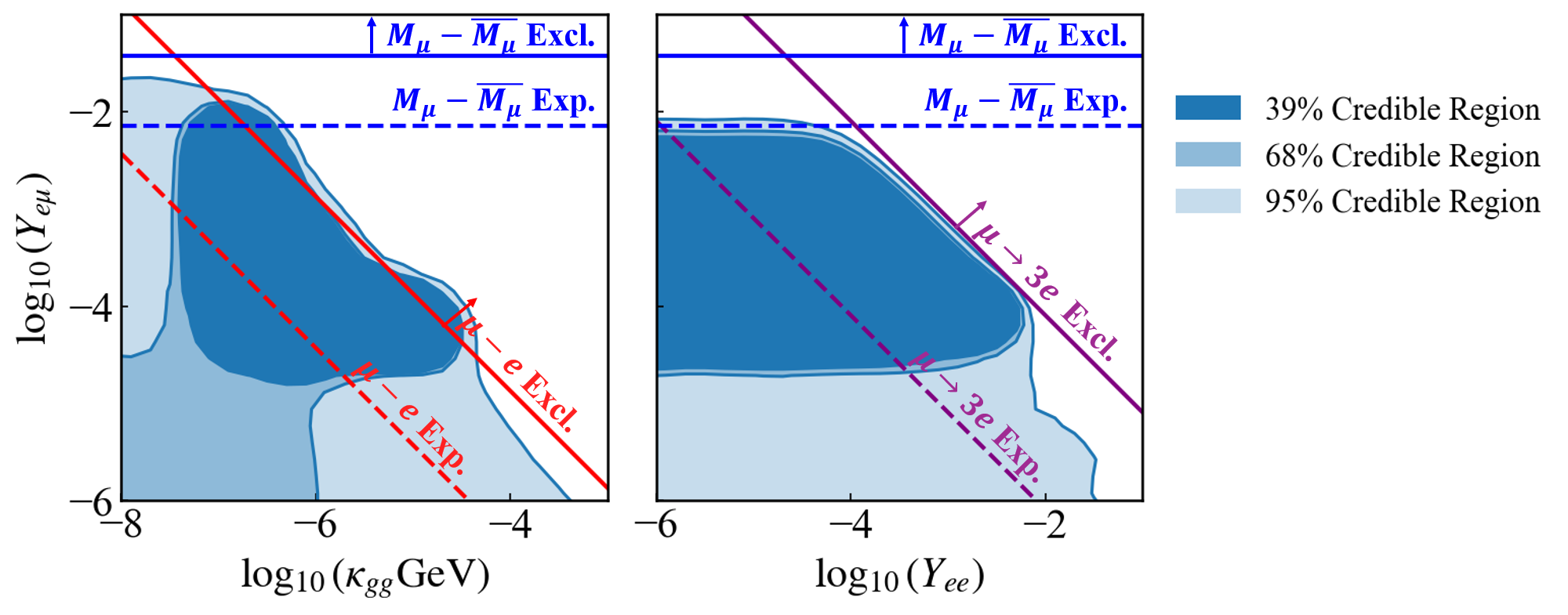
Figure 4: Constraints for h→eμ6 in the h→eμ7 plane, overlaid with current and future experimental exclusion lines.
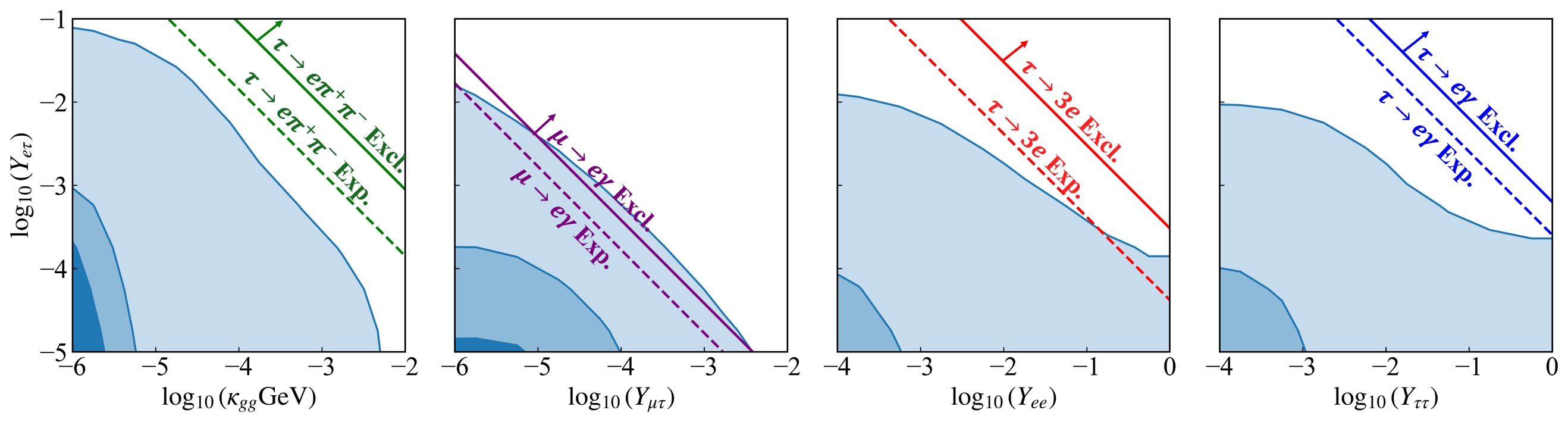
Figure 5: Constraints for h→eμ8 and their interplay with semileptonic and radiative LFV channels.
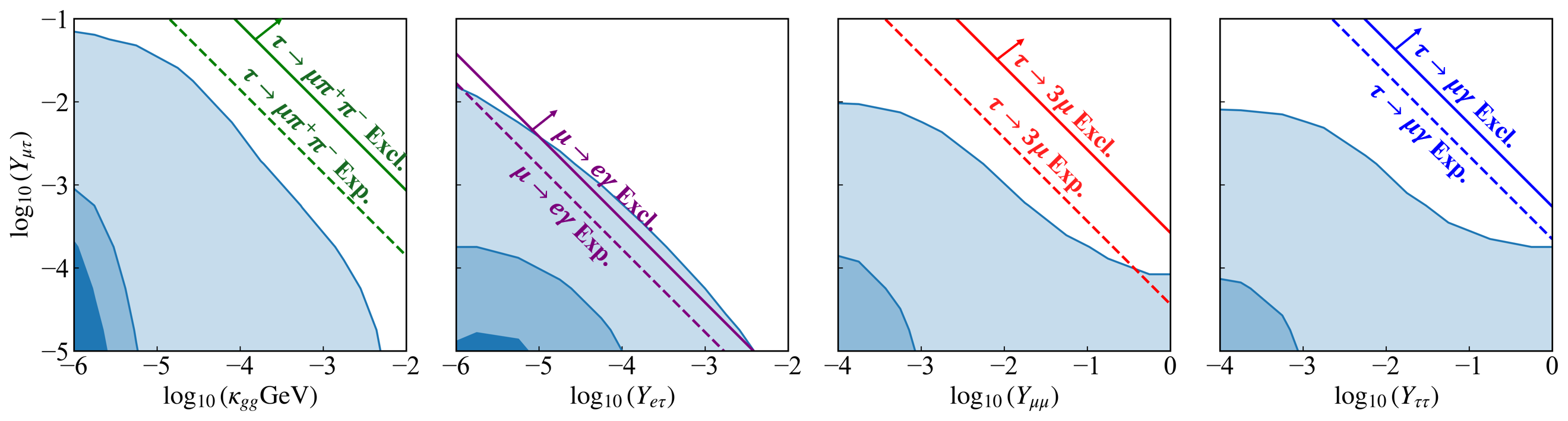
Figure 6: Constraints for h→eμ9, showing the dominance of ϕ0 bounds in shaping the credible region.
Experimental prospects are strong:
- Mu2e and COMET: Will tighten ϕ1 conversion limits toward the signal-preferred ϕ2 region.
- Mu3e: Future three-lepton decays will offer complementary coverage.
- MEG II: Targets loop-induced ϕ3, extending constraints by an order of magnitude.
- Belle II and STCF: Improve direct ϕ4 LFV searches.
- HL-LHC: Expands reach for diagonal Yukawas.
Statistical Robustness and Prior Sensitivity
Upper limits on couplings not directly fixed by the LHC signal exhibit mild prior dependence. Variation of the prior lower boundary shifts the limits by less than ϕ5, confirming stability of the bounds. Highest posterior density (HPD) intervals for bimodal distributions (e.g. ϕ6) are correctly computed as disconnected regions.
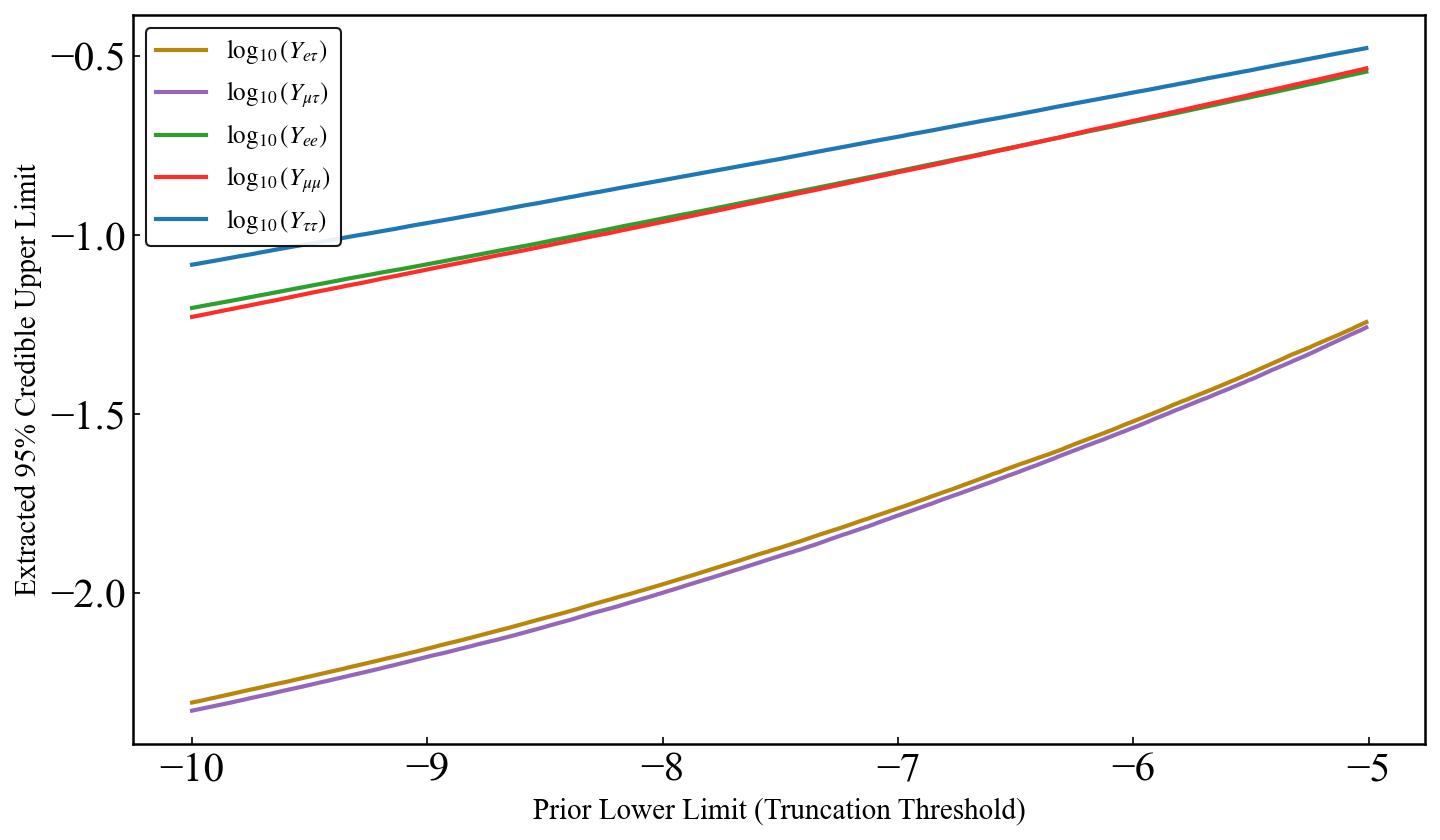
Figure 7: The sensitivity of 95% credible upper limit to the prior lower limit.
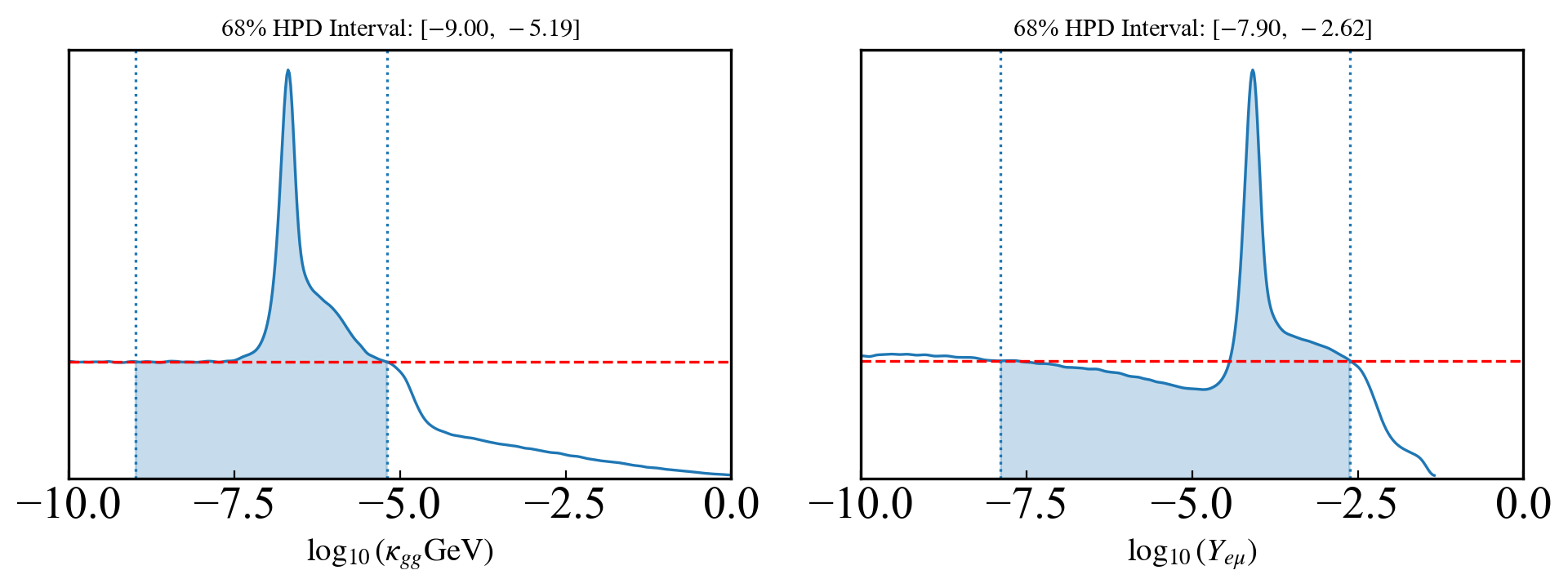
Figure 8: Unimodal HPD intervals in Bayesian analysis for ϕ7 and ϕ8.
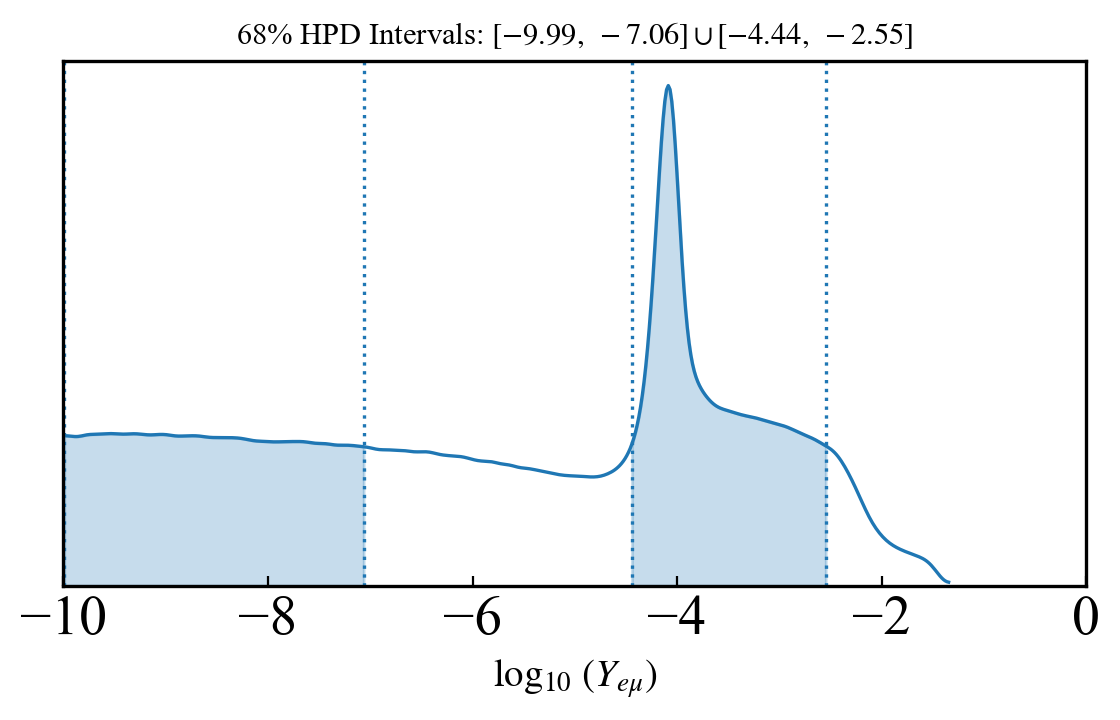
Figure 9: Strict, disjoint HPD intervals for ϕ9, reflecting the physical bifurcation in parameter space.
Implications and Outlook
This comprehensive analysis demonstrates that interpretation of the CMS Mϕ=146 GeV0 anomaly via a generic cLFV scalar mediator is currently viable but largely contingent on future experimental clarification. The model-independent approach isolates the parameter directions sensitive to each experimental program and provides clear mapping between collider signals and low-energy observables.
The methodology and results are broadly applicable to any cLFV scalar scenario near the electroweak scale, providing a robust framework for interpreting the next decade's data from both colliders and precision muon/taus experiments. Should the anomaly persist and be confirmed, high-energy and low-energy cLFV experiments will either corroborate or exclude the scalar interpretation, regardless of the underlying UV origin. Model-independent constraints and joint Bayesian inference will be critical in ensuring robust interpretation amid multiple experimental sources.
Conclusion
The Bayesian global analysis detailed in "Probing a 146 GeV cLFV scalar using the LHC and low-energy experiments" (2607.03249) establishes a quantitative link between an LHC excess and extensive cLFV constraints, delineating viable parameter space for a scalar mediator. The preferred region is tightly bounded and will be probed decisively by upcoming experiments. The framework provides an essential point of reference for interpreting cLFV anomalies and assessing the interplay between collider and precision probes, highlighting the strategic role of model-agnostic effective approaches in BSM phenomenology for the next decade.

