- The paper presents high-resolution 3D relativistic hydrodynamic simulations that capture jet–ISM interactions in the radio galaxy 3C 326 N.
- It shows that mixed ISM configurations with moderate jet power reproduce observed kpc-scale bubble morphologies and kinematic signatures from JWST data.
- The analysis quantifies kinetic energy coupling, turbulence characteristics, and post-jet accretion, offering constraints for AGN feedback models.
Jet–ISM Coupling in Gaseous Disks: Relativistic Jet Feedback in 3C 326 N
Overview
The manuscript "Jet–ISM Interactions in Gaseous Disks: Simulating Kinetic Feedback in the Radio Galaxy 3C 326 N" (2607.03071) presents a comprehensive suite of high-resolution three-dimensional relativistic hydrodynamic simulations investigating the interaction between radio jets and inhomogeneous gaseous disks, with particular focus on the MOHEG radio galaxy 3C 326 N. The study explores the impact of varied cloud configurations (spanning GMC- and GMA-scale structures), jet kinetic powers, and disk central densities, introducing a numerical turbulence injection scheme to stabilize the disk against unphysical collapse. Results are directly compared against spatially resolved JWST/NIRSpec observations, with synthetic emission maps and kinematic tracers demonstrating quantitative correspondence to observed bubble morphology, gas velocity dispersions, and emission structure in 3C 326 N.
Simulation Strategy and Model Parameter Space
The authors construct disk models realized as fractal density cubes with lognormal PDFs and two-point Kolmogorov power-law correlations to mimic multi-phase ISM properties. Cloud configurations probe lc,max=50 pc (GMC-dominated), $250$ pc (GMA-dominated), and a mixed case representing realistic filling factors. Turbulence is sustained via empirically calibrated velocity injections, validated by comparison with SN-feedback injection energies.
A bi-conical relativistic jet with variable kinetic power is injected at a 45∘ inclination relative to the disk plane. Hydrodynamic evolution is resolved on a 4 kpc cube at 7.8 pc resolution using PLUTO RHD, with a suite of runs spanning 1044–1046 erg/s jet powers and nw0=10–40 cm−3 central densities.
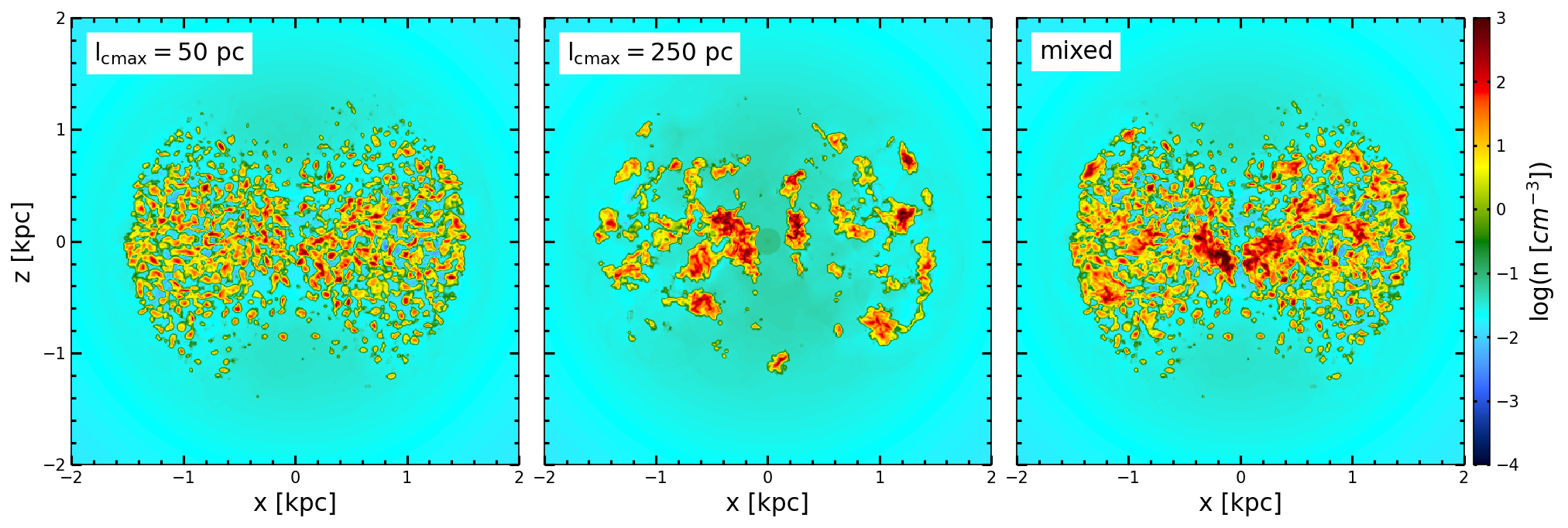
Figure 1: Density slices (logn [cm−3]) for initial cloud configurations prior to jet injection.
Outflow Morphology, Kinematics, and Turbulence
Jet–ISM coupling manifests distinct outflow characteristics as a function of cloud scale and jet power. For GMC-scale clouds ($50$ pc), jets couple efficiently, producing high mass-weighted velocity dispersions ($250$0 km/s) and widespread outflows ($250$1). In contrast, larger GMA clouds ($250$2 pc) stall jets, yielding spherical bubbles, lower dispersion ($250$3 km/s), and reduced outflows ($250$4). The mixed configuration intermediates, with asymmetric jet propagation and arm-lengths, reproducing observed lobe asymmetry.
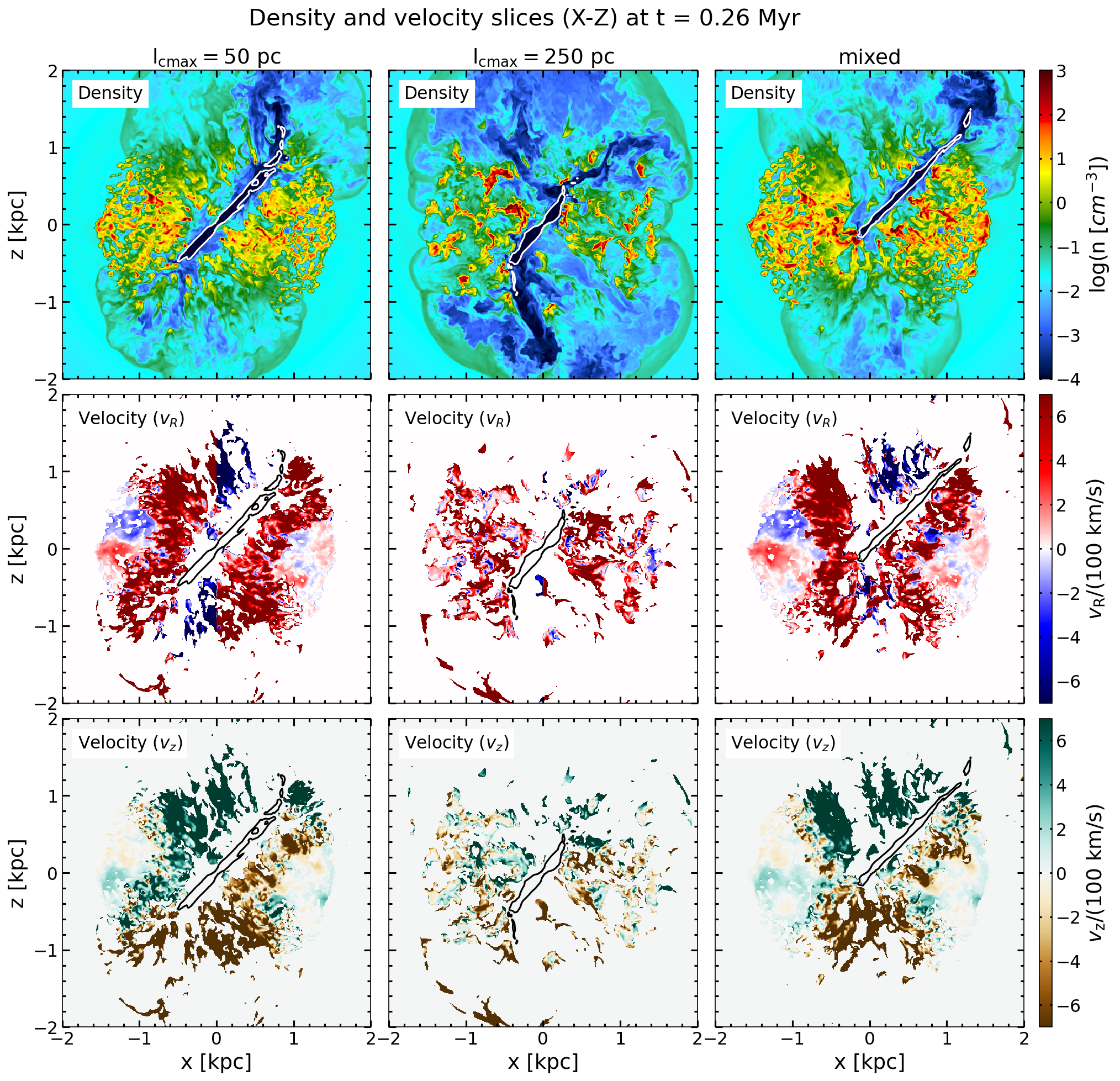
Figure 2: Density and velocity slices at 0.26 Myr for three cloud configurations highlighting outflow morphology differences.
Velocity dispersion peaks correlate with jet breakout; the rate of kinetic energy transfer to dense ISM ranges 5–15% of jet power for small/mixed clouds, $250$55% for large clouds. Maximum radial outflow velocities inversely scale with cloud size for fixed jet power, and scale positively with jet power, in agreement with jet–ISM simulations by Wagner et al. (2012), but at systematically lower values due to disk geometry and density.
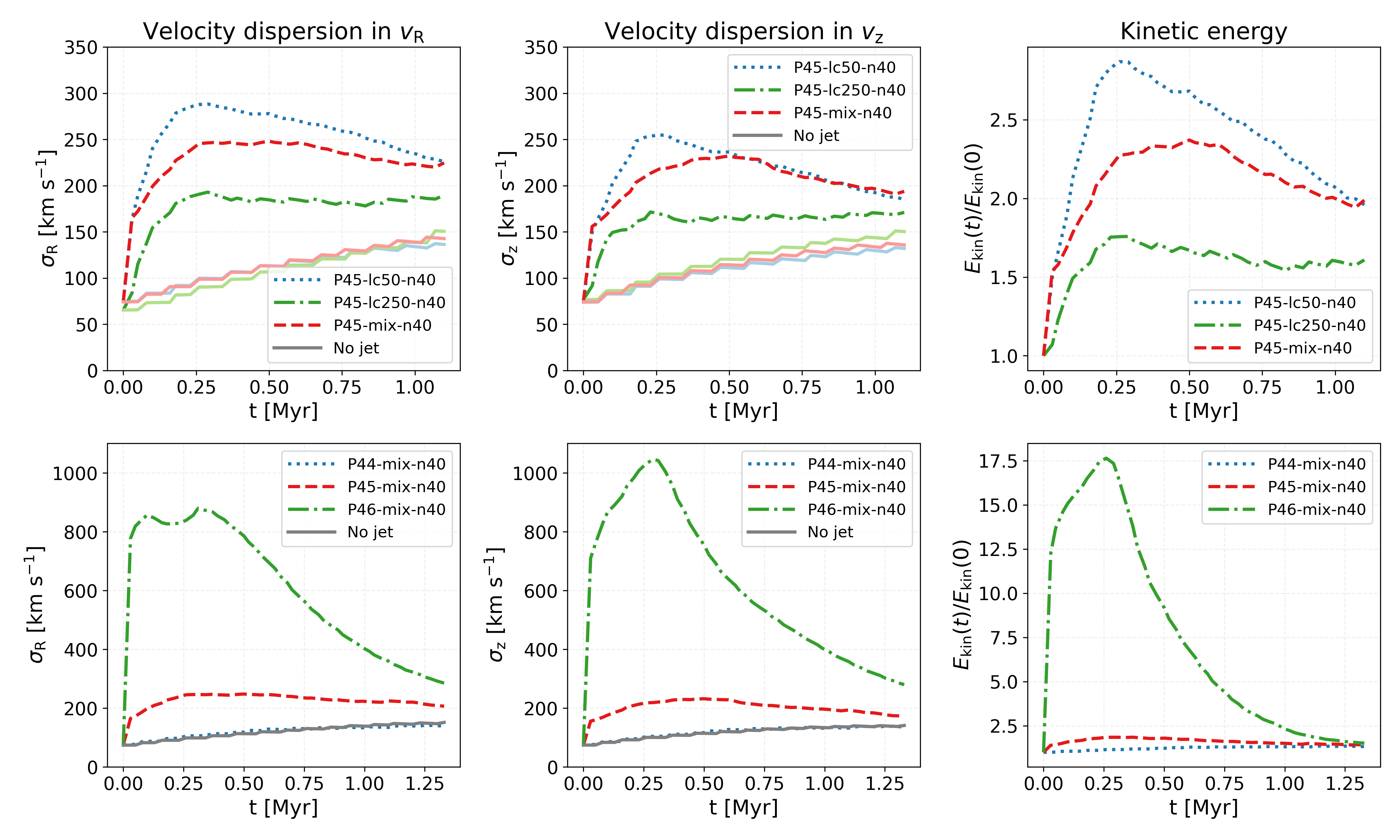
Figure 3: Mass-weighted velocity dispersion and kinetic energy evolution for different ISM configurations and jet powers.
The analysis of turbulence quantifies solenoidal versus compressive modes via compression ratio ($250$6) PDFs. Small/mixed clouds produce mostly solenoidal turbulence, while large GMA clouds yield higher mean $250$7 ($250$8), indicating efficient compressive feedback. This result is attributed to flood-and-channel jet injection in small clouds, versus direct compression in large cloud scenarios.
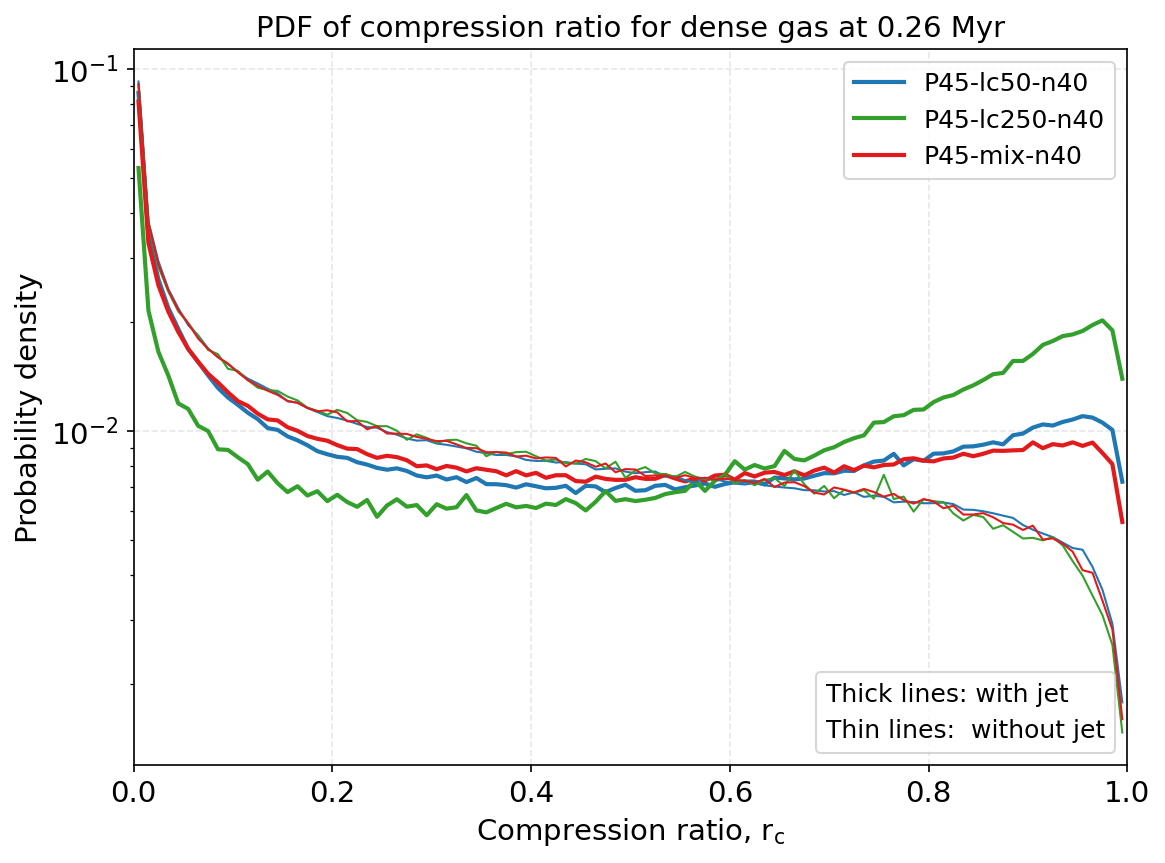
Figure 4: PDFs of compression ratio $250$9 for dense gas across cloud configurations, illustrating turbulence character.
Jet Power, Disk Density Effects, and Jet Confinement
Jet power governs breakout times, turbulence amplitude, and kinetic energy coupling. The most powerful jets (45∘0) break out rapidly (45∘1 Myr), drive 45∘2 km/s, and impart up to 50% of jet energy during transient phases, yet decouple quickly and induce sharp turbulence decay post-shutdown. Low-power jets remain confined, with persistent, lower-amplitude feedback.
Disk central density modulates feedback efficiency: lower 45∘3 disks experience higher bulk stirring and velocity dispersion due to reduced inertia, facilitating broader energy dissipation.
The temporal evolution of jet arm-lengths confirms the dependence on both cloud scale and jet power, with mixed ISM configurations producing asymmetric breakouts—consistent with observed radio lobe asymmetries in FRII sources.
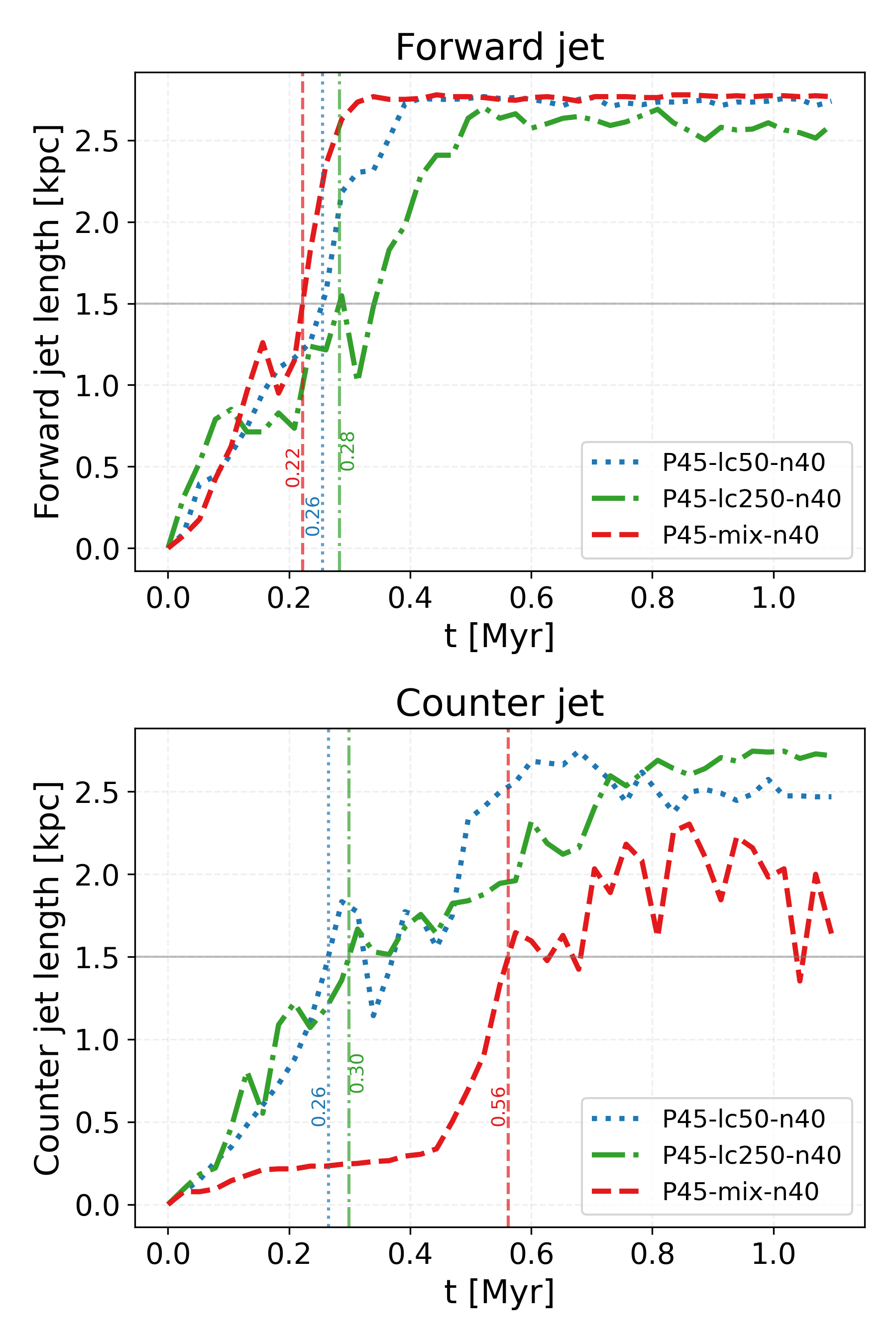
Figure 5: Forward and counter jet lengths versus time for varied cloud configurations, with breakout times highlighted.
Evolution of Gas Phases and Accretion
Phase-space analyses reveal post-shock ISM evolution into multiple thermally and kinematically distinct components: retained cloud cores, dense warm outflows (45∘4 K, 45∘5–45∘6 km/s), shocked layers, and hot tenuous gas (45∘7 K, 45∘8 km/s). The bulk mass distribution remains in cooled, accelerated phases dominantly heated by jet-driven shocks.
Accretion analysis demonstrates that even after jet shutdown, inflows re-establish within a few Myr, achieving Eddington ratios 45∘9, suggesting self-regulated AGN feedback cycles.
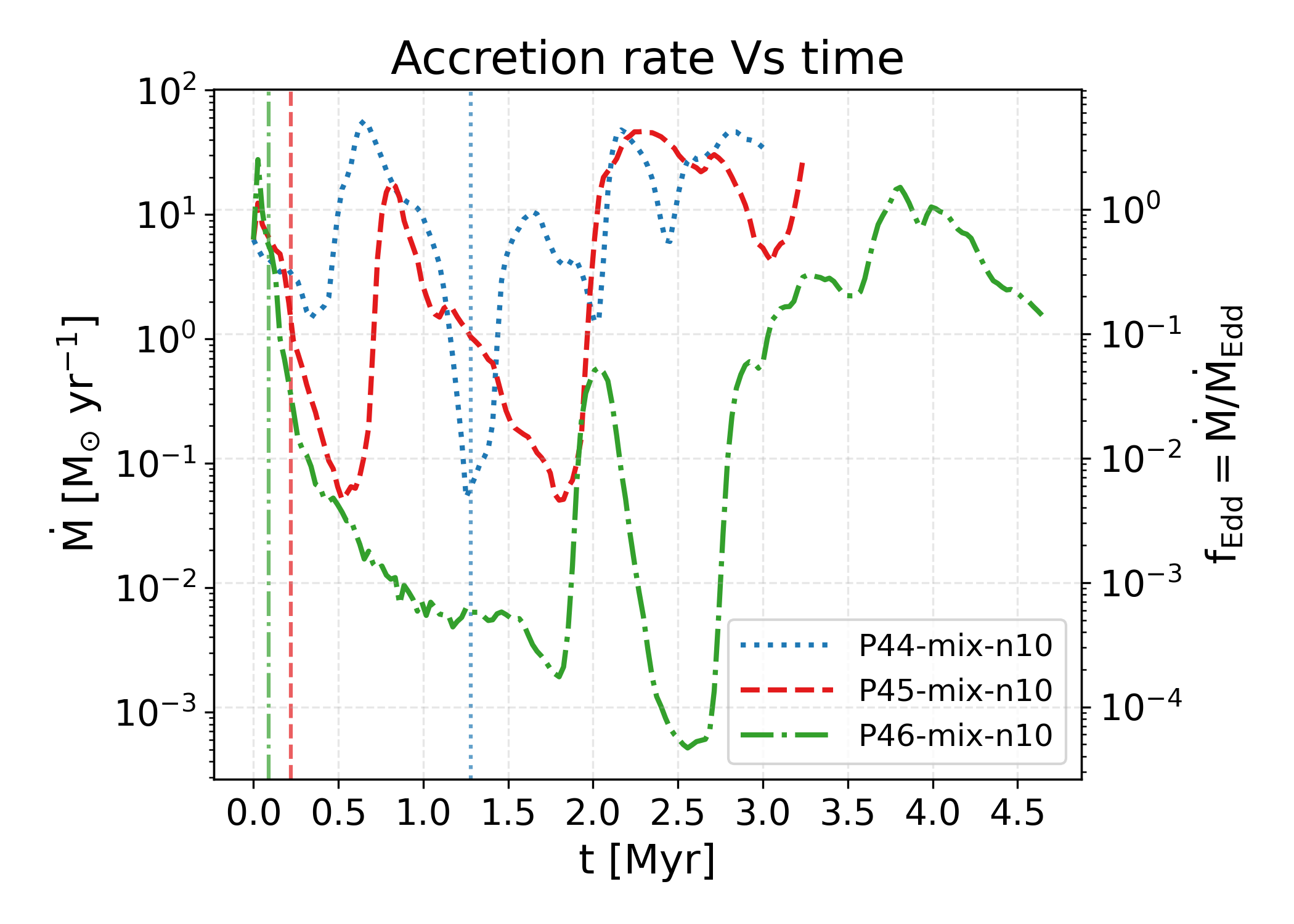
Figure 6: Accretion rate and Eddington ratio evolution at 10440 pc, showing recovery post-jet shutdown.
Quantitative Reproduction of 3C 326 N Observables
By post-processing with synthetic emission maps (via 10441 proxies) and computing line-of-sight velocities and 10442 dispersions, the simulations yield bubble morphologies, clump distributions, maximum LOS velocities (10443 km/s), and FWHM dispersion profiles (10444–10445 km/s) nearly identical to JWST/NIRSpec measurements of 3C 326 N. Only the mixed cloud configuration with moderate jet power (10446) reproduces all features: a kpc-scale cavity, bright clumps, realistic velocity widths, and multi-phase emission.
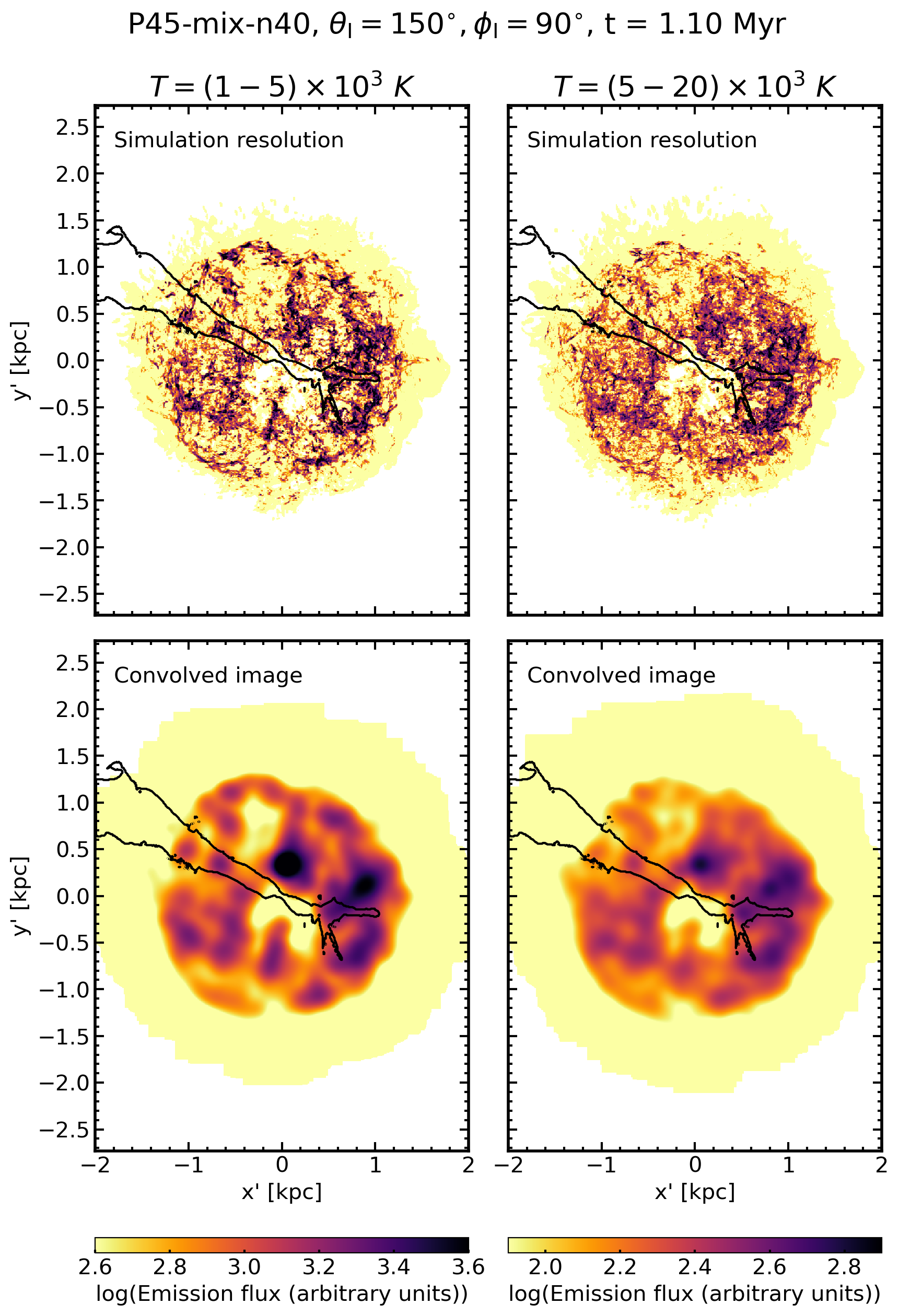
Figure 7: Synthetic emission maps from fiducial simulation, matching the kpc bubble and clump structure seen in 3C 326 N.
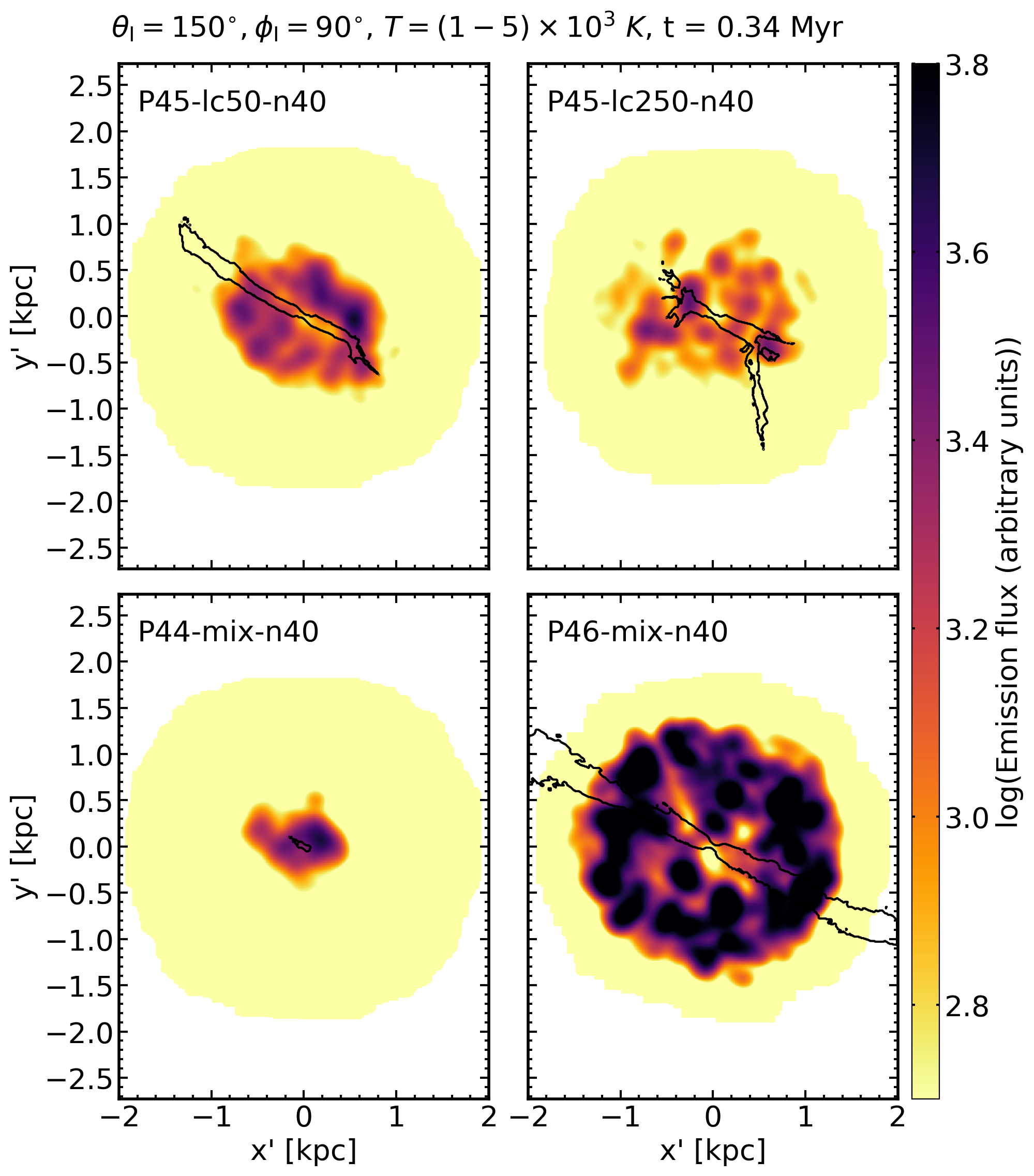
Figure 8: Convolved emission maps for shocked gas, illustrating the necessity of mixed ISM structure to match observations.
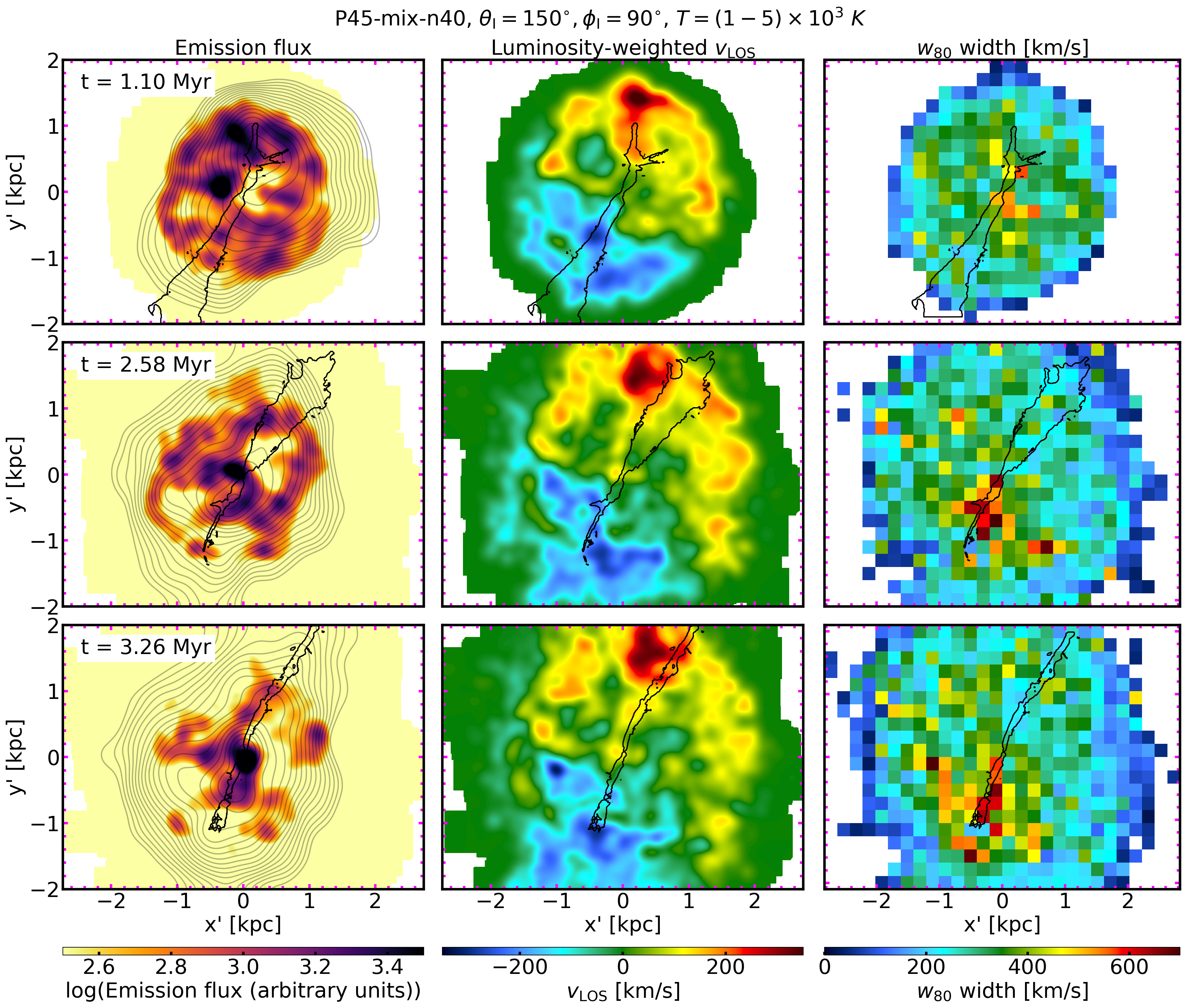
Figure 9: Bubble morphology, LOS velocity, and 10447 dispersion evolution; contours highlight radio continuum overlay.
Practical and Theoretical Implications
This work establishes that jet-driven feedback in a multi-scale clumpy ISM produces kinetic and morphological signatures consistent with MOHEG galaxies, accounting for observed 10448-luminous disks and jet-driven bubbles. Disk stabilization via turbulence injection enables longer integration and physically meaningful interpretation of AGN-ISM feedback, removing prior artefacts due to ISM collapse.
Results quantitatively constrain viable parameter space for interpreting observed radio galaxy outflows, demonstrating that intermediate jet powers interacting with realistic, mixed ISM drive the observed multiphase bubble morphologies and kinematics seen in high-resolution JWST data. Future theoretical efforts should incorporate accretion-regulated jet feedback and explicit molecular cooling to further refine physical predictions.
Conclusion
The simulations presented capture the key dynamical, kinetic, and morphological effects of relativistic jet feedback on dense, turbulent disks, providing a direct bridge to spatially resolved observations. Jet–ISM interactions are strongly modulated by underlying ISM structure: only mixed cloud configurations with moderate jet powers reproduce the observed kpc-scale molecular bubbles and disturbed kinematics known from 3C 326 N. The development and empirical validation of turbulence-sustaining schemes in hydrodynamic models represents substantial progress in addressing disk collapse artefacts. Results rigorously constrain feedback efficiency and outflow morphology as functions of jet–ISM parameters, critically informing both theoretical modeling and interpretation of galaxy evolution observations.

