- The paper demonstrates robust evidence for asymmetric ejecta and circumstellar material in SN 2023ixf using extensive multi-wavelength observations.
- It employs detailed spectral decomposition and empirical profile fitting to uncover double-peaked emission features and the transition from decay- to shock-powered phases.
- The findings support 3D explosion models and emphasize the role of asymmetric mass loss in shaping the evolution of core-collapse supernovae.
Evidence for Asymmetric Ejecta and Circumstellar Material in SN 2023ixf
Introduction and Context
This study provides an extensive nebular-phase spectroscopic and photometric analysis of the nearby Type II SN 2023ixf, leveraging a unique, densely sampled dataset spanning optical, near-infrared (NIR), and mid-infrared (MIR) wavelengths. The principal aim is to constrain the geometric and compositional structure of both the supernova (SN) ejecta and the surrounding circumstellar material (CSM), with an emphasis on detecting and characterizing large-scale asymmetries within the ejecta. SN 2023ixf, situated in M101 at 6.9 Mpc, is among the closest recent core-collapse events, enabling unprecedented multi-wavelength scrutiny.
Core-collapse supernovae are inherently non-spherical, as demonstrated both in theoretical 3D simulation studies and observational diagnostics such as late-time light echo imaging and spectropolarimetry. However, mapping these asymmetries onto specific ejecta compositions and morphologies remains a major open problem, especially at late times when significant interaction with complex CSM may further scramble the kinematic and radiative signatures.
Observational Data and Methods
SN 2023ixf was monitored from +89 to +749 days post-explosion with a coordinated campaign across ground-based optical and NIR facilities, supplemented by MIR (JWST/MIRI and NIRSpec) coverage. The photometric light curves Figure 1 tightly constrain the late-time decline, while dense spectral sampling tracks the emergence and evolution of both forbidden and permitted emission lines spanning H, He, IMEs (e.g., O, Mg, Ca), and IGEs (e.g., Fe, Ni).
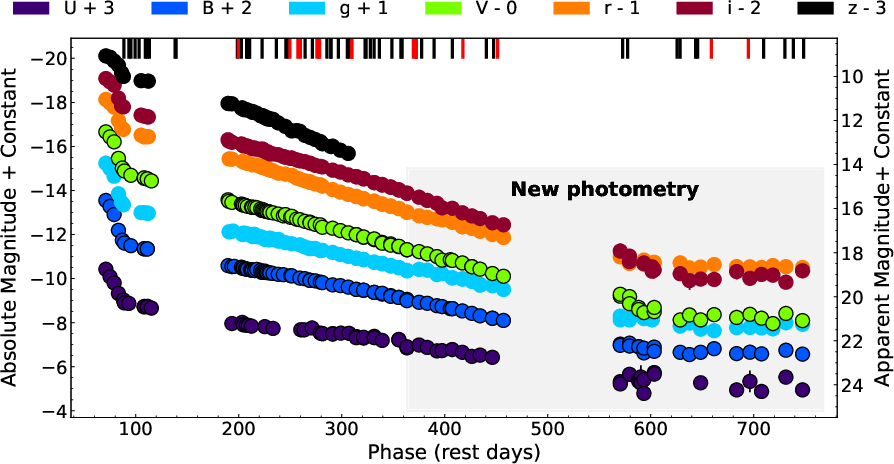
Figure 1: Optical (UBgVriz_s) light curves of SN 2023ixf from LCO, clearly showing the evolution across the nebular phase and key spectral sampling epochs.
All spectra are corrected for MW and host extinction, and line profiles are studied both in velocity and flux space, using empirical multi-component fitting approaches (Gaussian and skewed-Gaussian decompositions) and by direct comparison with radiative transfer and hydrodynamics models for late-phase CCSNe.
Evolution of Nebular Spectra and Line Profiles
The nebular-phase evolution in both the optical Figure 2 and NIR Figure 3 is characterized by the development of broad, asymmetric, and frequently multi-peaked emission features.
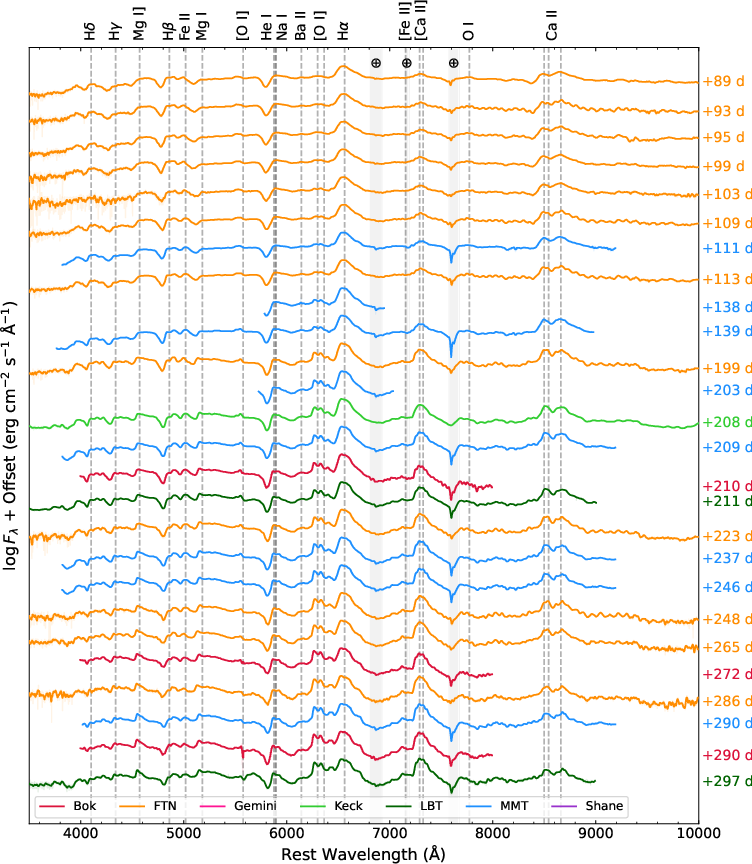
Figure 2: Optical spectra of SN 2023ixf from +89 to +749 days, demonstrating strong temporal evolution and marked asymmetries in several lines.
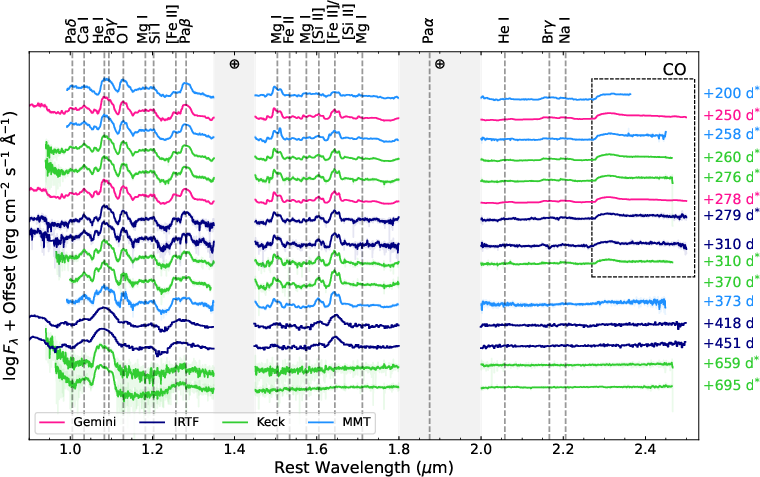
Figure 3: NIR spectra from +200 to +695 days post-explosion, revealing the appearance of double-peaked IME/IGE features, especially in Mg I and Ni I.
Comprehensive temporal mapping of key emission lines Figure 4 shows that Hα consistently displays a blueshifted, multi-peaked, and evolving profile, with high-velocity components emerging at late times. These are interpreted as "CSM horns" from fast outer ejecta interacting with extended, low-density CSM. Analogous features appear in other H and He lines at similar velocities, establishing their origin in post-shock, shock-excited gas.
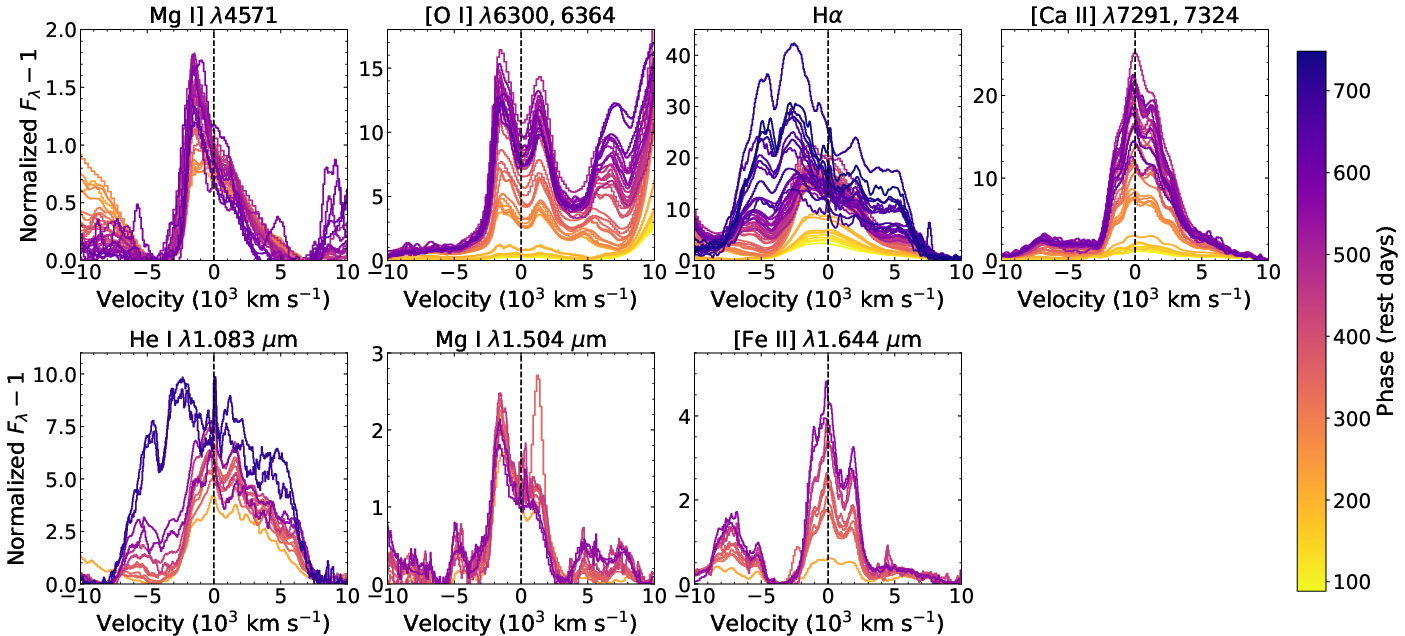
Figure 4: Temporal evolution of selected prominent emission lines, with zero velocity marked. Notable are the persistent blueshifts and multi-peaked morphologies.
Crucially, the line profile of Hα at intermediate epochs (+375d) can be modeled as a linear combination of the early, decay-powered (+139d) and late, shock-powered (+749d) profiles Figure 5, providing direct evidence for the gradual dominance of shock heating as the main power source at late times.
Across the NIR/MIR, double-peaked emission from Mg I 1.504 μm, Na I 2.206 μm, and [Ni I] 3.12 μm is a robust signature of a highly asymmetric distribution of heated, Ni-rich metallic ejecta. The pronounced blue-skewness and separation of these peaks (Figures 6, 8, 11) are consistent with a scenario of inhomogeneous, bipolar, or clumpy distributions of both IMEs and IGEs, possibly as a consequence of large-scale Rayleigh-Taylor mixing or non-axisymmetric explosion instabilities.
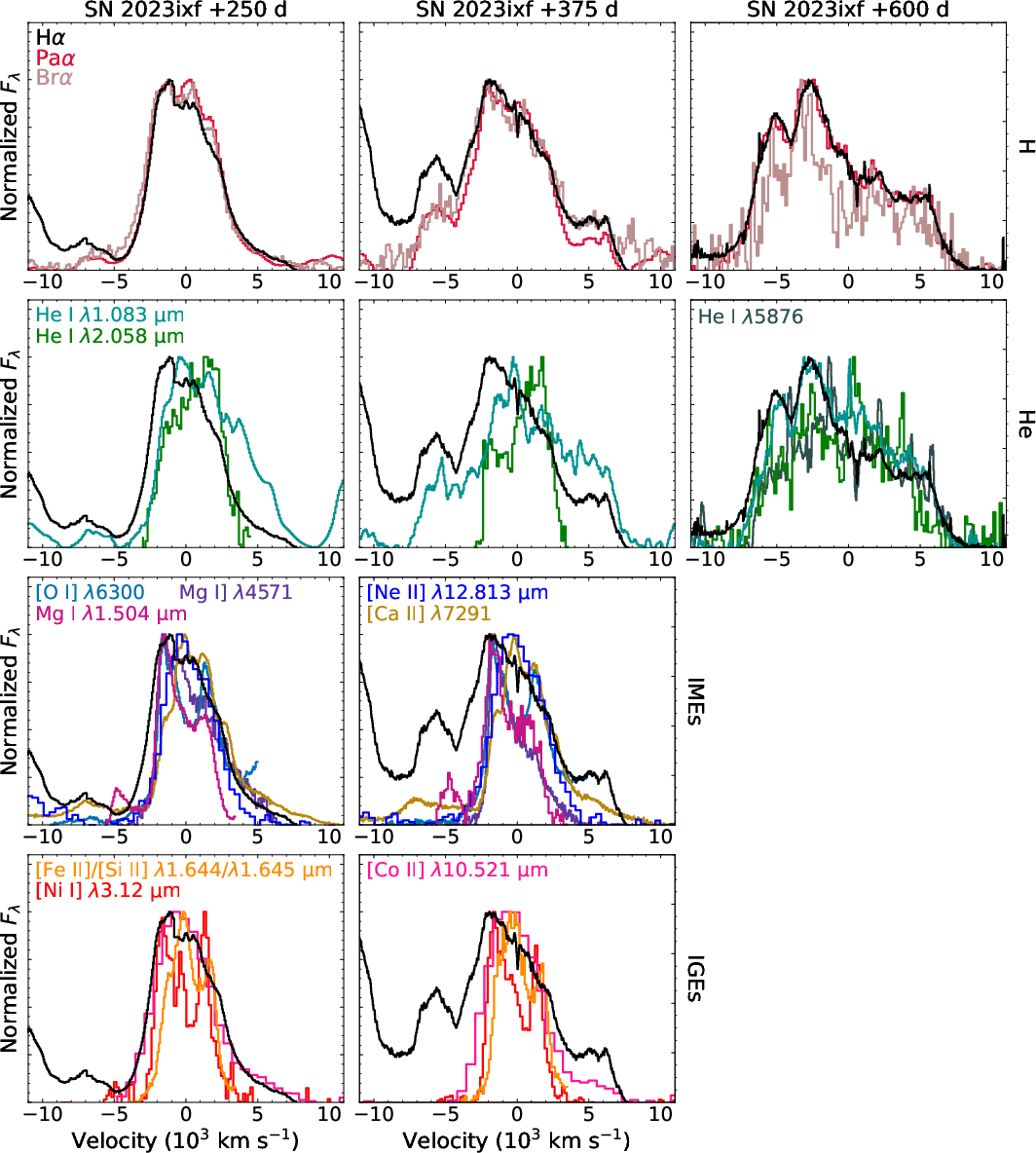
Figure 6: Line-profile comparison of prominent emission features at three epochs. A common blueshift (~−1600 km/s) is apparent among IME and IGE lines, indicative of non-spherical ejecta.
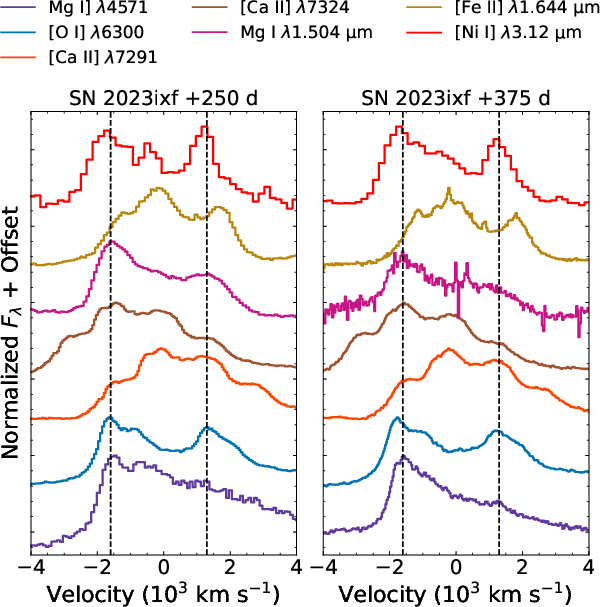
Figure 7: Several features at +250d and +375d with two clear emission peaks, particularly in [Ni I], supporting the conclusion of highly asymmetric or bipolar ejecta geometry.
Empirical Profile Fitting and Structural Inference
Detailed line-profile modeling reveals that the observed emission features necessitate multi-component structures:
- Hydrogen Lines: The Hα profile evolution can be decomposed into central, decay-powered, and high-velocity, shock-powered components, with an additional intermediate-width feature attributed to ejecta sweeping up aspherical CSM. The transition from decay to shock power is quantitatively tracked by modeling the reverse shock luminosity and comparing it to radioactive input, showing a crossover at ~+600d.
- IME/IGE Double-Peaked Features: Profiles of Mg I, Na I, and Ni I consistently require two skewed Gaussians, with velocity separations and relative line shapes inconsistent with simple spherically symmetric expansion. The data favor at least two large, non-axisymmetric plumes of Ni-rich material.
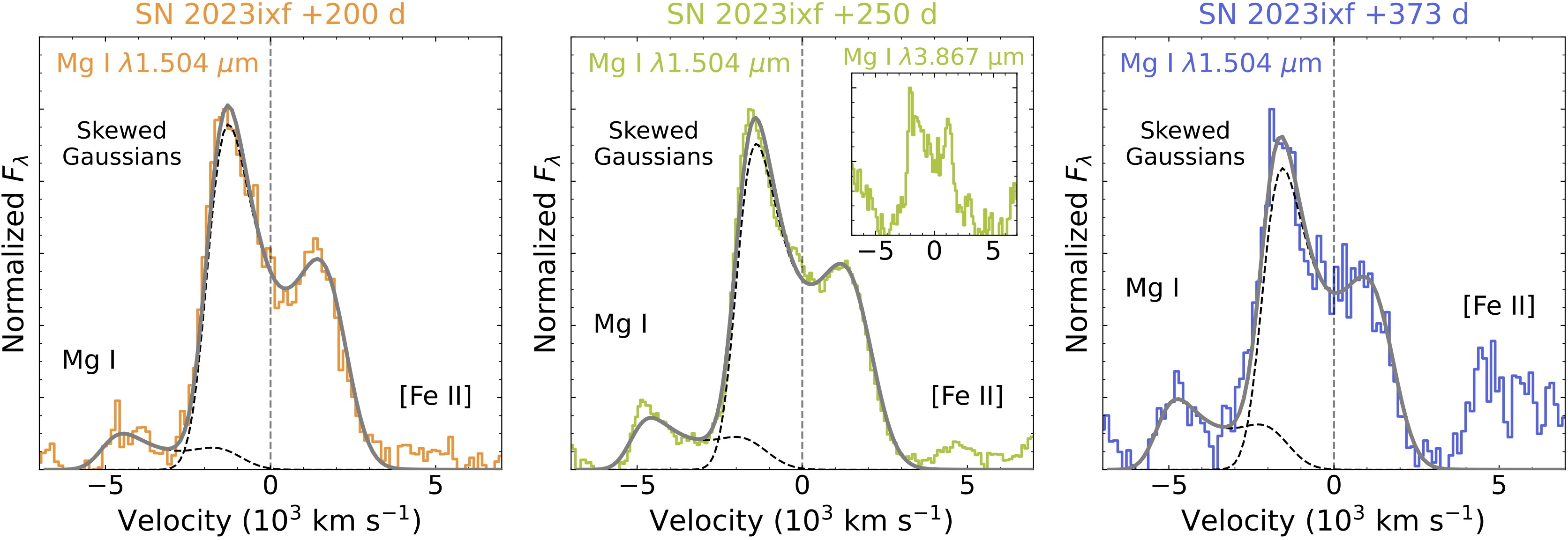
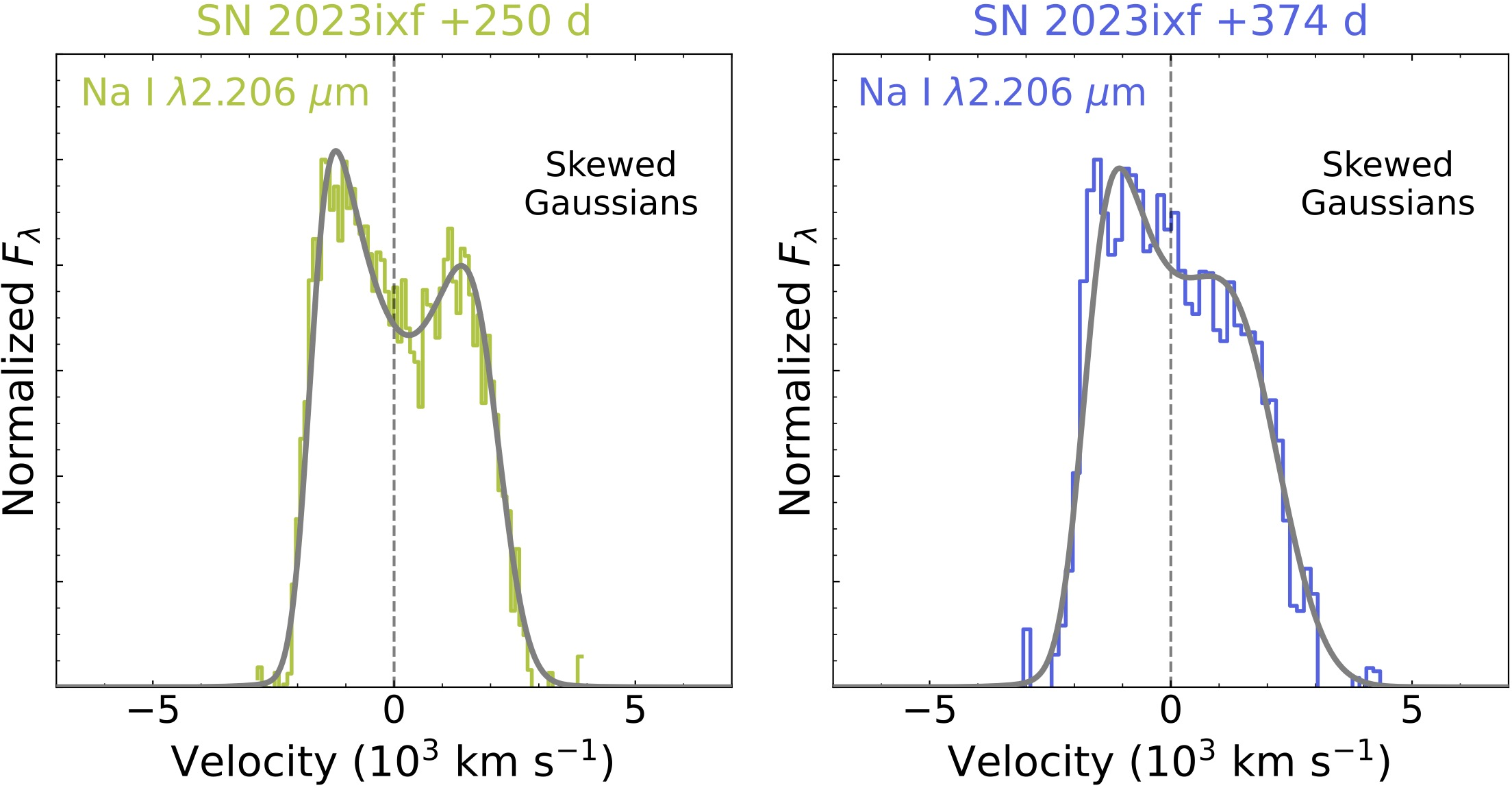
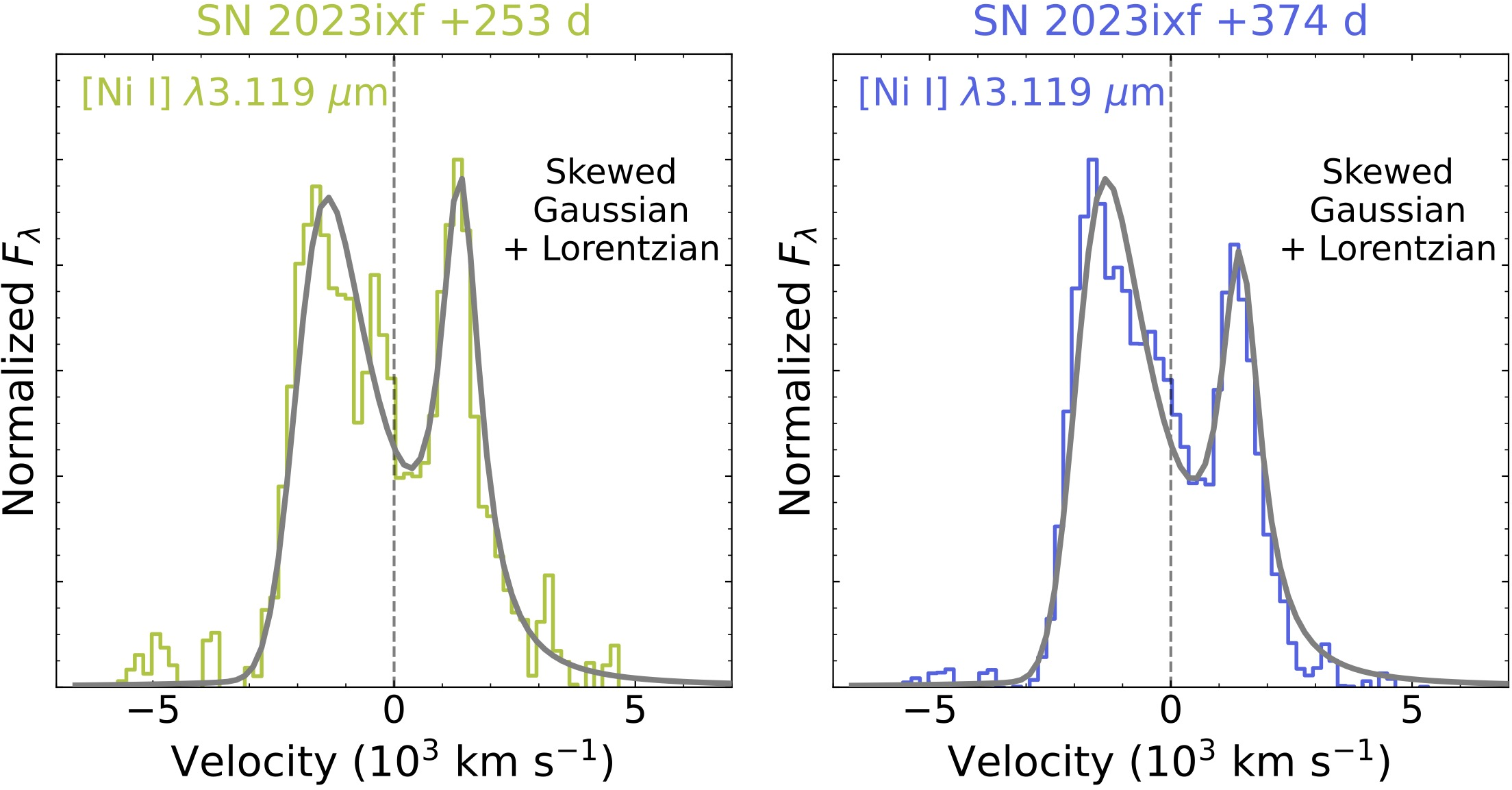
Figure 8: Double-peaked fits to Mg I, Na I, and Ni I features using skewed Gaussians, tracing the distinct kinematic signatures of asymmetric ejecta distributions.
- Symmetric/Broad Emission: By contrast, lines such as [Ar II] 6.985 μm and [Ne II] 12.813 μm, dominated by singly ionized species, are largely symmetric and centered near zero velocity, likely reflecting different spatial origins and excitation mechanisms (e.g., warmer, more diffuse regions associated with envelope material or shocked circumstellar shells; Figure 9).
- Oxygen Blueshifts and Dust: The [O I] 5577, 6300, 6364 Å lines remain persistently and strongly blueshifted through the nebular phase. While some blueshift may originate from dust attenuation, the effect is also found for NIR lines less subject to extinction, motivating the interpretation of an intrinsically blueshifted, asymmetric O-rich emission region.
Global Ejecta and CSM Geometry
The totality of spectroscopic diagnostics—persistent asymmetries, multi-peaked forbidden and permitted lines, and the scaling of Hα to match decay and shock-powered phases—strongly favor a scenario where both the ejecta and the CSM are intrinsically asymmetric. Specifically:
- The ejecta possess at least two major Ni-rich plumes or lobes with varying orientations, possibly reflecting the outcome of 3D neutrino-driven instabilities and mixing, rather than an axisymmetric, bipolar (jet-like) geometry.
- The CSM distribution is best described as disk- or torus-like, dense and highly aspherical, with substantial early blast-wave sweeping and subsequent emission powered by interaction.
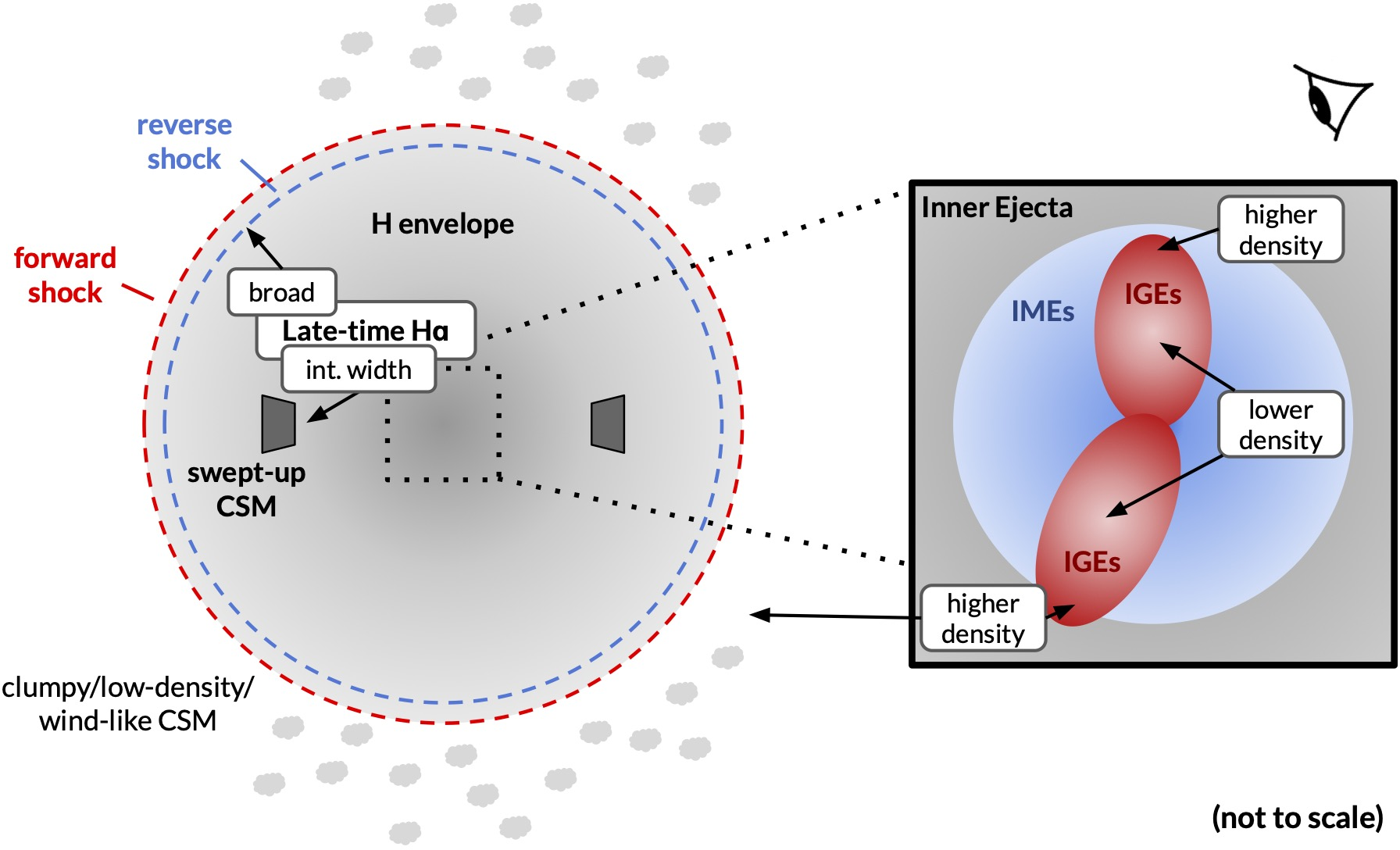
Figure 10: Schematic of inferred ejecta and CSM structure, highlighting the location of bipolar/blueshifted IME/IGE emission and the swept-up, aspherical CSM.
Temporary flux excesses on the blue side of intermediate-width H lines at late epochs and a clear absence (or substantial attenuation) of redshifted peaks in many IME and IGE lines are best reproduced if some regions are both geometrically and radiatively shielded—potentially by in-situ dust formation in the densest regions of the swept-up CSM or the inner ejecta (Section 7.4 of the paper).
Role of Dust and Model Ambiguities
Multifaceted dust signatures are present: strong red-wing suppression of line profiles, robust IR excess, and CO molecular band emission. However, the observed wavelength dependence of the blueshift asymmetries in SN 2023ixf is weak, which challenges pure dust attenuation models. Instead, large dust grains or a clumpy geometry may contribute, but the fundamental asymmetry appears intrinsic to the ejecta, bolstered by spectropolarimetry and cross-species comparison. Nevertheless, radiative-transfer degeneracies between dust effects and geometric configurations underscore the need for high-resolution, multi-epoch IR and optical spectral synthesis.
Implications and Future Directions
The findings have important theoretical and practical ramifications for CCSN studies:
- Explosion Physics: This work provides direct, empirical confirmation of the prediction from state-of-the-art 3D simulations that CCSNe commonly yield grossly asymmetric, plume-dominated ejecta structures. The spatial decoupling of IMEs/IGEs and the kinematic evidence for distinct Ni-rich regions support hybrid models where radial mixing and ejecta plumes are the norm rather than exceptions.
- CSM/Progenitor Mass Loss: The aspherical swept-up CSM, with high implied mass-loss rates, sets strong constraints on pre-explosion progenitor behavior—favoring eruptive or disk-wind models over quiescent RSG mass loss.
- Late-Time Power Sources: Transition from radioactive to shock power in the nebular phase is well tracked by spectral diagnostics and will inform future bolometric light curve modeling for events where MIR light curve coverage is limited.
Future JWST and ground-based MIR/NIR spectroscopic surveys will be critical for disentangling dust, geometry, and shock-interaction effects on late-time SN emission—especially for establishing the ubiquity of double-peaked and strongly asymmetric features in Type II SNe.
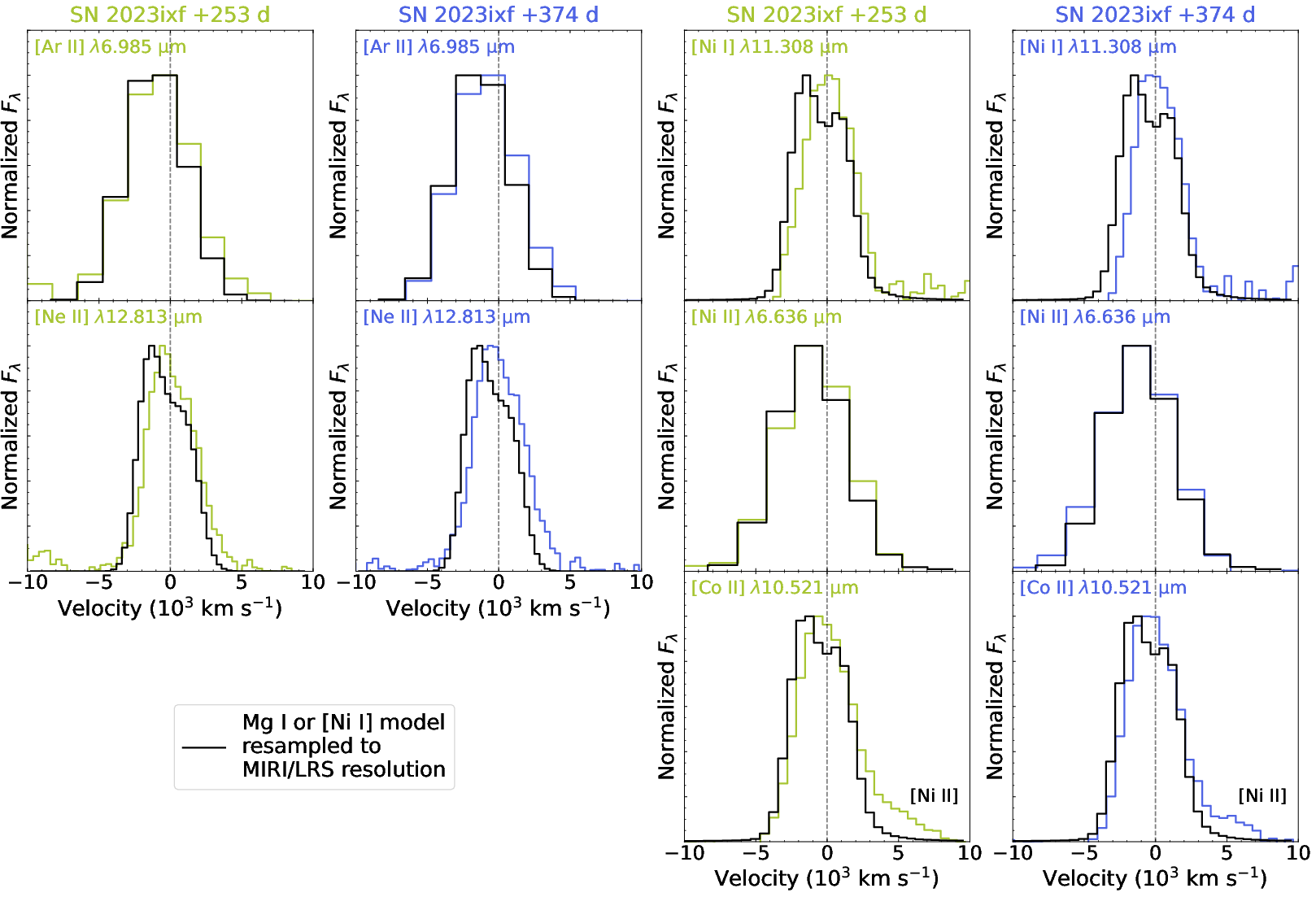
Figure 11: Demonstration of how spectral resolution can wash out intrinsic double-peak structures, indicating that fine-velocity substructure may be under-resolved in lower-resolution MIR data.
Conclusion
This comprehensive study of SN 2023ixf establishes robust, multi-faceted evidence for intrinsic, strong asymmetries in both the ejecta and the CSM, with major implications for modeling the physics of massive stellar death and the resultant chemical enrichment. The integration of optical to MIR spectroscopy, empirical profile decomposition, and comparison to 3D simulations represents a state-of-the-art approach to mapping SN internal structure at late phases.
SN 2023ixf shares pronounced double-peaked and asymmetric features with SN 2024ggi, suggesting that such ejecta asymmetries are widespread among core-collapse events. Systematic MIR nebular-phase spectroscopy, combined with spectropolarimetry and advanced 3D modeling, is warranted to build a statistical understanding of supernova explosion morphologies and the physical processes governing them.
Reference: "Evidence for Asymmetric Ejecta and Circumstellar Material in SN 2023ixf Inferred from Extensive Nebular-phase Observations" (2607.02859)

