- The paper demonstrates that the Robinson-Sadowski bound exponent for instantaneous L^q-norm growth in 3D Navier-Stokes flows is sharp.
- It utilizes a Riemannian conjugate-gradient framework and pseudospectral methods to optimize divergence-free velocity fields under L^q constraints.
- Results reveal a transition from dissipation-dominated to nonlinear amplification regimes, confirming the bound’s sharpness across all q > 3.
Sharpness of Growth Bounds for Lebesgue Norms in Navier-Stokes Flows
Background and Motivation
The regularity and potential singularity formation in 3D incompressible Navier-Stokes flows remain central unresolved issues in mathematical fluid dynamics. Conditional regularity criteria such as the Ladyzhenskaya-Prodi-Serrin conditions impose integrability constraints on velocity Lebesgue norms Lq that guarantee smoothness; specifically, for exponents q>3 and corresponding p satisfying $2/p + 3/q = 1$, the integral condition
∫0T∥u(t)∥qpdt<∞
ensures regularity, while its violation signals possible blowup scenarios. Understanding whether a priori estimates on the instantaneous growth rates of Lq-norms (and their sharpness) is thus intrinsically tied to the question of whether finite-time singularities can appear.
The paper addresses the sharpness of the upper bound derived by Robinson and Sadowski, which for solutions of the 3D Navier-Stokes equations on the periodic domain, states
dtd∥u∥qq≤C∥u∥qqq−3q−1,q>3,
where C depends only on q. The central question is whether this bound can be attained (up to a numerical prefactor) or fundamentally improved.
The authors consider instantaneous variational optimization problems: for fixed q>3 and imposed q>30, construct divergence-free, mean-zero velocity fields maximizing the rate of growth q>31 under the Navier-Stokes dynamics. The problem is equivalently formulated as:
q>32
where q>33 is a manifold of velocity fields in a suitable Sobolev space q>34 with prescribed q>35-norm, and the functional q>36 is the exact expression for the instantaneous time derivative of the q>37-norm for the Navier-Stokes system, depending nontrivially on q>38 through both its differential operators and the nonlinear pressure term.
A Riemannian conjugate-gradient algorithm is developed, leveraging the underlying manifold geometry and appropriate Sobolev gradients. The process includes retraction operators to enforce the q>39 constraint, projection to the tangent space, and a structure for momentum via vector transport and conservation of auxiliary constraints. Computations proceed via pseudospectral methods on high-resolution periodic grids, with dynamic resolution refinement to maintain spectral accuracy as amplitude increases.
Analytical Results for Small Data
In the small-amplitude regime (p0), the optimization is dominated by the Laplacian's dissipation. The maximizers are shown analytically to coincide with lowest-eigenvalue eigenfunctions of the Laplacian (ABC flows), yielding strictly negative growth rates due to viscosity. As p1 increases, viscous effects diminish relative to nonlinear amplification, and maximizers depart from the linear regime.
Numerical Results: Saturation and Exponent Analysis
High-resolution simulations were conducted for p2 over a broad range of p3. The branches of maximizers for each p4 display a clear cross-over: below a critical p5, the instantaneous rate of p6-norm growth is negative (dissipation-dominated); above it, strong nonlinear amplification occurs and the instantaneous growth is positive. For p7 sufficiently large, the growth rate saturates the upper bound in the Robinson-Sadowski estimate, i.e., there exist fields for which
p8
This scaling holds across all tested p9. The exponent is confirmed numerically through compensated scaling plots:
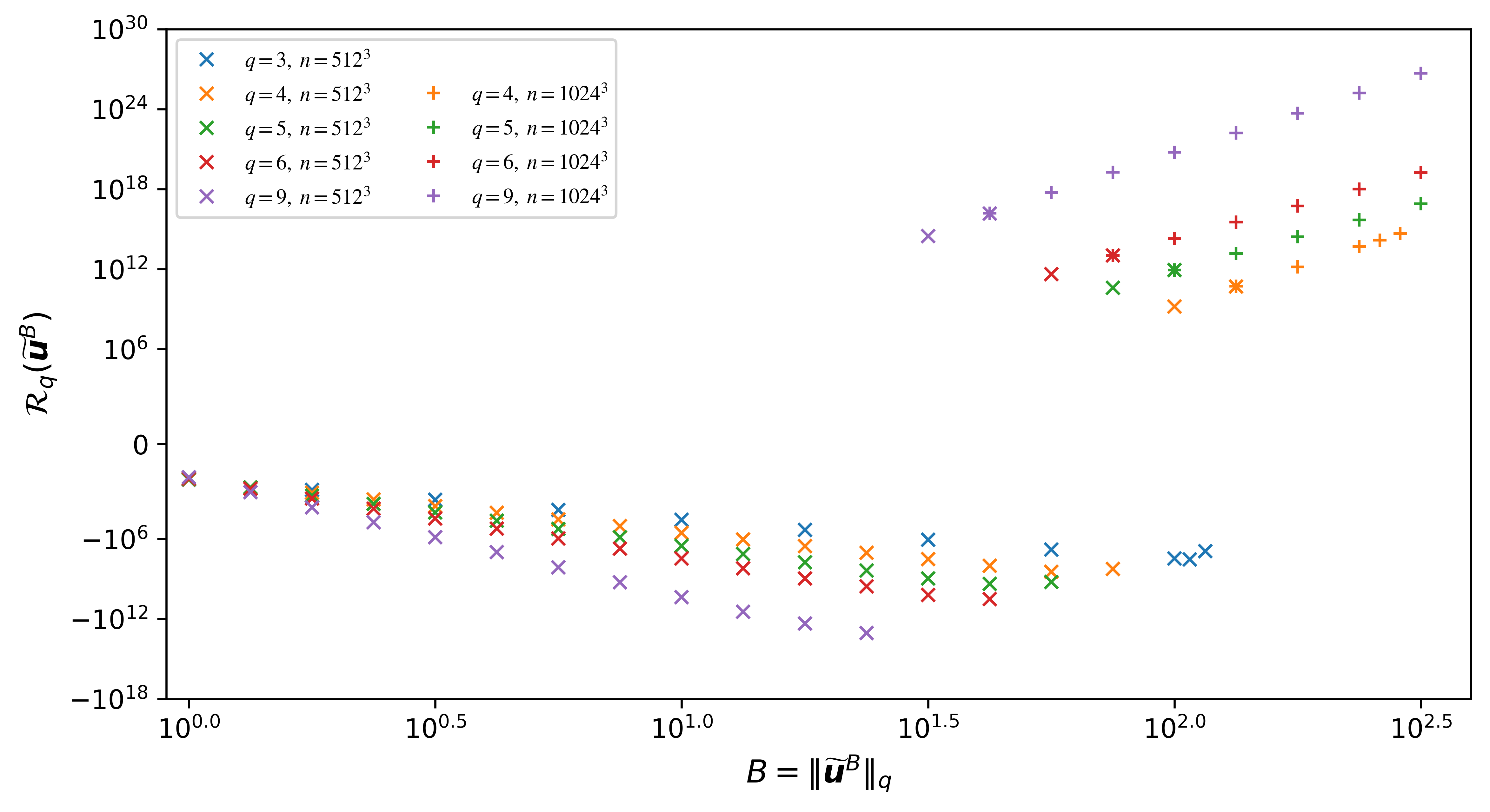
Figure 2: Dependence of the maximum values of the objective functional $2/p + 3/q = 1$0 on $2/p + 3/q = 1$1 for various $2/p + 3/q = 1$2 shows sharp transition and saturation at large $2/p + 3/q = 1$3.
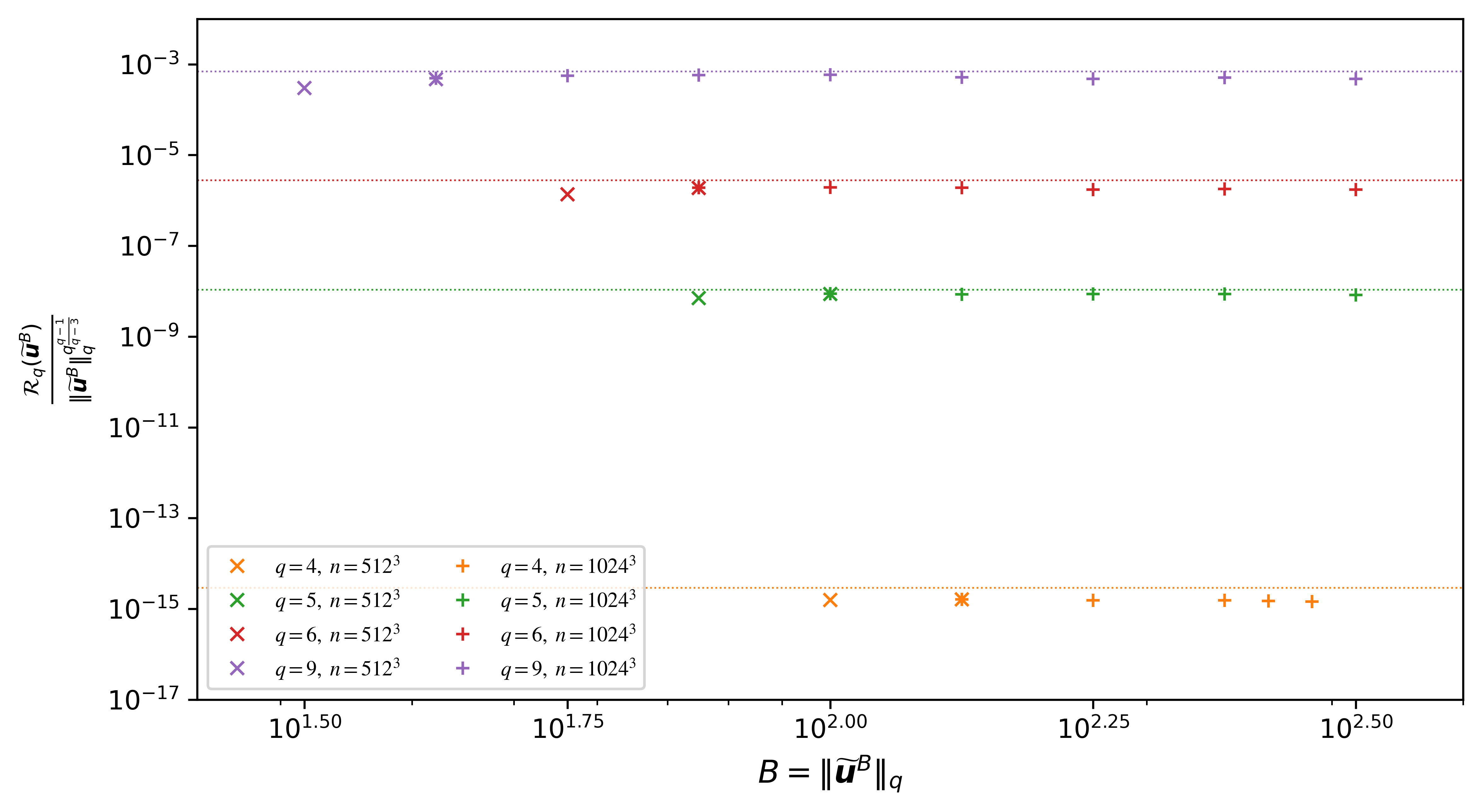
Figure 4: Compensated scaling for the maximum instantaneous growth: $2/p + 3/q = 1$4 is constant for large $2/p + 3/q = 1$5, confirming sharpness of the bound with respect to exponent.
The measured prefactors $2/p + 3/q = 1$6 vary with $2/p + 3/q = 1$7 and are numerically determined, but the critical result is that the exponent of $2/p + 3/q = 1$8 precisely matches the analytical upper bound. For $2/p + 3/q = 1$9, the exponent diverges, and the optimization becomes ill-posed; numerically, the maximization process fails to converge as the fields become singular, aligning with both analytical obstruction and the inapplicability of the bound at the critical endpoint.
Structure of Extreme Fields and Comparison to Enstrophy Maximizers
For small ∫0T∥u(t)∥qpdt<∞0, maximizers resemble ABC flows; as ∫0T∥u(t)∥qpdt<∞1 grows, the extremal fields undergo qualitative transitions and become increasingly spatially localized yet lack simple vortex structures. Unlike maximizers for enstrophy growth rate (which typically consist of axisymmetric colliding vortex rings), the structure here is more complex and not reducible to elementary vortex interactions.
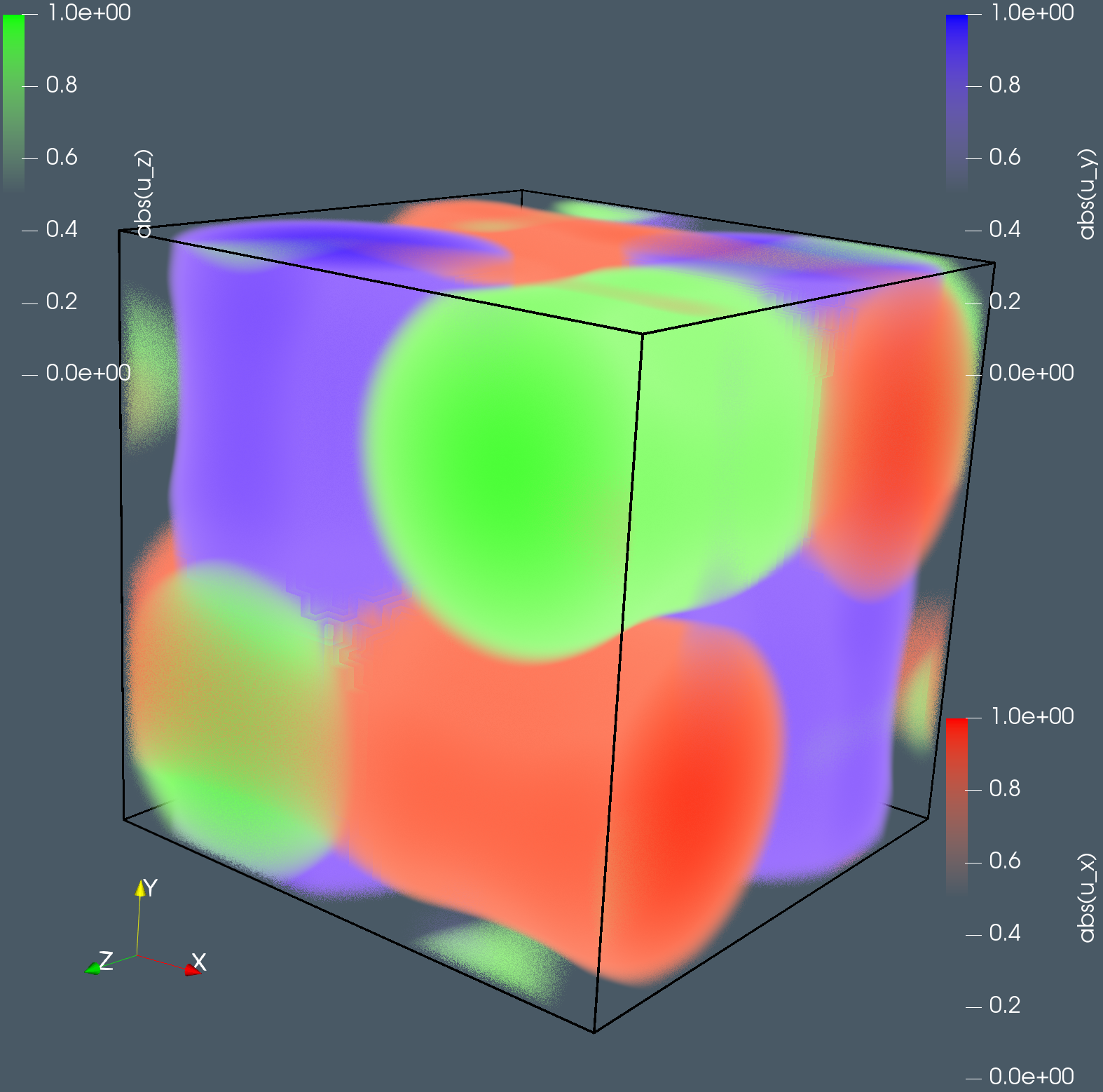
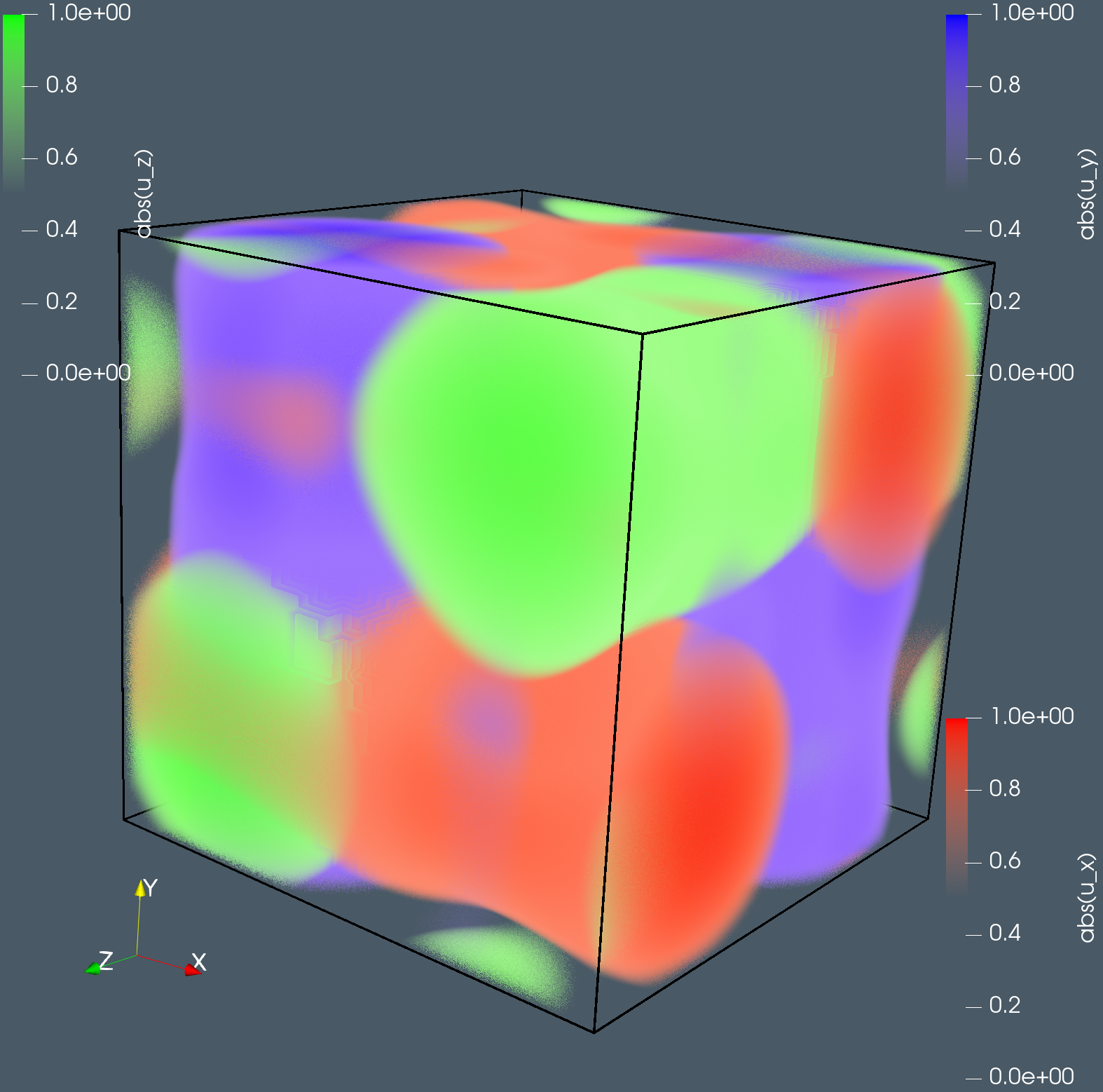
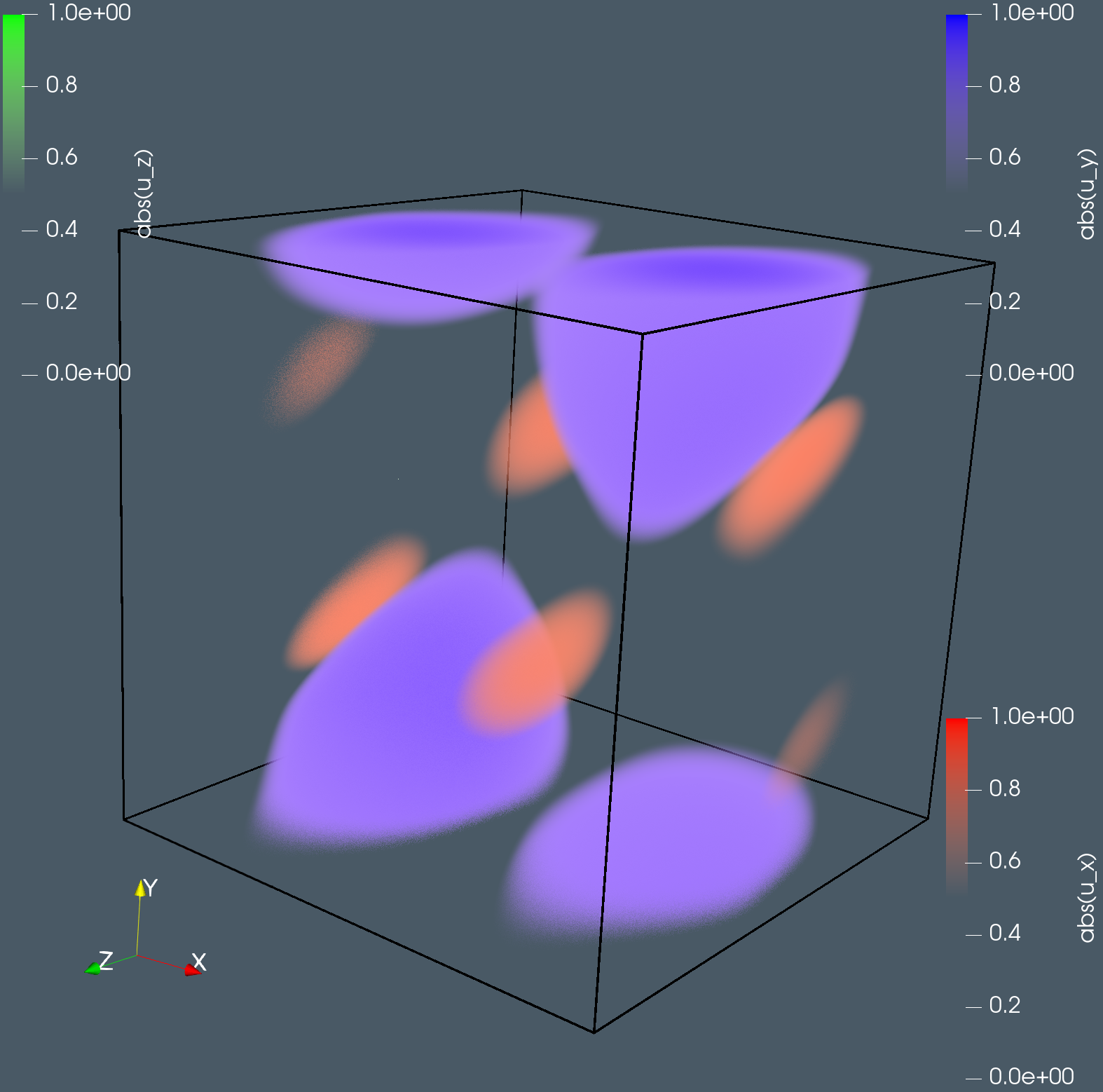
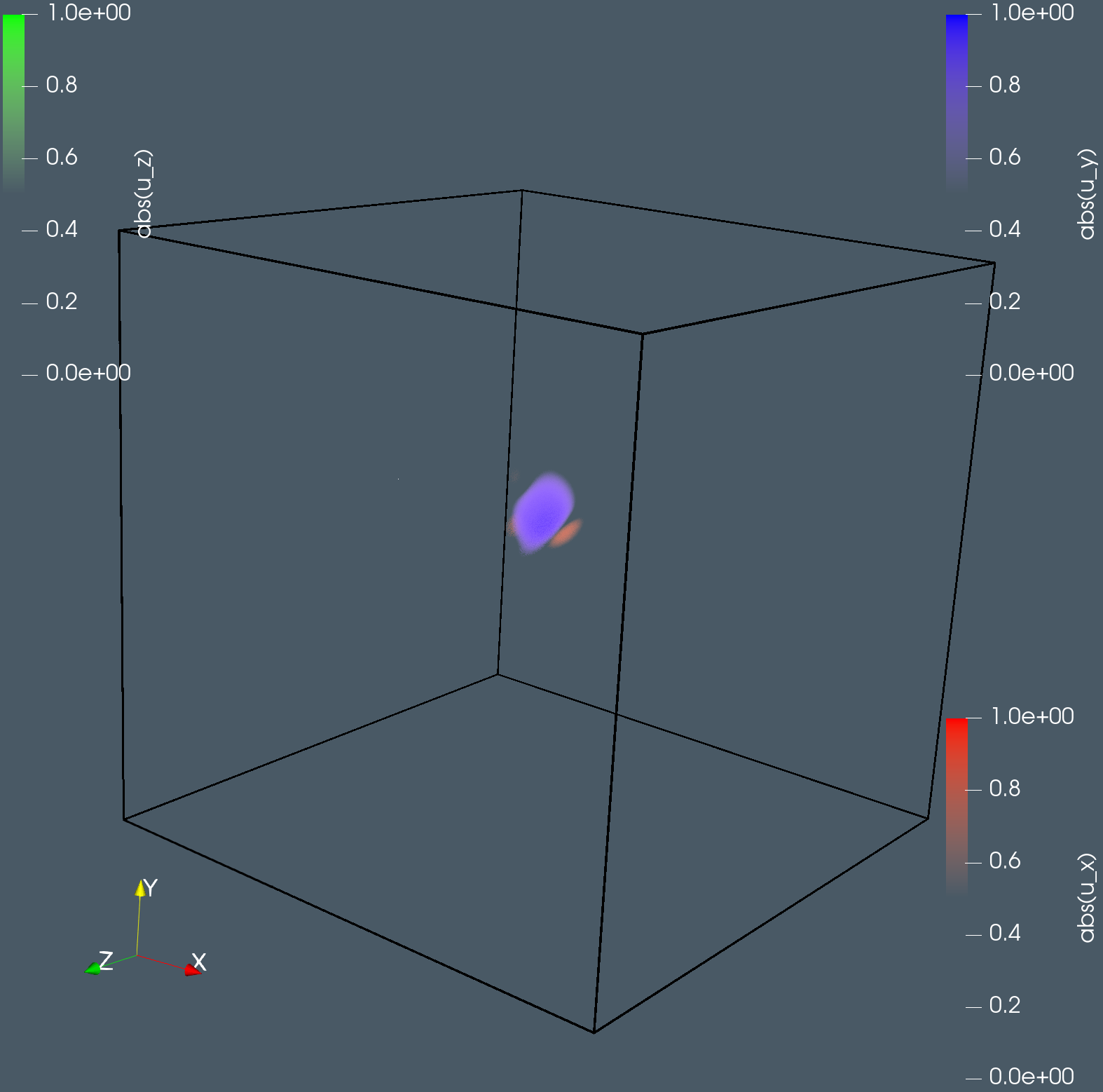
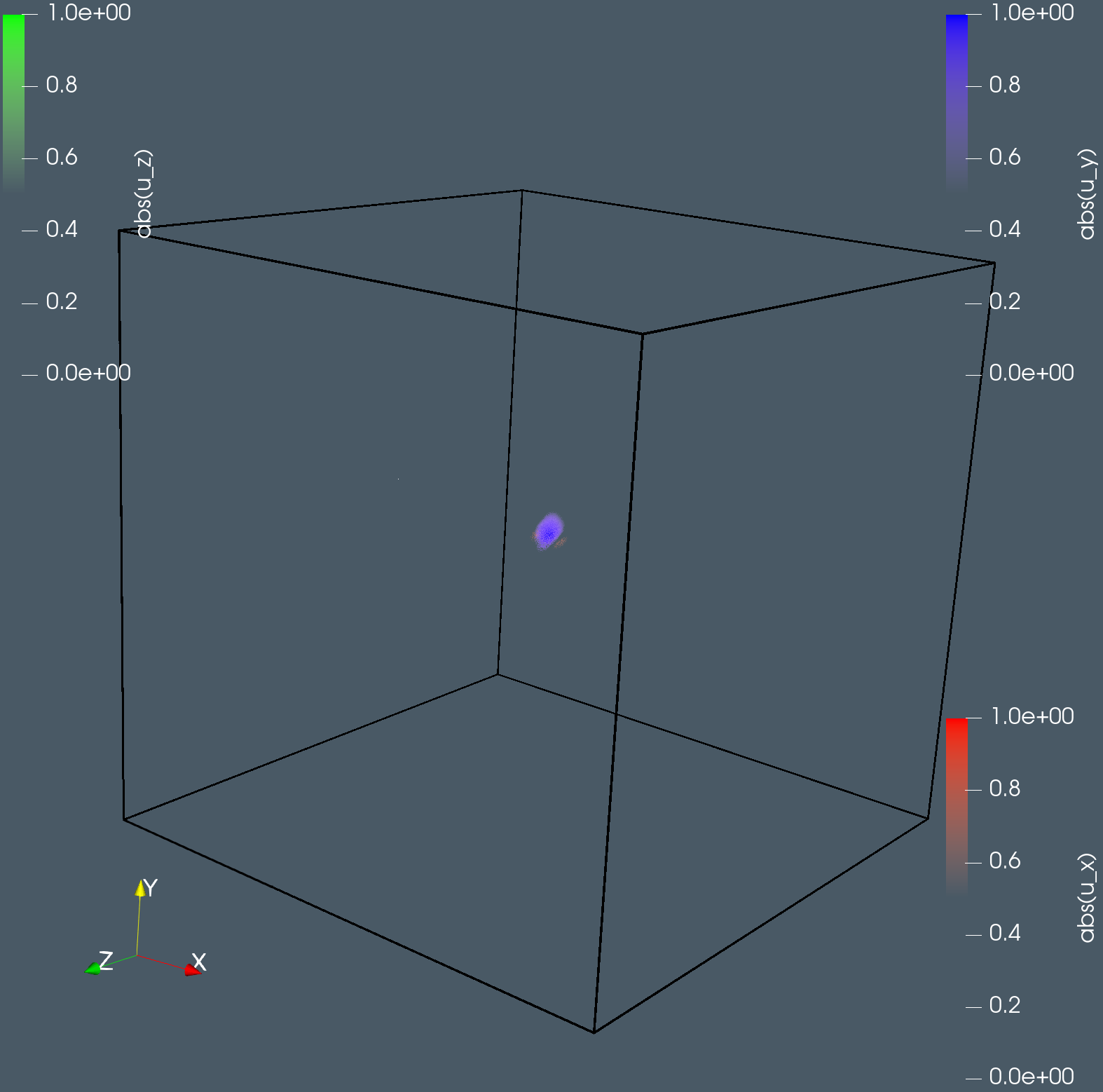
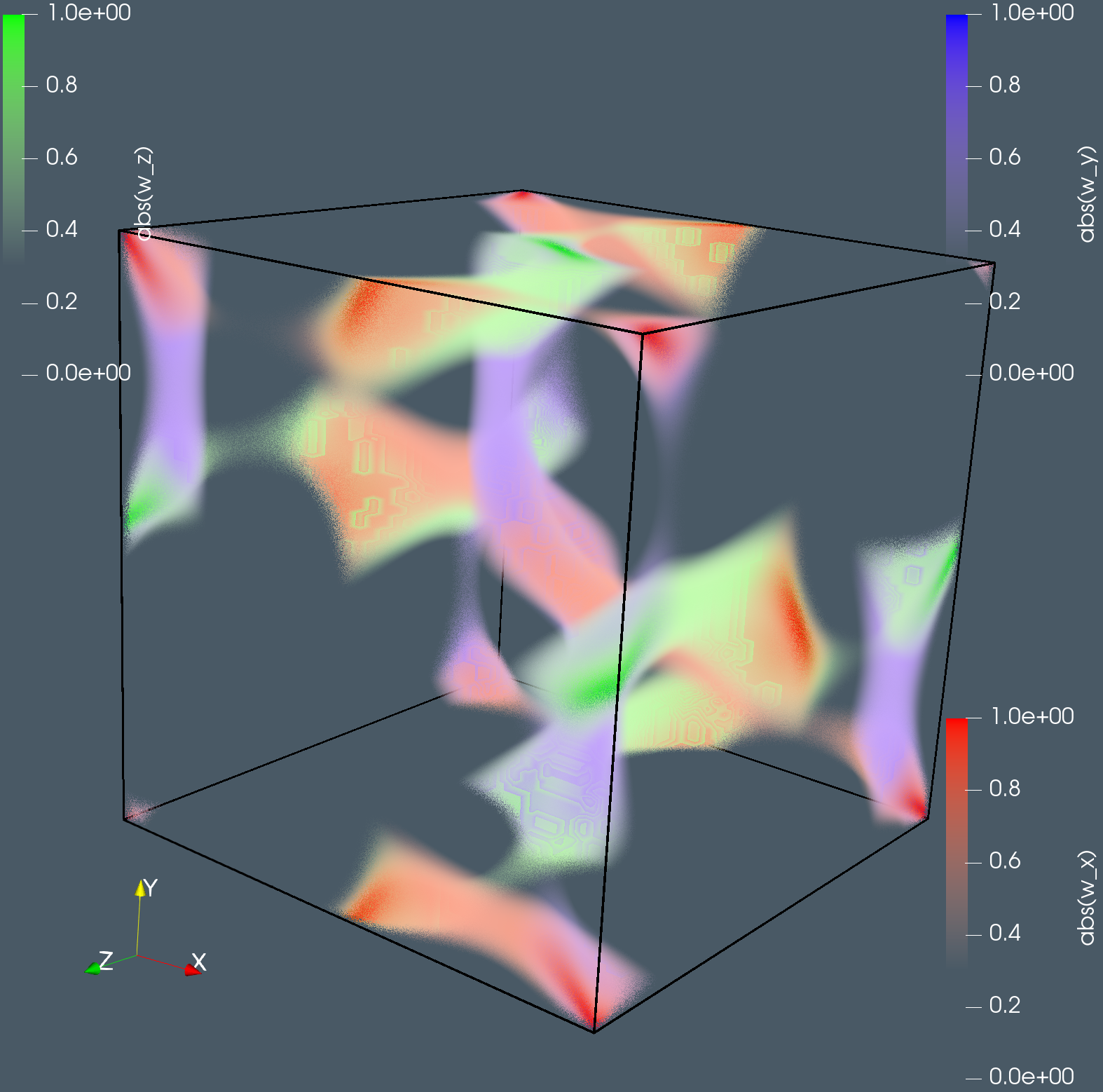
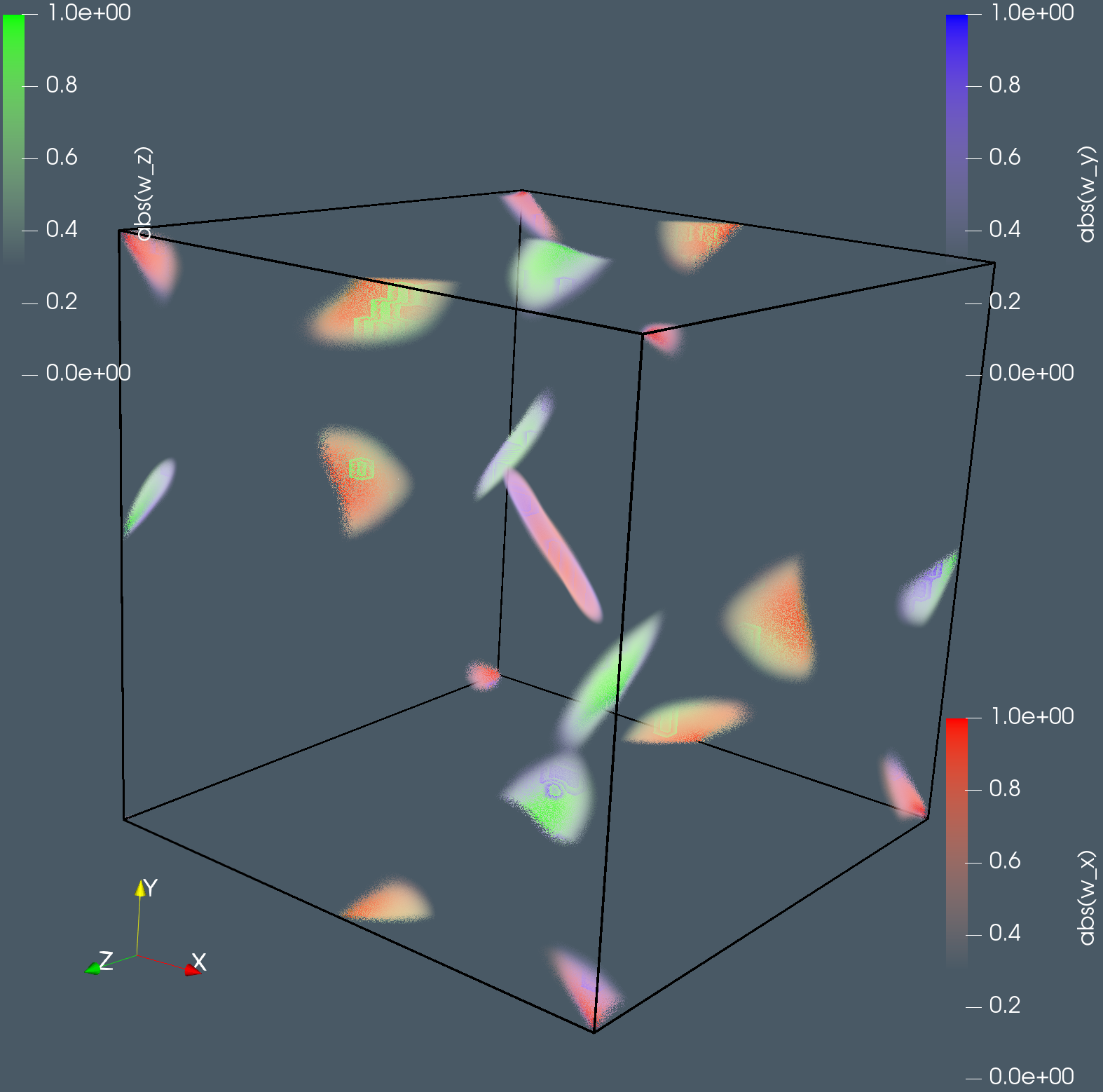
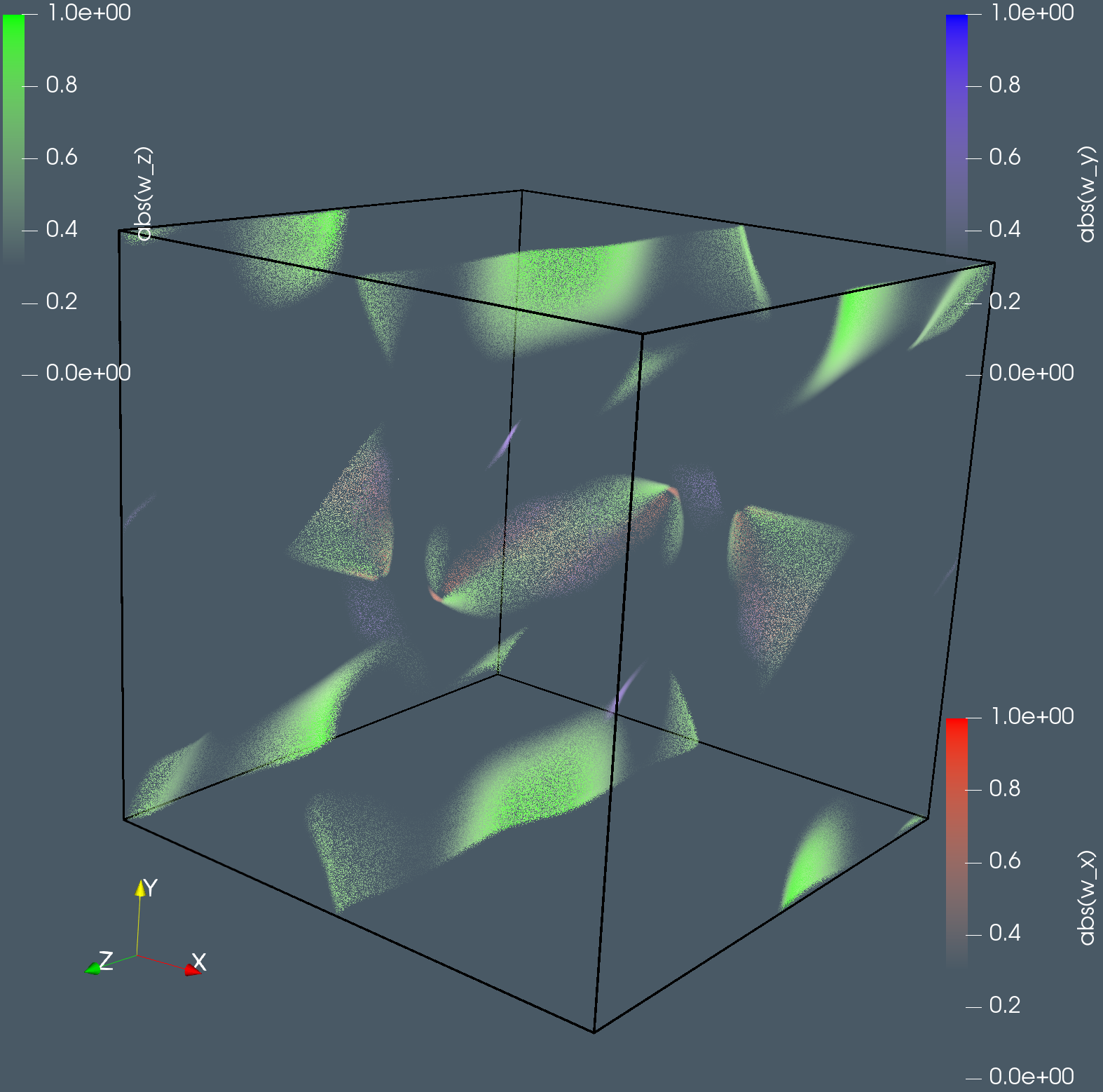
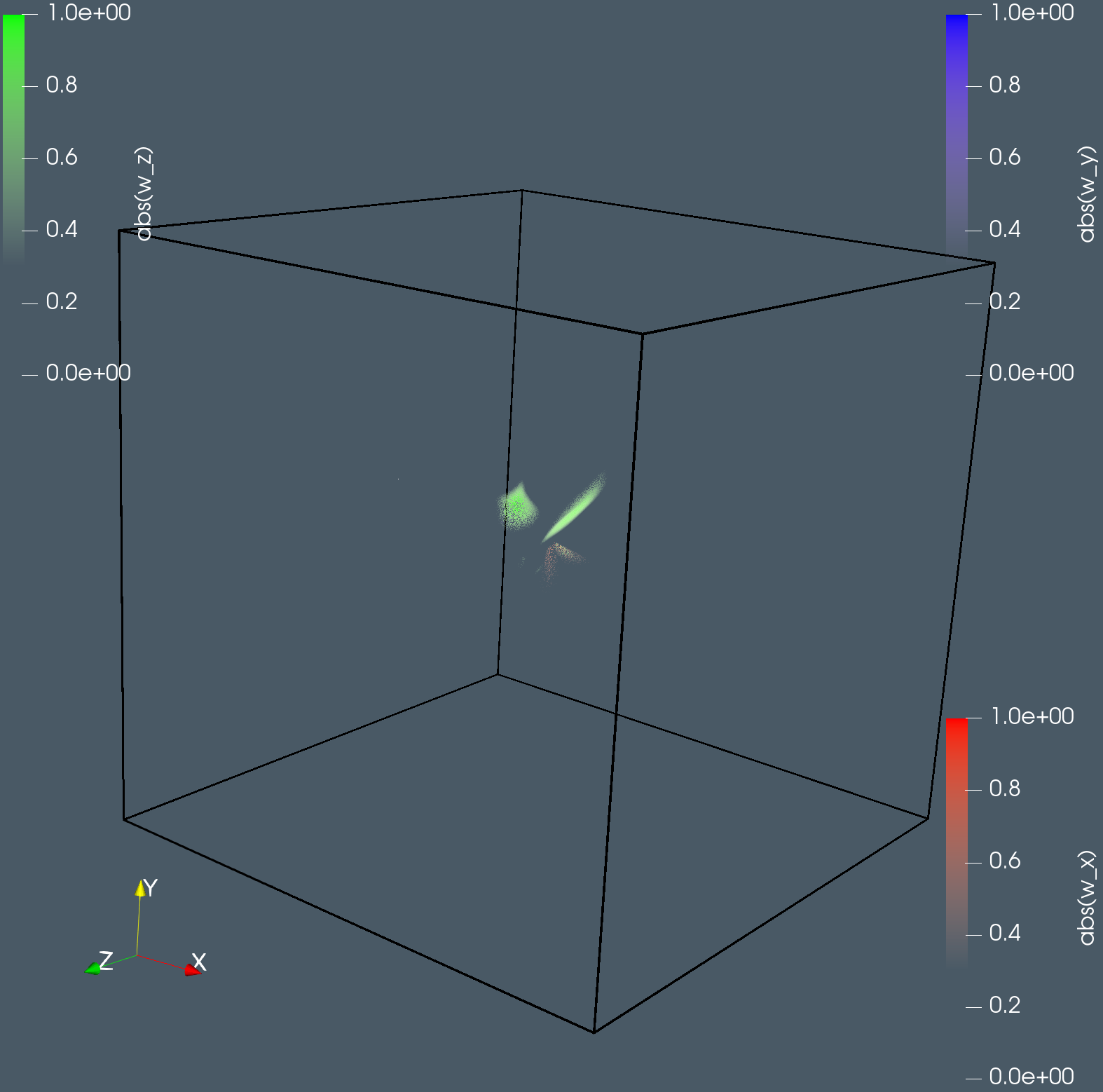
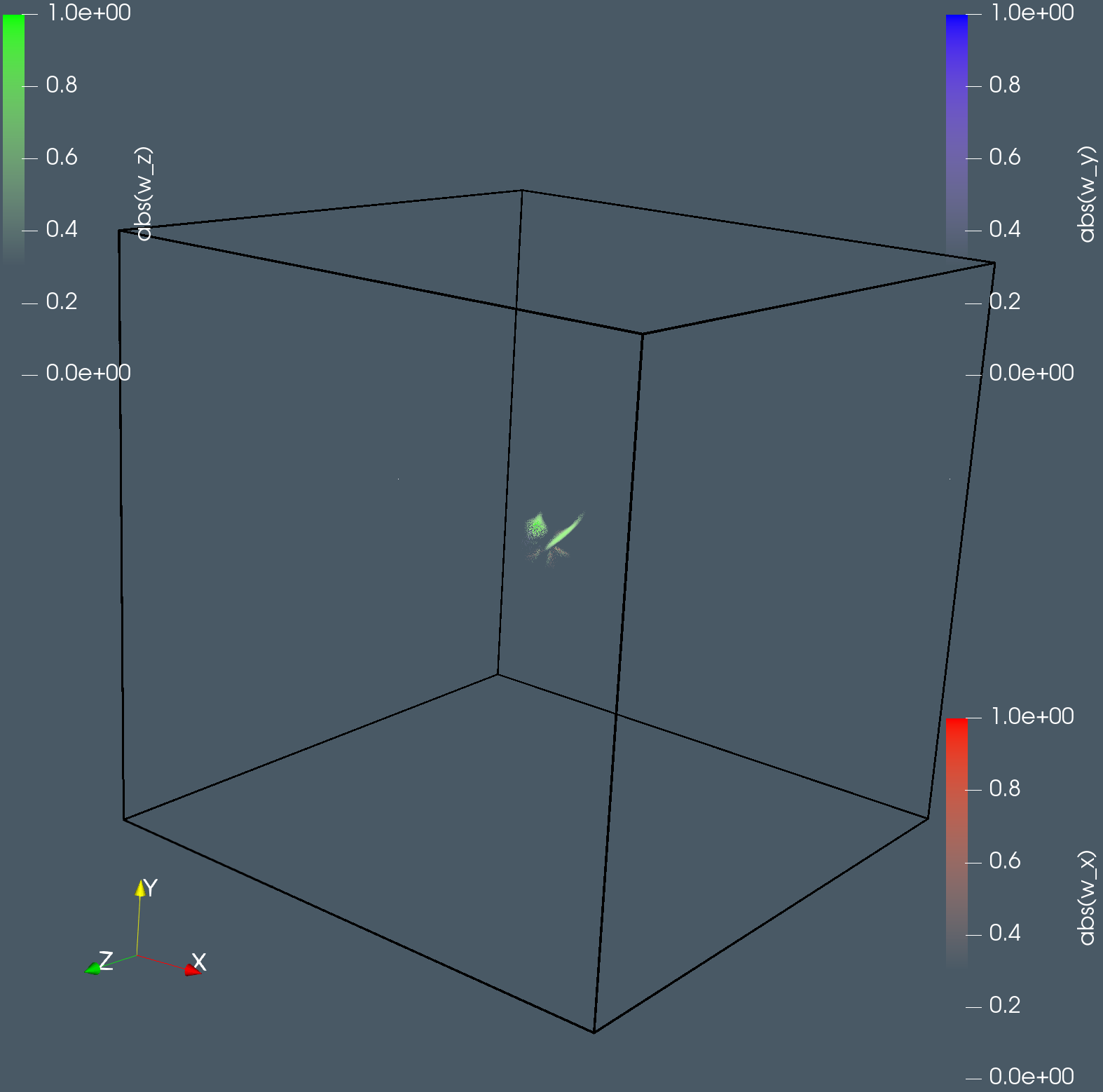
Figure 6: Maximizer velocity field for ∫0T∥u(t)∥qpdt<∞2, ∫0T∥u(t)∥qpdt<∞3 (ABC regime), illustrating smooth and spatially distributed structure.
For very large ∫0T∥u(t)∥qpdt<∞4, the fields become sharply localized, and all ∫0T∥u(t)∥qpdt<∞5-norm is concentrated in small regions. Analysis of the spatial patterns in both velocity and vorticity fields confirms that, even in the nonlinear regime, the bound is approached by ever more singular field configurations.
Dynamics Under Time Evolution
When extreme maximizer fields are used as initial data for time evolution via the 3D Navier-Stokes equations, the ∫0T∥u(t)∥qpdt<∞6-norm shows a rapid initial increase (consistent with the maximized instantaneous rate) but is quickly depleted as the flow reorganizes.
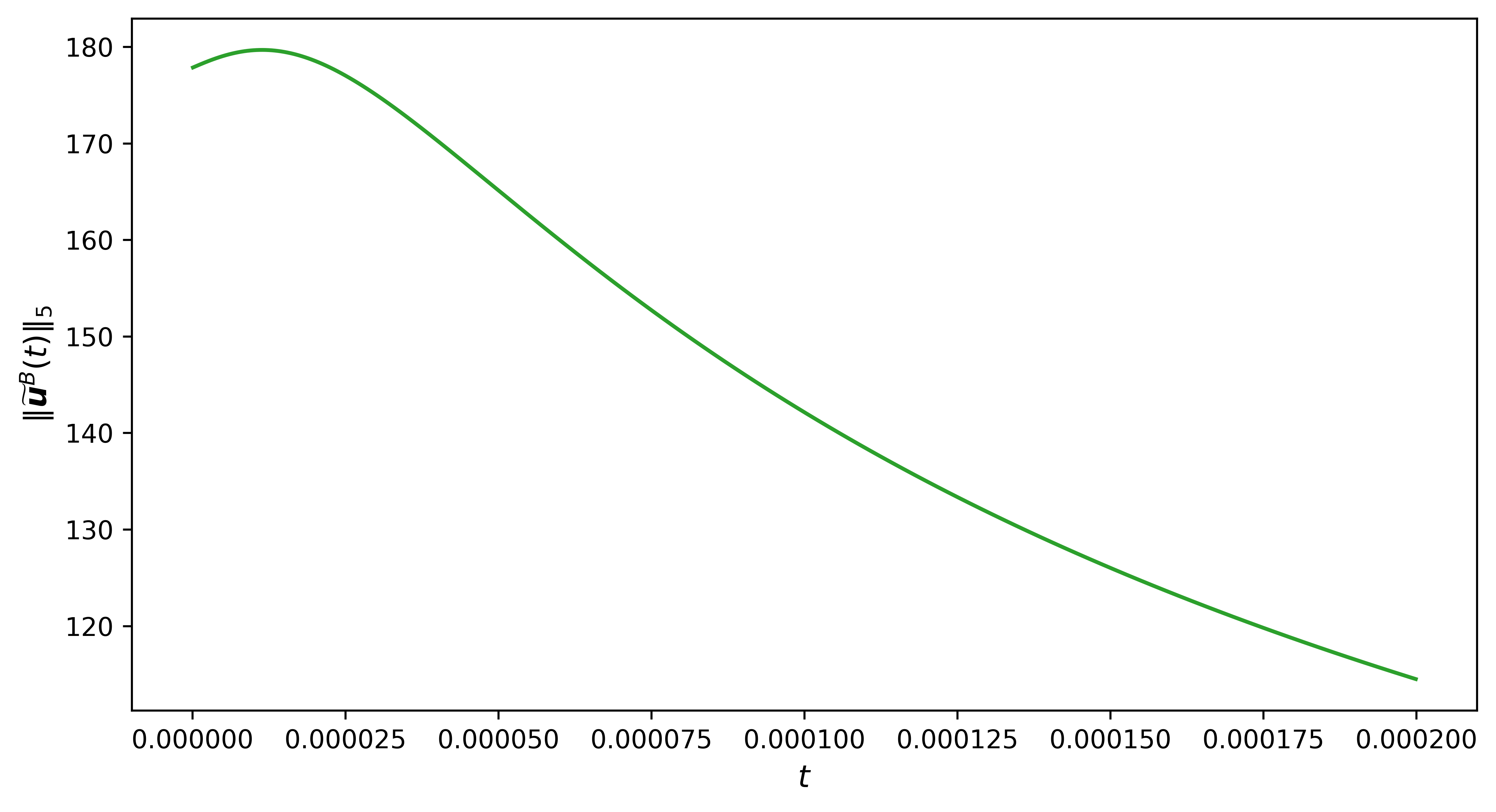
Figure 1: Time evolution of the ∫0T∥u(t)∥qpdt<∞7-norm after initializing with the maximizing field for ∫0T∥u(t)∥qpdt<∞8, ∫0T∥u(t)∥qpdt<∞9; immediate growth is followed by decay.
Implications and Theoretical Significance
The numerical evidence decisively establishes that the instantaneous a priori bound for the Lq0-norm growth in the Navier-Stokes equations is sharp with respect to the exponent for all Lq1. No field can provoke faster instantaneous growth, modulo the constant prefactor. This eliminates the possibility of fundamentally improving the upper bound exponent and suggests that hypothetical singularity formation scenarios would necessarily have to saturate this bound for finite time. However, critical evaluation of the maximizing field dynamics indicates that even such extreme configurations do not provoke simultaneous violation of both the Ladyzhenskaya-Prodi-Serrin and enstrophy regularity conditions: the fields that maximize instantaneous Lq2-norm growth are far from those that maximize enstrophy growth.
The nonexistence of a finite upper bound in the critical case Lq3—and the numerical ill-posedness of the maximizing problem as Lq4—corroborate the lack of polynomial growth bounds for Lq5 derivative predicted analytically, and aligns with the delicate scaling at the borderline of conditional regularity.
Conclusion
The rigorous computational and analytical framework developed demonstrates that the maximal instantaneous growth rate of Lq6-norms in 3D Navier-Stokes flows attains the sharp upper bound given by the Robinson-Sadowski estimate for all Lq7, and that the exponent on the right-hand side cannot be improved. The extremal fields responsible for this saturation are dynamically and structurally distinct from those relevant for enstrophy maximization, highlighting nuanced differences between routes to potential singularity formation. For the critical case Lq8, both theory and numerics indicate a qualitative change in behavior, suggesting no uniform polynomial-in-norm a priori bound on the instantaneous growth rate.
These findings clarify the interplay between functional analytic estimates, nonlinear optimization, and fluid dynamics, and delineate the precise range and nature of possible finite-time growth in spatial norms relevant to Navier-Stokes regularity theory (2607.02739).