- The paper introduces a unified benchmarking framework comparing over 10 VQE algorithm variants on amino acid Hamiltonians using active-space and qubit reduction techniques.
- It evaluates convergence behaviors, initialization effects, and noise resilience, highlighting trade-offs between hardware-efficient and adaptive VQE methods.
- Results indicate that while hardware-efficient VQE offers cost-efficiency, adaptive approaches yield improved chemical accuracy at the expense of higher computational overhead.
Comparative Assessment of VQE Algorithms for Ground-State Energies of Amino Acids on NISQ Devices
Introduction
Quantum simulation of molecular systems, particularly ground-state energy (GSE) estimation via solution of the electronic structure problem (ESP), presents acute computational demands as system size increases. Variational Quantum Eigensolver (VQE) methods have emerged as the flagship quantum-classical hybrid paradigm in the Noisy Intermediate-Scale Quantum (NISQ) landscape, circumventing the high circuit depth and error-correction requirements of quantum phase estimation (QPE). This work systematically benchmarks an extensive set of VQE algorithms—spanning hardware-efficient, adaptive, classically-boosted, and machine-learning-assisted variants—on the QMProt dataset, which provides standard quantum chemistry Hamiltonians for 20 proteinogenic amino acids and related small biomolecules, using active-space truncation and qubit reduction strategies.
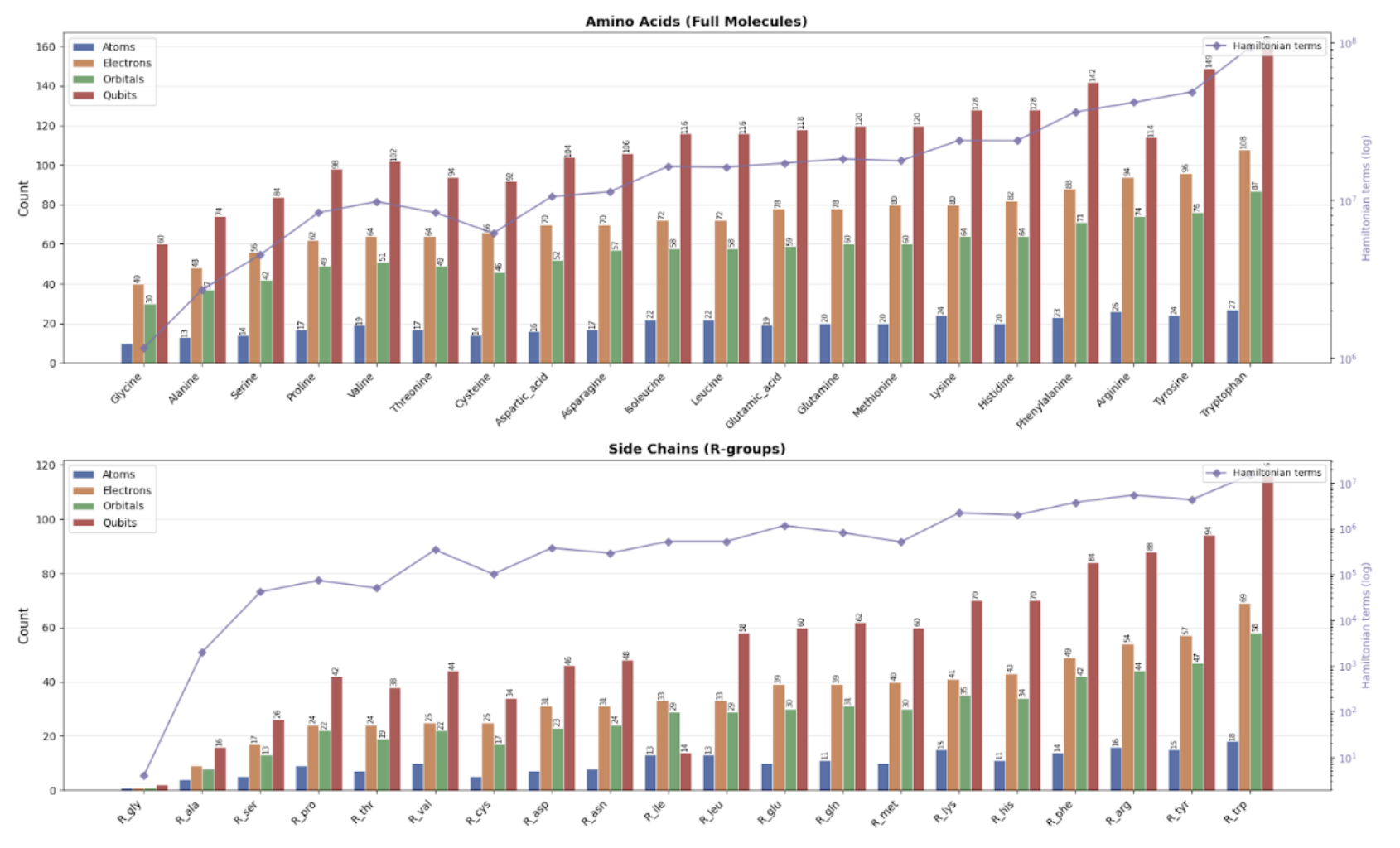
Figure 1: Number of atoms, electrons, orbitals, and qubits for the molecules available in the QMProt dataset.
Dataset Preparation and Qubit Economy
The study uses the QMProt dataset and leverages OpenFermion, PySCF, and Jordan-Wigner transformation to map second-quantized fermionic Hamiltonians into qubit operators. Active-space truncation dramatically reduces circuit width while retaining chemically correlated orbitals, validated via CASCI/CASSCF diagnostics. The contextual subspace (CS) reduction, based on maximizing the size of classically solvable Hamiltonian blocks, further compresses the quantum part requiring variational optimization.
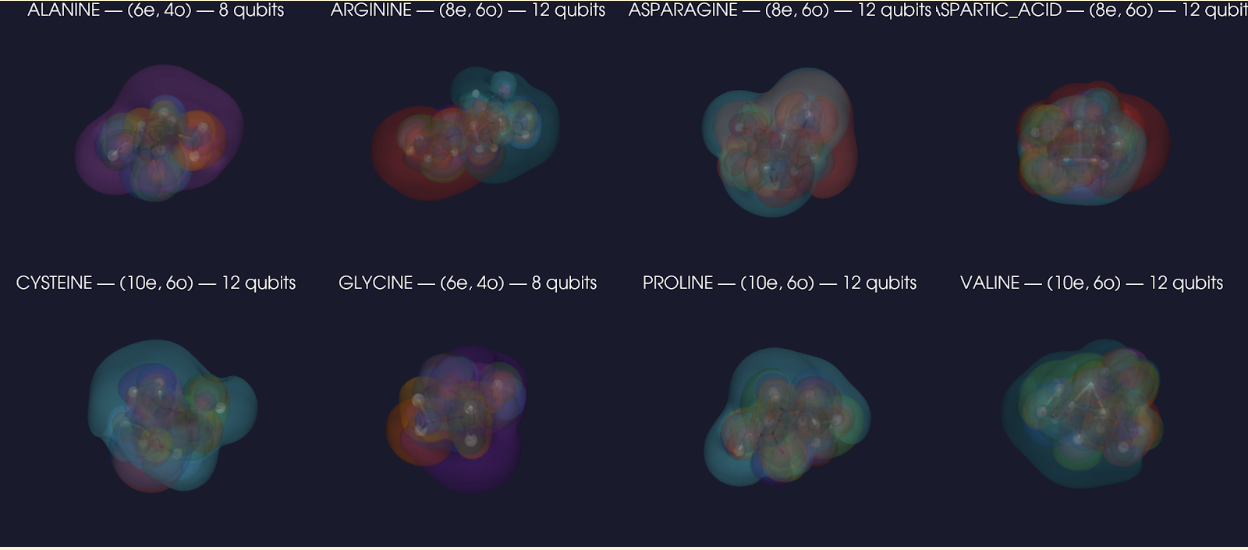
Figure 2: Active orbitals of model amino acids, visualized.
The net effect of these techniques is to enable simulation of entire amino acids with 4–6 active orbitals, corresponding to tractable qubit counts (typically 8–12 qubits post-truncation), while maintaining chemical accuracy for the primary electronic ground state.
VQE Benchmarking Pipeline and Evaluated Algorithms
The benchmarking framework standardizes comparison between 10+ VQE algorithmic paradigms (including ADAPT-VQE, Qubit-ADAPT-VQE, hardware-efficient VQE, CB-VQE, iQCC, VAns, NN-VQA, Hamiltonian variational ansatz, and CS-VQE, among others) under consistent Hamiltonian data, initialization procedures, and optimizer/hardware configurations.
A particularly significant engineering contribution is the modular handling of ansatz and operator pools in the presence of Clifford basis rotations imposed by CS reduction, ensuring fair and direct comparison across diverse algorithmic structures regardless of subspace transformations.
Experiment 1: Initialization and Trainability
The influence of circuit parameter initialization strategies (random-uniform, small-random, and near-identity) on convergence speed, plateau behaviors, and final energy was rigorously characterized. For hardware-efficient VQE circuits of fixed depth, rapid convergence to an energy plateau—within 2–5 classical iterations—was observed universally across all initialization types and all amino acid molecules, with post-convergence energy fluctuations on the order of 0.4 Hartree and no statistically significant differences in endpoint accuracy across strategies.
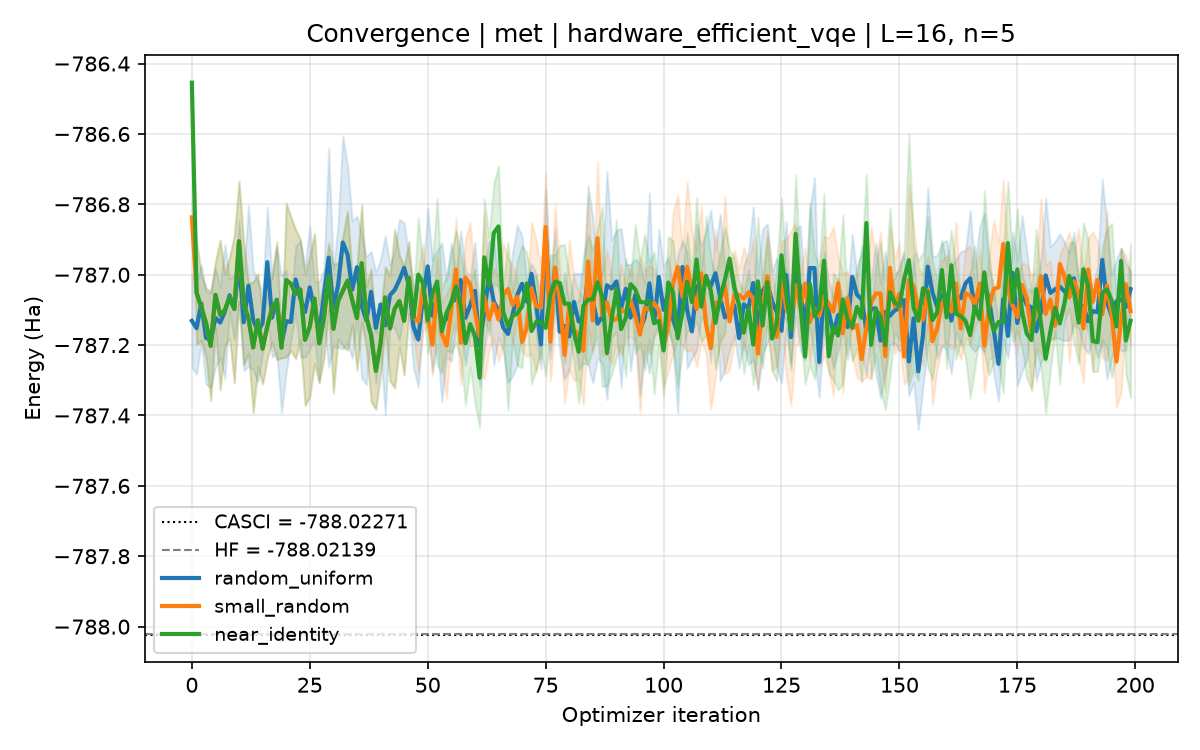
Figure 3: In the Methionine example, all three initialization strategies quickly settle into similar oscillatory plateaus around -787.1 Ha and stay above the CASCI/HF reference (-788.02 Ha).
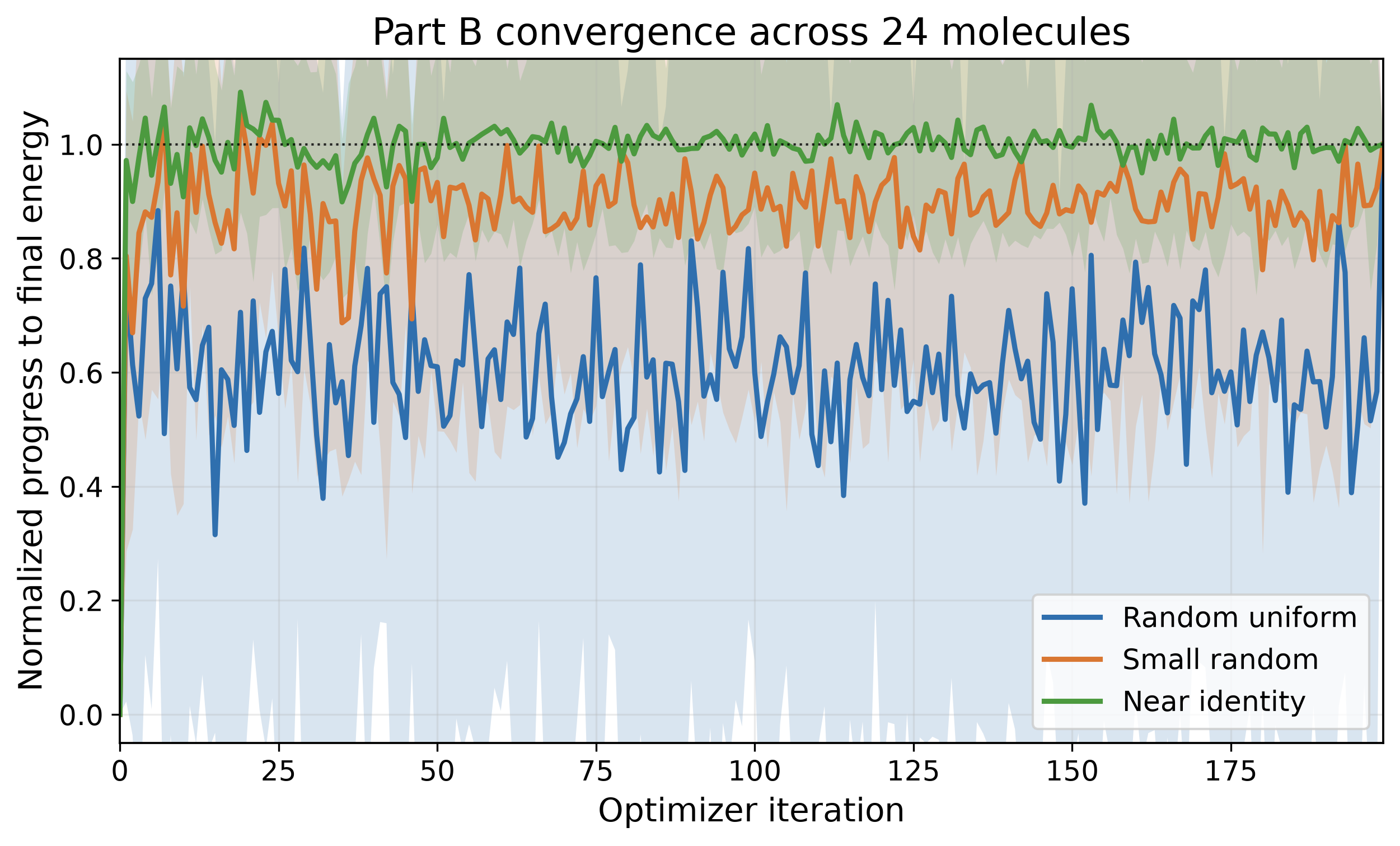
Figure 4: Per-molecule convergence-by-initialization curves; energies converge by 2–5 optimizer iterations, independent of initialization.
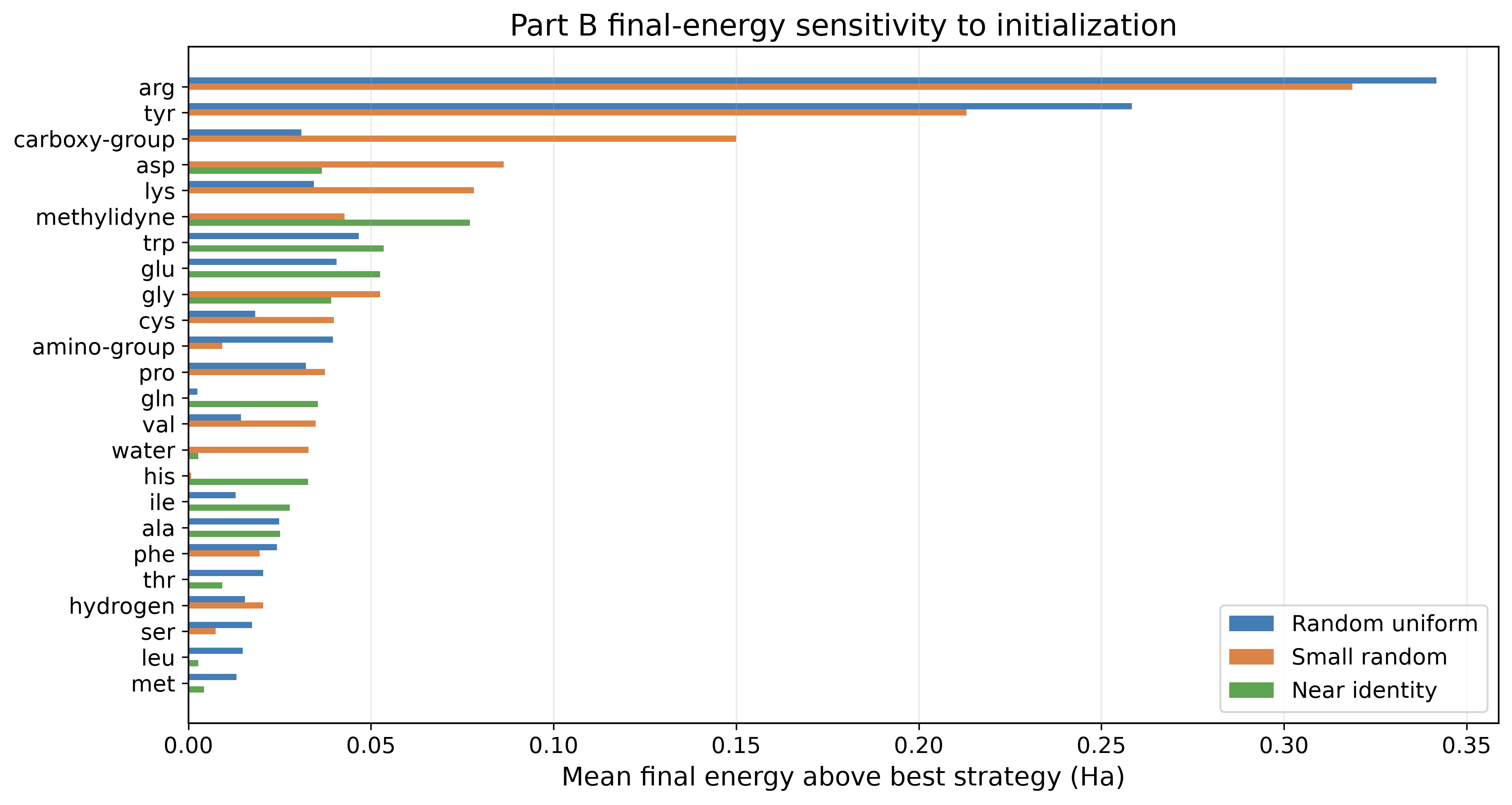
Figure 5: Per-molecule final-energy-by-initialization comparisons; no significant final energy differences across initialization strategies.
Gradient variance analysis, critical for diagnosing barren plateaus, confirms that the "near-identity" initialization systematically yields the lowest gradient variance, with the penalty scaling as the number of hardware-efficient layers increases, but the overall impact of initialization fades beyond extremely deep ansatz.
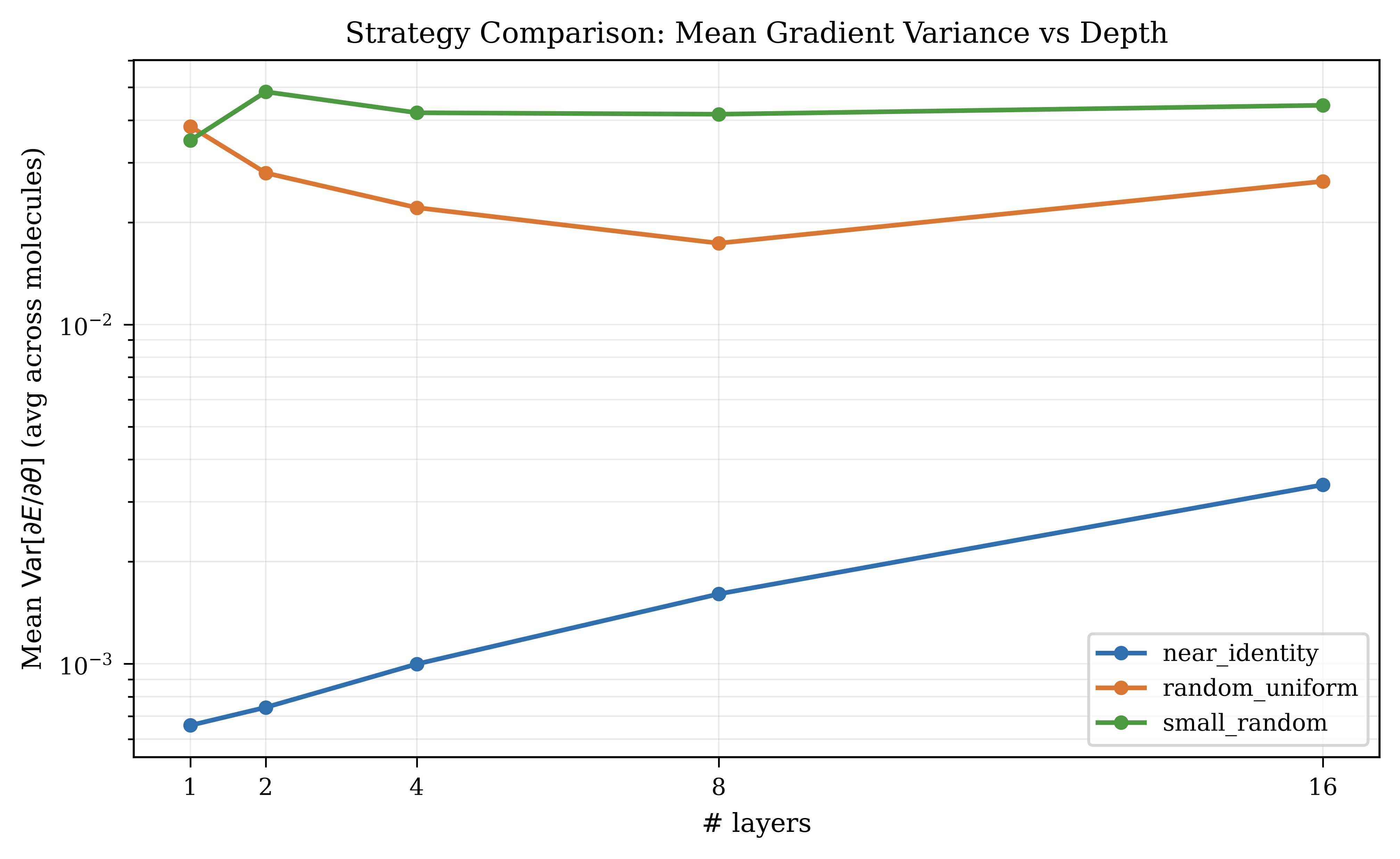
Figure 6: Mean variance across molecules vs. number of layers for three initialization strategies; near-identity minimizes variance, random-uniform/small-random have higher average variance.
Experiment 2: Noise Resilience Analysis
Robustness to quantum noise is measured by assessing L2 parameter drift and cosine similarity between noiseless and noisy optimization optima as a function of noise strength parameter p. Both the L2 drift and cosine similarity heatmaps reveal a monotonic relationship: increasing noise strength induces progressively greater parameter drift across all probed amino acids, though the magnitude of noise susceptibility varies by molecular instance, reflecting differing Hamiltonian conditioning.
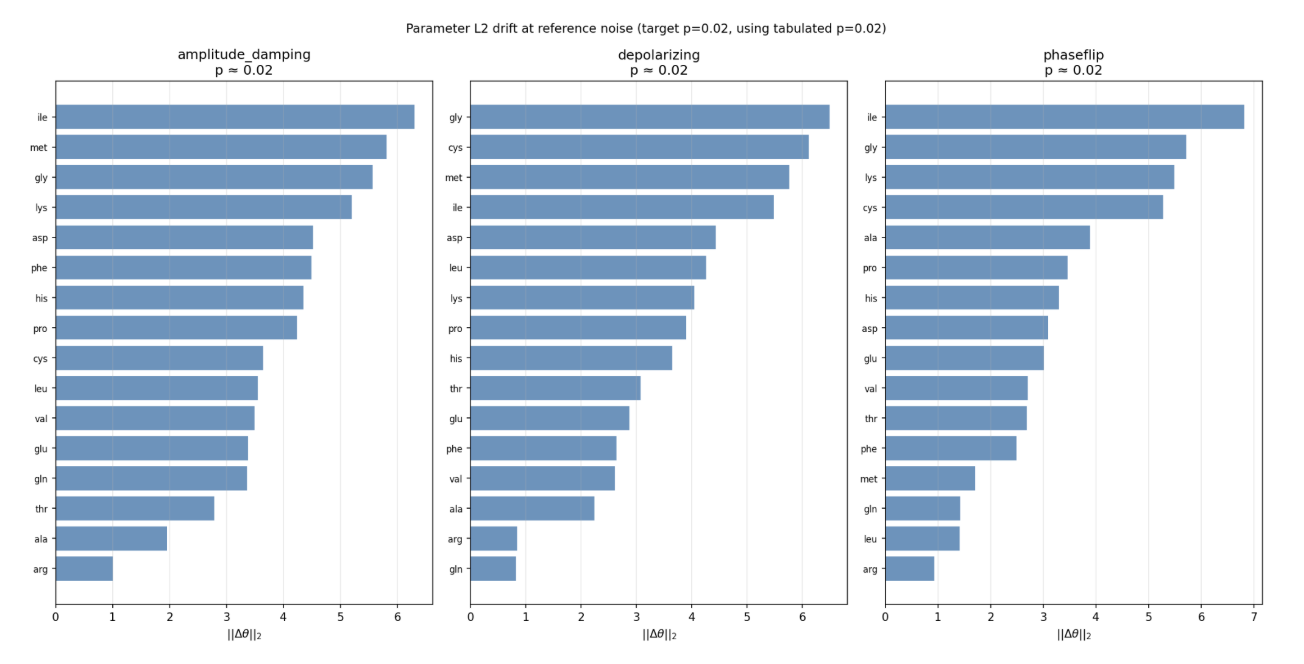
Figure 7: Parameter L2 Drift at reference noise across molecules.
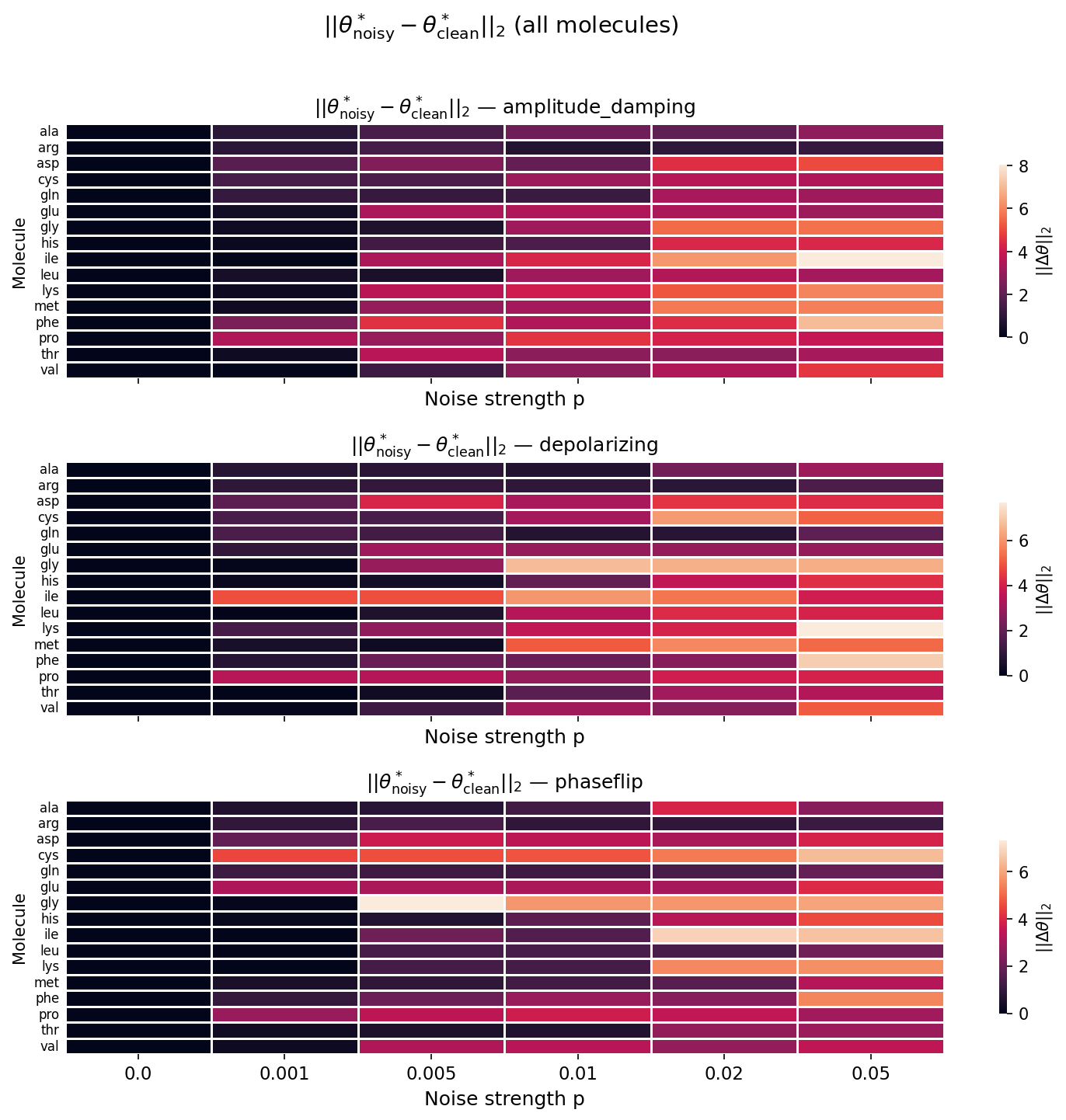
Figure 8: Parameter drift heatmap (L2 norm) as quantum noise intensity p increases, indicating increased drift.
Experiment 3: Expressibility, Accuracy, and Cost Scaling
Ground-state energy errors for ADAPT-VQE as a function of the number of variational parameters ("operator budget") were found to decrease monotonically, but at a high cost in increased circuit evaluations and wall time. The study establishes, quantitatively, that hardware-efficient VQE yields 10–20x lower measurement/cost-function evaluation overhead than Qubit-ADAPT-VQE for matched final parameter budgets, albeit at some expense of chemical accuracy.
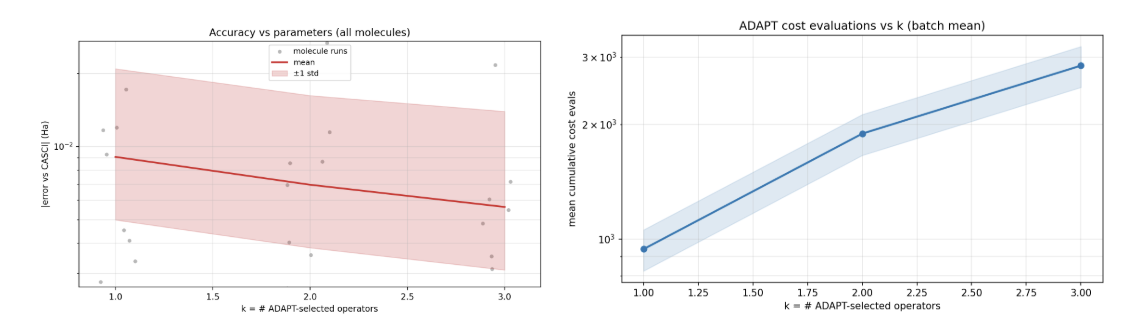
Figure 9: Energy error vs. number of ADAPT-VQE operators relative to CASCI; error decreases as operator count increases.
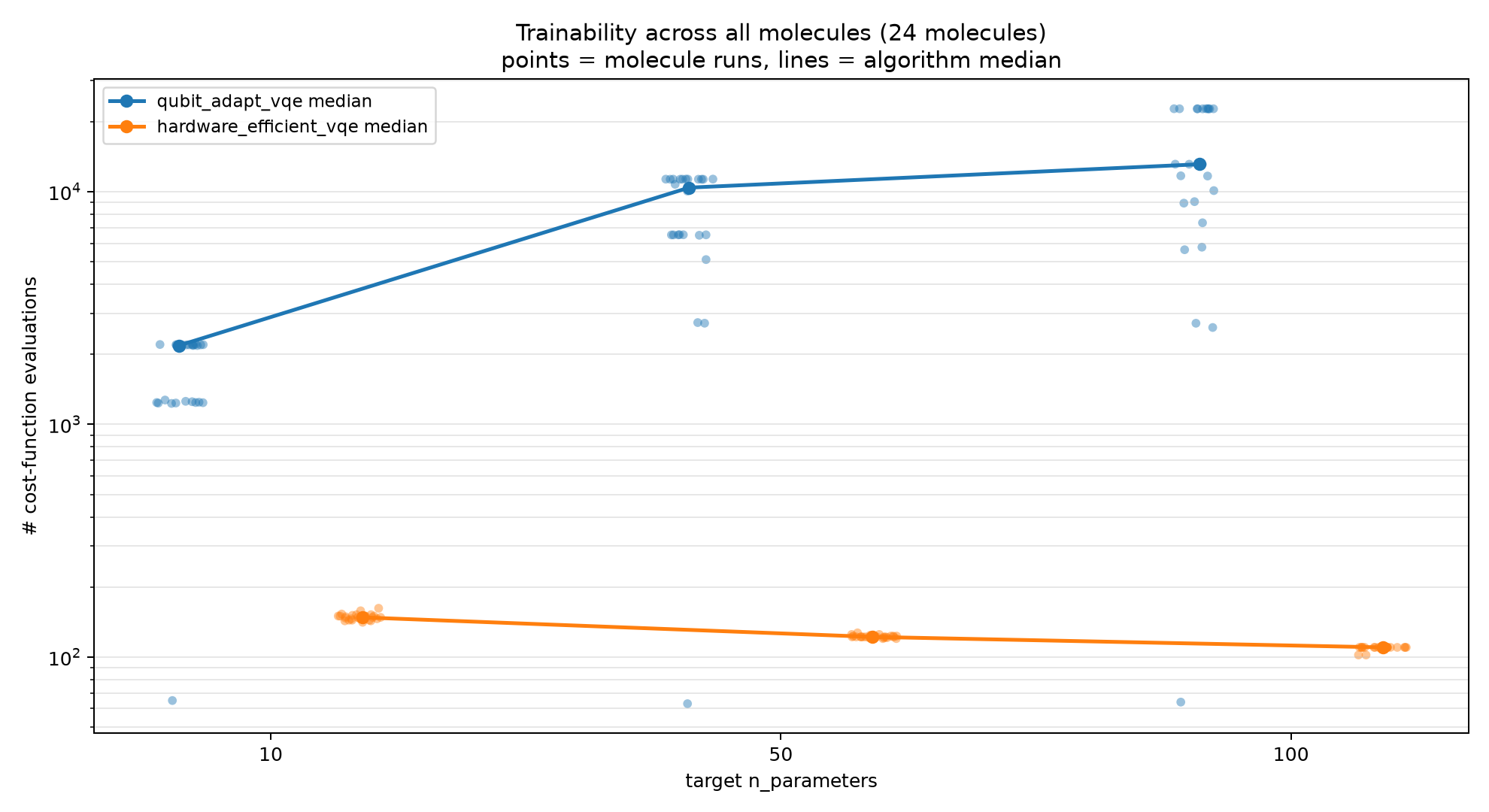
Figure 10: Cost-function evaluations for all molecules: hardware-efficient VQE is cheaper by approximately one order of magnitude compared to Qubit-ADAPT.
Experiment 4: Hamiltonian Prefix Truncation and Information Content
An investigation into how much ground-state energy information is retained as a function of the number of leading Hamiltonian prefix terms included showed a rapid reduction in mean energy error up to the inclusion of the fourth parameter, a transient error spike at the fifth, and then slow convergence improvement through to the tenth parameter. This suggests that the dominant correlation information is compactly encoded in a small number of leading Hamiltonian terms for these systems.
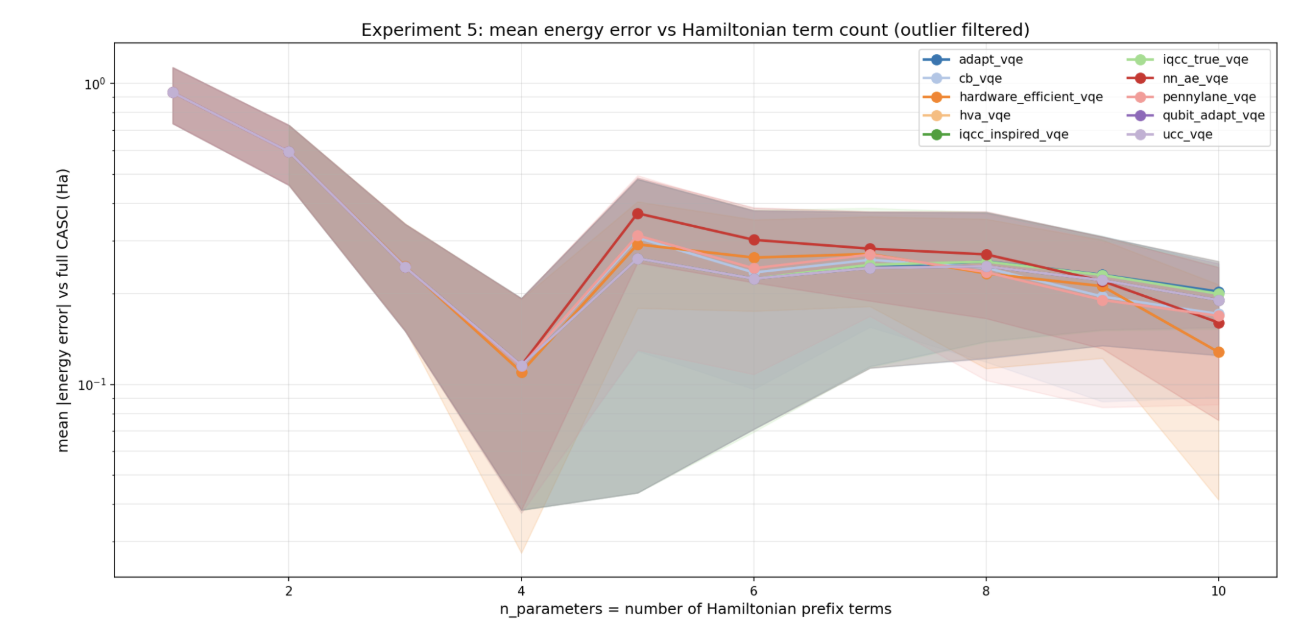
Figure 11: Energy deviation vs. number of prefix parameters retained from the Hamiltonian; error minimum at four parameters.
Trainability and Algorithmic Overhead
Further per-molecule breakdowns (not shown in the main text but referenced) corroborate the system-independent trends in sample/molecule efficiency for ADAPT- vs. hardware-efficient VQE methods.
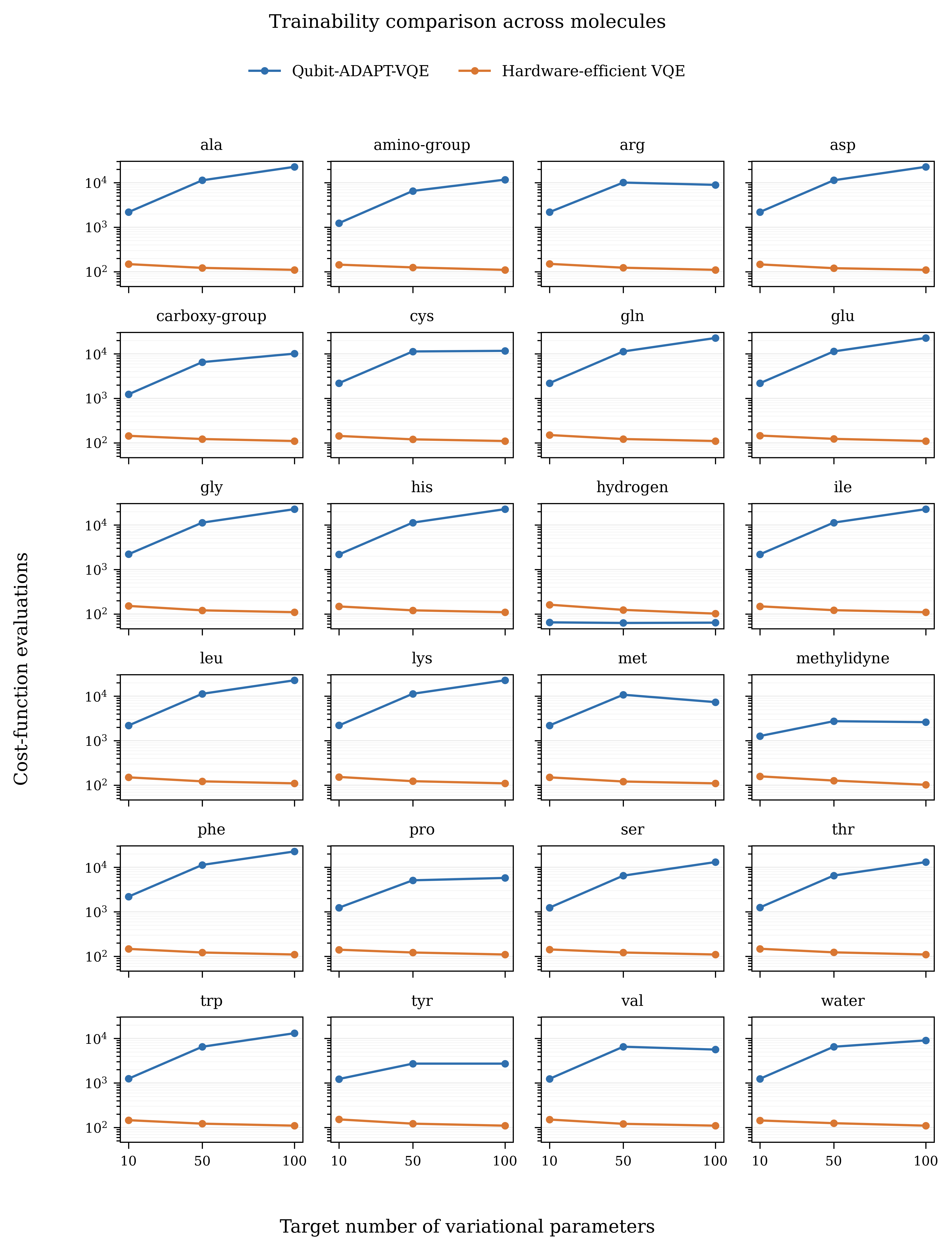
Figure 12: Cost-function evaluations required by Qubit-ADAPT-VQE and hardware-efficient VQE versus variational parameter count per molecule.
Implications, Limitations, and Directions
Practical Implications
By providing a unified, extensible benchmarking pipeline for key VQE algorithms and parameter regimes, this work supplies a blueprint for NISQ-era resource allocation: for moderate active spaces, hardware-efficient VQE is clearly dominant for cost (with ~1 order of magnitude fewer evaluations), but adaptive ansatz (e.g., Qubit-ADAPT) are more effective for squeezing out final fractions of chemical accuracy at the price of scalability and compute.
This is directly relevant to protein quantum modeling pipelines, fragment-based methods for active-site energetics, and quantum benchmarking of realistic biomolecular subsystems. The availability of easy switching between ansatz types and reduction strategies enables fast hypothesis testing for algorithm-hardware matching and error-mitigation strategies.
Methodological Constraints
As noted, the optimizer choice (e.g., Bayesian optimization vs. COBYLA), depth truncation, and mapping method (Jordan-Wigner vs. Bravyi-Kitaev) can influence both trainability and noise sensitivity, but were not exhaustively ablated here. Extension to larger Hamiltonian prefix truncations and alternative encodings remain pertinent for further study.
Theoretical Ramifications
The lack of strong dependence of trainability on initialization, for these moderate-depth circuits, aligns with current understanding of barren plateaus arising only in far deeper hardware-efficient variational forms. The operator pool flexibility introduced for CS reductions highlights the need for theory on the expressivity of Pauli pools in rotated (basis-shifted) subspaces, especially as adaptive methods are extended to more heavily transformed or symmetry-reduced quantum chemical problems.
Future Prospects
The benchmarking codebase forms an open platform for testing future adaptive, ML-guided, or error-mitigated VQE variants as quantum hardware matures and qubit counts scale. In particular, scaling studies on more complex fragments, Hamiltonian embedding, and cross-validation of operator pool selection for new classes of biomolecules may directly impact near-term quantum chemistry computation and pharmaceutical compound prioritization.
Conclusion
This study delivers a rigorously modular framework for benchmarking VQE algorithms on active-space-truncated amino acid Hamiltonians, bringing clarity to the tradeoffs between cost-efficiency and expressibility among leading VQE paradigms. Hardware-efficient ansatz remain favorable for NISQ resource considerations at relevant biological scales, but adaptive and context-aware methods are preferred when chemical accuracy margins are paramount. The repository and methodology here pave the way for chemically meaningful NISQ-era quantum computing benchmarks and integrations with future hardware-in-the-loop biomolecular simulations (2607.02620).