- The paper introduces PairCoder++, a two-agent pair programming framework that leverages toolchain-grounded verification and error-triggered role switching to improve code synthesis.
- It demonstrates significant performance gains across multiple benchmarks, with enhancements in executability, compile rates, and multimodal artifact quality.
- Results reveal that systematic collaboration between Driver and Navigator agents effectively transforms non-executable code into robust, verified outputs.
PairCoder++: Pair Programming as a Universal Paradigm for Verified Code-Driven Multimodal and Structured-Artifact Generation
Motivation and Problem Setting
The paper "PairCoder++: Pair Programming as a Universal Paradigm for Verified Code-Driven Multimodal and Structured-Artifact Generation" (2607.01883) tackles the persistent brittleness of LLM-based program synthesis and code-driven multimodal artifact generation. While LLMs can author code for a variety of domains—charts, scientific figures, SVG/icon generation, CAD, 3D modeling (Blender, OpenSCAD), web UIs, and hardware designs—the bottleneck remains the unobservable interface between code and the downstream toolchain (compiler, renderer, simulator). Single-pass code generation frequently yields artifacts that do not compile, do not execute, or fail to meet the semantic, geometric, or visual targets, especially as complexity increases.
Previous remedies follow two branches: (1) multi-agent collaboration systems that increase correctness via role specialization but with prohibitive token and runtime costs, and (2) single-model refinement using tool-driven feedback, which is susceptible to the model's own blind spots. Neither provides a scalable, domain-agnostic, structured protocol that robustly incorporates toolchain verification into the feedback loop.
The PairCoder++ Framework
PairCoder++ addresses these shortcomings by operationalizing human-style pair programming between two LLM agents—a Driver and a Navigator Figure 1. The framework enforces toolchain-grounded review with a tight feedback loop, using verifiable evidence from the compiler or runtime as the basis for revision, coupled with error-triggered role switching to increase repair coverage and efficiency. The same protocol transfers across domains, architectures, and modalities, supporting not only code synthesis but also the generation of structured visual and geometric assets.
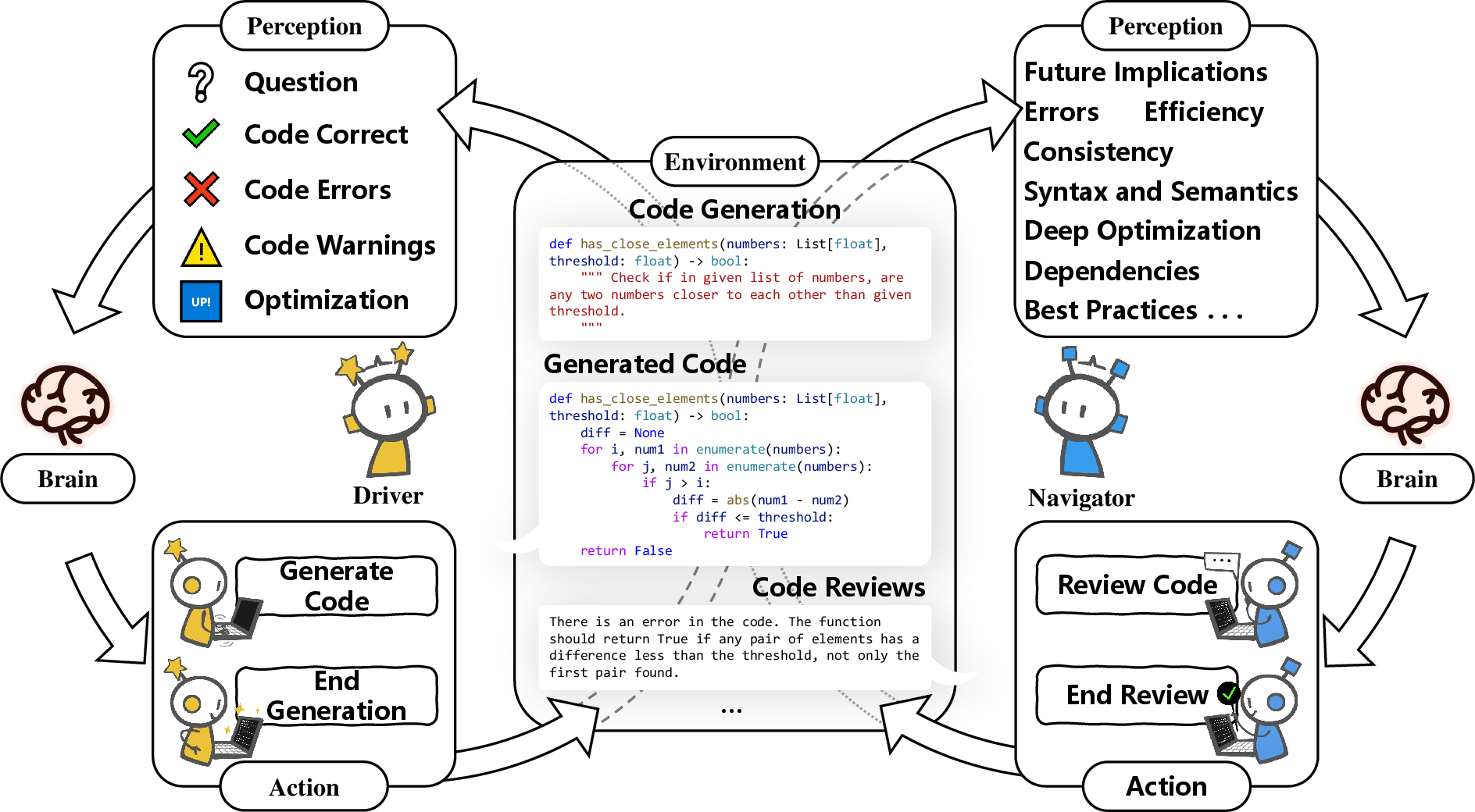
Figure 1: The PairCoder framework: the Driver generates and revises code, the Navigator reviews it against verification evidence, and persistent errors switch the roles.
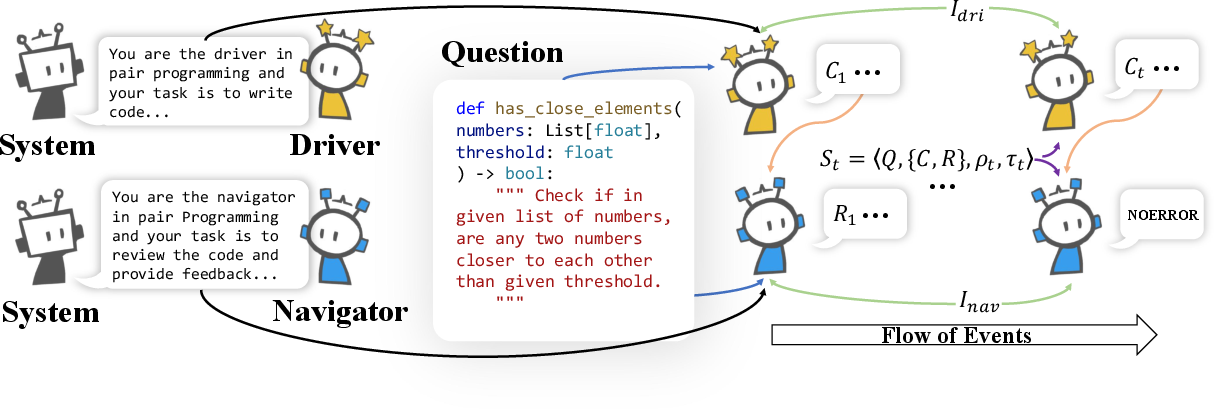
Figure 2: PairCoder workflow: the Driver proposes and revises, the Navigator reviews against toolchain evidence, and persistent errors trigger a role switch.
System Components
- Role-Specific LLM Agents: The Driver synthesizes and revises code based on task specification and history. The Navigator inspects the current candidate against verification signals, identifying actionable errors or accepting correct solutions. Each role is maintained via a self-mirroring prompt protocol, ensuring separation of perspectives and responsibilities.
- Verification Evidence (ψt): Before review, each candidate is subjected to the benchmark's toolchain. Diagnostics include execution success/failure, structured error traces, outputs, and rendered artifacts compared to the reference. This feedback is visible to both agents for revision and critique.
- Collaboration Protocol: The agents alternate, exchanging code and structured reviews in an iterative loop. If errors persist beyond a parameterized threshold, control switches so that the diagnosing agent becomes the Driver and implements the fix. The process terminates either upon [NOERROR] acceptance or after exhausting the iteration budget, at which point the best candidate (by passing verification and highest continuous score) is selected.
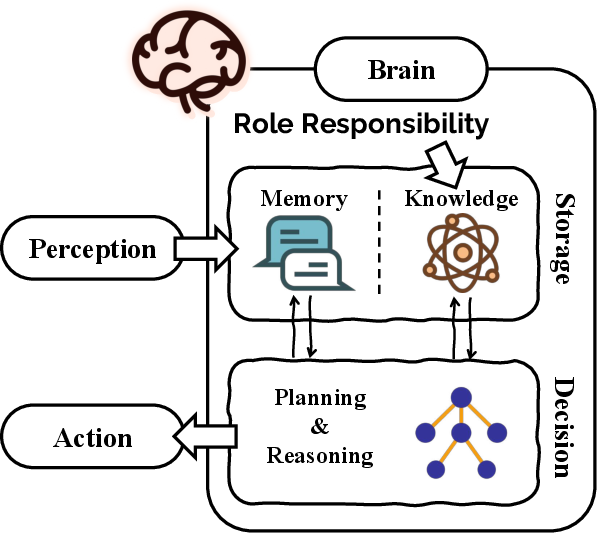
Figure 3: Agent brain architecture: LLM-based decision making with role-specific configuration.
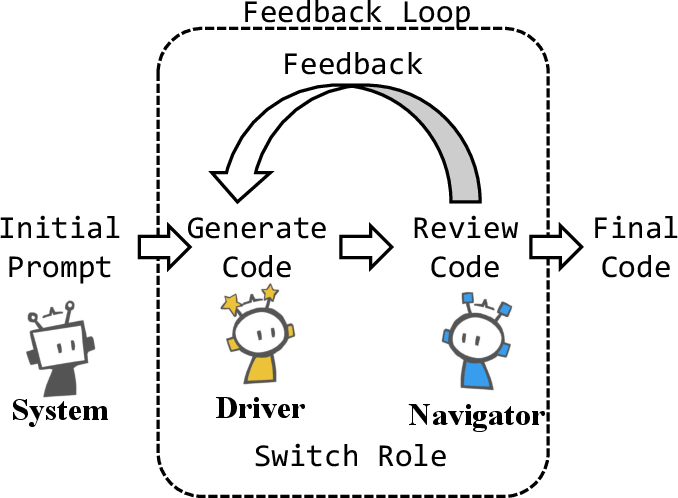
Figure 4: Collaboration mechanism with iterative feedback loop between Driver and Navigator agents.
Experimental Protocol
Benchmarks and Model Coverage
PairCoder++ is tested on 17 public benchmarks spanning:
- Program Synthesis: LiveCodeBench, BigCodeBench, DS-1000.
- Multilingual Code: HumanEval-X in C++, Java, JavaScript.
- Web/UI: WebApp1K (React projects).
- Hardware: VerilogEval, RTLLM.
- Code-Driven Multimodal Artifacts: DaTikZ (TikZ/LaTeX), Plot2Code, PandasPlotBench, ChartMimic (matplotlib), StarVector (SVG), GenCAD-Code (CadQuery), 3DCodeBench (Blender), P3D-Bench (parametric CAD).
Seven LLMs from three providers are evaluated, including GPT-5.4/5.5, doubao models, and DeepSeek models.
Collaborative Strategy and Cost Analysis
PairCoder++ increases cost (token count) per task by a factor ranging from 2.9x to 9.2x, depending on the domain, with an average of about 7x. This overhead arises from multiple review-generation cycles but is significantly lower than team-based multi-agent frameworks that pay one order of magnitude overhead in the literature.
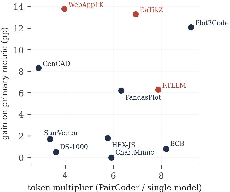
Figure 5: Cost versus benefit at gpt-5.4-mini: per-benchmark token multiplier against primary-metric gain; colours follow the families of Fig.~1.
Results: Accuracy and Coverage
Overall Gains
PairCoder++ achieves substantial gains across metrics—executability, compile rate, pass@1, SSIM, CLIP, DINO, Chamfer, and F-score—on nearly all benchmarks and model combinations:
- 3DCodeBench: Executability improves from 0.20 to 0.78.
- DaTikZ: Compile rate increases by 10–30 points across all evaluated models (e.g., 0.5→0.633 for gpt-5.4-mini).
- LiveCodeBench: Pass@1 rises from 0.94 to 0.99.
- GenCAD-Code and StarVector: Show large absolute improvements in execution or render rate, geometry, and retained topology.
- P3D-Bench (parametric 3D generation): Validity jumps by up to 28.7 points on weaker models and by over 27 points even on mid-tier models; geometry/topology metrics improve consistently (detailed breakdowns provided).
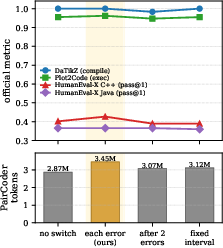
Figure 6: Role-switching policy at gpt-5.4-mini: official metric (top) and PairCoder token cost (bottom) for four policies; see Sec.~RoleSwitch.
Domain Generality: Multimodal and Structured Artifact Generation
Quantitative (Table below) and qualitative (see galleries in the appendix) results demonstrate robust improvements in multimodal code-driven benchmarks:
- Plot2Code, PandasPlotBench, ChartMimic (Figures 7–9): Higher execution rates and SSIM/CLIP scores. For example, in Plot2Code with gpt-5.4-mini, execution rises 0.841→0.962, SSIM increases 0.412→0.474.
- StarVector (Figure 7, 14): Render rate saturates at 1.0, and visual similarity metrics climb across models.
- GenCAD-Code, 3DCodeBench, P3D-Bench (Figures 15–17): Not only does executability improve, but geometric and topological fidelity (Chamfer, F-score, NC, IoU, no-open-edge) systematically rise.
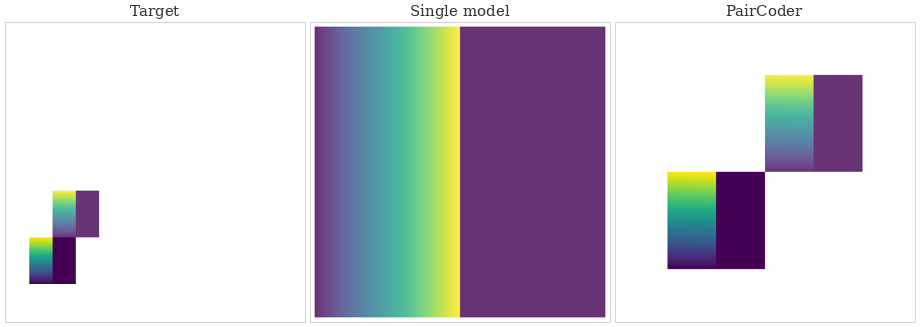
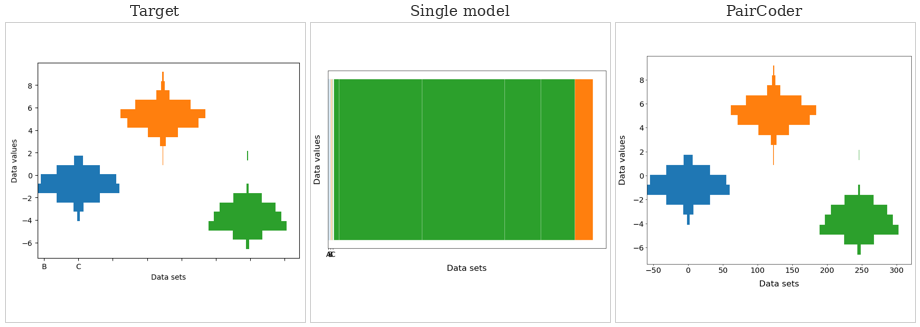
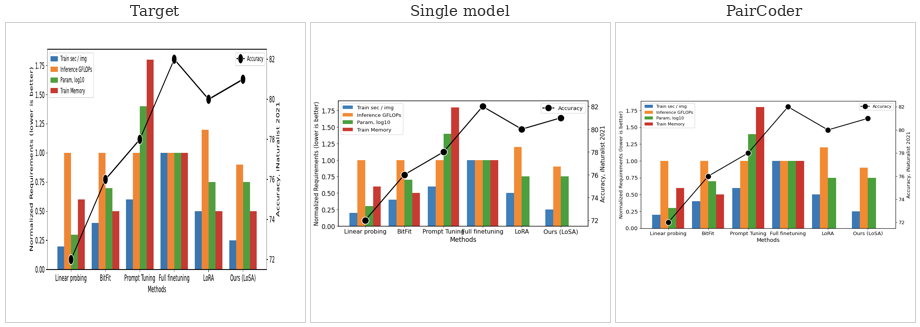
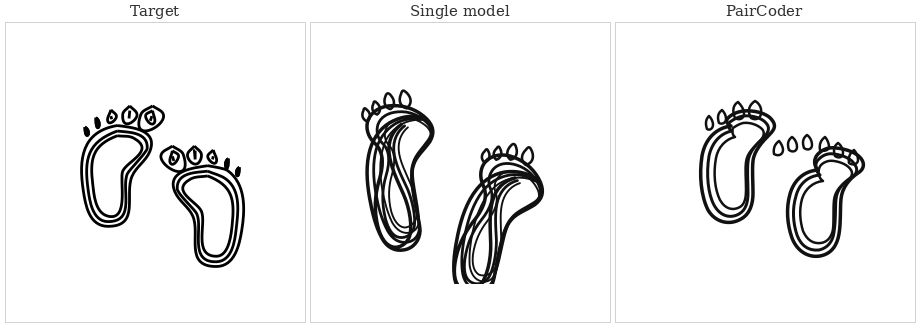
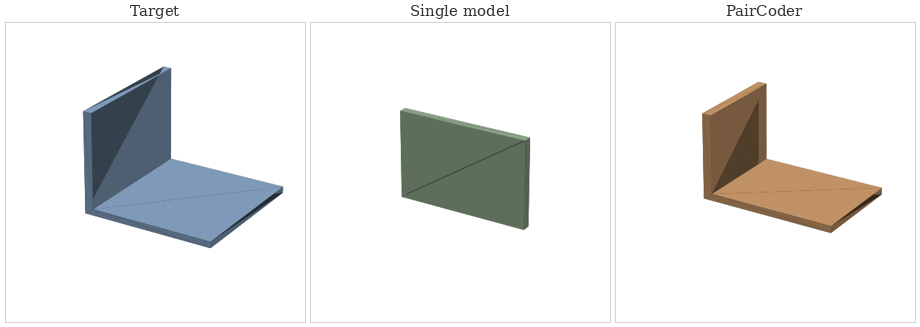
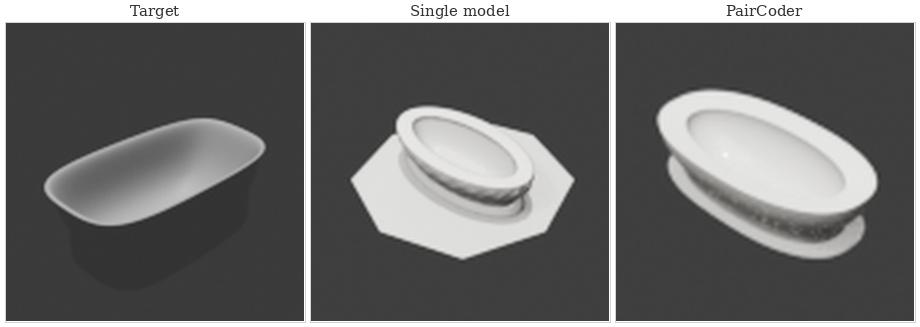
Figure 8: Plot2Code: image to matplotlib.
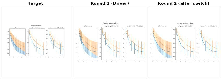
Figure 9: Case 1 rendering progression: target (left), the Driver's first program (middle), the program after the role switch (right).
Figure 7: Case 3 rendering progression on doubao-1.5-lite: target (left), the Driver's first (non-compiling) program (middle), the repaired program after the role switch (right).
Mechanism Analysis
Verification-Oriented Review and Role Switching
The efficacy of PairCoder++ is most pronounced in tasks where toolchain signals are rich (e.g., CAD/modeling, complex visualization). When the toolchain provides strong oracles, the Navigator can ground actionable (non-style) critiques. The error-triggered role switch policy outperforms alternatives, especially with nontrivial repair workloads, confirming that allowing the error-diagnosing agent to take the Driver role accelerates recovery and stabilizes convergence.
Coverage vs. Optimization
A key empirical insight is that PairCoder++ delivers its greatest value by converting non-executable or non-compilable programs into valid outputs, not by re-optimizing already-correct solutions. On tasks where the baseline saturates the toolchain oracle, PairCoder++ ties, as designed: the conservative Navigator protocol stymies unnecessary modifications.
Reasoning Effort and Model Capability
Enabling high reasoning effort boosts both baseline and collaborative arms, but the relative gain from PairCoder++ persists where toolchain verification is informative. This indicates that collaboration does not merely compensate for “weak models” but compounds model strengths in conjugation with external oracles.
Broader Implications and Limitations
PairCoder++ provides concrete, systematic evidence that two-agent, role-based pair programming—grounded in external verification—generalizes robustly from classical program synthesis to code-driven multimodal artifact generation. Unlike single-model self-refinement, it leverages independent perspectives and explicit, toolchain-mediated feedback, achieving practical reliability increases in scenarios where correctness is externally verifiable.
Future developments could include:
- Reducing token and wall-clock costs via more efficient review mechanisms or model distillation.
- Extending the protocol to incorporate non-text/toolchain signals (e.g., human-in-the-loop feedback, semantic specifications beyond current benchmarks).
- Deeper analysis into optimal role assignment and dynamic agent/model specialization over the review process.
A residual limitation is cost: the method is significantly more expensive than single-pass inference (average 7× token count), which may limit deployment in production settings until efficient reductions are achieved.
Conclusion
PairCoder++ presents a minimal, universal collaboration protocol for code-driven content generation, transcending narrow domain tuning or team-scale agentic frameworks. By tightly coupling LLM-driven proposal/revision cycles with toolchain-grounded, independent review and adaptive role switching, it enables verifiable, robust program synthesis and structured multimodal artifact generation across a spectrum of tasks, models, and vendors. The quantitative and qualitative results underline that this pair programming paradigm transforms code-driven creation into a reliably verified process whenever external oracles are available, defining a new scheme for trustworthy artifact generation in AI.