- The paper presents a novel analysis of charged particle motion and QPOs in a KR-modified Reissner–Nordström black hole, highlighting the impact of the Lorentz-violating parameter ℓ.
- It employs a direct solution of Maxwell's equations to model an external magnetic field, revealing significant modifications to the effective potential and ISCO structure.
- An MCMC-based analysis using QPO data robustly constrains key parameters, suggesting new tests for alternative gravity models and electromagnetic interactions in black hole environments.
Charged Particle Dynamics and QPOs in Reissner–Nordström-like Kalb–Ramond Black Holes Immersed in Magnetic Fields
Introduction and Theoretical Background
This work presents a comprehensive study of the dynamics of charged test particles and quasi-periodic oscillation (QPO) frequencies in the vicinity of a non-rotating, charged black hole solution arising from Kalb–Ramond (KR) gravity, under the influence of an external magnetic test field. Kalb–Ramond gravity introduces a Lorentz-violating parameter, ℓ, via the coupling of an antisymmetric tensor field, fundamentally altering the spacetime structure compared to standard Reissner–Nordström (RN) black holes. The presence of both electric charge and a nontrivial magnetic field extends the parameter space, demanding careful consideration of the electromagnetic sector's mutual feedback with the modified gravitational background.
The metric structure deviates from asymptotic flatness for ℓ=0, leading to a modified horizon structure and asymptotic normalization. The magnetic field solution is computed directly from source-free Maxwell's equations in the deformed geometry, rather than using the Wald ansatz, ensuring self-consistency of the electromagnetic configuration with the KR-modified background.
The motivation for this analysis is multifold: probing Lorentz-violating corrections in strong-field gravity scenarios, capturing the impact on high-energy astrophysical observables (QPOs), and establishing parameter constraints from current observational data.
Black Hole Geometry, Magnetic Field, and Horizon Structure
The metric function f(r) for the charged KR black hole incorporates the parameter ℓ, and is given by
f(r)=1−ℓ1−r2M+(1−ℓ)2r2Q2
where M is the mass, Q the charge, and ℓ the Lorentz-violating KR parameter. The value of f(r) at large radii approaches (1−ℓ)−1, indicating a nonstandard asymptotic regime, and leading to nontrivial rescalings of frequencies and conserved quantities to match to a physical observer at infinity.
The impact of ℓ=00 on the horizon structure is significant: as ℓ=01 increases for fixed ℓ=02 and ℓ=03, the event and Cauchy horizons approach each other, reducing the region admitting stable circular orbits and pushing the solution closer to extremality.
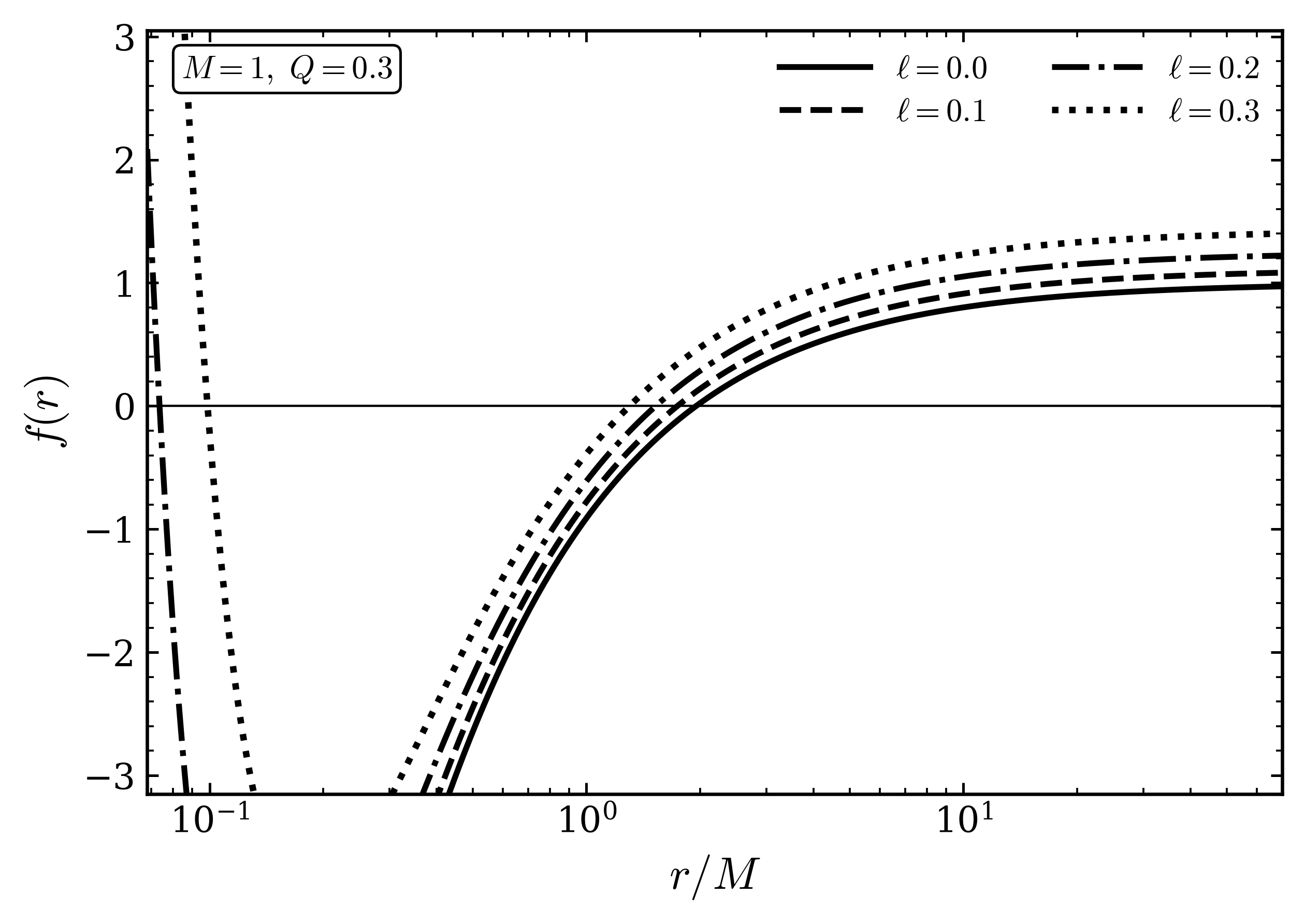
Figure 1: Metric function ℓ=04 of the charged KR black hole, demonstrating how varying ℓ=05 alters the asymptotic normalization and the horizon locations.
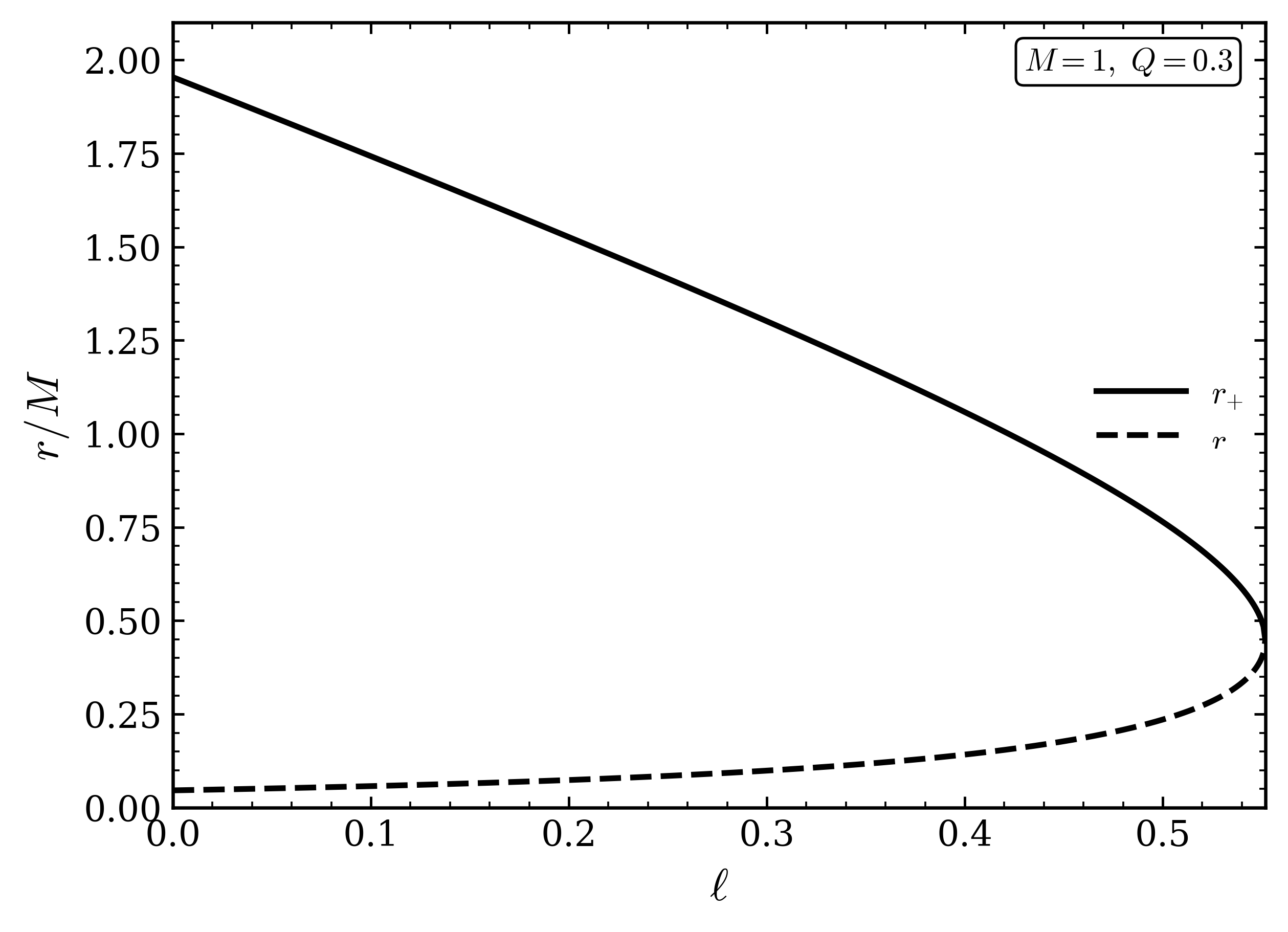
Figure 2: Cauchy (ℓ=06) and event (ℓ=07) horizon radii as functions of ℓ=08; increased ℓ=09 decreases separation and tightens extremality constraints.
The magnetic field is modeled as an axial test field. Solving the Maxwell equation in this geometry yields a nontrivial radial profile for the vector potential component f(r)0, characterized by a power-law index f(r)1 which departs from the f(r)2 scaling of the Wald solution in standard backgrounds.
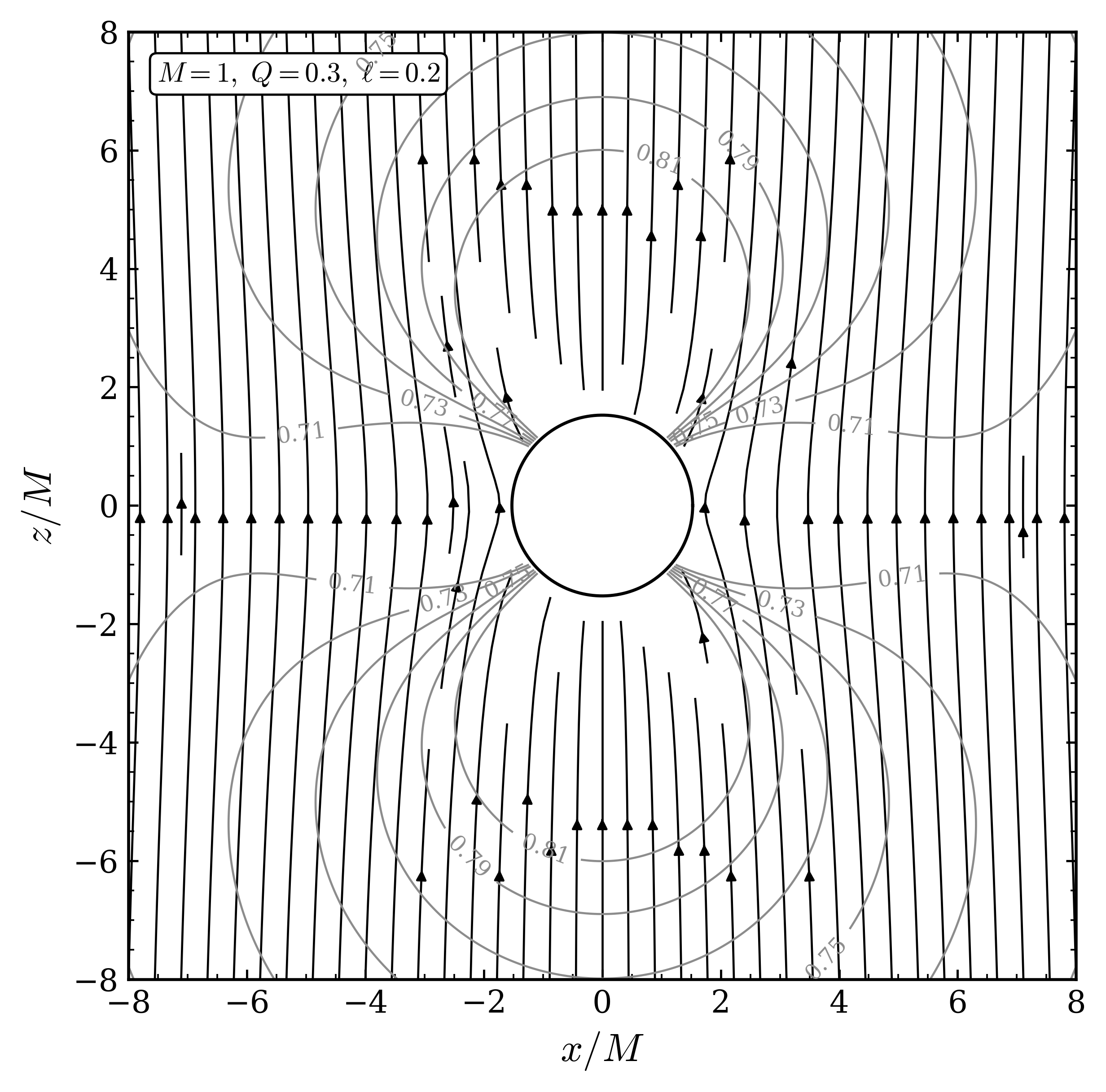
Figure 3: Magnetic field lines for f(r)3, illustrating the geometric distortion of the magnetic configuration around the black hole.
Equations of Motion and Effective Potential
The motion of a charged test particle in this background is determined by the Lagrangian
f(r)4
yielding conserved energy and angular momentum. The combined gravitational, electromagnetic, and magnetic (Lorentz) forces lead to a modified effective potential, with explicit dependence on f(r)5, f(r)6, particle charge-to-mass ratio f(r)7, and the dimensionless magnetic coupling f(r)8.
The effective potential for equatorial motion is
f(r)9
where ℓ0 is the numerically determined magnetic radial function. The mechanical angular momentum receives a direct correction ℓ1 from the magnetic interaction, shifting the stable-orbit region.
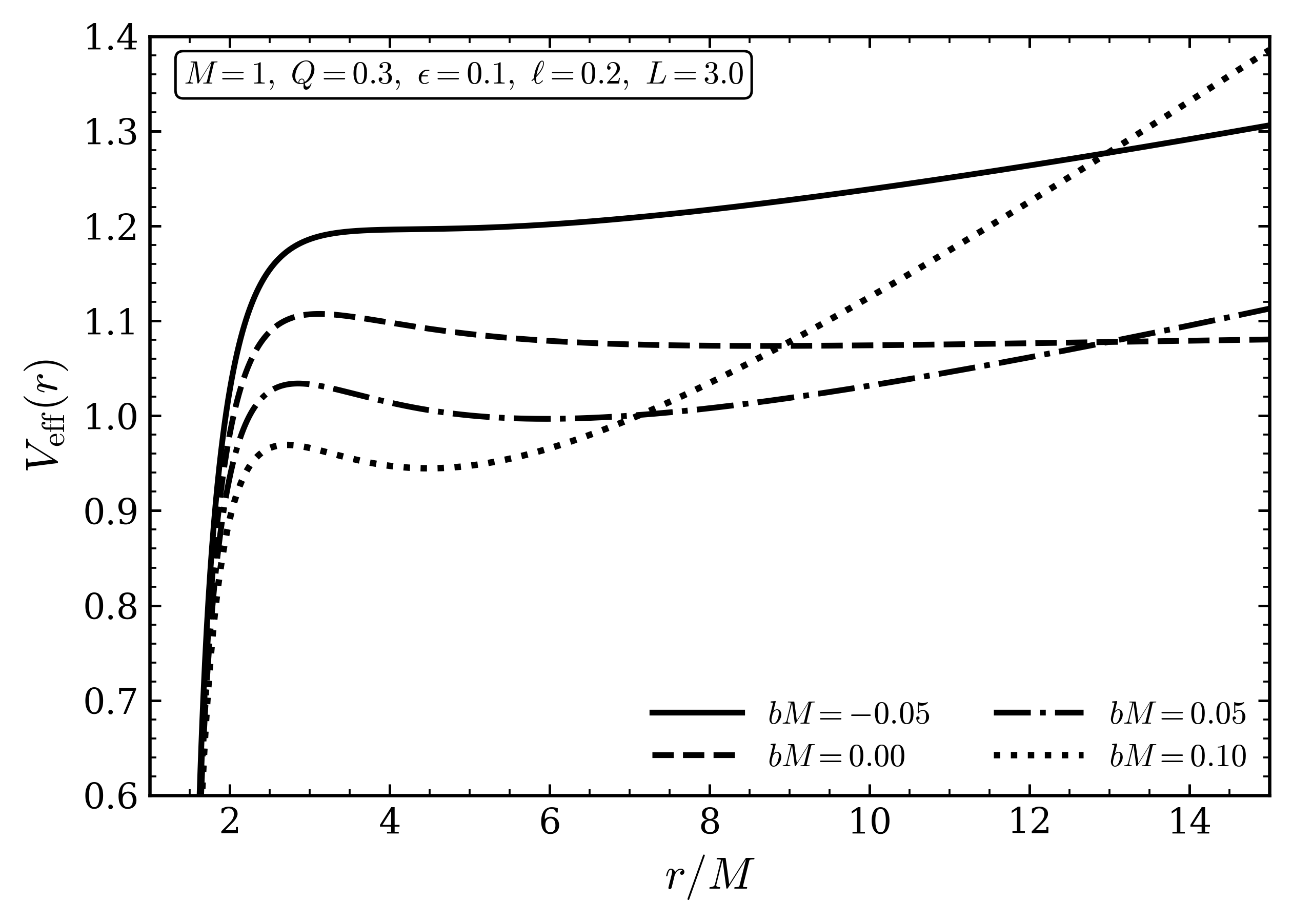
Figure 4: Effective potential ℓ2 for various ℓ3; the magnetic coupling redistributes the angular-momentum budget and modifies potential minima.
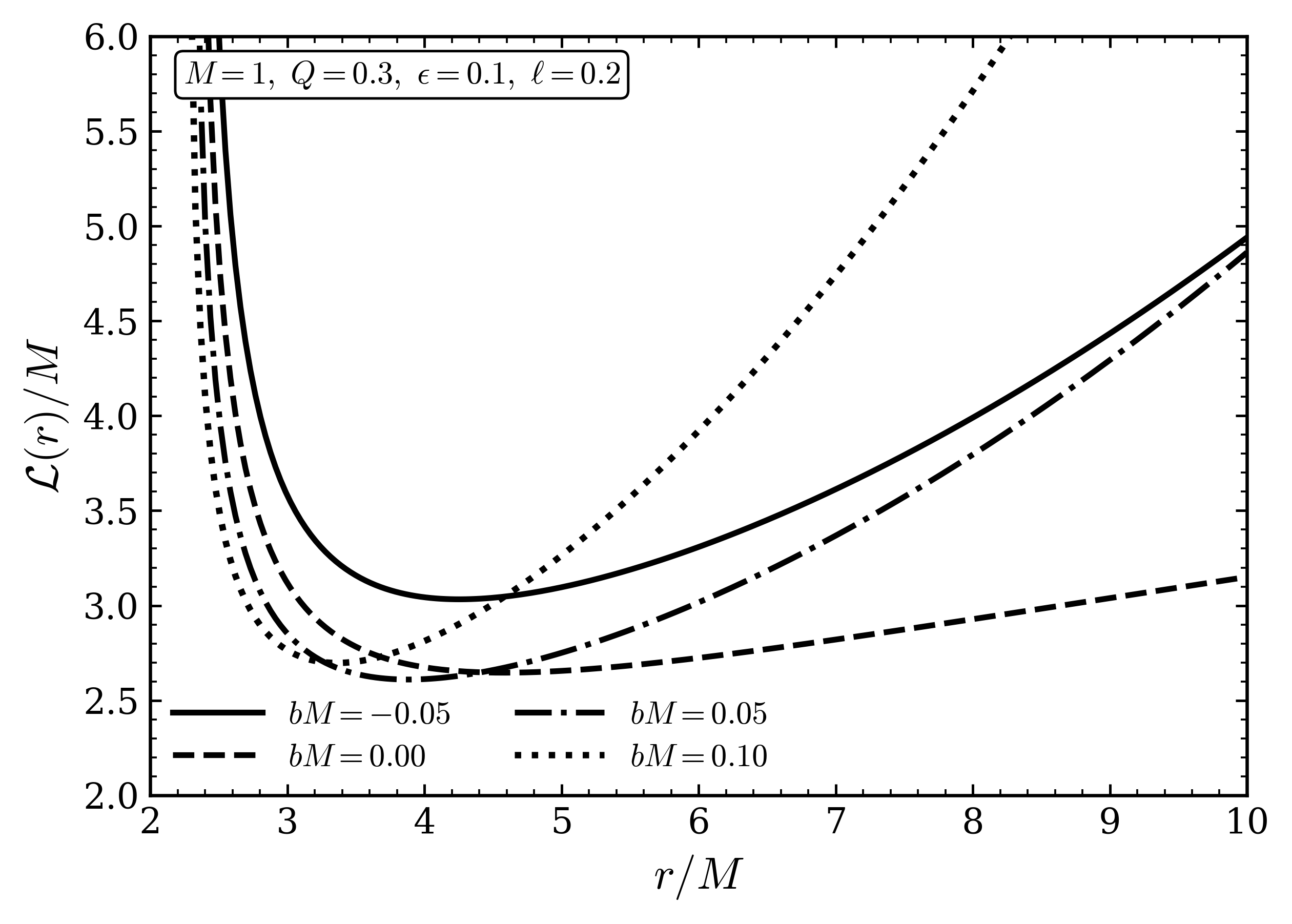
Figure 5: Specific canonical angular momentum ℓ4 for circular orbits as a function of radius and ℓ5. Larger ℓ6 leads to increased separation at large ℓ7 due to the dominance of the magnetic term.
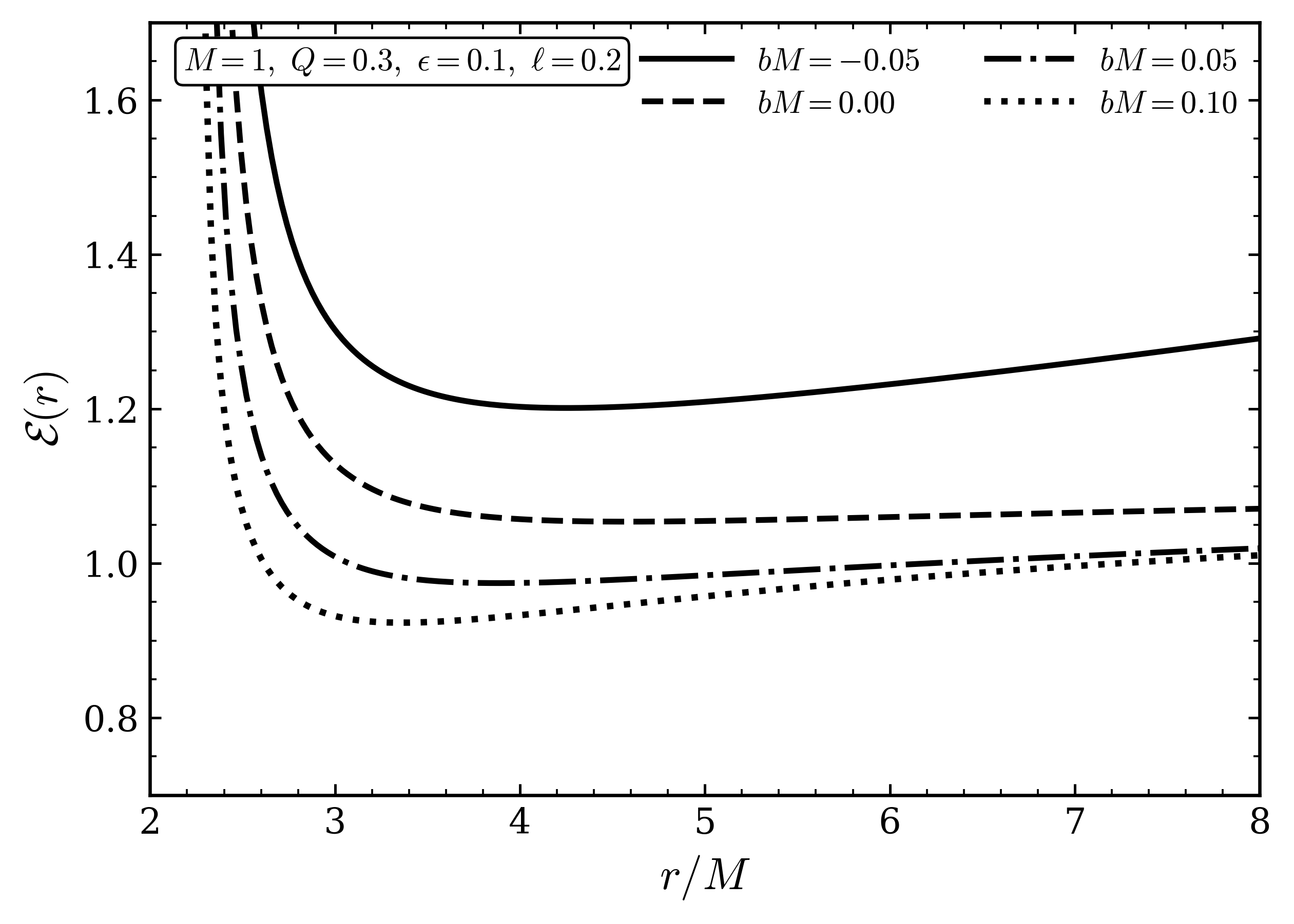
Figure 6: Specific energy ℓ8 for circular orbits; the dependence on magnetic field is less pronounced compared to ℓ9, dictated by overall energy balance.
ISCO Structure and Stability Analysis
The ISCO radius f(r)=1−ℓ1−r2M+(1−ℓ)2r2Q20, associated energies, and angular momenta are obtained numerically. The ISCO location is highly sensitive to both f(r)=1−ℓ1−r2M+(1−ℓ)2r2Q21 and the magnetic coupling f(r)=1−ℓ1−r2M+(1−ℓ)2r2Q22, shifting inward as either parameter increases. This points to a complex interplay between spacetime geometry and electromagnetic effects in setting the boundary for stable circular motion.
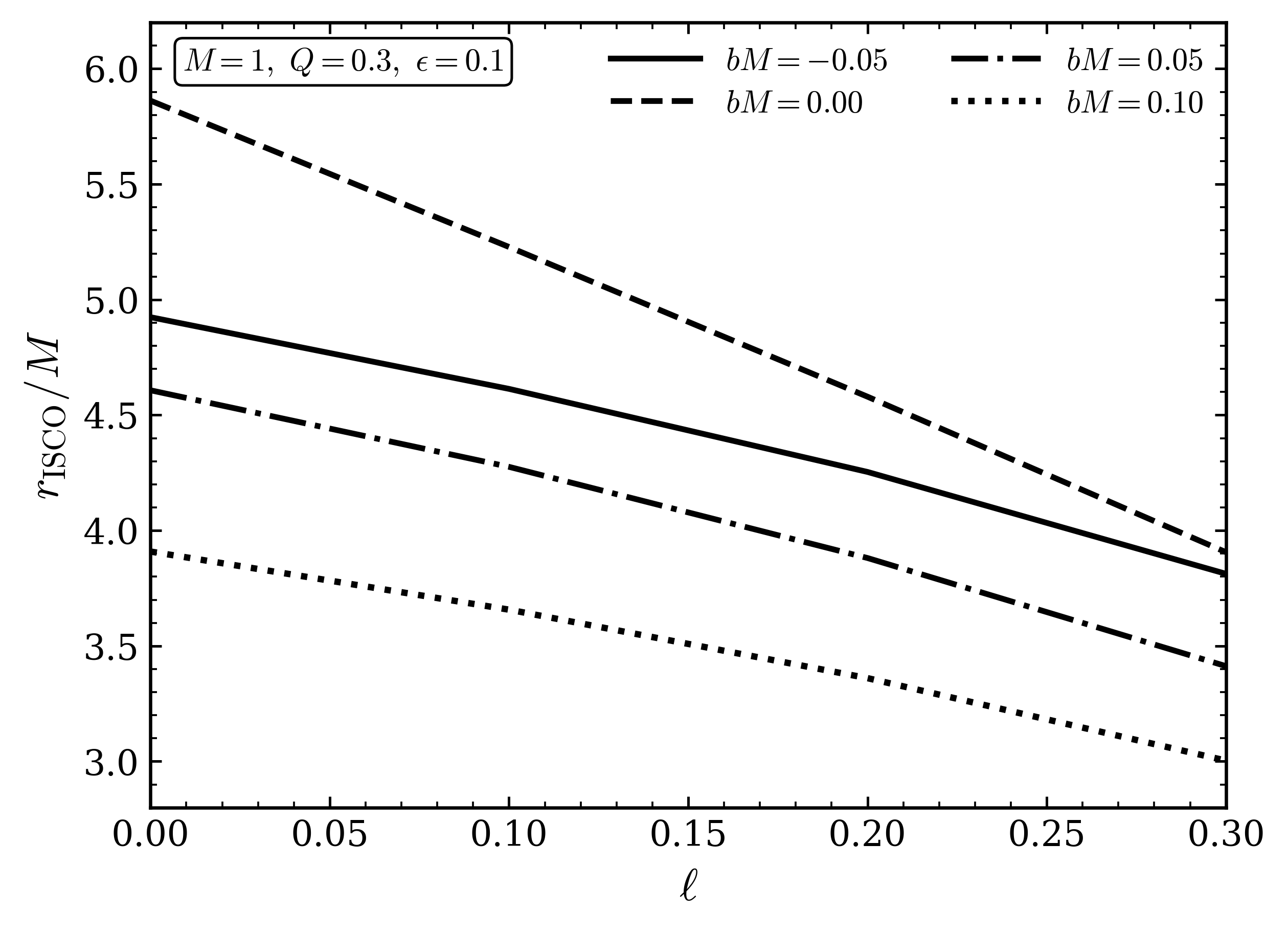
Figure 7: ISCO radius as a function of f(r)=1−ℓ1−r2M+(1−ℓ)2r2Q23 for different f(r)=1−ℓ1−r2M+(1−ℓ)2r2Q24; larger f(r)=1−ℓ1−r2M+(1−ℓ)2r2Q25 pushes the ISCO inward and accentuates magnetic effects.
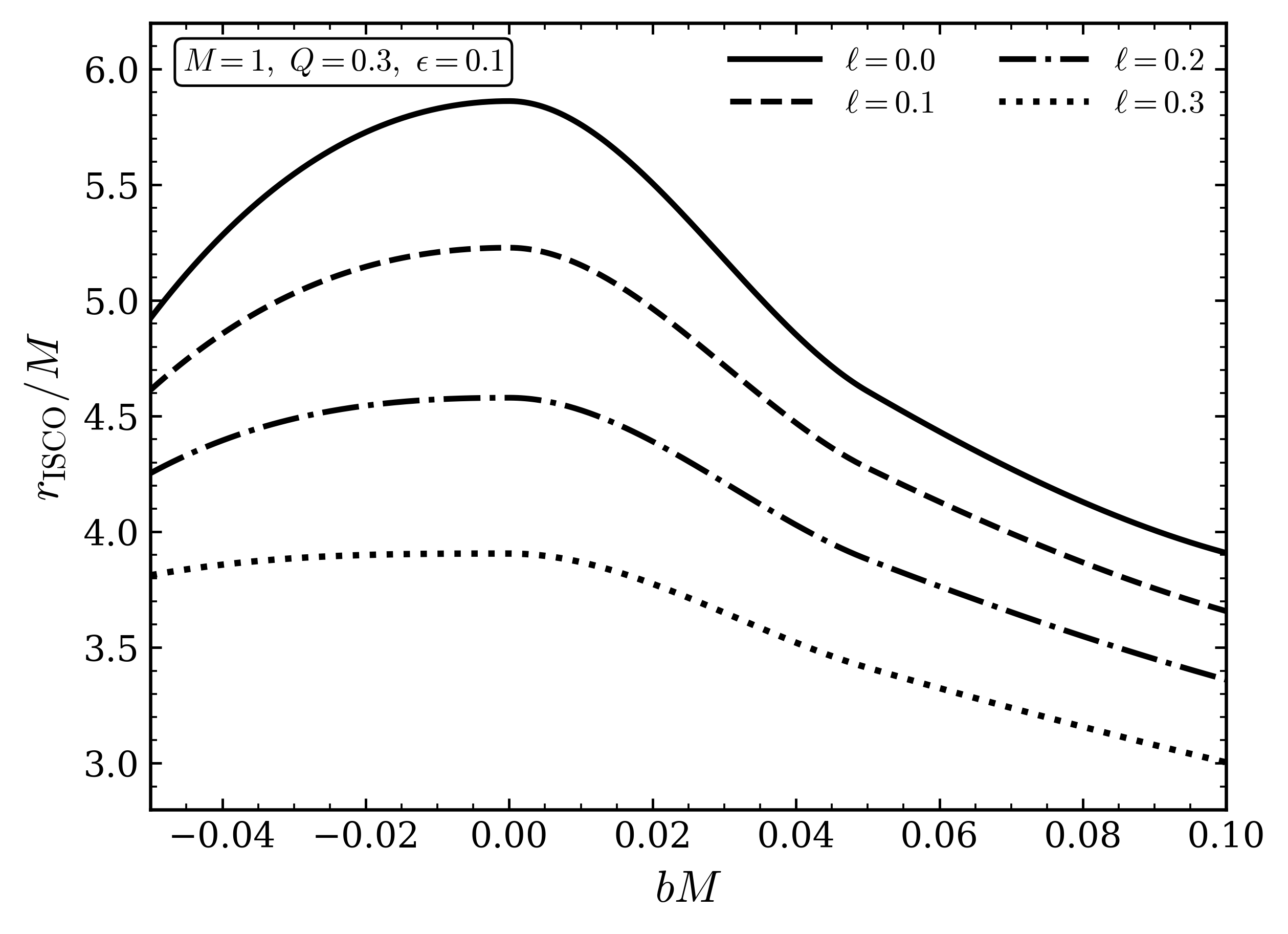
Figure 8: ISCO radius versus f(r)=1−ℓ1−r2M+(1−ℓ)2r2Q26 for fixed f(r)=1−ℓ1−r2M+(1−ℓ)2r2Q27 values; positive f(r)=1−ℓ1−r2M+(1−ℓ)2r2Q28 supports smaller ISCO radii.
These results demonstrate that the ISCO (and hence the location of maximum disk radiation and strongest QPO emission) is a sensitive probe of both fundamental Lorentz-symmetry breaking and local electromagnetic environment.
Quasi-Periodic Oscillation Frequencies
Within the relativistic precession model, the orbital frequency f(r)=1−ℓ1−r2M+(1−ℓ)2r2Q29 and the periastron-precession frequency M0 are identified with the upper and lower QPO frequencies, respectively. The fundamental frequencies are derived from the equations of motion, incorporating the full influence of the KR geometry and electromagnetic fields.
The radial profile of the orbital frequency and radial epicyclic frequency for fixed M1 are calculated numerically.
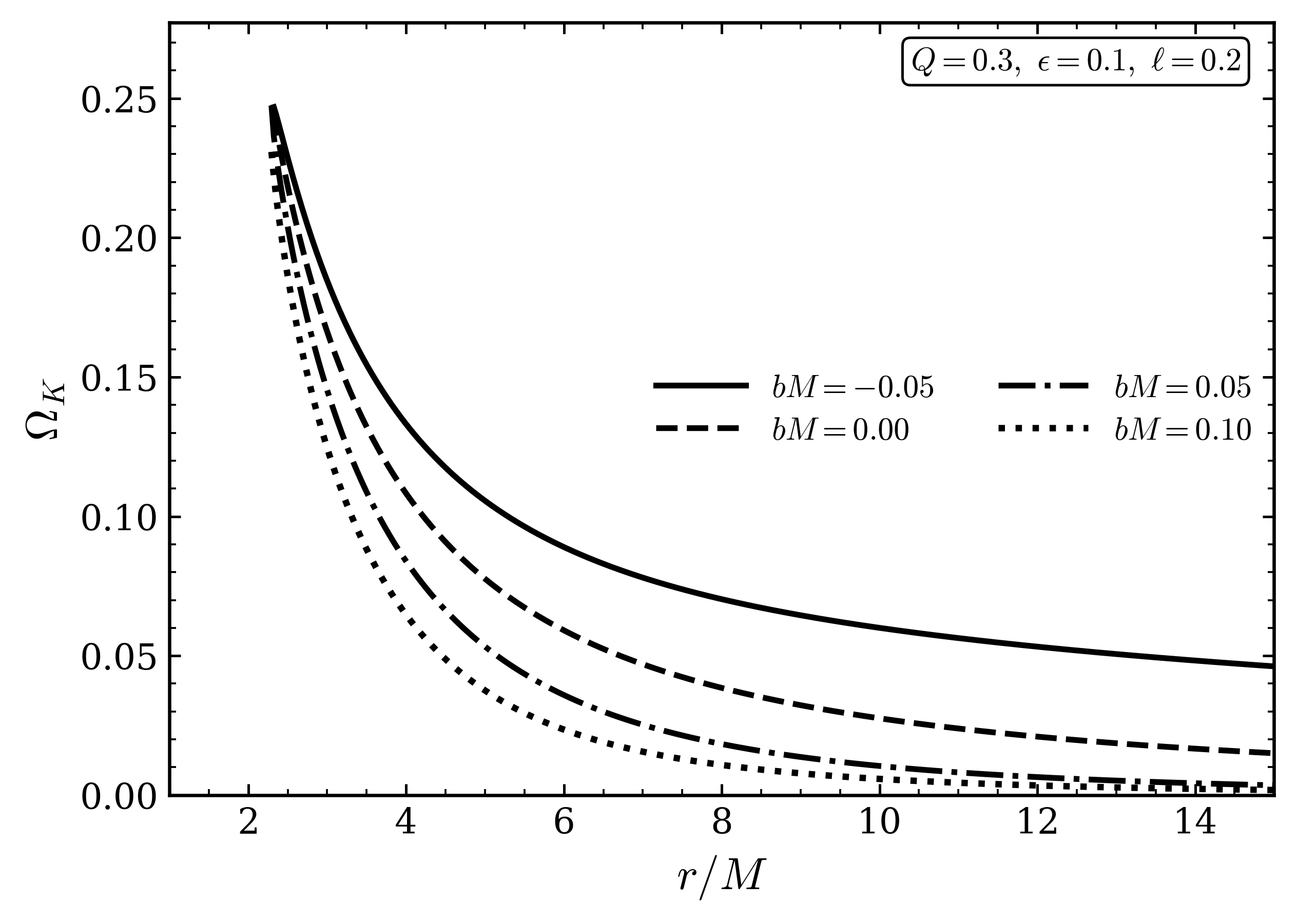
Figure 9: Generalized Keplerian frequency M2 as a function of M3 under different M4; magnetic and electric fields alter the entire frequency profile.
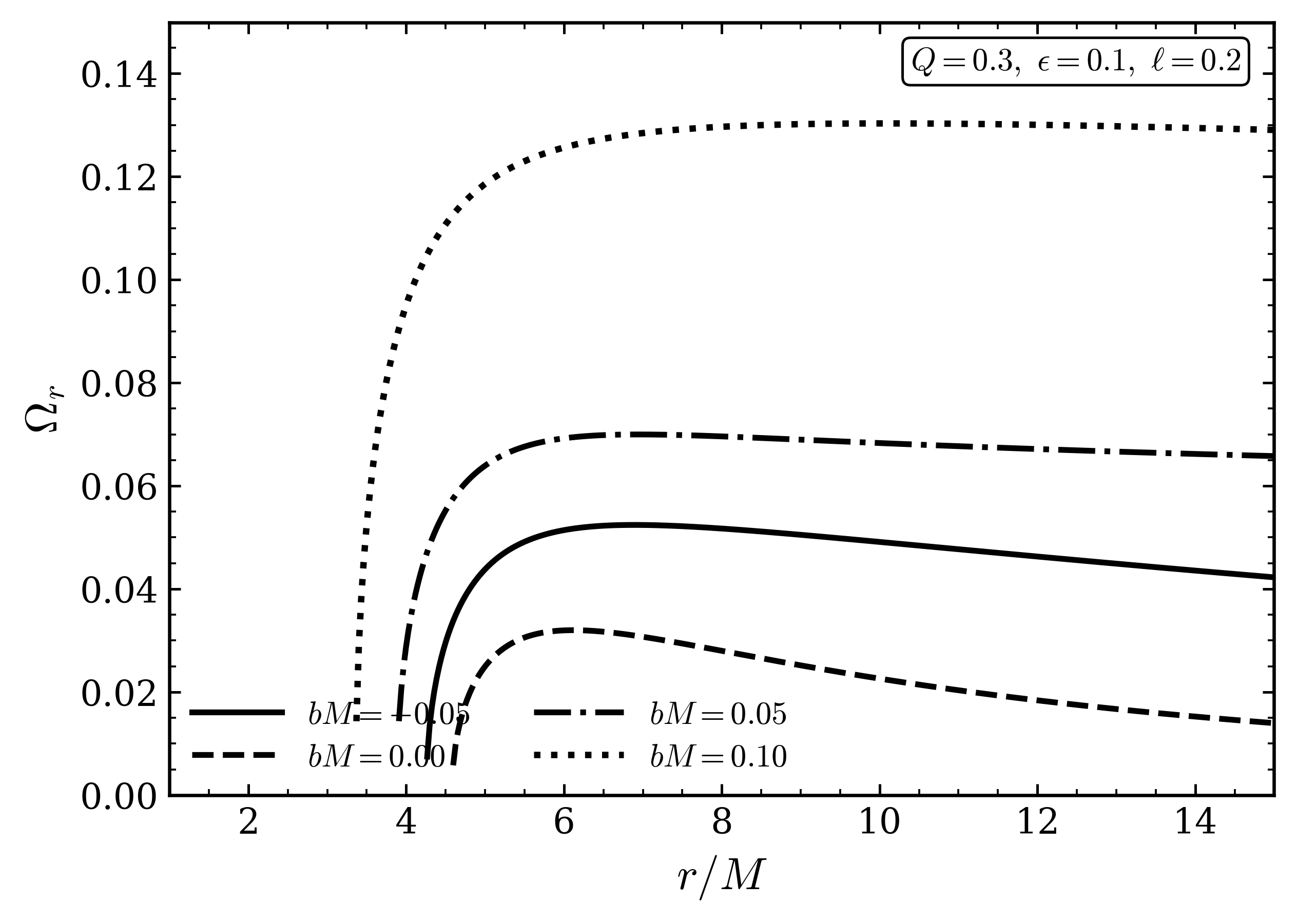
Figure 10: Radial epicyclic frequency M5 versus M6 for multiple M7 values. The vanishing of M8 marks onset of instability (ISCO radius).
These results encode the distinct "fingerprint" of the spacetime and electromagnetic configuration in the QPO spectrum.
MCMC Parameter Estimation With Observational Data
Using twin-peak HFQPO data from GRO J1655–40, XTE J1550–564, and M82 X-1, the authors perform a Markov Chain Monte Carlo analysis of the six-dimensional parameter space: black hole mass (M9), charge (Q0), Lorentz-violating parameter (Q1), specific particle charge (Q2), magnetic coupling (Q3), and emission radius (Q4).
The posterior constraints robustly yield nonzero Q5 and Q6 compatible with the data, and the best-fit values for all three targets reproduce the observed frequencies within their uncertainties. The Schwarzschild limit (Q7, Q8, and Q9) is statistically excluded by the QPO data.
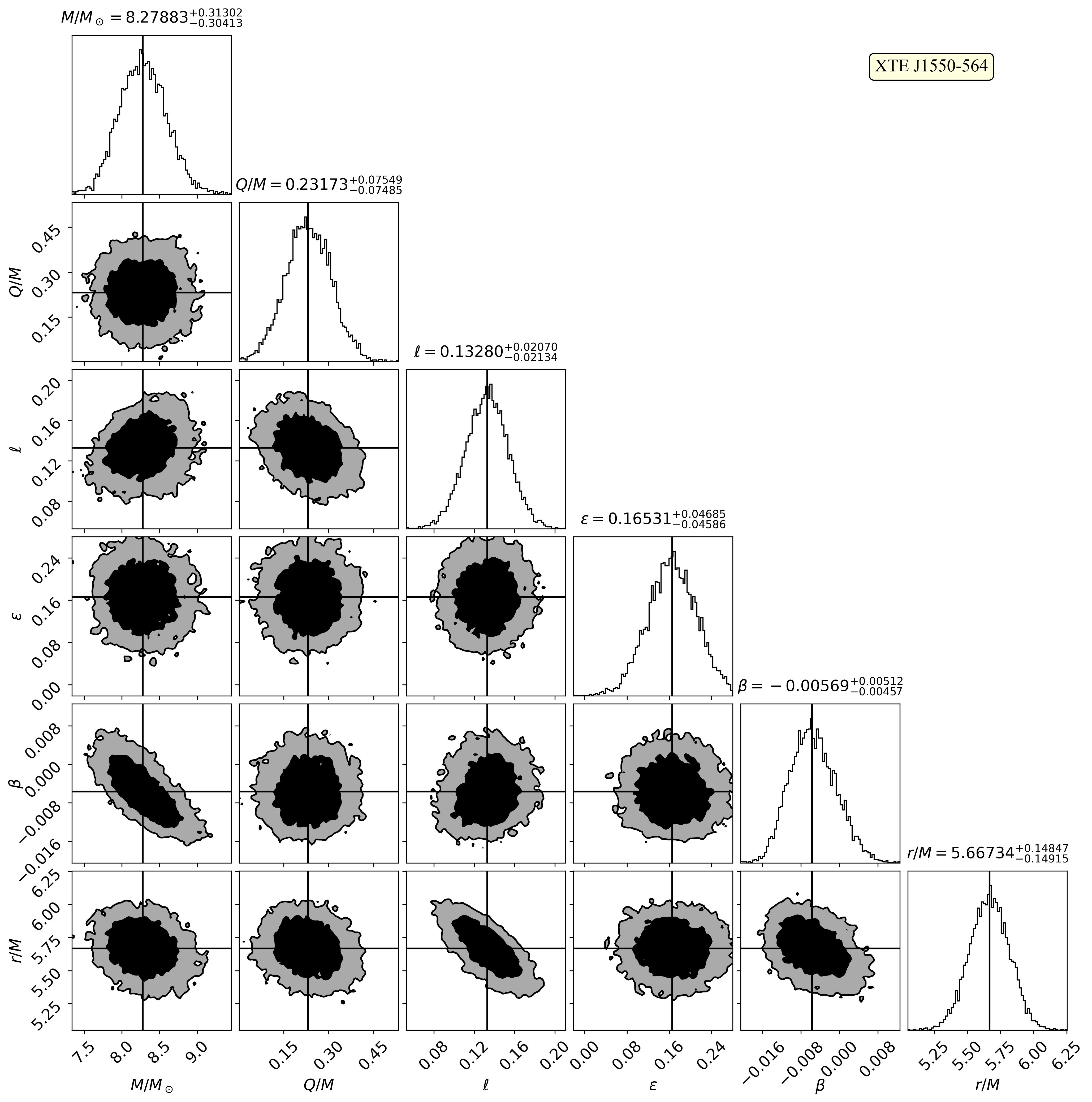
Figure 11: Corner plot for XTE J1550–564 presenting marginalized posterior distributions and covariances across all model parameters.
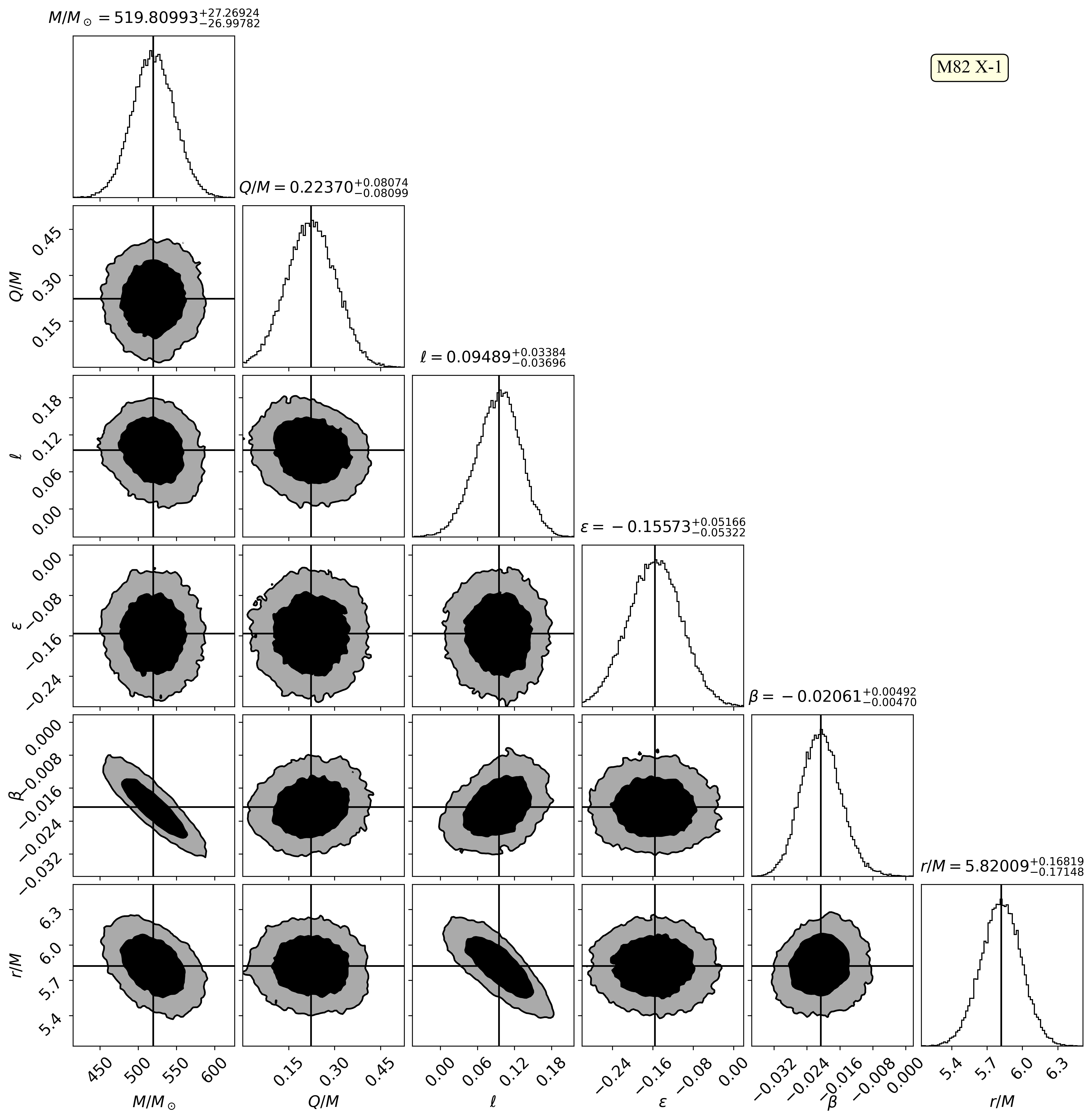
Figure 12: Corner plot for M82 X-1, similar structure illustrating parameter correlations and uncertainties.
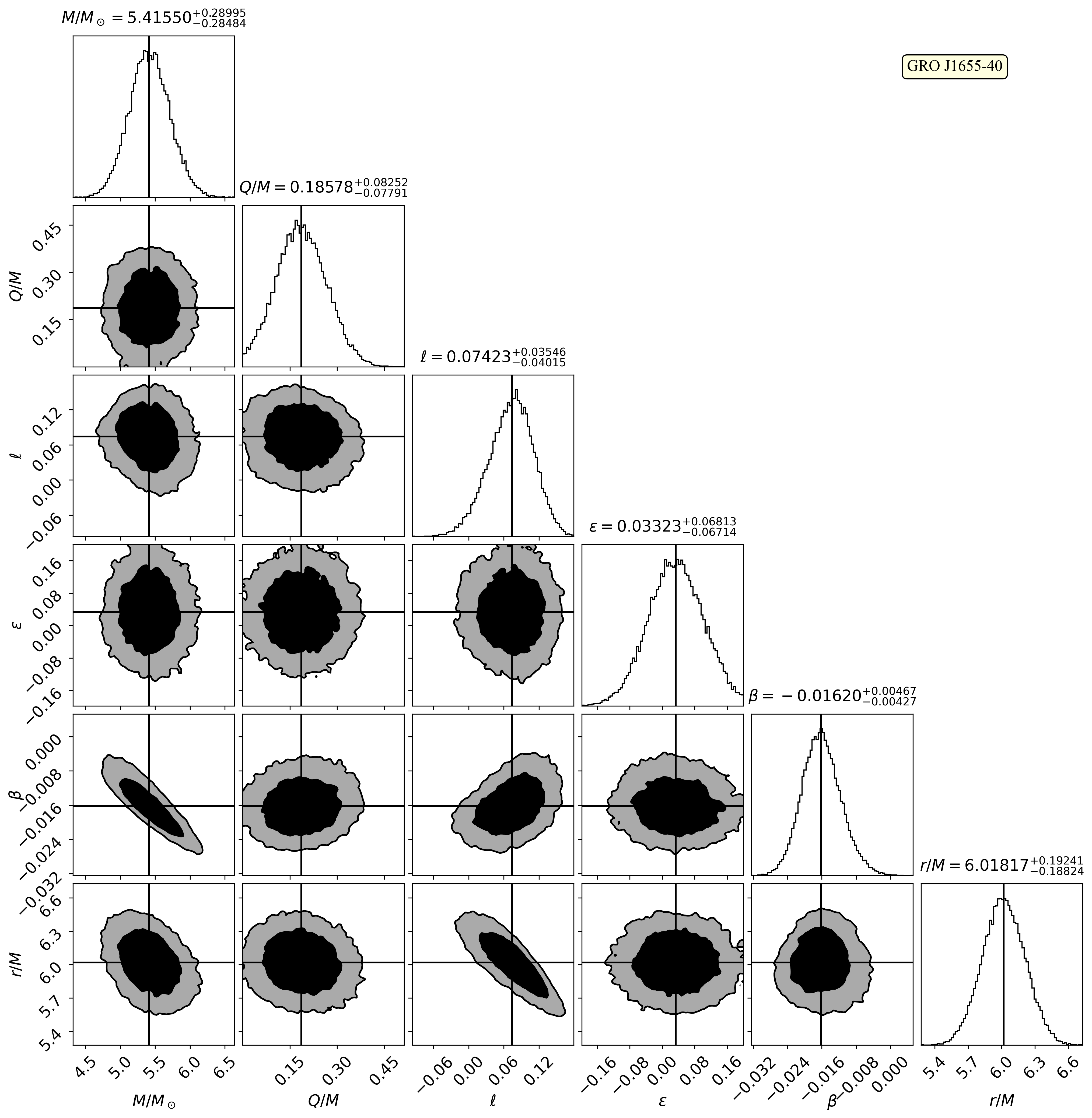
Figure 13: Corner plot for GRO J1655–40, highlighting degeneracies between mass, ℓ0, and ℓ1.
Notably, the physically allowed parameter ranges are shaped by fundamental consistency conditions (event horizon existence, stable circular motion) and astrophysical considerations.
Implications, Limitations, and Future Directions
The analysis demonstrates that inclusion of both KR-induced Lorentz-violation and realistic magnetic field modeling is required for phenomenologically successful QPO fitting in these sources. The strong sensitivity of QPO frequencies to ℓ2 and ℓ3 offers a path for probing both new fundamental physics and local environmental effects in black hole observations.
Practical implications include the potential for distinguishing alternative gravity models via multi-parameter fits to precision timing data, and for leveraging electromagnetic field diagnostics in constraining the strong-field regime.
Theoretically, this work reinforces how departures from the standard no-hair theorems—driven by fundamental fields or broken symmetries—manifest in electromagnetic and orbital observables accessible to high-energy astrophysics.
However, the analysis remains subject to key limitations: spin is neglected; the magnetic field is treated in the test-field regime; complex disk physics and radiative transfer effects are not modeled; and only non-rotating backgrounds are considered.
Future directions include extending these results to rotating (Kerr-like) KR black holes, incorporating full GRMHD simulations, and cross-correlating QPO, shadow, and spectral data for joint constraints on ℓ4, ℓ5, and ℓ6.
Conclusion
This study establishes that QPO timing data, jointly with a physically consistent treatment of Lorentz-violating backgrounds and electromagnetic fields, can constrain fundamental and environmental parameters governing black hole spacetimes. The results underscore the necessity of including both KR field-induced metric deformation and consistent magnetic field solutions to fit astrophysical QPO observations, suggesting new avenues for testing alternative theories of gravity in the strong-field regime (2607.01723).