- The paper proposes a stream function–pressure VEM approach that eliminates the need for inf–sup stability conditions in the Stokes–Darcy system.
- It employs C¹ and C⁰ virtual elements to achieve optimal convergence rates on arbitrary polygonal meshes and nonmatching interfaces.
- Numerical experiments validate the method's robustness and flexibility in complex geometries, highlighting its applicability in biomedical and engineering contexts.
Stream Function–Pressure Virtual Element Methods for the Stokes–Darcy Interface Problem: Technical Summary
The paper "Stream function -- pressure virtual element methods for the Stokes--Darcy interface problem" (2607.01622) introduces and analyzes a novel virtual element discretization for the coupled Stokes–Darcy system. This interface problem couples viscous free flow (Stokes) and porous media flow (Darcy) via interface conditions of mass conservation, normal stress balance, and the Beavers–Joseph–Saffman slip law. The proposed approach leverages a stream function formulation in the Stokes region, eliminating the need for inf–sup stability and enabling the use of C1-conforming VEM on arbitrary meshes, coupled with a C0 VEM discretization for the Darcy pressure.
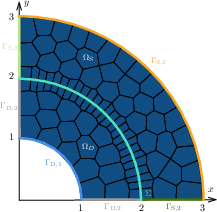
The Stokes–Darcy system is partitioned into non-overlapping domains: ΩS (free flow) and ΩD"(porousmedia),interfacedthrough\Sigma.Classicalformulationsrequiremixedfiniteelementspacesadheringtoinf–supcompatibility,complicatingimplementationongeneralmeshes.Instead,thestreamfunction\chiisintroducedfor\Omega_S,satisfyingincompressibilitybyconstruction,andcoupledtoDarcypressure\varphiviainterfacebilinearformsderivedfromphysicaltransmissionconditions.</p><p>Theresultingweakformisacoupledsystem:afourth−order(biharmonic)variationalproblemfor\chiin\Omega_Sandasecond−order(diffusion)variationalproblemfor\varphiinC^00.Importantly,thisreformulationensuresallinterfacetransmissionconditions—massconservation,stressbalance,andslip—areimposeddirectlyattheprimalvariablelevel.<imgsrc="https://emergentmind−storage−cdn−c7atfsgud9cecchk.z01.azurefd.net/paper−images/2607−01622/domainshort.png"alt="Figure1"title=""class="markdown−image"loading="lazy"></p><p><imgsrc="https://emergentmind−storage−cdn−c7atfsgud9cecchk.z01.azurefd.net/paper−images/2607−01622/domainmixedshort.png"alt="Figure1"title=""class="markdown−image"loading="lazy"><pclass="figure−caption">Figure1:Sketchofthecomputationaldomainandpossibleboundaryconfiguration.</p><imgsrc="https://emergentmind−storage−cdn−c7atfsgud9cecchk.z01.azurefd.net/paper−images/2607−01622/domaindarcyinsidestokes.png"alt="Figure2"title=""class="markdown−image"loading="lazy"></p><p><imgsrc="https://emergentmind−storage−cdn−c7atfsgud9cecchk.z01.azurefd.net/paper−images/2607−01622/domainstokesinsidedarcy.png"alt="Figure2"title=""class="markdown−image"loading="lazy"><pclass="figure−caption">Figure2:SchematicrepresentationsofthetwonestedStokes–Darcydomainconfigurations.</p></p><h3class=′paper−heading′id=′virtual−element−discretization−methodology′>VirtualElementDiscretizationMethodology</h3><h4class=′paper−heading′id=′polynomial−projections−and−local−spaces′>PolynomialProjectionsandLocalSpaces</h4><p>Theproposeddiscretizationreconcilesnonmatchingpolygonal(orpolyhedral)meshesacrossdomains.InC^0$1, the $C^0$2 VEM is employed—yielding globally $C^0$3-conforming, locally quadratic shape functions for stream function. In $C^0$4, the $C^0$5 VEM delivers globally $C^06−conforminglinearpressureapproximations.BothVEMspacesarebasedoncarefullychosensetsofdegreesoffreedom:streamfunctionanditsgradientatvertices,andpressureatvertices.<imgsrc="https://emergentmind−storage−cdn−c7atfsgud9cecchk.z01.azurefd.net/paper−images/2607−01622/sketchclass.png"alt="Figure3"title=""class="markdown−image"loading="lazy"><pclass="figure−caption">Figure3:SchematicoverviewofthefilteringprocedureforinterfaceDoFsintheVEMframework.</p></p><p>Thismeshtreatmentnaturallyenablesintricategeometriesandrobusthandlingofnonmatchingmeshesattheinterface,facilitatedbyanimplementationintheVEM++object−orientedC++library.</p><h4class=′paper−heading′id=′discrete−formulation′>DiscreteFormulation</h4><p>Thediscretebilinearformsemployprojectionsontopolynomialspacestoensureconsistencyandstability.Stabilizationoperators,crucialforcomputabilityofnon−polynomialvirtualspaces,areconstructedattheelementlevelandweightedaccordingtophysicalparameters.</p><p>Theglobalsystemisaperturbedsaddle−pointproblem,but,duetotheprimal–primalstructureandstreamfunctionformulation,theresultingdiscretizationisfreefrominf–supconstraints.</p><h3class=′paper−heading′id=′a−priori−error−analysis′>APrioriErrorAnalysis</h3><p>Thepaperprovidesrigorousenergy−normerrorboundsfortheVEMscheme.TheinterpolationtheoryforC^0$7 and $C^0$8 VEM is combined with trace inequalities and polynomial approximation properties to deliver optimal convergence rates.
Formally, for local mesh size $C^0$9, and exact solutions $\Omega_S$0 with additional regularity, the total error obeys
$\Omega_S$1
for $\Omega_S$2, with constants $\Omega_S$3 only depending on the domain, physical parameters, and mesh regularity. The stabilization is shown to be robust for all reasonable parameter regimes.
Numerical Experiments
Comprehensive numerical tests are performed to validate accuracy and flexibility. Results confirm optimal linear rates for both structured and unstructured meshes, including challenging cases with nonmatching interfaces and highly irregular element shapes.
Manufactured Solutions: Convergence Verification
- Manufactured test cases with both zero and nonzero interface values exhibit energy error decay rates consistently matching theory.
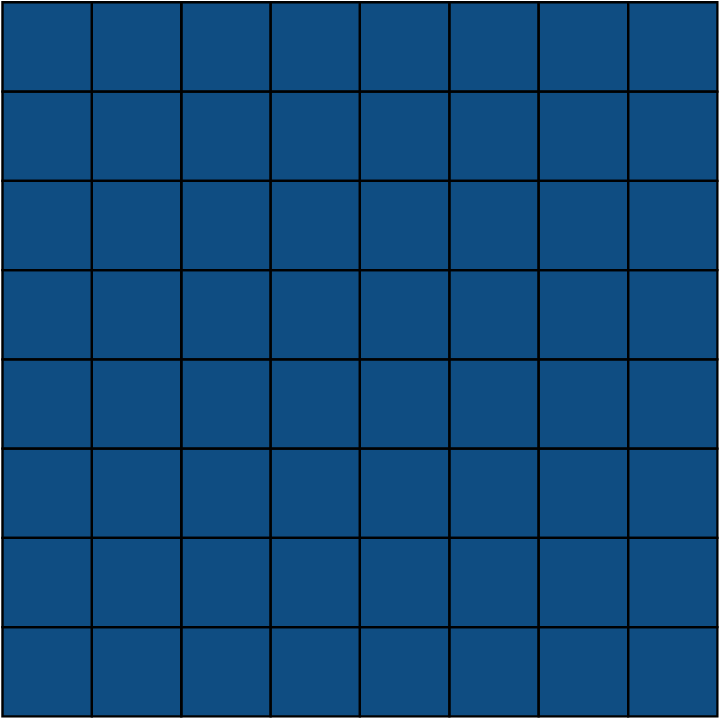
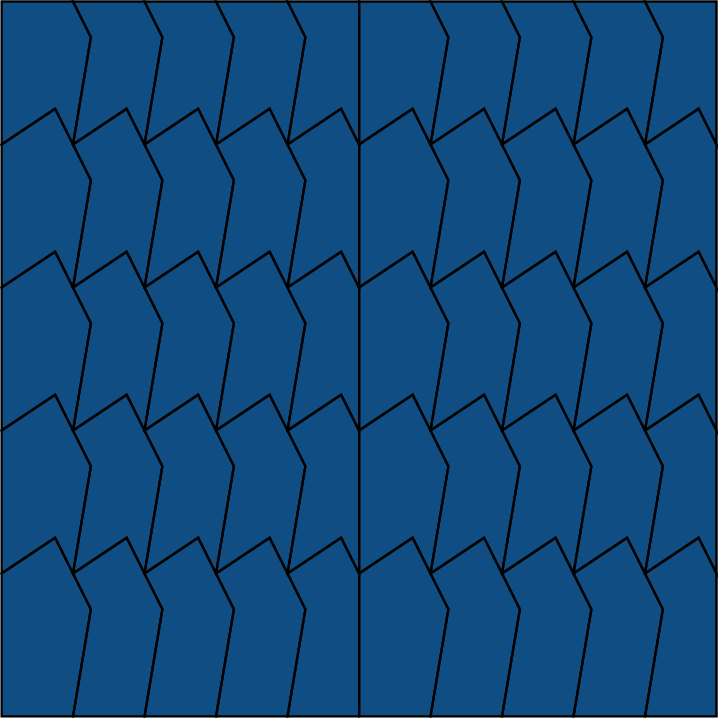
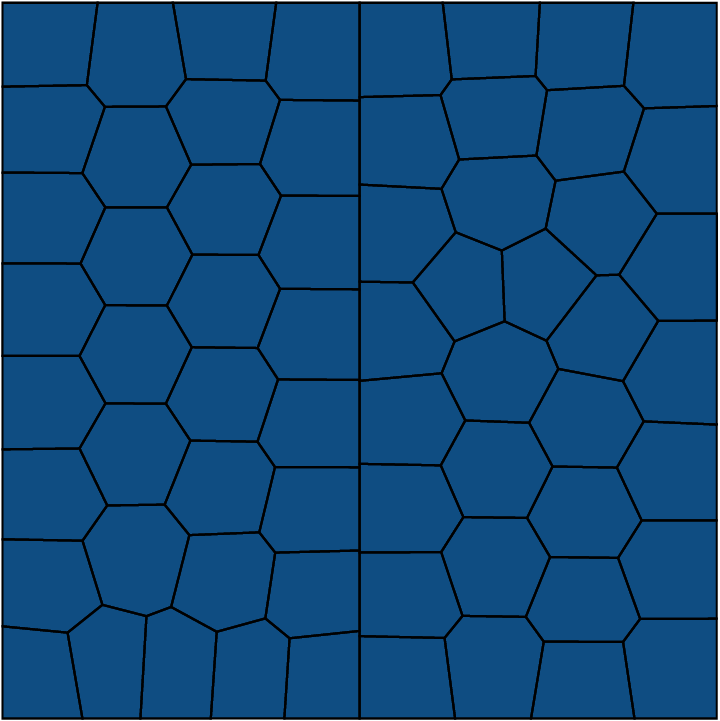
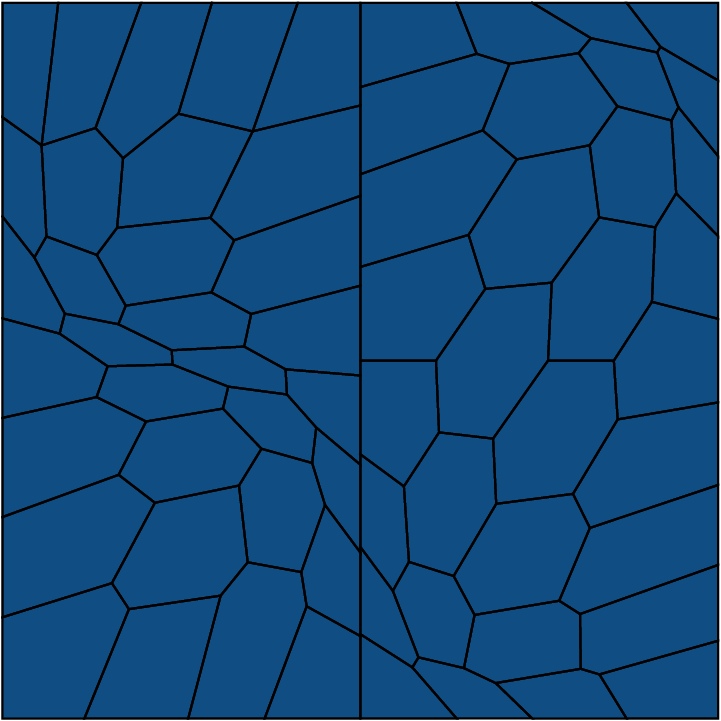
Figure 4: Variety of discretisations used for the unit square in Experiments 1 and 2.
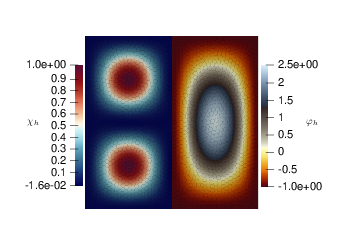
Figure 5: Experiment 1. Nodal values of the VEM solutions ΩS4 and ΩS5 on the Voronoi mesh at the final refinement level.
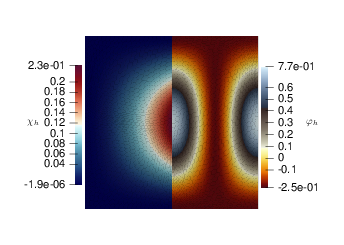
Figure 6: Experiment 2. Nodal values of the VEM solutions ΩS6 and ΩS7 on the finest refinement of the perturbed Voronoi mesh.
Heterogeneous Domains: Dead-End Filter
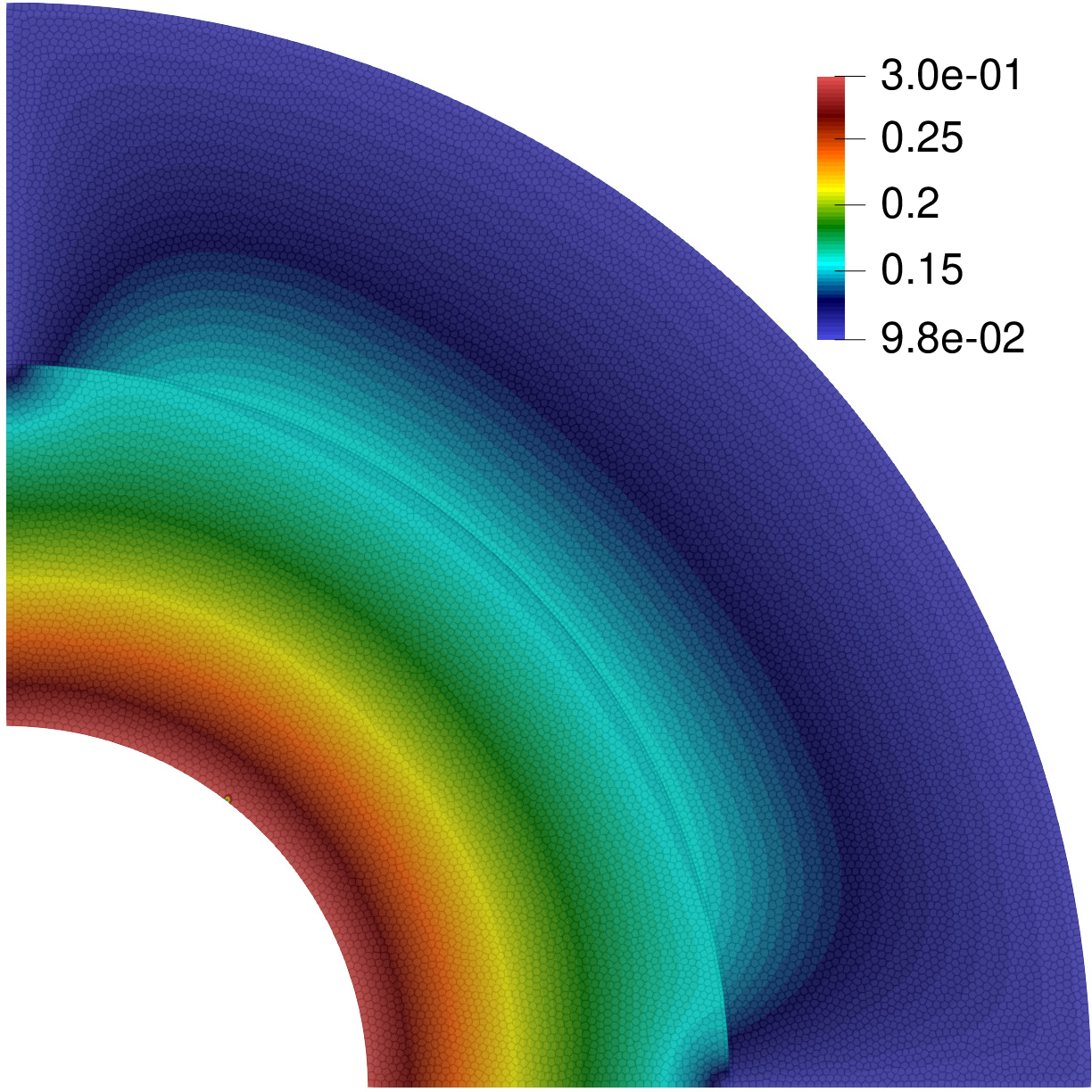
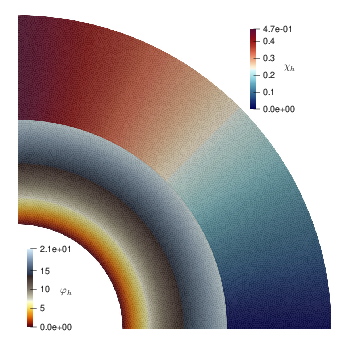
Figure 8: Experiment 3. Snapshots of the variables of interest for the quarter annulus dead-end filter domain discretised with 15,501 Voronoi elements.
Biomedical Application: Bioartificial Organ Perfusion
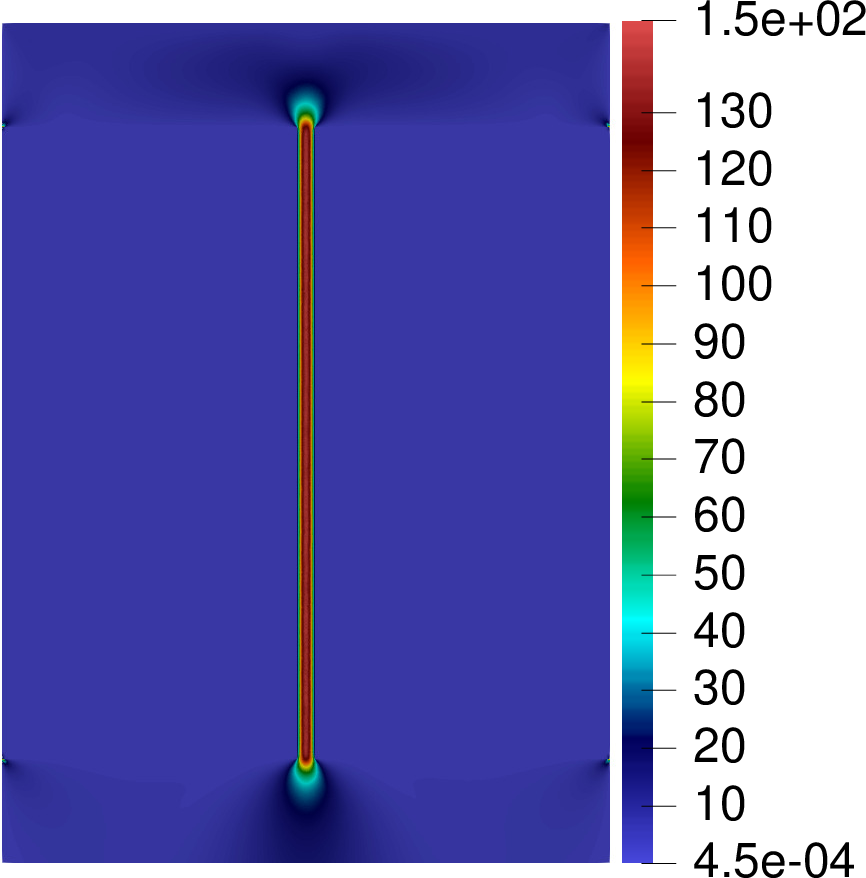
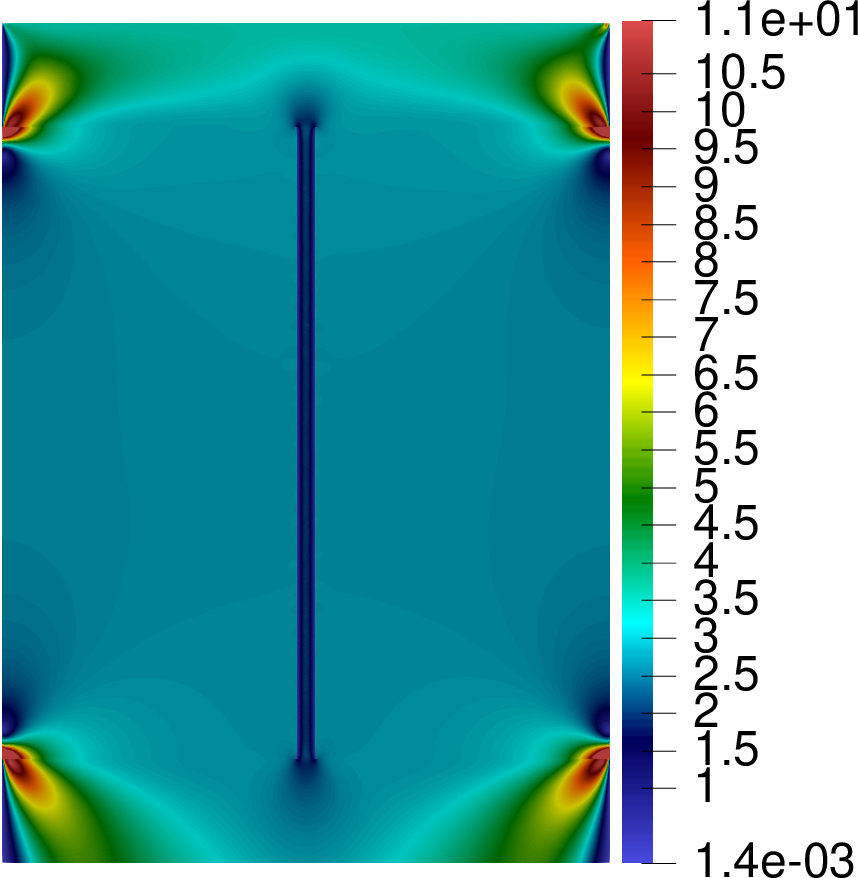
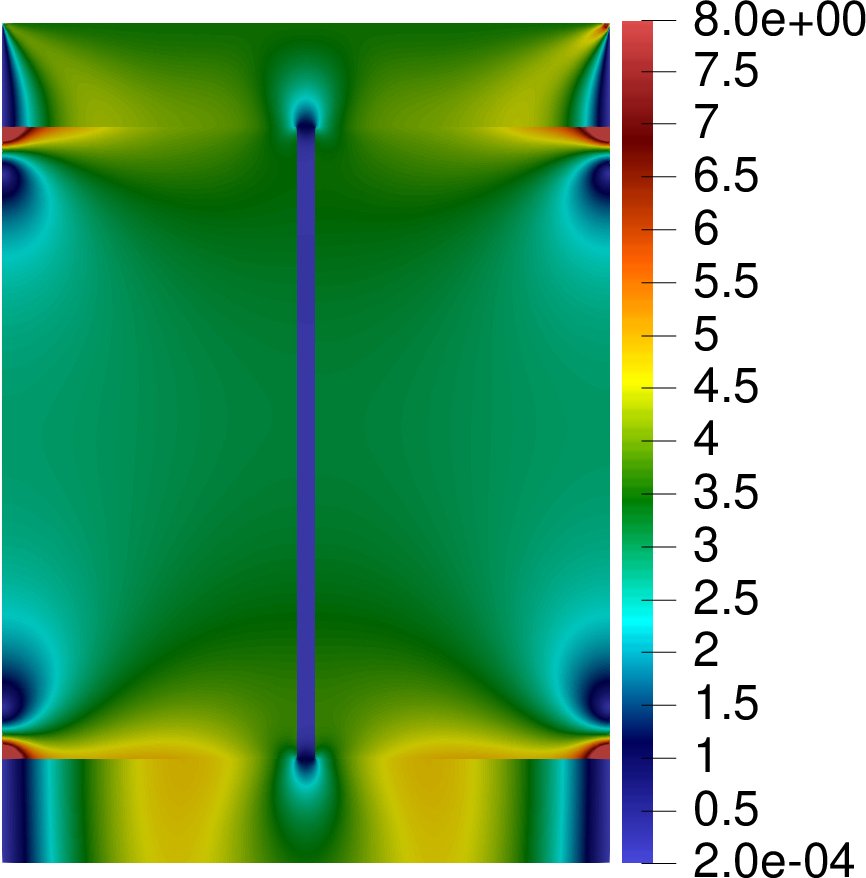
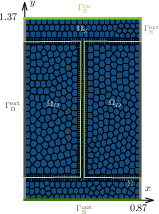
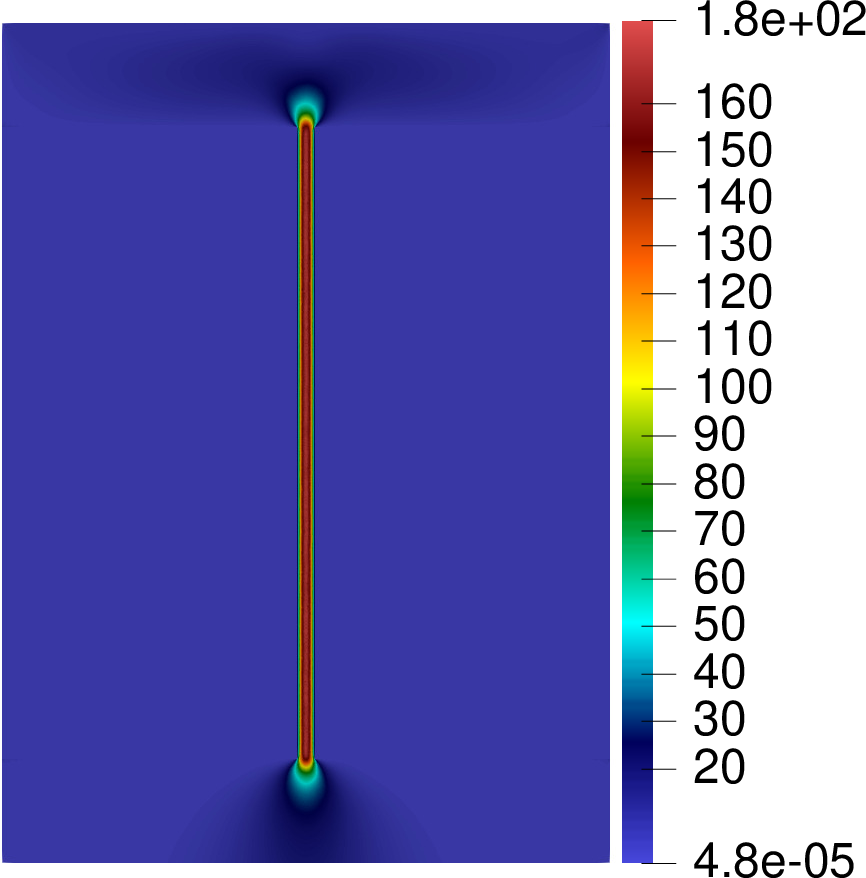
Figure 10: Stokes' and Darcy's velocities for a straight blood flow network embedded within a bioartificial scaffold domain discretised with a Voronoi mesh for several values of ΩS8.
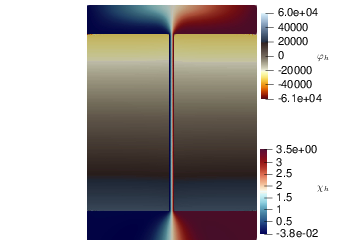
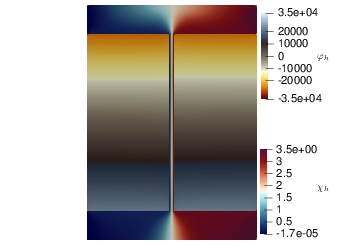
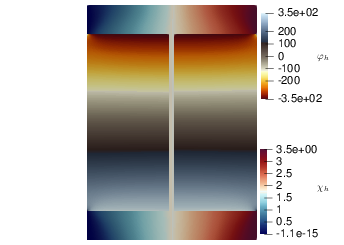
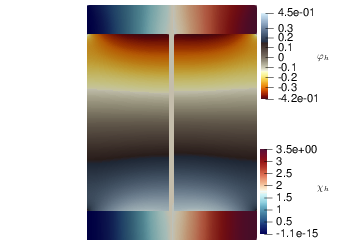
Figure 11: Nodal values of the stream function ΩS9 and Darcy's pressure ΩD"(porousmedia),interfacedthrough0 for a straight blood flow network and varying ΩD"(porousmedia),interfacedthrough1.
Implications, Extensions, and Open Challenges
This work establishes a rigorous, efficient, and flexible framework for simulating coupled Stokes–Darcy problems on general meshes without remeshing or aggressive interface-conforming requirements. The stream function formulation eliminates the need for inf–sup stable pairs, which has significant computational benefits and simplifies implementation, especially for high-order discretizations or adaptive mesh refinement.
Key implications and challenges:
- Practical flexibility: The ability to use arbitrary polygonal meshes makes the method highly applicable to real-world domains with geometric complexity or moving/deforming interfaces.
- No inf–sup constraints: This greatly broadens the potential for codebases and discretizations, as standard mixed FE inf–sup compatibility checks become unnecessary.
- High regularity demand: The need for ΩD"(porousmedia),interfacedthrough2-conforming spaces for the biharmonic portion, while tractable for 2D VEM, is technically intricate for 3D or higher polynomial degrees. Extension to 3D would require vector potential formulations and advanced high-order ΩD"(porousmedia),interfacedthrough3 VEM.
- A posteriori analysis: While this work provides a priori estimates, a robust a posteriori error estimator for adaptive refinement remains open.
- Curved geometries and extreme mesh irregularity: Further work is needed to handle highly curved interfaces and relax the mild mesh regularity assumptions.
Conclusion
The paper delivers an effective VEM-based method for Stokes–Darcy interface problems, combining the stream function–pressure formulation with polygonal discretization to provide robust, inf–sup-free, and optimally convergent numerical solutions. It opens avenues for generalizing to more complex physics (e.g., multiphysics, nonlinearities, or multiple coupled subdomains), higher-order spatial discretizations, and three-dimensional simulations. Future research includes the design of stabilization-free variants, local mesh adaptation strategies, and modular pressure recovery algorithms relevant for practical engineering and biomedical applications.