- The paper presents a novel theoretical framework that combines stochastic turbulent acceleration with nonlinear SSC cooling to explain X-ray lag-frequency spectra in HBL blazar jets.
- It numerically solves the time-dependent Fokker–Planck equation to model electron energy distributions, capturing transitions between acceleration- and cooling-dominated regimes.
- The study reveals that lag amplitude correlates with flare duration and turbulence properties, offering new observational diagnostics for jet microphysics in high-energy blazars.
X-ray Fourier Lag-frequency Spectra Modulated by Stochastic Turbulent Acceleration in HBL Blazar Jets
Introduction
This study provides a comprehensive theoretical framework for analyzing X-ray interband time lags observed in high-frequency-peaked BL Lac objects (HBLs), focusing on the modulation of lag-frequency spectra by stochastic turbulent acceleration (STA) and nonlinear synchrotron self-Compton (SSC) cooling. Fourier lag analyses provide diagnostic leverage to disentangle electron acceleration and cooling in relativistic jets, where observed spectral energy distributions (SEDs) and variability challenge single-process interpretations.
The approach updates previous analytical frameworks by numerically solving the time-dependent Fokker–Planck (FP) equation for electron populations, allowing a self-consistent treatment of processes and timescales dominating nonthermal X-ray variability in HBL-type blazars.
One-zone Leptonic Model with STA and Nonlinear SSC Cooling
The adopted scenario considers a one-zone, homogeneous, optically thin plasma blob of size R′, moving relativistically along the jet axis. The blob is permeated by an isotropic, tangled magnetic field B′ and bathed in a population of electrons Ne′(γ′,t′) subject to:
- Injection: Electrons with power-law energy distributions from an external acceleration process.
- Re-acceleration: Stochastic interactions with turbulence (diffusion coefficient Dp∝γ′q; e.g., q=2 for hard-sphere).
- Radiative cooling: Linear (synchrotron) and nonlinear (SSC, including Klein-Nishina effects).
- Escape: Parameterized via energy-independent residence time.
The kinetic FP equation encapsulates these processes. By integrating this equation numerically, temporal evolution and interplay of acceleration and cooling are resolved on all relevant timescales and energy scales.
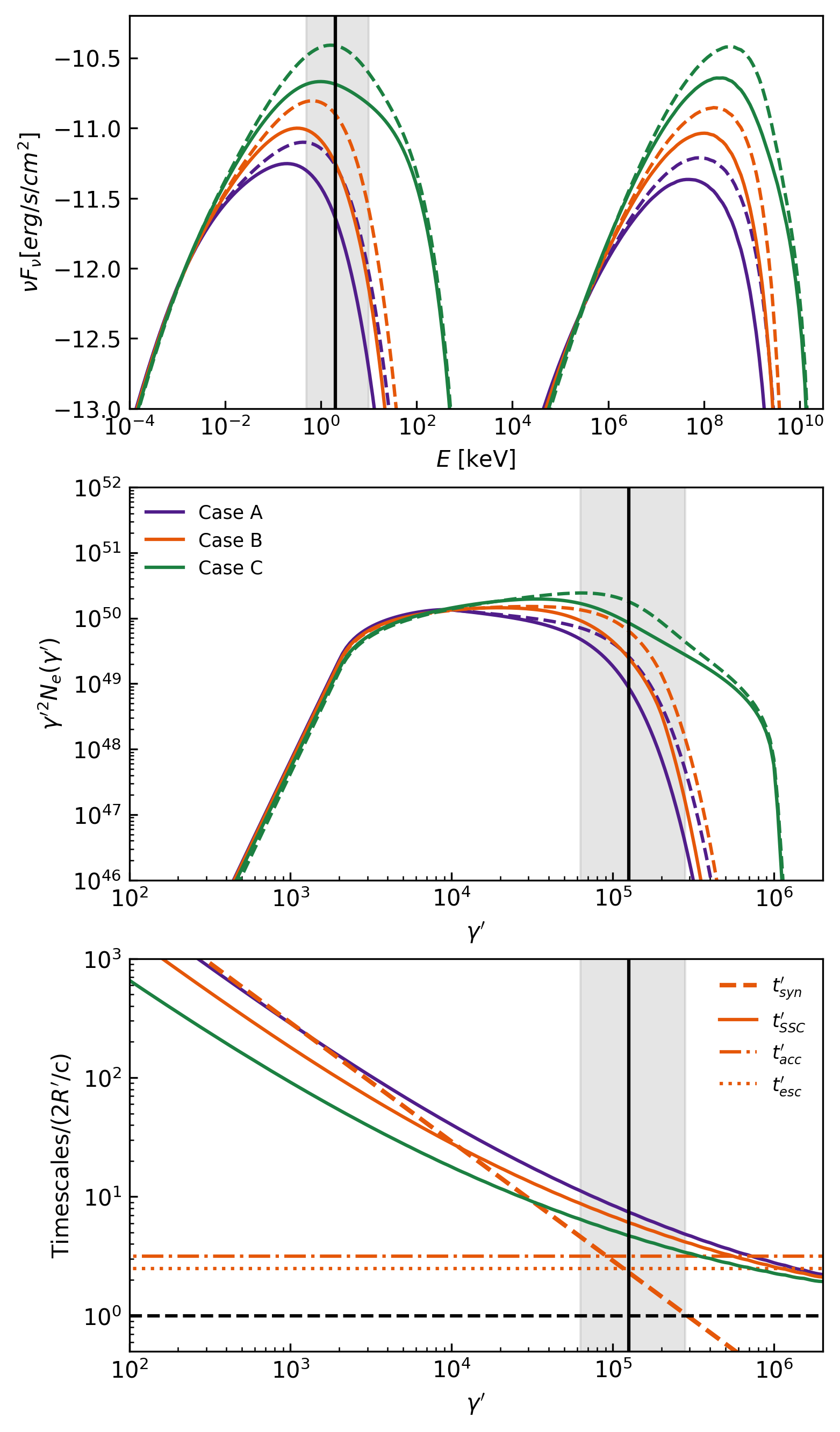
Figure 1: Steady-state SEDs, EEDs, and electron timescales obtained for three characteristic parameter sets, demonstrating distinct time-lag regimes and the impact of SSC nonlinearity.
The top panel of Figure 1 shows steady-state SEDs. The middle panel presents EEDs, while the bottom shows acceleration, cooling, and escape timescales, all normalized to the light-crossing time $2R'/c$ to ensure temporal fidelity.
Lag Regimes and Fourier Analysis Methodology
The time lags between X-ray bands are quantified via discrete Fourier transform (DFT)–based lag-frequency spectra, normalized flux matching delay (NFMD), and cross-correlation function (CCF) centroids. The lag sign assigns soft/negative lags when harder X-ray bands lead (cooling-dominated) and hard/positive lags when the soft bands lead (acceleration-dominated).
Distinct behavior emerges depending on the ratio of injected maximum electron Lorentz factor γi,max′ to the equilibrium Lorentz factor γeq′ (set by balance of acceleration and cooling):
- Acceleration-dominated (hard lag): γi,max′<γeq′
- Cooling-dominated (soft lag): γi,max′≫γeq′
- Transition regime: B′0
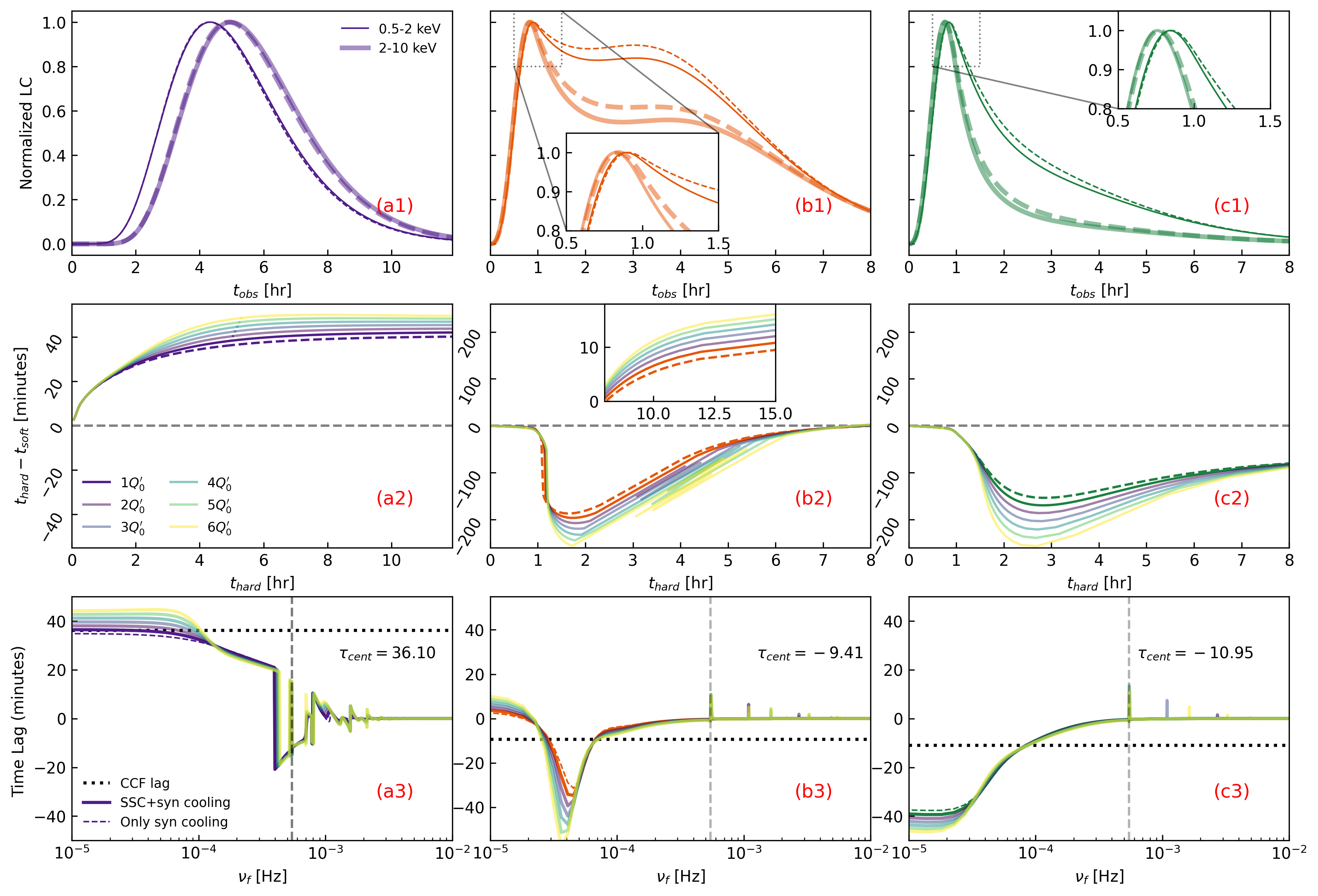
Figure 2: Normalized X-ray LCs (top), instantaneous time delays (middle), and Fourier lag-frequency spectra (bottom) for three representative lag regimes with varying injection rates, both with and without SSC cooling.
Fourier lag-frequency spectra (Figure 2, bottom) expose quantitatively distinct behaviors: hard lags display positive constant lags at low frequencies with a sign change at higher frequencies, soft lags show negative values, and the transitional regime presents a frequency-dependent switch from positive to negative with a smooth cross-over.
STA and SSC Effects on Lag-frequency Morphology
Influence of B′1 and EED Slope
Lag-frequency properties are highly sensitive to the electron injection parameters, primarily B′2 and the EED slope B′3.
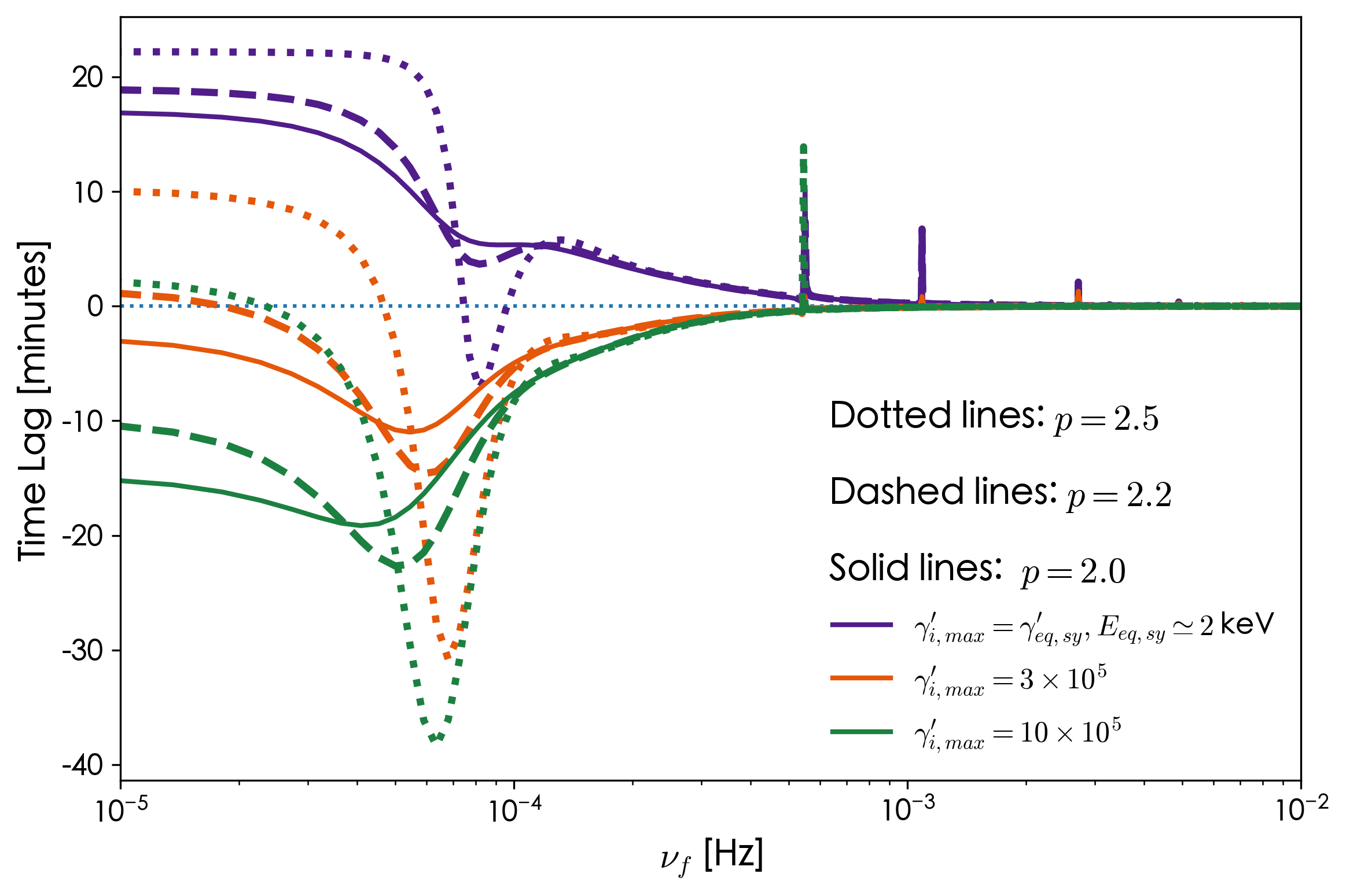
Figure 3: Lag-frequency spectra as a function of B′4 and EED index B′5, indicating the transition from hard to soft lags as B′6 increases, with sharper transitions for steeper B′7.
Role of STA and Parameter Dependence
The strength of stochastic acceleration, governed by B′8, critically determines whether cooling or acceleration structures dominate the lag spectra.
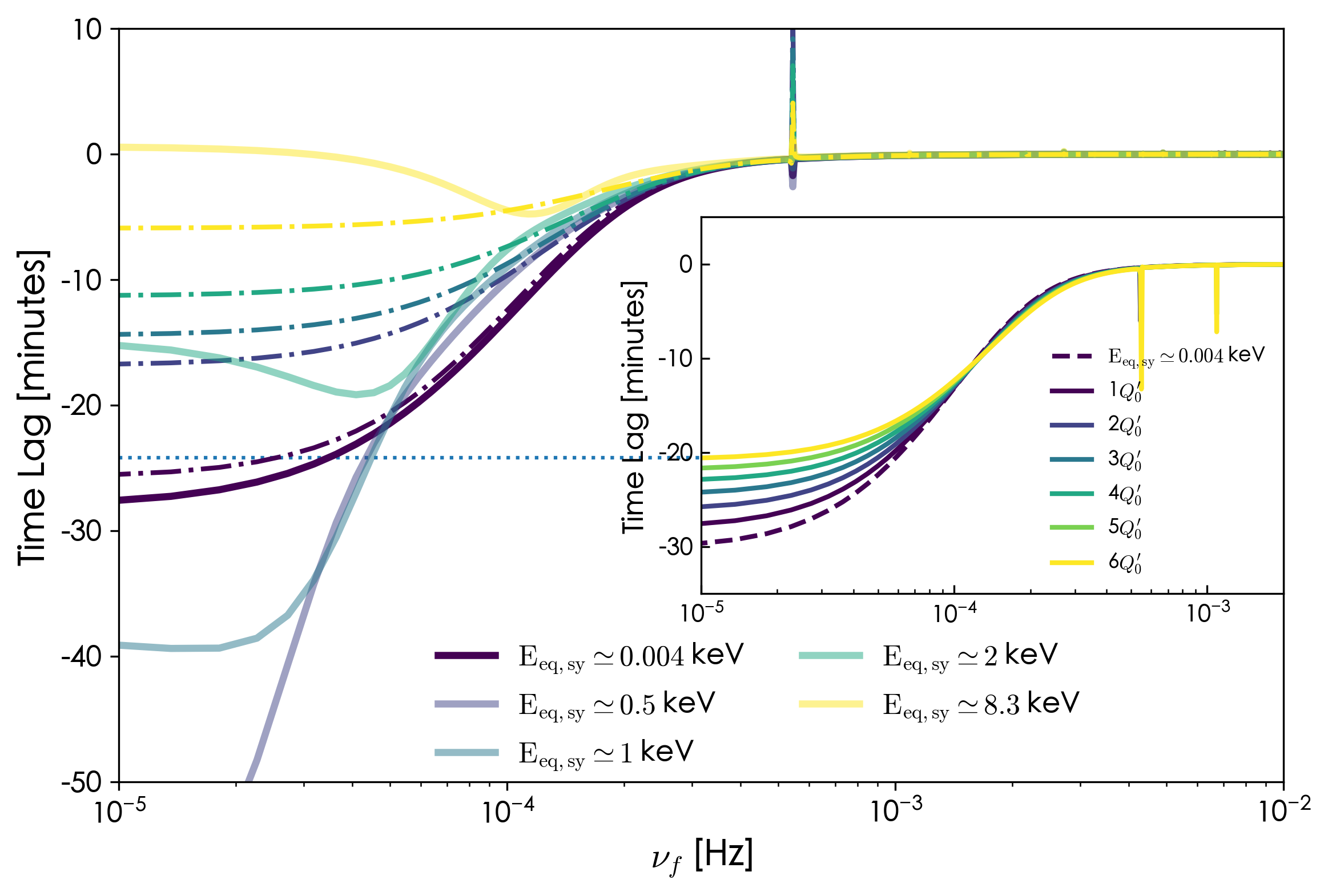
Figure 4: Lag-frequency spectra for varying B′9 and synchrotron equilibrium energy Ne′(γ′,t′)0, illustrating the non-monotonic trend in lag amplitude with acceleration rate and the suppression of cooling-driven lags by strong STA.
The lag amplitude peaks when electron escape is slow and radiative cooling dominates. As the acceleration rate increases, re-acceleration suppresses lag amplitude, eventually nullifying net lags for sufficiently fast acceleration.
Impact of Nonlinear SSC Cooling
Nonlinear SSC cooling amplifies lag magnitudes, particularly in the regime where STA suppresses cooling-driven energy transfer but does not fully compensate for radiative losses at high injection rates.
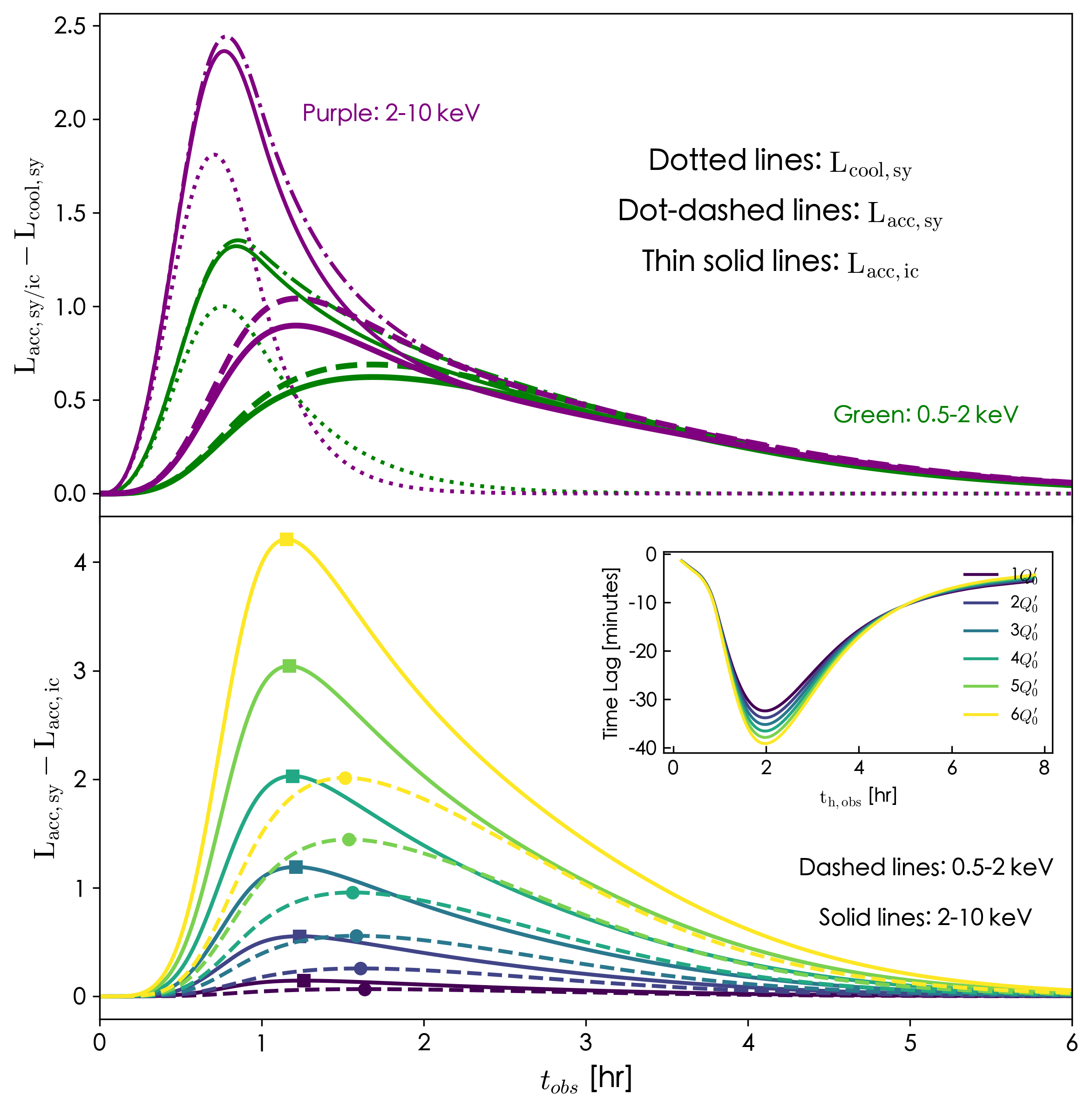
Figure 5: Isolated contributions of STA and SSC cooling to lag evolution between soft and hard bands, elucidating the amplification of lags by increased SSC cooling.
There is a pronounced positive correlation between lag amplitude and flare duration, explained by enhanced SSC strength for longer injection times.
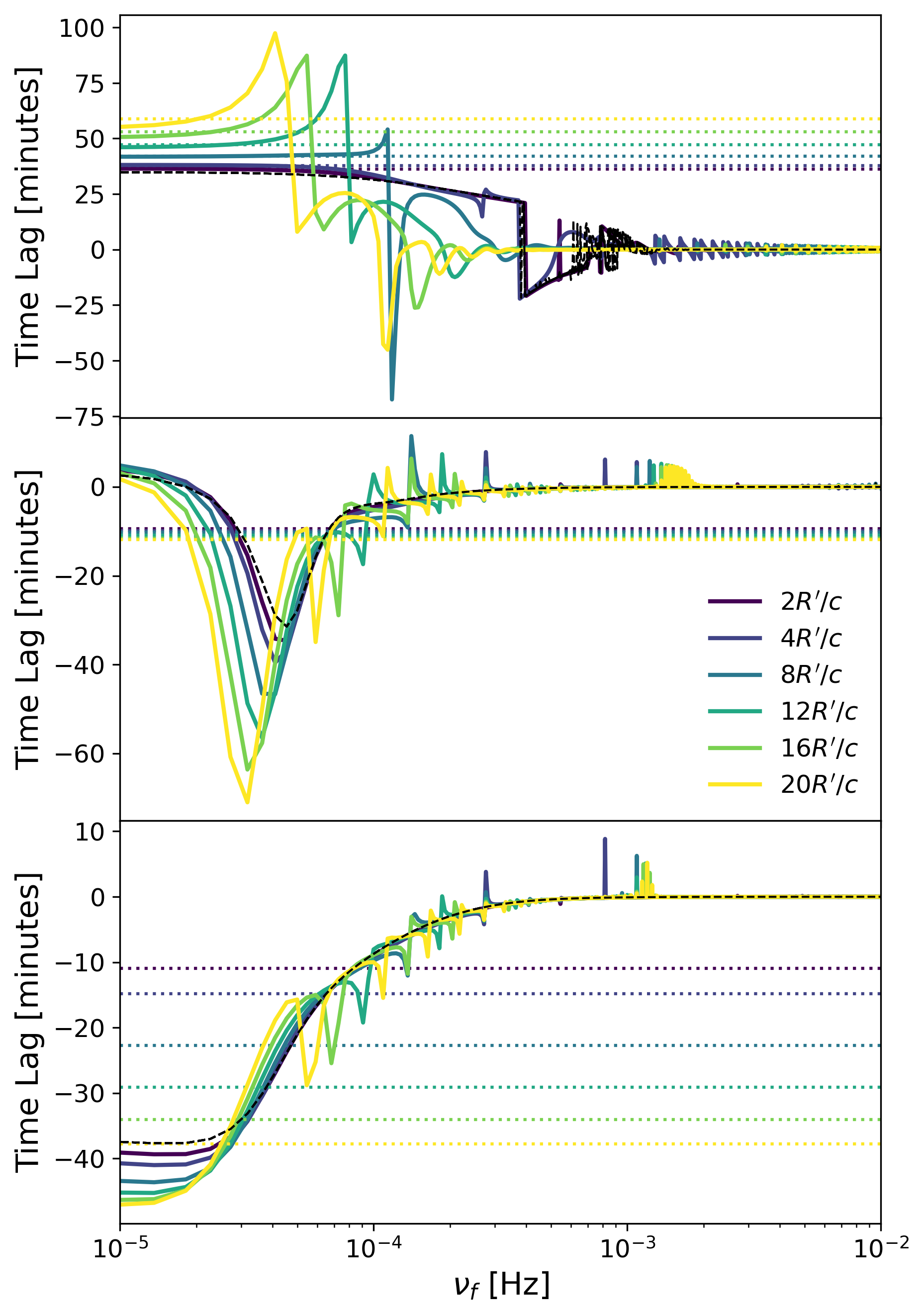
Figure 6: Fourier lag-frequency spectra for varying injection durations, confirming that lag amplitude increases with flare length in strong SSC scenarios.
Turbulence Properties, Acceleration Mode, and Microphysics
The model predicts modest but robust quantitative sensitivity of lag-frequency spectra to turbulence spectral index Ne′(γ′,t′)1, distinguishing between Kolmogorov (Ne′(γ′,t′)2) and hard-sphere (Ne′(γ′,t′)3) limits.
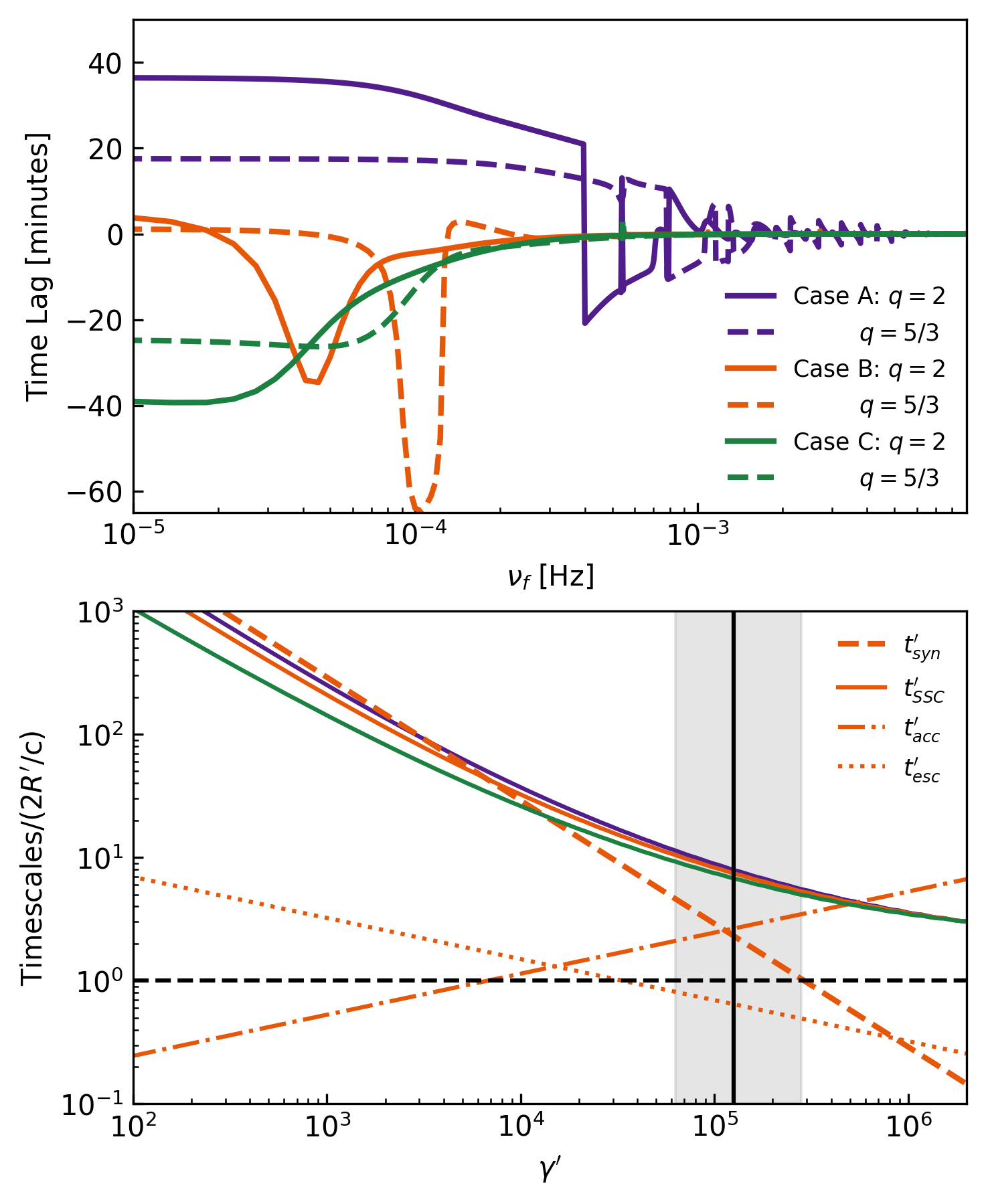
Figure 7: Comparison of lag-frequency spectra and timescales for Ne′(γ′,t′)4 versus Ne′(γ′,t′)5, highlighting differences in lag amplitude and characteristic frequency.
Additionally, simultaneous Fermi-I (shock) and Fermi-II (stochastic turbulent) acceleration leads to parameter-dependent modifications of lag spectra, with the Fermi-I component primarily affecting cooling-dominated and transitional regimes.
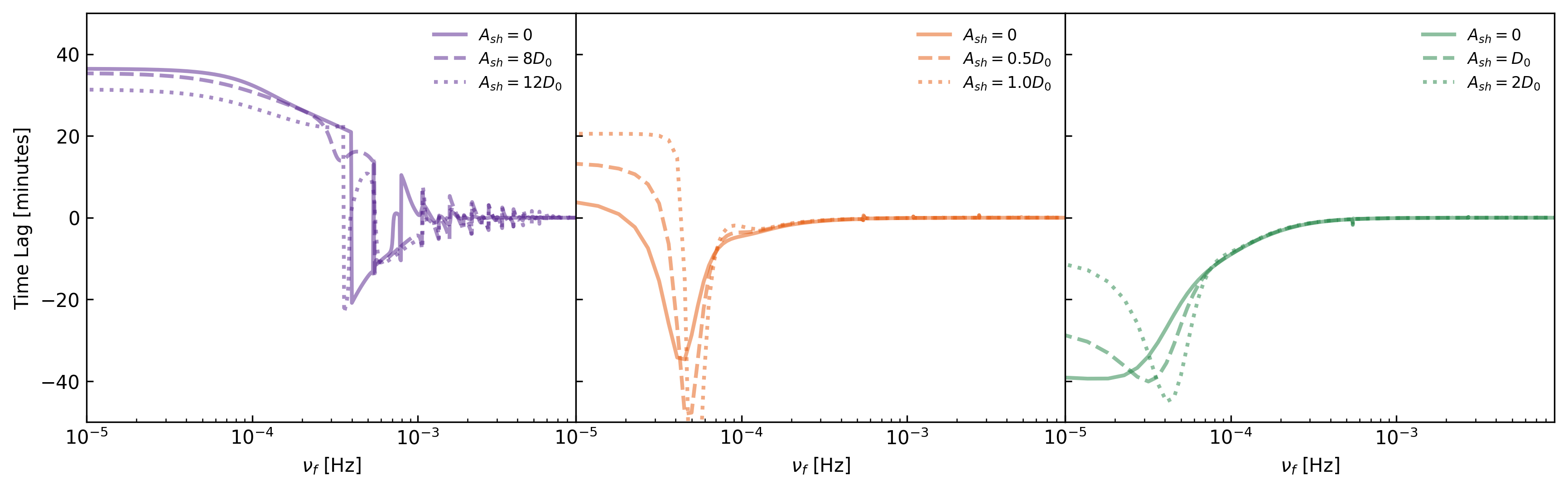
Figure 8: Effects of incorporating first-order Fermi (shock) acceleration on lag-frequency spectra for three regimes.
Spectral Evolution and Temporal Population Dynamics
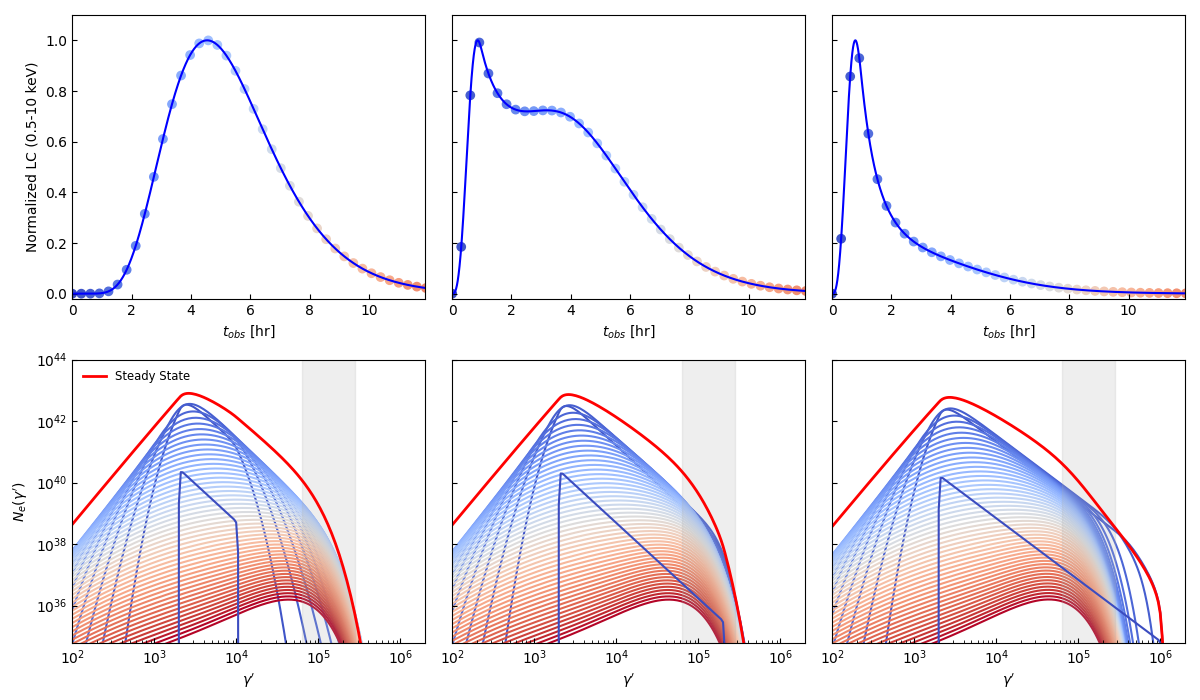
Figure 9: Theoretical X-ray LCs and concurrent evolution of electron energy spectra for characteristic flare events, demonstrating coupling of spectral and timing signatures.
The spectro-temporal behavior affirms the assignment of timing features to underlying energy transport, acceleration, and cooling processes in the evolving electron population.
Steady-state SEDs with Kolmogorov Turbulence
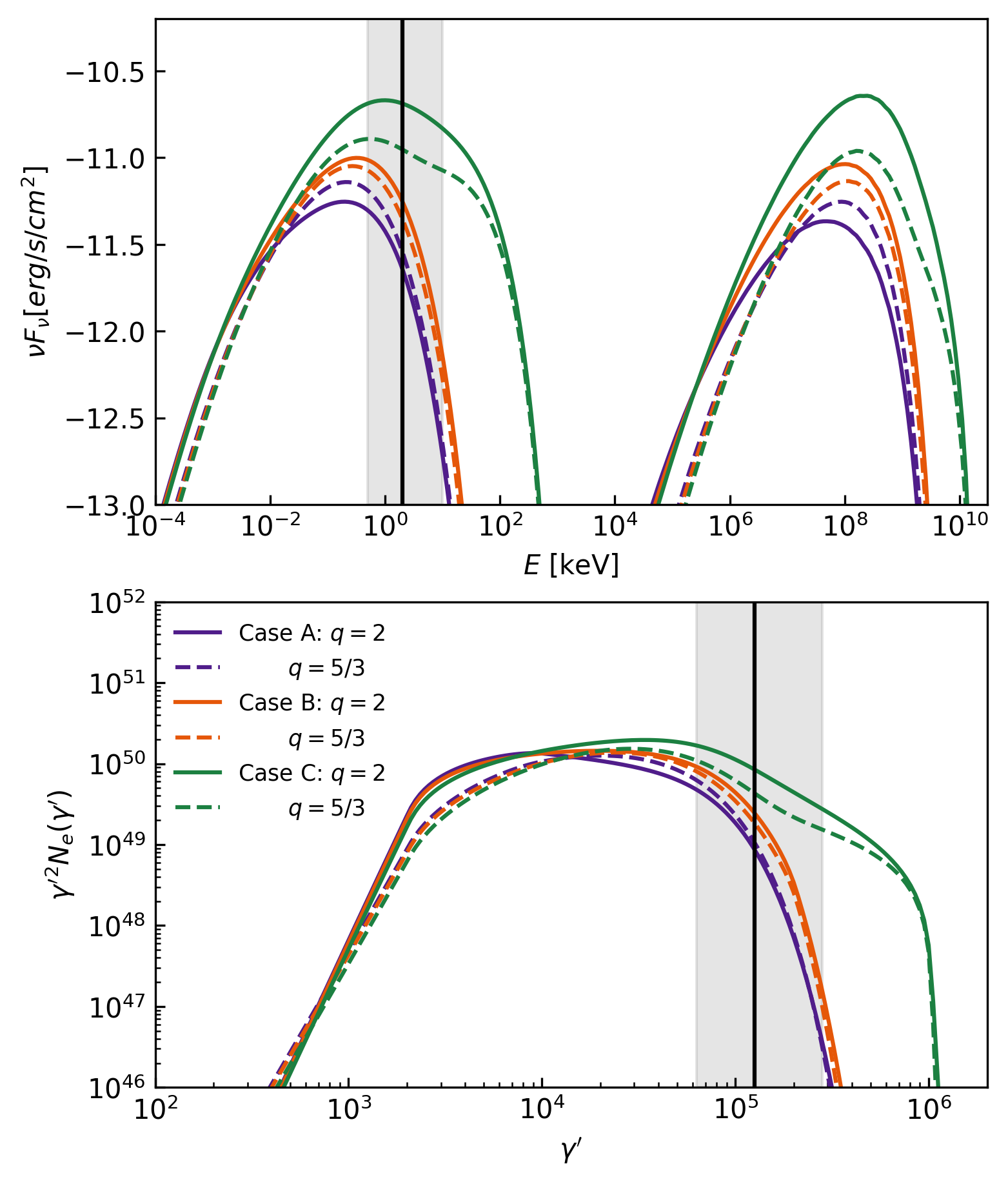
Figure 10: Steady-state SEDs and EEDs for Ne′(γ′,t′)6, demonstrating differences in equilibrium energies and electron spectra compared with the Ne′(γ′,t′)7 case.
Implications, Observational Diagnostics, and Future Directions
This study substantiates that inclusion of STA and nonlinear SSC cooling provides a comprehensive explanation for the full range of observed X-ray lag behaviors in HBLs, resolving previous contradictions and unifying disparate interpretive frameworks. The presence of a transition regime in the lag-frequency domain is a robust signature of simultaneous energy-dependent acceleration and cooling—a diagnostic inaccessible to time-domain CCF measurements alone.
The results predict that large lag amplitudes and positive lag/flare-duration correlations are observational signatures of strong SSC cooling in TeV-bright blazar flares. The model further provides pathways to probe jet turbulence properties, acceleration microphysics, and the interplay of competing acceleration modes.
Future high-cadence, long-baseline X-ray observations (e.g., by Athena) will facilitate direct, quantitative lag-frequency spectrum measurement. Combined with SED and population modeling, these diagnostics hold promise for constraining the physical state and microphysics in the innermost regions of blazar jets.
Conclusion
The presented work delivers a detailed, quantitative framework for interpreting X-ray lag-frequency spectra in HBL blazars, elucidating the roles of STA, nonlinear SSC cooling, turbulence properties, and multi-modal acceleration in shaping observable timing features. These findings both resolve existing observational discrepancies and provide a theoretical basis for future jet microphysics constraints using X-ray spectro-temporal data.

