- The paper establishes a rigorous analytical framework showing magnetic confinement in WSe₂ quantum dots that effectively suppresses Klein tunneling.
- It uses an effective gapped Dirac Hamiltonian and angular momentum channel analysis to uncover resonant scattering efficiencies and tunable quasi-bound states.
- The study highlights potential applications in spintronics and valleytronics by enabling precise control over carrier localization in 2D transition metal dichalcogenides.
Confinement in Magnetically Induced Quantum Dots in Monolayer WSe₂
Introduction and Theoretical Motivation
This study addresses the prospect of controlling carrier confinement within two-dimensional (2D) transition metal dichalcogenides (TMDs), specifically monolayer WSe₂, via spatially localized magnetic fields to form quantum dots (QDs). Unlike graphene, where massless Dirac fermions enable strong Klein tunneling that impedes electrostatic confinement, WSe₂ possesses an intrinsic direct band gap and significant spin-orbit coupling. This duality enables robust spin and valley control, and allows magnetic quantum confinement to become feasible and tunable. The work provides a rigorous analytical foundation for the formation of quasibound states in monolayer WSe₂ QDs using the effective gapped Dirac Hamiltonian in the presence of a spatially restricted magnetic flux. The implications for quantum transport, spintronics, and valleytronics are substantial.
The physical configuration is depicted in Figure 1, which shows a monolayer WSe₂ sheet in the xy-plane subjected to a circular, perpendicular magnetic field region of radius R. The Dirac-like Hamiltonian, including spin-orbit and valley terms, governs electron dynamics inside and outside the magnetic domain, enabling mode-resolved scattering analysis.
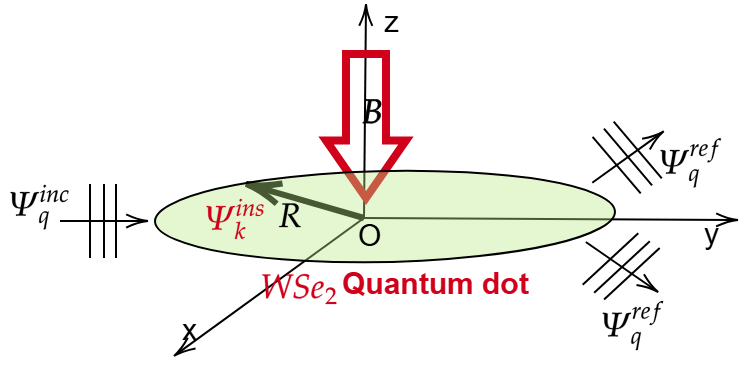
Figure 1: Schematic of a monolayer WSe₂ sheet subjected to a confined perpendicular magnetic field forming a quantum dot region.
Analytical Framework for Magnetic Confinement
The system is modeled using an effective Dirac Hamiltonian augmented with intrinsic gap Δ, spin-orbit coupling strengths λc and λv, and valley and spin degrees of freedom. The vector potential switches discontinuously at r=R, inducing a ring-like compensation field that maintains net-zero total magnetic flux. Owing to preserved rotational symmetry, the problem reduces to decoupled angular momentum channels (l), with each channel's radial Dirac equation solved using Kummer’s confluent hypergeometric functions for r<R, and Bessel/Hankel functions for r>R.
Continuity conditions at the dot edge yield exact analytic expressions for the scattering amplitudes and reflection coefficients for each angular channel. These, in turn, serve as the input for calculating experimentally relevant quantities such as the total and channel-resolved scattering efficiencies, and local probability densities for arbitrary incident energy E, magnetic field R0, and dot radius R1.
Magnetic Suppression of Klein Tunneling and Carrier Localization
Strong suppression of Klein tunneling is a central result, enabled by the band gap and enhanced by the magnetic barrier. The magnetic field generates cyclotron motion, which, in conjunction with geometric confinement, sharply localizes low-energy electrons within the dot.
Scattering efficiency R2 as a function of magnetic field R3 and energy R4, shown in Figure 2, elucidates the interplay between magnetic localization and electronic structure parameters. The numerical data demonstrate:
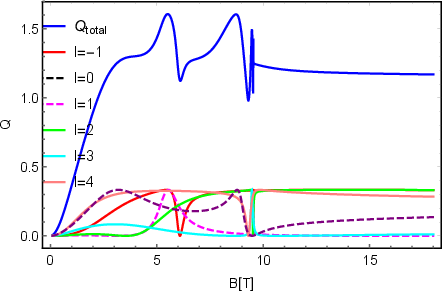
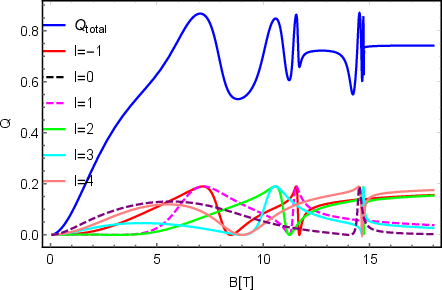
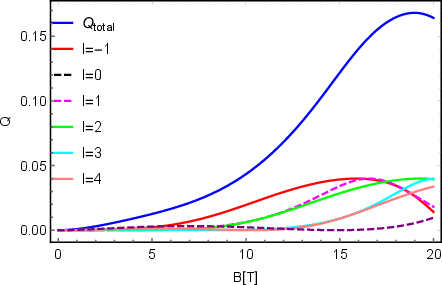
Figure 2: Scattering efficiency R5 versus magnetic field R6 for different incident energies, highlighting the strong energy dependence and tunability of magnetic confinement.
- Low energy (R7 eV): R8 is large and grows with R9, confirming efficient carrier trapping.
- Intermediate/high energy: Δ0 is suppressed and less responsive to Δ1, as kinetic energy allows carriers to traverse the magnetic barrier.
The dominance of low-order angular momentum channels (Δ2, Δ3) in the resonant scattering spectrum is a robust feature, supporting effective magnetic confinement even as Δ4 increases.
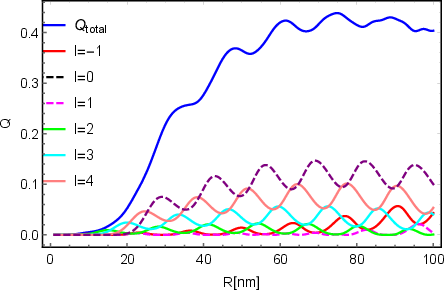
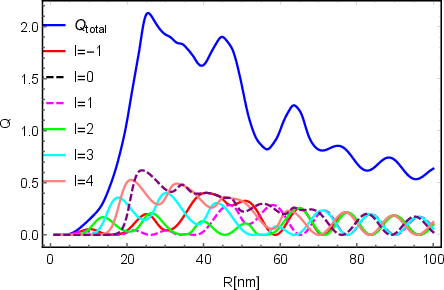
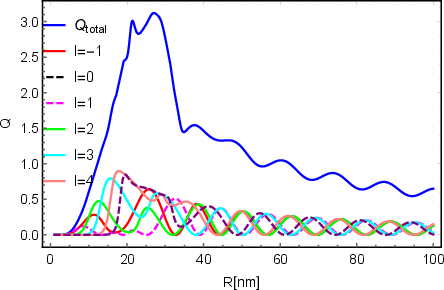
Figure 3: Scattering efficiency Δ5 as a function of dot radius Δ6 at various Δ7, showing that larger dots enhance resonant confinement and increase Δ8.
Larger dot radius Δ9 systematically enhances λc0, particularly at higher λc1, since the phase space for quasi-bound cyclotron states increases. This synergy between geometric and magnetic parameters is not achievable in gapless, spin-degenerate Dirac systems like graphene.
Visualization of the spatial carrier density under different λc2 and λc3 (Figure 4) establishes the presence of tunable resonances—quasibound states—within the magnetic dot region. This spatial localization is most pronounced at low energies and commensurate magnetic fields, where the cyclotron orbit matches the system size, sharply maximizing charge density inside the dot.
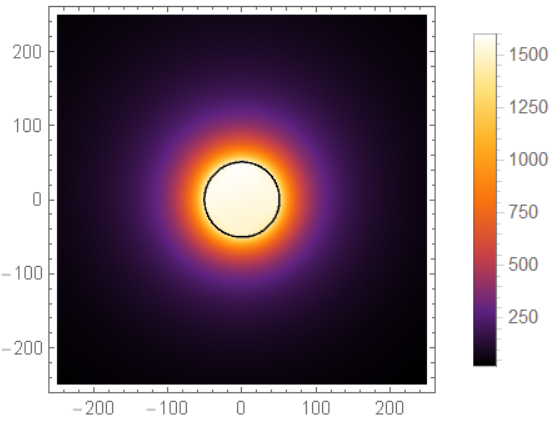
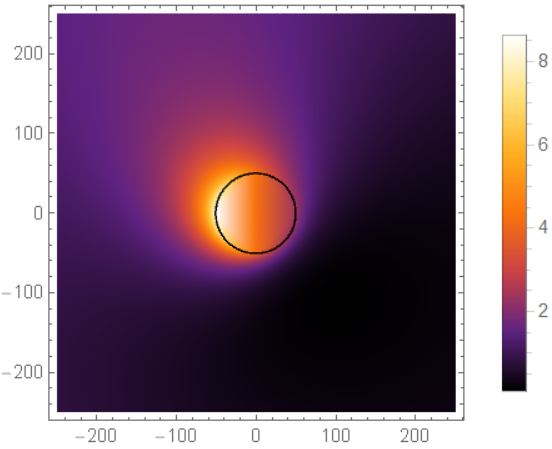
Figure 4: Real-space charge density maps for selected energies and magnetic fields, demonstrating localization and resonant enhancement within the quantum dot as λc4 varies.
These resonances correspond directly to peaks in the scattering efficiency, and their field-tunability underlines the ability to engineer controllable quantum states with desired localization characteristics. For higher λc5, localization is attenuated, consistent with reduced λc6. Additionally, due to spin-valley coupling in WSe₂, these resonant states can be valley-contrasting and spin-resolved, opening pathways to valley and spin-selective device applications.
Implications and Perspectives
The theoretical results establish that gapped TMDs like WSe₂ are uniquely suited for magnetic quantum dot engineering, outperforming zero-gap graphene in confinement efficiency. The strong spin-orbit and valley contrasting features, combined with absence of detrimental Klein tunneling, yield highly tunable and stable resonant states. Parameters such as incident energy, λc7, and λc8 provide full control over the localization and scattering signatures of the QD.
From a practical standpoint, these findings suggest a pathway toward realizing spin and valley filters, resonant tunneling systems, or quantum information devices where manipulation of distinct spin or valley states is essential. The magnetic quantum dot paradigm may be leveraged for hybrid photonic-electronic integration, quantum sensing, and manipulation of single-electron states for quantum computation.
Theoretically, this work paves the way for further exploration of many-body phenomena in magnetic QDs, the interplay of disorder and confinement, and the extension to bilayer or heterostructure TMD systems.
Conclusion
The study provides a rigorous analytical and numerical account of magnetic quantum confinement in monolayer WSe₂, elucidating the conditions for resonance formation, carrier localization, and channel-resolved transport in a spin-valley-coupled, gapped Dirac material. The prominent findings include efficient suppression of Klein tunneling, strong low-energy scattering resonances, and spatially tunable density localization controlled by λc9 and λv0. These results reinforce the viability of monolayer WSe₂ as an advanced platform for quantum nanodevice engineering, with direct relevance to spintronic and valleytronic technology development.