- The paper introduces a framework that quantifies and leverages both positive and negative label influences in multi-label node classification.
- The paper decomposes the GNN process into propagation and transformation stages, integrating influence matrices to form a directed label influence graph.
- The paper demonstrates robust performance gains, achieving average AUC improvements over 3% across various datasets and GNN backbones.
Multi-Label Node Classification with Label Influence Propagation: A Comprehensive Analysis
Introduction and Motivation
Multi-label node classification (MLNC) on graphs introduces unique challenges due to the heterogeneity and non-Euclidean structure of graph data, where each node can be associated with multiple labels, and node semantics cannot be fully captured via traditional multi-label methods. Previous efforts in MLNC either neglect inter-label dependencies or only model simple label proximity without capturing the intricate positive and negative influences among labels observed in real-world datasets. The paper "Multi-Label Node Classification with Label Influence Propagation" (2607.00671) provides a detailed framework for quantifying and leveraging these mutual label influences during the learning process.
Empirical Analysis of Label Influence
The initial empirical observations demonstrate that, for graph data, the relationships among labels are not uniformly beneficial; certain labels, when jointly trained, can enhance or degrade the predictive performance for other labels depending on graph structure and supervision. Heatmaps reveal pronounced positive and negative influences across datasets, implying that naive exploitation of label co-occurrence is insufficient.
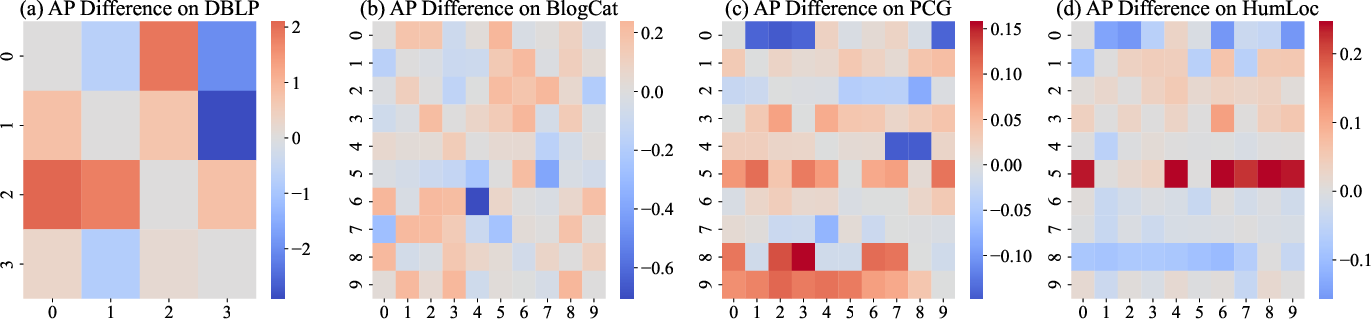
Figure 1: Observed asymmetrical positive (red) and negative (blue) influence between pairs of labels, calculated as joint versus isolated training differences on MLNC benchmarks.
These phenomena underpin the need for a framework that dynamically identifies, amplifies, or suppresses specific label influences.
Decomposition of the GNN Message Passing Process
The paper decomposes the standard GNN-based MLNC pipeline into two orthogonal operations: propagation (P), which manages information flow and smoothing through graph topology, and transformation (T), which encapsulates representation learning via trainable parameters. This decomposition clarifies that label influences are enacted both structurally (via P) and parametrically (via T) and must be separately and jointly considered.
Quantification of Label Influence Correlations
Influence in Propagation (P)
The influence between two nodes is formally quantified using Personalized PageRank (PPR), capturing the expected probability mass transfer under random walk dynamics. At the label level, influence from label ya to yb is computed by aggregating node-level influences across sets, explicitly distinguishing positive and negative contributors based on overlapping and disjoint sets. This yields a k×k asymmetric influence matrix reflecting potential enhancement and suppression dynamics at the label level during the propagation stage.
For transformation, influence is modeled through the angular relationships between gradients of loss functions for different labels during backpropagation. Smaller angles (greater alignment) suggest mutually beneficial label interactions in the shared backbone, while orthogonality or opposition signals potential conflict or detrimental interference. This gradient-based influence is formalized using accumulated cosine similarities across training steps.
Construction and Propagation of the Label Influence Graph
Both propagation and transformation influence matrices are combined via element-wise multiplication to yield an integrated label influence matrix. To capture higher-order dependencies, this matrix is normalized row-wise (softmax), constructing a directed label influence graph where nodes represent labels and edges represent normalized pairwise influence scores.
The final impact of each label is determined via PageRank over this label graph, yielding label-specific importance scores. These scores dynamically rescale the contributions of each label's loss to the total optimization objective, thus adaptively encouraging or suppressing label gradients in accordance with their high-order positive or negative influence on the entire system.
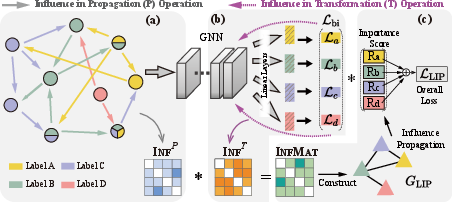
Figure 2: The framework depicts how pairwise label influences are quantified during propagation and transformation, integrated into a label graph, and then propagated to compute importance scores guiding loss reweighting.
Experimental Results and Numerical Findings
Extensive experiments across diverse datasets (DBLP, BlogCat, OGB-proteins, PCG, HumLoc, EukLoc) demonstrate that the proposed Label Influence Propagation (LIP) consistently outperforms state-of-the-art baselines, including methods that use label embeddings or explicit co-occurrence graphs.
Notably, LIP achieves average AUC improvements of 3.06% under node splits and 3.42% under label splits, as well as improvements in macro-F1 and AP across biological, social, and web datasets. The performance gains are robust to backbone architecture (e.g., GCN, GAT, APPNP, GIN, GPRGNN), confirming that the framework is both effective and modular.
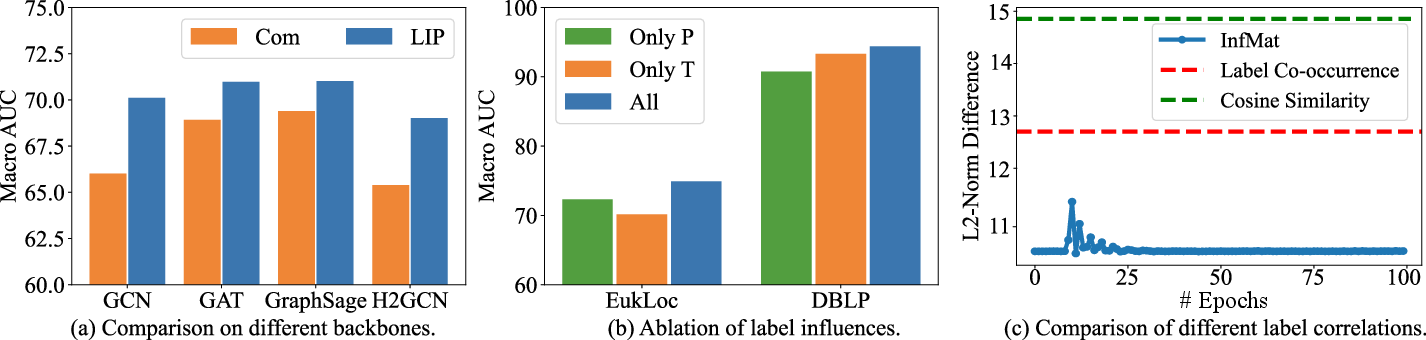
Figure 3: Model analysis confirms that LIP provides consistent performance gains across a variety of GNN backbones and datasets.
Ablation studies confirm the necessity of both propagation and transformation influences; removal of either component degrades performance. Comparative analysis with simple co-occurrence or label embedding similarity measures demonstrates that LIP's influence matrix aligns more closely with empirical influence ground truths (as measured by retraining/fine-tuning experiments), validating its utility and fidelity.
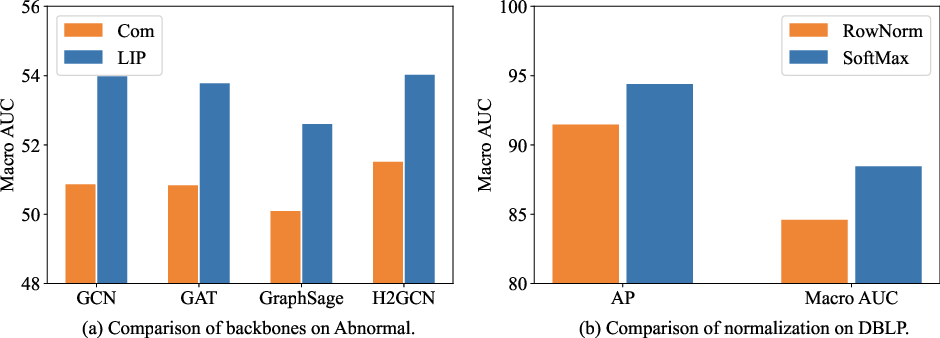
Figure 4: Additional analysis demonstrates robustness across datasets and ablation confirming the importance of each influence quantification component.
Sensitivity analysis shows stable performance as hyperparameters α (for PPR) and β (for PageRank) are varied, indicating low propensity for pathological behavior due to parameter misconfiguration.

Figure 5: Hyper-parameter variation tests (α, β) on DBLP and PCG indicate stable and robust performance with LIP.
Implications and Future Directions
Both empirically and theoretically, the paper demonstrates that fine-grained quantification and exploitation of positive and negative label influences is critical for high-fidelity MLNC. The plug-and-play design of LIP enables it to enhance any GNN backbone, promoting wide adoption.
On the practical side, this influence-based adaptive loss reweighting is of particular interest for real-world applications in biological network analysis and e-commerce, where multi-label dependencies are strong and costly to annotate. It also paves the way for integrating noise robustness, inductive generalization, and dynamic/temporal extensions.
Theoretically, the framework invites further work into the interplay between graph structure, label set geometry, and gradient dynamics. Extensions could model influence propagation in label-heterophilic graphs, or integrate label noise estimation into the influence calculation.
Conclusion
This work establishes a rigorous foundation for leveraging label influence mechanisms in multi-label node classification. By structurally and parametrically quantifying label interactions and propagating their high-order effects, the proposed LIP framework consistently improves classification performance across domains and backbones. The modularity and empirical effectiveness of LIP mark it as a valuable direction for both practical applications and future research in structured output learning on graphs.