- The paper demonstrates a theoretical model for coherent, high-frequency energy oscillations between electron shells and the nucleus in 229Th ions.
- It uses a Lindblad master equation to capture both coherent and incoherent processes, revealing robust oscillations even under detuning conditions.
- The findings lay a foundation for developing nuclear quantum batteries with efficient, laser-driven charging protocols.
Coherent Energy Oscillation Between Electron Shells and Nucleus in 229Th Ions: Toward a Nuclear Quantum Battery
Introduction
This work presents a theoretical investigation of coherent and multiple energy exchange processes between the electron shell and nucleus of 229Th ions, enabled by close matching of magnetic dipole (M1) transitions in electronic and nuclear subsystems. Such a configuration forms a dual-qubit (two-level system) architecture, in which the electronic qubit is spatially embedded with the nuclear qubit. The paper establishes the conditions for and properties of long-lived, high-frequency energy oscillations between these qubits, in regimes where the electron–nucleus coupling is strong relative to radiative decay rates. These insights are positioned as a foundation for a "nuclear quantum battery"—a device that stores and releases energy using the metastable isomeric state of 229Th, charged by coherent excitation protocols.
The system comprises two coupled qubits: an atomic electronic M1 transition (energy ωA), and a nuclear transition between the 229Th ground and isomeric states (energy ωN≈8.4 eV). Notably, these transitions can possess closely matched energies in certain thorium ions, including Th+, Th2+, Th6+, and Th39+, supported by recent atomic structure calculations.
The electron–nucleus system is modeled via a Lindblad master equation accommodating both coherent and incoherent processes:
- The coherent dynamics are governed by a Hamiltonian containing onsite terms (2290) and inter-qubit couplings (2291), where 2292 encodes the real part of the energy exchange arising from virtual photon-mediated magnetic dipole–dipole coupling.
- Incoherent (dissipative) dynamics are governed by 2293 (electronic/nuclear radiative widths) and small inter-qubit decay cross-couplings 2294.
The quantum electrodynamical derivation demonstrates that, unlike paradigmatic NEET (Nuclear Excitation by Electron Transition) processes, the electron–nucleus interaction energy in 2295Th ions can substantially exceed the natural linewidths—thus enabling multiple energy oscillations, rather than just single-shot transitions.
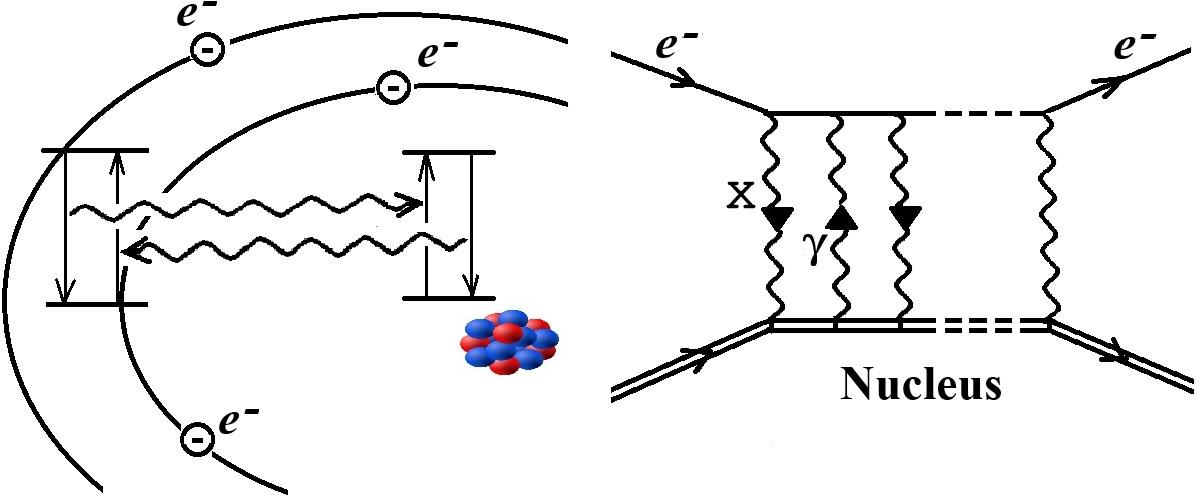
Figure 1: Scheme of energy exchange between the electron shell and the nucleus from a quantum-electrodynamical point of view.
Regimes of Energy Exchange and Dynamical Features
NEET Regime (Single-Shot Transfer)
For weakly coupled electronic and nuclear qubits (2296), energy exchange occurs via the NEET process, characterized by a small probability of nuclear excitation, strongly suppressed when the transition energies are detuned. The process is essentially dissipative and non-reversible.
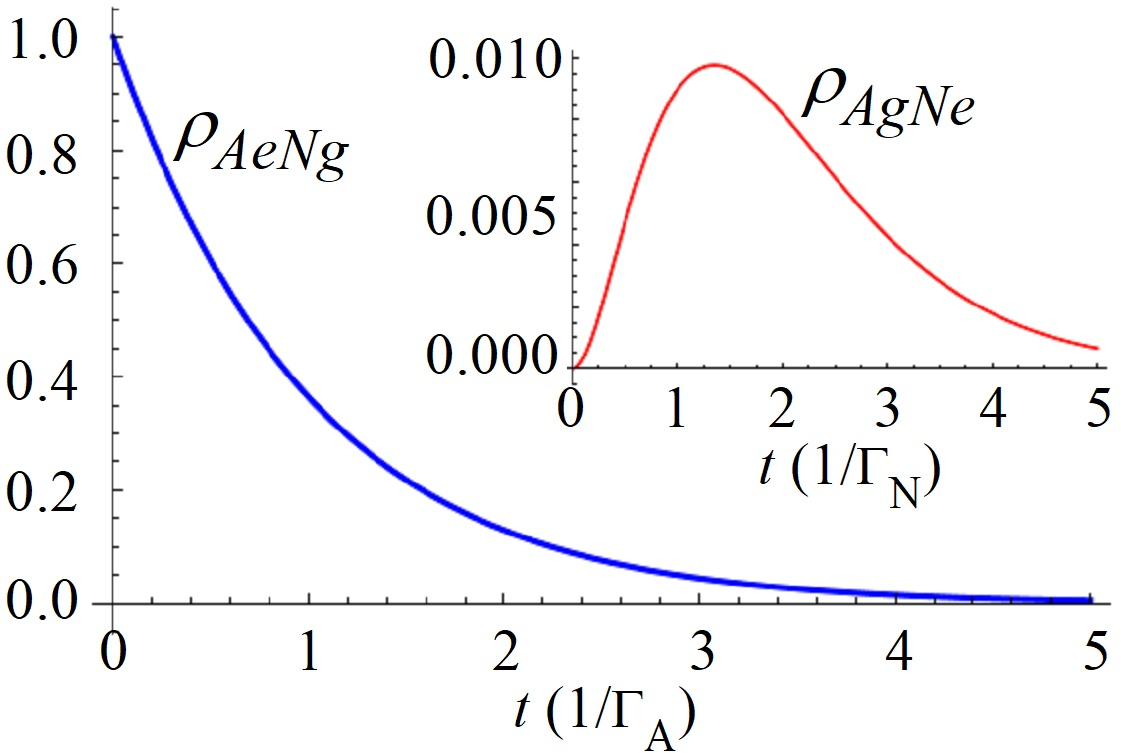
Figure 2: One-time NEET process for 2297 and 2298.
Coherence-Enhanced Regime in 2299Th
In the 2290Th system where 2291, the dynamic reveals a strongly coherent character. At resonance (2292), the population undergoes multiple, long-lived Rabi-like oscillations between the electronic and nuclear excited states with oscillation frequencies 2293–2294 Hz. Critically, the maximum nuclear excitation probability approaches unity and is only weakly diminished by off-resonant detuning so long as 2295.
Population oscillations persist for timescales up to 2296–2297 s (limited by electronic radiative decay), and the nuclear subsystem witnesses accelerated decay via the electron shell's influence.
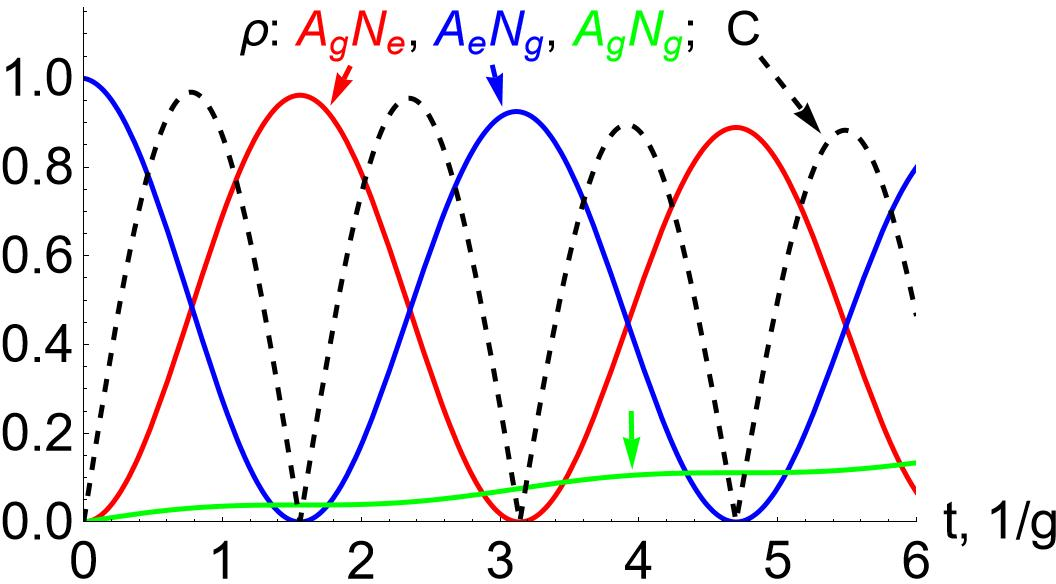
Figure 3: The probability to find the system in the states 2298 (blue), 2299 (red), and ωA0 (green), with corresponding concurrence ωA1 for ωA2 under the initial condition ωA3.
Concurrently, the coupled system undergoes spontaneous formation of entanglement, as quantified by the concurrence. This periodic entanglement peaking aligns with maximal electron–nucleus excitation transfer.
Effect of Shell "Breathing" and Experimental Detection
As the excitation swaps between electronic states of notably different radii (e.g., 7s and 8s shells), the electronic cloud effectively "breathes," i.e., it expands and contracts at the oscillation frequency. This modulates the ion's light scattering properties, which are experimentally accessible via trapped ion fluorescence in Paul traps.
Nuclear Quantum Battery: Laser-Driven Coherent Charging
By applying coherent laser drives resonant with the electronic transition, it becomes feasible to "charge" the nuclear system, i.e., coherently excite the isomer. This embodies the concept of a nuclear quantum battery, in which:
- The electron shell acts as energy donor and the isomeric nucleus as acceptor.
- Synchronous population oscillations occur between bare (ωA4) and doubly excited (ωA5) states with an effective frequency ωA6, where ωA7 is the electronic Rabi frequency. The maximal population transfer can reach almost unity on resonance.
This charging protocol is robust to modest detuning, removing the strict necessity for exact resonance between atomic and nuclear transitions due to the large ωA8 ratio. However, shifting the laser off-resonance (ωA9) reduces the maximum achievable nuclear excitation.
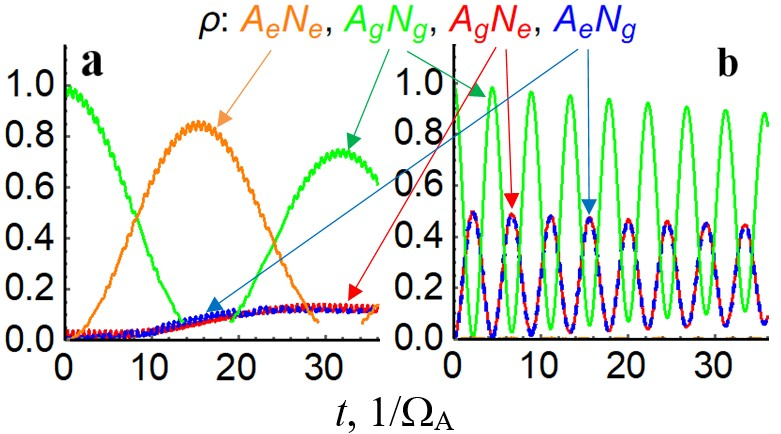
Figure 4: a) Oscillation of state populations for 2290, 2291, and 2292; b) State populations under detuned laser frequencies 2293.
Numerical Estimates and Strong Claims
For highly charged Th2294, 2295 eV and 2296 eV, implying 2297. This strong separation of timescales enables:
- Oscillation frequencies up to 2298 Hz.
- Charging times (half-oscillation period) below microseconds at modest laser power (2299 W) and focusing.
It is asserted that multiple, long-lived coherent energy oscillations with near-unity nuclear excitation probability can be realized even in the presence of substantial detuning, a departure from conventional NEET limitations.
Implications and Prospective Directions
Practical implications include the construction of nuclear quantum batteries leveraging the unique low-lying isomer in ωN≈8.40Th and laser-based coherent charging. The regime of operation does not require fine-tuned resonance conditions, significantly relaxing experimental constraints and suggesting robust implementability. The possibility of monitoring coherent oscillations through changes in scattered light intensity introduces a non-invasive diagnostic tool.
Theoretically, the work exposes avenues for deeper exploration of strongly coupled multiqubit atomic-nuclear systems, entanglement generation, and the manipulation of hybrid quantum states for quantum information processing. The concept could generalize to other nuclear–atomic systems with suitable transition alignment.
Future directions may involve:
- Realization in laboratory conditions, with direct measurement of oscillatory electron shell dynamics and nuclear charging.
- Integration into frequency standards or quantum memory architectures.
- Investigations into other ions or engineered systems with enhanced electron–nucleus coupling.
Conclusion
This study delivers a comprehensive theoretical treatment of coherent, high-efficiency energy exchange between the electron shell and nucleus in ωN≈8.41Th ions, premised on strong dipole–dipole coupling and near-degenerate transitions. Unlike classical NEET regimes, these systems possess the capacity for multiple, reversible energy oscillations and efficient nuclear state population even under significant detuning. Such phenomena underpin the design and charging protocols for nuclear quantum batteries and open new perspectives for atomic–nuclear quantum technologies.
(2607.00607)