- The paper demonstrates a modular subsurface robot design integrating peristaltic gait and TBM excavation, underpinned by Euler-Lagrange dynamic decoupling.
- It employs a comprehensive methodology combining analytical modeling, MATLAB/Simulink simulations, and a sim-to-real pipeline via Unity/ROS for controller verification.
- Results indicate effective control with an average 10 mm cycle advancement, showcasing robustness against variable soil mechanics and anchoring challenges.
Dynamic Modeling, Gait Synthesis, and Control of a Novel Subsurface Bore Propagator
Introduction and Background
Subterranean exploration presents significant challenges due to the absence of hollow spaces, high variability in soil mechanics, constrained environments, and severe sensing limitations. Addressing these, the paper introduces a modular subsurface robotic system designed for autonomous excavation and navigation through compact soils, merging bio-inspired earthworm-like peristaltic locomotion and tunnel-boring machine (TBM) excavation paradigms (2607.00569). The system is systematically decomposed into modules—anchoring modules (AMs), propulsion modules (PMs), and an excavation head module (EHM)—with design choices informed by state-of-the-art developments in worm-inspired and TBM-based robotics.
The novelty is twofold: both the detailed dynamical decoupling via the Euler-Lagrange formalism to facilitate modular controller synthesis, and the explicit sim-to-real development pipeline that tightly integrates model-based simulation, controller tuning, and high-fidelity physics-based environments for verification.
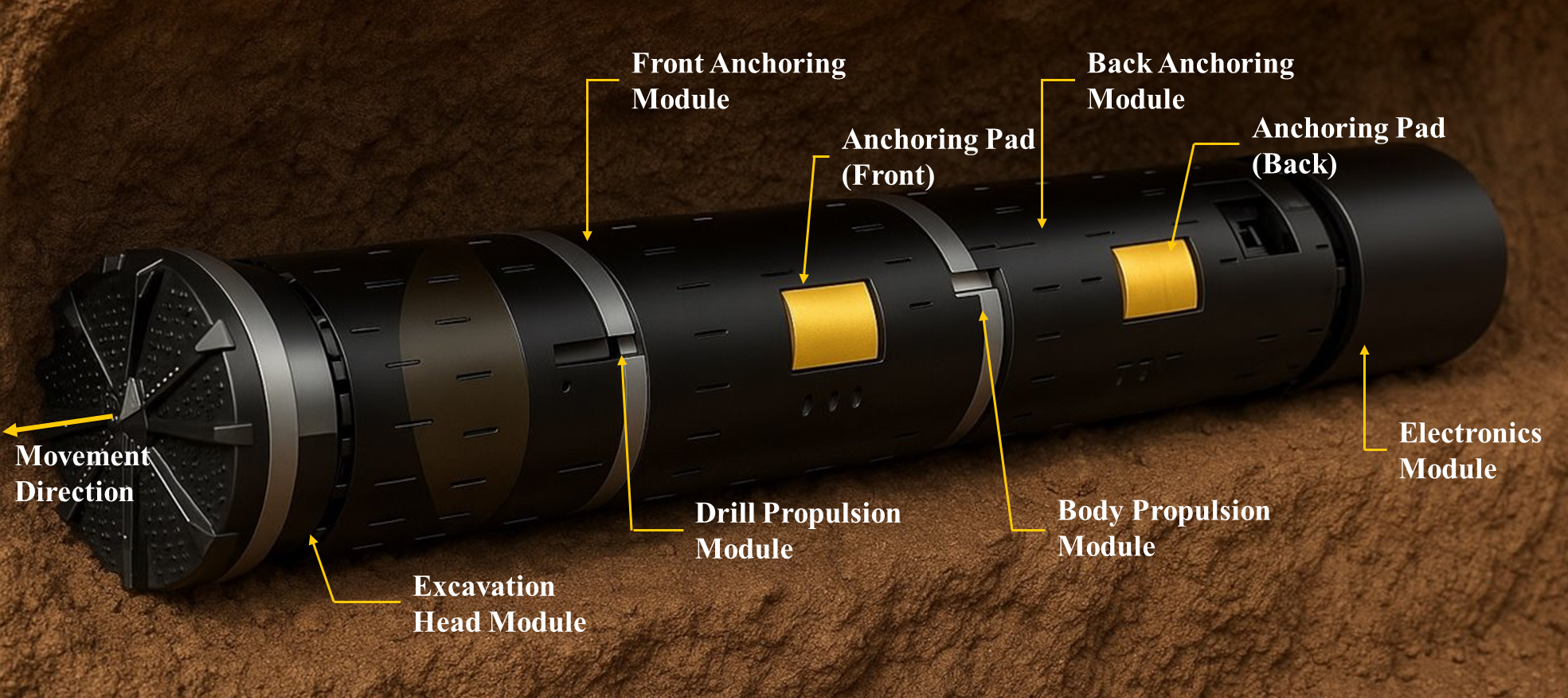
Figure 1: A CAD rendering showcasing the bore propagator robot embedded in a subsurface soil environment.
Modular Architecture and System Modeling
The robot architecture consists of five modules—EHM for excavation, two AMs for anchoring, and two PMs for propulsion—physically and kinematically decoupled, yet coordinated via a centralized state machine. The AMs utilize lead-screw actuated prismatic joints for radial pad extension to provide anchoring force. The PMs deploy parallel lead-screw assemblies for linear actuation, providing translational drive. The EHM contains a revolute joint actuated drilling head with an auger mechanism for soil conveyance.
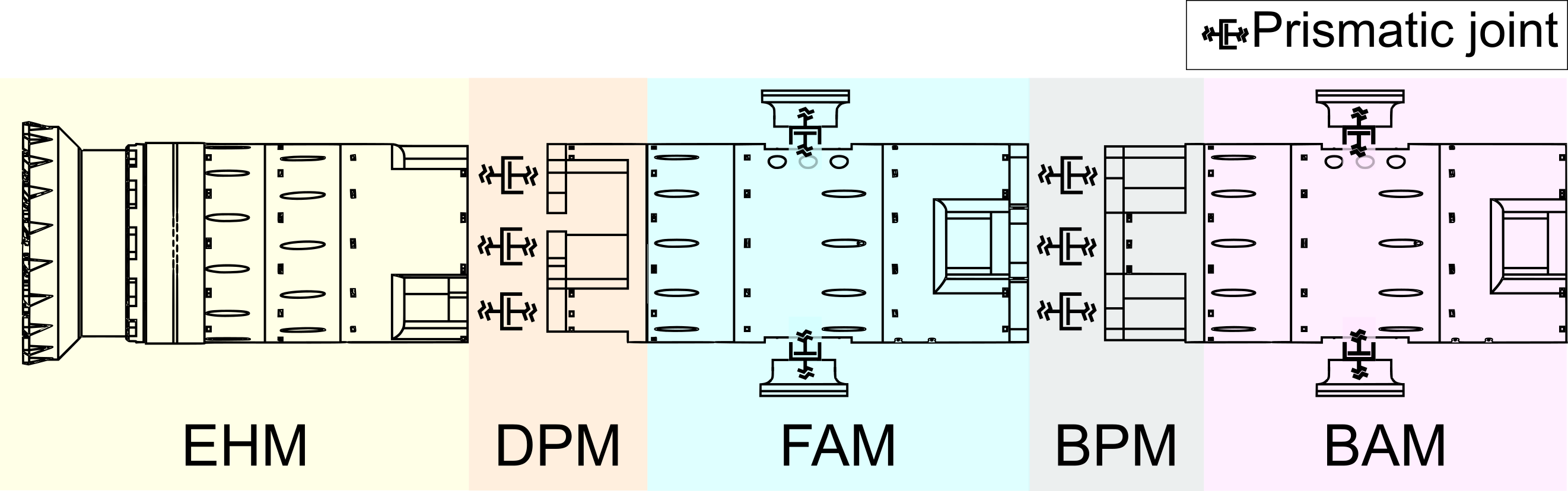
Figure 2: The physical arrangement of the robot with explicit articulation and connecting joints among modules.
Each module's dynamic equations are derived independently under the Euler-Lagrange approach, accounting for generalized coordinates, velocity, inertia coupling, frictional and contact forces, and environmental disturbances. A key design decision is the abstraction of connections via co-located coordinate systems (CoSys) and transfer wrenches at module interfaces, enabling a recursive and extendable multi-body formulation.
AM dynamics include a detailed cylindrical contact model capturing pad/soil interactions using Young's modulus composite hardness and Coulomb friction. The PM model represents linear actuation of the robot body, suitable for incorporating various soil resistance loads. The EHM model incorporates both feed forces and torque constraints derived from empirical drilling formulas; this is critical for realistic simulation of excavation force propagation.
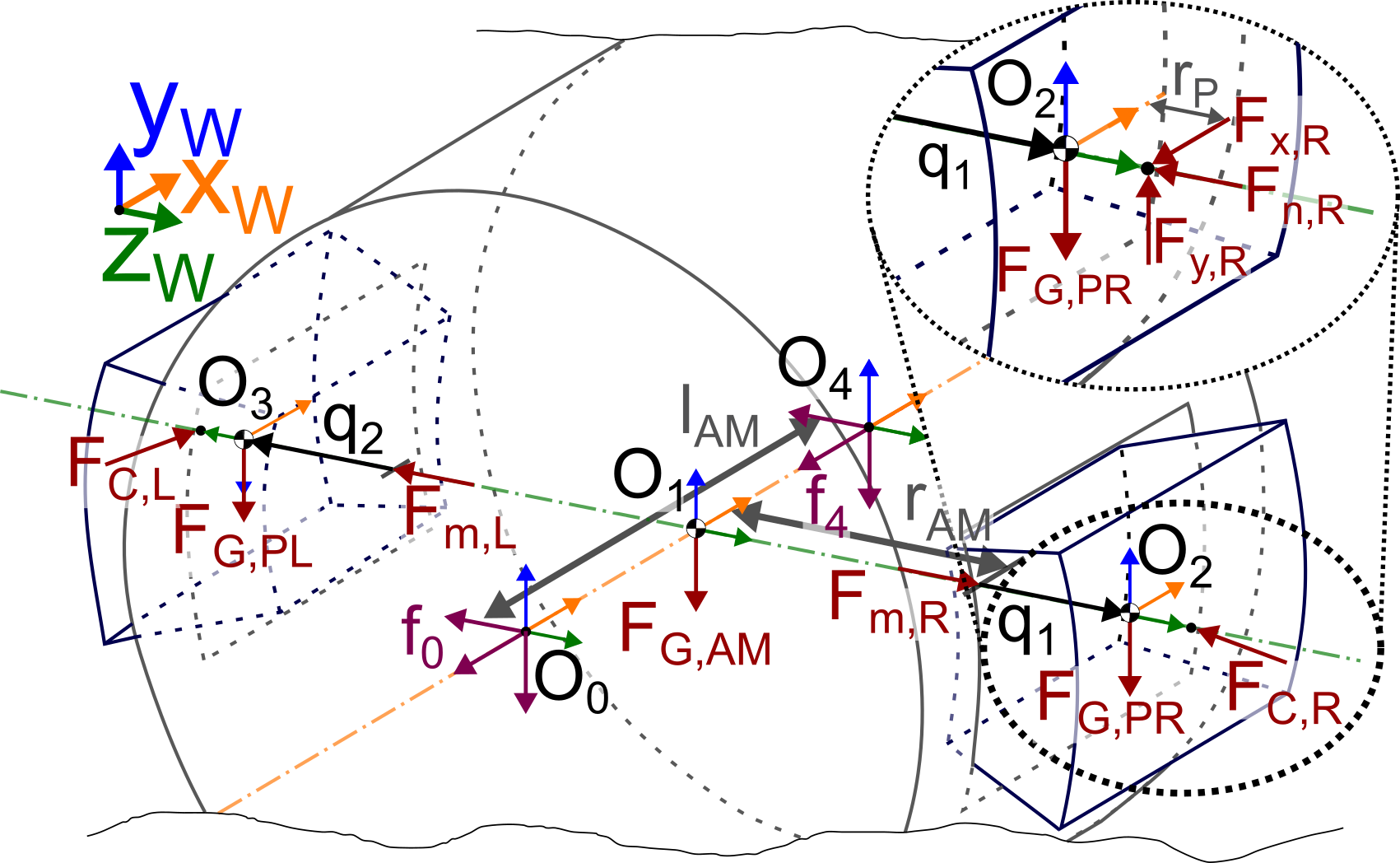
Figure 3: Schematic detailing coordinate systems and force transmission for the anchoring module, including contact and friction forces.
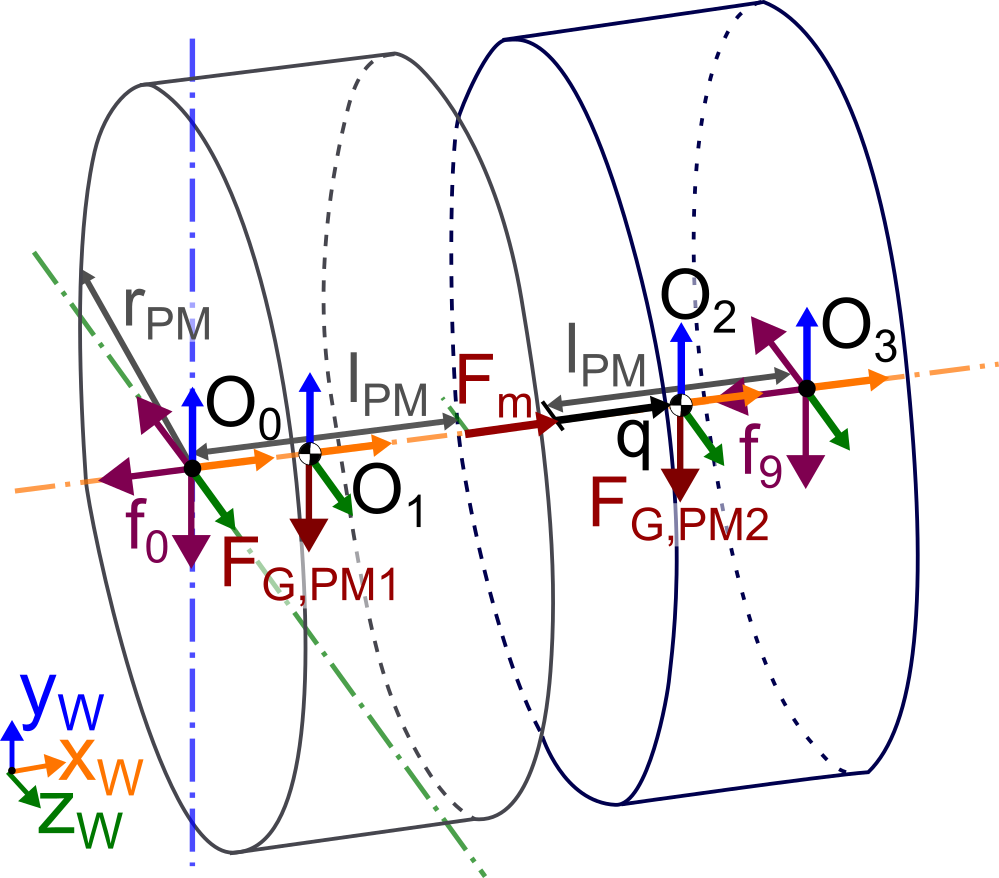
Figure 4: Force and coordinate layout for the propulsion module, emphasizing dynamic interactions with neighboring segments.
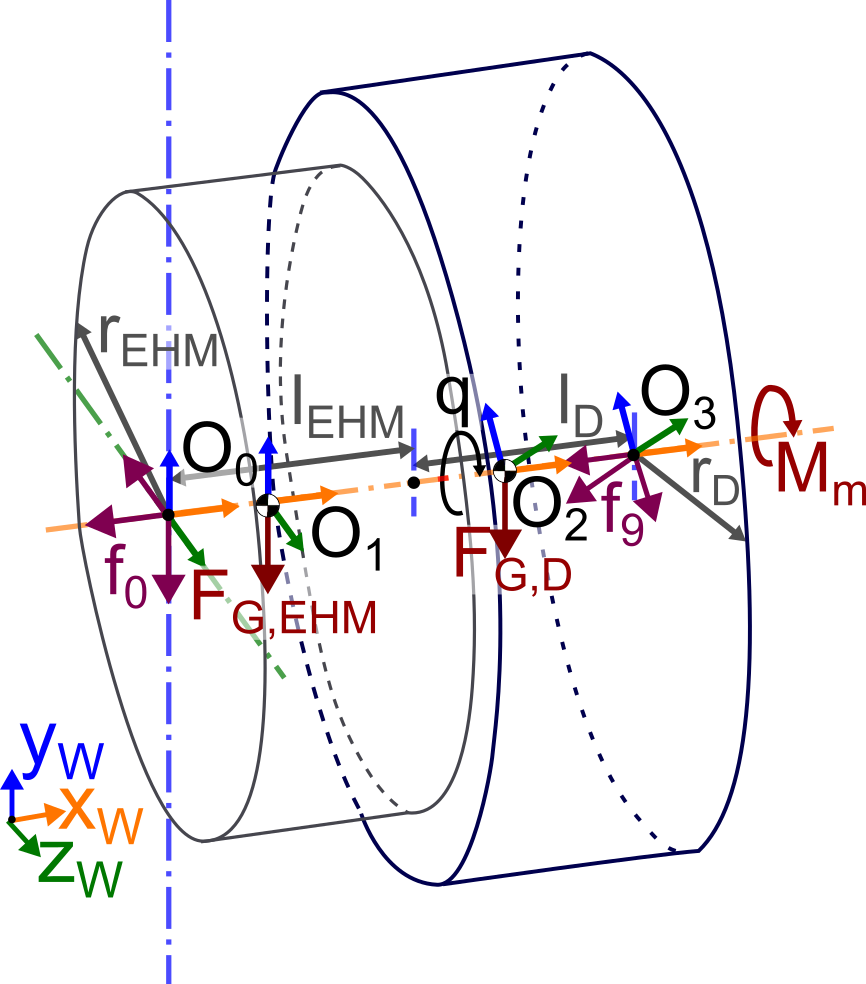
Figure 5: EHM-specific coordinate system and force decomposition for modeling drilling dynamics and interface with soil via torque and feed force.
Gait Synthesis: Centralized State Machine and Peristaltic Sequencing
Locomotion is achieved through a peristaltic gait coordinated by a high-level state machine. A typical cycle consists of sequential anchoring, drilling, elongation, disengagement, contraction, and re-anchoring actions, with discrete control signals routed to each module to ensure force closure with the environment and minimize slippage. The modular controller design utilizes PID control with direct feedback from anchoring pad forces, module elongation, and drill velocity, all parameterized within physically-meaningful bounds.
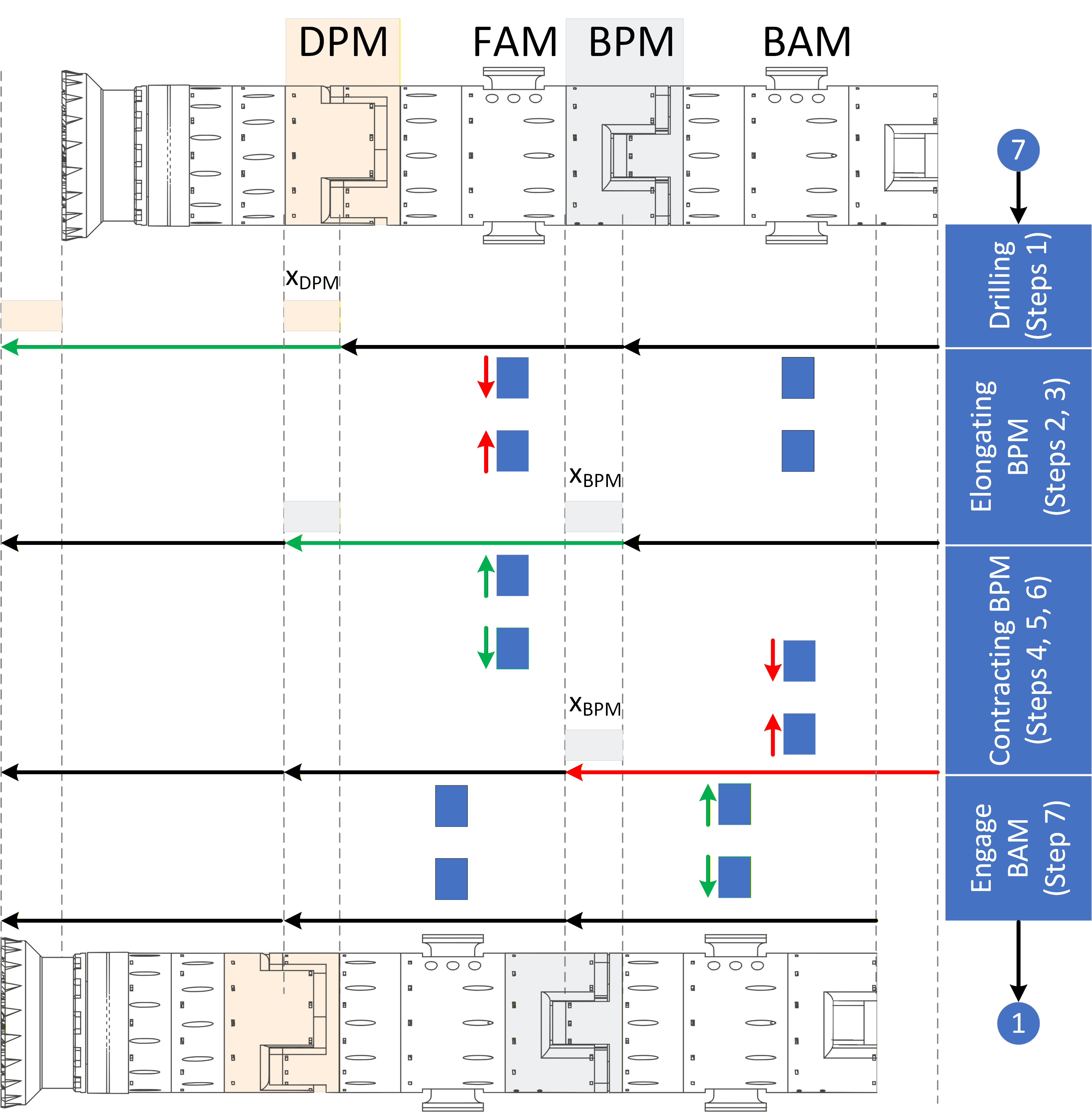
Figure 6: Snapshot of the peristaltic gait cycle demonstrating x-axis elongation phases and state transition logic.
This architecture decouples high-level gait policy from low-level force/position control, enabling rapid adaptation to configuration changes and environmental disturbances.
Numerical and Simulation Results
The module-level dynamic models are validated via MATLAB/Simulink simulations under various perturbations and contact models, demonstrating effective regulation of anchoring normal force (~250 N), controlled module displacement, and robustness to noise/disturbance injected at the actuator level.
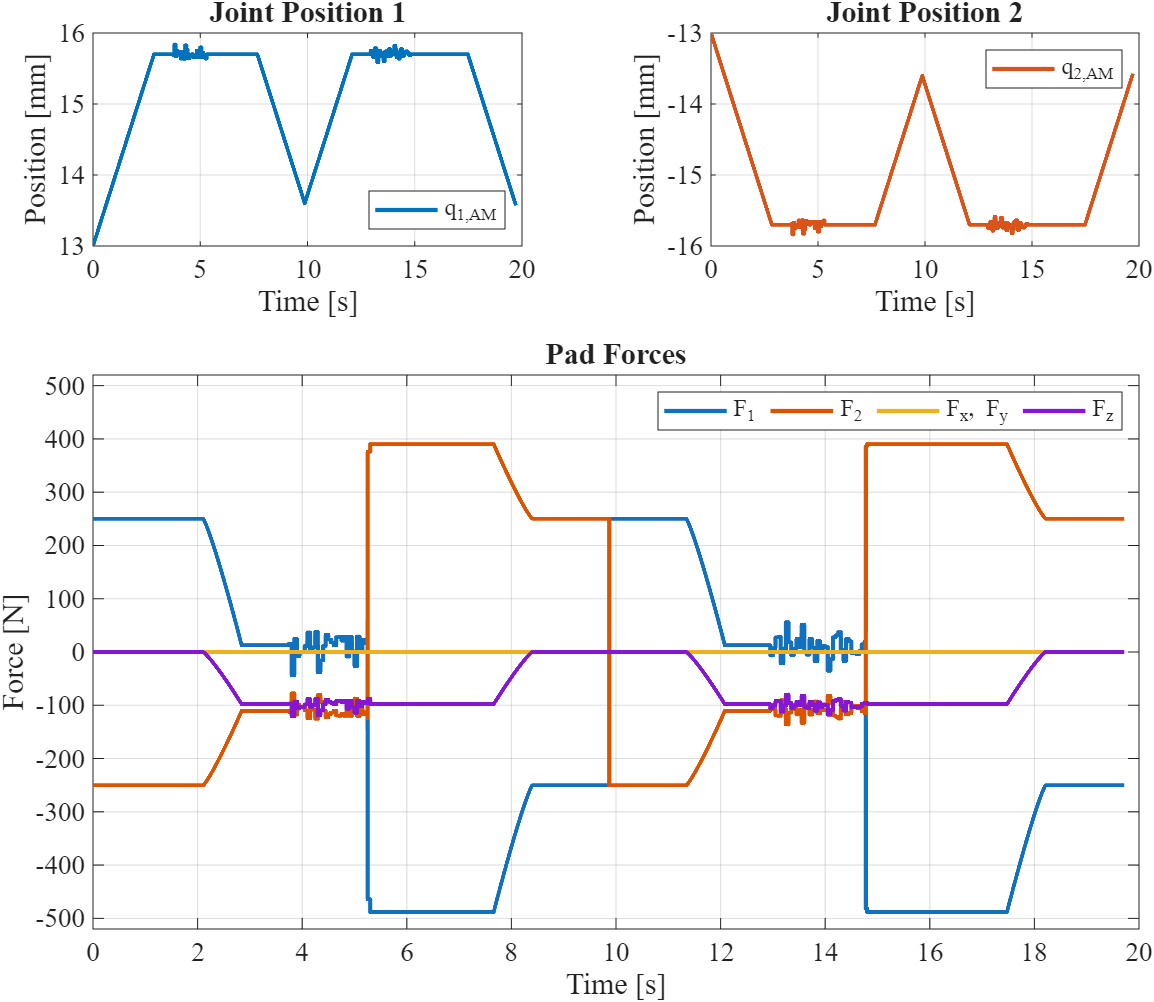
Figure 7: Time-series demonstrating prismatic joint positions and resultant forces—including normal and actuated components—in the AM during simulated anchoring cycles.
Simulation of the PM verifies stable displacement tracking under white-noise disturbance, indicating good disturbance rejection and actuation authority (Figure 8).
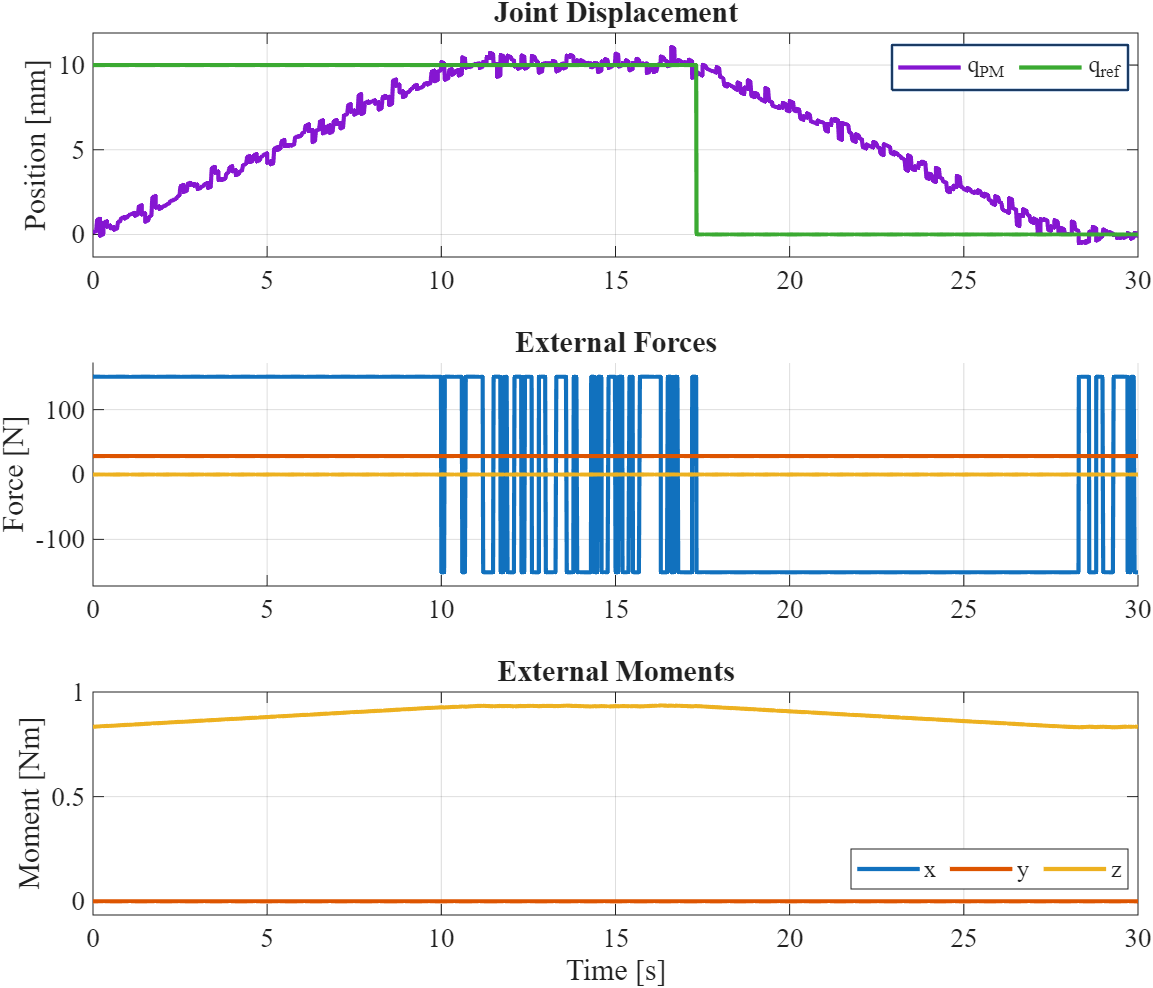
Figure 8: Dynamic simulation of the PM with actuator force equilibrium and effective position regulation under disturbance.
The EHM model captures transient and steady-state drilling torque and feed force behavior when actuated via a first-order filtered PID controller (Figure 9).
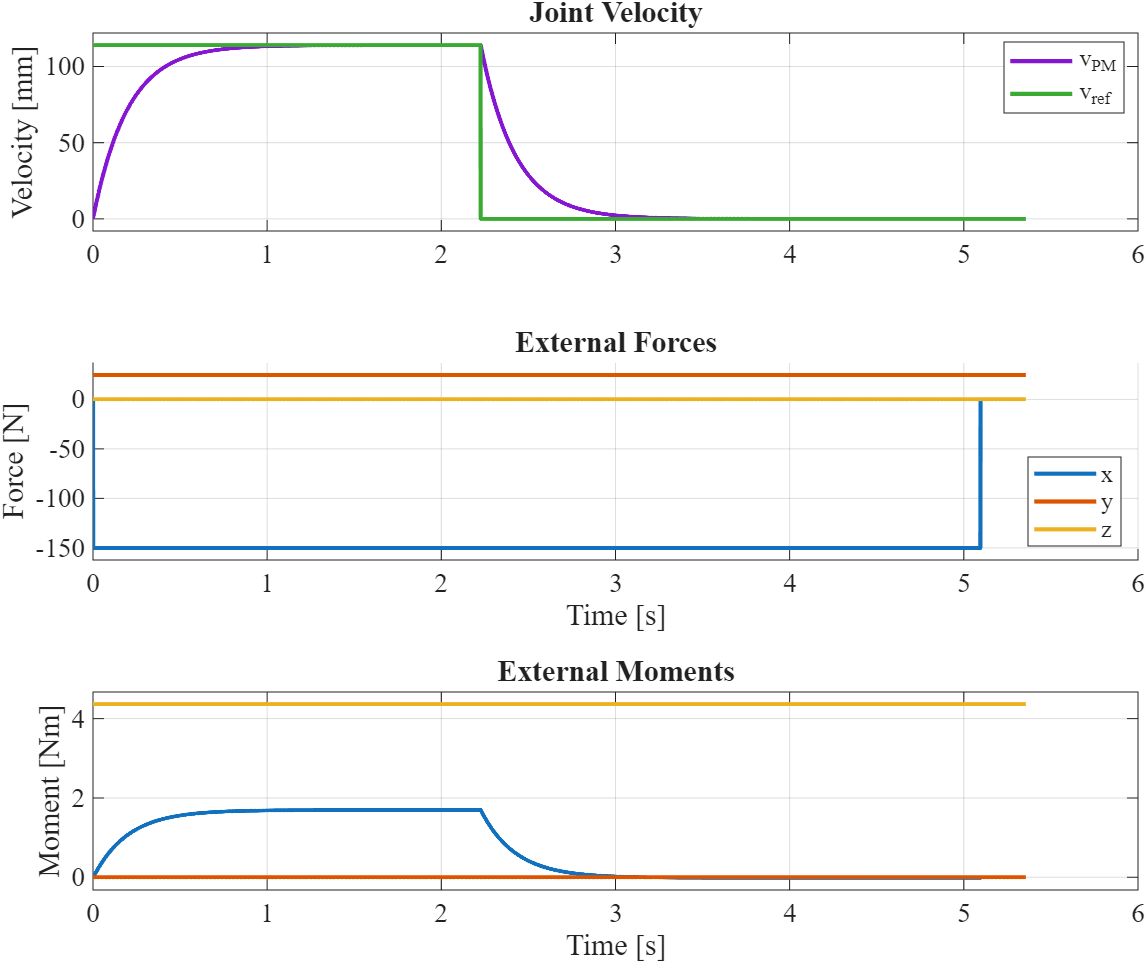
Figure 9: Simulation of the EHM model with drill torque regulation and smooth escalation of loading under step commands.
These models are then transitioned to a physics-based Unity simulation via ROS integration, using the full robot CAD geometry to test closed-loop behavior under more realistic, non-linear soil interaction dynamics.
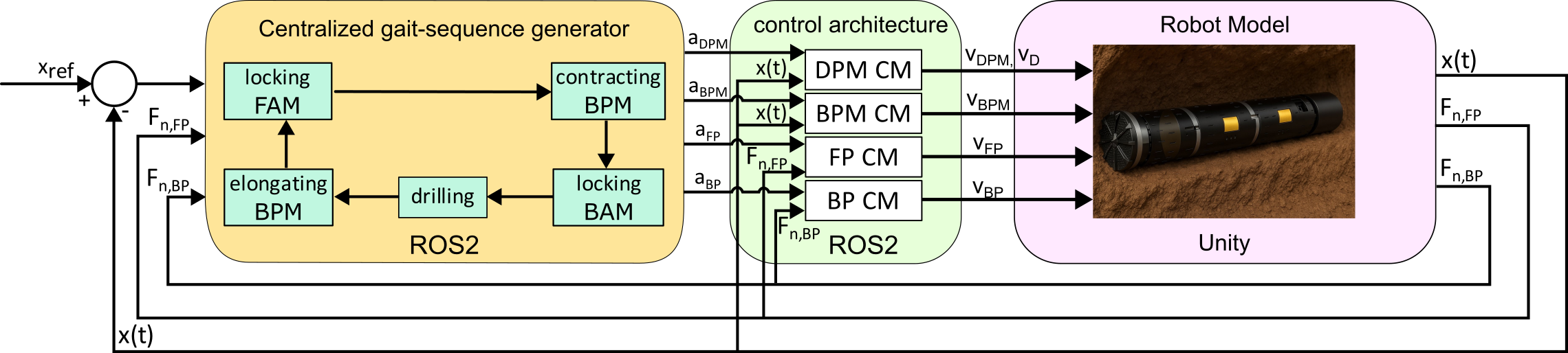
Figure 10: System-level block diagram outlining Unity simulation architecture, integrating ROS middleware, the modular controller, and state-machine-based gait synthesis.
In 300 s of simulation time (three complete gaits), the robot achieved a net advancement of 30 mm, with slip predominantly observed during specific contraction phases—suggesting plastic failure in anchoring or insufficient normal force when loads from module lever arms increase.
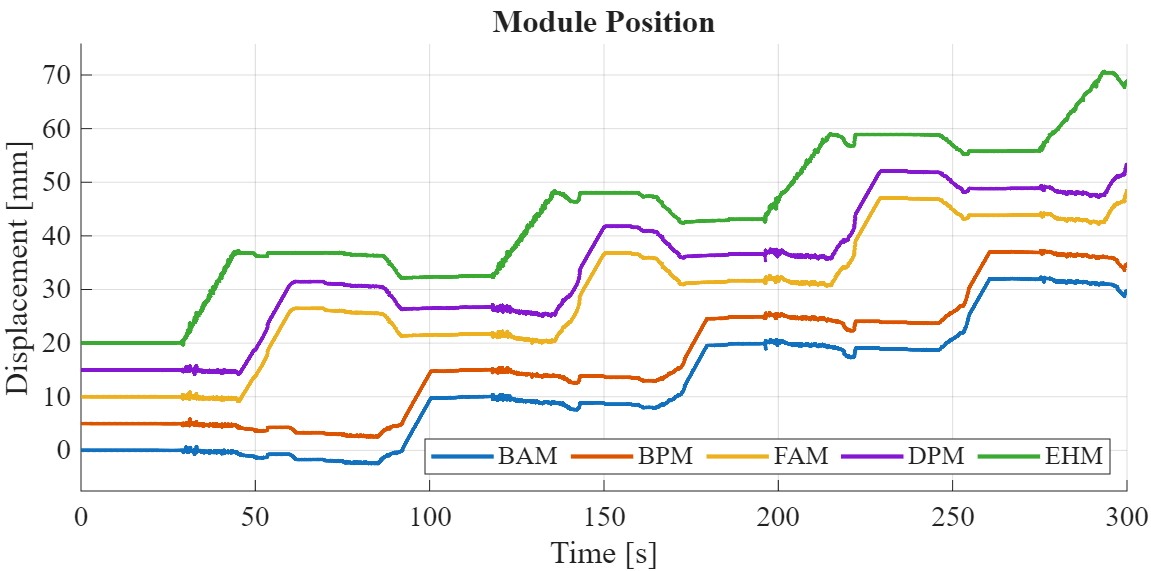
Figure 11: Unity-simulated module positions over time, showing clear periodic advancement and quantized forward motion of the bore propagator.
Pad state signals confirm proper alternation between pad contact engagement/disengagement to avoid robot body/tunnel contact, with controller-modulated force oscillations accommodating variable soil disturbance.
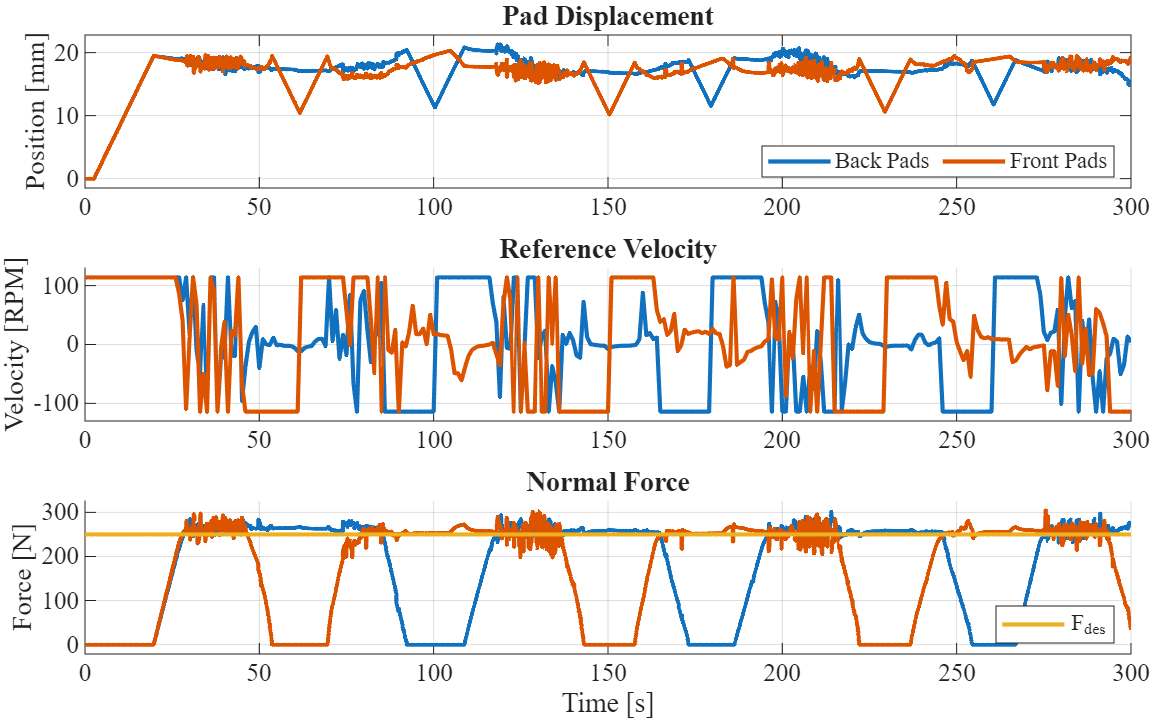
Figure 12: Pad displacement, control reference velocity, and normal force trajectories for AMs during Unity-based simulation, illustrating continuous anchoring logic.
The PMs exhibit trajectory perturbations corresponding to high-load phases, and the velocity profile confirms controller authority despite external torque/force perturbations (Figure 13).
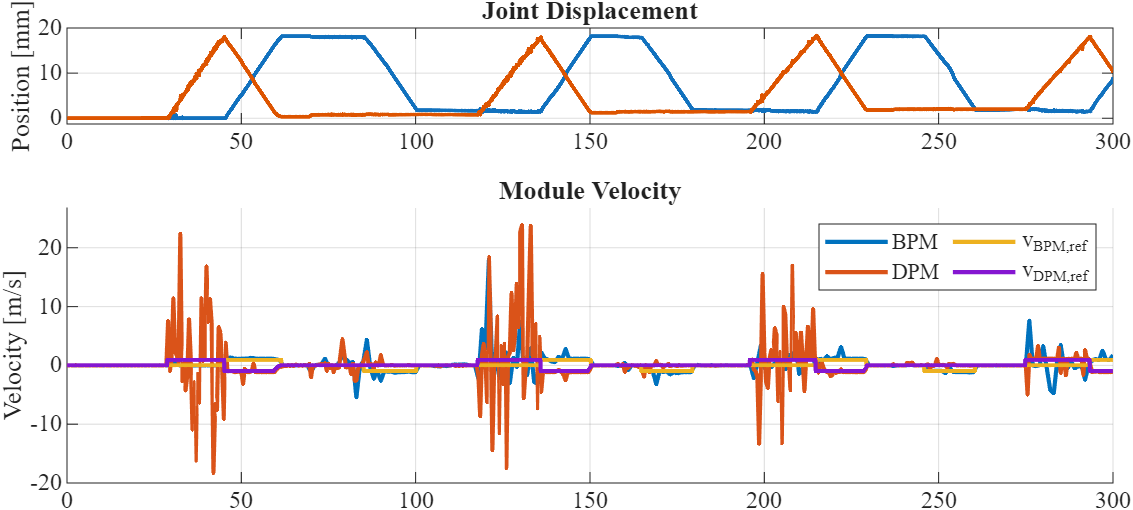
Figure 13: PMs’ joint displacement and velocity time histories, revealing dynamic adaptation during peristaltic contraction/elongation.
Discussion, Implications, and Future Directions
Strong empirical result: The simulation demonstrates a net advancement of 30 mm over three cycles, indicating a mean cycle advancement of 10 mm—well within the predicted theoretical range, though subject to measurable slip in challenging configurations. The use of module-level modeling validated in both analytic and high-fidelity virtual environments confirms the design's core assumption: dynamic decoupling simplifies control synthesis without sacrificing adaptivity to variable environmental loads.
The paper's modular approach, where each physical subsystem (AM, PM, EHM) is captured by independent Euler-Lagrange equations and associated controls, suggests a pathway toward rapid reconfiguration and up-scaling to more complex, 3D-capable robots. The sim-to-real pipeline, leveraging Unity/ROS, lays vital groundwork for future incorporation of adaptive or learning-based controllers (e.g., CPG-based, reinforcement learning, or trajectory optimization as seen in [fang_dynamic_2025], [salagame_reduced-order_2025]) and for on-the-fly adaptation to heterogeneous soil mechanical properties.
From a practical perspective, this framework allows for detailed investigation into soil-robot interaction—especially anchoring failure modes, force/torque transmissibility, and critical slip scenarios—directly informing the design of next-generation subsurface exploration robots for infrastructure, geotechnical, and planetary science applications.
Conclusion
This work presents a comprehensive, analytically grounded framework for the design, dynamic modeling, simulation, and control of modular subterranean robots with integrated excavation and peristaltic locomotion. The meticulous decoupling of both physical and control architectures, validated across simulation environments, supports the feasibility of flexible and robust burrowing robots for confined environments. Future research should focus on scaling to 3D trajectories, integrating adaptive and model-based controllers, and transitioning robust sim-to-real transfer to hardware-in-the-loop experimentation. The methodology established herein provides a rigorous basis for such advances in biomimetic underground robotics.

