- The paper demonstrates that a main-sequence companion creates a persistent flat asymmetry in the SNR shell through ejecta-companion interaction.
- High-resolution simulations using SPH (GADGET) and grid-based (RAMSES) methods reveal that Rayleigh-Taylor instabilities gradually erode features while key imprints remain observable for centuries.
- Comparisons with observed SNRs indicate that structured CSM interactions can mimic or dominate the companion-induced signatures, complicating progenitor channel discrimination.
Three-Dimensional Simulations of Type Ia Supernova Remnants: Effects of a Main-Sequence Companion
Introduction and Scientific Motivation
Type Ia supernovae (SNe Ia) remain central to cosmology as standard candles, but ambiguity regarding their progenitor channels—particularly the distinction between single-degenerate (SD, WD + non-degenerate companion) and double-degenerate (DD, WD + WD)—continues to hinder astrophysical inference. The presence or absence of an intact non-degenerate companion, with its consequent asymmetrical interaction with the SN ejecta prior to the onset of the supernova remnant (SNR) phase, is a critical diagnostic for breaking this degeneracy. Moreover, the mass-loss history shaping the circumstellar medium (CSM) leads to additional diversity in SNR evolution and observable properties.
The present work conducts high-resolution three-dimensional hydrodynamic simulations using GADGET (for SPH-based binary interaction and impact) and RAMSES (for post-impact grid-based SNR evolution) to systematically investigate the morphological and kinematic imprint of a Roche-lobe filling main-sequence companion on the SN ejecta and subsequent SNR evolution. Emphasis is placed on the longevity and observability of these imprints, and their comparison with detailed multi-epoch kinematic data for young, spatially-resolved Galactic and LMC SNRs.
Simulation Methodology
Pre-SN Ejecta–Companion Interaction
The simulations begin with a binary consisting of a Chandrasekhar-mass white dwarf and a 1.21 M⊙ main-sequence companion, configured at Roche-lobe separation. The 1D W7 SN explosion profile is mapped into GADGET and allowed to interact with the companion over ∼5000 s. Ejecta-companion interaction strips ∼0.173 M⊙ of envelope, imparting a negligible kick to the companion (velocity ≪ ejecta velocity). A persistent cone-shaped cavity is carved in the ejecta, which acts as the origin geometry for the remnant phase.
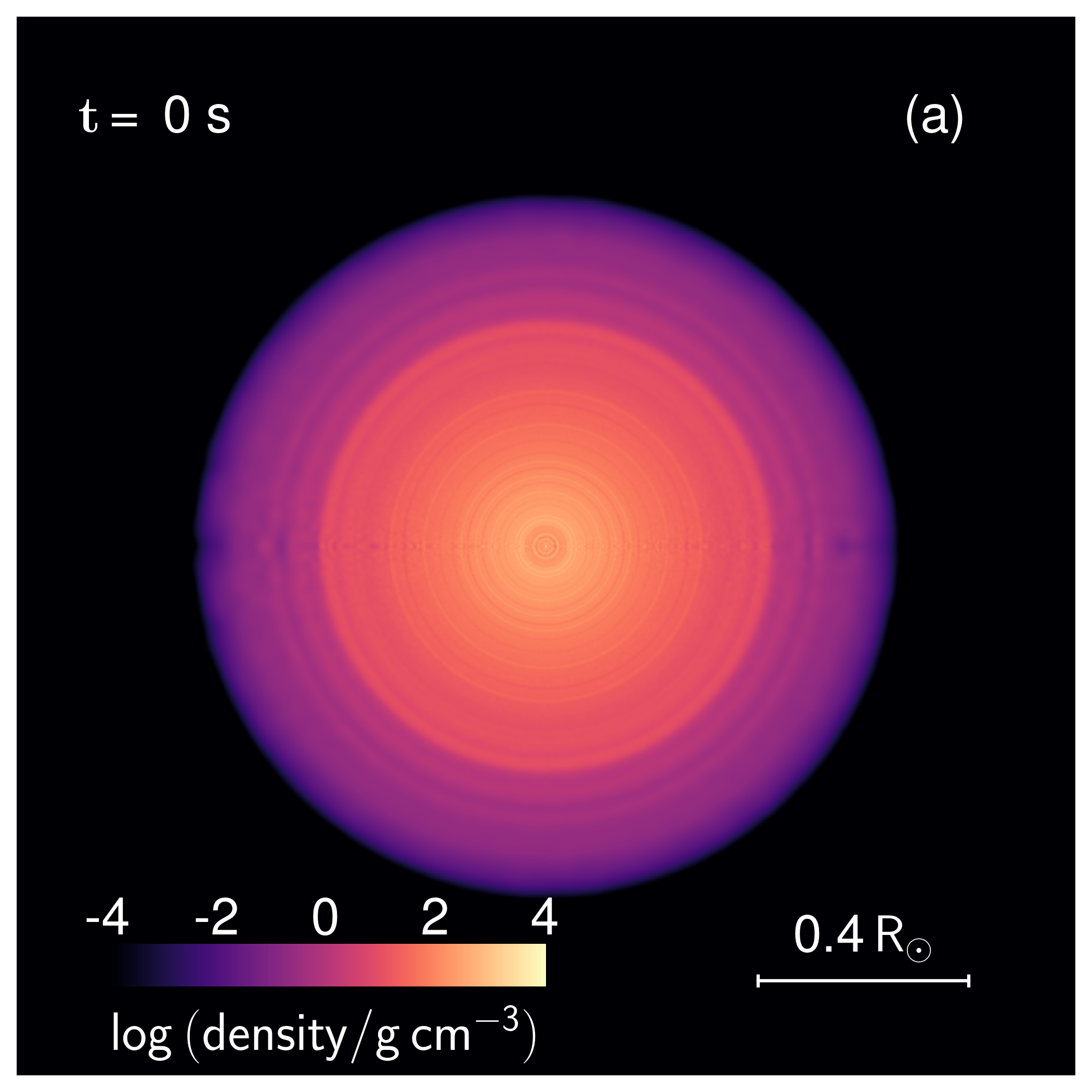
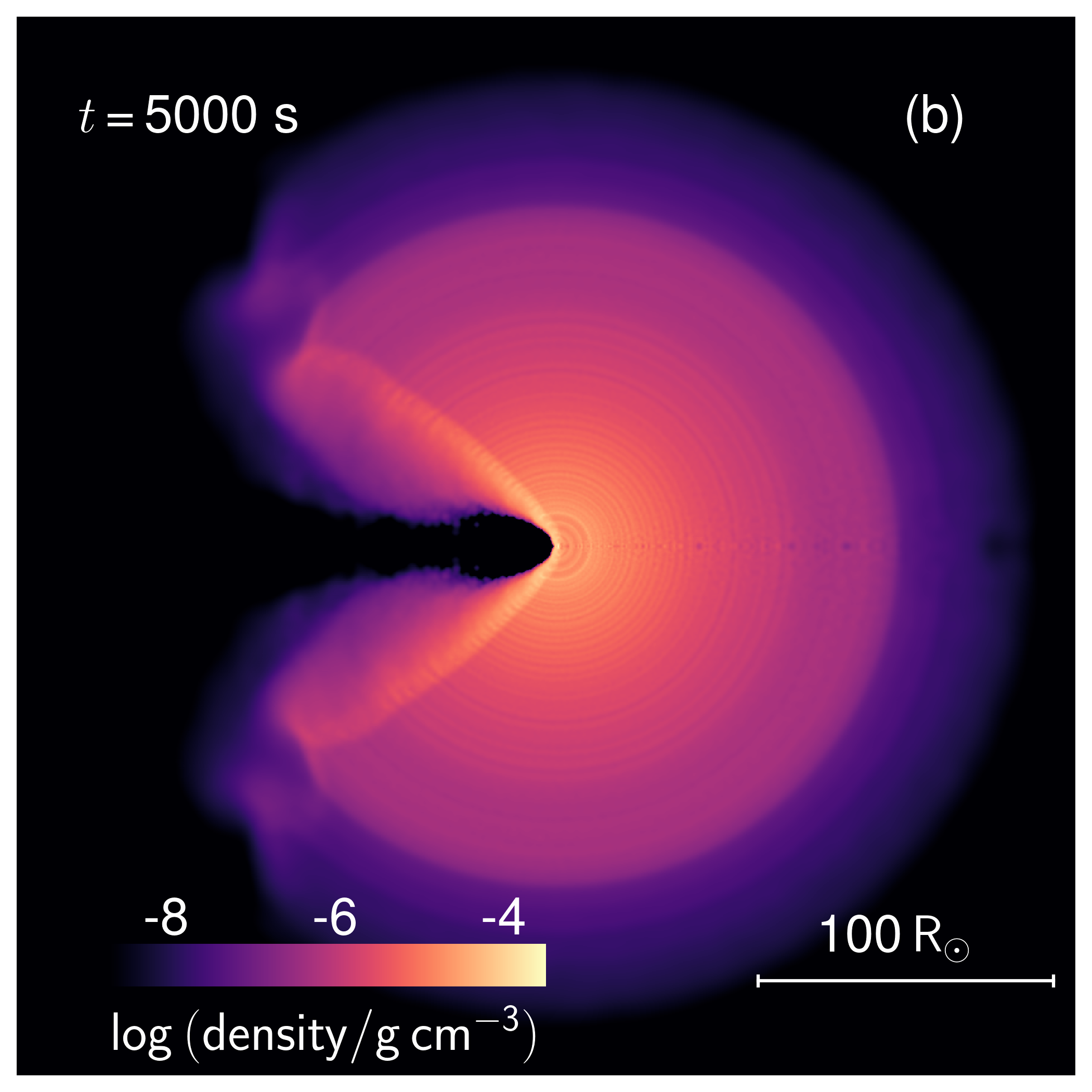
Figure 1: The geometry of SN ejecta at t=0 s, prior to companion interaction.
Transition to Remnant-Phase SNR Evolution
The post-interaction ejecta is remapped to a 2563 Cartesian grid, rescaled to t=1 yr, and embedded in a uniform ISM (nH=0.74 cm−3) in RAMSES with a co-moving mesh. Three compositional groups—H/He (ISM), intermediate-mass elements (IME: S, Si, Ar, Ca), and iron-group elements (IGE)—are traced.
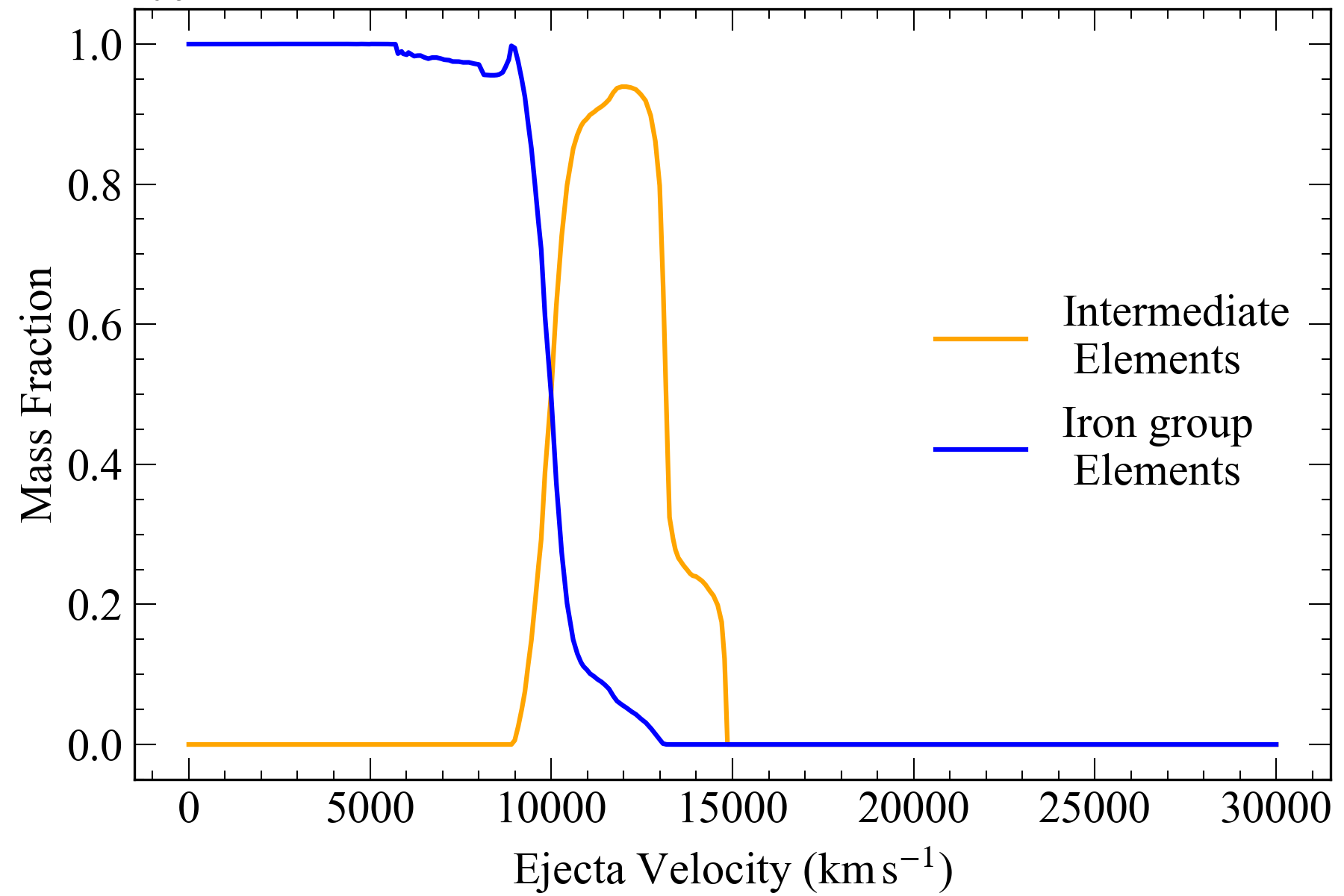
Figure 2: Radial abundance profiles of IMEs and IGEs in the W7 model, which inform post-impact compositional mapping.
The baseline model (W7+MS) is evolved alongside a control scenario with no companion interaction (W7_No_Companion), allowing for isolation of the companion's imprint on SNR structure and evolution.
Results: Morphologies, Instabilities, and Feature Persistence
SNR Morphology and the Companion Carved Cavity
The impact cavity manifests as a pronounced flat "bottom" on one side of the young SNR when viewed perpendicular to the binary axis, with the remainder retaining approximate spherical symmetry. This anisotropy is preserved for ∼300 yr, although Rayleigh-Taylor instability (RTI) gradually erodes small-scale features and partially erases the large-scale asymmetry.
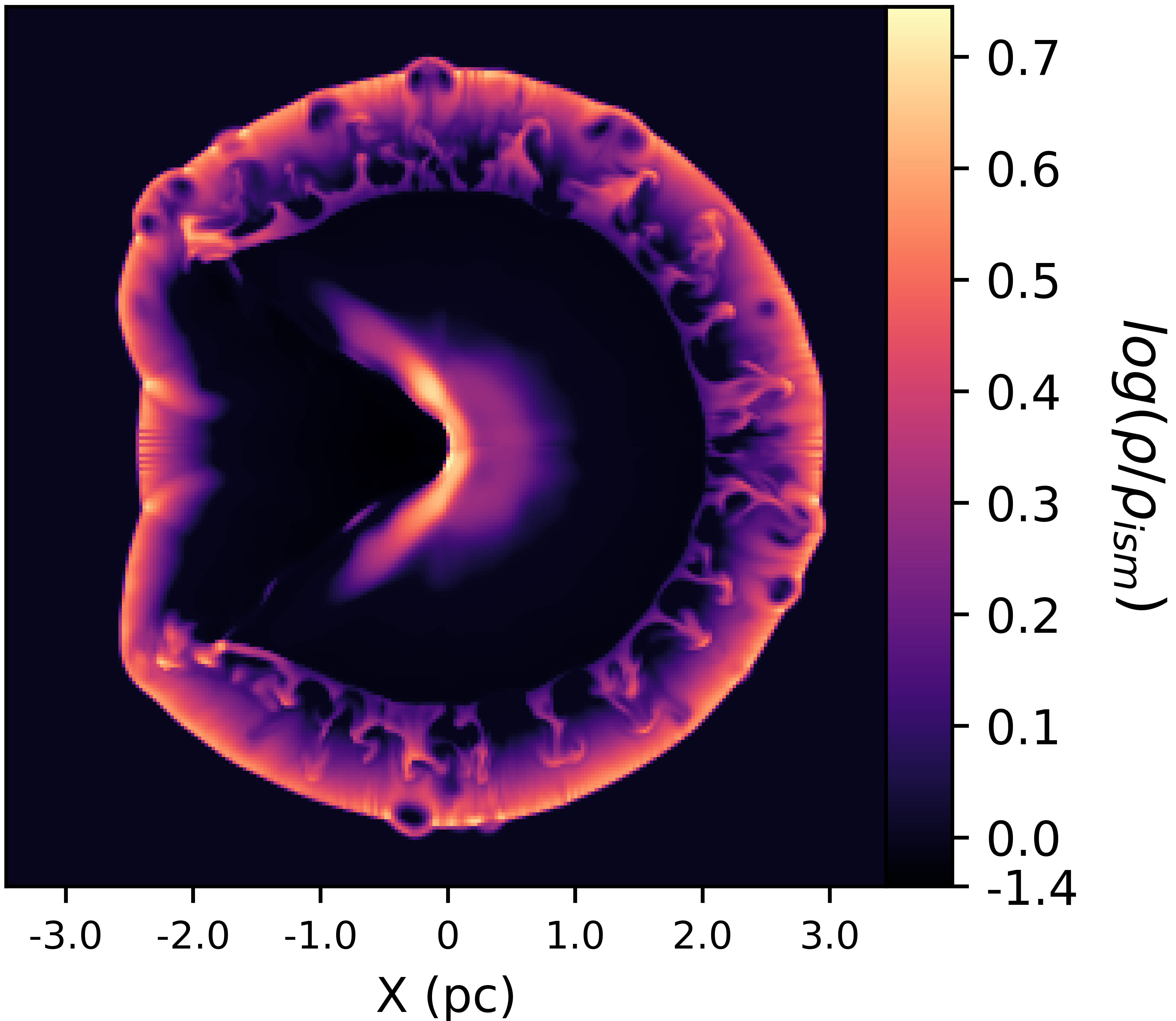
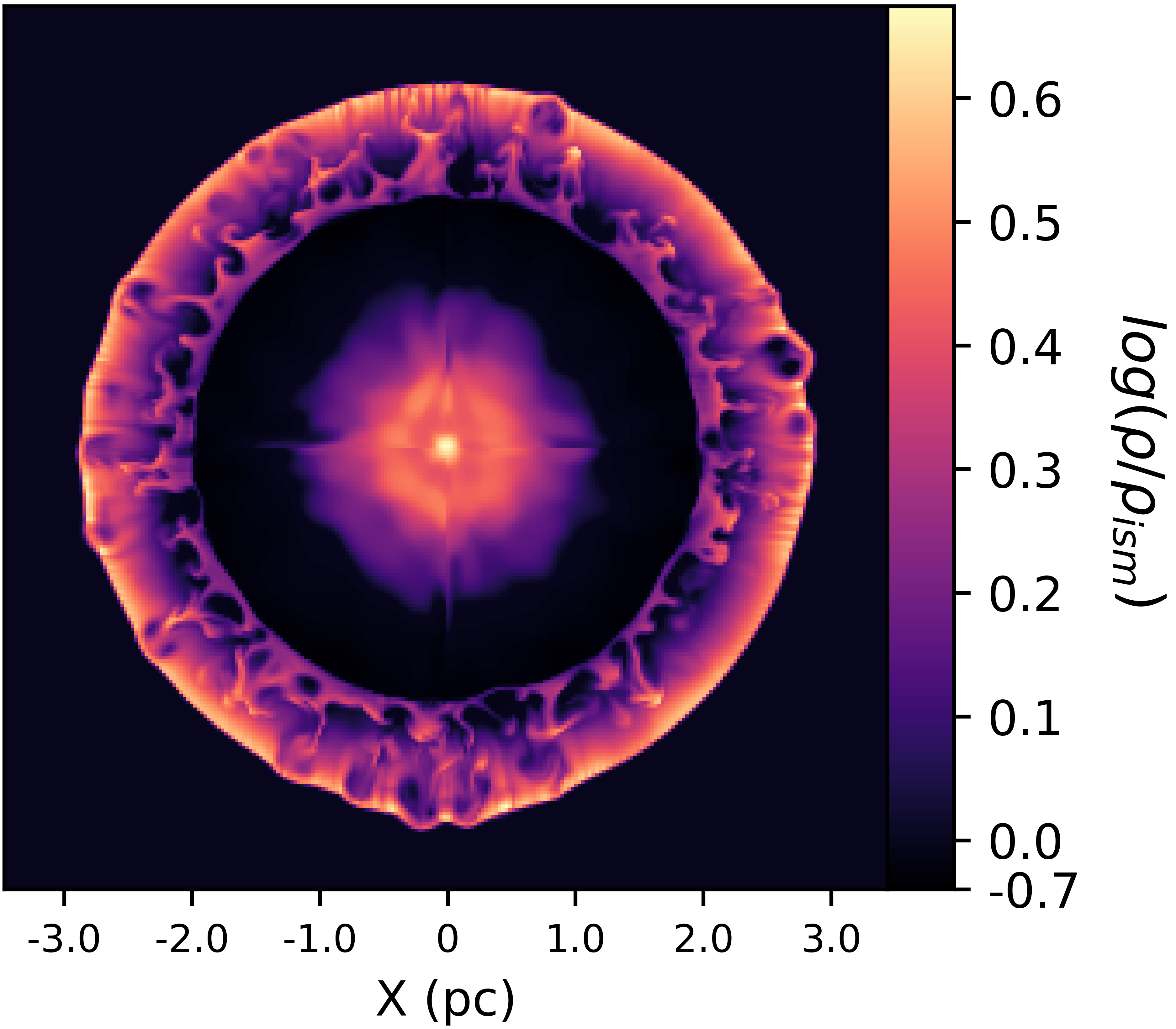
Figure 3: Density slices in the X–Y plane at ∼50000 yr for (left) W7+MS and (right) W7_No_Companion SNRs, highlighting the persistent cavity imprint.
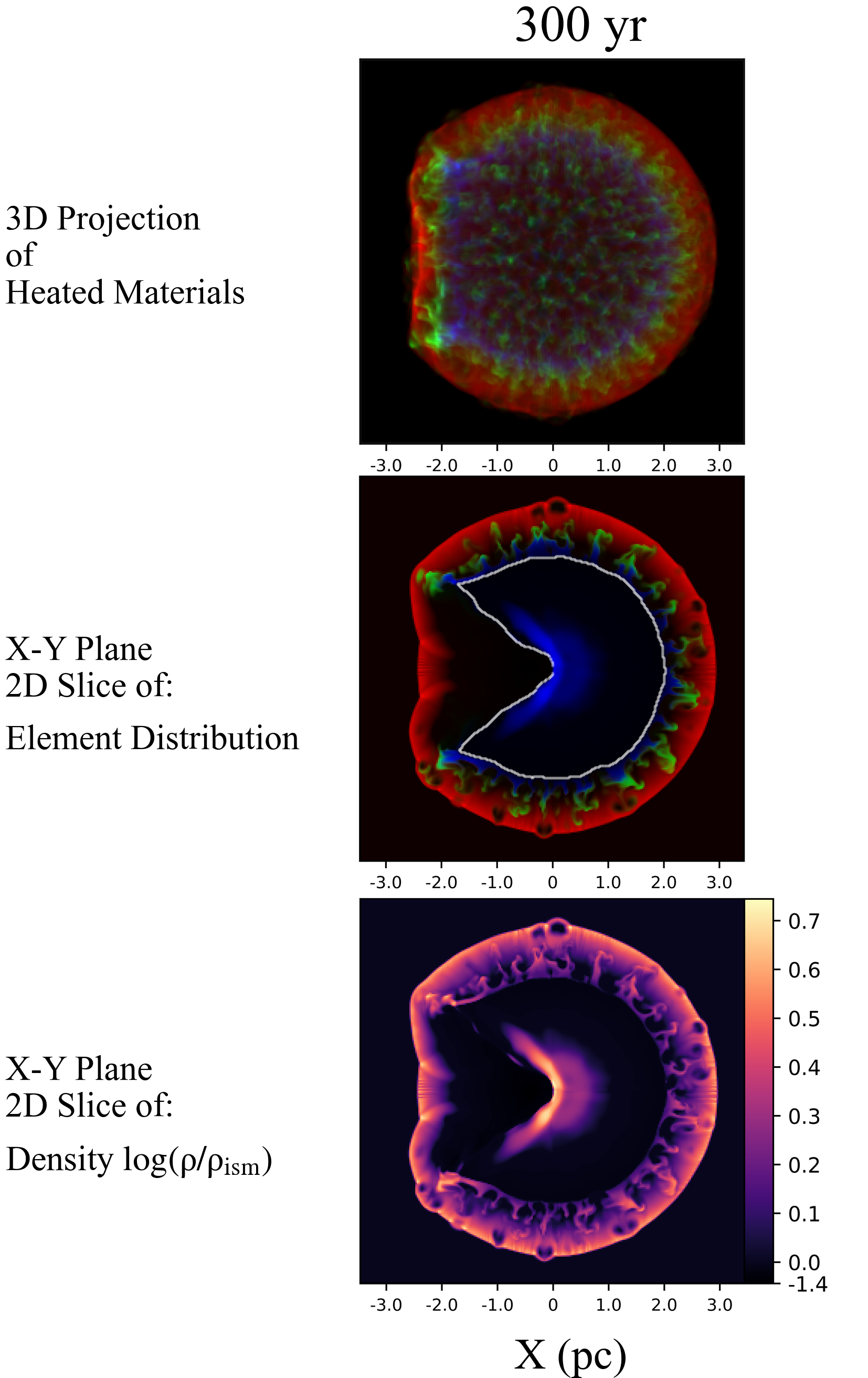
Figure 4: Full 3D snapshot of W7+MS at ∼50001 yr, demonstrating the tri-compositional structure and reverse shock position.
Projection of shock-heated material (proxy for X-ray surface brightness) similarly reveals a significant asymmetry in W7+MS absent in the spherically symmetric control.
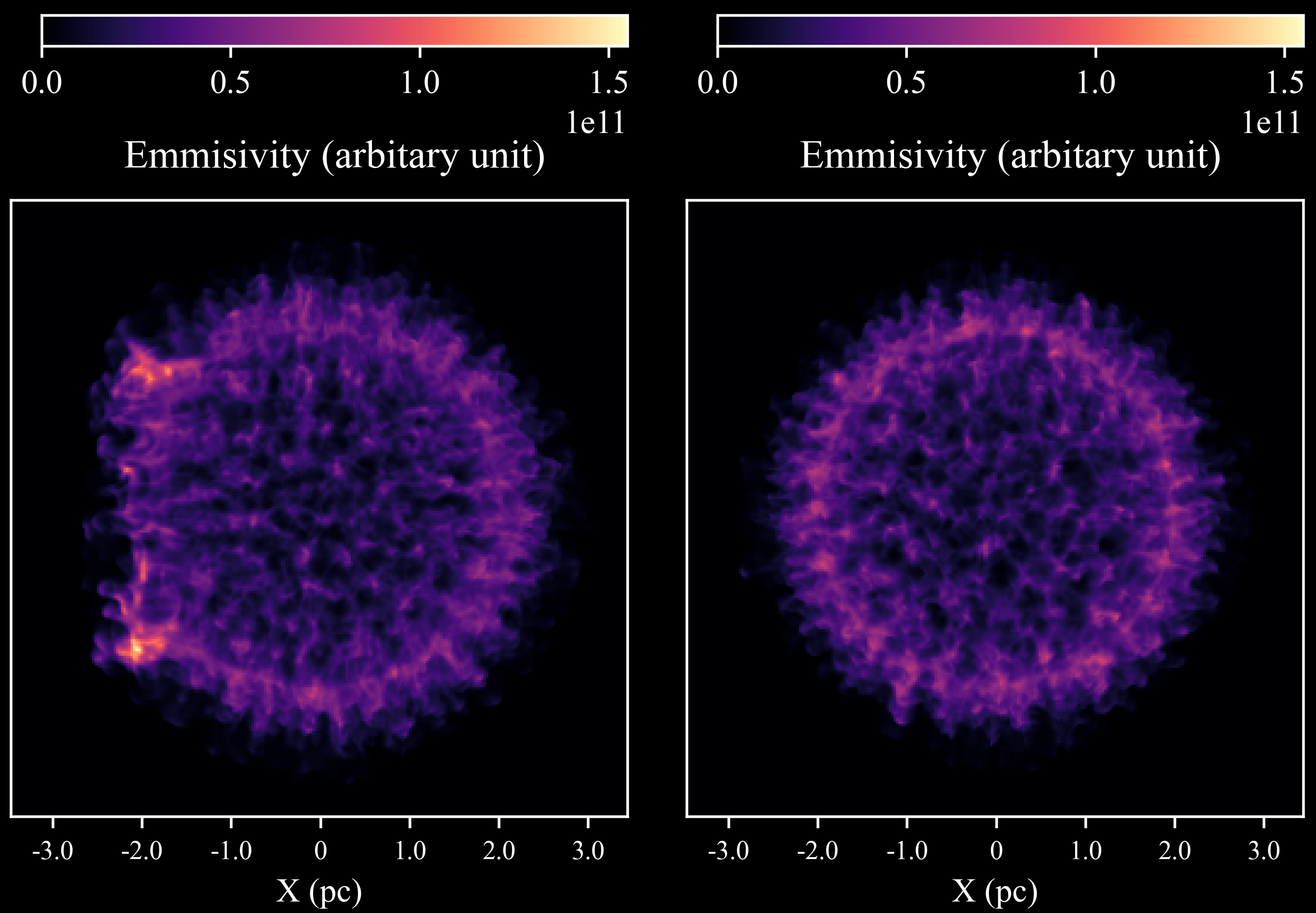
Figure 5: Projected density-squared (shock-heated material) for W7+MS (left) and W7_No_Companion (right) at ∼50002 yr.
RTI Finger Growth, Angular Analysis, and Feature Scalability
Healpix-based spherical harmonic analysis of the contact discontinuity quantifies the angular scale and amplitude of RTI development. Power spectra for W7+MS reveal power excess at low multipoles (∼50003) corresponding to the cavity and at ∼50004 for the over-density ring at the cavity's edge. In comparison, the control simulation exhibits a peak at higher multipoles (∼50005), consistent with fully nonlinear RTI growth dominating the boundary structure.
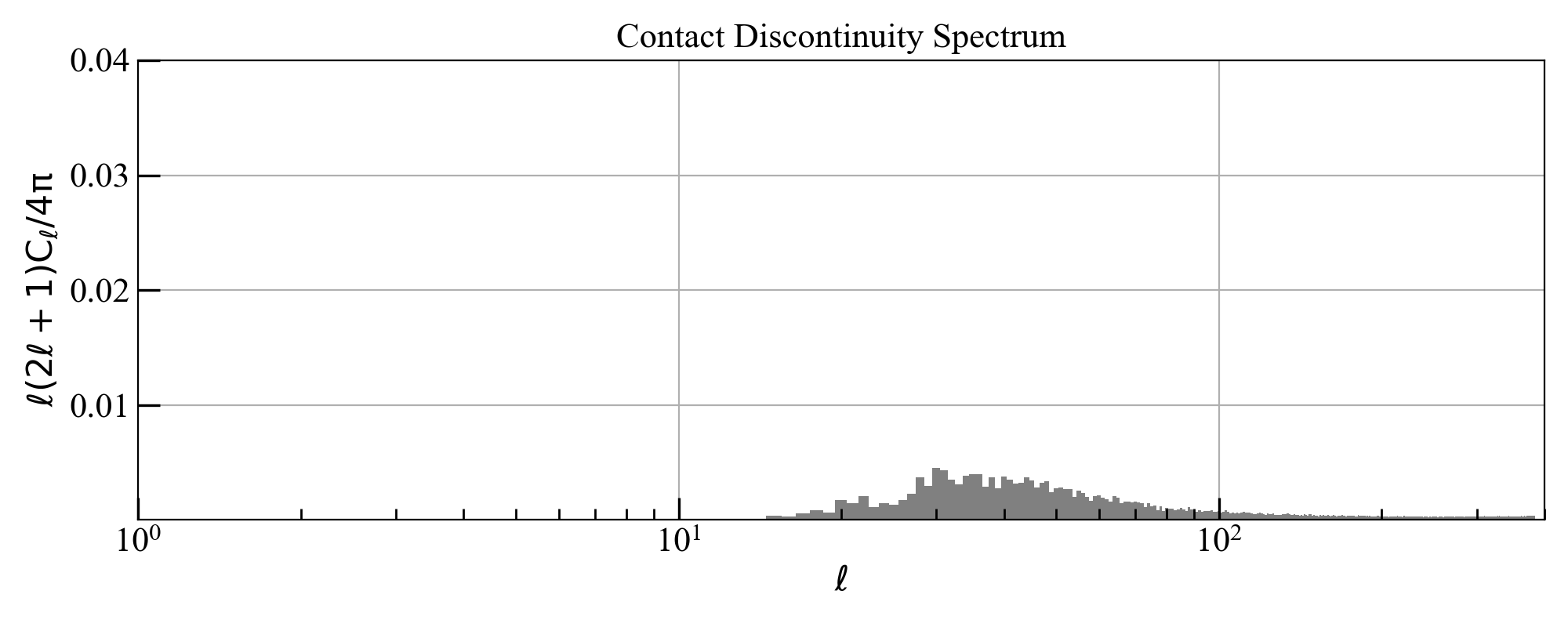
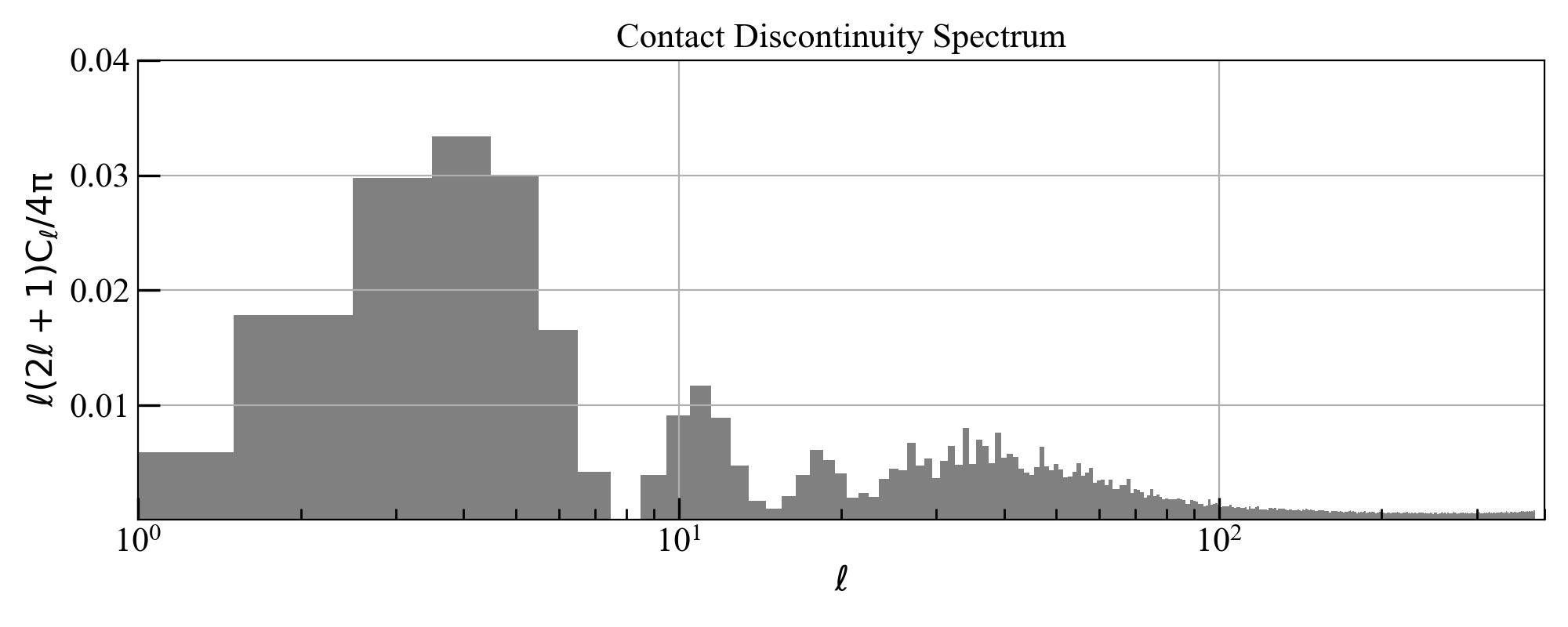
Figure 6: Angular power spectra for W7_No_Companion (upper) and W7+MS (bottom), showing relative contributions of RTI and large-scale asymmetry.
Overall, the feature scale of the companion interaction exceeds that of RTI-dominated structures for several hundred years, confirming the persistence and potential observability of the asymmetry under optimal conditions.
Observational Comparison and Constraints
Direct Confrontation with Resolved SNRs
Simulated expansion rates and morphology were compared with measurements for SNR\,0519-69.0, G1.9+0.3, and SN\,1006. All display some degree of asymmetry or apparent "flatness" in the SNR shell; however, detailed kinematic data show that these regions of reduced curvature also exhibit slower expansion rates than adjacent parts—an effect substantially stronger than predicted by the pure companion-interaction model, which anticipates only modest spatial expansion rate modulation due to the self-similar propagation of the ejecta shell.
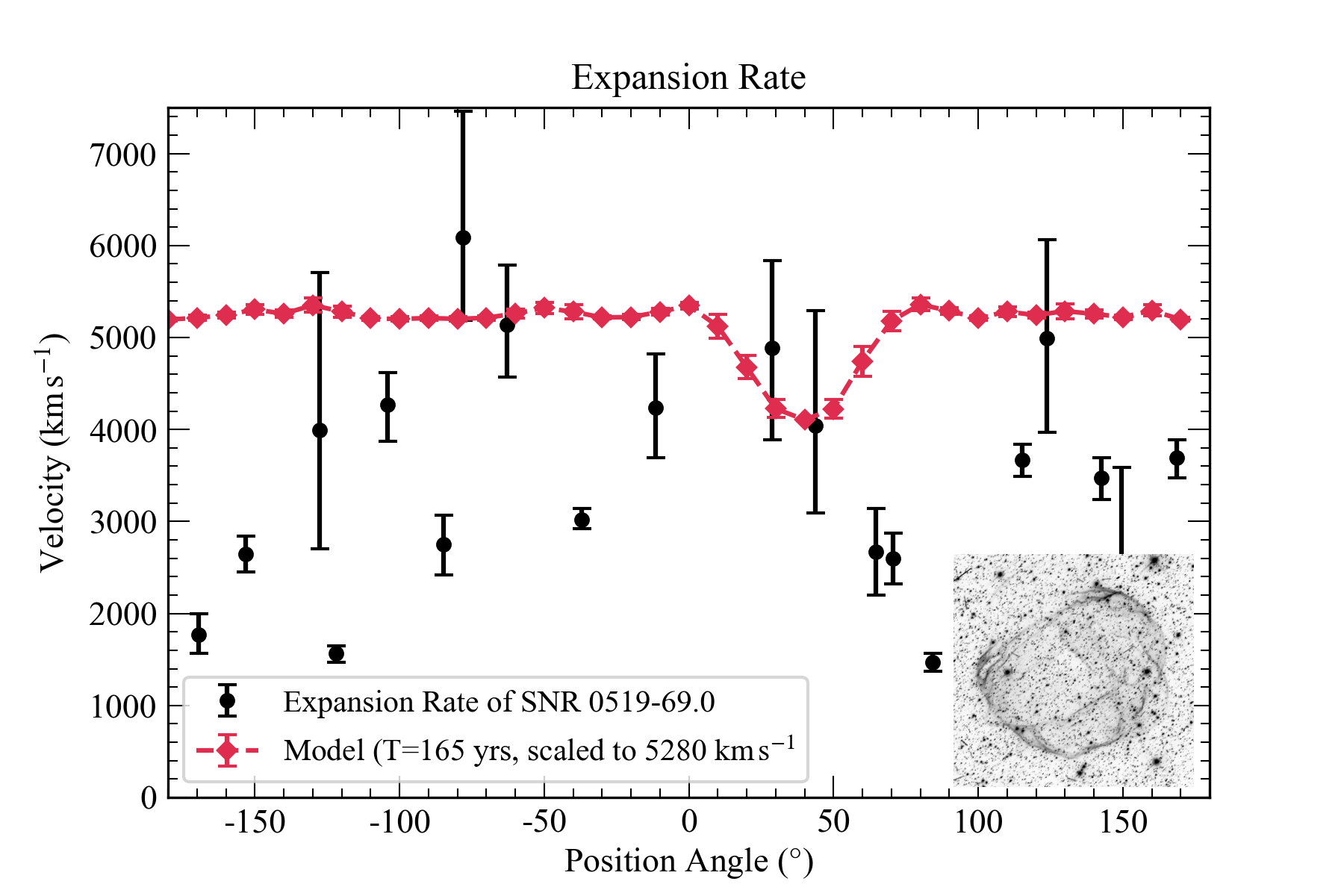
Figure 7: Comparison between measured SNR\,0519-69.0 expansion rates (red) and those predicted by the W7+MS model (blue, scaled), as a function of position angle.
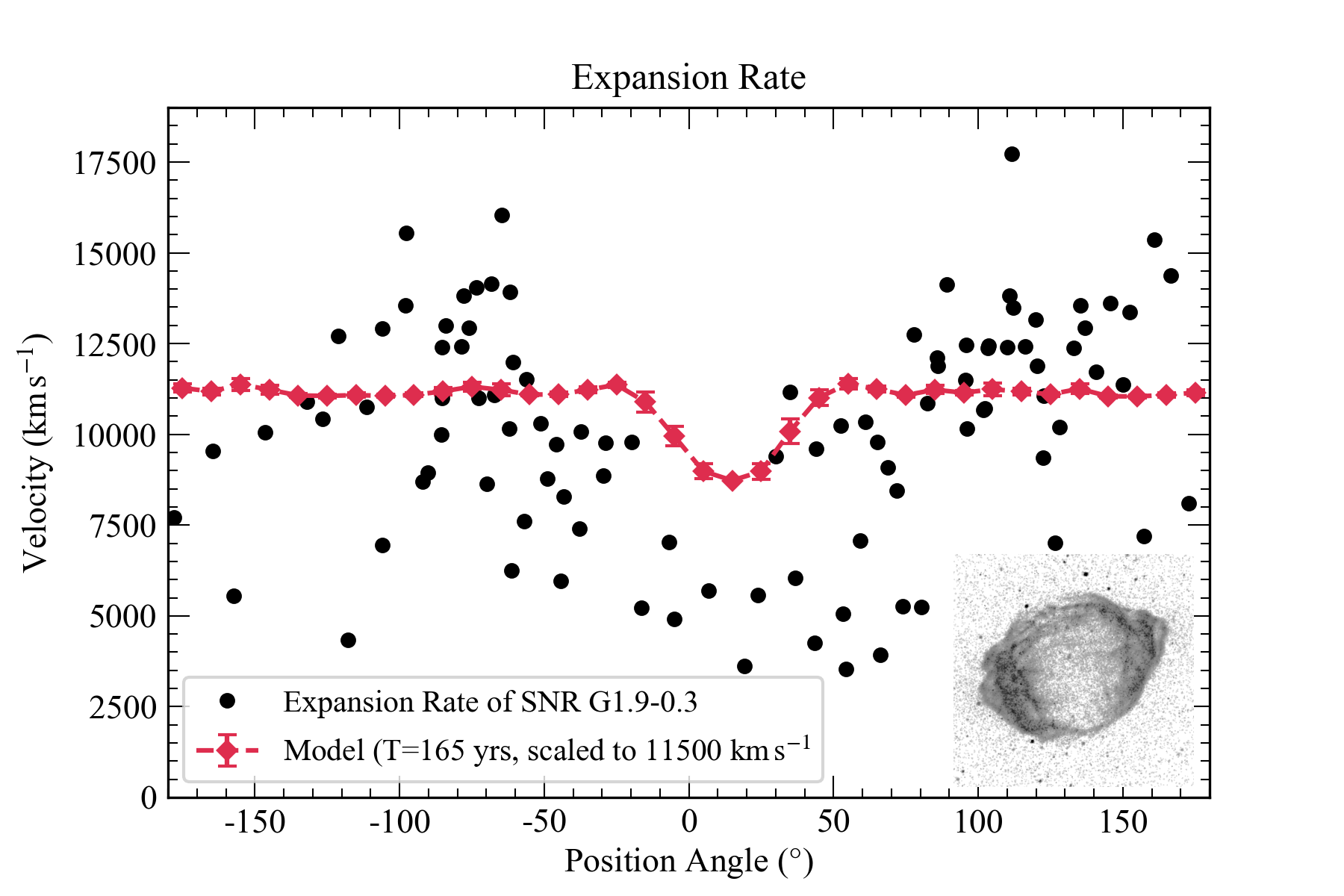
Figure 8: As in Figure 7, but for SNR\,G1.9+0.3.
The angular scale of observed "flat" features in SNR\,0519-69.0 (∼50006) is also significantly larger than predicted for a canonical Roche-lobe filling configuration. These discrepancies, as well as the high velocity contrast, imply CSM interaction—rather than ejecta-companion effects—as the dominant driver of strong SNR asymmetries in currently resolved cases.
Effects of CSM Inhomogeneity
A supplementary simulation with a toroidal over-density (CSM torus) demonstrates that dense, localized CSM can dramatically slow the shock in specific sectors (∼50007 velocity drop), causing large apparent angular expansion asymmetry with minimal radius change.
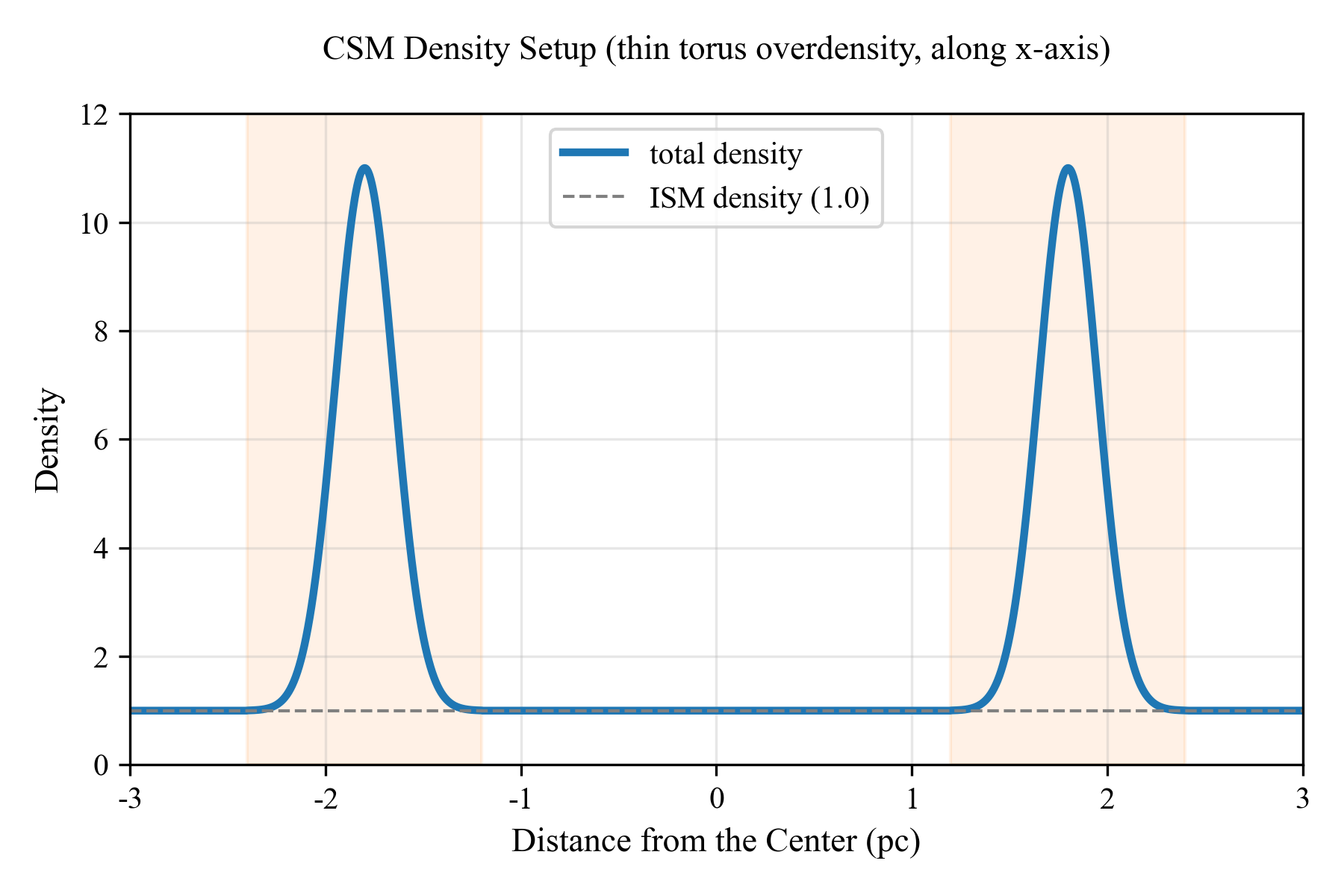
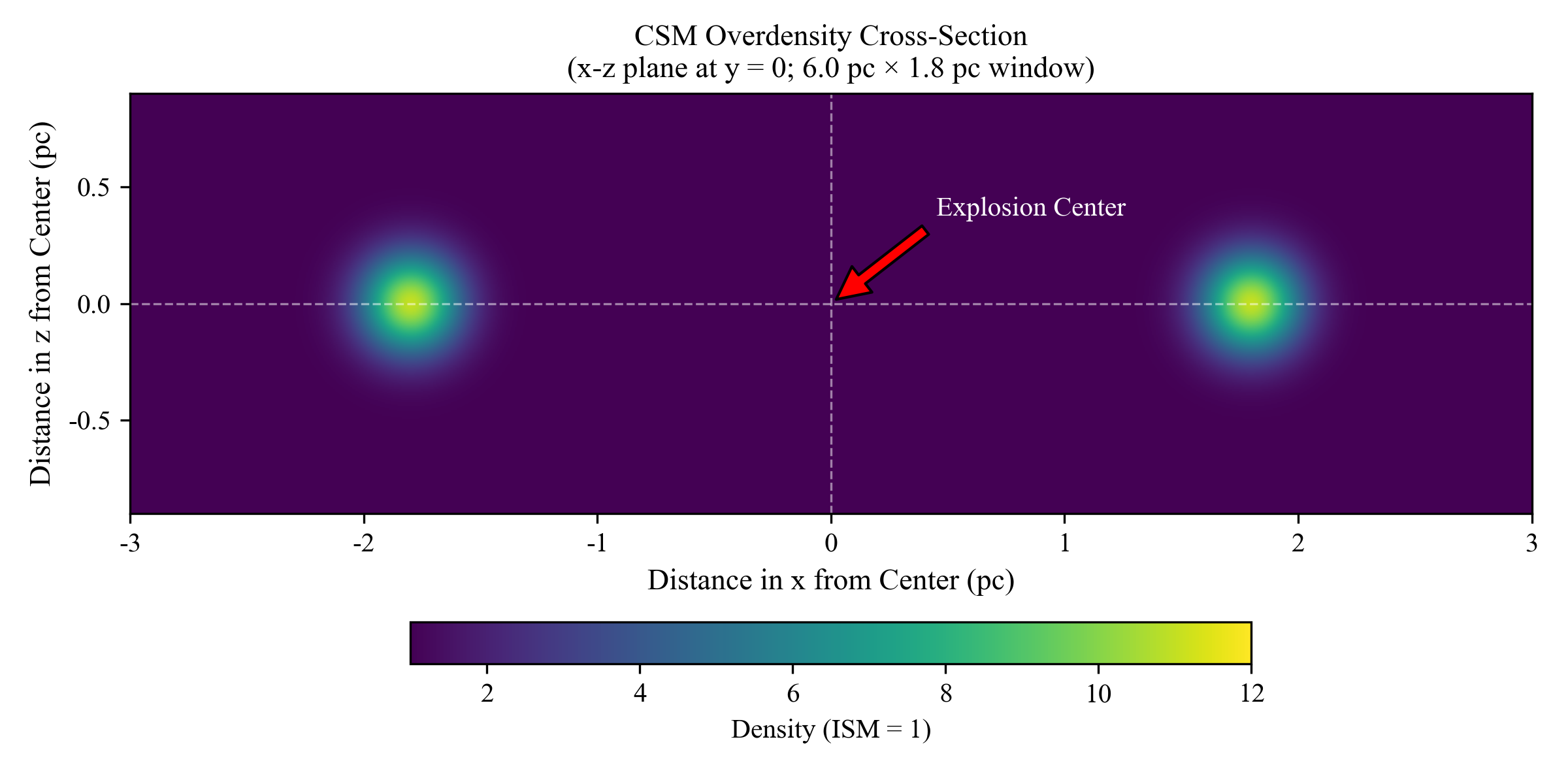
Figure 9: Cross-section of the imposed toroidal CSM density distribution, showing over-density in the ∼50008–∼50009 plane.
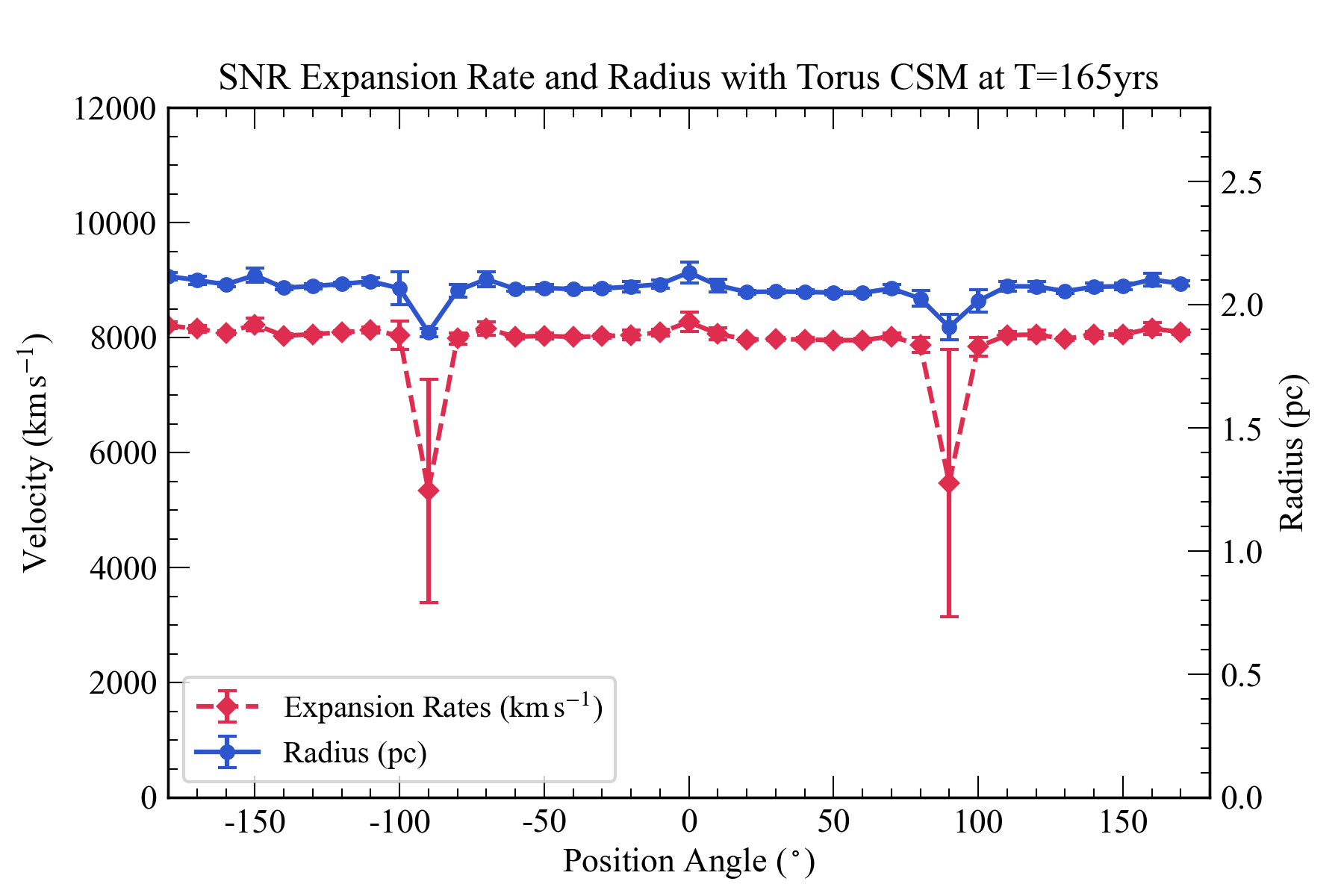
Figure 10: Radial and expansion velocity profiles (blue: radius, red: expansion velocity) of the SNR with CSM torus at ∼0.1730 yr. Velocity decrement tracks the CSM overdensity angularly.
These results highlight the degeneracy between progenitor-induced and environmental asymmetries in observed SNRs, challenging attempts to use morphology alone to discriminate between SD and DD channels.
Implications, Limitations, and Theoretical Outlook
The simulations confirm that a surviving non-degenerate companion in canonical SD SN Ia systems imprints a persistent, large-scale cavity in the young SNR, visible for several centuries at favorable viewing angles, and robust to typical RTI growth. However, several constraints limit unambiguous observational identification:
- CSM/ISM interaction can mimic and even dominate morphological features, introducing strong radial and velocity asymmetries.
- Feature visibility is highly angle-dependent; absence of the signature in current samples is inconclusive given orientation and sample-size biases.
- Ejecta structure and compositional mapping: Use of a spherically symmetric W7 explosion profile omits large-scale explosion anisotropies, which are likely even in SD explosions (e.g., GCD, offset ignition).
- Emission proxies and diagnostics: Density-squared projection is a crude proxy for X-ray brightness; more detailed non-equilibrium ionization and multi-wavelength synthetic observations are necessary for robust comparison [Fujimaru2026].
The study demonstrates that multi-epoch, high-precision expansion measurements—able to correlate morphology with detailed velocity fields—are essential to distinguishing progenitor imprints from environmental effects. Structured CSM must be incorporated in future simulations for meaningful inference [2025A&ARv..33....1R].
Conclusion
This work provides a comprehensive quantitative evaluation of the morphological and kinematic signatures of main-sequence companion interaction in SD SNe Ia SNRs. The key results are:
- A persistent flat-bottomed asymmetry forms in the SNR shell as a result of companion interaction, surviving for several centuries before being mitigated by RTI and turbulent mixing.
- No known young, spatially-resolved SNR Ia currently provides compelling evidence for this signature when kinematic and angular expansion data are jointly considered.
- Dense, structured CSM can produce stronger, more angularly extended, and kinematically distinctive asymmetries than the companion-carved cavity alone, strongly supporting the need for simultaneous modeling of progenitor and CSM/ISM history.
Upcoming high angular and velocity-resolution observations (e.g., XRISM) in conjunction with advanced 3D hydro+radiative transfer modeling [Fujimaru2026] will enable more precise discrimination between SD and DD progenitors and clarify the multifaceted roles of mass transfer, binary evolution, and CSM sculpting in shaping Type Ia SNR diversity.
References:
- "Three-Dimensional Simulations of Type Ia Supernova Remnants I: Effects of a Main-Sequence Companion Star" (2607.00354)
- "Probing the Diversity of Type Ia Supernova Remnants in 3D Hydrodynamic Simulations with X-Ray Spectral Synthesis" [Fujimaru2026]
- "Type Ia supernova progenitors: a contemporary view of a long-standing puzzle" [2025A&ARv..33....1R]

