- The paper introduces a co-evolutionary framework integrating adaptive host ITN use and vector feeding shifts to capture nonlinear disease transmission dynamics.
- The paper derives threshold conditions and analyzes bifurcations using next-generation matrices and Routh-Hurwitz criteria to delineate disease-free and endemic equilibria.
- The paper reveals that full ITN adoption in one host can paradoxically heighten transmission in the other, highlighting the need for integrated intervention strategies.
Nonlinear Feedbacks Between Host Behavior and Vector Adaptation in a Multi-Host Vector-Borne Disease Model
Model Overview and Coupled Behavioral Dynamics
This work presents a mathematically rigorous co-evolutionary framework for vector-borne disease (VBD) transmission incorporating adaptive host protective behavior and vector feeding adaptation in a multi-host context. Specifically, two host populations (h1, h2) interact with a vector population, with only h1 individuals eligible for insecticide-treated net (ITN) protection. The vector's feeding preference shifts dynamically as a function of ITN coverage among h1, modulating both biting rates and host selection. Host decisions to adopt ITN are modeled as payoff-driven imitation dynamics in an evolutionary game-theoretic setting, with payoffs depending on infection prevalence, vector density, and perceived ITN cost.
Notably, the vector’s behavioral adaptation is not merely a parameterized response but emerges as a direct consequence of host strategy composition via functional dependence on θ (the fraction of h1 employing ITN). This nonlinear feedback generates complex couplings: disease prevalence alters host protection incentives, which modifies vector biting preference, thus reshaping transmission rates and infection risk in both host classes.
Disease-Free and Endemic Equilibria: Thresholds and Stability
Analysis of the high-dimensional, coupled ODE system yields explicit threshold conditions for disease extinction and persistence. The basic reproduction number R0 (no ITN) and the control reproduction number Rc (with ITN coverage) are derived using the next-generation matrix formalism. The system admits multiple disease-free equilibria (DFE) corresponding to different ITN coverage levels: zero, partial, and full. Stability of DFE is contingent on whether R0<1 or Rc<1 at the respective equilibrium.
Endemic equilibria exhibit a nuanced dependence on both behavioral (h20, ITN cost h21) and epidemiological parameters. The existence and stability of interior endemic solutions are determined by the roots of a collection of nonlinear polynomials (h22), which encode the interactions among payoff terms, vector preference, and host composition. Stability is characterized via the Routh-Hurwitz criterion applied to the Jacobian of the ODE system at equilibrium. Numerical validation confirms these analytic results and delineates parameter regimes for which coexistence of ITN users and non-users occurs.
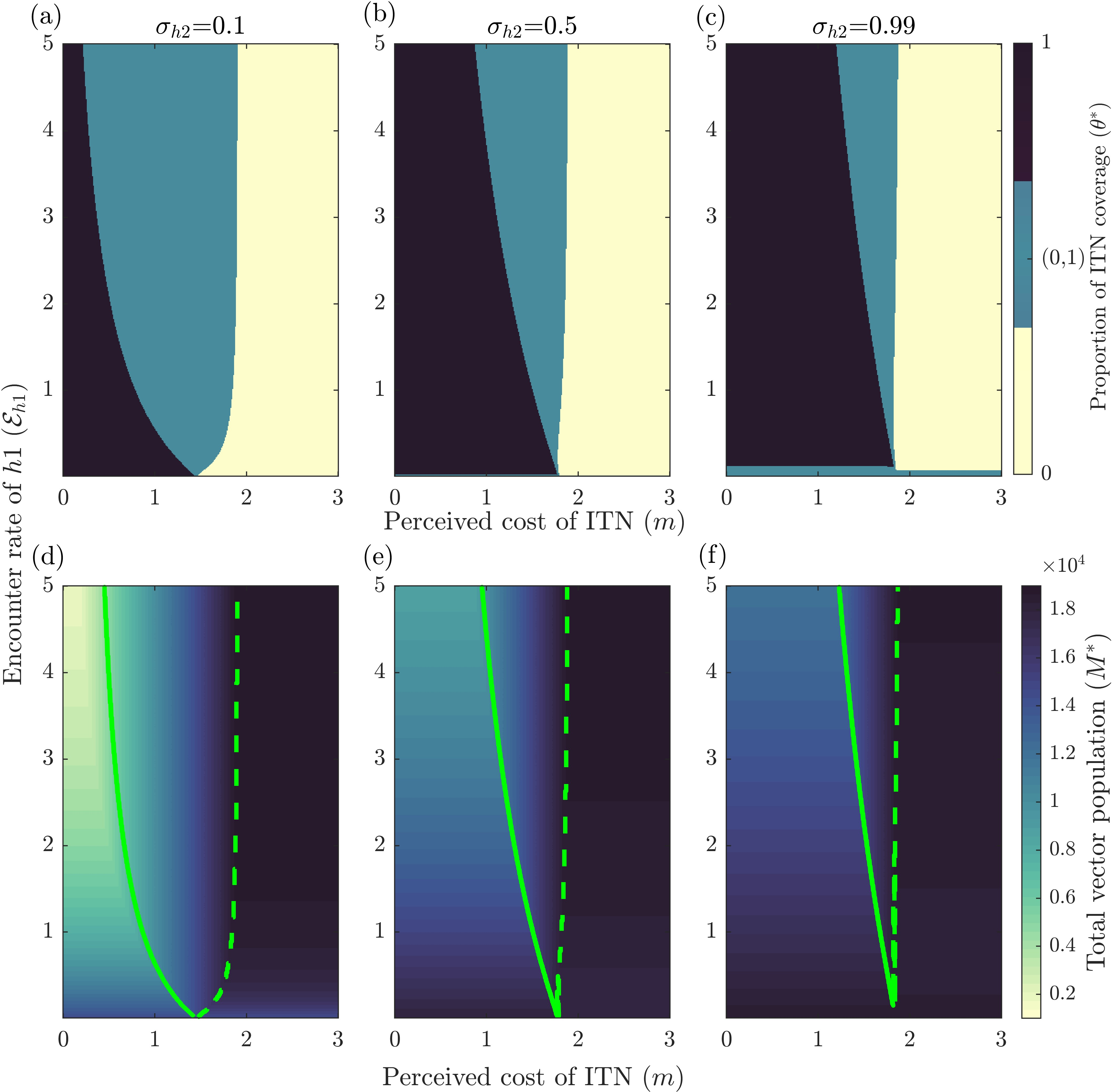
Figure 1: Impact of varying h23 and ITN cost h24 on host protection strategies and vector population size, across different values of h25.
Bifurcation Analysis: Critical Transitions and Oscillatory Dynamics
The model exhibits rich bifurcation structure, including both saddle-node and Hopf bifurcations. Saddle-node bifurcations are induced by variations in recovery rate (h26), leading to the collision and annihilation of stable and unstable endemic equilibria. Analytical verification using Sotomayor's theorem and computation of transversality conditions demonstrates the generic occurrence of this bifurcation in parameter space. Importantly, once a critical recovery threshold h27 is crossed, further increases yield only marginal reductions in disease prevalence, emphasizing limitations of intervention strategies that target recovery in isolation.
Hopf bifurcation arises as the perceived ITN cost (h28) increases, destabilizing endemic equilibria and generating self-sustained oscillations in both prevalence and ITN coverage. The transition point is precisely determined by vanishing of the first Lyapunov coefficient and genericity conditions. Oscillatory outbreaks are maintained through feedback between prevalence-driven ITN adoption and vector preference adaptation.
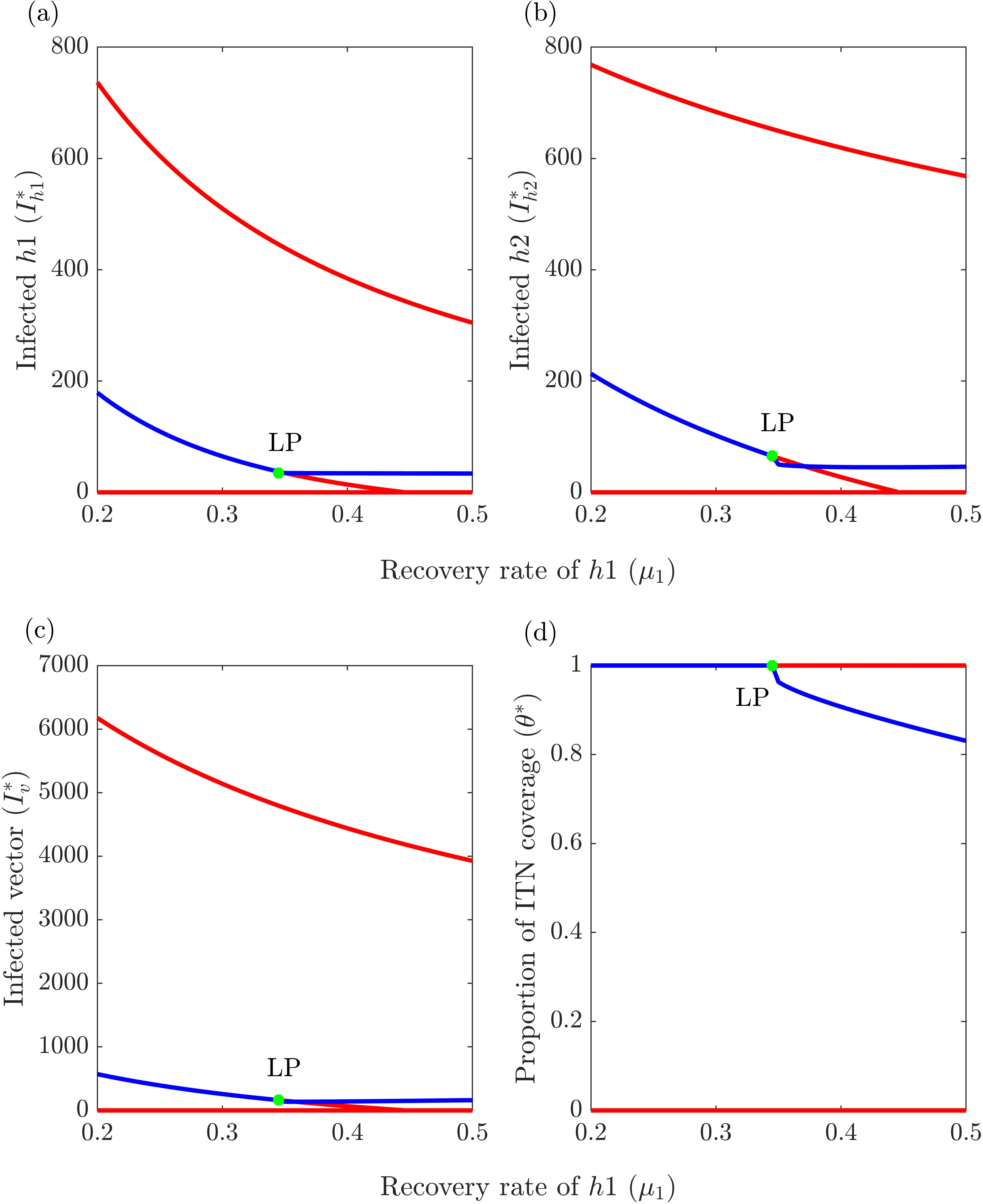
Figure 2: Saddle-node bifurcation with respect to recovery rate h29, showing convergence of stable and unstable endemic equilibria.
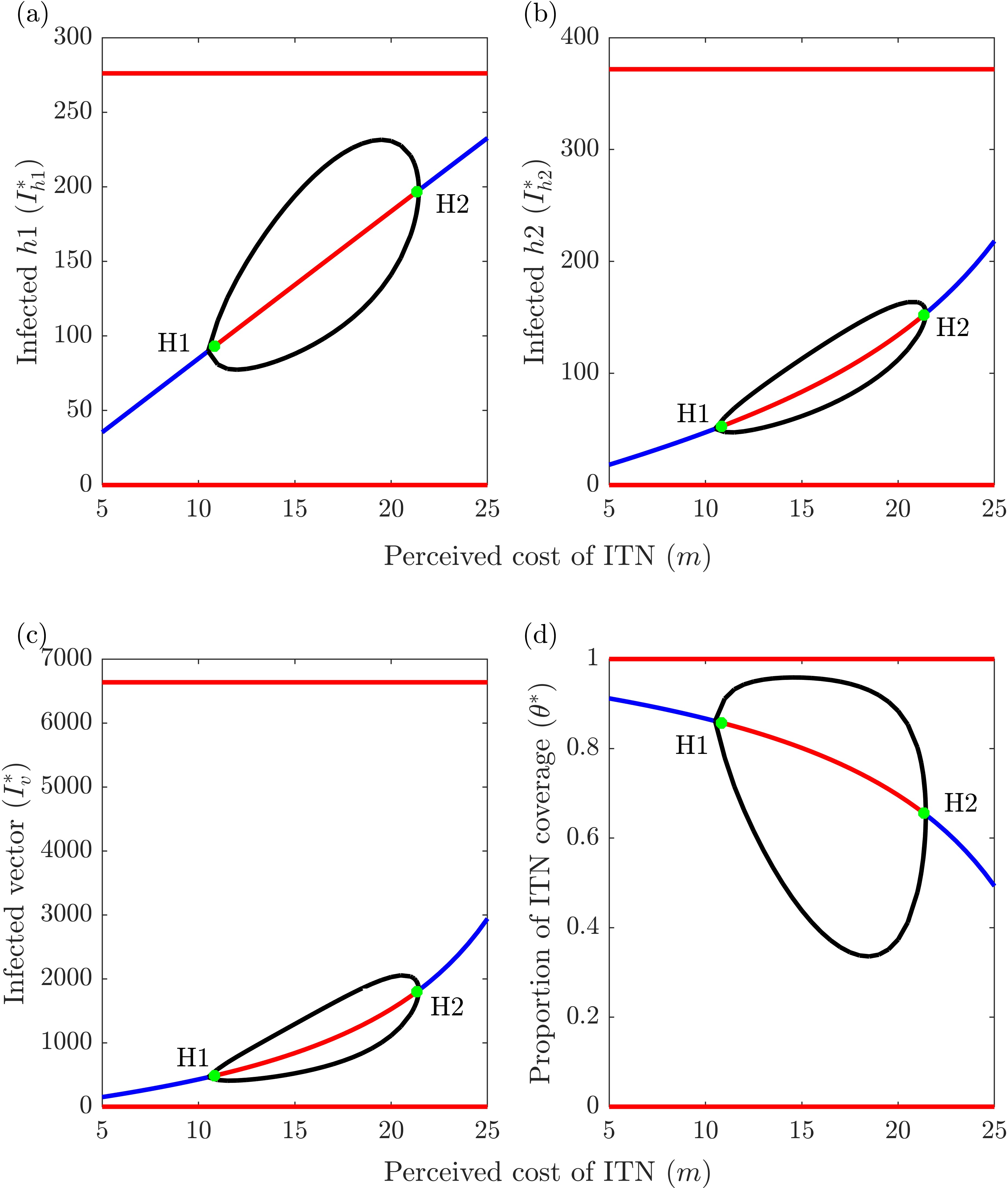
Figure 3: Hopf bifurcation with respect to ITN cost h10, with emergence of periodic solutions and changes in stability.
Vector Adaptation and Host Diversity Implications
A salient result is the identification of a counterintuitive effect: full ITN adoption by h11 can actually increase prevalence in h12 due to adaptive shifts in vector feeding. This is quantified by the time-dependent vector preference function h13, which governs redistribution of bites and modulates the effective force of infection in each host population. When vector preference shifts toward h14, overall vector density can amplify, particularly if h15 is poorly protected or less competent for disease recovery.
Numerical experiments highlight that the impact of ITN interventions is highly sensitive to innate feeding preferences (h16), ITN cost, and host encounter rates. Coexistence regions for ITN users and non-users are more pronounced as vector density increases and vector access to alternate hosts improves.
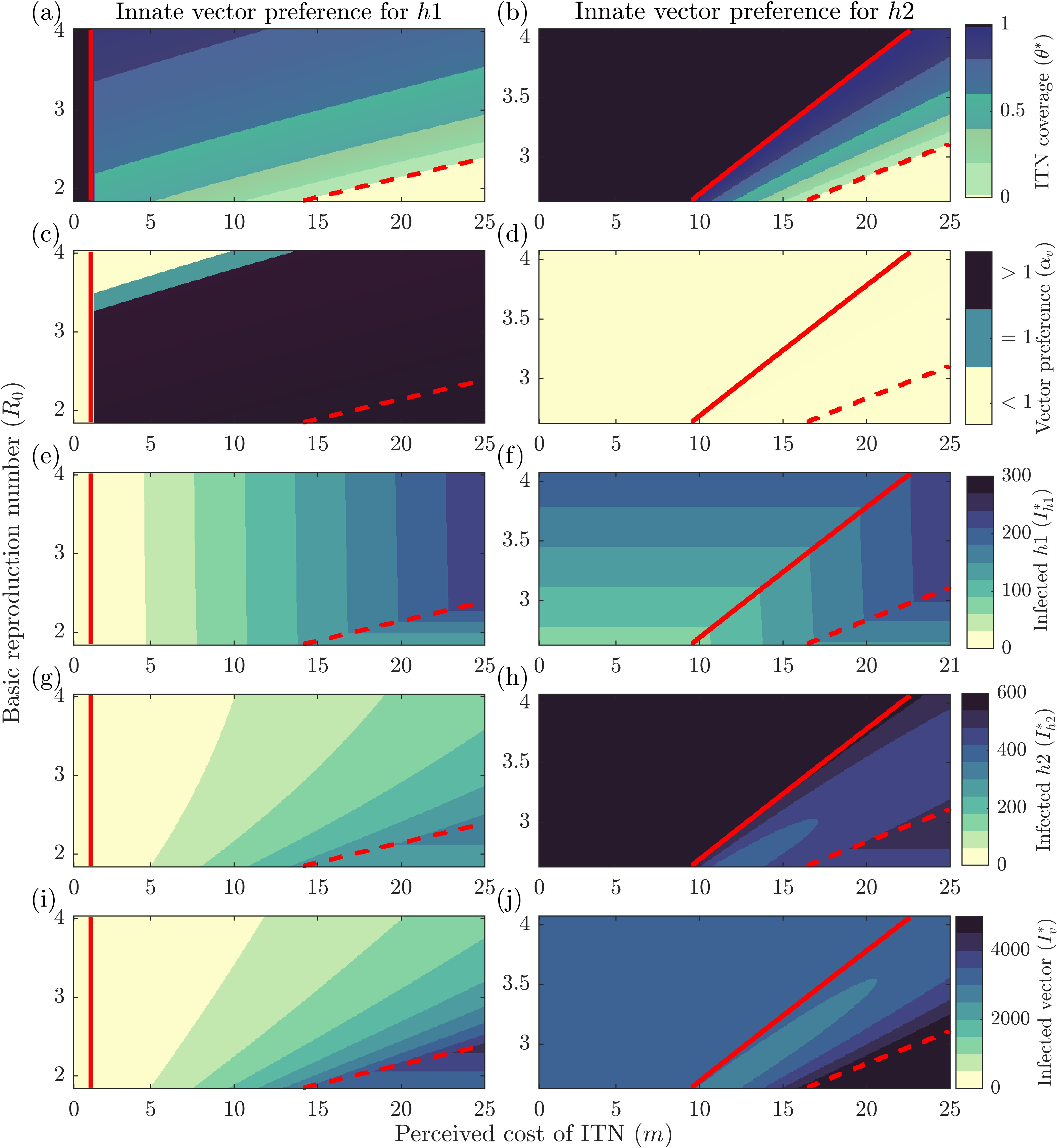
Figure 4: Equilibrium behavior across h17 and h18 for low/high vector preference toward h19, illustrating complex dependence on host and vector adaptation.
Practical and Theoretical Implications
The coupled nonlinear feedbacks between behavioral adaptation and vector dynamics underscore the necessity for integrated intervention designs in VBD control. Static models that ignore these feedbacks systematically underestimate the potential for critical transitions, bistability, and sustained oscillatory outbreaks. The findings suggest that aggressive ITN coverage in a single host population, without considering vector adaptation and host diversity, may fail to provide comprehensive disease control.
Theoretical implications extend to the broader study of game-environment feedbacks in epidemiological systems, supporting the emergence of oscillatory "tragedy of the commons" scenarios and route-dependent critical transitions.
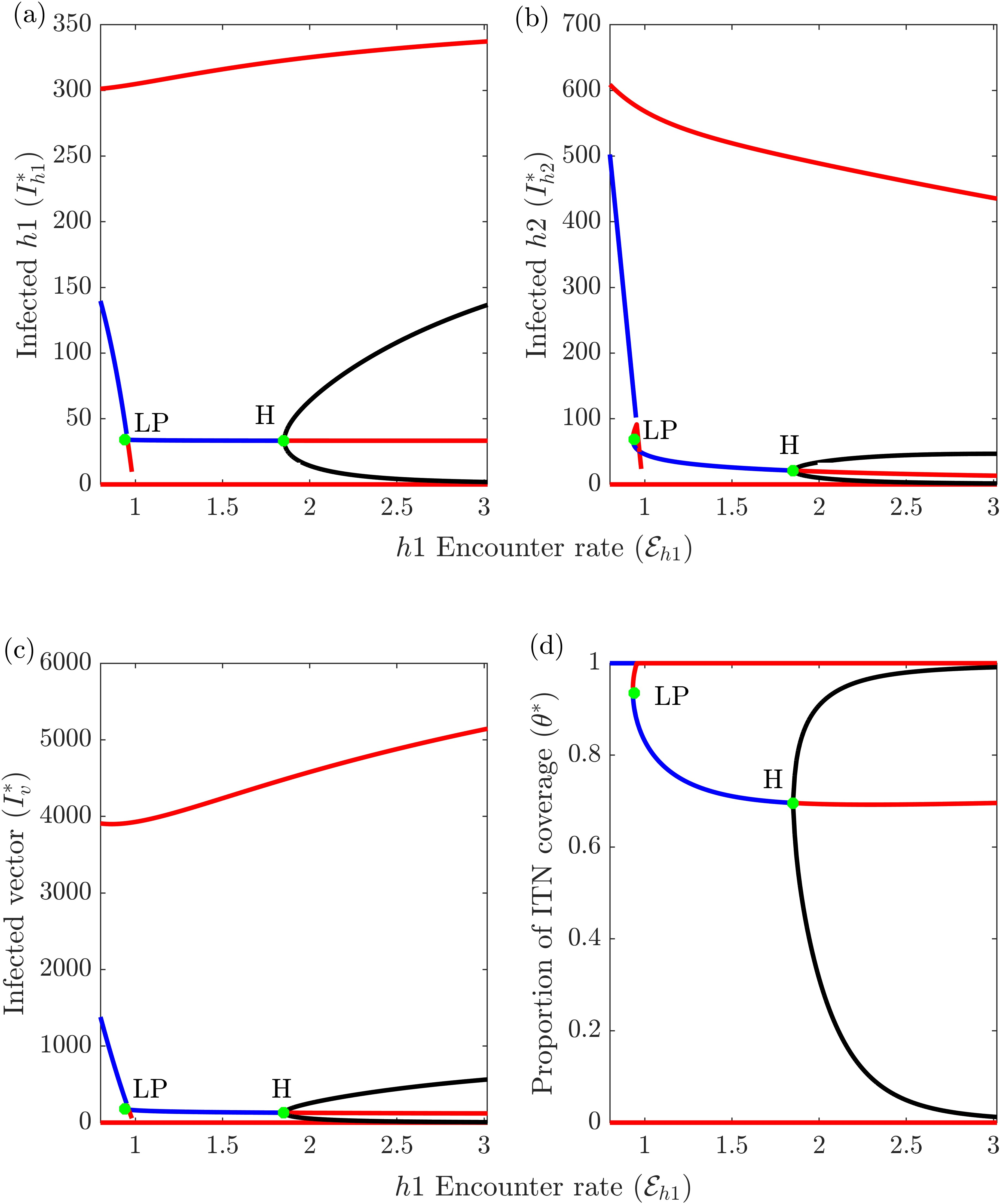
Figure 5: Bifurcation diagram with respect to host encounter rate h10, showing saddle-node and Hopf bifurcation structure.
Conclusion
This paper introduces a formally constructed, biologically realistic framework for analyzing the interplay of adaptive host protection and vector feeding behavior in VBD systems. Explicit derivations of threshold and bifurcation conditions highlight the complexity of coupled feedbacks and emphasize the necessity to account for host behavioral diversity and vector adaptation in both mathematical modeling and practical interventions.
Numerical simulations validate analytic predictions and illustrate parameter regimes where intervention paradoxes and oscillatory outbreaks may be expected. Immediate practical implications include the risk of increased prevalence in secondary hosts when ITN use is not universally adopted, and the limited effectiveness of strategies focusing purely on host recovery rates after certain thresholds. Future extensions may consider environmental variability, seasonal parameter modulations, or stochastic effects to further elucidate the robustness of these dynamical phenomena.
This framework advances the understanding of nonlinear feedbacks in epidemiological systems and provides a rigorous foundation for future policy-driven research in vector-borne disease control (2606.31768).

