- The paper introduces explicit kernel characterizations and novel inversion formulas for V-line transforms on symmetric m-tensors in a disk.
- The numerical implementation demonstrates accurate and stable reconstruction of vector and tensor fields, even under noise.
- The study bridges analytic theory with practical algorithms for optical tomography and related scattering-based imaging applications.
V-Line Tensor Tomography in a Disk: Theoretical and Numerical Reconstruction
Introduction and Motivation
The paper "V-Line Tensor Tomography in a Disk: Theoretical and Numerical Reconstruction" (2606.31632) provides a comprehensive analytic and computational study of V-line transforms on symmetric m-tensor fields with compact support in disks. V-line (broken-ray) transforms are integral geometric operators that generalize the classical Radon transform; they arise when reconstructing internal structures from single-scattering trajectories, as seen in optical tomography, Compton camera imaging, and related modalities. The extension from scalar to tensor tomography is essential in contexts such as inverse transport, Doppler, and polarization imaging, where the physical quantities of interest are vector or higher-rank tensor fields.
The central advancements of this work are: (1) an explicit kernel characterization for mixed V-line transforms on symmetric m-tensor fields, (2) new analytic inversion formulas for tensor reconstruction based on a novel decomposition approach, and (3) systematic numerical validation of these inversion algorithms, including robustness to data noise.
This study considers V-line transforms for symmetric m-tensors f supported in a disk of radius R. The V-line is defined by connecting a boundary point of the disk to an interior point along a straight segment, then forming a fixed scattering angle θ and proceeding along another segment. The k-th mixed V-line transform M(k) integrates the pairing of f with specified tensorial test vectors along the entire broken ray, interpolating between longitudinal (k=0) and transverse (m0) transforms.
The authors derive the following main theoretical results:
- Kernel Characterization: For each m1 (m2), the kernel of the m3-th mixed V-line transform is precisely characterized by the set of symmetric m4-tensor fields representable as a sum of higher derivatives of scalar potentials which omit the m5-th order term in the specific decomposition. This generalizes known results for the straight-line transform and allows determination of the gauge freedom in tensor reconstructions.
- Explicit Inversion Formulas: For symmetric tensors of the special form m6, recovery can be accomplished from only the m7-th mixed V-line data, providing an efficient, non-redundant inversion instead of requiring full data for all m8.
- Reduction to the Straight-Line Ray Transform: Through careful geometric analysis, the V-line data are mapped onto restricted straight-line (Radon-type) data within a reduced disk of radius m9, limiting the recoverable region but enabling the use of known inversion machinery for the standard tensor Radon transform.
These theoretical developments are accompanied by precise statements of the boundary conditions on the scalar potentials, ensuring compatibility with compact support and the geometric configuration of the V-line data.
Numerical Implementation
The paper systematically validates the analytic inversion strategy via detailed MATLAB simulations for m0 (vector field) and m1 (symmetric tensor field) cases. Numerical experiments are structured as follows:
- Synthetic phantoms, including smooth Gaussian bumps, overlapping disks, and non-convex rectangular annuli, are supported within the math-defined field of view for given scattering angles.
- Forward data are generated for the longitudinal, transverse, and mixed V-line transforms over angular and depth parameters, implementing bilinear interpolation and composite trapezoidal integration for spatial accuracy.
- The inversion proceeds via transformation of V-line data to straight-line analogs on accessible rays, inversion of the resulting system for scalar Radon transforms of the tensor components, and application of classical Radon inversion.
- Reconstructions are tested under no noise and under increasing Gaussian noise levels (e.g., 5%, 10%, 20%) to rigorously assess stability.
Empirical Results and Quantitative Evaluation
The numerical results demonstrate:
- Accurate and stable reconstruction of both smooth and sharply discontinuous components of vector and tensor phantoms under noise-free conditions.
- Robustness to high noise: Even with m2 noise, the main features of the reconstructed fields (position, support, and amplitude) are preserved, though increased granularity and artifacts manifest at higher corruption levels.
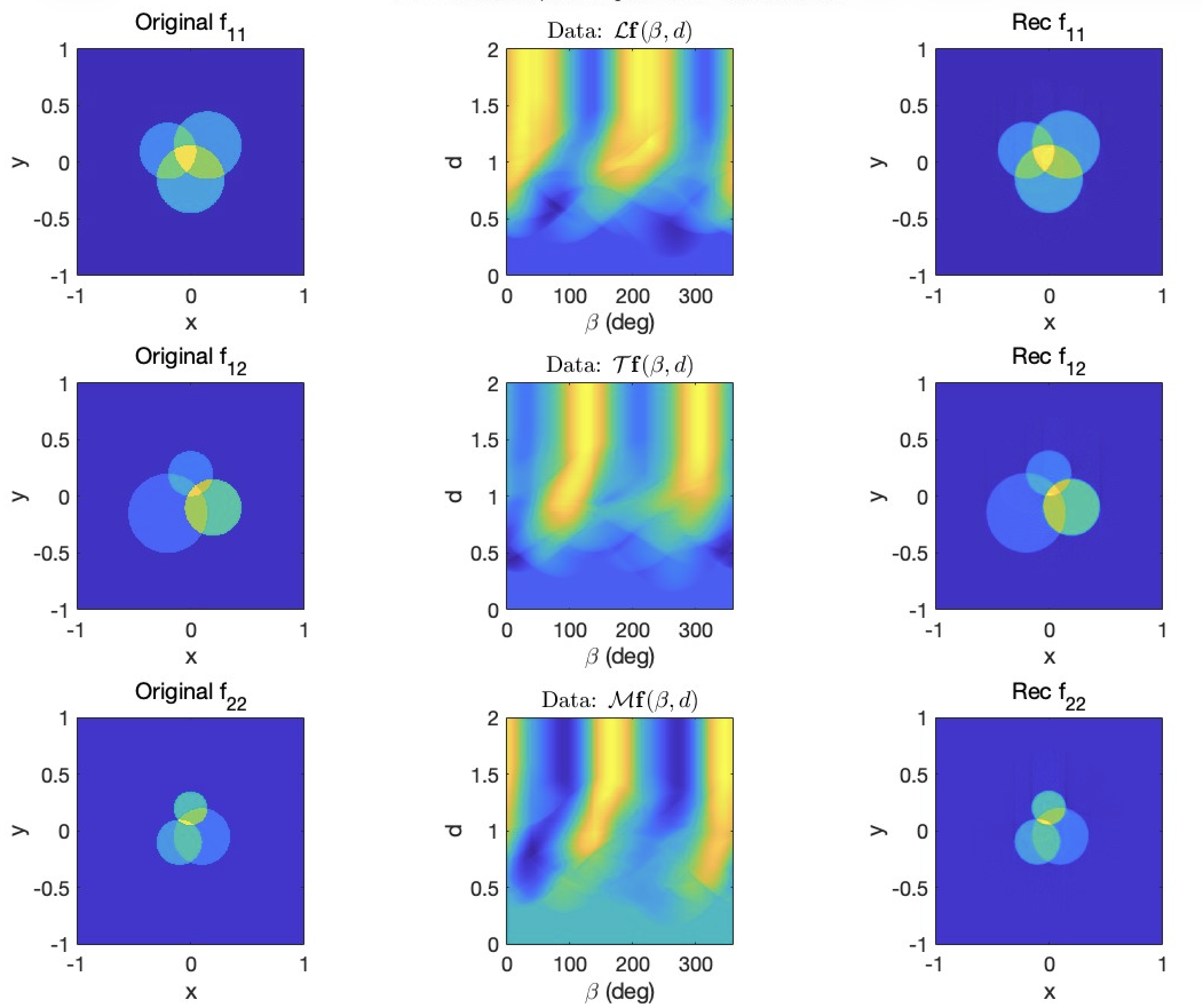
Figure 1: Reconstructed 2-tensor field (Phantom 2) from m3, m4, and m5 in noise-free conditions, showing high fidelity recovery of sharp and smooth components.
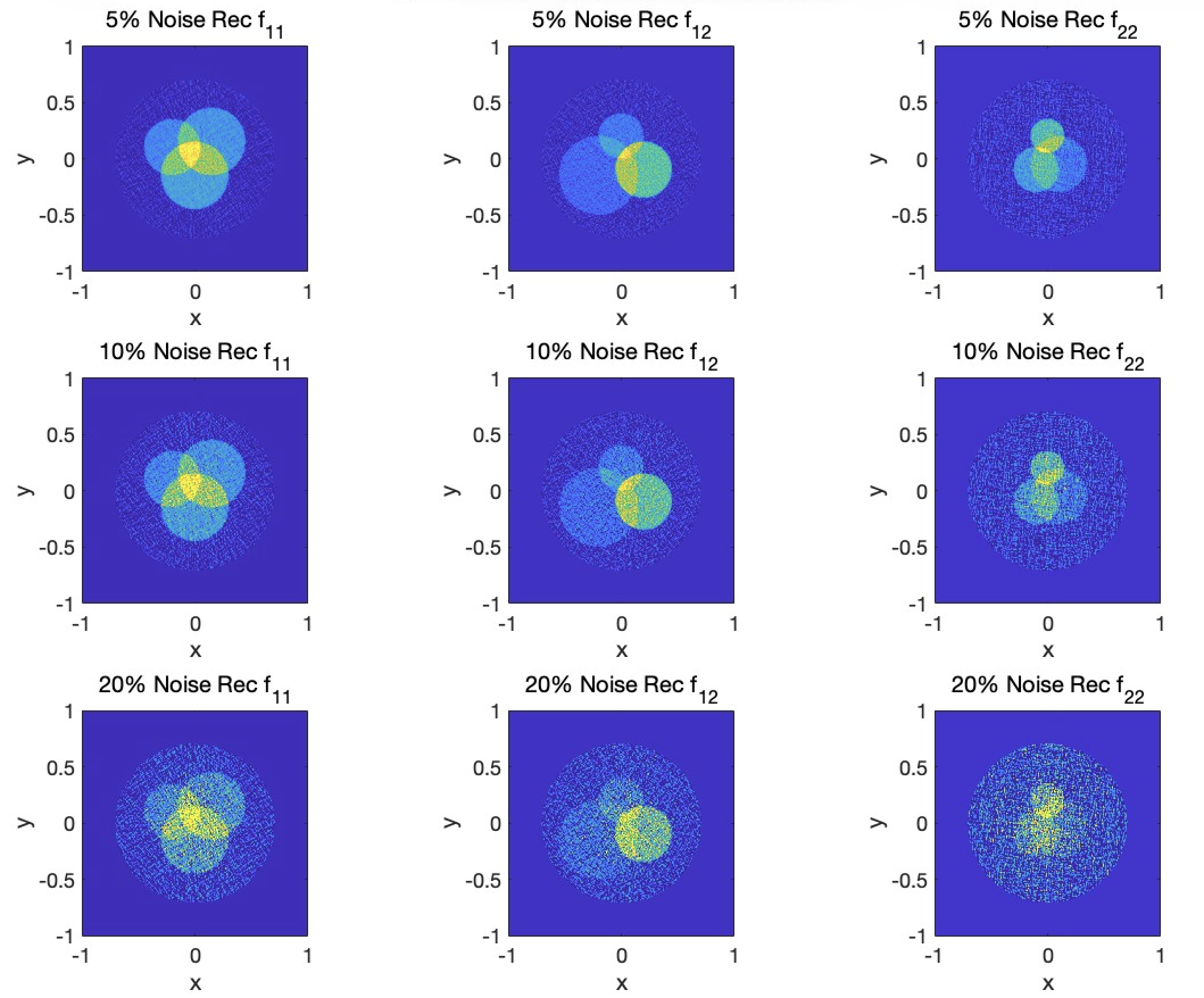
Figure 2: Reconstruction of the same 2-tensor field (Phantom 2) with additive noise, demonstrating stability and retention of key geometric features.
- Angular dependence: Reconstructions at varying scattering angles m6 demonstrate that the validity of the inversion is tightly linked to the field of view m7, with truncation artifacts outside this range for small m8 and essentially complete recovery for large m9.
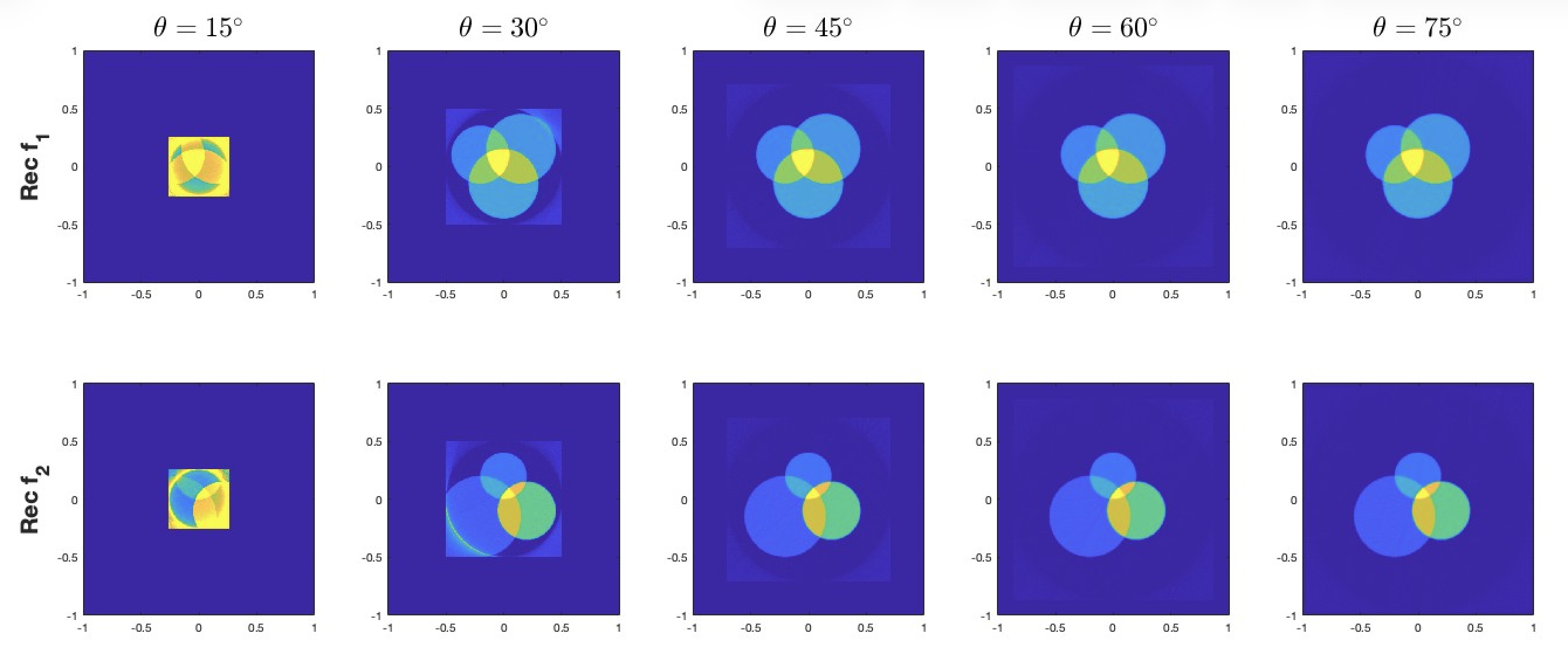
Figure 3: Reconstructed components of Phantom 2 for scattering angles f0 up to f1 illustrating expansion of reconstructible support with increasing angle.
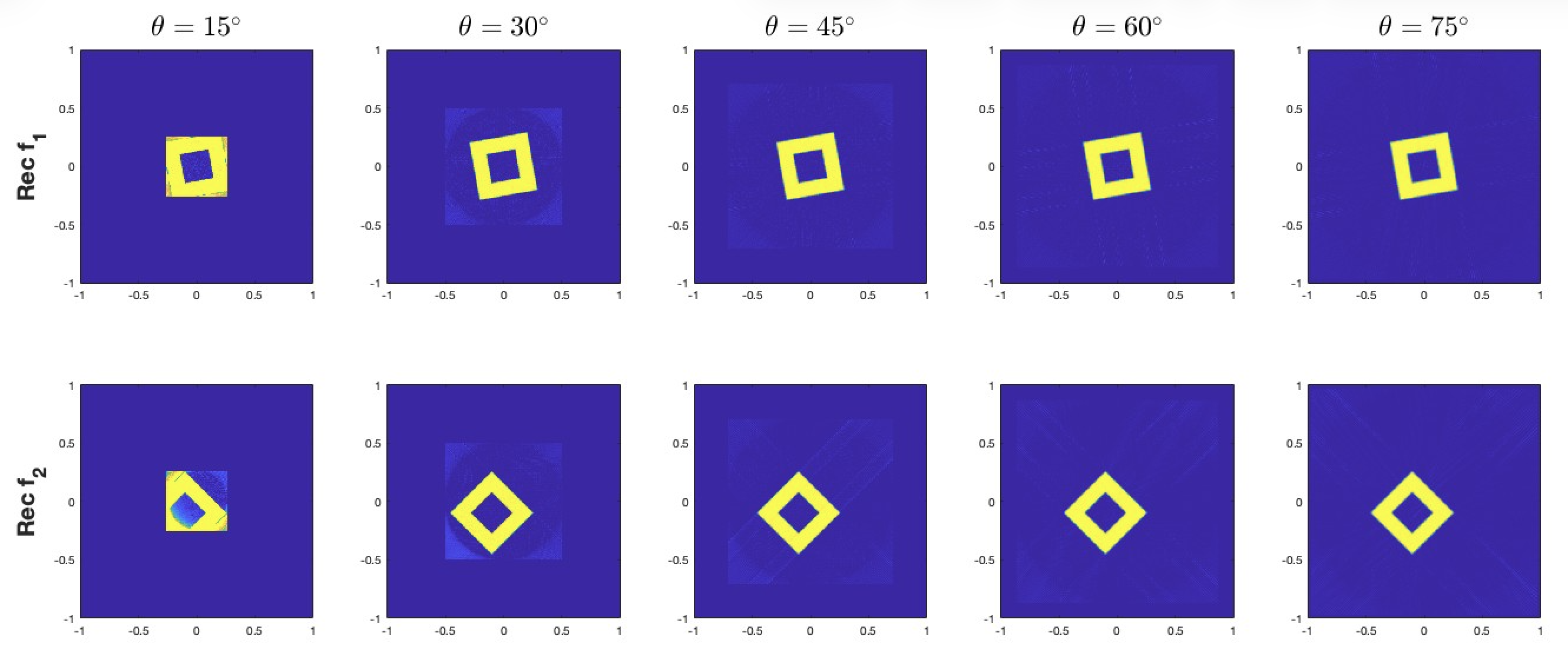
Figure 4: Similar comparison for Phantom 3, confirming field of view constraints as dictated by the theory.
- Complexity handling: The framework effectively reconstructs phantoms with nontrivial topology, such as hollow squares and overlapping structures, further attesting to the numerical soundness and the absence of spurious artifacts when theoretical support conditions are met.
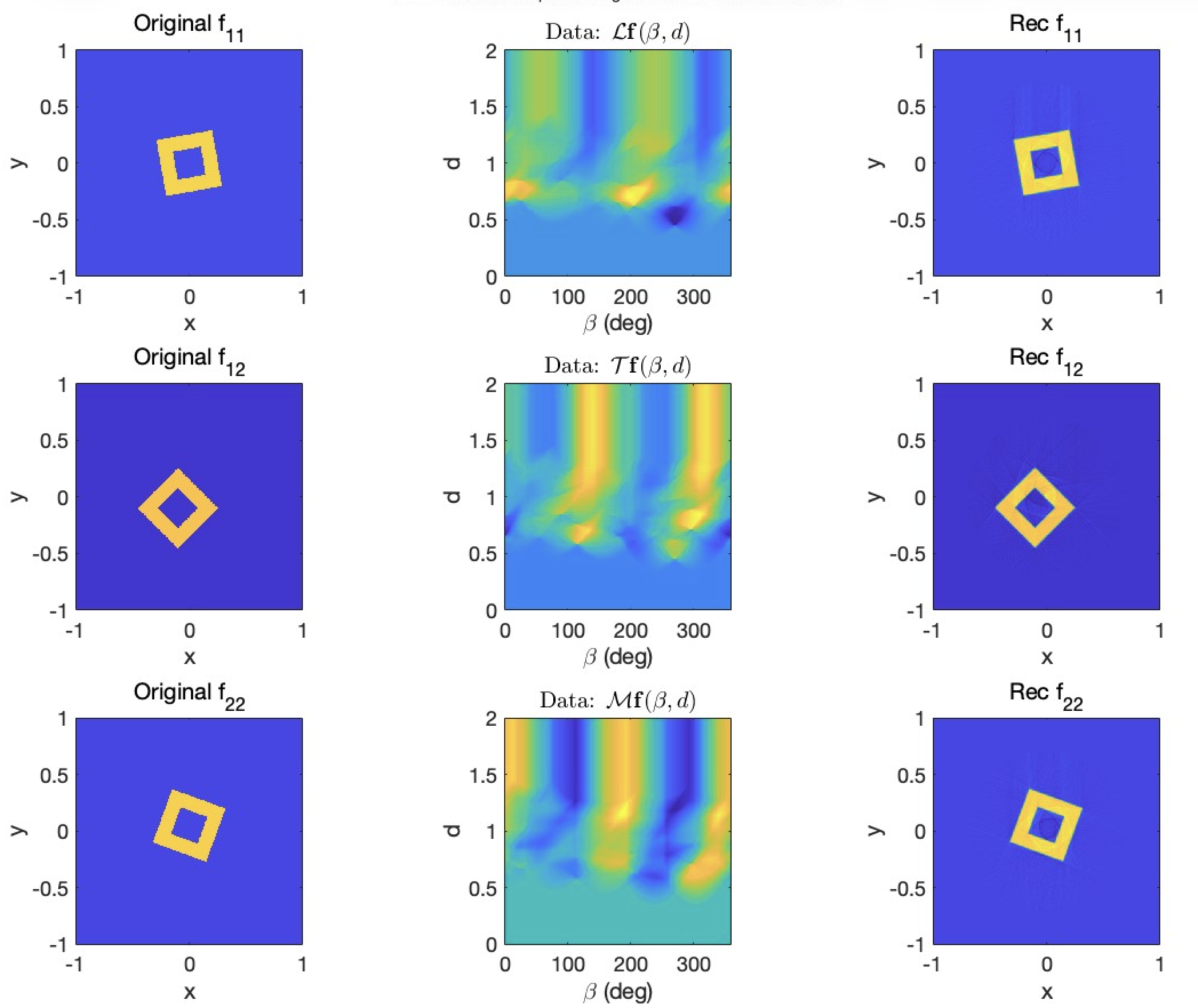
Figure 5: Reconstructed 2-tensor field (Phantom 3) from f2, f3, and f4, verifying algorithmic effectiveness on non-convex, piecewise-constant data.
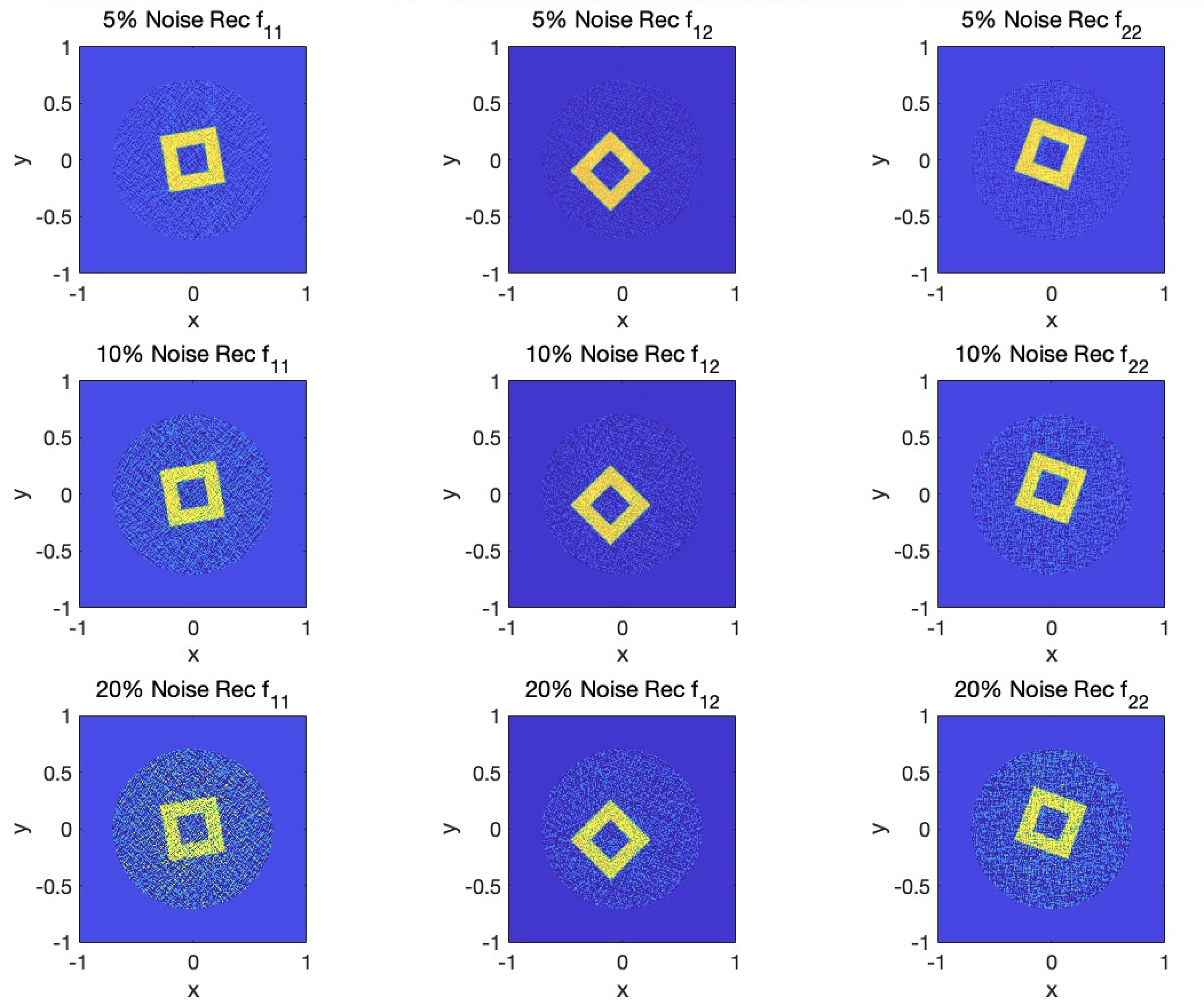
Figure 6: Phantom 3 with increasing noise, showing core structure is retained though expected perturbations emerge.
Implications and Future Perspectives
This work provides a unified framework for the inversion of V-line transforms for symmetric tensor tomography in disk geometry, bridging the analytic structure of the transform's null space with practical, numerically stable algorithms. The explicit kernel characterization clarifies data non-uniqueness and aids in understanding the potential limitations of tensor tomography in scattering-based imaging.
Practically, the robust numerical schemes and demonstrated noise resilience make these inversion formulas viable for deployment in computational pipelines for optical tomography, nuclear imaging, and materials science applications that rely on single-scattering models. The analytic machinery could be adapted to more general domains, non-constant scattering angles, or to accommodate attenuation and background inhomogeneities.
Further research directions include extending the framework to manifolds with boundary, integrating attenuation models, and developing real-time or iterative regularization strategies for severely limited or non-uniform V-line data, as well as exploring connections to other generalized Radon-type transforms that appear in modern inverse problems.
Conclusion
The paper establishes a rigorous analytic and computational treatment of V-line tensor tomography in disks, with explicit kernel decompositions and inversion formulas for symmetric f5-tensors. The schemes are validated via high-fidelity, quantitatively robust numerical experiments across a wide range of phantoms, scattering geometries, and noise scenarios. The advances substantially deepen both the theory and practice of broken-ray tomography for vector and tensor fields, laying solid foundations for further methodological innovation and application.