- The paper introduces a large deviations framework that defines stress scenario plausibility through dominant configurations in extreme financial losses.
- It employs a self-structuring transformation to shift baseline data into the tail, significantly reducing the sample size required for high-threshold events.
- Empirical studies demonstrate that the method reliably recovers key structural stress indicators across various network models.
Generating Plausible Stress Scenarios via Large Deviations: An Expert Analysis
Large Deviations Approach to Stress Scenario Generation
The paper develops a rigorous, systematic methodology for generating plausible financial stress scenarios guided by large deviations theory. Traditional financial stress tests often rely on ad hoc scenario selection or oversimplified parametric copula models, leading to scenarios that are either not severe enough to probe true systemic risk or are implausible and therefore not decision-relevant. The core innovation in this work is to endogenously define plausibility for stress scenarios: a scenario is plausible if, under the baseline tail model, it is among the dominant configurations most likely to produce a large systemic loss.
Large deviations principles (LDP) form the backbone of this approach. Under increasingly rare events (e.g., extreme portfolio losses), the conditional distribution of the underlying risk factors becomes sharply concentrated near configurations that minimize the rate function subject to the system loss constraints. This concentration allows for both theoretical characterization and practical approximation of the set of "most-likely stress configurations." The large-deviations approach thus shifts the focus from handpicked or artificially likely stress points to those scenarios with meaningful probability mass under the actual dependence structure in the tail.
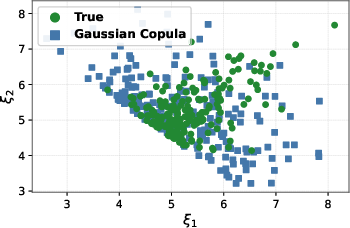
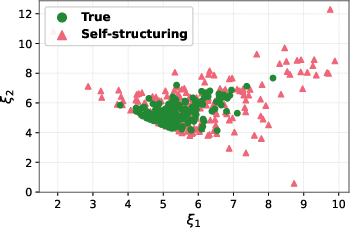
Figure 1: Gaussian copula generator illustrates standard copula-based stress sampling, which may misrepresent the true stress-generating tail dependence structure.
A significant technical advance introduced is the self-structuring transformation, Ts, which operates on baseline sample data. The transform pushes samples from observed data into the tail, amplifying the severity of realized events while carefully preserving the large-deviations geometry—that is, the most-likely stress mechanisms as defined by the tail geometry of the baseline model. The transformation is parametrized by a stretch parameter s>1, which interpolates between the observed sample and more extreme stress scenarios, and is calibrated to control the trade-off between sample size and the rareness of the stress level under consideration.
This generator is notably "plug-and-play": given a batch of baseline data and access to the system loss function, one can construct empirical samples from the stressed regime simply by transforming the originals and retaining only those that realize losses above the desired threshold. This process is computationally efficient, requiring no resampling or optimization for each scenario.
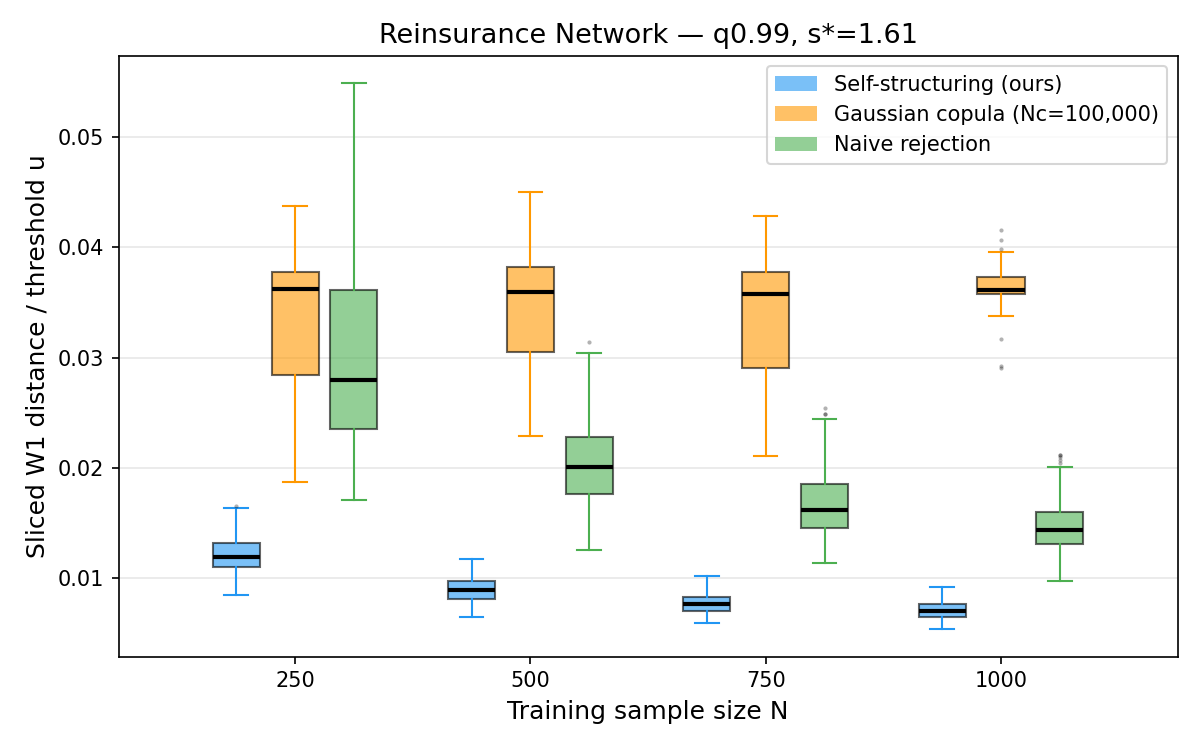
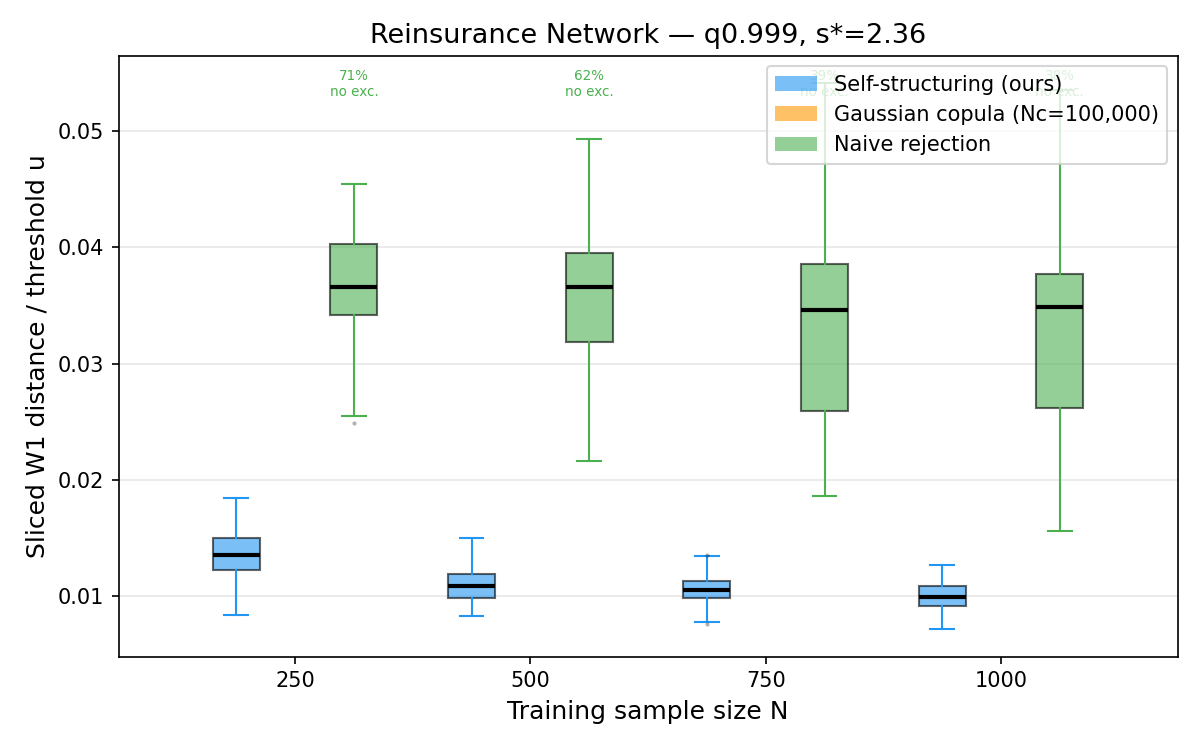
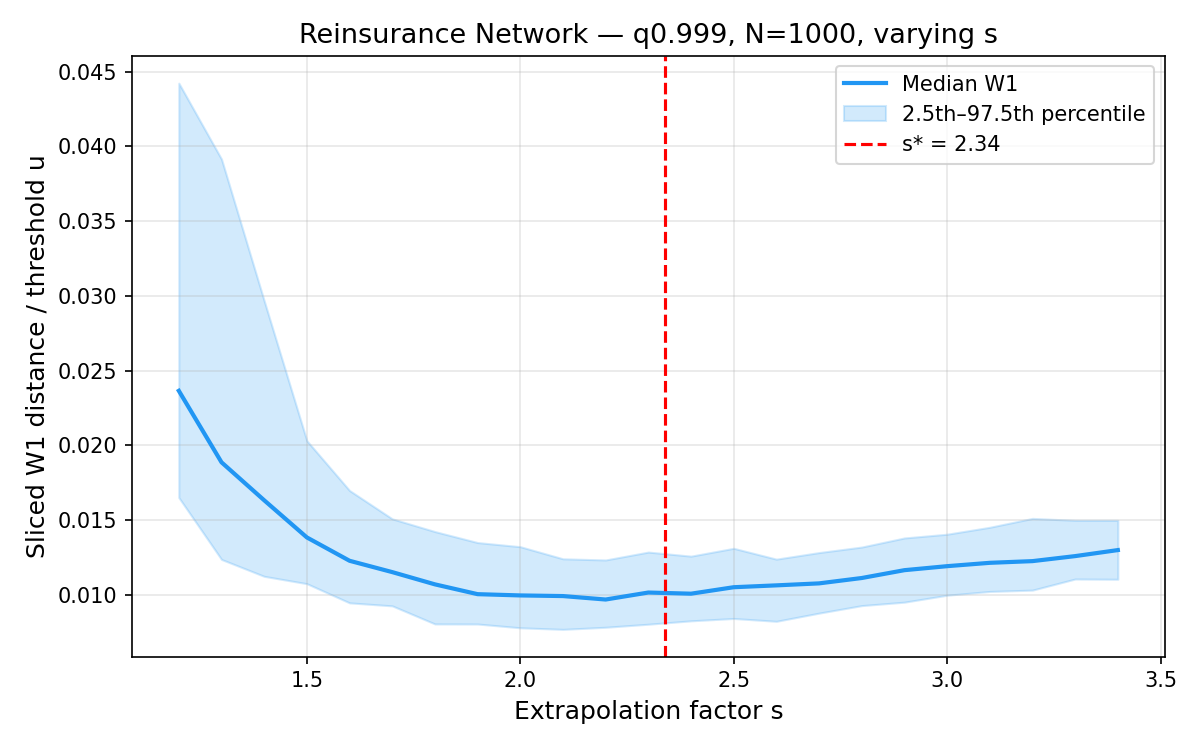
Figure 2: Distribution of normalized Wasserstein errors at stress level q=0.99 with stretch parameter s=1.61, measuring fidelity of the self-structured generator vs. Gaussian copula and empirical baseline approaches.
Efficiency and Recovery of Stress Regime Structure
Through both theoretical results and extensive simulations, the paper demonstrates that the proposed self-structuring generator satisfies two critical benchmarks:
- Representativeness: The transformed generator's scenarios, conditionally on loss exceeding a high threshold u, are exponentially likely to be near the true set of dominant large-deviations configurations. This ensures that the generator is not simply producing severe outcomes, but doing so via the right mechanisms as dictated by the original model.
- Sample Complexity Reduction: By tuning the stretch parameter s, the probability of observing threshold exceedances in the transformed data is dramatically increased relative to the baseline. The sample size required to observe a fixed number of stressed realizations at level u is reduced by a factor scaling as pu−s−α⋆ where pu is the baseline probability of exceedance and α⋆ describes the effective tail index.
The empirical studies include complex network models (bipartite reinsurance, clearing networks) with varied topologies (core-periphery, hub-and-spoke, fully connected). Across all of these, the proposed generator consistently enables accurate recovery of both the reference stressed loss law and internal diagnostics (severity, concentration, and breadth of distress) even when direct empirical resampling yields no exceedances.
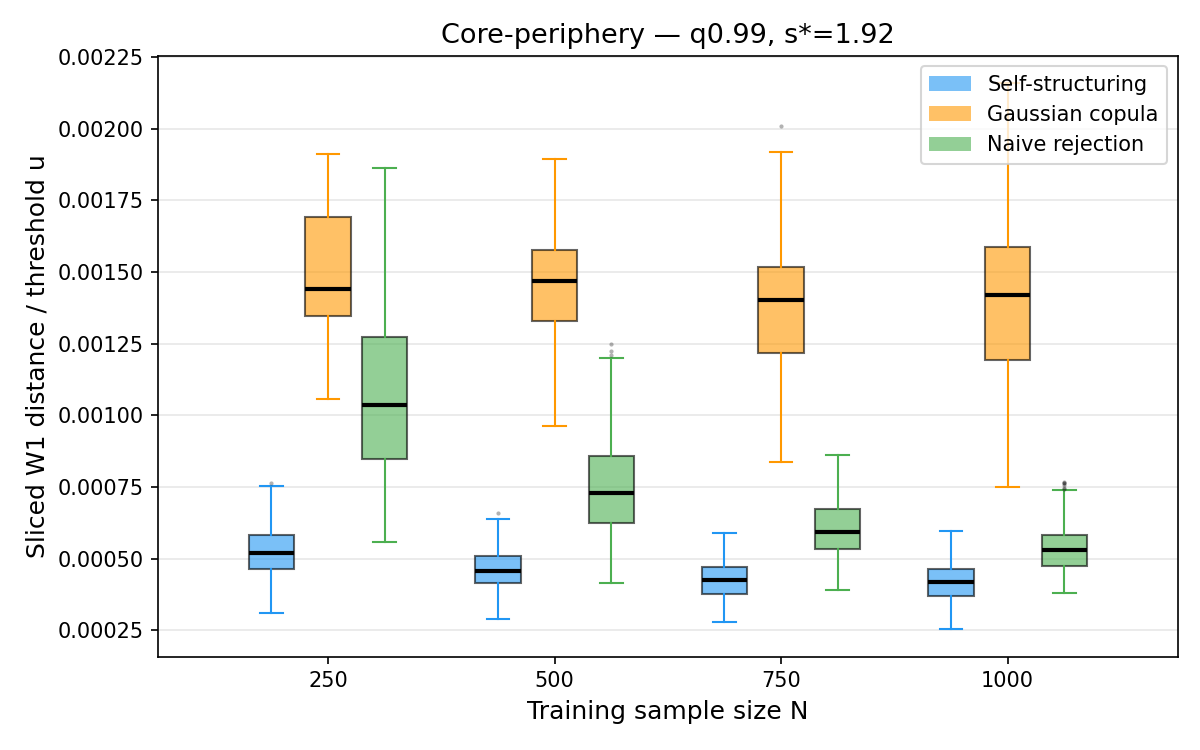
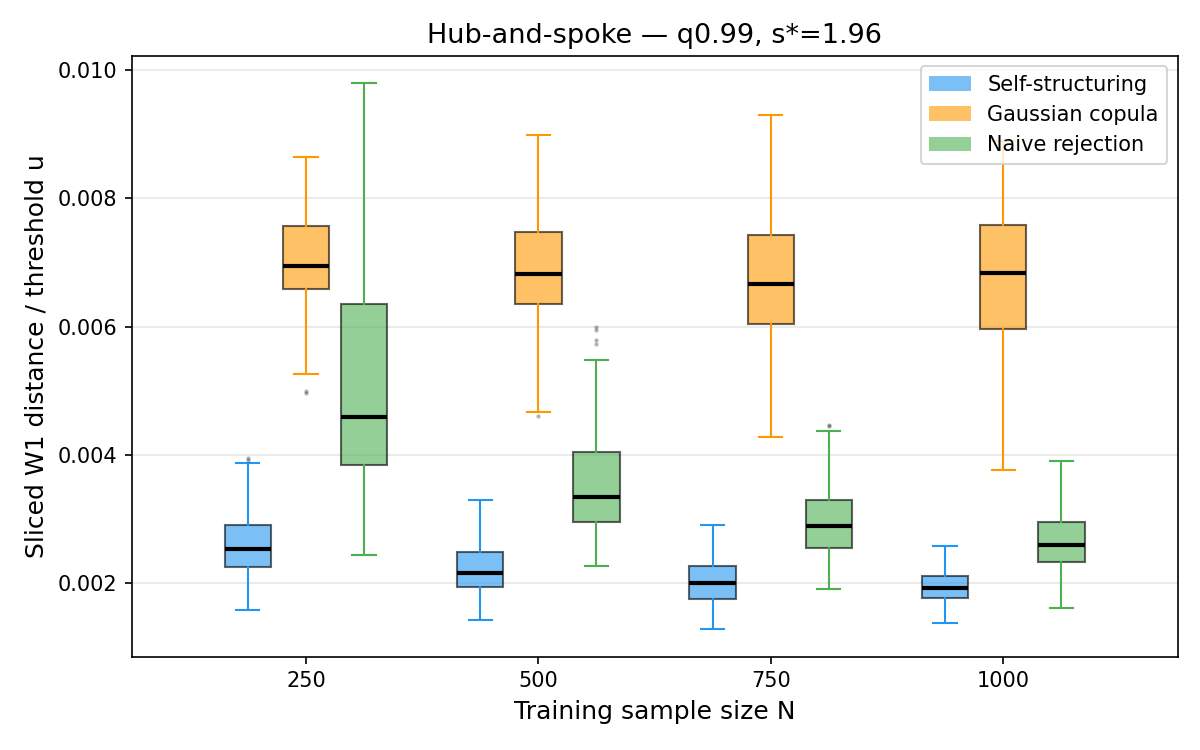
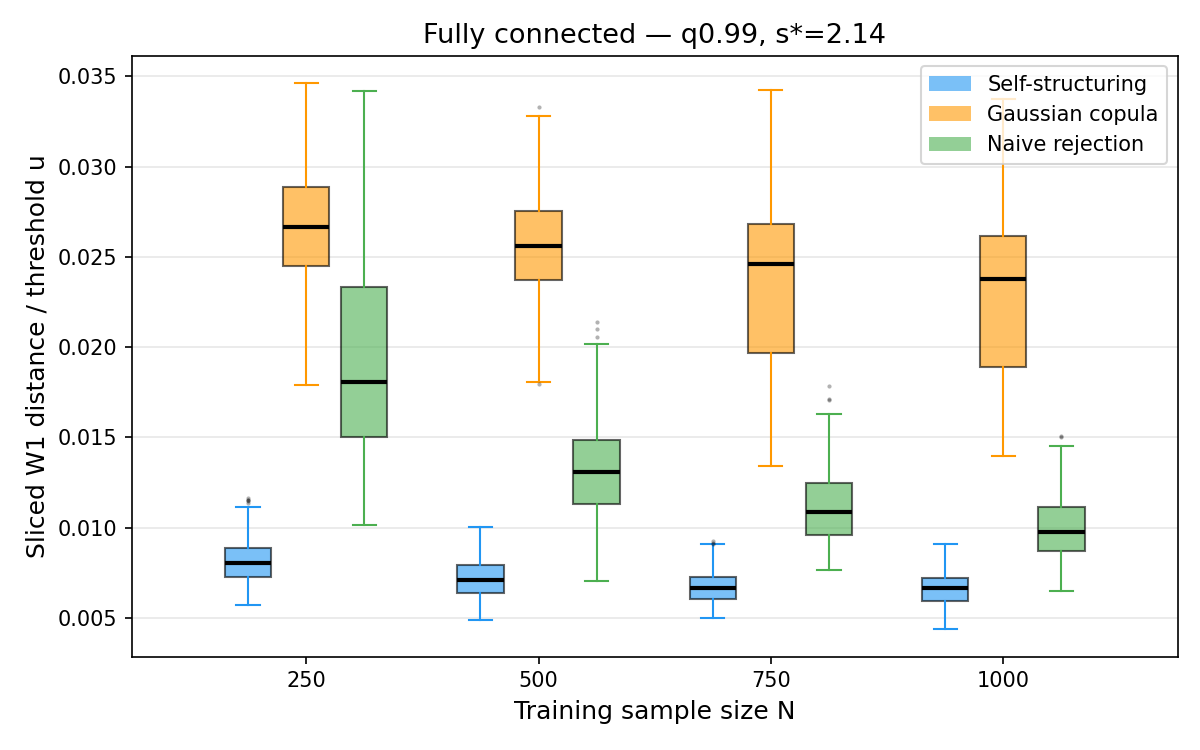
Figure 3: Wasserstein errors for three network topologies at s>10; self-structuring generator (left) outperforms Gaussian copula and naive empirical methods across all structures.
Diagnostic Recovery and Structural Plausibility
Going beyond the loss distribution itself, the paper evaluates higher-order diagnostics of systemic stress, including the fraction of distressed institutions (s>11), total loss (s>12), and a Herfindahl-Hirschman index of loss concentration (s>13). The transformed generator recovers not only the unconditional tail law, but also the structural character of distress in the stressed regime, matching reference conditional distributions for these diagnostics.
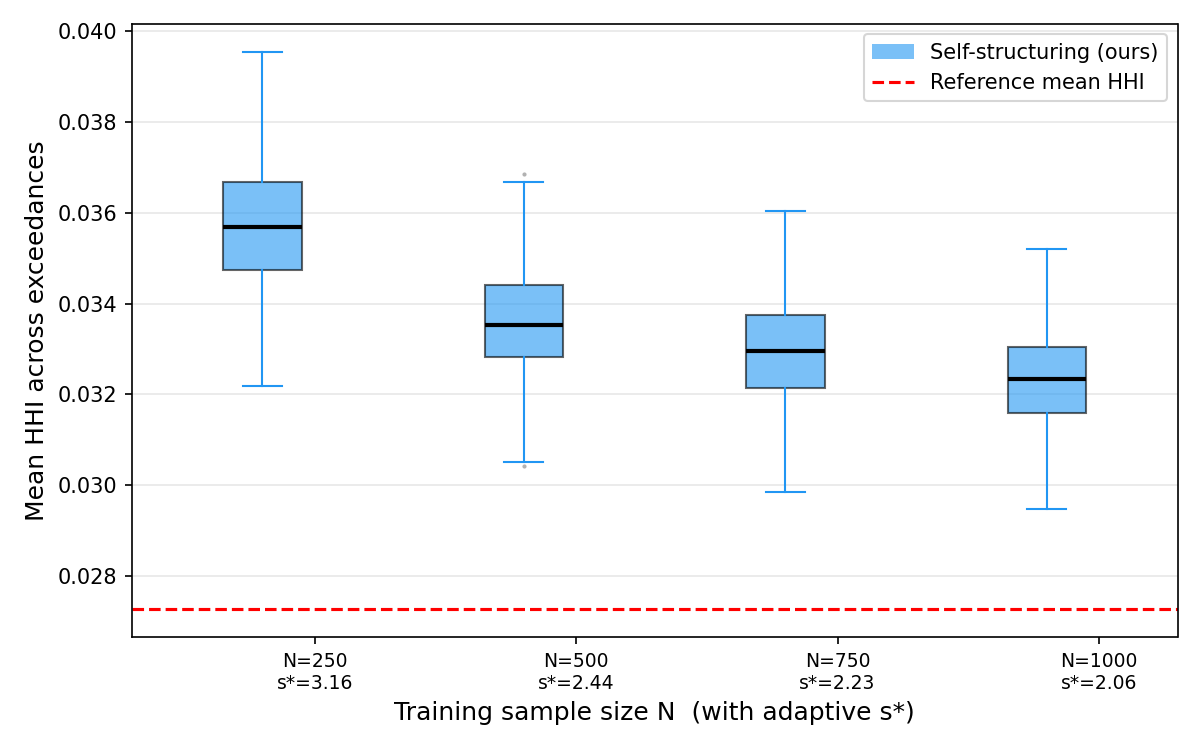
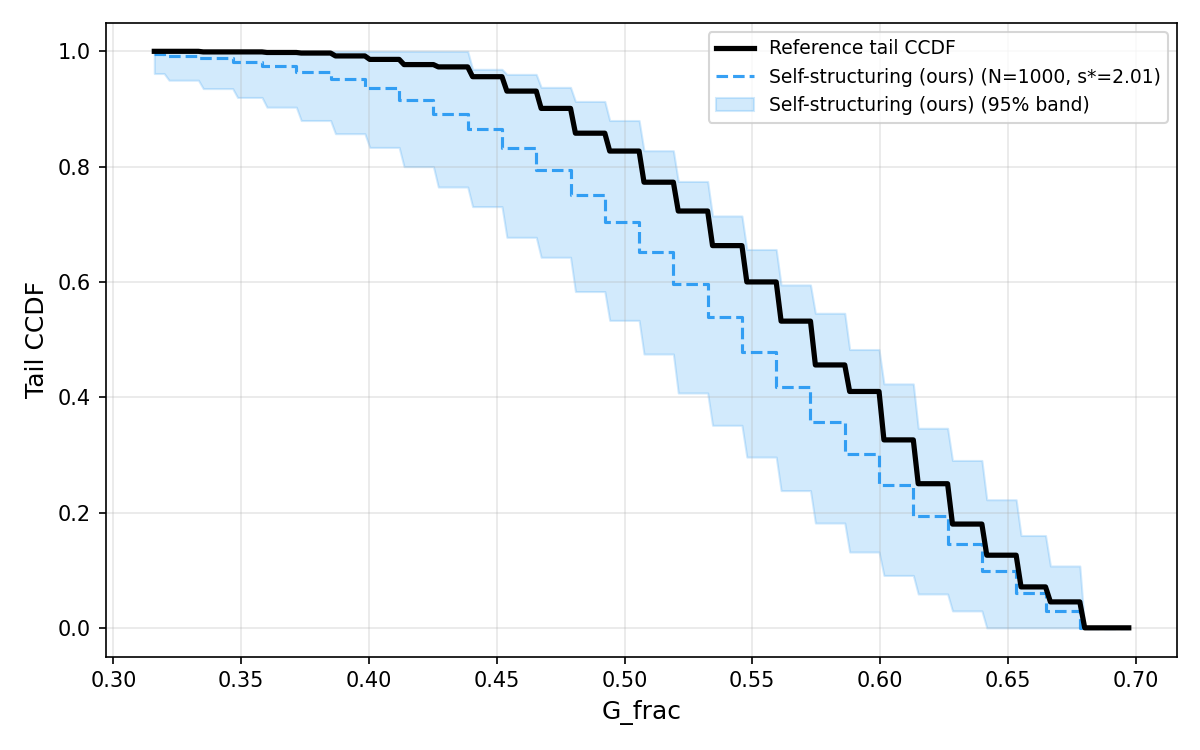
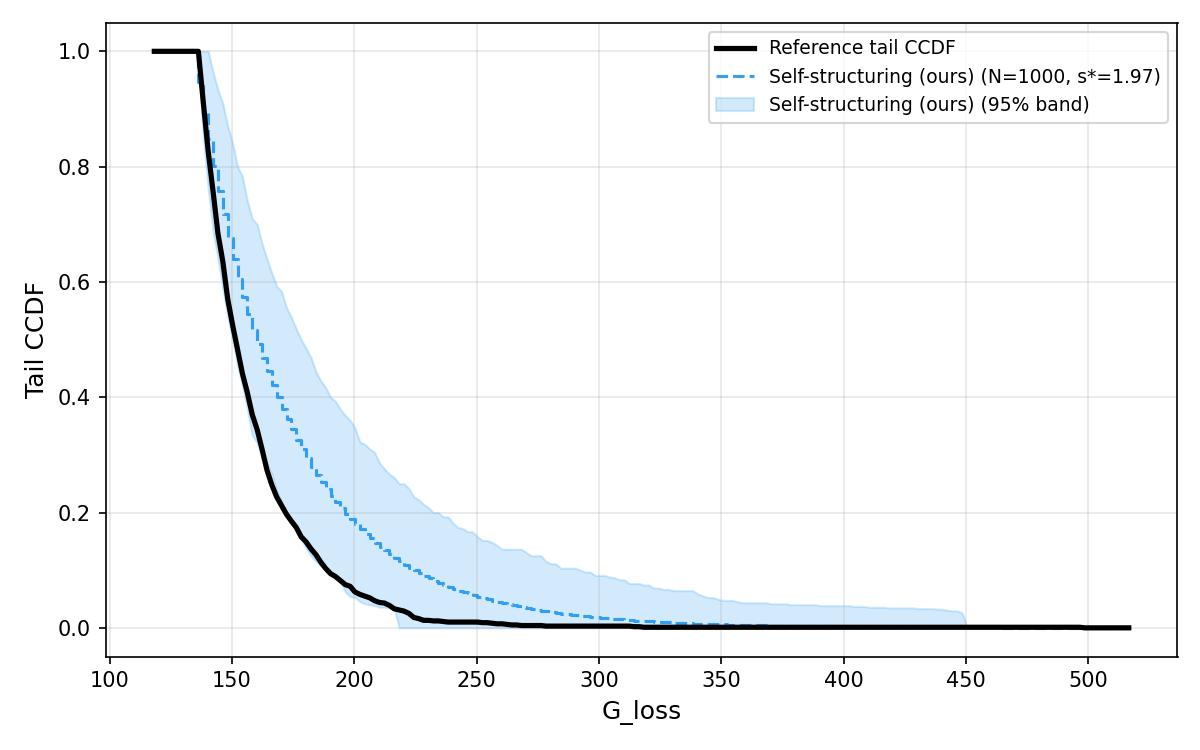
Figure 4: Conditional mean of s>14 across replications, confirming the self-structuring generator's fidelity in capturing concentration of losses.
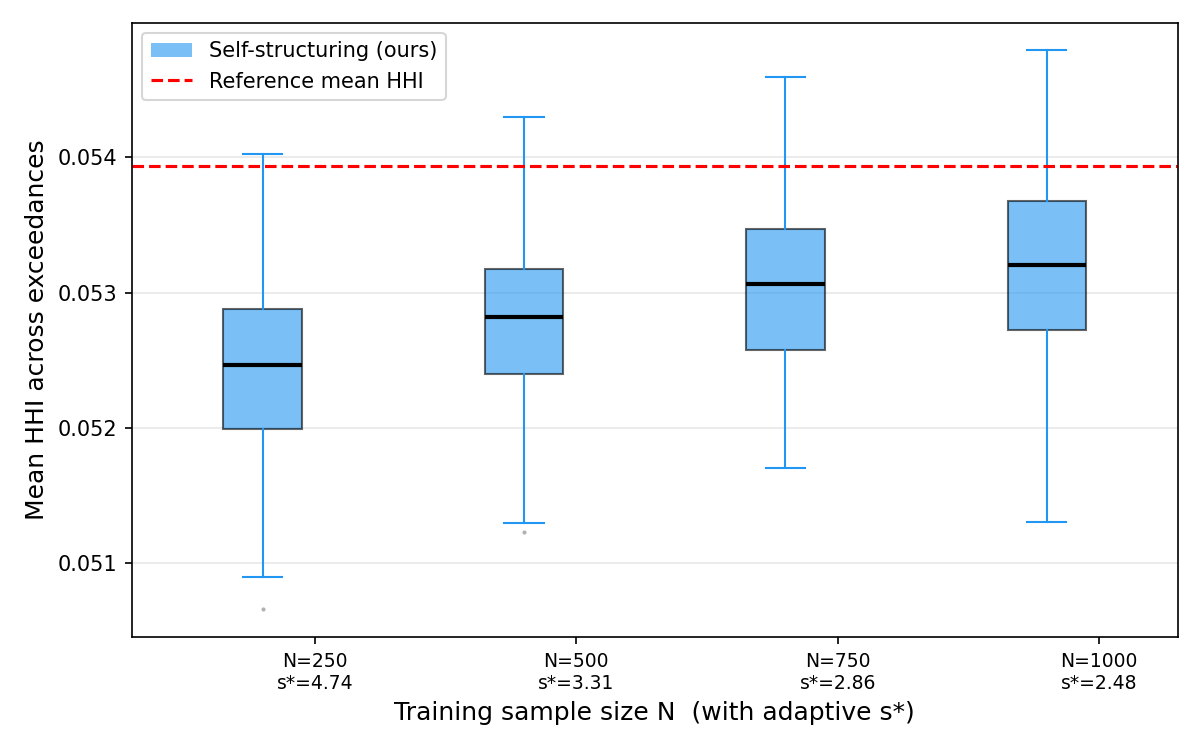
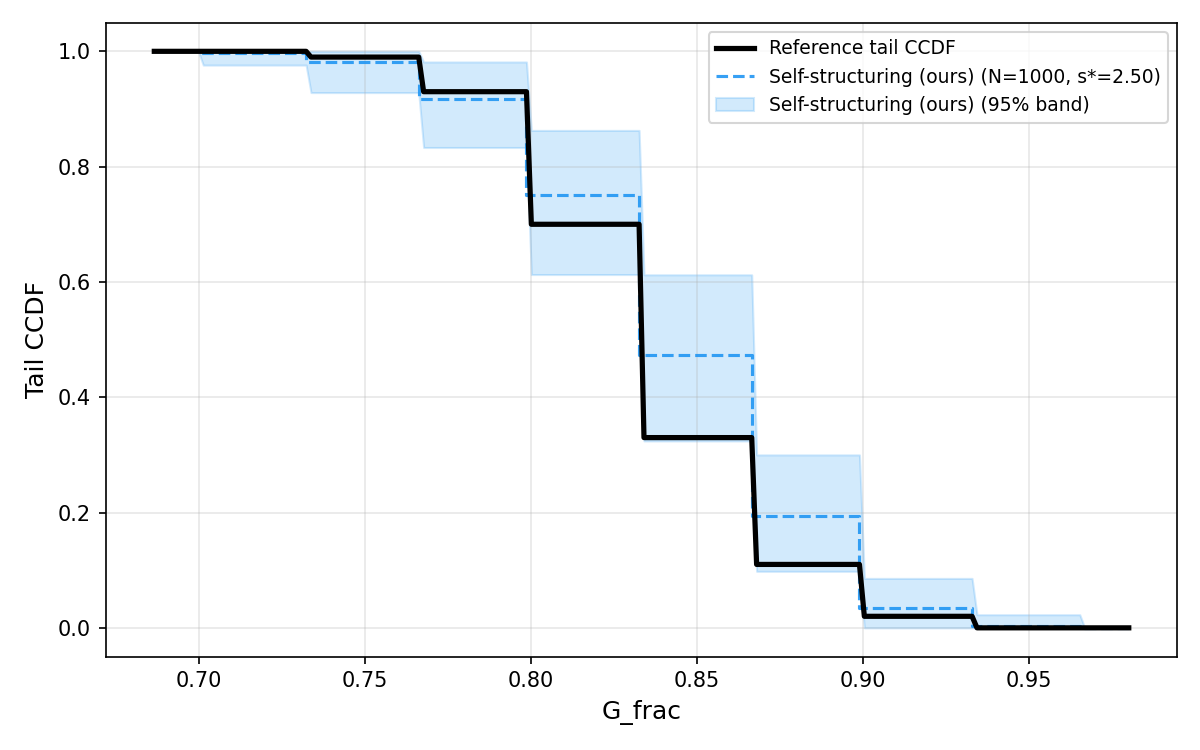
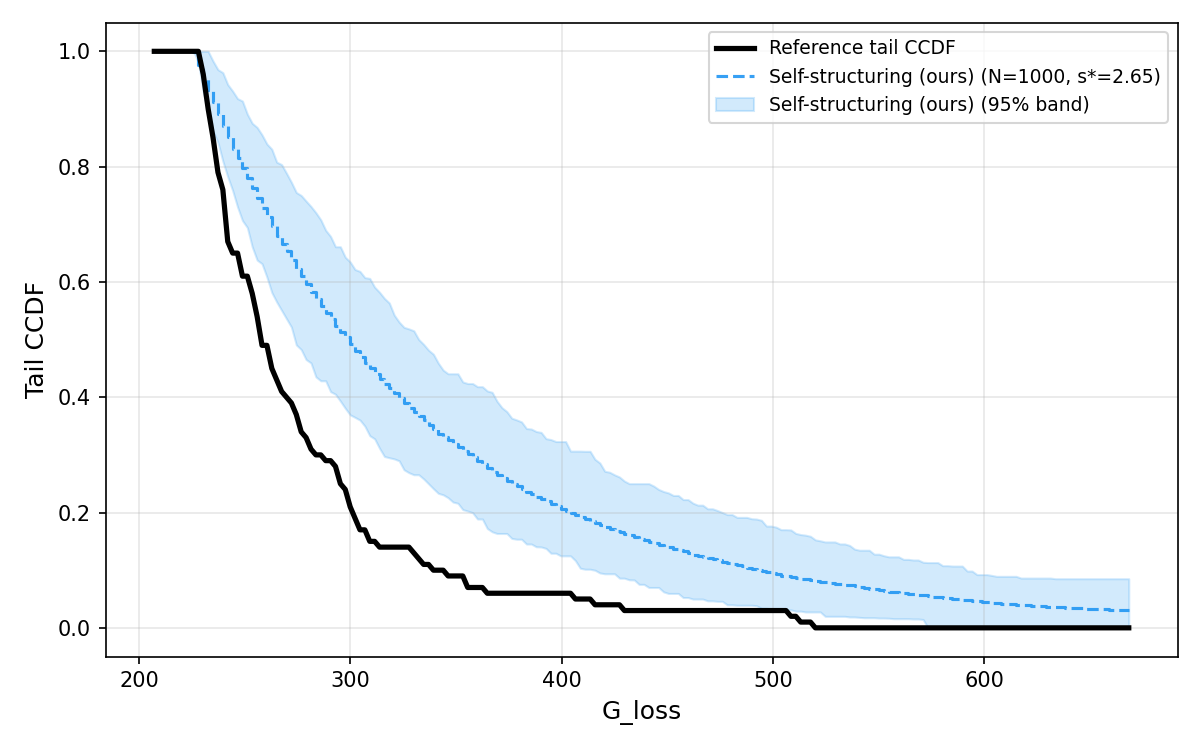
Figure 5: Conditional mean of s>15 in a clearing network setting, further illustrating accuracy across distinct systemic models.
These results are robust across sample sizes and reveal that the algorithm captures not simply marginal or first-moment properties, but the full multivariate structure of stress as quantified by sophisticated, system-level metrics.
Implications and Future Directions
The large deviations framework and self-structuring generator together offer a robust mathematical grounding for scenario-based risk management and financial supervision. This approach directly addresses the long-standing dilemma of constructing scenarios that are simultaneously severe enough to probe financial system vulnerabilities and statistically plausible given the actual risk factor structure. By embedding the plausibility criterion into the geometry of the system model, this method reduces reliance on ad hoc scenario design and copula-parameterizations that may misrepresent the true joint tail risk.
Pragmatically, the method enables informative stress scenario generation even in data-sparse settings for high thresholds—arguably the most relevant regime for systemic risk. The methodology is both computationally efficient and model-agnostic, requiring only access to baseline sample data and the system loss map for implementation.
Theoretically, this work suggests several directions for further research. These include characterizing the optimal choice of stretch parameter s>16 in more complex loss environments, extensions to dynamic or path-dependent loss functions, and integration with robust optimization and model uncertainty quantification frameworks. The approach may also be generalized outside financial contexts for any application involving rare tail events in complex stochastic systems.
Conclusion
The paper proposes a theoretically sound and implementable procedure for generating plausibly severe financial stress scenarios by leveraging the large deviations principle and adapting it to data samples via a self-structuring transformation. The approach offers precise control over scenario plausibility, dramatically improves data efficiency, and reliably recovers not only tail loss laws but also the structural markers of systemic stress. This methodology has direct relevance for high-stakes risk management in complex, high-dimensional financial systems and lays groundwork for future advances in data-driven rare-event scenario generation.
(2606.31122)

