- The paper introduces Online TT-ALS, a streaming tensor decomposition algorithm that uses deterministic incremental orthogonalization to enforce strict orthogonality and enhance stability.
- It reduces the computational complexity per update from quadratic to linear in TT-rank, achieving millisecond-level latency for real-time high-dimensional data processing.
- Experimental results validate superior reconstruction quality, error control, and scalability compared to both batch algorithms and previous online methods.
Online TT-ALS for Streaming Tensor Decomposition with Incremental Orthogonalization
Introduction and Motivation
The paper "Online TT-ALS for Streaming Tensor Decomposition with Incremental Orthogonalization" (2606.31061) introduces Online TT-ALS, a streaming tensor decomposition algorithm that extends Alternating Least Squares (ALS) to the Tensor Train (TT) format with a novel sequential orthogonalization strategy. The motivation centers on addressing limitations of both batch and existing online TT decomposition algorithms—specifically, the challenge of maintaining high approximation accuracy and computational stability in memory- and latency-constrained streaming environments.
While TT decomposition is known for its linear parameter growth in tensor order and its efficacy in compressing high-dimensional data, batch solutions (e.g., TT-SVD, TT-ALS) require full data access and exhibit prohibitive memory and latency demands for streaming or large-scale scenarios. Existing online variants, such as TT-FOA, while offering incremental updates, either sacrifice structural constraints (leading to instability and accuracy loss) or require inefficient quadratic scaling in TT rank. The presented Online TT-ALS framework is designed to surmount these issues by combining a strict enforcement of orthogonality constraints with a deterministic single-sweep update.
Methodology
The proposed algorithm operates under the streaming tensor paradigm, wherein new slices are appended sequentially to the final mode. At each time step, Online TT-ALS performs a single deterministic forward pass that incorporates incremental orthogonalization, ensuring numerical stability and efficient subspace projection for core updates.
A core innovation is the imposition of orthogonality on TT cores during both right-to-left and left-to-right sweeps. Right-orthogonalization propagates normalization and decouples core dependencies by employing QR/LQ decompositions, while sequential core updates minimize a local least-squares objective where the contraction interfaces are built incrementally from updated and historical cores.
Monotonic objective decrease and temporal smoothness are theoretically guaranteed by the structure of these orthogonality constraints—a result formalized through variational analysis. This structure enables the update complexity per time step to be reduced from O(In−1r2) in previous online TT schemes to O(In−1r), with I as the mode size, n the tensor order, and r the TT-rank.
Theoretical and Computational Analysis
The algorithm's theoretical contributions are twofold:
1. Monotonicity: The enforcement of orthogonality ensures that each core update via exact local optimization results in a non-increasing local objective, guaranteeing stable convergence without resorting to approximate, ill-conditioned solutions.
2. Temporal Smoothness: The propagation of prior state information into each step, combined with bounded input variation, allows the global reconstruction error to be tightly controlled frame-by-frame. The error after each update is provably bounded by the previous error plus the magnitude of the new data's variation.
From a computational perspective, the primary cost at each step is dominated by the contraction of the incoming frame with the left and right interface tensors, which, due to orthogonality, can be executed efficiently. The cost of QR/LQ decompositions on reshaped TT cores remains minor under practical regimes (I≫r≫n). This linear scaling in r marks a significant improvement over prior online approaches.
Experimental Results
Experiments validate the method on synthetic high-order tensors and real-world video datasets, measuring both numerical error and perceptual/structural quality metrics (RE, PSNR, M-RMSE, SSIM, MS-SSIM, LPIPS, VMAF). The algorithm is benchmarked against several baselines: batch TT-ALS, TT-ALS using data slices or batches, TT-FOA, and neural functional approaches (OFTD).
Scalability is demonstrated by achieving stable approximation error and practical latency on tensors of order up to seven (Table 1 of the paper), where all batch-type methods experience out-of-memory failure and TT-FOA becomes prohibitively slow.
Perceptual Performance: The method achieves superior SSIM, LPIPS, and VMAF scores across both static and dynamic video backgrounds, outperforming TT-FOA and significantly surpassing all batch variants in both quantitative and qualitative (visual) comparisons.

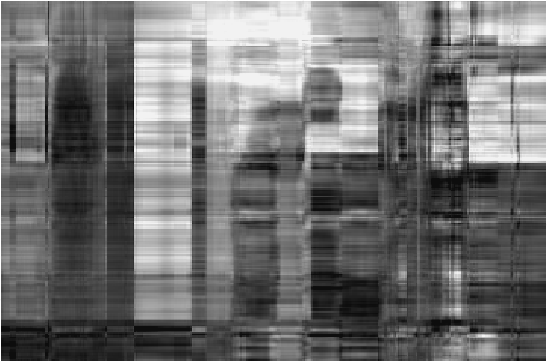

Figure 1: Example of a ground truth frame from the input streaming video tensor.






Figure 2: Grayscale video reconstructions at frame 350; top: low-rank (r=(10,10)), bottom: high-rank (r=(30,30)), illustrating the loss of fidelity in batch and first-order online baselines versus Online TT-ALS.









Figure 3: Color video reconstructions at frame 220; top: low-rank (r=(10,3,3)), bottom: high-rank (O(In−1r)0), highlighting the improved detail preservation by Online TT-ALS over baselines.
Latency Analysis: Compared to neural functional approaches (OFTD), which require tens of seconds per frame due to the iterative optimization of implicit neural representations, Online TT-ALS achieves millisecond-level latency—faster by three to four orders of magnitude for comparable approximation error.
Ablation on Orthogonality: The necessity of sequential orthogonalization is empirically verified. Removing these steps leads to rapid degradation of reconstruction quality over time, with error accumulation and unstable updates.
Implications and Future Directions
The Online TT-ALS framework provides a robust solution for real-time, high-dimensional data compression, especially well-suited for resource-constrained streaming contexts such as video surveillance, large-scale sensor arrays, and online scientific computing. Its deterministic algebraic structure and avoidance of warm-up or convergence delays address critical limitations of randomized or first-order online TT algorithms.
By bridging the gap between high fidelity, stability, and practical deployability, Online TT-ALS lays the groundwork for future research in adaptive TT-rank selection and real-time learning on hardware with tight memory and latency restrictions. The method's framework can potentially be generalized beyond visual data to other online learning problems involving high-dimensional, temporally evolving structures.
Conclusion
Online TT-ALS advances streaming tensor decomposition by ensuring monotonic, stable, and highly efficient updates within the TT format, enabled by a rigorous incremental orthogonalization schema. Empirical results confirm theoretical claims of stability, error control, and scalability, with practical superiority over both batch and recent deep learning paradigms in the streaming regime. The paper opens the door to further research in adaptive and resource-aware tensor network algorithms for real-time learning and data analytics.