Quantifying Quantum Correlations in Annihilation Photon Pairs under Compton Scattering
Published 27 Jun 2026 in quant-ph and hep-ph | (2606.29035v1)
Abstract: We present a theoretical study of the evolution of polarization entanglement and quantum coherence in 511 keV photon pairs produced by para-positronium decay during successive Compton scattering events. We start with a maximally entangled Bell state and employ the generalized Stokes-Mueller formalism to derive the two-photon density matrix following single-, double-, and triple-Compton scattering, explicitly considering both polar and azimuthal scattering geometries. Using this framework, we quantify the degradation of quantum correlations through concurrence (as a measure of entanglement) and the l1-norm (as a measure of coherence). Our results demonstrate that entanglement is highly sensitive to the scattering geometry and disappears near right-angle scattering, while quantum coherence remains finite even in regimes where entanglement vanishes completely. These findings provide a unified description of polarization-dependent decoherence in annihilation photon pairs and clarify the distinct roles of entanglement and coherence in realistic two-photon interactions. These results are relevant for quantum-enhanced positron emission tomography and highlight the persistence of quantum resources in scattering-dominated media.
The paper introduces a rigorous method to quantify polarization entanglement using concurrence and coherence via the l1-norm in sequential Compton scattering.
Single, double, and triple scattering analyses reveal that entanglement is highly sensitive to polar angles while coherence remains nonzero even when entanglement vanishes.
The findings offer key insights for quantum-enhanced PET and imaging, distinguishing between fragile nonlocal entanglement and robust local coherence.
Quantitative Analysis of Quantum Correlations in Annihilation Photon Pairs under Compton Scattering
Introduction and Motivation
This paper presents a rigorous theoretical investigation of polarization entanglement and quantum coherence in 511 keV photon pairs generated via para-positronium (p-Ps) annihilation, tracking their evolution during sequential Compton scattering events. Using the generalized Stokes–Mueller formalism, the study systematically quantifies both bipartite entanglement (via concurrence) and quantum coherence (via the l1-norm) for one, two, and three successive scatterings, accounting for arbitrary polar and azimuthal geometries. The analysis provides clarity on the relative fragility of entanglement and the resilience of coherence, directly addressing questions relevant to quantum-enhanced positron emission tomography (PET) and the robustness of quantum resources in complex environments.
Theoretical Framework
The initial state considered is the Bell singlet
∣Ψ−⟩=21(∣H1V2⟩−∣V1H2⟩),
which represents a maximally entangled state in polarization. To characterize the effect of Compton scattering, the authors employ the Mueller-Stokes formalism, propagating the two-photon Stokes matrix through combinations of rotation (M) and Compton-scattering (T) operators applied in geometrically specified sequences corresponding to each event. The full two-photon density matrix after multiple scatterings is reconstructed via analytic expressions that reflect these transformations.
The degraded quantum correlations are evaluated via:
Concurrence: Directly quantifies two-qubit entanglement, ranging from 0 (separable) to 1 (maximal).
l1-norm of coherence: Sums the magnitudes of off-diagonal elements in the density matrix, measuring basis-dependent quantum superposition, with robustness under decoherence.
The use of these measures enables explicit mapping of the quantum resource landscape as functions of both scattering order and geometry.
Polarization Entanglement Under Successive Compton Scattering
Single Compton Scattering
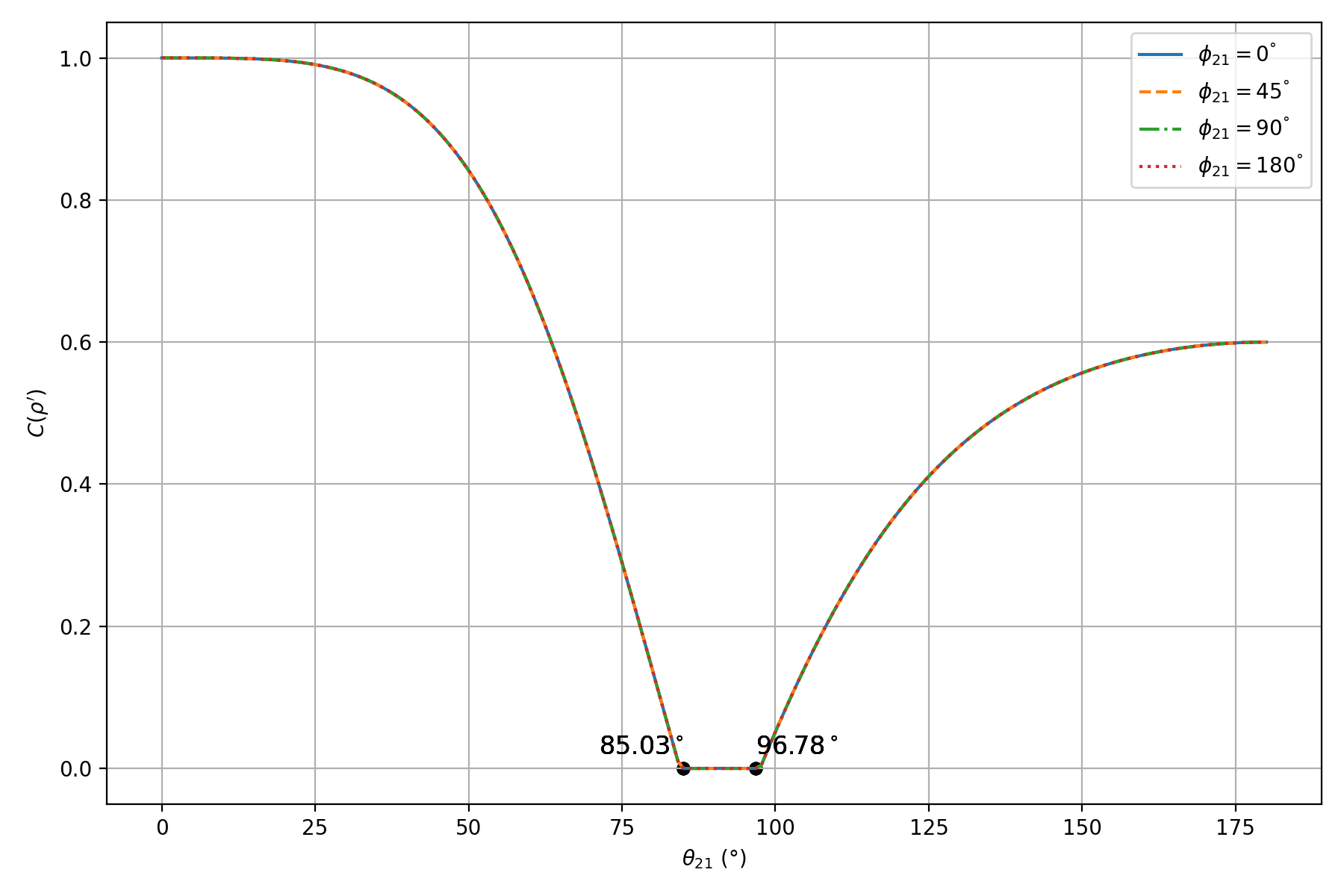
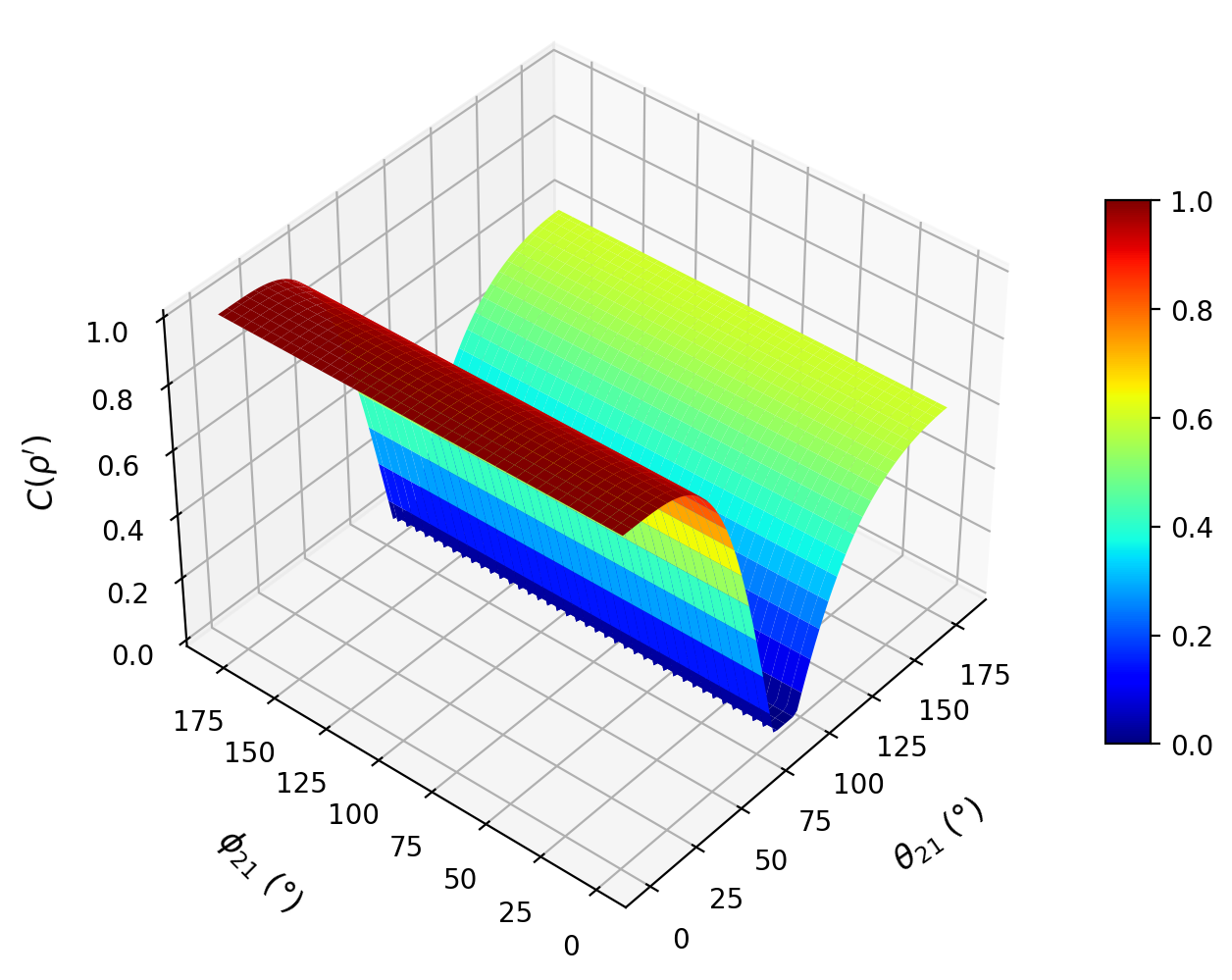
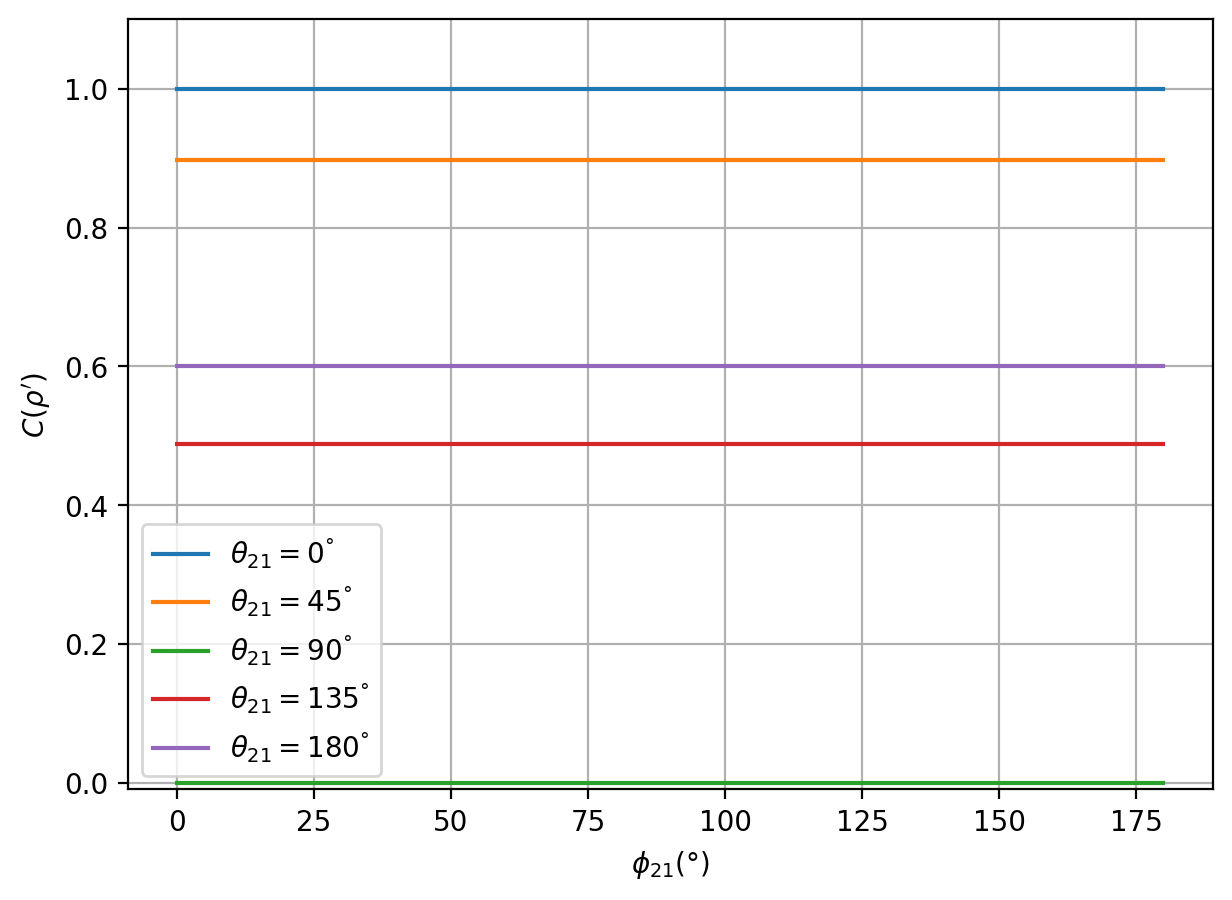
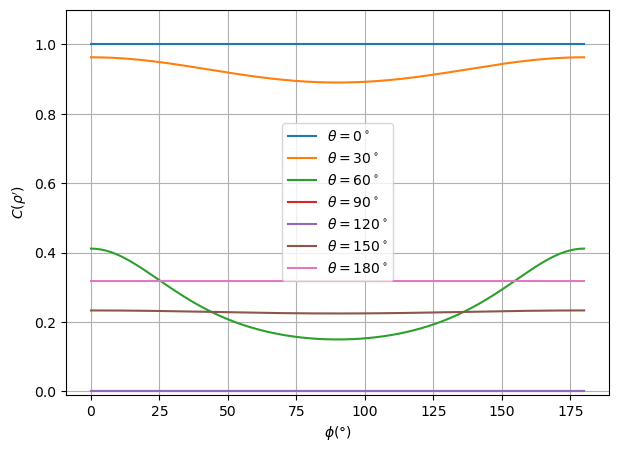
After a single scattering (with photon 2), concurrence C(ρ′) depends sensitively on the polar scattering angle θ21, but not on the azimuthal angle ϕ21. Notably, concurrence drops sharply and vanishes in the vicinity of right-angle (θ21≈90∘) scattering, consistent with maximal leakage of polarization information to the environment at this geometry.
Figure 1: Concurrence l10 for single Compton scattering as a function of polar angle l11, exhibiting a minimum near l12.
Figure 2: Concurrence l13 for single Compton scattering as a function of azimuthal angle l14 showing invariance across l15.
Double Compton Scattering
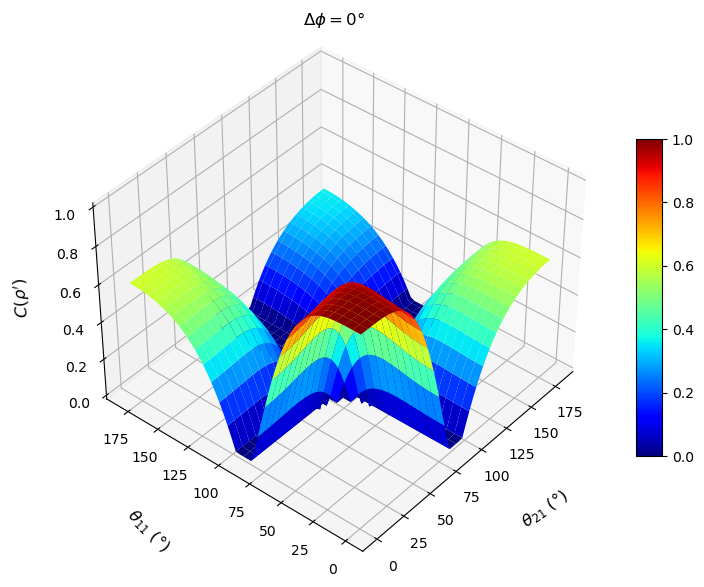
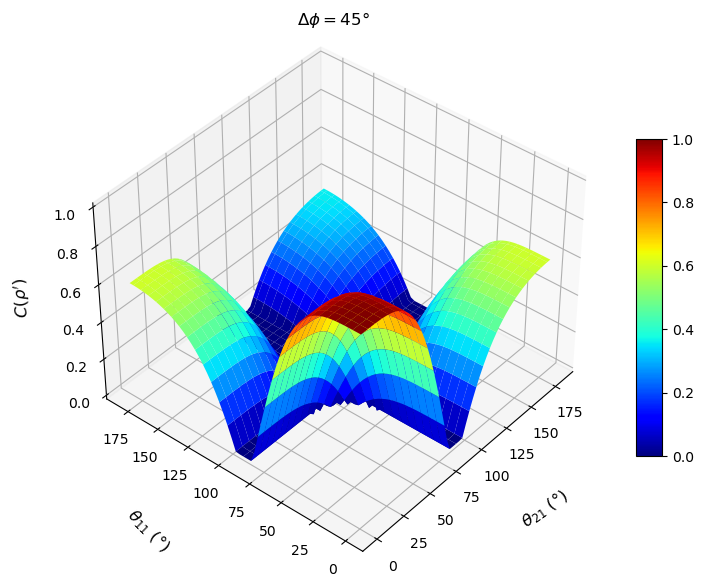
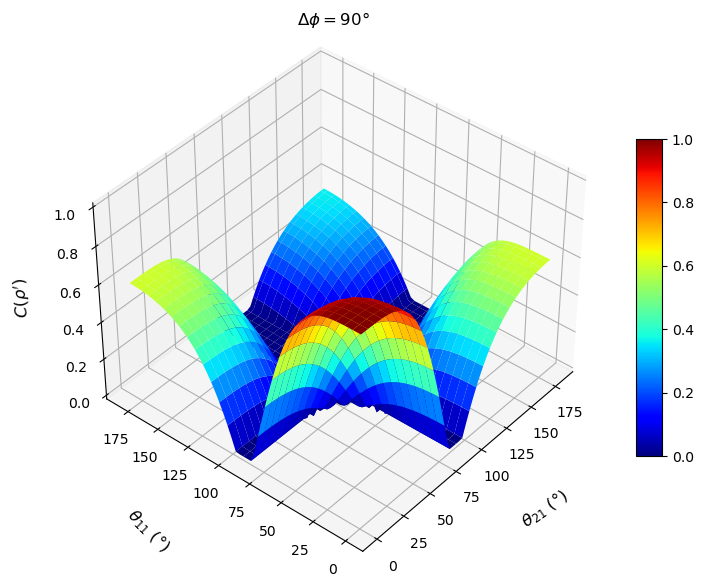
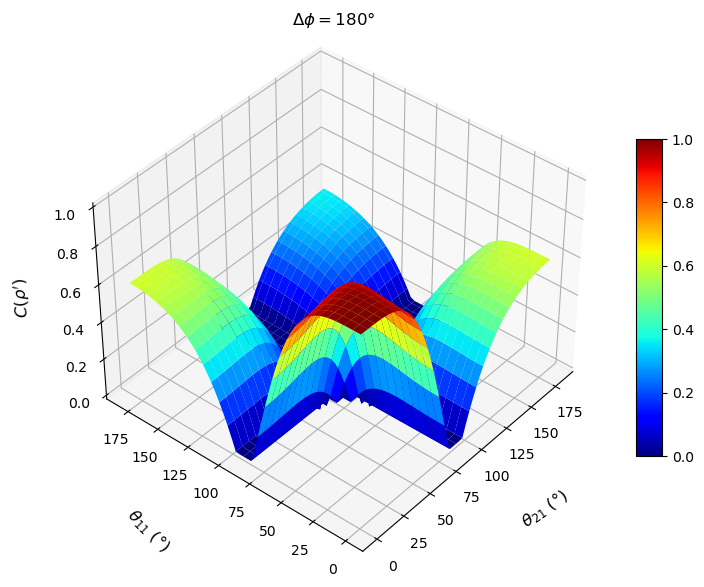
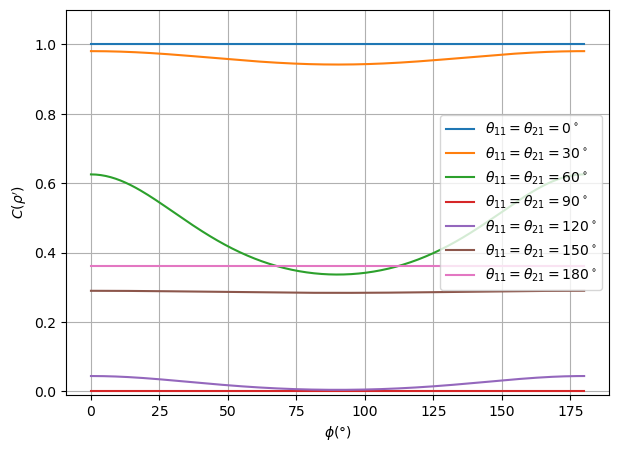
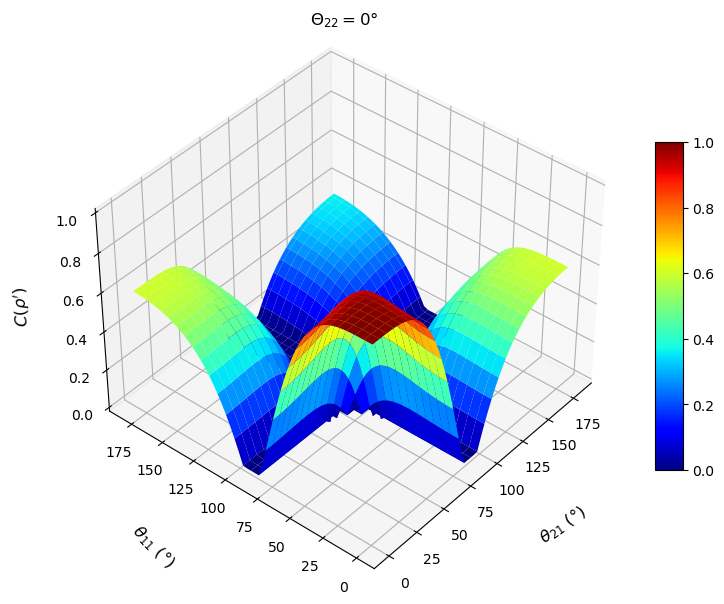
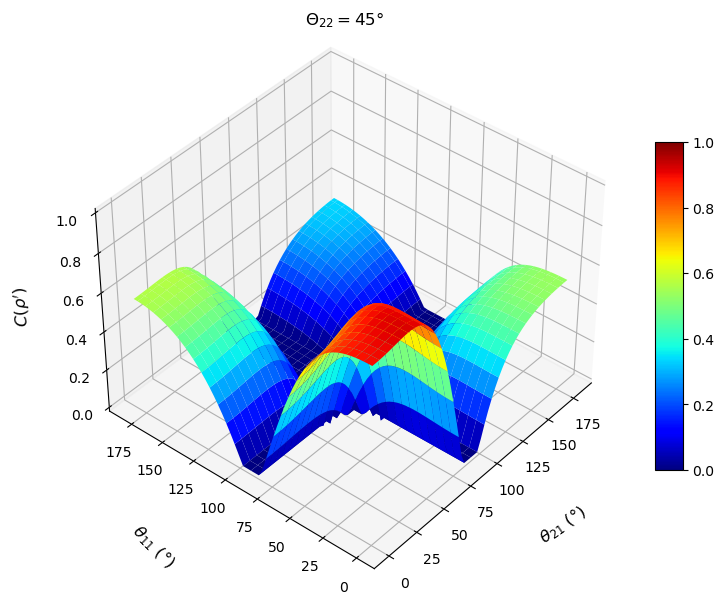
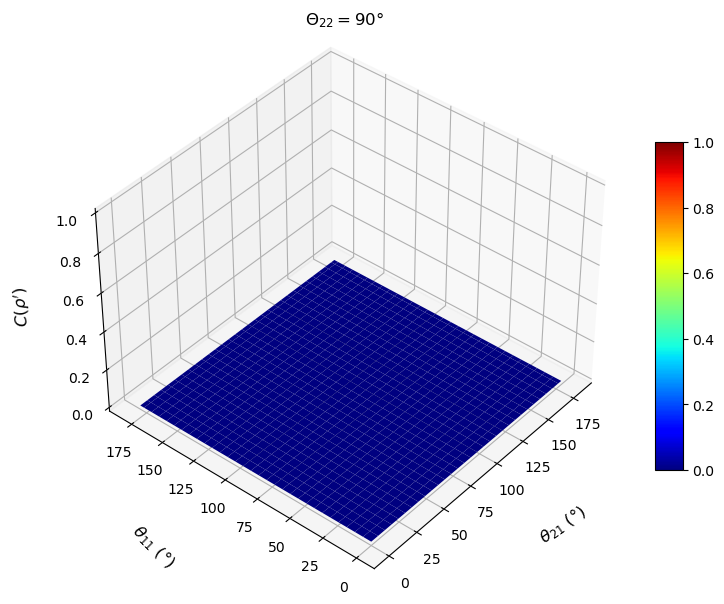
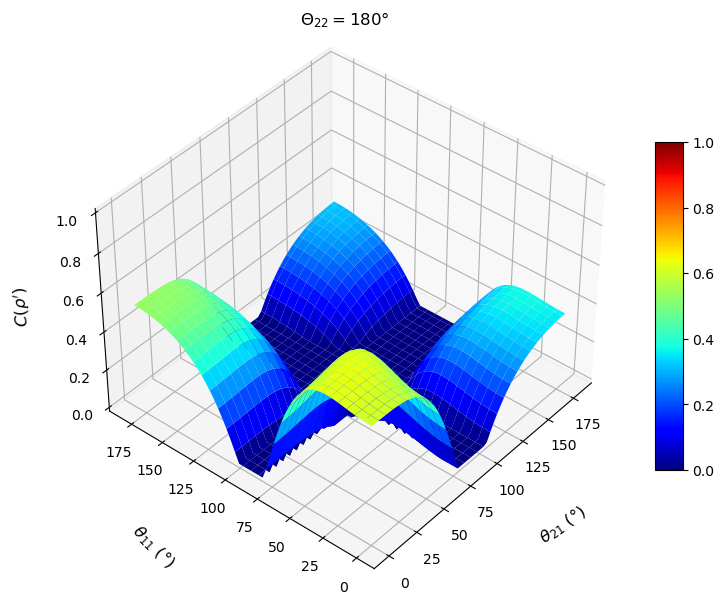
With both photons undergoing one scattering each, concurrence becomes a function of two polar angles (l16, l17) and their azimuthal difference l18. The entanglement can vanish for a wide range of joint "right-angle" geometries, forming a valley of zero-concurrence in parameter space.
Figure 3: Concurrence l19 for double Compton scattering showing the joint dependence on both polar angles, with broad regions of vanishing entanglement.
Figure 4: Concurrence ∣Ψ−⟩=21(∣H1V2⟩−∣V1H2⟩),0 for double Compton scattering as a function of the azimuthal difference ∣Ψ−⟩=21(∣H1V2⟩−∣V1H2⟩),1 for various polar angles, highlighting increased sensitivity outside low-angle regimes.
Triple Compton Scattering
A further scattering event (two on one photon, one on the partner) extends and deepens the regions in which concurrence vanishes, especially when any of the three polar angles is near ∣Ψ−⟩=21(∣H1V2⟩−∣V1H2⟩),2. The azimuthal dependence remains subordinate to the dominance of polar angle-induced decoherence.
Figure 5: Concurrence ∣Ψ−⟩=21(∣H1V2⟩−∣V1H2⟩),3 for triple Compton scattering versus ∣Ψ−⟩=21(∣H1V2⟩−∣V1H2⟩),4, showing entanglement collapse across a broader parameter region as the third scattering is introduced.
Figure 6: Concurrence ∣Ψ−⟩=21(∣H1V2⟩−∣V1H2⟩),5 for triple Compton scattering as a function of ∣Ψ−⟩=21(∣H1V2⟩−∣V1H2⟩),6, with the location of zero-concurrence intervals dictated by polar angles.
Quantum Coherence Dynamics
Single Compton Scattering
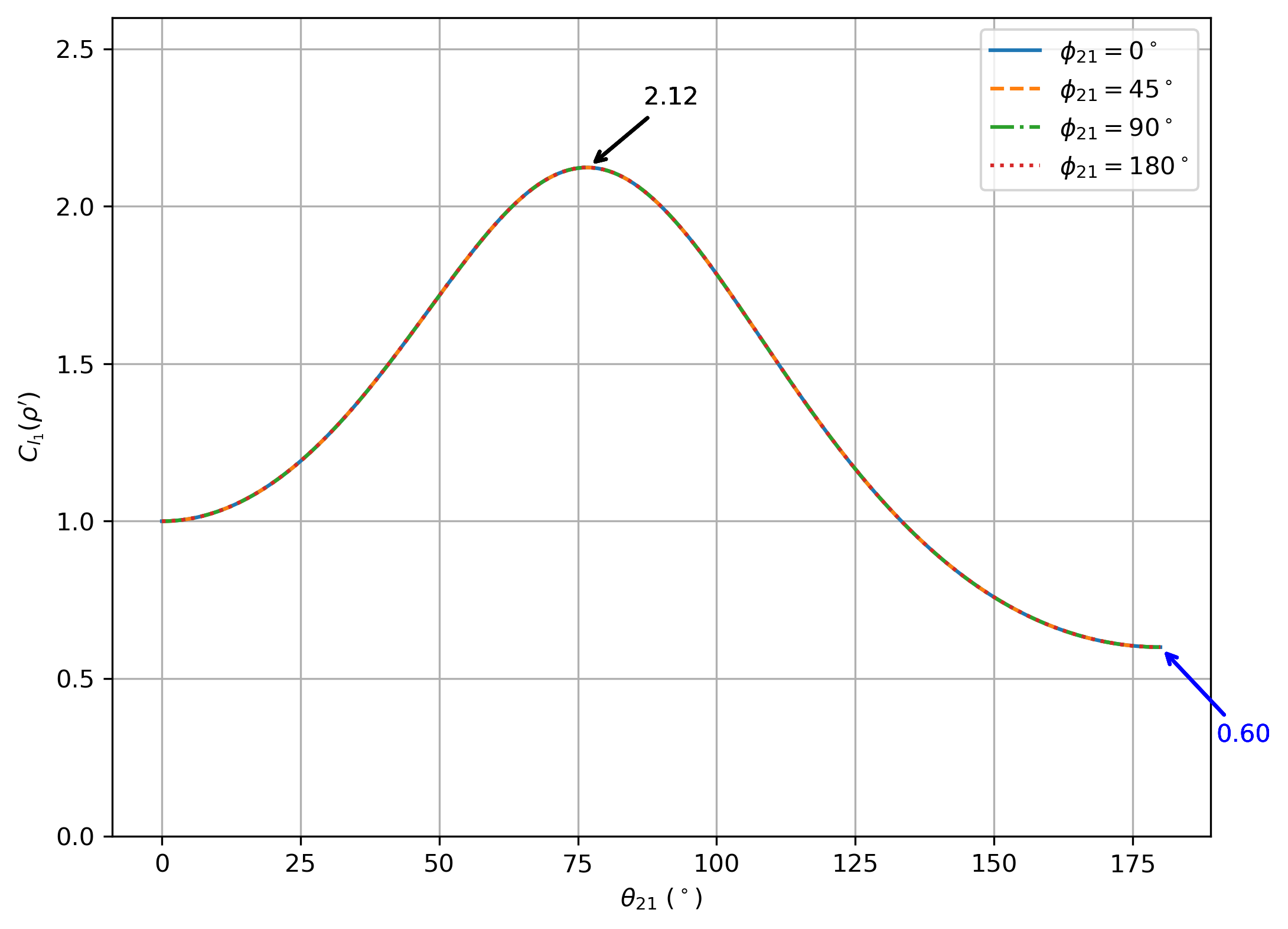
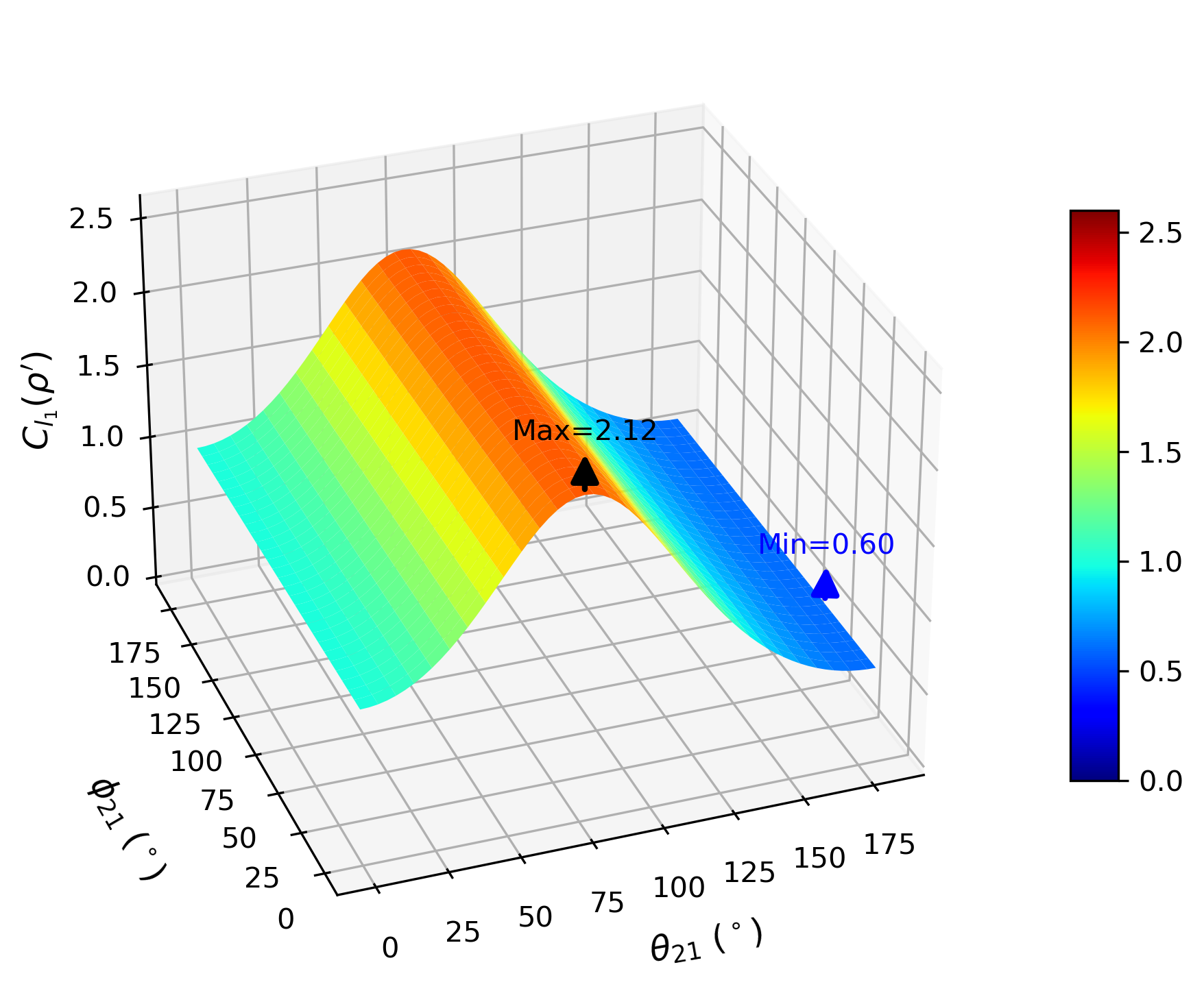
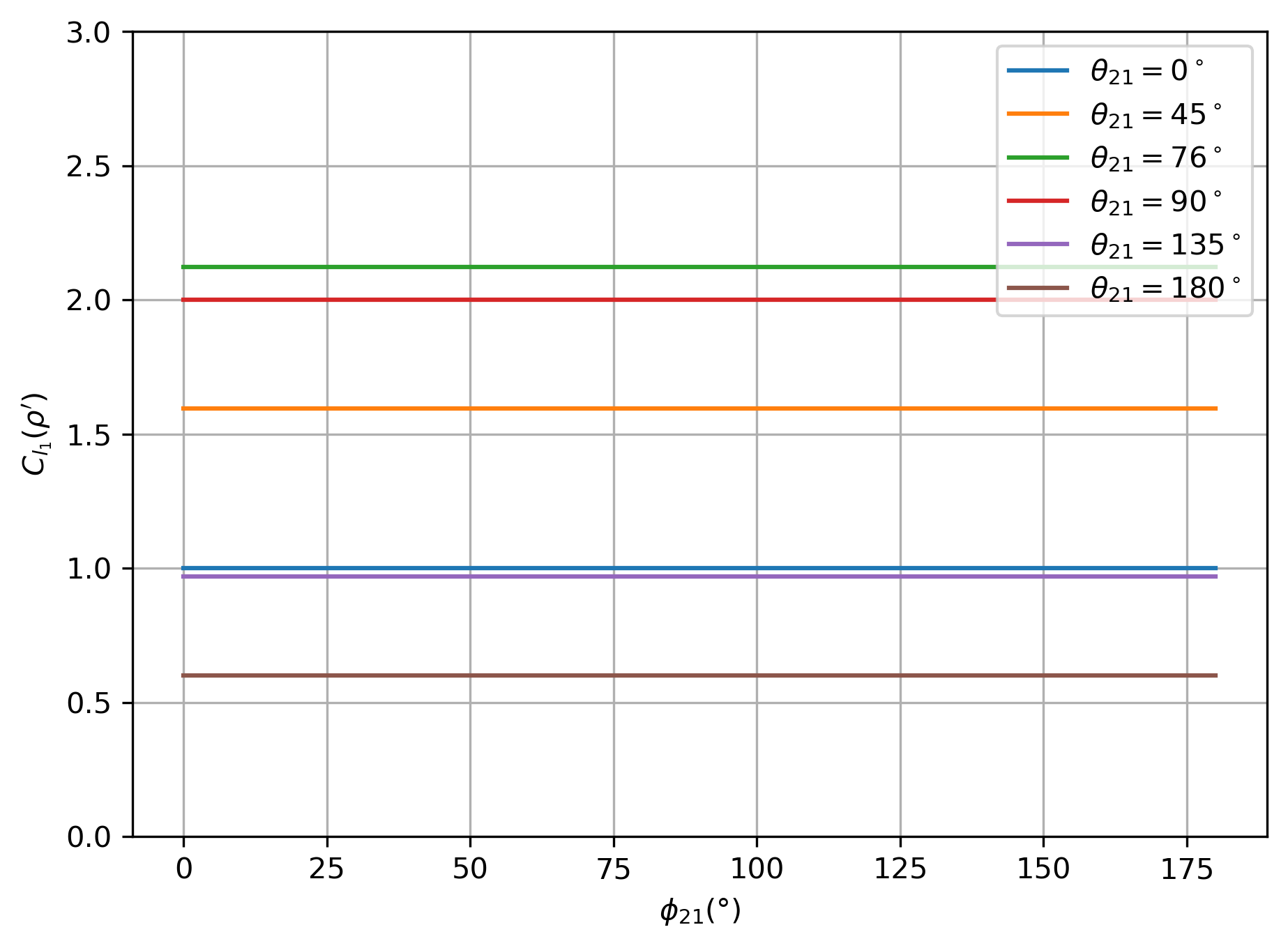
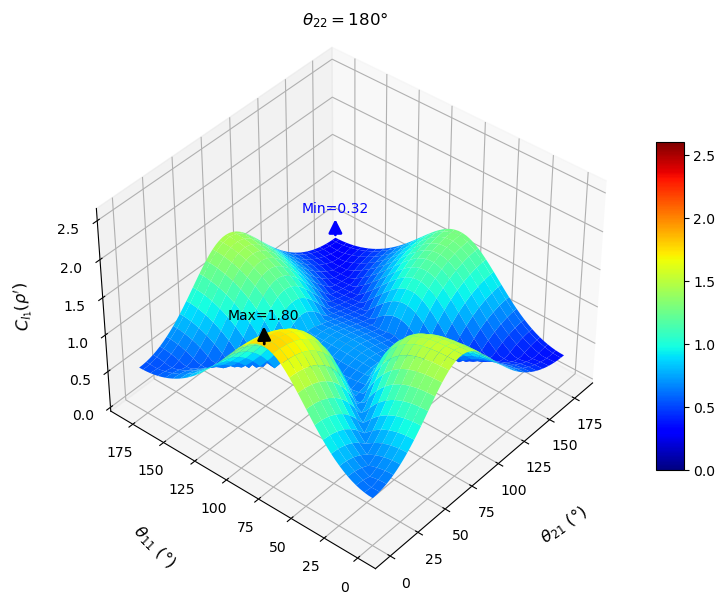
Coherence (via the ∣Ψ−⟩=21(∣H1V2⟩−∣V1H2⟩),7-norm) shows markedly different behavior from concurrence. While entanglement is annihilated near right-angle scattering, coherence remains finite, even peaking at intermediate polar angles (∣Ψ−⟩=21(∣H1V2⟩−∣V1H2⟩),8) before tapering at high angles. This indicates that local polarization superpositions persist despite global entanglement loss.
Figure 7: Quantum coherence ∣Ψ−⟩=21(∣H1V2⟩−∣V1H2⟩),9 for single Compton scattering, peaking well above the entanglement-minimal region and invariant under azimuthal variations.
Double and Triple Scattering
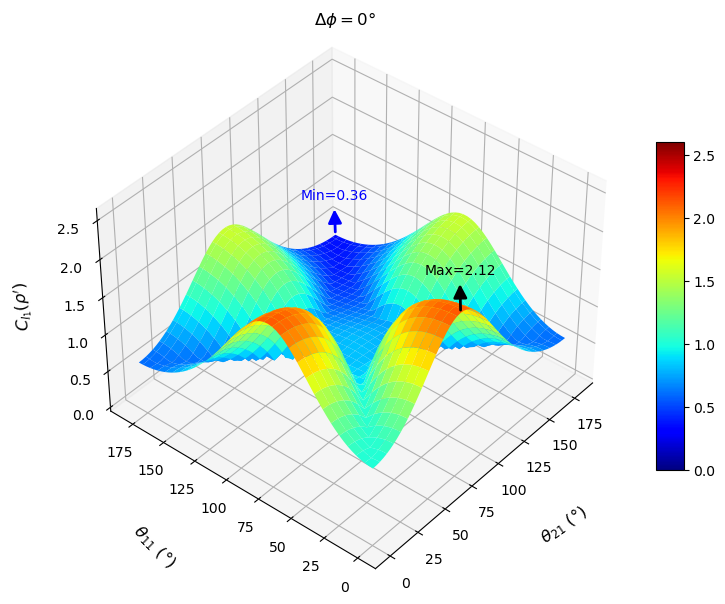
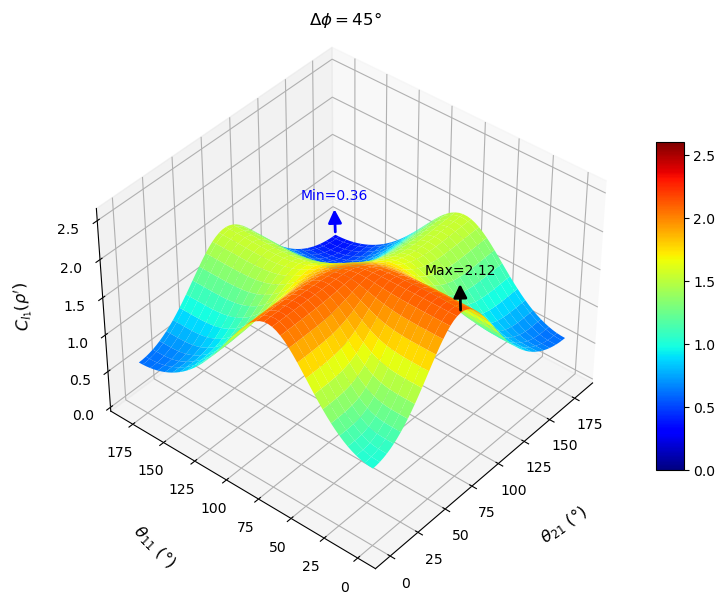
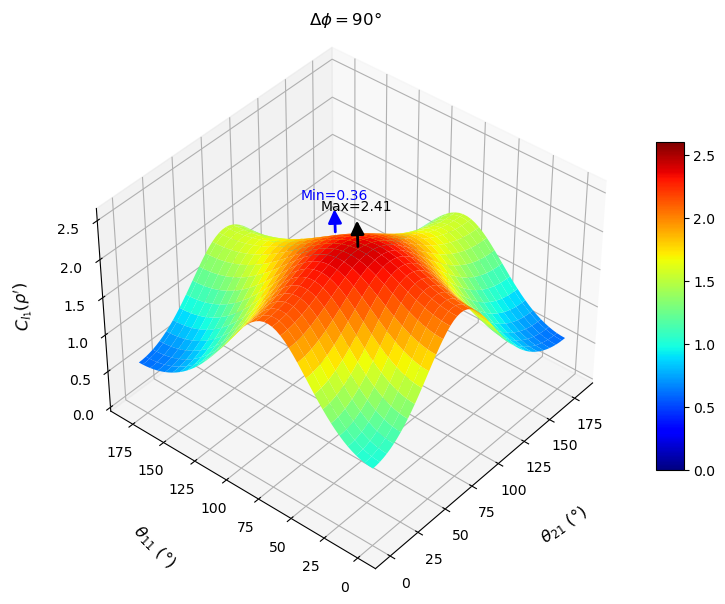
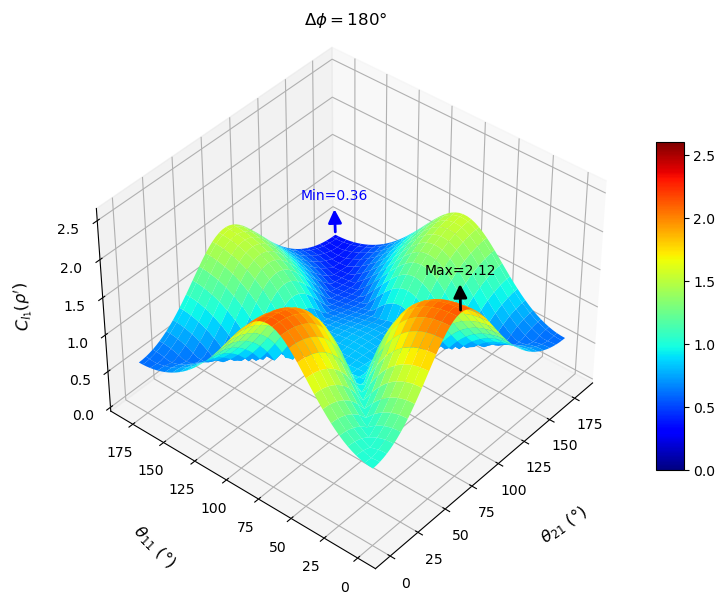
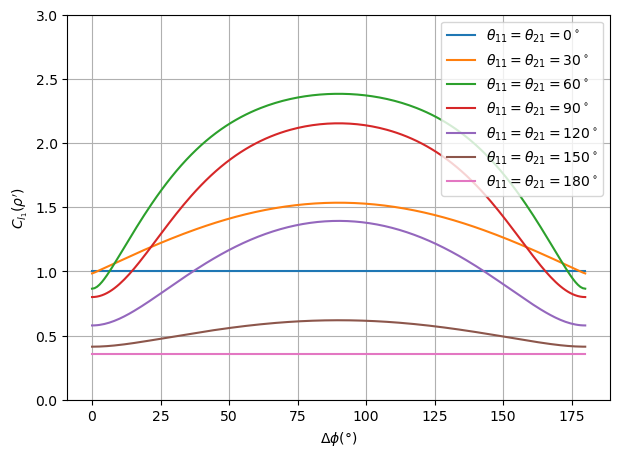
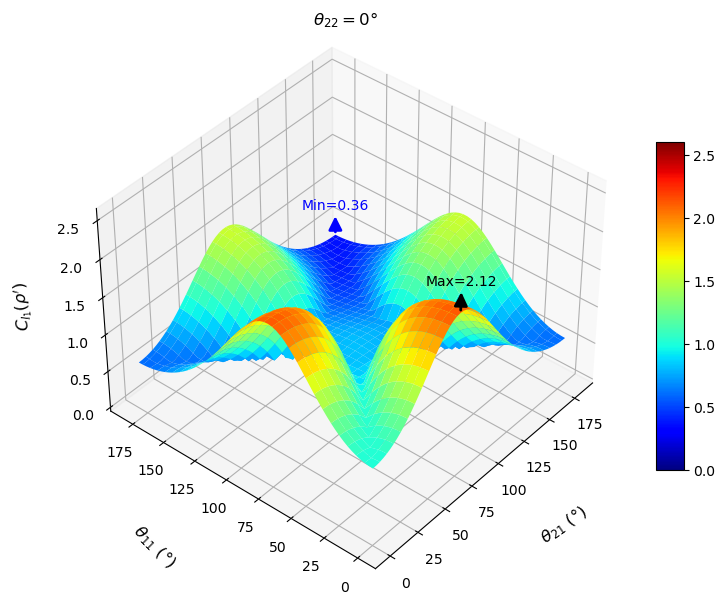
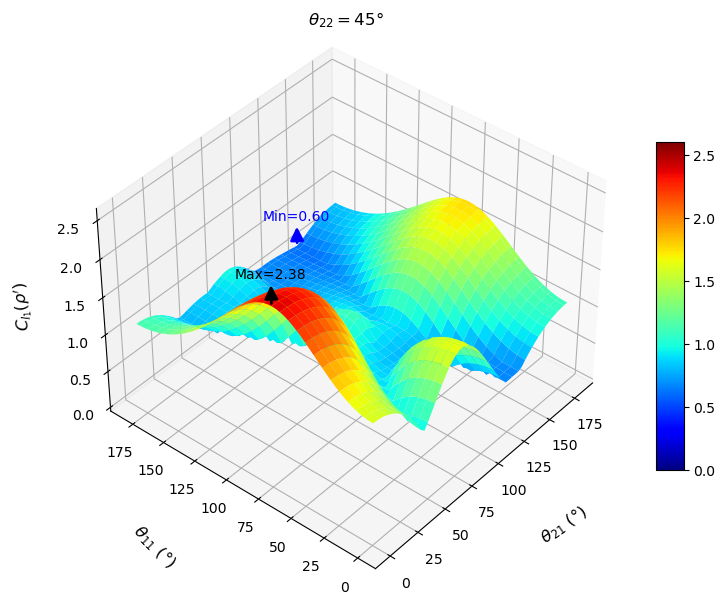
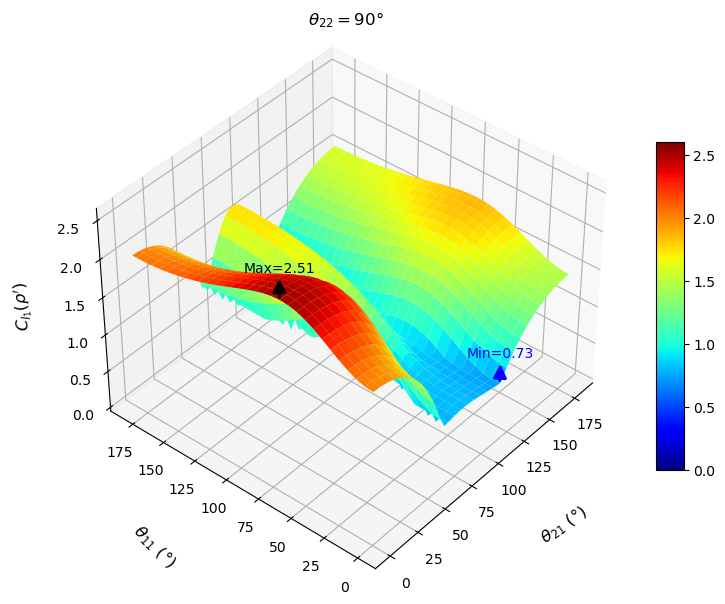
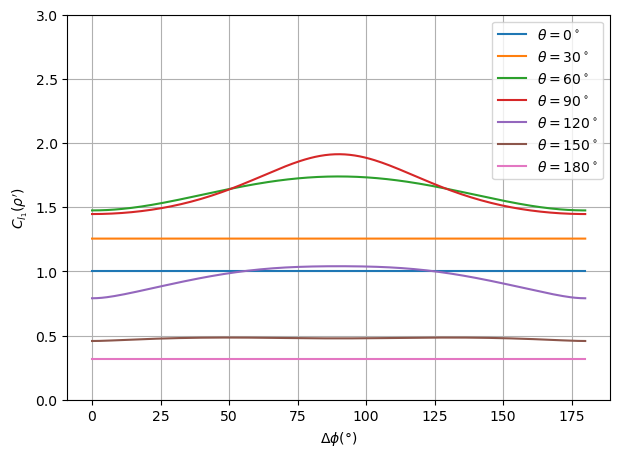
Coherence decreases steadily with the addition of scattering events but does not vanish even when concurrence does. Its dependence on joint scattering angles and azimuthal difference becomes more pronounced, but the M0-norm is consistently nonzero, highlighting the resilience of coherence.
Figure 8: Quantum coherence M1 for double Compton scattering across M2, showing the loci of maximum coherence shift with geometry.
Figure 9: Quantum coherence M3 as a function of M4 (double scattering), with azimuthal dependence emerging beyond small polar angles.
Figure 10: Quantum coherence M5 for triple Compton scattering, maintaining significant coherence even after three events.
Figure 11: M6 (triple scattering) as a function of M7, showing persistent, but geometry-dependent, coherence.
Figure 12: M8 as a function of additional geometric parameters, illustrating the non-trivial multi-parameter dependency in the triple scattering regime.
Implications and Theoretical Consequences
The analysis demonstrates that:
Entanglement is highly sensitive to scattering geometry and the number of scattering events, with right-angle configurations acting as fixed loci for complete disentanglement and additional events serving to suppress entanglement magnitude and broaden these regions.
Quantum coherence, as quantified by the M9-norm, is comparatively resilient, retaining a finite and sometimes substantial value even when concurrence collapses. This property persists even after triple scattering and for a wide range of angular parameters.
The operational distinction between entanglement and coherence becomes acute in realistic, scattering-dominated environments: while only entanglement is strictly nonlocal, local coherence remains exploitable in applications, such as quantum-enhanced PET, where full entanglement preservation is elusive.
The robustness of coherence, along with the geometry-specific collapse of entanglement, positions these metrics as complementary diagnostic tools—particularly relevant as quantum resource management becomes increasingly important in imaging and metrology.
Prospects for Quantum Measurement and Imaging
These findings have concrete implications for the design and interpretation of experiments in quantum-enhanced PET and other quantum sensing modalities. In media where multiple Compton scatterings are likely—such as biological tissue—the ability to exploit residual polarization coherence, even in the absence of strict entanglement, can facilitate protocols leveraging quantum advantages (such as improved timing or noise rejection). The strong geometry-dependence of resource degradation may also allow tailored detector layouts or reconstruction algorithms to mitigate detrimental effects.
Resource theory perspectives further suggest that local coherence could, in principle, be operationally recycled into entanglement via suitable incoherent operations and classical communication in controlled settings.
Conclusion
The study provides a comprehensive quantitative framework for assessing the decay of quantum resources—entanglement and coherence—in annihilation photon pairs traversing realistic scattering environments. The distinct behaviors of concurrence and T0-norm coherence elucidated here clarify the underlying robustness of quantum superposition relative to nonlocal entanglement, with direct ramifications for quantum imaging and foundational tests of quantum correlation. The formalism and findings serve as a reference point for future theoretical and experimental investigations into quantum resources in open, scattering-prone systems.