- The paper introduces a salami slicing trellis that models substitutions, insertions, and deletions for robust error correction in DNA coding.
- It integrates decision-feedback with polar decoding to achieve near-capacity performance across finite-length DNA pools.
- Empirical results validate an additive channel capacity penalty and efficient computational scalability for practical DNA storage applications.
Salami Slicing Trellis: A Unified Approach for Synchronization Errors in DNA Coding
Overview and Motivations
This paper addresses the critical challenge of efficiently correcting synchronization errors—including substitutions, insertions, and deletions—in DNA-based storage systems. With DNA storage emerging as a leading candidate for archival data due to its high density and long-term stability, constructing coding schemes that are robust to all three error types encountered in DNA sequencing channels is essential. Traditional concatenated code strategies are hampered by the finite strand lengths in DNA and the complications arising from channel variability and small synchronization errors. This work presents the salami slicing trellis, an interactive, decision-feedback trellis that, when coupled with polar coding across strands, achieves robust correction for all error types and approaches the conjectured channel capacity for the substitution-insertion-deletion (SID) channel.
Problem Setting and Previous Approaches
In DNA storage, pools consist of between 28 and 220 short (26–28) strands. Each bit in a strand may be flipped (substitution), inserted, or deleted, with typical error rates on the order of 1%. The core challenge is the simultaneous presence of all three error types, creating a triply noisy channel not well handled by codes designed for single error types.
Earlier work focused on along-strand coding with outer codes for strand pools—a strategy crippled by the inhomogeneity in channel quality due to variation in strand read multiplicities, small strand lengths, and the finite-length penalties associated with deletion codes. The Geno-Weaving technique proposed an orthogonal approach, coding across strands at fixed positions. This transforms the randomness in sequencing and synchronization errors into substitution-like noise at each bit position, which can be tackled by powerful codes like polar codes. The original Geno-Weaving framework, however, could only address substitution and deletion errors, not arbitrary insertions.
The Salami Slicing Trellis
The salami slicing trellis generalizes the Geno-Weaving framework by formulating a per-strand decision-feedback trellis that models the true posterior distribution of each bit, given observed outputs with synchronization noise. At each bit position, the trellis advances one position as it incorporates the error structure (deletion, insertion, and substitution) and, using feedback from polar decoding in the orthogonal direction, integrates the most probable decoded bit values back into the trellis for subsequent positions.
The key steps in the salami slicing trellis operation are:
- Column-wise Posterior Estimation: For each bit position p in strand s, a trellis computes the posterior Pr[Xp(s)∣Y(s)] recursively, by considering all possible alignment paths through the synchronization channel.
- Oracle-Aided Successive Computation: After estimating the pth bit, the true value is revealed (initially by an oracle; in practice, by the polar decoder at that position), and the process advances to estimate the next bit.
- Trellis Structure: The trellis incorporates diagonal, rightward, and downward transitions, corresponding to correct transmission, deletions, and insertions, respectively (Figure 1).
(Figure 1)
Figure 1: The salami slicing trellis for a single strand, encoding transitions due to substitution, insertion, and deletion for posterior computation at every bit position.
The trellis’ complexity scales as O(ℓ2) per strand (each strand having ℓ bits), and the process is efficient enough for practical DNA pool sizes due to the structure of probable paths: only those close to the main diagonal (the expected alignment) contribute significantly to posterior sums.
Tail Trellis Correction
To compensate for likelihood deviations due to rare events in the sequence tails—where the remaining sequence lengths of 2200 and 2201 may differ significantly—a tail trellis correction is computed. This modified trellis tracks the probability that the residuals of the input and output strings are reconciled through allowed channel operations (ignoring symbol identities for the tail). Posterior probabilities from the main trellis are multipled by those from the tail trellis to yield corrected estimates.
(Figure 2)
Figure 2: The tail trellis augments posterior estimation by modeling the likelihood that the tails of input and output align through indels.
Integration with Orthogonal Polar Decoding
Once all per-strand/posterior probabilities of bit values are computed, the decoding process alternates:
- The polar code decodes each position across the pool of strands using the inferred posteriors, producing an estimated bit vector per position.
- The decoded bits are then fed back to the strand-wise trellises, which, with these now-fixed bits, refine the posterior estimation for subsequent positions.
Polar codes are chosen due to their proven capacity-achieving performance and the strong polarization of channel capacities observed empirically as strand-pool size (2202) grows.
(Figure 3)
Figure 3: Overall scheme: Each strand runs its own salami slicing trellis; each bit position across all strands is protected and decoded by a polar code.
Numerical Results and Channel Capacity Analysis
The most prominent empirical results from the study are as follows:
- The average binary entropy 2203 of the posterior bit probabilities after decoding, with and without the tail trellis correction, is plotted in Figure 4. With 2204, the tail trellis reduces average equivocation from 0.216 to 0.194, close to the conjectured channel equivocation 2205.
(Figure 4)
Figure 4: Posterior entropy averaged across positions, demonstrating the improved sharpness in estimation provided by the tail trellis.
- Empirically, the effective channel capacity for each bit channel converges toward 2206, confirming the conjecture that the capacity penalty due to small substitution, insertion, and deletion rates is additive.
- Channel polarization under polar transformation is validated via sorted bit-channel capacities for varying 2207, showing sharp thresholds around the conjectured capacity (Figure 5).
(Figure 5)
Figure 5: Polarization phenomenon for bit-channel capacities, converging to the conjectured capacity as 2208 increases.
- Full-pool simulations, with block sizes up to 2209 and 260 bits per strand, show decoding performance aligns with capacity predictions. Block error probabilities and rates approach the theoretical limit as 261 increases and even under varying error rates (up to 262) (Figures 6 and 7).
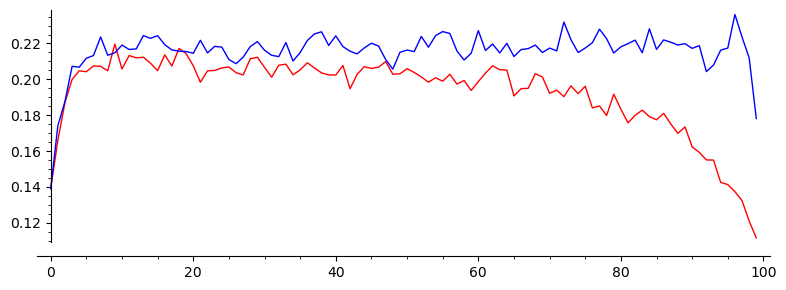
Figure 6: Block error probability across multiple pools and block sizes, demonstrating scaling toward capacity with increasing block length.
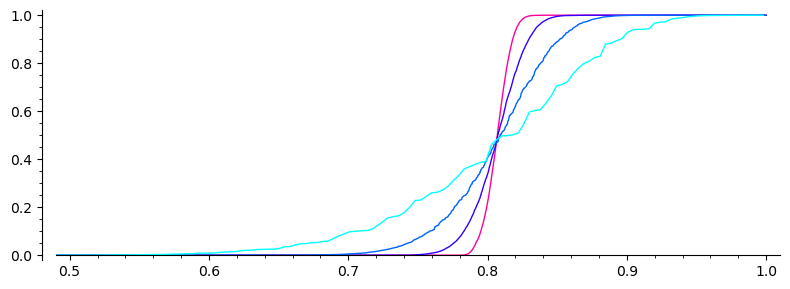
Figure 7: Pool error performance for higher error rates, maintaining proximity to the theoretical capacity bound.
Theoretical and Practical Implications
The strong numerical alignment with the conjectured SID channel capacity and the computational tractability of the proposed algorithm have several theoretical and practical consequences:
- Unified Correction of SID Errors: The method provides a robust, generic solution for arbitrary low-rate substitution, insertion, and deletion errors—in contrast to previous schemes that required tailored codes for specific noise types or struggled under the synchronization penalty of multiple error types.
- Capacity-Approaching Performance: The observed near-equality between empirical performance and 263 supports the conjecture that, for low-rate errors, the capacity reduction is additive, making code design and analysis feasible for future DNA storage systems.
- Orthogonal Coding for Finite-Length Regimes: By coding across strands rather than along them, the method leverages the large size of DNA pools to mitigate the finite-length rate penalties that plague along-strand schemes.
- Algorithmic Efficiency: The 264 complexity for the trellis step and 265 for the polar decoding make the scheme suitable for practical PCR-scale pool sizes and strand lengths, supporting scalability.
Prospects for Future Work
Key research directions suggested by this work include:
- Extensions to Shuffled or Multi-Read Settings: Handling pools where strands might be shuffled or read multiple times could generalize the method to broader sequencing and synthesis contexts.
- Code Optimization under Nonuniform Error Models: Practical sequencing often yields position- and context-dependent error rates; adapting the trellis and polar code construction to account for such profiles may improve robustness.
- Hardware and Parallel Implementations: Realizing the described algorithms at scale for commercial DNA storage systems will require parallelization and possibly hardware acceleration due to the high per-pool computational demands.
- Rigorous Capacity Proofs for SID Channels: The consistently observed capacity matches for the additive entropy conjecture motivate formal proofs addressing combined SID channels, extending the current theoretical landscape.
Conclusion
This paper establishes a tractable and unified decoding framework for DNA storage channels afflicted by simultaneous substitutions, insertions, and deletions. The salami slicing trellis, coupled with orthogonal polar coding, achieves near-capacity performance for triply noisy channels at error rates realistic for current sequencing technology. The empirical support for the additive entropy capacity penalty, robust finite-length behavior, and practical computational profile position this approach as a reference design for future high-fidelity DNA-based archival systems.

