- The paper introduces a reflective-sail weak stability boundary (WSB) structure employing a locally optimal control law to maximize Keplerian energy and enable efficient Earth escape trajectories.
- It utilizes high-order numerical integration and Levi-Civita regularization to accurately capture periapsis dynamics, resulting in higher hyperbolic excess velocities and reduced time of flight compared to ballistic escapes.
- The study demonstrates that increasing the sail lightness number compresses stable regions, expanding the escape domain while also revealing counterintuitive effects where sail actuation can sometimes impede escape.
Reflective-Sail Weak Stability Boundary Structures with Locally Optimal Control in Sun-Earth PCR3BP
Introduction and Motivation
The construction of efficient Earth escape trajectories is pivotal for interplanetary transfers, directly impacting mission time and delivered excess energy. Traditional ballistic escapes in the planar circular restricted three-body problem (PCR3BP) are limited by relatively long times of flight (TOF) and modest hyperbolic excess velocities (v∞). This paper addresses these limitations by introducing the reflective-sail weak stability boundary (WSB) structure in the Sun-Earth PCR3BP, leveraging solar radiation pressure (SRP) via an ideal reflective sail.
By devising a locally optimal control law that maximizes the instantaneous increase of Keplerian energy relative to Earth, the study systematically investigates how solar sail actuation modifies the phase space of escapes, how it alters the WSB structure, and how it enables more favorable mission profiles compared to traditional ballistic escapes. The inclusion of Levi-Civita regularization manages the singularity at the Earth, allowing high-precision numerical treatment of periapsis passages.
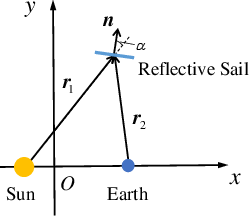
Figure 1: Schematic of the Sun-Earth PCR3BP with a reflective sail.
Dynamical Framework and Control
The augmented Sun-Earth PCR3BP model incorporates the force from SRP, with acceleration proportional to sail lightness number β (practically up to 0.05). High-order variable-step Adams-Bashforth-Moulton integration schemes with stringent tolerances ensure numerical accuracy, particularly in the vicinity of Earth where Levi-Civita regularization is critical.
The reflective sail attitude is governed by a pitch angle α, dynamically selected at each instant to locally maximize the time derivative of the Keplerian energy with respect to Earth. Through a closed-form derivation, the locally optimal αLO(t) is explicitly obtained for all feasible configurations, with degenerate cases handled robustly.
Weak Stability Boundary Structure for Reflective Sails
The WSB structure, originally proposed for multi-body low-energy transfer design, is extended to account for non-conservative (SRP-augmented) systems. The stable set W1 is computed as the set of periapsis initial conditions that result in at least one stable revolution about Earth (i.e., E2≤0 after one cycle in the rotating frame).
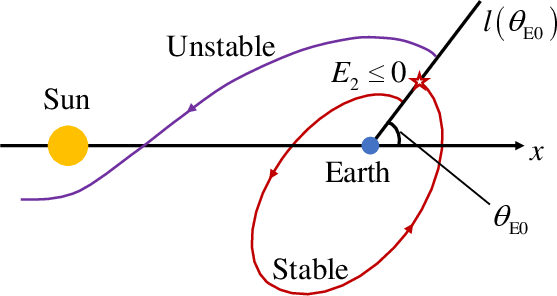
Figure 2: Schematic of the stable and unstable motions.
Extensive computation of WSB structures is performed across a range of sail lightness numbers (β=0.01, $0.03$, $0.05$) and initial osculating eccentricities (e0=0.5 to β0). The results demonstrate that increasing β1 systematically compresses the stable region, evidencing the expanded escape domain induced by the SRP when locally optimized for escape.
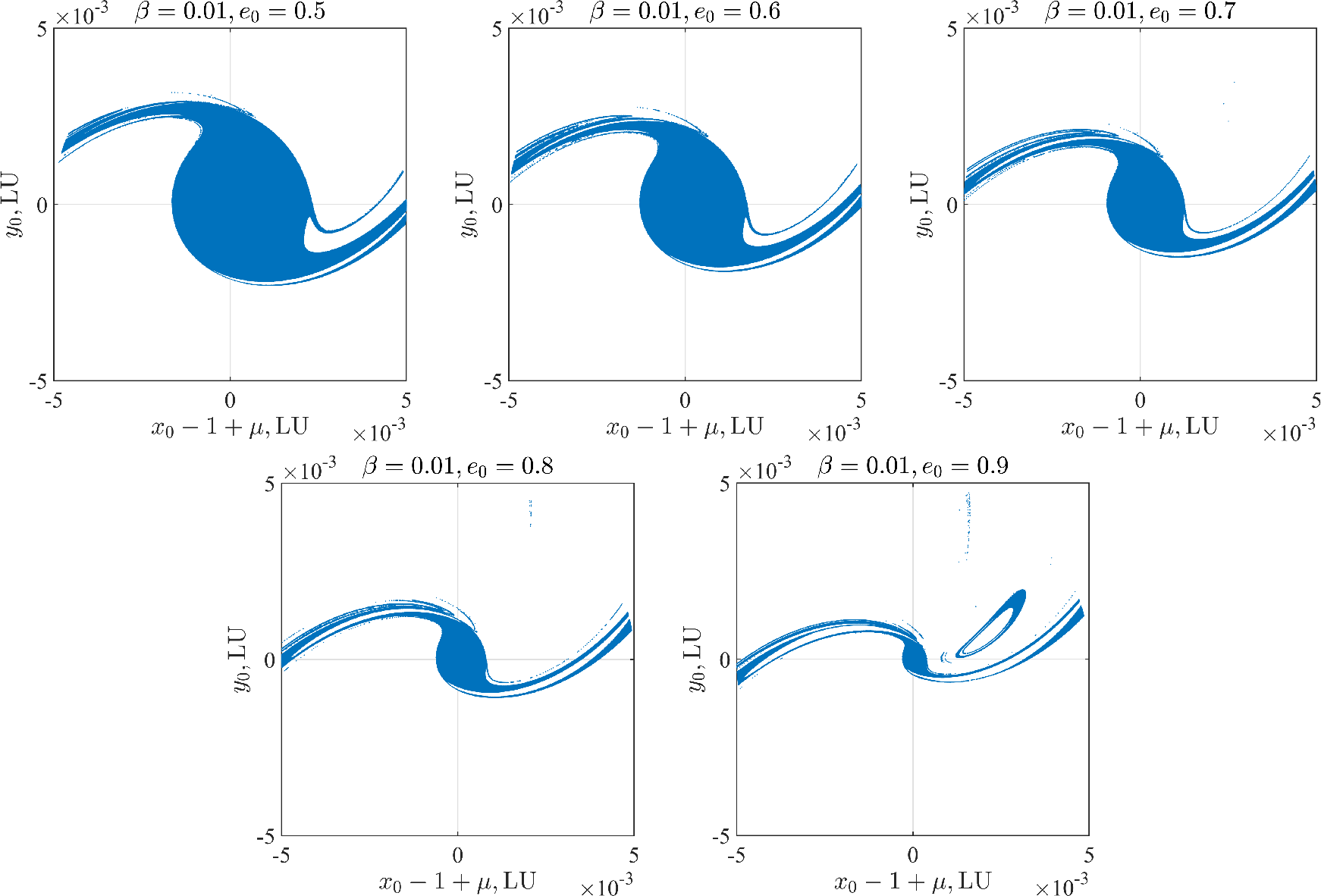
Figure 3: Configurations of reflective-sail WSB structures (β2).
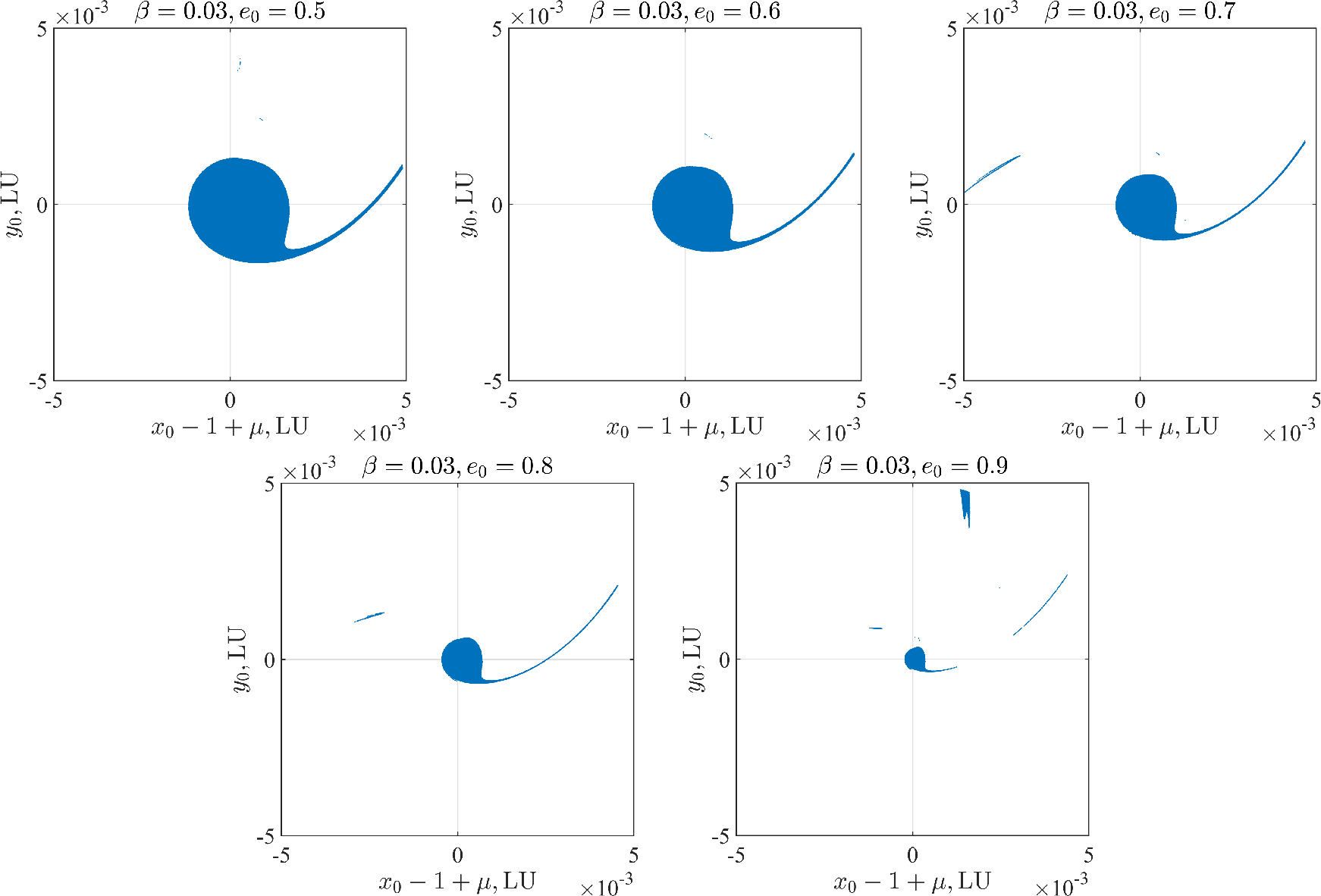
Figure 4: Configurations of reflective-sail WSB structures (β3).
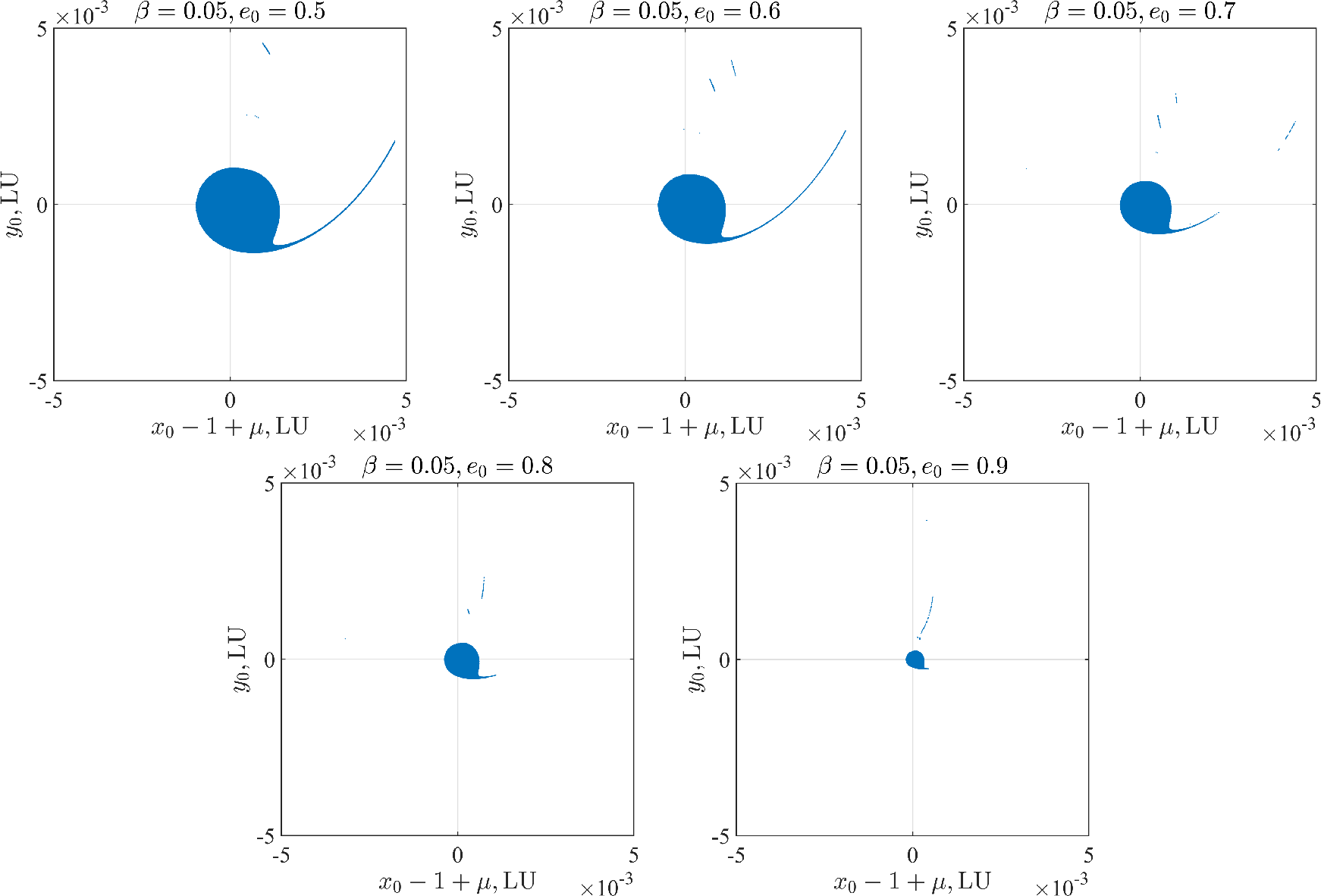
Figure 5: Configurations of reflective-sail WSB structures (β4).
Notably, there exist specific regions (notably in the second quadrant relative to Earth) where the use of a reflective sail with locally optimal control does not universally facilitate escape—the sail can sometimes counterintuitively impede escape in dynamic regions, a finding that contradicts naive expectations of monotonic enhancement with sail deployment.
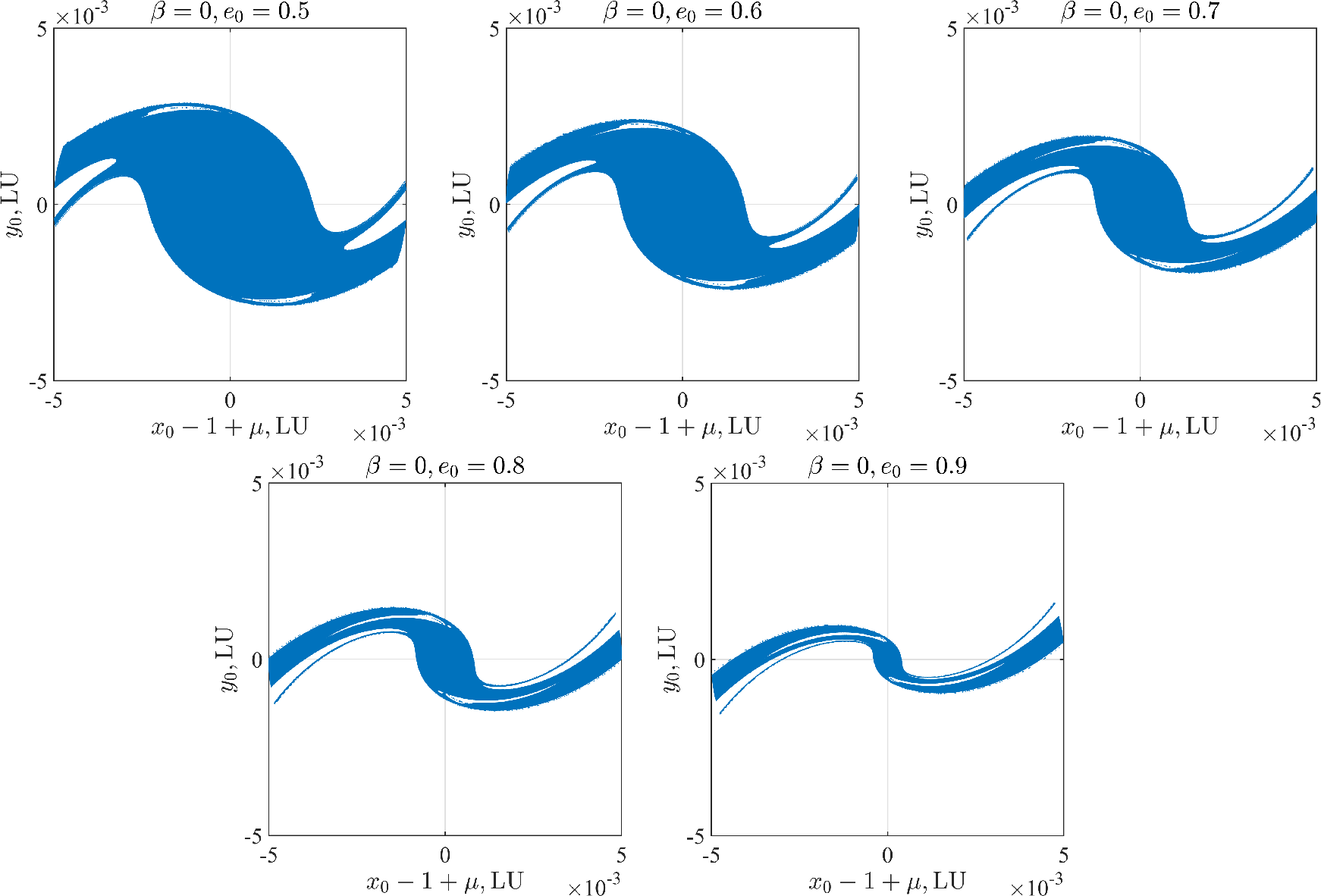
Figure 6: Configurations of WSB structures in the Sun-Earth PCR3BP (no sail).
Escape sets are constructed using intersections between forward-in-time unstable sets of the sail-augmented model and backward-in-time stable sets of the traditional PCR3BP, reflecting operational constraints where the sail is only deployed at periapsis to maximize utility. The procedure ensures feasible, practically implementable escapes.
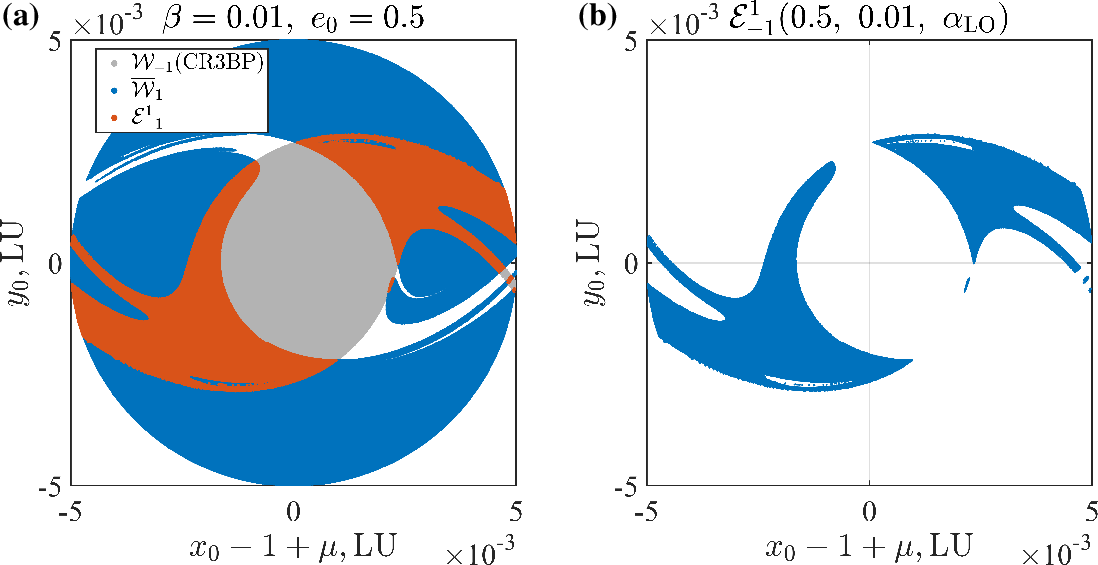
Figure 7: An example of the intersection for escape set construction.
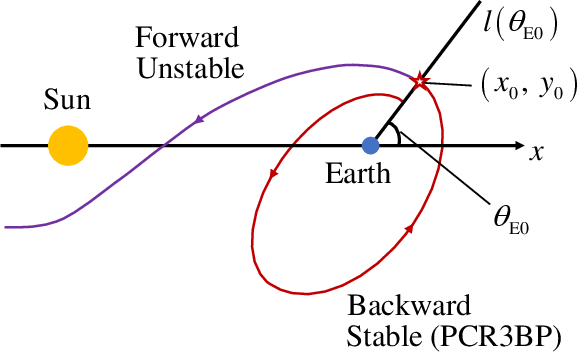
Figure 8: Schematic depiction of a typical escape trajectory generated from the escape set.
Performance is quantified in terms of time of flight (TOF) and the estimated hyperbolic excess velocity (β5) at prescribed distances from Earth. Systematic variation of β6 and periapsis conditions reveals:
- Sail augmentation universally shifts the Pareto frontier towards higher β7 and shorter TOF, compared to ballistic scenarios (i.e., more efficient and energetic escapes).
- Increasing β8 yields continuously better escape profiles, though with nontrivial modifications to the phase-space partition of stable/unstable sets.
- Higher initial osculating eccentricity (β9) permits higher α0 solutions within practical TOF bounds.
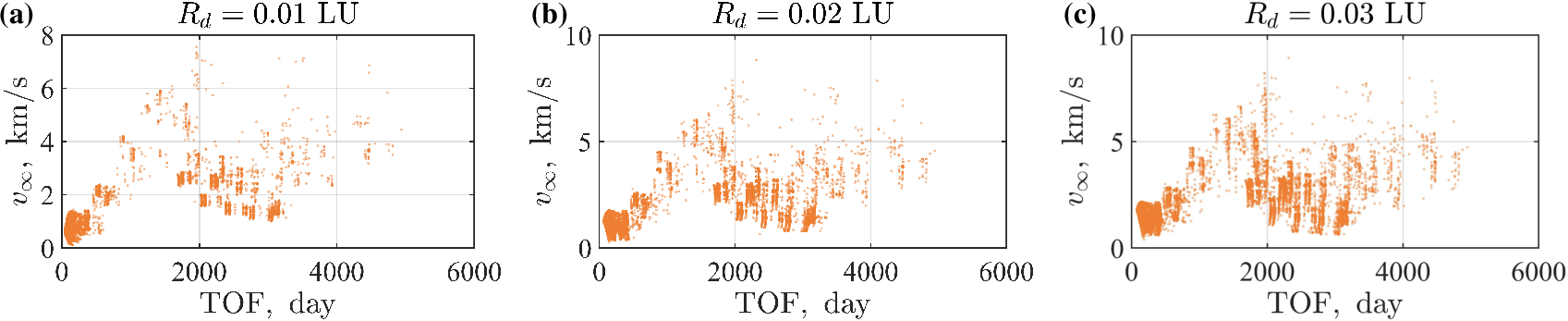
Figure 9: The α1 solution map for reflective-sail escapes at α2, α3 over varying α4.
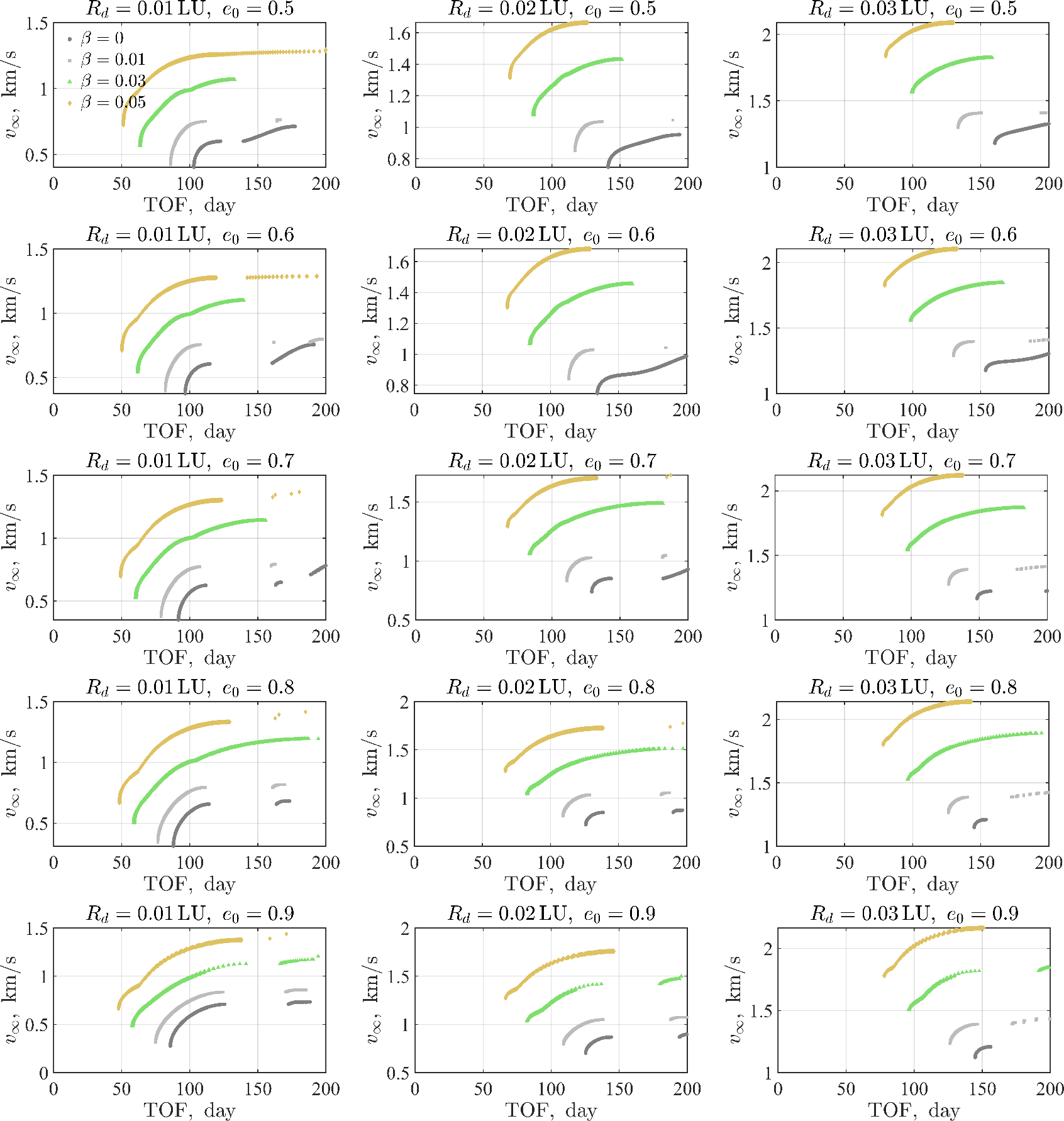
Figure 10: Pareto fronts (TOF vs. α5) for escape solutions within 200 days, comparing sail vs. ballistic escape.
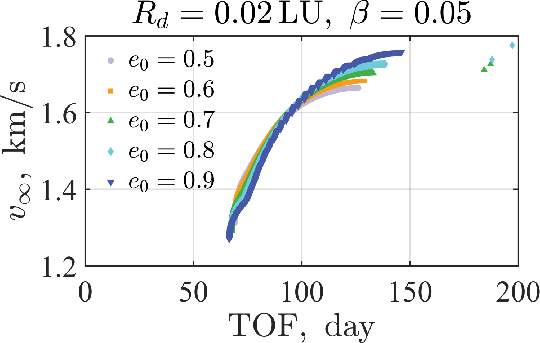
Figure 11: Pareto fronts under α6 for all tested initial eccentricities α7.
The analysis of a representative optimal escape trajectory for α8 and α9 indicates αLO(t)0 km/s with a TOF of αLO(t)1 days, demonstrating substantial enhancement relative to the non-sail case.
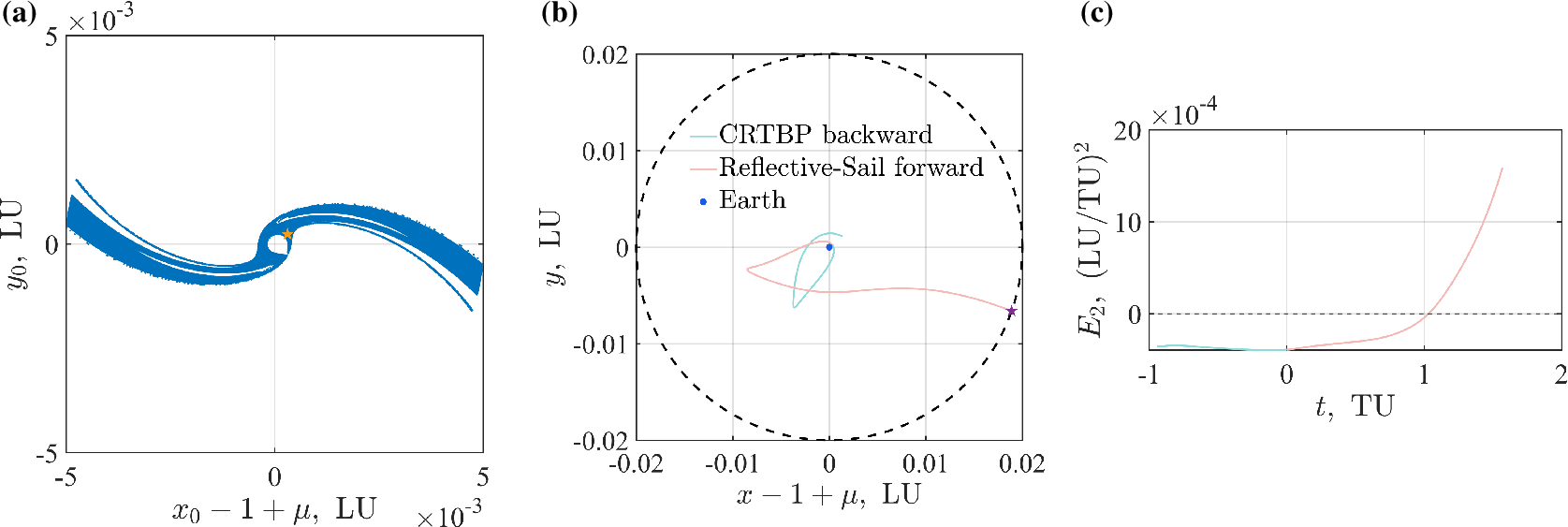
Figure 12: Maximum αLO(t)2 attained for varying αLO(t)3 at αLO(t)4.
Time History of Sail Attitude
The temporal profile of the optimal sail pitch angle during a typical escape highlights the sail orientation's dynamic adaptation, rapidly traversing the range from αLO(t)5 to αLO(t)6, in line with analytical expectations for energy maximization.
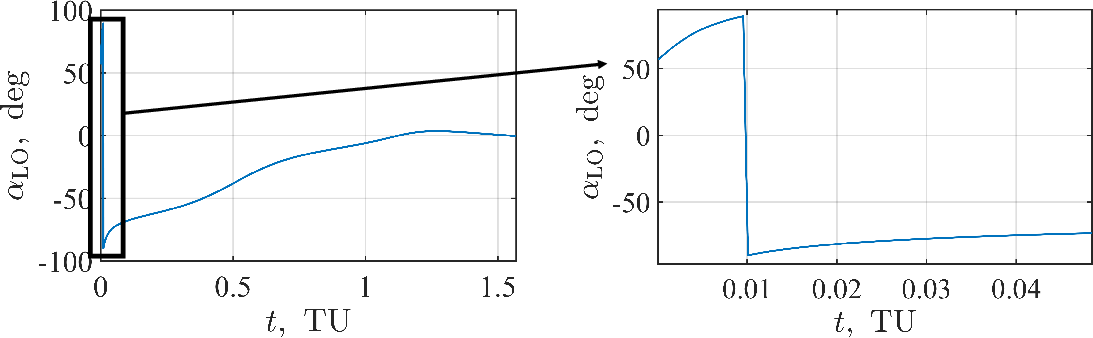
Figure 13: Time history of the locally optimal pitch angle αLO(t)7 during the escape.
Implications and Future Directions
The formalism of reflective-sail WSB structures expands the mission architect's toolkit for systematic escape trajectory design in multi-body gravity fields augmented with non-conservative forces. The principal theoretical implication is that the presence of an optimally controlled sail fundamentally alters phase space features, in particular compressing stable domains and enabling new families of rapid, high-energy escapes that are not accessible ballistically. The finding that sail deployment can, in specific zones, reduce escape likelihood underscores the need for careful control law synthesis, particularly for complex mission architectures seeking to optimize both TOF and arrival energy.
Practically, the framework provides a pathway to higher-fidelity, low-thrust trajectory design leveraging readily available WSB concepts and efficient numerical tools. The extension to higher-order sail models, eclipse/shadowing, and further generalization to three-dimensional or non-ideal (e.g., refractive, diffractive) sail characteristics is immediate. Integration with deep-learning-based classification of WSB sets and robust optimization under uncertainty remains a promising direction for future research.
Conclusion
The introduction and formal analysis of reflective-sail WSB structures in the Sun-Earth PCR3BP, controlled via a locally optimal pitch profile for Keplerian energy maximization, enables a systematic and numerically efficient approach to designing Earth escape trajectories. The principal result is a strong, quantitatively validated improvement in both time of flight and escape energy relative to ballistic solutions, with nuanced dependencies on both the sail's lightness number and initial orbital geometry. This framework generalizes classical multi-body dynamics, providing a foundation for further advances in sustained, propellantless mission design across diverse solar system escape scenarios.