- The paper demonstrates that non-perturbative vertex methods for QED₃ exhibit substantial gauge violations at strong coupling due to truncation approximations.
- It compares the SD equations, three-loop 3PI effective action, and Ball-Chiu ansatz in terms of their ability to satisfy the Ward identity.
- Numerical strategies, including Gauss-Legendre quadrature and damping techniques, reveal a hierarchy in vertex dressing functions that motivates improved truncation schemes.
Gauge Invariance of Non-Perturbative Vertex Methods in Three-Dimensional QED
Introduction and Motivation
This work presents a rigorous analysis of gauge invariance in non-perturbative vertex prescriptions for continuum gauge theories, focusing on three-dimensional quantum electrodynamics (QED₃). The challenge addressed is the computation of fermion-boson vertex functions beyond perturbation theory, a necessity in strongly coupled systems where conventional Feynman diagrammatics break down. Given the central role of gauge symmetry in constraining physical observables, quantifying and controlling gauge variance in practical non-perturbative methods is of fundamental importance. The study contrasts three broad strategies: coupled Schwinger-Dyson (SD) equations with naive truncation, the three-particle irreducible (3PI) effective action at three loops, and the Ball-Chiu (BC) vertex ansatz. All investigations are performed in Landau gauge.
Non-Perturbative Vertex Construction: SD, 3PI, and Ansatz
The SD approach formulates an infinite tower of coupled integral equations relating n-point Green's functions, which must be truncated for tractability. A common truncation replaces higher-order vertices with their tree-level forms; in QED, a bare four-point function is set to zero, and only the two- and three-point functions are dynamically computed. This methodology inevitably breaks gauge invariance due to truncation.
The 3PI effective action formalism, implemented to three-loop order in this work, systematically accounts for higher-order correlations while providing a self-consistent set of equations for vertices and propagators. While symmetry identities are only enforced up to the truncation order, the 3PI theory is proven to maintain gauge invariance at the level consistent with its order.
In contrast, the BC ansatz is constructed to exactly satisfy the Ward identity by forming the vertex in terms of two-point functions, ensuring gauge invariance for longitudinal components by construction. However, it leaves the transverse vertex structure unconstrained and often oversimplified.
Tensor Decomposition and Dressing Functions
QED₃'s three-point fermion-boson vertex possesses twelve independent tensor structures, segmented into longitudinal and transverse components. An orthogonalized basis, extending the Ball-Chiu construction, is adopted to ensure numerically stable dressing functions and to avoid kinematic singularities at collinear configurations. The longitudinal dressing functions are directly related to the Ward identity, while the transverse functions capture unconstrained quantum corrections.
Projection onto this basis yields a coupled set of scalar integral equations for all dressing functions, a substantial numerical challenge due to the dimensionality of the phase space and the intricacies of the integral kernels.
Numerical Methodology
A bespoke simplification pipeline is employed to analytically cancel redundant numerator-denominator structures in the integral equations, drastically reducing the susceptibility to numerical instabilities near singular submanifolds. Algebraic manipulation is performed prior to discretization, using FORM and Mathematica to reroute large cancellations and minimize the occurrence of small denominators.
High-order Gauss-Legendre quadrature is applied across a three-dimensional grid of external kinematics, with convergence accelerated by initialization at weak coupling and iterative bootstrapping to stronger coupling. Damping is implemented in the convergence cycle to mitigate oscillations and enhance numerical stability. Parallelization via MPI is critical for computational tractability.
Ward Identity Tests and Gauge Violation
The Ward identity,
−iqμΓμ(p,k)=S−1(k)−S−1(p),
serves as the diagnostic for gauge invariance. The scalar projections of the identity are compared for both SD and 3PI solutions. Violation of the Ward identity is quantified by the norm of the relative difference between directly computed longitudinal dressing functions and those reconstructed via the identity from two-point functions.
Results exhibit a monotonic increase in violation with coupling; at α=5, the Ward identity is violated by approximately 30% in both SD and 3PI approaches, with the 3PI method yielding slightly reduced violation. This represents a quantitatively significant gauge artifact, calling into question the physical reliability of truncated non-perturbative methods at strong coupling.
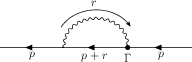
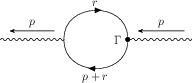
Figure 1: Propagator corrections for the fermion and photon two-point functions, illustrating typical Feynman diagrammatic content of the SD and 3PI approaches.
Vertex Dressing Functions and Numerical Results
The averaged magnitudes of the various vertex dressing functions reveal that the leading contributions are concentrated in the first longitudinal and third transverse components, with subdominant corrections from other structures. In particular, some dressing functions are suppressed by two orders of magnitude relative to the dominant terms, suggesting avenues for systematic simplification in future theoretical and numerical treatments.
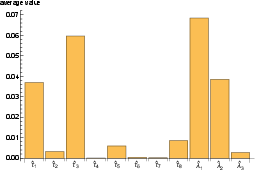
Figure 2: The average value of the vertex dressing functions at α=5, displaying the hierarchy and relative importance of each component.
Comparison with Ball-Chiu Ansatz
Agreement between the full 3PI/SD vertices and the Ball-Chiu vertex is found to be robust at weak coupling but degrades rapidly as coupling increases. For α=2, the weighted average relative difference escalates to approximately 45% for 3PI and 50% for SD. The most pronounced disagreement is observed in the σ^2 (BC) and τ^2 (non-perturbative) comparison.
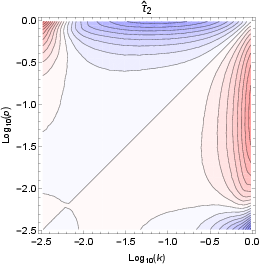
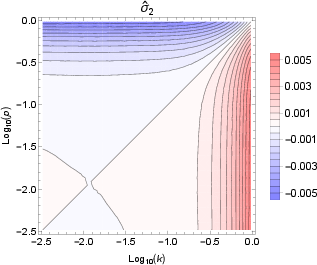
Figure 3: Comparison of the dressing functions σ^2 (Ball-Chiu ansatz) and τ^2 (full vertex) at α=2 and −iqμΓμ(p,k)=S−1(k)−S−1(p),0, highlighting structural differences at moderate coupling.
Notably, the BC ansatz remains an efficient and reasonably accurate approximation at weak to moderate couplings but must be applied with caution when studying phenomena near critical coupling or in regimes sensitive to non-trivial transverse vertex dynamics.
Theoretical and Practical Implications
The explicit quantification of gauge violation in both SD and 3PI truncated methods has significant implications. First, it establishes limits on the physical reliability of non-perturbative computations using these frameworks, particularly as the coupling approaches regimes where collective phenomena (e.g., chiral symmetry breaking) may be anticipated. Second, the results support the intuitive expectation that strictly ansatz-based approaches, while computationally convenient and exactly gauge invariant by construction, can miss or misrepresent key dynamical features encoded in the transverse vertex structure.
From a practical perspective, the identification of dominant and subdominant dressing functions motivates focused truncations or hybrid strategies, possibly employing the BC ansatz for certain components and dynamical computation for others. The numerical pipeline developed for term simplification and stability is of direct relevance for future large-scale studies, including extensions to four-dimensional QED/QCD and studies in alternative gauges.
Conclusion
This analysis rigorously assesses the gauge invariance of leading non-perturbative vertex prescriptions in QED₃. Both SD and 3PI effective action approaches exhibit substantial gauge violation at strong coupling, as evidenced by acute discrepancies in satisfaction of the Ward identity. The Ball-Chiu ansatz maintains close agreement only at weak coupling. The observed hierarchy of dressing function magnitudes offers a pathway for more efficient and controlled truncation schemes. The implications for the accurate non-perturbative computation of physical observables and phase structure are profound, necessitating both improved truncation strategies and complementary studies in alternative gauge choices to robustly assess gauge artifacts. These findings shape the trajectory for future work in non-perturbative gauge theory, including functional methods for QCD and beyond.