- The paper presents a rigorous derivation for the wave-particle decomposition that adaptively partitions the distribution function using a local kinetic horizon.
- It develops a conservative macro-micro algorithm that couples a gas-kinetic NS solver with deterministic or stochastic particle solvers to ensure strict conservation.
- Multiscale numerical validations demonstrate asymptotic preserving behavior and regime adaptivity, reducing computational cost in continuum regions.
Wave-Particle Decomposition for Kinetic Equations: Theoretical and Numerical Advances
Introduction and Context
The paper "Wave-Particle Decomposition for Kinetic Equations I: Theory and Numerics" (2606.26915) presents a rigorous derivation, analysis, and numerical framework for a wave-particle decomposition (WPD) applied to kinetic relaxation equations, spanning the full Knudsen number spectrum. This method leverages local characteristic integral solutions and defines a local kinetic horizon that adaptively partitions the distribution function into analytically tractable (wave) and collisionless (particle) components. The approach subsumes and extends previous unified gas-kinetic schemes (UGKS, UGKWP) and macro-micro decompositions, yielding a continuous formulation that directly informs a conservative macro-micro numerical algorithm. The wave operator's Chapman–Enskog expansion recovers hydrodynamic fluxes with horizon-dependent coefficients, while the remaining non-equilibrium effects are accurately captured by the particle component.
Mathematical Formulation: From Integral Solution to Wave-Particle System
The theoretical starting point is a kinetic model (e.g., BGK, Shakhov, ES-BGK), where the time evolution of the velocity distribution f(x,ξ,t) follows
∂tf+ξ⋅∇f=τG[f]−f,
with G[f] a target equilibrium-like distribution and τ the local relaxation time. The integral solution along characteristics naturally partitions f at a local kinetic horizon T: f(x,ξ,t)=WT(x,ξ,t)+PT(x,ξ,t),
where the wave component W accumulates relaxation within the horizon, and the particle component P represents collisionless memory beyond T. Unlike classical macro-micro approaches (which introduce a kinetic residual), this construction aligns the decomposition with the physics of relaxation and free transport, using the local collisionless probability ∂tf+ξ⋅∇f=τG[f]−f,0 as a weighting factor (see Proposition and Lemma in the text).
The resulting coupled PDEs for ∂tf+ξ⋅∇f=τG[f]−f,1 possess internal exchange terms, yielding a source-free conservation law for hydrodynamic moments. The Chapman–Enskog expansion of the wave operator provides fluxes that reduce to Euler/Navier–Stokes (NS) forms weighted by horizon-dependent coefficients ∂tf+ξ⋅∇f=τG[f]−f,2; the non-hydrodynamic portion—irreducible at the PDE level—is governed by the particle flux.
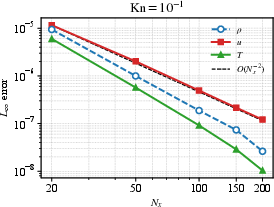
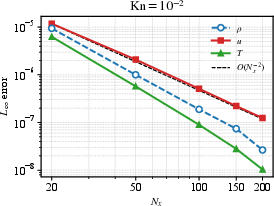
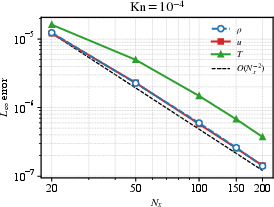
Figure 2: Diagrammatic positioning of WPD within the UGKS/UGKWP and macro-micro landscape, emphasizing its PDE-level, locally adaptive split.
Numerical Realization: Conservative Macro-Micro Algorithm
The algorithmic translation is a finite-volume scheme in which the total conservative solution vector is updated by the sum of a wave flux (computed via a local gas-kinetic NS solver with horizon-weighted transport coefficients) and a particle flux (solved deterministically via discrete-ordinate ∂tf+ξ⋅∇f=τG[f]−f,3 or stochastically via Monte Carlo). The wave-particle interface is determined by the local horizon ∂tf+ξ⋅∇f=τG[f]−f,4, typically related to the mesh evolution timescale rather than the global timestep, in contrast to earlier UGKWP approaches.
Grid-level update for a cell ∂tf+ξ⋅∇f=τG[f]−f,5: ∂tf+ξ⋅∇f=τG[f]−f,6
with conservative wave-particle coupling and internal exchange handled to machine precision, ensuring strict conservation.
Novelty lies in (1) splitting at the governing equation level, (2) attributing the kinetic degrees of freedom to a physically meaningful surviving collisionless population, and (3) localizing the computational cost in accordance with the flow regime.
Theoretical Analysis: Asymptotic, Rarefied, and Adaptive Properties
Formal analysis establishes three central properties:
- Asymptotic preserving (AP): As ∂tf+ξ⋅∇f=τG[f]−f,7 (continuum limit), ∂tf+ξ⋅∇f=τG[f]−f,8 and the scheme reduces to a standard Navier–Stokes solver; the explicit particle fraction vanishes exponentially and the method is independent of kinetic stiffness.
- Rarefied regime consistency: As ∂tf+ξ⋅∇f=τG[f]−f,9 (strongly non-equilibrium), G[f]0 and all transport is carried by the particle solver, with no artificial hydrodynamic closure imposed.
- Regime adaptation: The active kinetic population in each cell scales as G[f]1, enabling exponential suppression of kinetic computation where not required (i.e., in continuum regions), as formalized in detailed scaling theorems.
Crucially, the approach avoids global time-step-constrained splitting; instead, the particle fraction is governed locally, preventing unnecessary kinetic computation in well-resolved continuum regions.
Numerical Validation: Multiscale Benchmarks and Quantitative Assessment
A wide array of one-, two-, and three-dimensional test problems assesses accuracy, efficiency, and adaptability:
1D Tests:
- Smooth-wave propagation: Second-order accuracy in all macroscopic variables; convergence rates independent of the regime.
- Sod shock tube: Consistency with classic kinetic and continuum solutions across rarefied and near-continuum limits.
- Couette flow and normal shock: Quantitative agreement with reference solvers (UGKS, direct G[f]2) in profiles and distribution functions.
Multidimensional Tests:
- Lid-driven cavity (2D): Accurate velocity and temperature fields across Knudsen numbers, with particle fraction varying naturally from G[f]3 in rarefied to G[f]4 in high-G[f]5 continuum conditions. Centerline profiles and vortex structures accurately recovered.
- Hypersonic cylinder (2D): Bow shock and surface property profiles agree closely with both deterministic and stochastic references; the method achieves substantial reduction in kinetic degrees of freedom and wall time as the flow transitions toward the hydrodynamic regime.
- X38 vehicle (3D): Direct extension to complex geometries and practical flow conditions is demonstrated; the method remains stable and adaptively efficient without modification.
Empirical results underscore the relevant features of the formulation:
- Preservation of strict conservation laws (mass/pseudomomentum/energy) to machine accuracy.
- Regime-adaptive memory and CPU requirements as evidenced in kinetic DOF and wall-time tables, especially in particle-dominated versus wave-dominated flow regions.
- Numerical stability and accuracy in moving between regimes, including highly non-equilibrium and strongly rarefied/wall-dominated flows.
Implications and Future Directions
This work establishes a robust theoretical and practical framework for multiscale kinetic simulation. The wave-particle decomposition, with its local-horizon-guided partitioning, achieves AP behavior, local regime adaptation, and computational efficiency directly at the PDE level. By tying the particle fraction to physical relaxation properties rather than mesh, time-step, or ad hoc error metrics, the method enables physically consistent, sharply adaptive simulations, making it naturally suited for modern, large-scale, heterogeneous CFD and kinetic applications.
Practically, these advances have immediate impact on hypersonic vehicle aerodynamics, plasma flows, multiphase systems, and multiscale photon and radiation transport. Theoretically, the construction invites further generalization, including nonlinear collisional models, adaptive/hybrid velocity discretizations, and integration with high-order solvers.
Potential future work includes rigorous convergence and stability analyses for the full nonlinear scheme, incorporation of adaptive velocity-space refinement or reduction, time-integration improvements for higher-order accuracy, and parallel high-performance implementations for exascale multiscale simulation.
Conclusion
The wave-particle decomposition with a local kinetic horizon, developed in this work, delivers a unifying and physically transparent means of handling kinetic equations across the entire Knudsen spectrum. By leveraging the integral solution structure, the approach merges conservative discretization, physically meaningful regime-adaptivity, and rigorous asymptotic behavior, thereby offering both theoretical clarity and computationally efficient tools for a vast range of multiscale problems in kinetic theory (2606.26915).