- The paper reveals that a photo-thermal mechanism drives c axis reorientation in Te thin films by using an Arrhenius-based kinetic model.
- It employs picosecond laser pulses on MBE-grown Te films and leverages polarization-resolved reflectance to quantify anisotropic optical responses.
- The findings enable programmable reconfiguration for optoelectronic applications and indicate potential extensions to other anisotropic van der Waals materials.
Photo-Thermal Mechanism for Pulse Laser-Induced Reorientation of the Crystallographic c Axis in Tellurium Thin Films
Introduction
The orientation-dependent properties of tellurium (Te), an elemental semiconductor with pronounced uniaxial anisotropy, motivate precise control of its crystallographic c axis for optoelectronic applications. Recent results demonstrate the feasibility of spatially programmable c axis reorientation in Te thin films via picosecond pulse laser irradiation, aligning the c axis perpendicular to the laser polarization. Prior hypotheses attributed this effect to selective melting and recrystallization, but lacked a quantitative model. The present study systematically investigates the dependence of c axis alignment on laser fluence and pulse number, establishing a minimal kinetic model rooted in photo-thermal dynamics and anisotropic optical absorption.
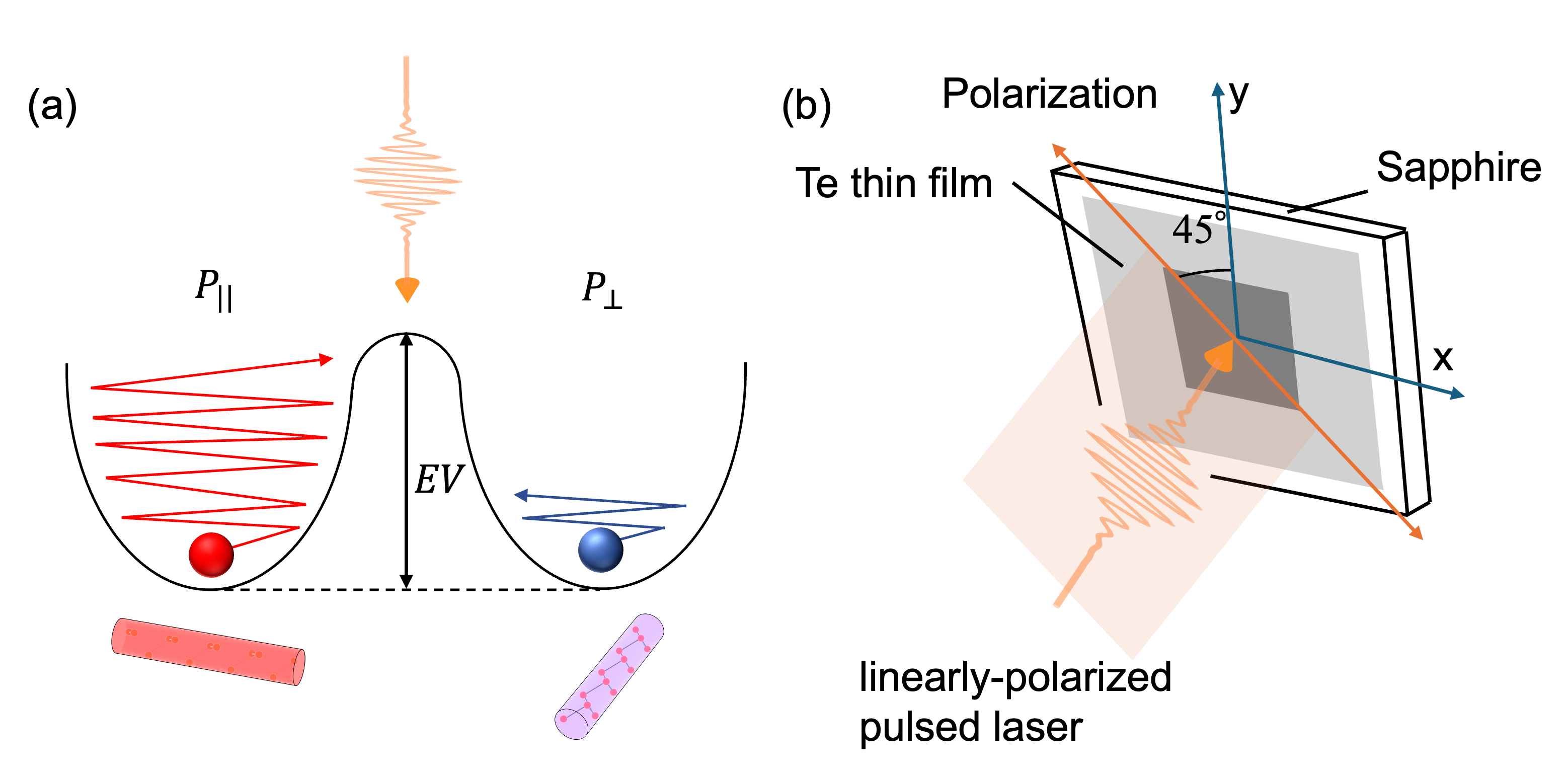
Figure 1: Schematic of the kinetic model and experimental setup: laser-induced anisotropic heating drives selective grain reorientation in Te films.
Experimental Methodology
Thin films of Te capped with Al2O3 were prepared via MBE on sapphire substrates, followed by irradiation with linearly polarized picosecond laser pulses at various fluences and pulse numbers. The laser polarization was set 45∘ from the y axis for robust symmetry. Optical characterization employed reflectance and transmittance measurements with a custom setup leveraging polarizers, wave plates, and lock-in detection, allowing extraction of polarization-resolved refractive indices.
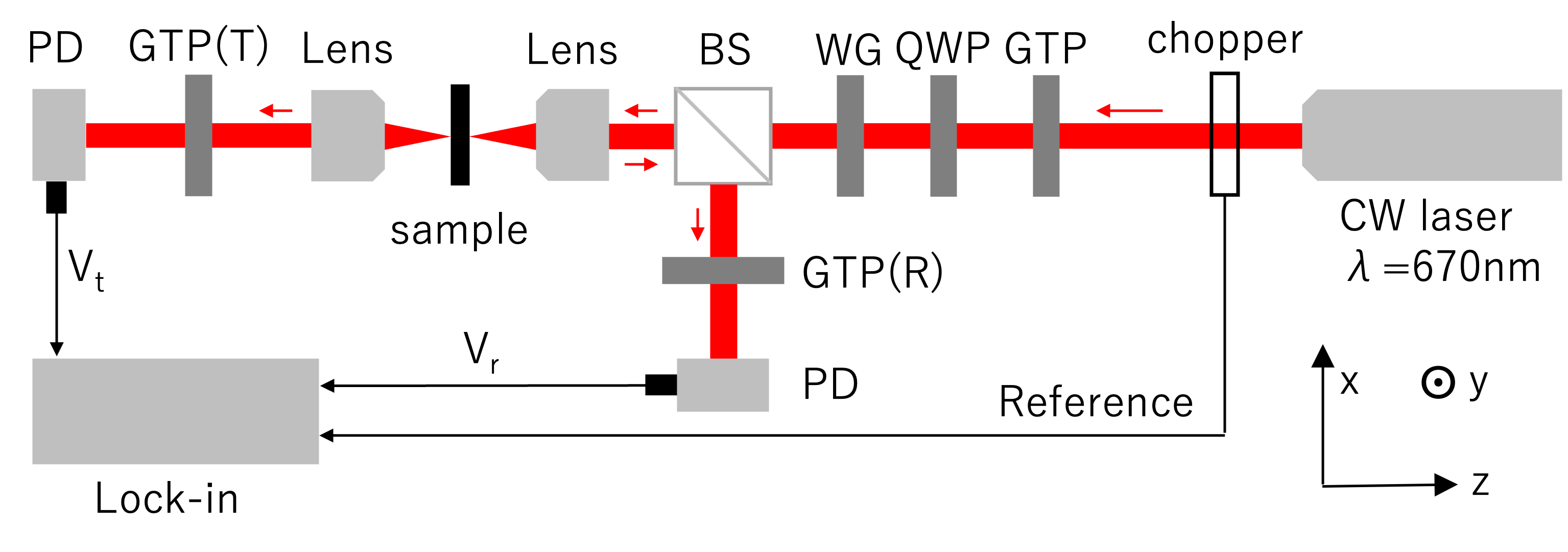
Figure 2: Optical setup schematic for the measurement of refractive indices in laser-irradiated Te films.
Optical Anisotropy and Refractive Index Analysis
The c axis realignment was quantified via polarization-dependent reflectance and transmittance. Data fitting utilized a Jones-matrix-based formalism, incorporating surface roughness through Debye-Waller attenuation. The parameter extraction yielded c0, c1, c2, c3 for the ordinary and extraordinary axes, respectively. Enhanced anisotropy was corroborated by strong variations in c4, c5 with fluence c6 and pulse number c7.
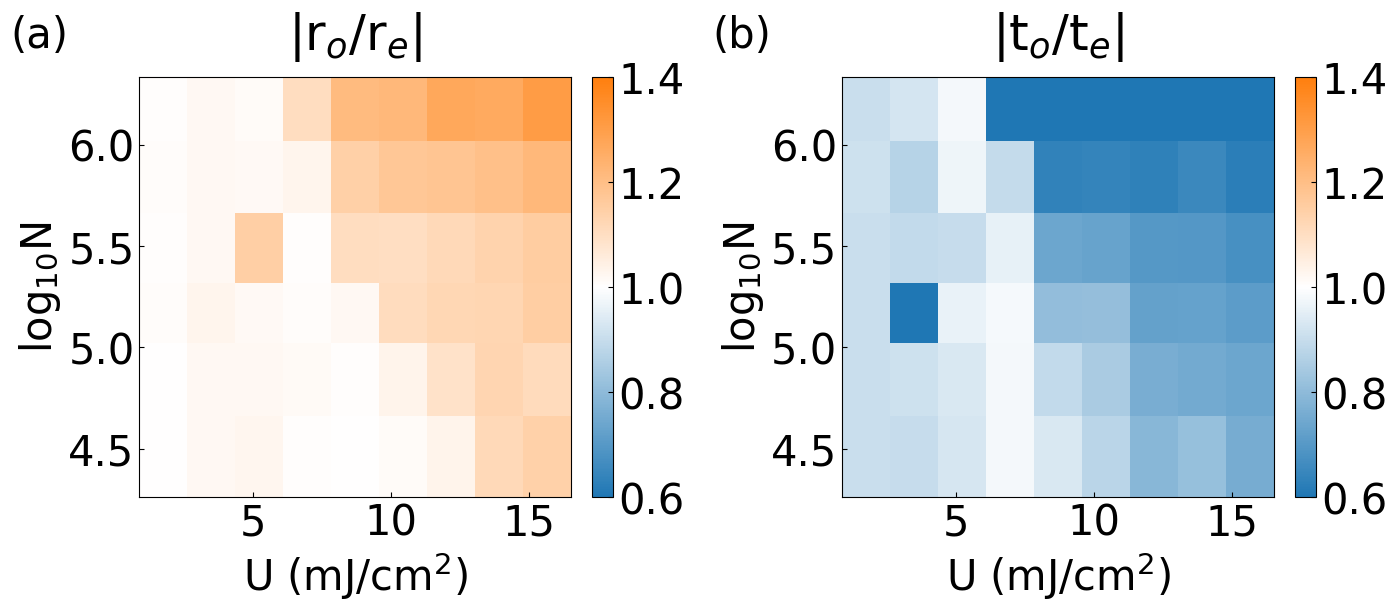
Figure 3: Polarization-resolved reflectance and transmittance ratios as functions of laser fluence and pulse number.
The refractive index differences, c8 and c9, exhibited pronounced threshold behavior, with c0 reaching values near 3 for extensive irradiation and c1 spanning c2 to c3. These trends confirm robust laser-induced optical anisotropy and validate prior reports.
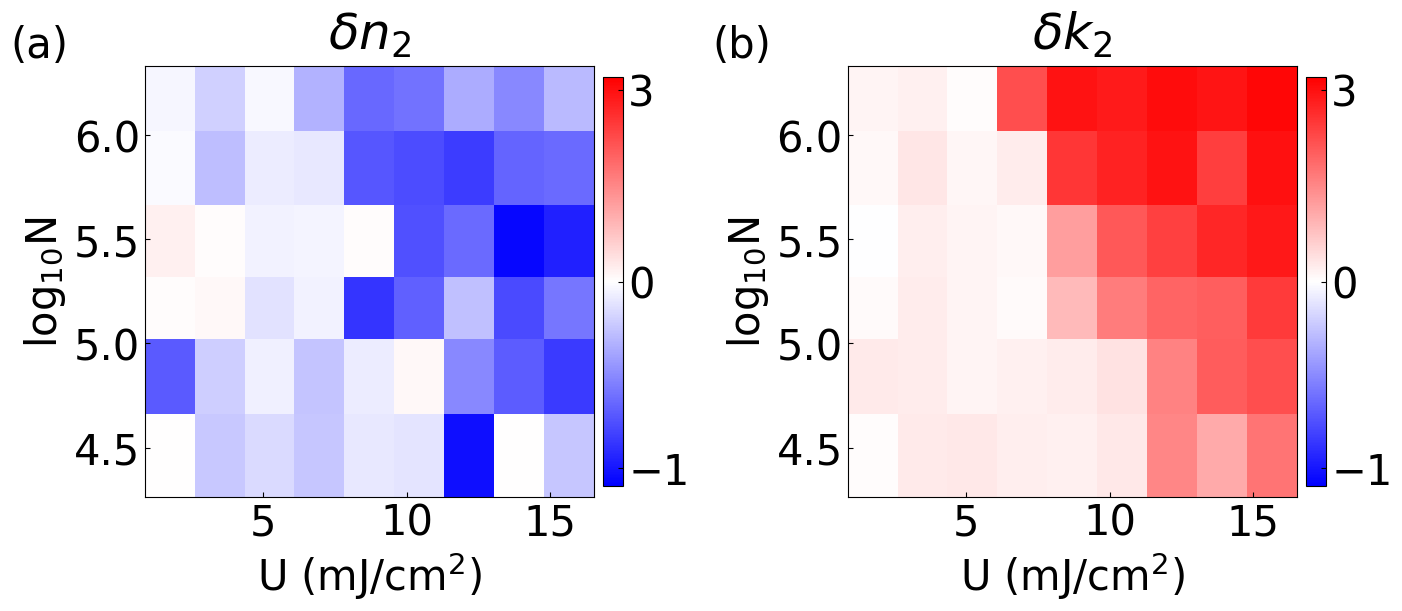
Figure 4: Log-scale fluence and pulse dependence of refractive index and extinction constant differences after laser irradiation.
Minimal Kinetic Model for Grain Reorientation
The kinetic model adopts an Arrhenius law for thermally activated switching between two metastable grain orientations (c4 axis parallel vs. perpendicular to laser polarization). The switching probability per pulse is modulated by anisotropic laser-induced temperature rise, governed by linear dichroism. The population dynamics are governed by a master equation yielding asymptotic alignment for sufficiently large fluence and pulse repetition.
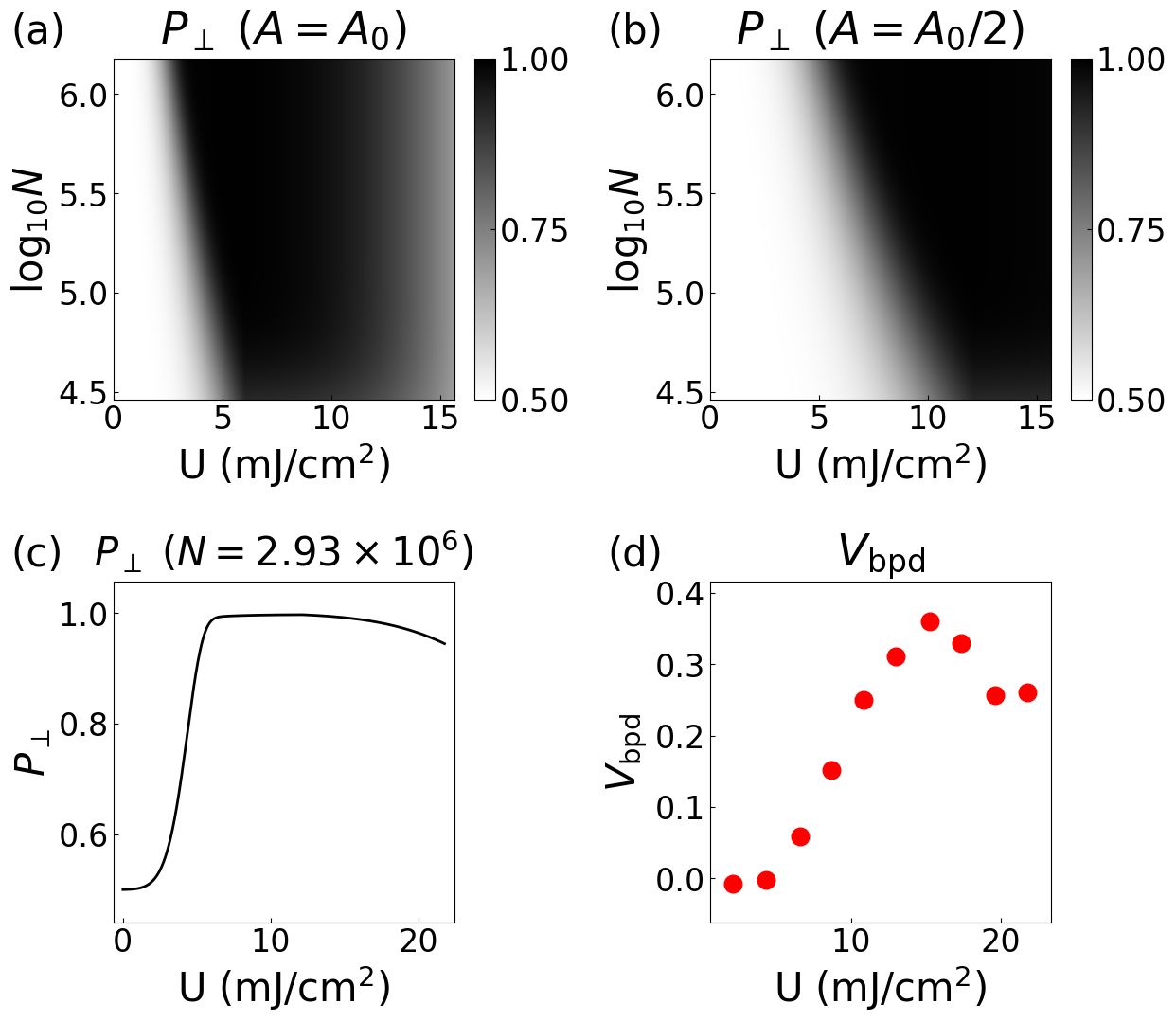
Figure 5: Theoretical calculation of perpendicular grain fraction as a function of laser fluence and pulse number.
The model incorporates physical parameters (activation energy, attempt frequency, activation volume) estimated from Te properties and atomic-scale structural motifs. Simulations reveal steep threshold behavior in c5 (fraction of grains aligned perpendicular), closely tracking c6 experimental trends. Adjusting the absorbance parameter accounts for thermal diffusion, matching experimental thresholds.
Extension to Other Anisotropic Materials
The model generalizes to anisotropic van der Waals materials such as black phosphorus, WTec7, and SnSe by recasting the transition rates in terms of material-dependent parameters (c8, c9, c0). Critical fluences for 90% grain alignment are calculated across a parameter space, indicating that laser control of crystal orientation is feasible for these materials under comparable irradiation conditions.
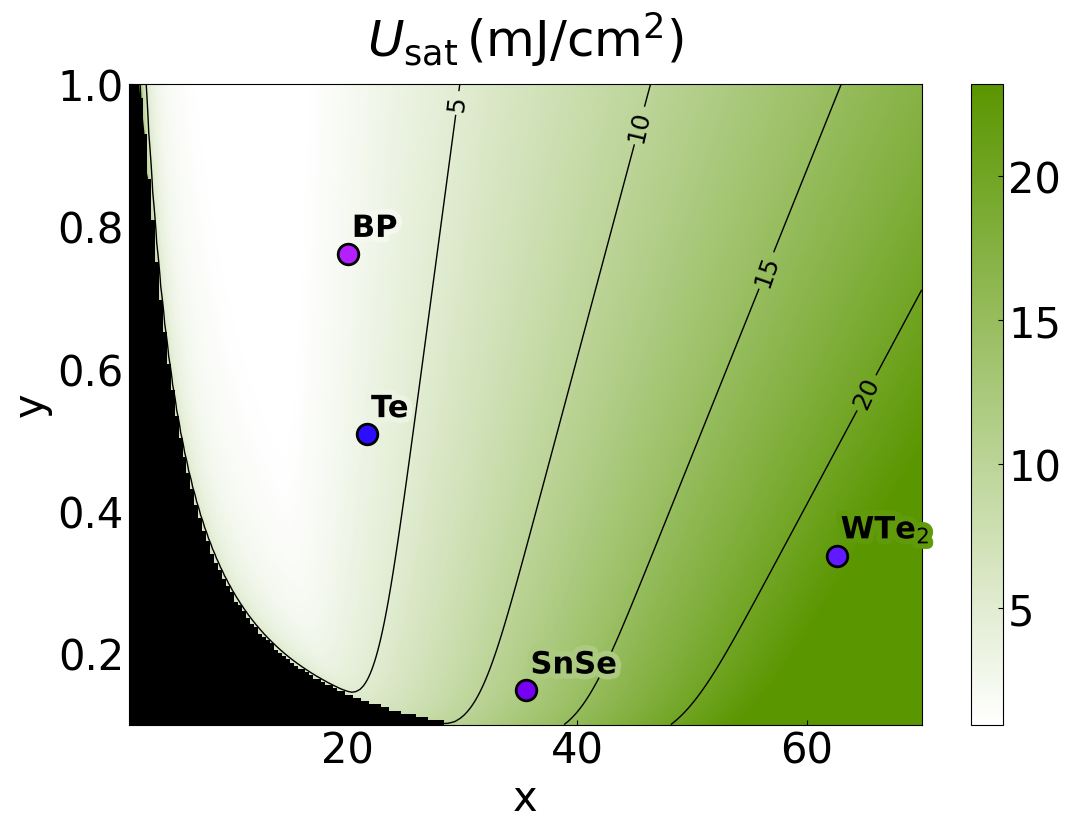
Figure 6: Calculated critical fluence c1 for laser-induced orientation control in Te, BP, WTec2, and SnSe.
Impact on Thin Film Morphology
Laser irradiation not only induces reorientation, but also modifies film morphology. Decreased thickness and increased interfacial roughness correlate spatially with optical anisotropy. A one-dimensional heat transport simulation quantifies the cooling time (c3 ns) and establishes a rotational attempt frequency concordant with grain reorientation kinetics.
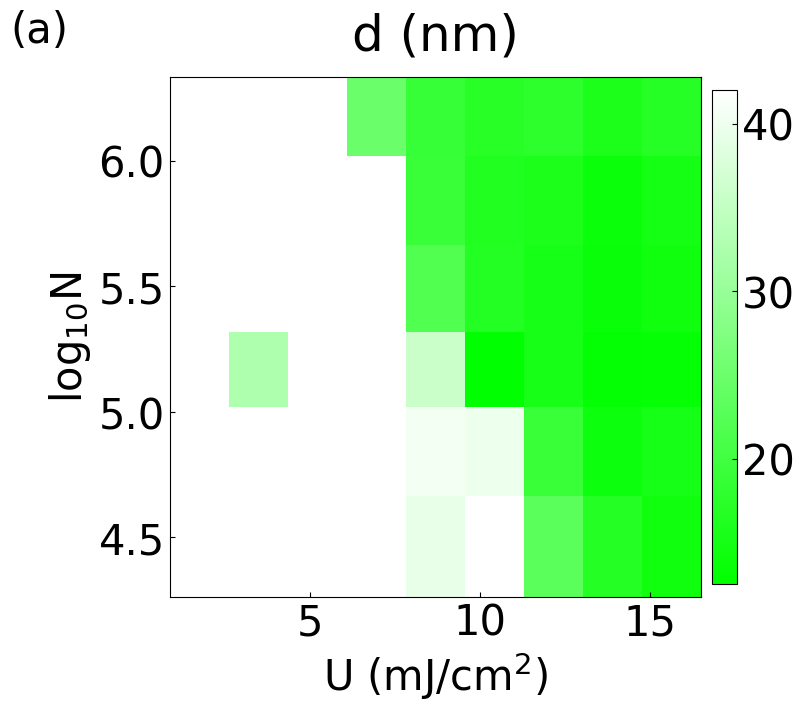
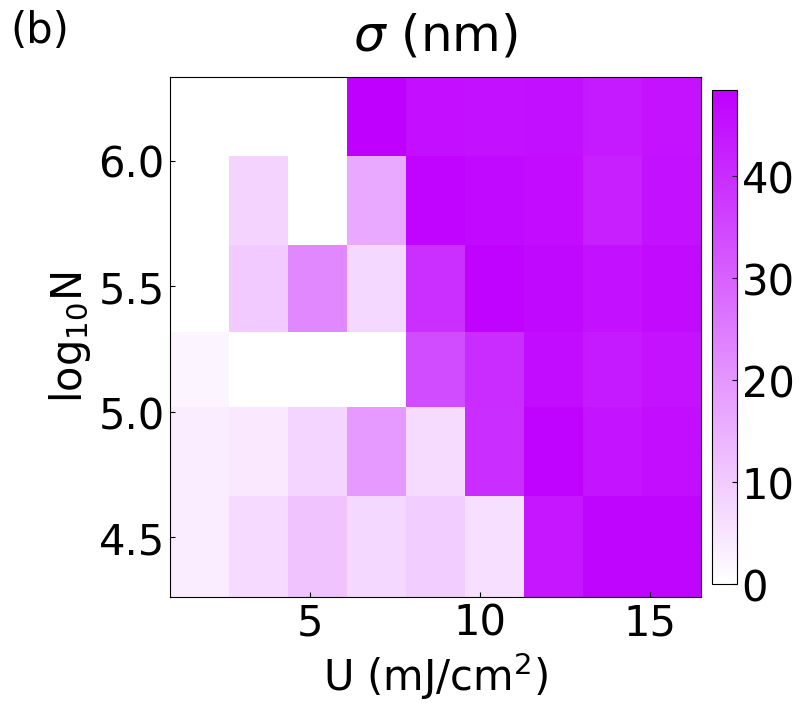
Figure 7: Evolution of film thickness and roughness with increasing fluence and pulse count.
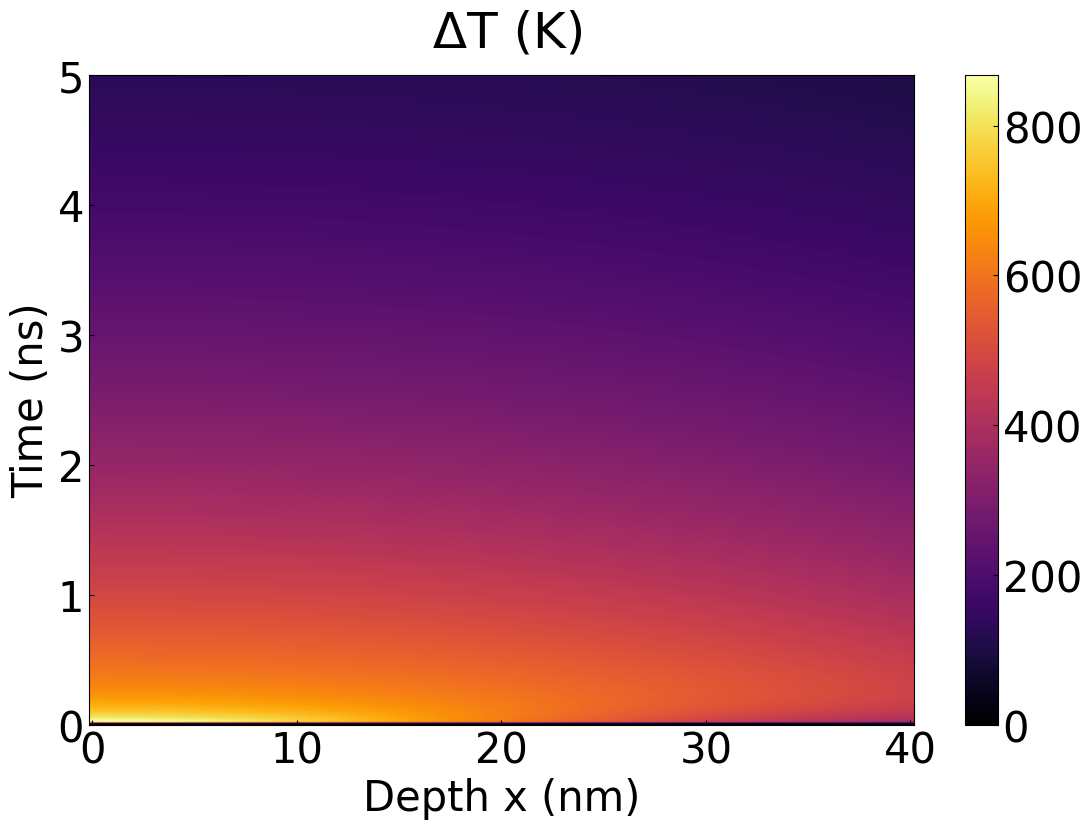
Figure 8: Simulated temperature profile and relaxation dynamics for Te thin films under laser heating.
Implications and Future Directions
This work provides rigorous evidence that c4 axis reorientation in Te thin films is predominantly photo-thermal in origin, triggered by polarization-dependent absorption and subsequent selective melting/reconfiguration. The kinetic model quantitatively predicts the threshold behavior and scaling with pulse parameters, and is extensible to broader classes of anisotropic materials. Practically, this mechanism enables maskless, programmable control of optical axes for reconfigurable photonic devices, metasurfaces, and anisotropic spintronic platforms. Theoretically, this framework motivates further exploration of laser-driven orientation control and defect engineering in low-dimensional solids, potentially incorporating cooperative structural rearrangements or exploiting non-equilibrium melting dynamics.
Conclusion
The integrated experimental and modeling study establishes a photo-thermal paradigm for pulse laser-induced c5 axis reorientation in Te thin films, driven by anisotropic optical absorption and thermally activated grain switching. The threshold behavior is accurately described by a minimal kinetic model based on the Arrhenius law. Extension to other anisotropic van der Waals materials is substantiated, suggesting practical routes for ultrafast, maskless optic axis control in low-dimensional materials. These findings have direct implications for the fabrication of programmable optoelectronic and spintronic devices exploiting orientation-dependent material properties (2606.26499).