- The paper demonstrates that outerplanar metrics lack an O(1)-point local certificate, marking a key difference from other graph families.
- It introduces a polynomial-time (O(k^5)) algorithm that leverages circular ordering, repelling path conditions, and dynamic programming for metric realization.
- The study’s innovations, including LP/flow duality and channel routing, provide new tools for tackling combinatorial metric realization in outerplanar graphs.
Recognizing Outerplanar Metrics: Structural and Algorithmic Advances
Problem Context and Motivation
This paper examines the metric realization problem for outerplanar graphs: Given a metric D on a terminal set T, can one construct an edge-weighted outerplanar graph G (with T⊆V(G)) such that the shortest-path metric on T matches D? The distance realization problem is fundamental in metric graph theory and has established connections to areas including computational biology, chemistry, and network tomography. Despite extensive prior work on particular families such as trees, cactus graphs, and Okamura-Seymour instances, the characterization and efficient algorithmic recognition of outerplanar metrics has remained open.
Structural Characterization: No Local Certificate
The paper's first major result is the negative resolution of the local certificate question: For outerplanar metrics, there is no O(1)-point condition. That is, even though for trees and Okamura-Seymour instances a metric is realizable if and only if all $4$-point submetrics are realizable, the authors construct metrics on k≥20 terminals where the restriction to any proper subset is outerplanar-realizable, yet the complete metric is not ("Paths and Intersections: Recognizing Outerplanar Metrics" (2606.25827)). This constitutes a strong structural separation between outerplanar graphs and other well-studied families.
Efficient Polynomial-Time Recognition Algorithm
Despite the absence of a succinct certificate, the paper develops a polynomial-time algorithm (O(k5)) for recognizing outerplanar metrics and constructing realizing graphs when possible. The algorithm operates in three major stages:
- Circular Ordering via Okamura-Seymour Algorithms: Any outerplanar metric is also an Okamura-Seymour metric. Leveraging recent algorithms for circular ordering, the terminals are placed on the boundary according to T0 ("Path and Intersections: Characterization of Quasi-metrics in Directed Okamura-Seymour Instances" [chen2025path]).
- Repelling Paths Condition: The critical combinatorial condition for feasibility is that for every pair of terminal pairs T1 and T2, if they "repel" (in the sense of metric inequalities derived from intersecting shortest paths), then their corresponding shortest paths must be disjoint. The authors prove this is both necessary and sufficient and provide a combinatorial LP-certification and dual-flow argument—supported by a new path switching and chord uncrossing technique that is visualized in the manuscript.
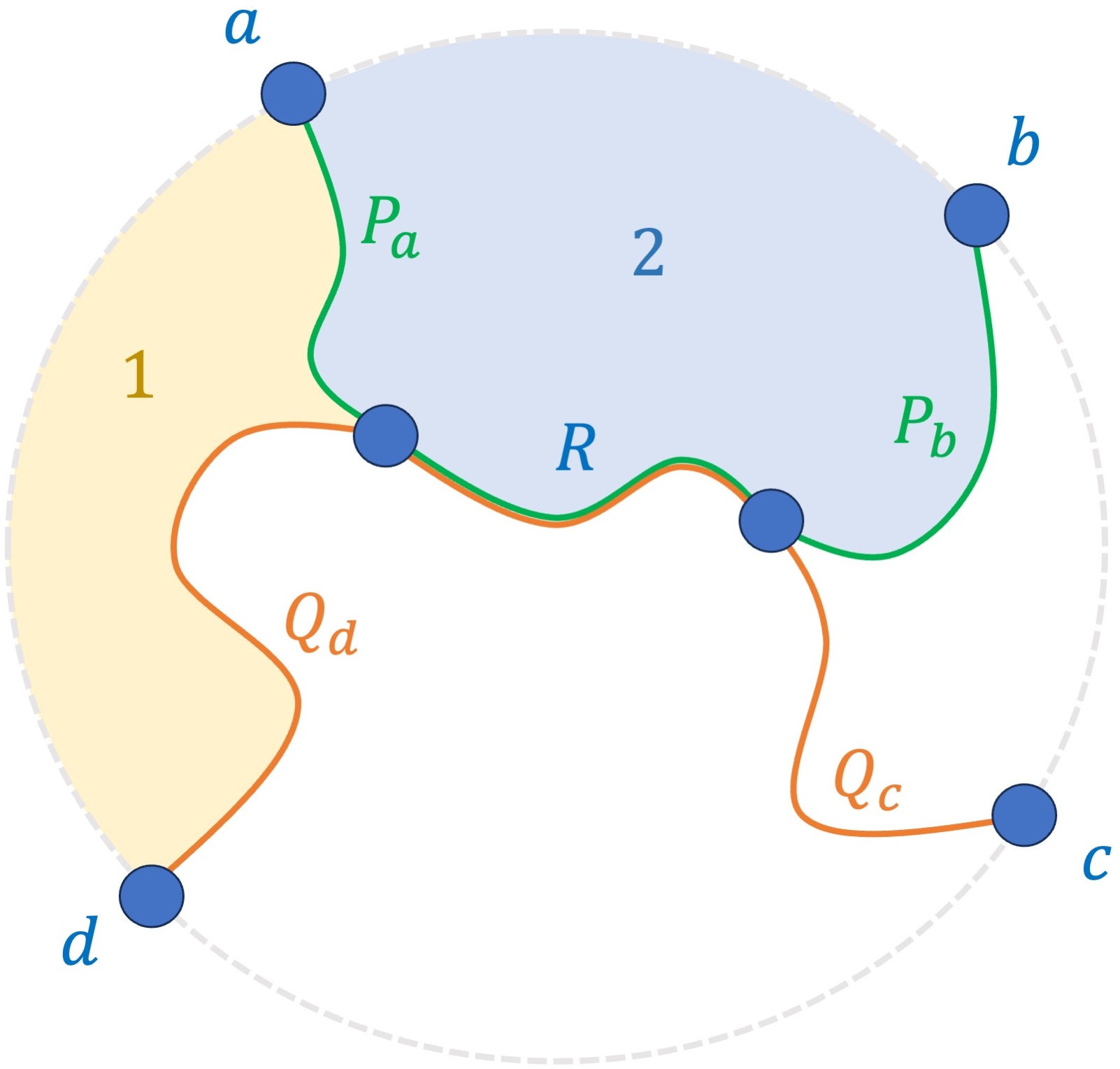
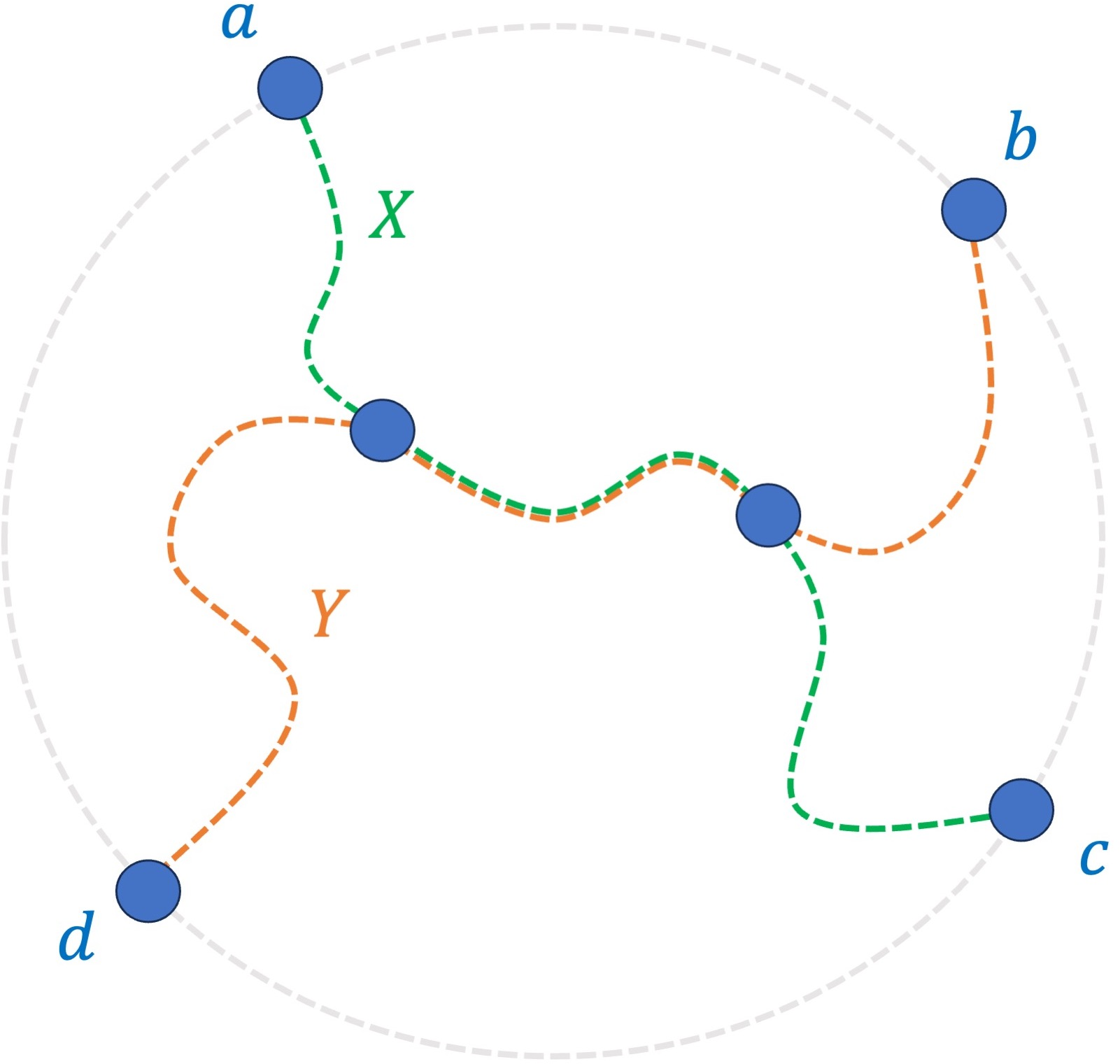
Figure 1: An illustration of path switching, which is crucial for manipulating flows and intersections in shortest path structures.
- Dynamic Programming in Canonical Outerplanar Frameworks: By massaging any outerplanar graph into a canonical form, the authors design a dynamic programming algorithm to realize the metric, partitioning the boundary into segments and filling "channels" between segments to optimally realize the goal.
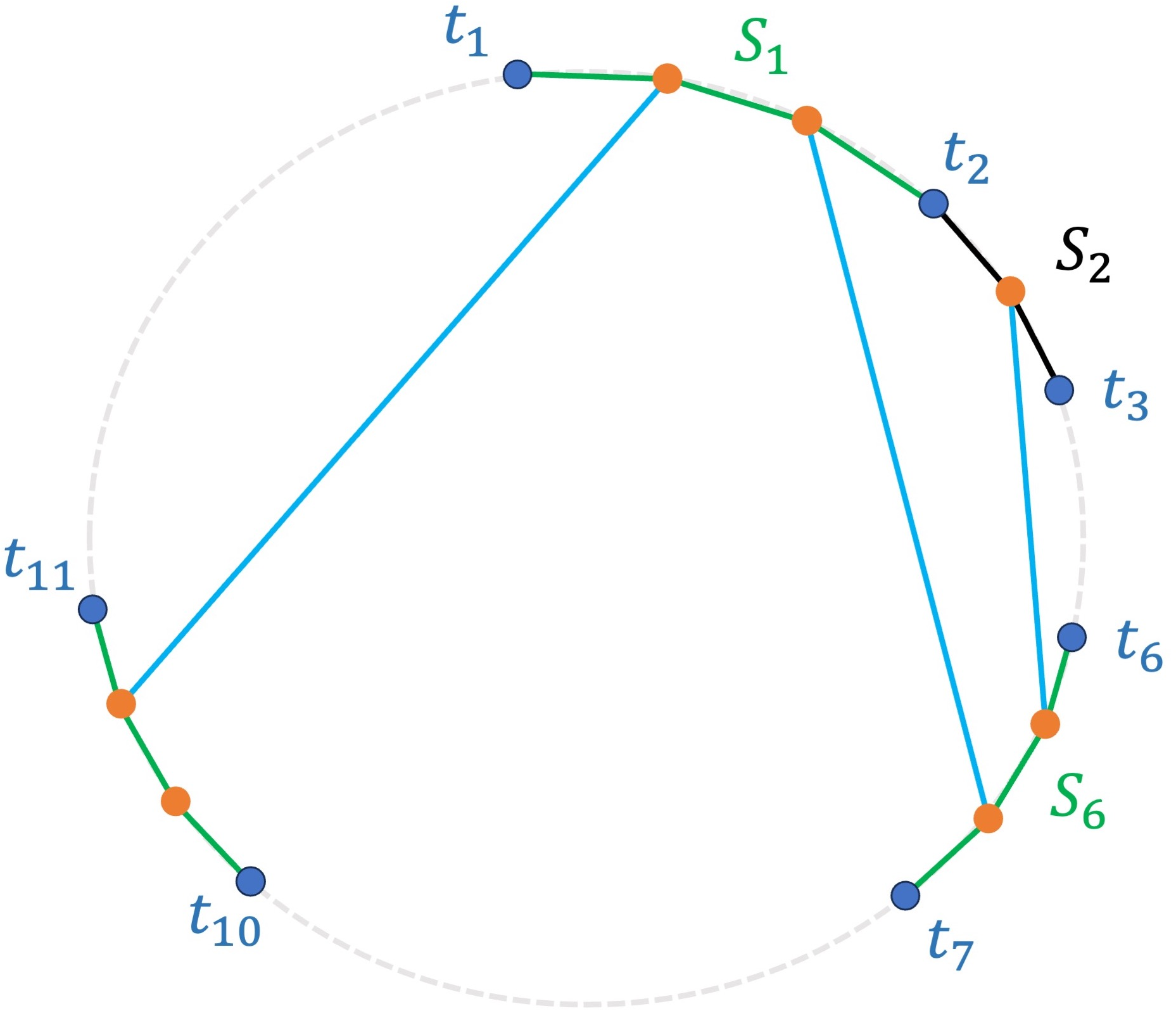
Figure 2: A canonical outerplanar graph: terminals T3 and boundary segments T4.
Technical Innovations
The algorithmic framework leverages a novel "paths and intersections" perspective, shifting focus from metrics on small point sets to intersection patterns and structural properties of shortest paths across the boundary.
Numerical Complexity and Claims
The algorithm's running time is explicitly polynomial (T6, with prospects for further optimization), matching the best bounds for related problems on trees and Okamura-Seymour instances. The claims regarding absence of small certificate and sufficiency of repelling paths are proved constructively and with strong counterexamples (see Appendix of (2606.25827)).
Implications and Future Directions
Theoretical implications include a deeper understanding of combinatorial metric realization in low-complexity planar families, separation from Okamura-Seymour and tree cases, and novel structural results on shortest-path intersection patterns. The path switching and chord dominance techniques have potential independent applications in metric embeddings, mimicking network constructions, and planar graph emulators. Practically, the results enable efficient metric realization in domains where outerplanarity is imposed by physical or biological constraints.
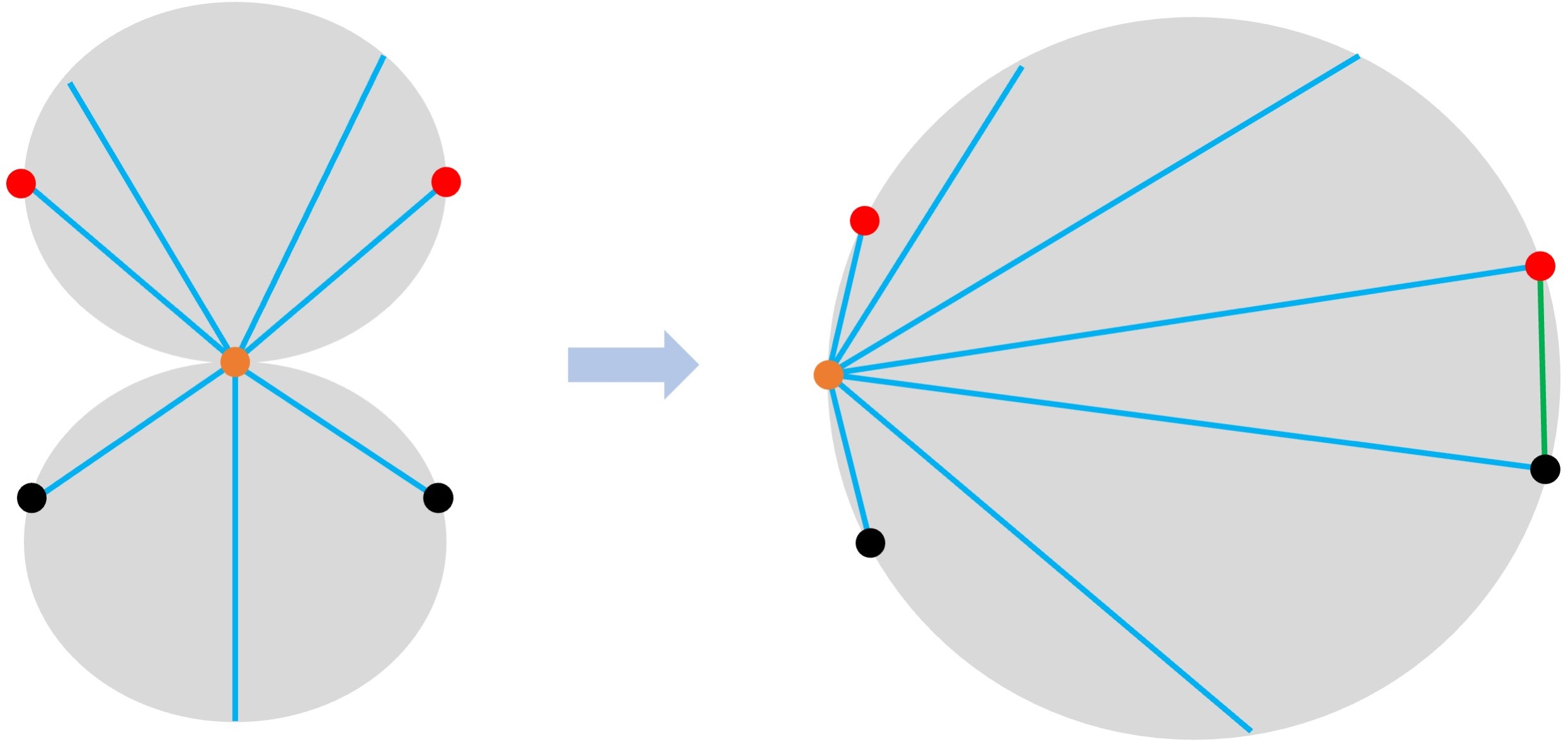
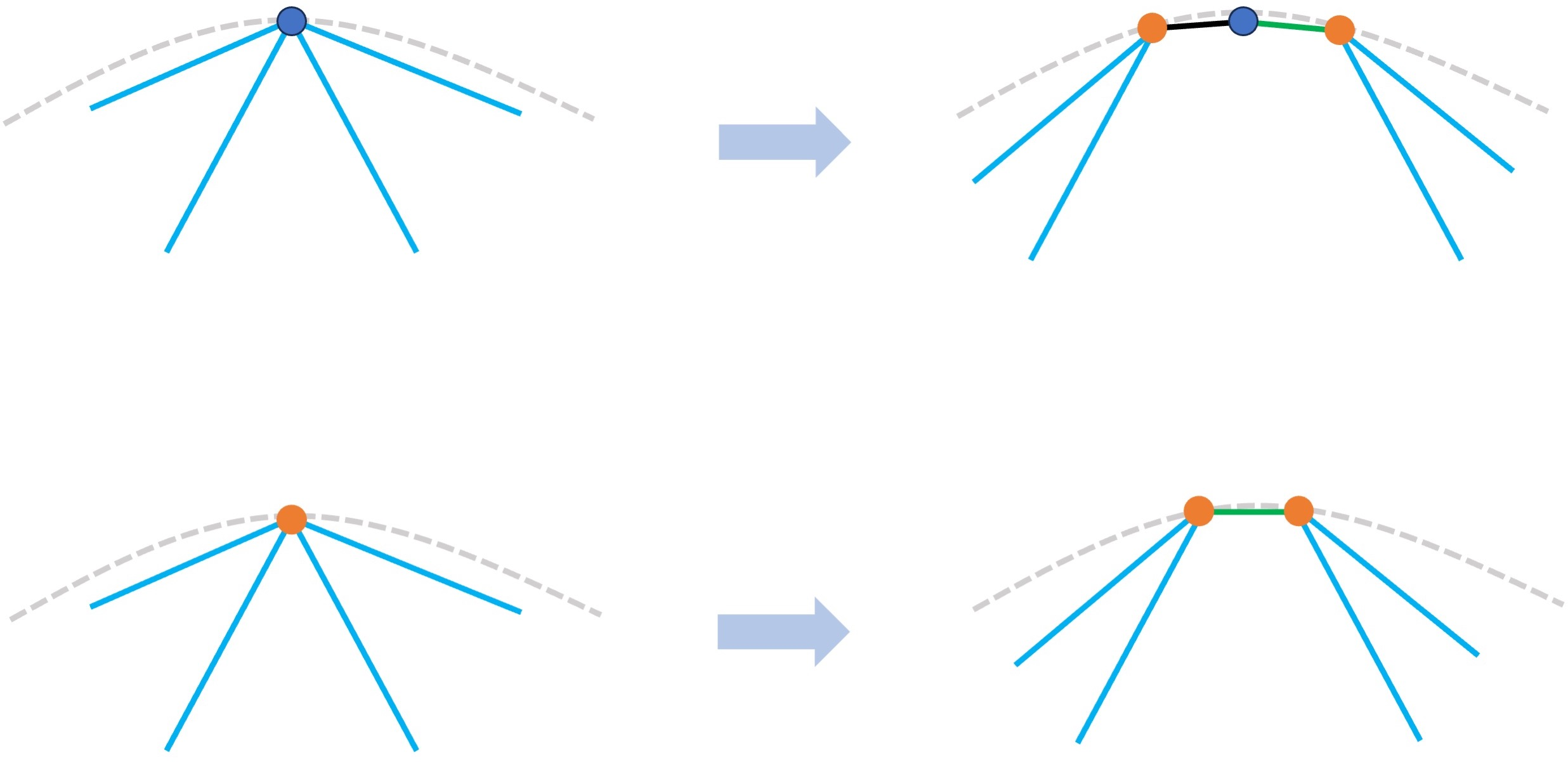
Figure 4: Transforming arbitrary outerplanar graphs into canonical forms via massaging operations.
Future developments may focus on:
- Extending the "paths and intersections" framework to broader classes (planar, minor-free, or directed graphs).
- Investigating metric approximation and distortion bounds for families lacking T7-point certificates.
- Applying duality techniques to flow-cut gaps and embedding problems, leveraging new structural LP/flow correspondences.
Conclusion
The paper delivers a rigorous complexity separation and constructive algorithmic framework for recognizing and realizing outerplanar metrics. The absence of a local certificate is counterpoised by the sufficiency of intersection-based conditions, opening new avenues in metric graph theory and combinatorial optimization. The "paths and intersections" approach provides both a technical toolkit and a conceptual shift, with ramifications for future studies on planar metric realization and graph emulators.

