- The paper introduces EveLoad, the first dataset using event-based eye movements to classify six workload conditions under controlled N-back tasks.
- Methodology involves converting 2000 events into 5-frame tensors processed by a modified ResNet18, achieving subject-specific and mixed-subject accuracies above 96%.
- Implications include real-time adaptive rehabilitation and assistive interfaces, leveraging high temporal resolution and robustness in dynamic environments.
Event-Based Eye Movement Sensing for Cognitive Workload Recognition: An Authoritative Summary of "EveLoad" (2606.25177)
Introduction and Motivation
The paper "EveLoad: Cognitive Workload Recognition from Event-Based Eye Movements" (2606.25177) addresses the technical gaps in unobtrusive, high-temporal-resolution cognitive workload monitoring for adaptive rehabilitation and assistive interfaces. Conventional frame-based eye trackers are hampered by limited temporal resolution, motion blur, and insufficient robustness to rapid ocular dynamics; this limits their applicability in XR and wearable rehabilitation systems requiring state-aware adaptation. Event cameras, which asynchronously capture per-pixel brightness changes, offer microsecond-level temporal resolution, high dynamic range, and low latency, allowing precise recording of rapid ocular movements. The authors recognize that prior workload recognition studies often utilize free-viewing or spatially unconstrained paradigms, resulting in models that may conflate gaze-location distributions with workload-specific ocular dynamics. This work introduces EveLoad, the first dataset for cognitive workload recognition leveraging event-based eye-movement signals under spatially constrained, task-driven conditions, enabling benchmarking of workload-discriminative dynamics independent of gaze allocation cues.
Dataset Construction and Experimental Paradigm
EveLoad comprises 7.5 hours of event-based eye-movement recordings from 20 healthy adult participants. The acquisition protocol employs a controlled N-back-guided fixation paradigm, systematically varying working memory load (no-load, 0-back, 1-back) and stimulus presentation rates (slow: 1500 ms, fast: 750 ms), resulting in six workload-speed classes.
The spatial distribution of fixation targets is strictly controlled: targets are sampled on a uniform 1900 × 1000 pixel grid, with trajectory displacement constraints (200–800 pixels) to ensure robust saccadic coverage.
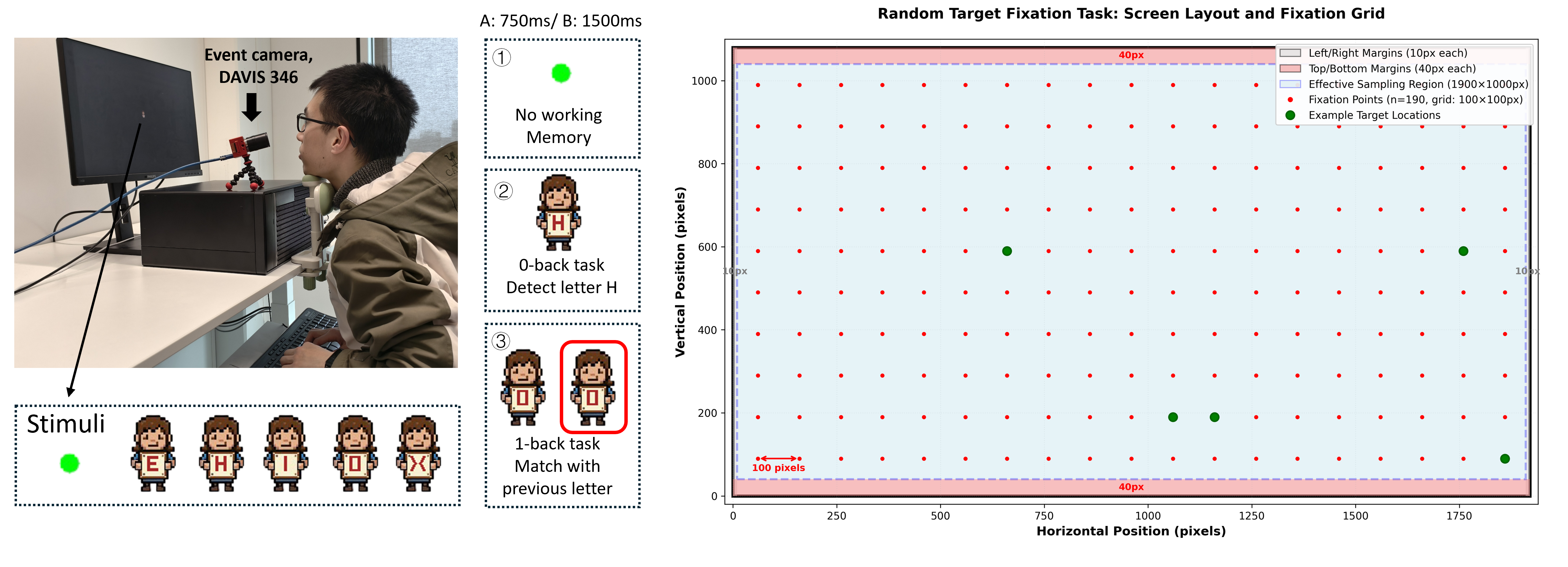
Figure 1: The recording apparatus, experimental stimulus protocol, and spatial constraints on task-driven fixation trajectories.
Each class contains 200 fixation targets per participant, yielding 24,000 annotated stimuli with synchronized event data, behavioral responses, and workload labels. The annotation granularity supports reproducible analysis, split definitions, and precise temporal alignment of ocular dynamics with task events.
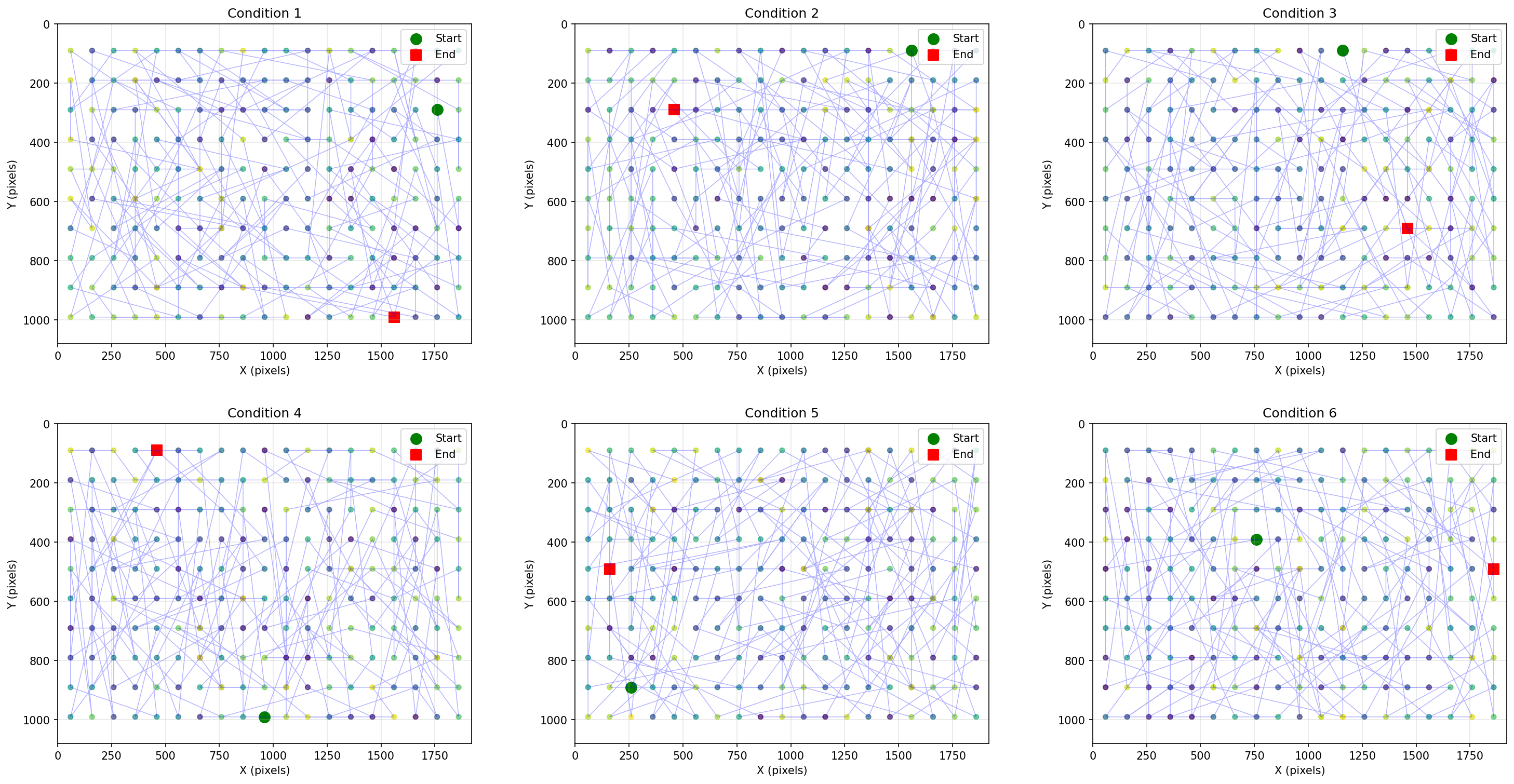
Figure 2: Examples of fixation trajectories spanning all regions of the grid, under different workload-speed conditions, ensuring uniform spatial coverage.
Event-Based Representation and Model Architecture
Raw event streams from the DAVIS346 sensor are pre-processed by hot pixel removal; event frames are generated by accumulating 2000 consecutive events and partitioning by polarity. Five such frames, separated into positive and negative channels, comprise a 10-channel input tensor encoding short-term spatiotemporal dynamics.
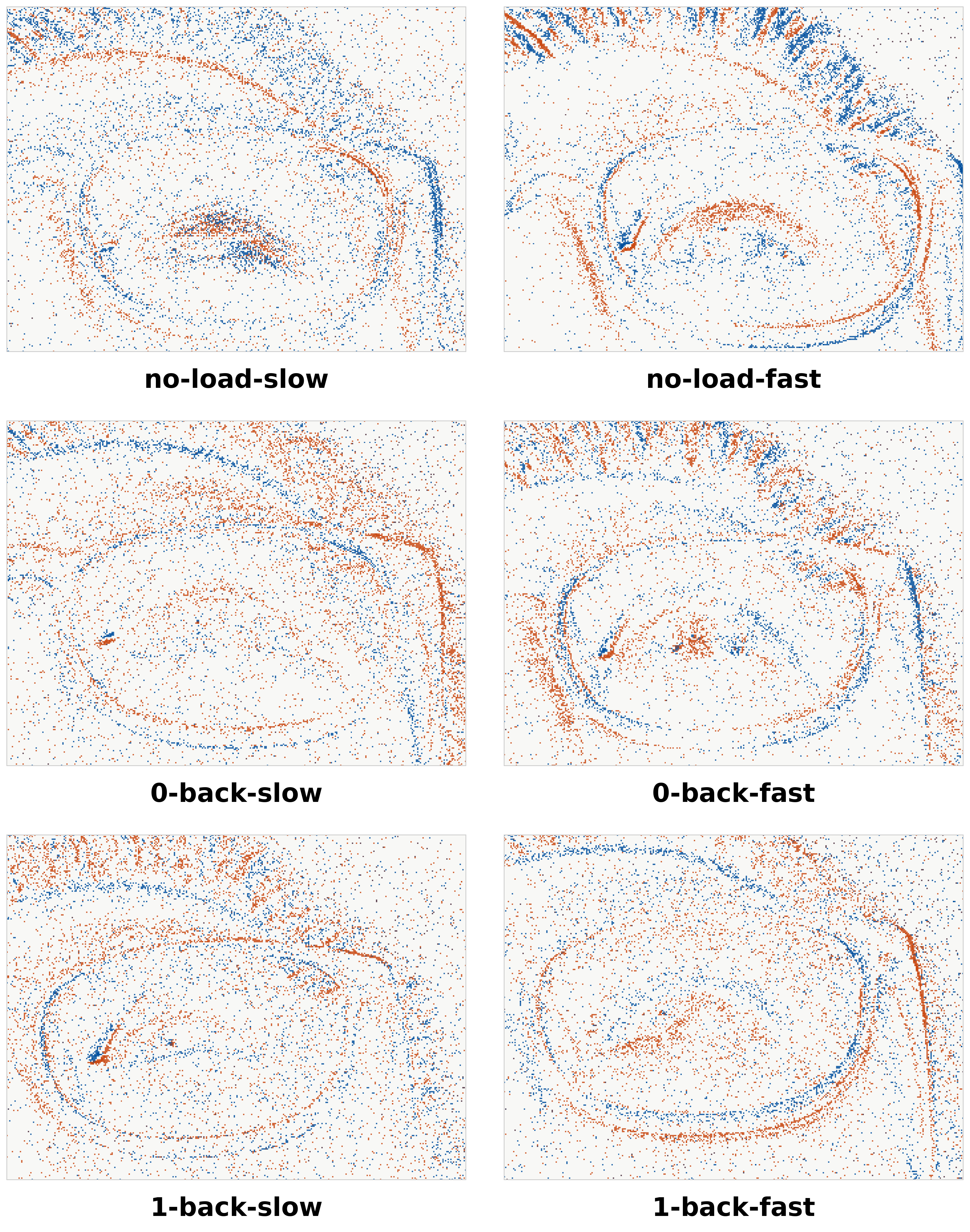
Figure 3: Illustrative visualization of event-frame representations under different workload conditions (no-load, 0-back, 1-back).
The backbone architecture for workload classification is an adapted ResNet18, initialized with ImageNet weights and modified for 10-channel input compatibility. Feature extraction is followed by global average pooling and a fully connected classification head, mapping the 512-dimensional embedding to six workload logits.
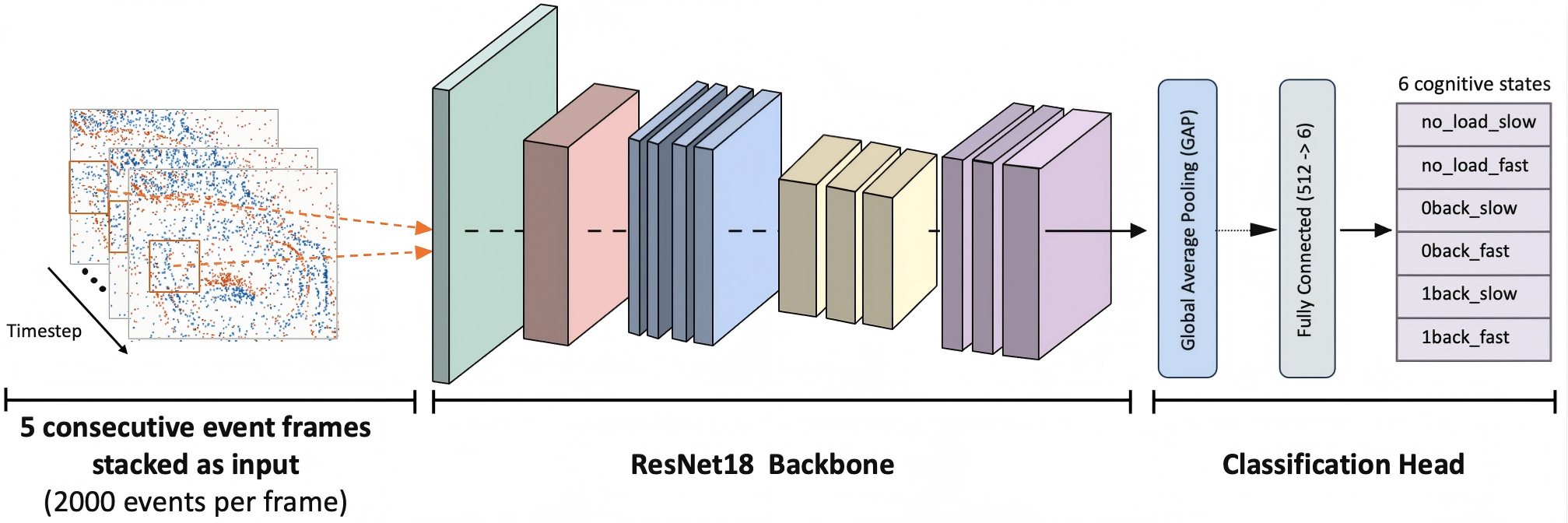
Figure 4: Model pipeline: multi-frame event tensor input, ResNet18-based feature extractor, global average pooling, and task-specific classification.
Alternative backbones (MobileNetV3, MobileViT) were evaluated; ResNet18 consistently demonstrated stronger discriminative capacity for event-based ocular workloads.
Experimental Validation and Numerical Results
Both subject-specific and mixed-subject random split evaluations were conducted. Subject-specific protocol: for each participant, data are partitioned 8:1:1 (train:test:validation) at the stimulus level. Mixed-subject split: all stimuli pooled, split randomly, maintaining integrity of individual stimulus sequences.
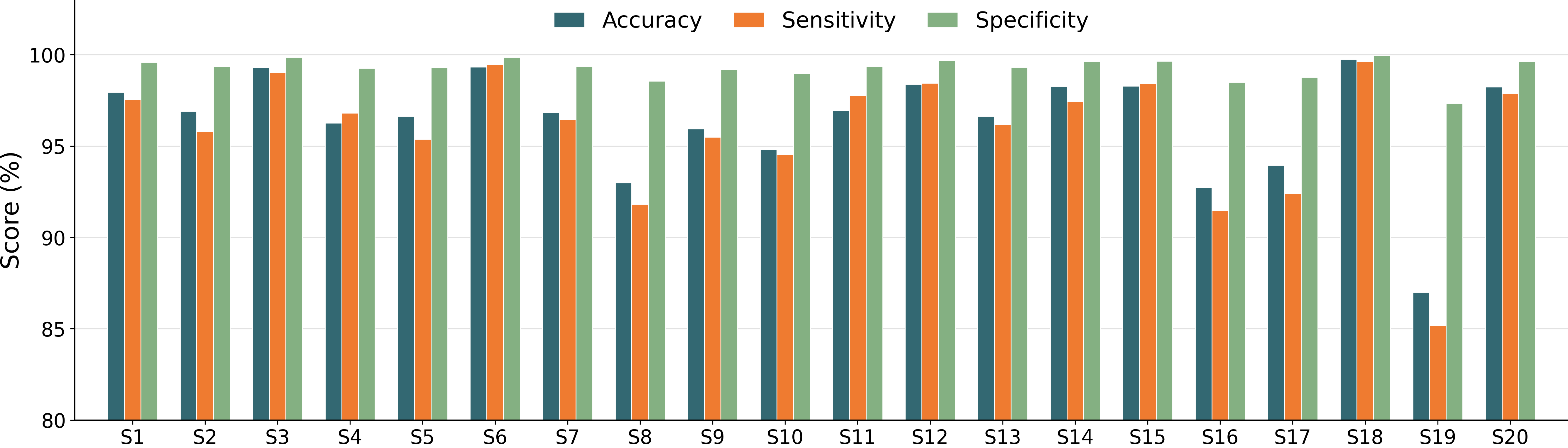
Figure 5: Subject-specific test accuracy across all 20 participants, indicating consistently high recognition rates.
ResNet18 achieved:
- Mean subject-specific accuracy: 96.36%, macro F1: 96.00%
- Mixed-subject accuracy: 96.13%, macro F1: 95.84%
Ablation studies determined optimal event-frame construction (2000 events/frame, 5 consecutive frames), and backbone comparison confirmed ResNet18’s superiority (outperforming MobileViT and MobileNetV3 by 2–4 percentage points).
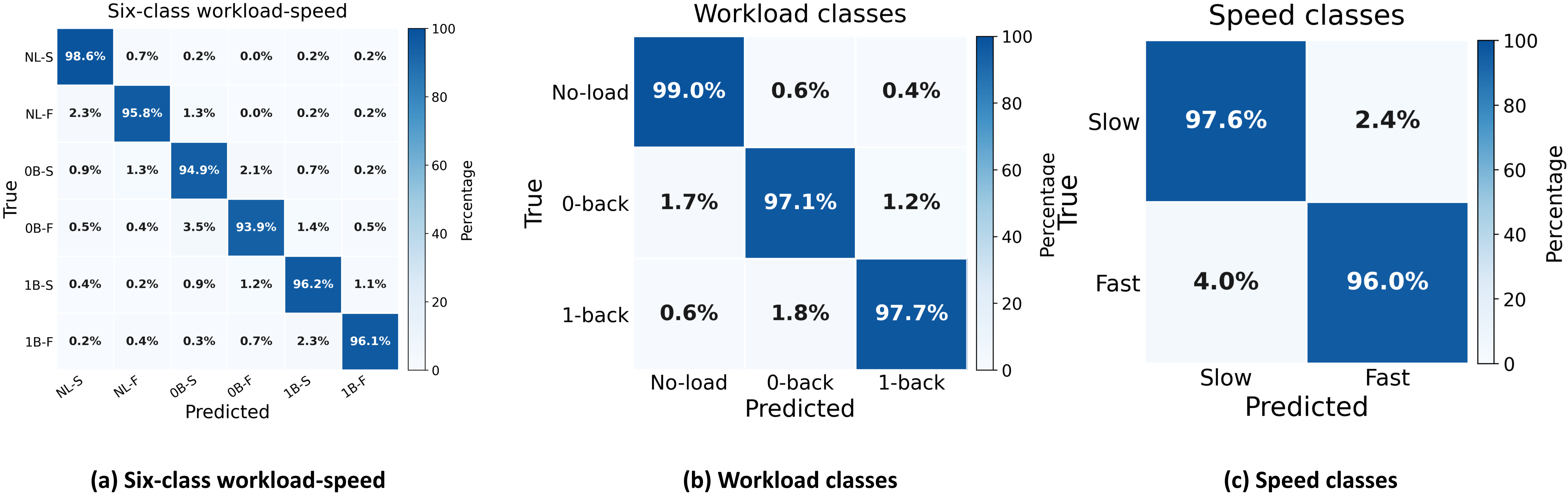
Figure 6: Confusion matrices detailing classification performance across all workload-speed classes and merged levels.
These results robustly indicate that event-based ocular signals encode workload-discriminative information, even under spatially constrained, task-driven interaction, ruling out spatial gaze distribution artifacts as a confounding factor.
Comparative Analysis and Theoretical Implications
Compared to prior eye-movement-based workload recognition literature employing conventional eye trackers, RGB cameras, or multimodal sensors, EveLoad stands out in several respects:
- Sensor Modality: Event camera, capturing high-frequency dynamics with microsecond precision.
- Label Granularity: Six workload-speed classes (versus prevalence of binary or tertiary settings).
- Spatial Control: Uniform spatial distribution of fixation targets eliminates gaze-location confounds present in free-viewing paradigms.
The classification accuracy is on par with or surpasses prior benchmarked studies, notably achieving strong results despite a more challenging six-class discrimination task. The implications are twofold:
- Practical: Event-based ocular sensing provides a viable modality for real-time workload-aware adaptation in assistive and rehabilitation technology. It can be integrated with AR/VR headsets, robot-assisted therapy, or adaptive interfaces, offering high temporal resolution and robustness to rapid eye movements.
- Theoretical: The dataset and paradigm enable research disentangling workload-specific ocular dynamics from gaze allocation artifacts, supporting fine-grained cognitive state modeling.
Future Directions
Prospective advancements include:
- Clinical validation in neurological populations (stroke, TBI) with altered workload-ocular behavior.
- Real-time online inference embedded in rehabilitation feedback loops, exploiting event-camera low-latency for adaptive difficulty modulation.
- Fusion with other physiological modalities (EEG, fNIRS) for multimodal cognitive state estimation.
- Expansion to unconstrained environments, balancing spatial control and ecological validity.
Conclusion
The "EveLoad" study establishes a technical and methodological foundation for cognitive workload recognition using event-based eye-movement signals under spatially controlled, task-driven conditions. It demonstrates strong discriminative performance across six workload-speed classes, lays groundwork for future adaptive rehabilitation and assistive interfaces, and sets a new benchmark for event-based vision modalities in cognitive-humansensing. Further clinical and cross-modality studies are warranted to fully realize the translational potential.