- The paper introduces SIES, a unified framework that combines explicit dynamical evolution with learnable, signed attention to govern collective synchronization.
- The paper demonstrates robust target alignment and accelerated convergence across diverse oscillator networks, even under unseen dynamics and scales.
- The paper validates SIES on embodied robotics and heterophilous graph classification, highlighting its scalability, adaptive coordination, and real-time topology-aware control.
Swarm-Inspired Emergent Synchronizer: A Unified Framework for Generalizable Collective Behavior in Graph Dynamical Systems
Introduction and Theoretical Framework
The paper introduces the Swarm-Inspired Emergent Synchronizer (SIES), a graph-dynamical architecture for learning generalizable local interaction laws that control collective organization in systems represented by graphs (2606.24958). The fundamental insight is that neither classical coupled dynamical systems (CDS) nor graph neural networks (GNNs) alone capture the complete spectrum of swarm-like behaviors: CDSs emphasize explicit state evolution but lack adaptive agent intelligence; GNNs provide adaptive message passing but lack embedded dynamical semantics, particularly the capacity for signed (attractive/repulsive) interactions crucial for heterophily. SIES merges these modalities by using an explicit dynamics engine at each node, while learnable interaction rules—based on signed, source-target-conditioned attention—mediate local coupling.
Each node in SIES maintains an evolving dynamical state and a task-conditioning cue. The coupling operator, realized via attention mechanisms without softmax normalization, admits both positive (attractive) and negative (repulsive) edge weights, a feature not present in standard GNNs. This design aligns with swarm intelligence: local, task-conditioned, direction-aware, and signed interactions accumulating to produce nontrivial, robust, and generalizable collective phenomena.
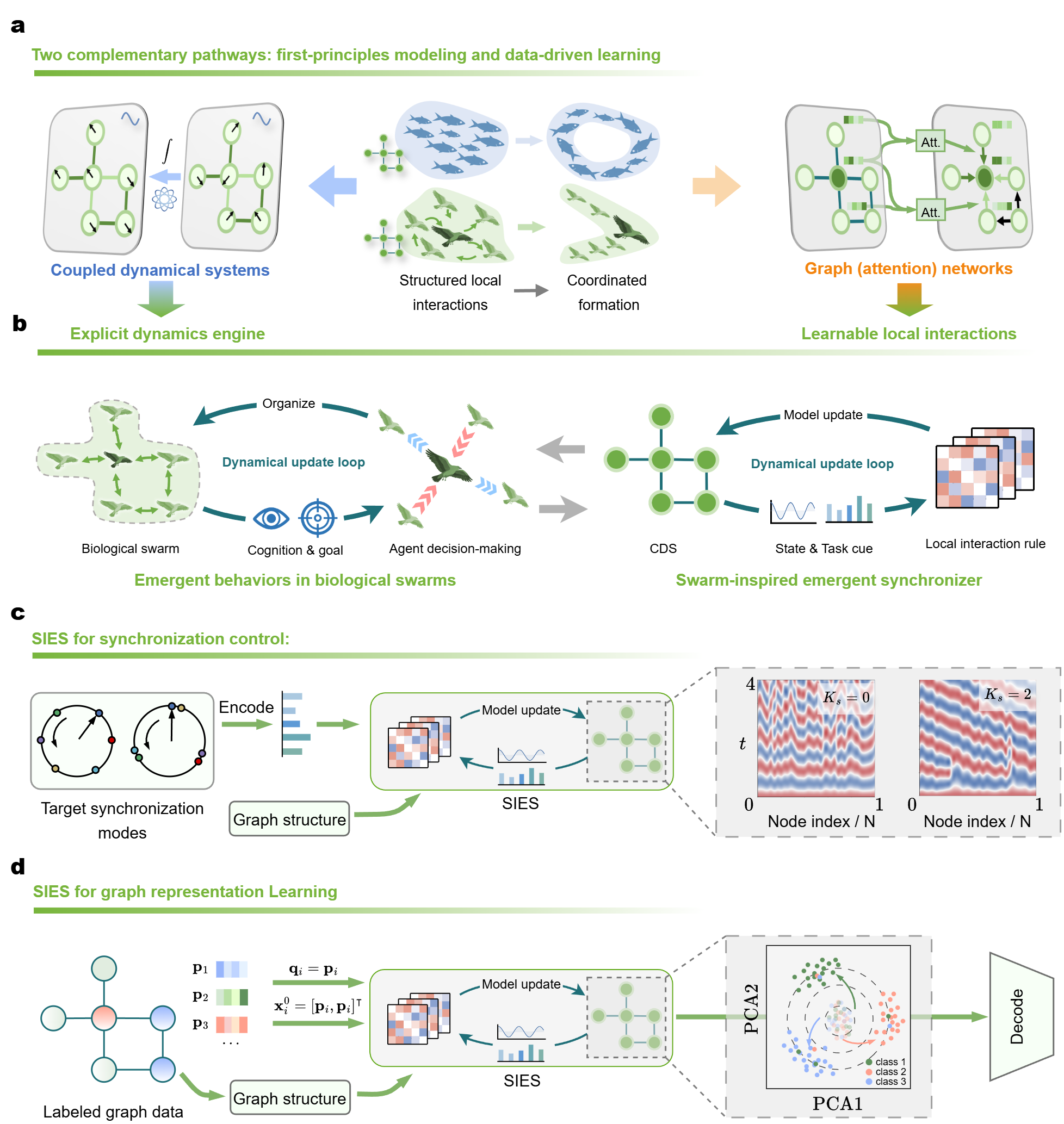
Figure 1: SIES unifies explicit dynamical evolution with learnable, signed, task-conditioned interaction rules for both synchronization control and graph representation learning.
Generalization in Collective Synchronization
SIES is evaluated in synchronization control tasks where a model, trained on an 8-node Hopf oscillator network and specific phase configurations, is tested under significant generalization requirements: unseen intrinsic node dynamics (e.g., Van der Pol, overdamped harmonic), unseen system scales (up to 120 nodes), and unseen target phase relations. Empirically, SIES retains high target alignment and low residual error across all axes, with order parameter Rtarget close to unity and phase RMSE in the range of 2∘–4∘ for highly nontrivial traveling-wave targets.
Theoretical insight is provided through reduction to a weakly coupled phase model, demonstrating that for traveling-wave targets in fully connected graphs, a phase-dependent coupling function A(θi,θj)=cos(θj−θi)+sin(θj−θi) induces the correct locking pattern for any N>4, and the corresponding equilibrium is locally stable.
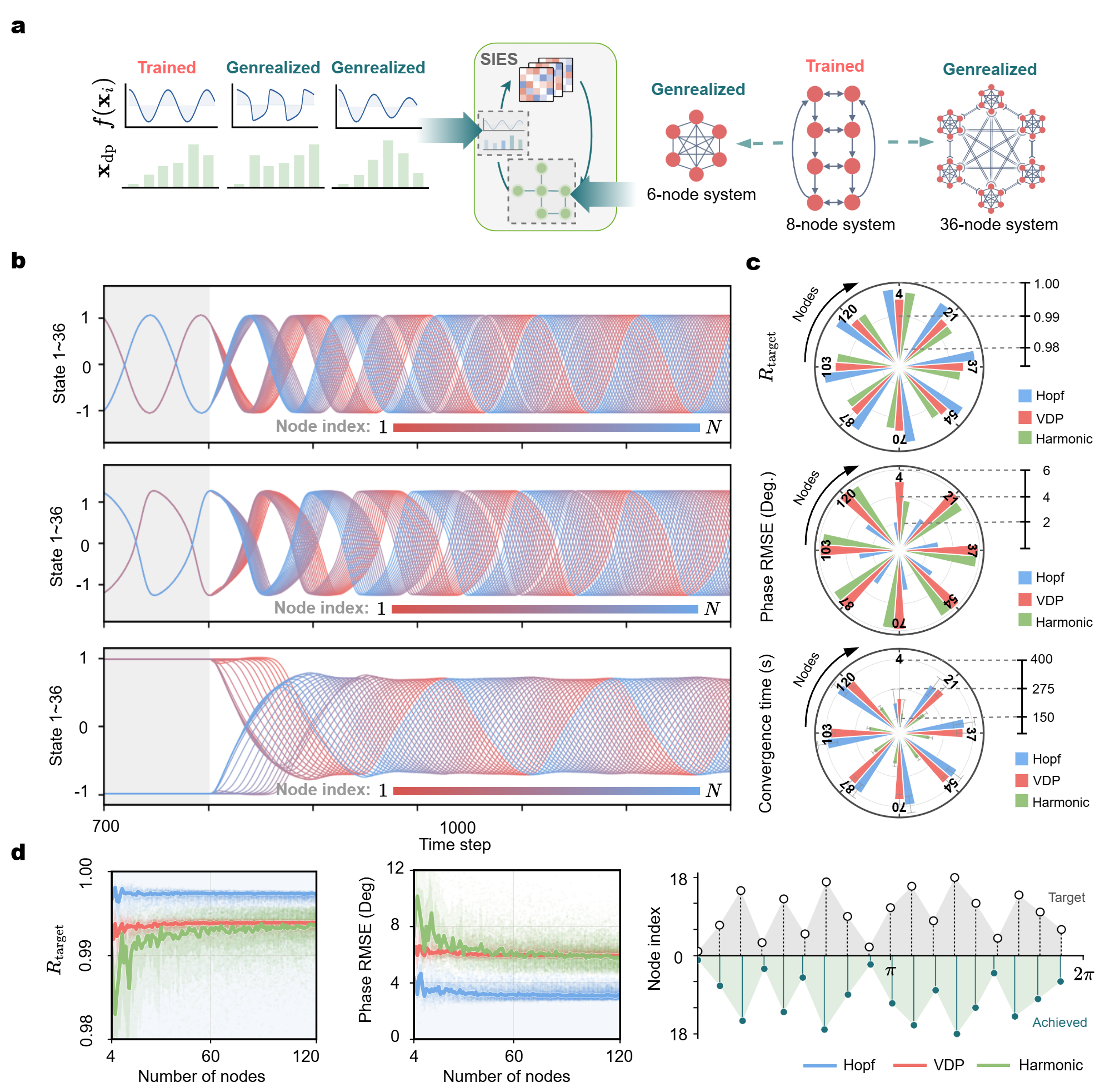
Figure 2: SIES generalizes to larger and dynamically distinct CDSs, stably producing prescribed traveling waves and random synchronization targets across scales and oscillator types.
Convergence, Basin of Attraction, and Sparse Topologies
SIES is benchmarked against three strong oscillator baselines (fully connected, Salamander CPG, and diffusive coupling) on canonical robotic gaits (walk, trot, bound). Across 1000 random initializations per target, SIES achieves lower median and mean convergence times across all phase distances, and cumulative convergence fraction curves rise more rapidly across all tested baselines. Notably, this accelerated convergence is not confined to small initial distances but holds throughout the phase space, corresponding to an empirically broader and deeper basin of attraction.
Sensitivity to interaction sparsity is systematically assessed using ring lattices and small-world graphs: for normalized degree kn/N≳0.3, SIES recovers the synchronization performance of fully connected networks. Furthermore, the introduction of moderate small-world rewiring (rewiring probability pr) enhances long-range synchronization without requiring all-to-all coupling—an explicit parallel to biological swarms and network science.
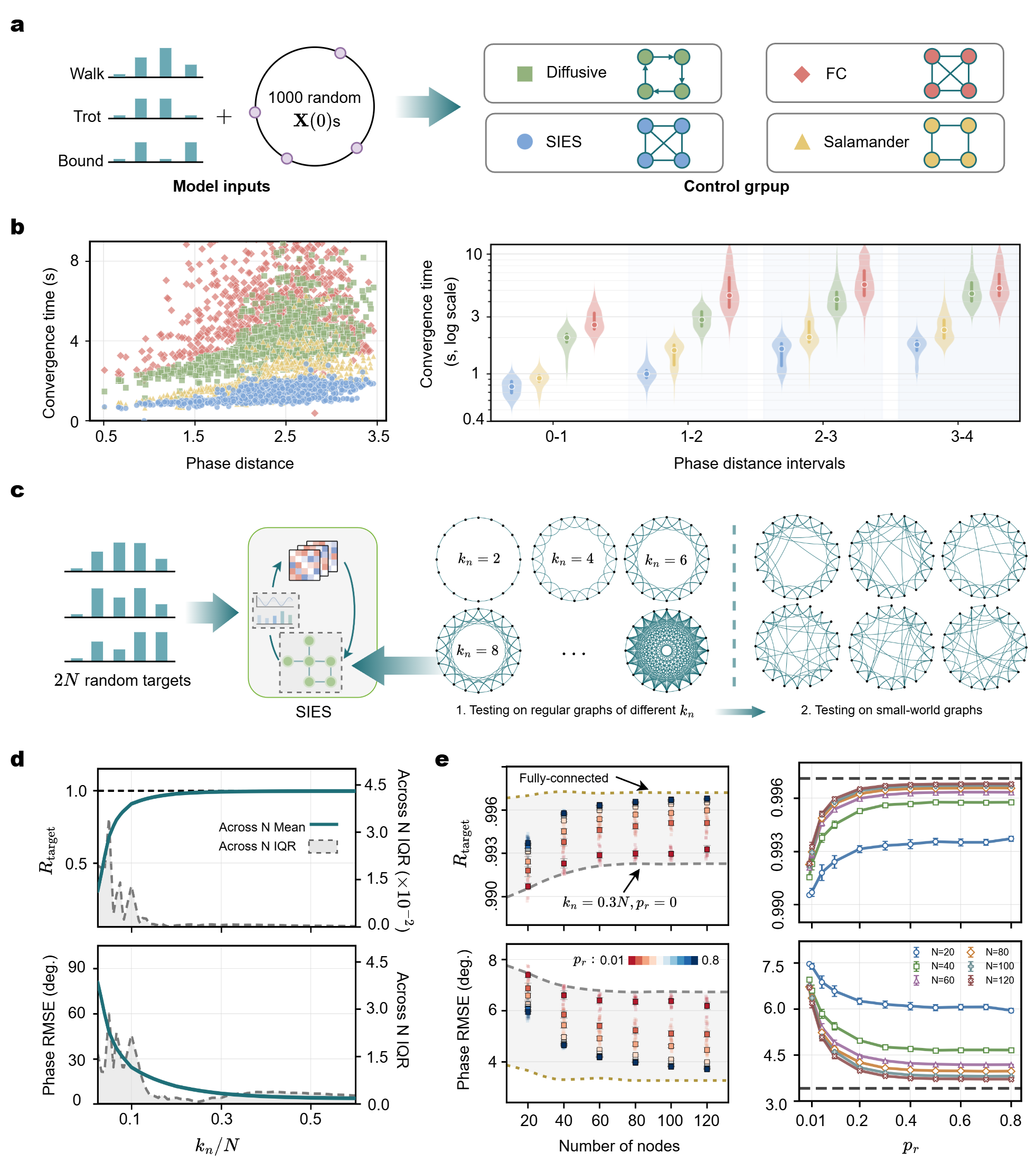
Figure 3: SIES achieves consistently faster and more robust convergence to target patterns compared to oscillator baselines and maintains high performance on sparse and small-world network topologies.
Mechanistic Ablation: Role of Signed Attention and Source-Target Conditioning
Ablation studies reveal that signed attention is essential: substituting standard non-negative softmax attention eliminates the ability to express phase-lagged and heterophilous modes, restricting the system to trivial in-phase synchrony. Source-target decoupling is also critical; tying source and target projections reduces performance on non-symmetric or traveling targets. Aggregation in feature space accelerates optimizer convergence but is not essential for accessing the full mode repertoire. Thus, the expressive core of SIES is the combination of signed, direction-aware, task-conditioned attention injected as the coupling law into the CDS.
Embodied Topology-Aware Rhythmic Control in Multi-Legged Robotics
The architectural design of SIES is directly validated on embodied control tasks in both PyBullet-simulated centipede robots (6, 16, 32 legs) and a physical hexapod with progressive leg disablement. A single trained SIES model dynamically constructs an interaction graph from the robot morphology, computes couplings online, and generates robust, scalable, and adaptive rhythmic commands for the trajectory-planning module.
Upon sequential loss of legs in the hexapod, SIES recomputes the CDS topology, immediately producing new phase patterns appropriate for the reduced gait—demonstrating zero-shot, topology-aware adaptation to morphological change. This is a nontrivial functional property for real-time robust locomotion, addressing a key limitation in fixed-architecture CPG and GNN controllers.
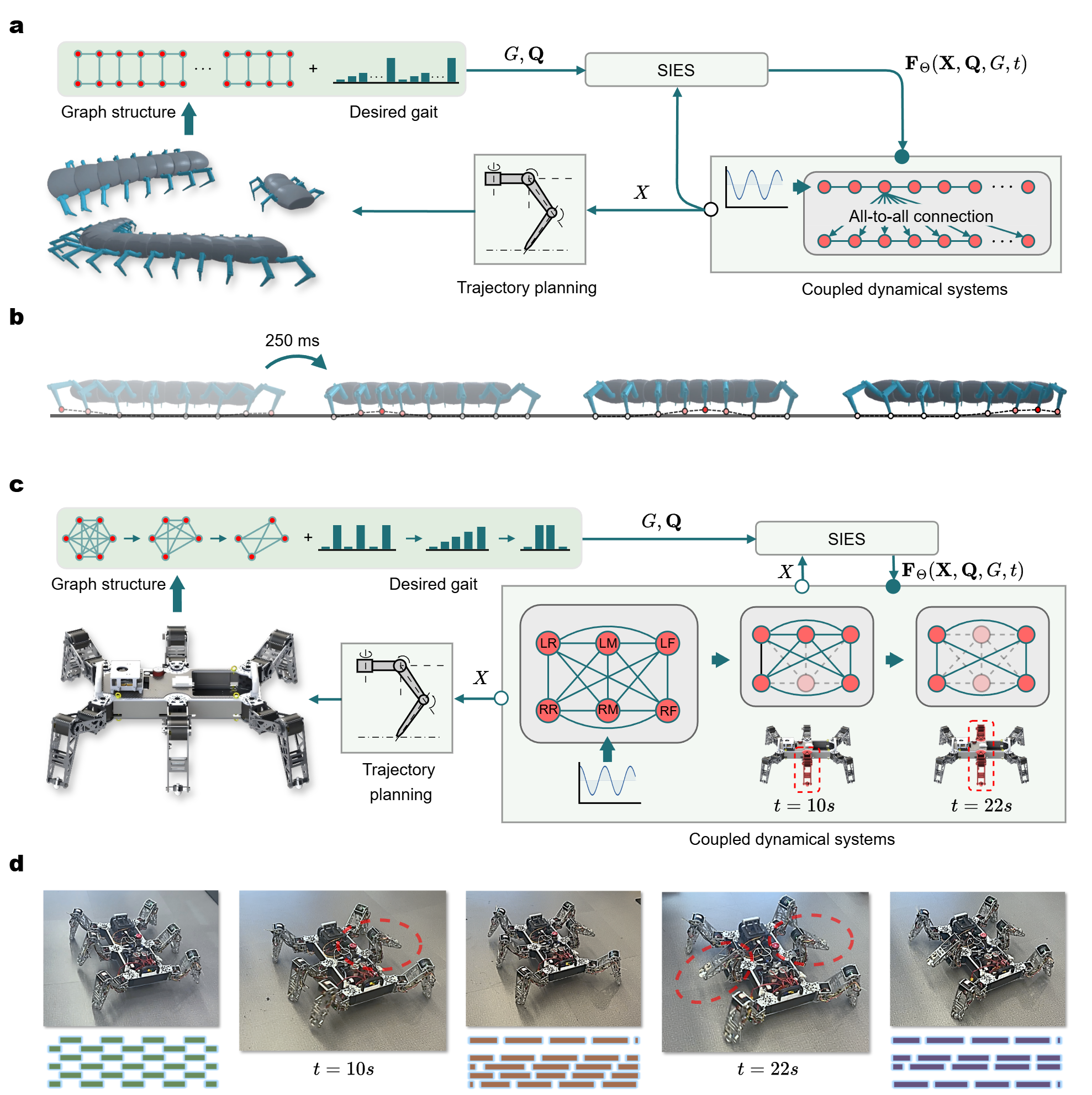
Figure 4: SIES enables real-time, morphology- and fault-aware rhythmic control for simulated centipede robots across scales and a physical hexapod subject to sudden sequential leg loss.
Graph Representation Learning with Signed Dynamical Attention
SIES is extended to node classification on challenging heterophilous graph datasets, outperforming or attaining top-3 results on 4/6 tasks compared to enhanced classical GNNs and CDS-based GNNs (e.g., GraphCON, KuramotoGNN). In particular, SIES achieves 99.55% ROC-AUC on Minesweeper and over 92% accuracy on the Roman-Empire dataset.
The explicit dynamical evolution of node features with signed, task-conditioned attention enables SIES to separate nodes of unlike class via repulsion and collapse nodes of like class via attraction—directly counteracting the over-smoothing and homophilic biases in conventional message passing. PCA projections of state evolution reveal that SIES achieves sharper, more discriminative class partitioning than non-negative-attention variants.
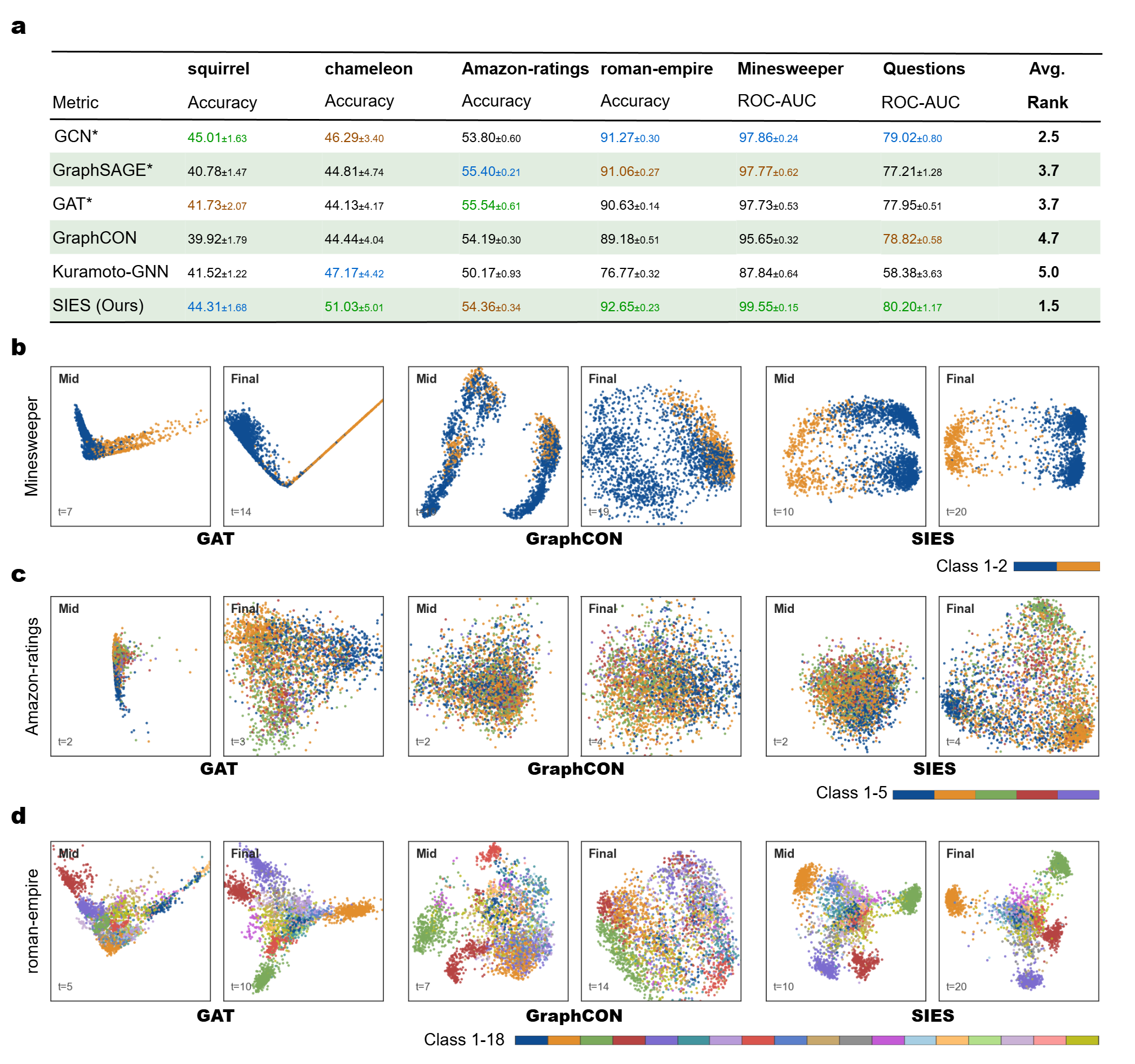
Figure 5: SIES delivers top-tier accuracy on heterophilous graph benchmarks and induces clearer class structure in its learned node representations compared to both conventional and CDS-based GNNs.
Internal Computation: Task-Conditioned Multi-Head Signed Attention
SIES coupling computation at each update step is realized via multi-head, task-conditioned attention that operates in feature space, with direct injection of signed coefficients to mediate attractive and repulsive neighbor aggregation. This supports adaptive, directional, and context-dependent information flow regardless of network scale or task.
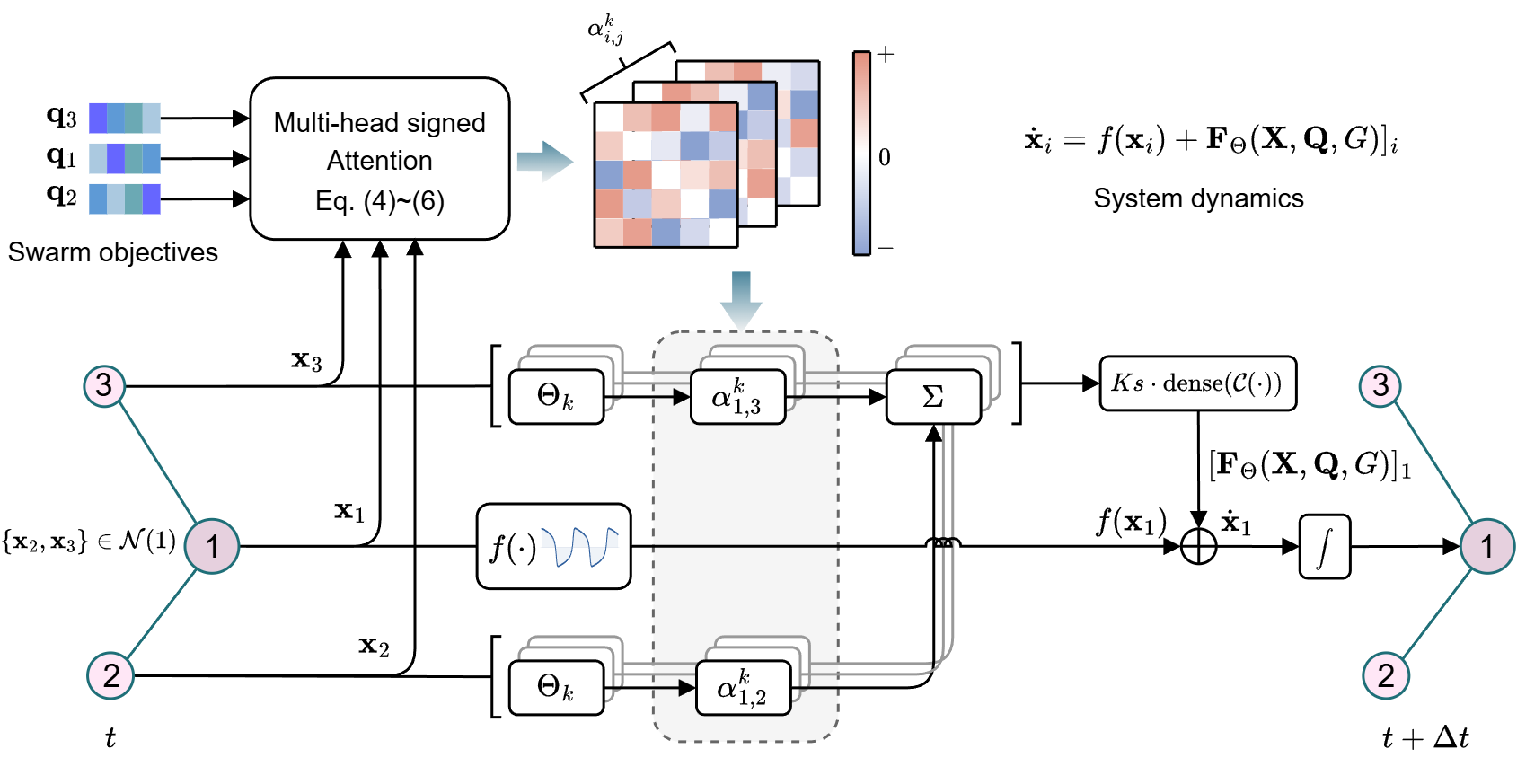
Figure 6: SIES coupling computation relies on task-conditioned, multi-head, signed attention for feature aggregation, preserving the full spectrum of local interaction semantics.
Implications and Future Directions
SIES demonstrates that signed, adaptive, and task-aware local interaction laws in a dynamical state evolution framework are sufficient for scalable, generalizable, and robust collective coordination in both synthetic graph systems and embodied robotics. This bridges explicit-dynamics-based control and trainable graph-based intelligence, endowing CDSs with data-driven adaptability and GNNs with true dynamical semantics, including repulsive interactions.
Practically, SIES advances morphology-adaptive rhythmic control for legged robots, damage-tolerant coordination in dynamic topologies, and discriminative learning under heterophily. Theoretically, the empirical linear-like dependence of convergence time on phase-separation and the analytically tractable scale-invariance for certain patterns motivate further research in certifiability, global reachability, and transient safety of such architectures. Future extensions may target more rigorous Lyapunov or contraction-based stability criteria, development of decentralized/adaptive online learning to match the full flexibility of biological swarms, and application to complex multi-physics phenomena (e.g., sensor arrays, spatial forecasting, resonator arrays).
Conclusion
SIES operationalizes the core principles of swarm intelligence in graph dynamical systems: scalable and generalizable collective behaviors, robust convergence, sparsity-compatible organization, and topology-aware adaptation—all derived from a minimal yet expressive local interaction rule. Its unified approach addresses longstanding deficits in both classical CDS and GNN paradigms and enables a range of applications spanning adaptive robotics, dynamical systems theory, and graph representation learning.
(2606.24958)

