- The paper introduces mixed voting rules that combine protocols like Greedy and MES to reconcile utilitarian efficiency with proportional fairness.
- It develops and evaluates novel pre-allocation methods, with the Value-Based approach markedly enhancing proportionality as measured by EJR+.
- Empirical evaluations on 313 real-world PB instances demonstrate robust trade-offs between efficiency and fairness through tailored budget splits.
Mixed Voting Rules for Participatory Budgeting: An Expert Summary
Introduction
The paper "Mixed Voting Rules for Participatory Budgeting" (2606.23320) advances the theoretical and empirical analysis of Participatory Budgeting (PB) mechanisms by proposing and scrutinizing the concept of mixed voting rules—rules that sequentially combine multiple PB protocols, each allocated a fraction of the budget. Drawing inspiration from mixed-member electoral systems, such as those used in German and Scottish parliamentary elections, the mixed rules framework aims to reconcile the utilitarian efficiency of rules like Greedy with the proportionality guarantees of norms like the Method of Equal Shares (MES). The work addresses the inherent trade-off between utilitarian welfare and proportional representation, providing technical adaptations, rigorous axiomatic results, and empirical evaluations across real-world datasets.
The authors formalize mixed voting rules as sequential compositions, where each constituent rule operates over the subset of projects not previously selected and is constrained by both a budget share and a preselected project set. This requires technically nuanced adaptations of PB rules—for Greedy, adaptation is direct, whereas for MES, the challenge is in determining appropriate initial budgets for voters when some projects may already have been enforced, which has implications for proportionality.
Pre-allocation methods for MES are introduced: Null (no adjustment), MES-Style (simulates sequential MES allocation to preselected projects), Equal-Split (divides project costs among supporters), and Value-Based (allocates voter budgets according to project "value-for-money" heuristics). Each method is analyzed with respect to its ability to match or exceed baseline proportionality guarantees in the context of the mixed rules framework.
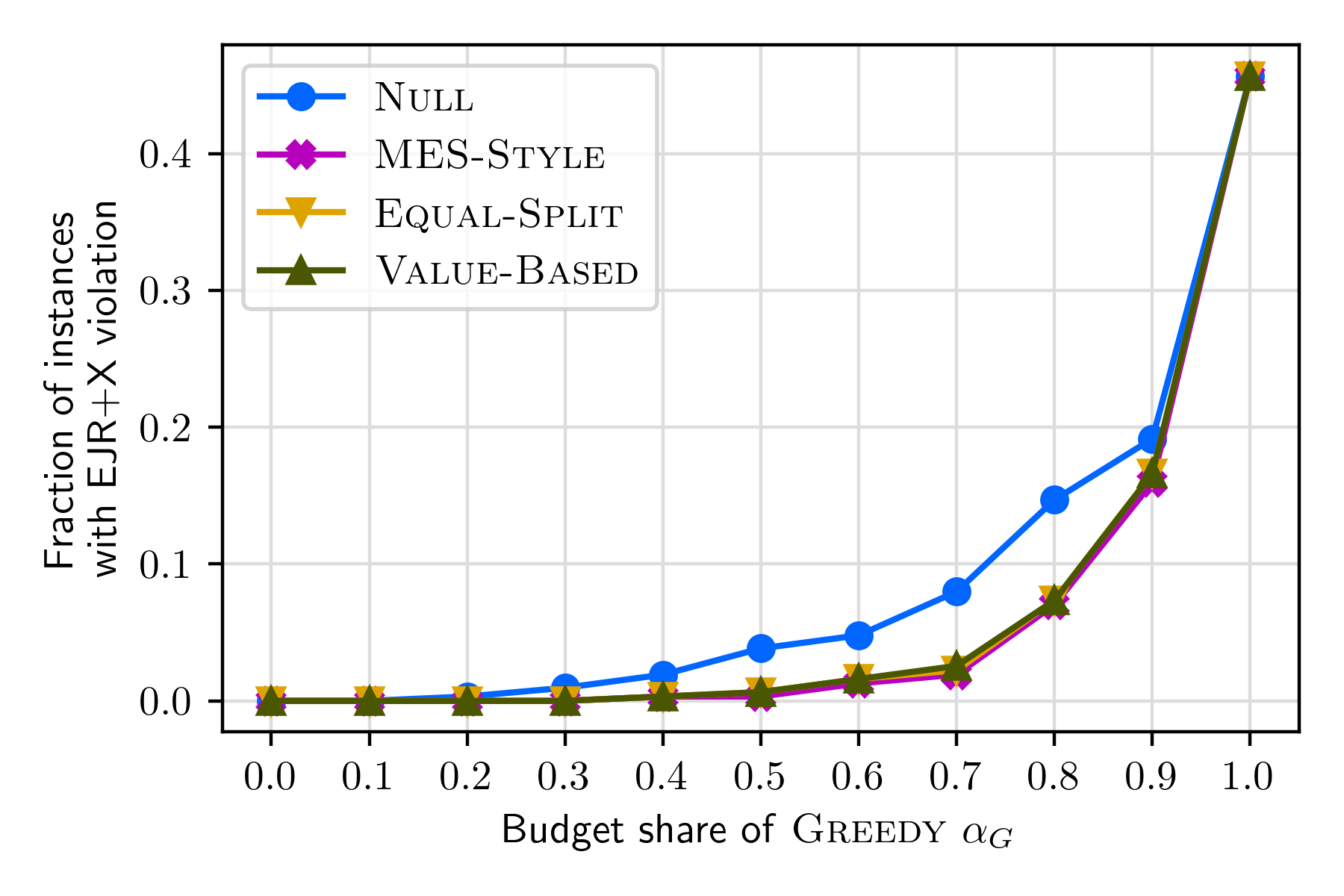
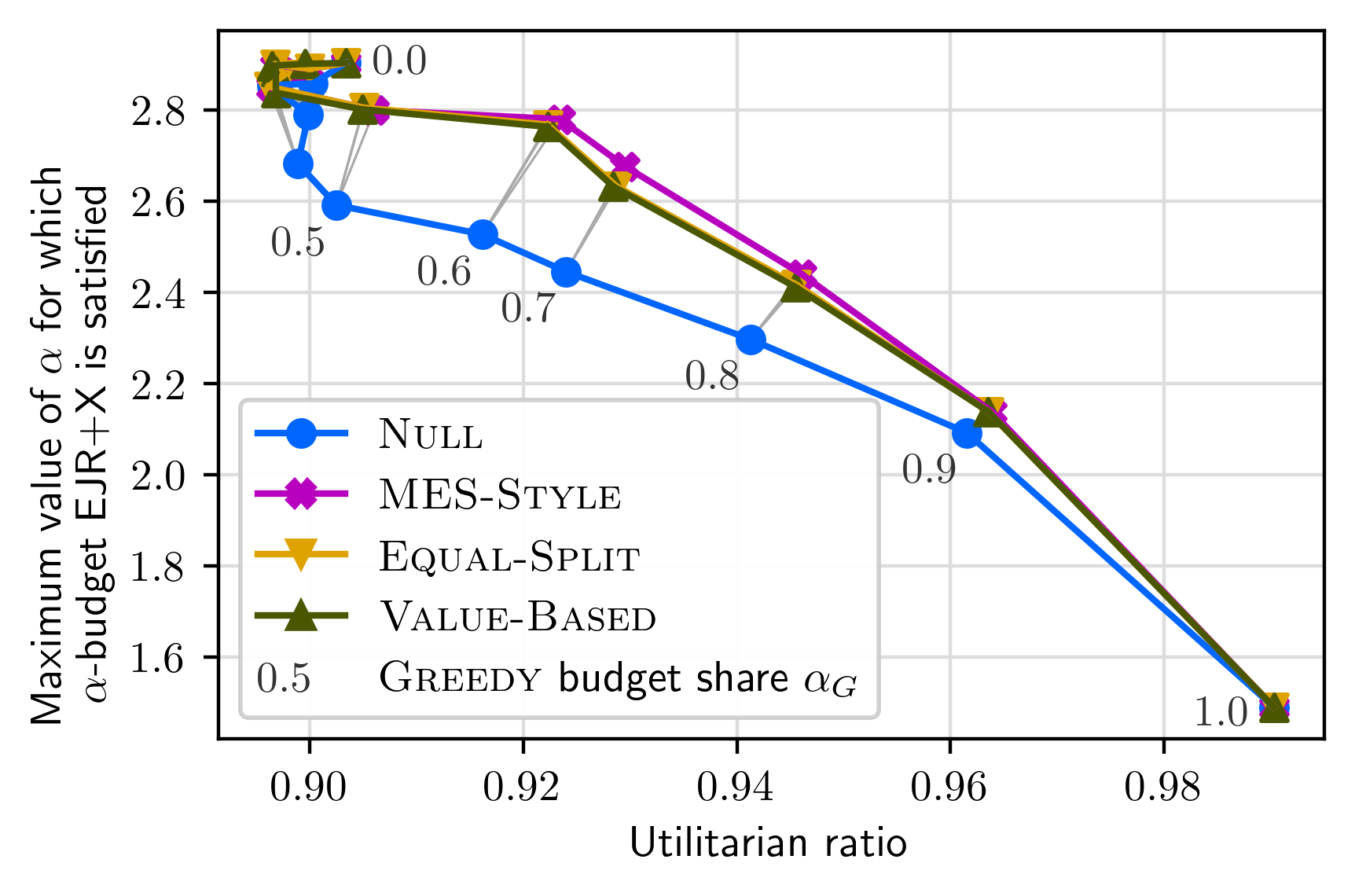
Figure 1: Fraction of instances for which EJR+ up to any project is violated, demonstrating how different pre-allocation methods impact proportionality in empirical datasets.
Proportionality Analysis and Theoretical Results
The proportionality guarantees are formalized using parameterized axioms such as EJR+ (Extended Justified Representation), with minimum voter budget share as a key parameter. Theoretical results establish that, except for Value-Based, none of the pre-allocation methods can surpass the baseline established by their constituent rules—Proposition 1 places a tight bound on achievable proportionality without sacrificing utilitarian outcomes.
The Value-Based pre-allocation method is proven to dominate others for parameterized EJR+ proportionality in mixed rule contexts. For MES with Value-Based pre-allocation, the paper rigorously shows that proportionality can exceed the budget share baseline, conditional on the observed minimum voter budget share post-preallocation. The analysis leverages non-standard, partially-executed rule properties—proportionality guarantees are computed post-hoc based on outcomes of earlier rule stages.
Empirical Evaluation
The mixed voting rules framework is subjected to empirical scrutiny using a comprehensive dataset from Pabulib, encompassing 313 non-trivial PB instances. The central experimental variable is the greedy budget share allocated to the first rule. Key empirical findings include:
- Proportionality Robustness: Even allocating a small fraction of the budget to MES results in high proportionality, with violations of EJR+ rare until Greedy accounts for 80% or more of the budget.
- Utilitarian Welfare Stability: Utilitarian welfare is generally preserved except for low budget splits favoring Greedy, where selecting suboptimal projects becomes likely.
- Budget Exhaustiveness: MES can leave large portions of budget unspent; completion methods (e.g., Greedy) and budget increase heuristics are empirically validated solutions.
- Early Stopping Strategies: Greedy with early stopping reduces inefficiencies in small instances and prevents detrimental effects observed when splitting the budget between exhaustive rules.
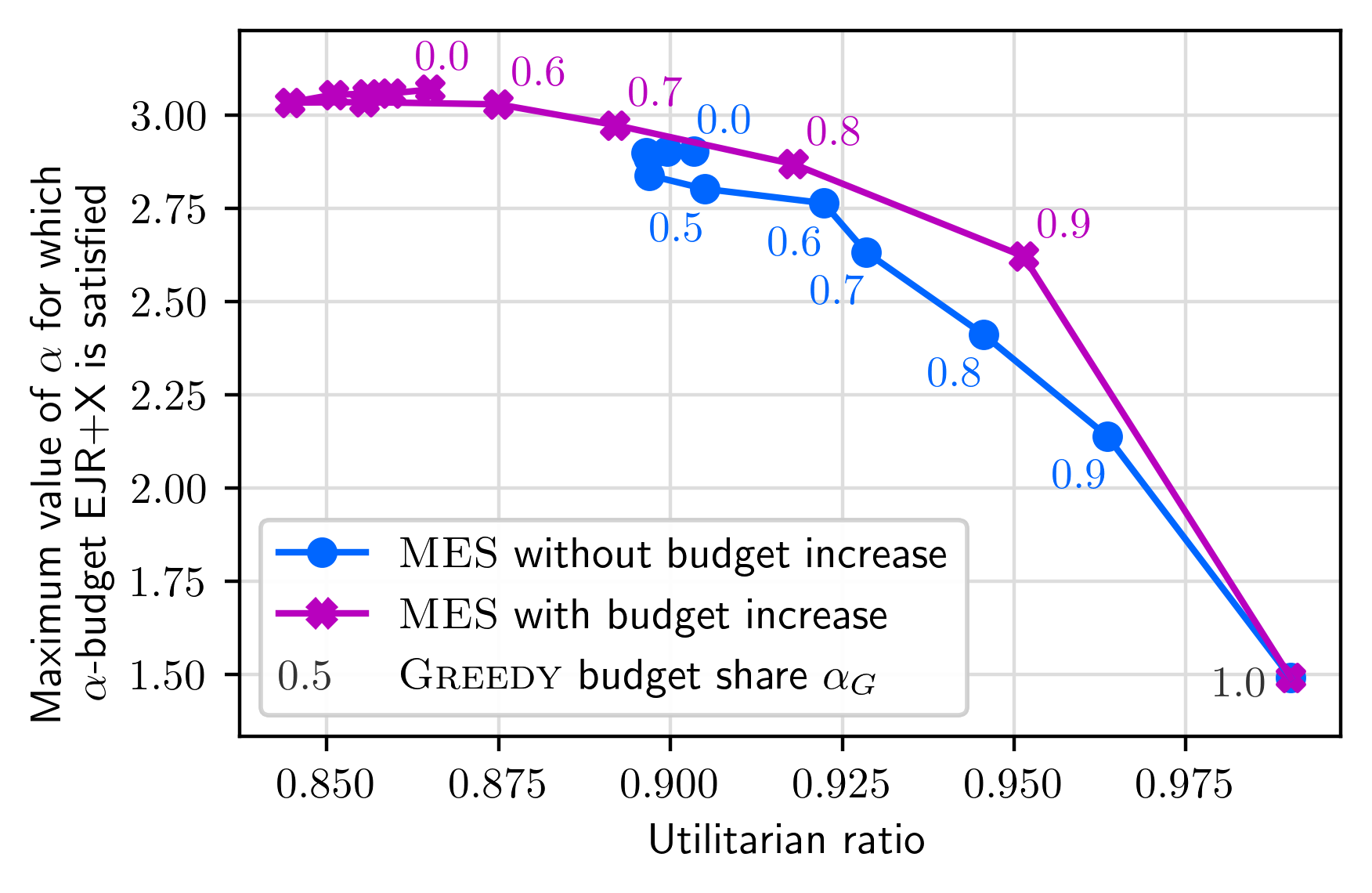
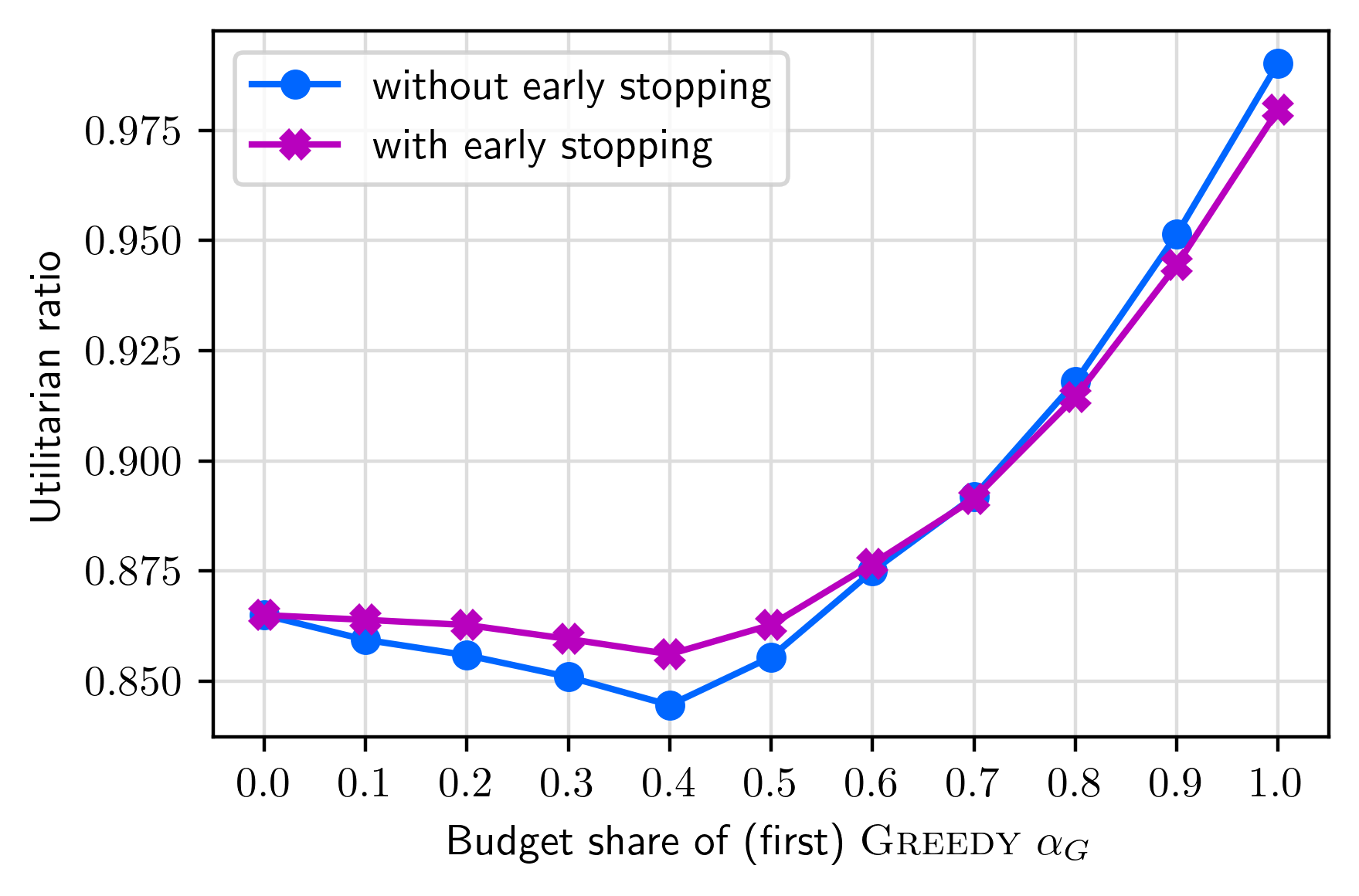
Figure 2: Trade-off curves between proportionality and utilitarian welfare for various pre-allocation methods and greedy budget shares.
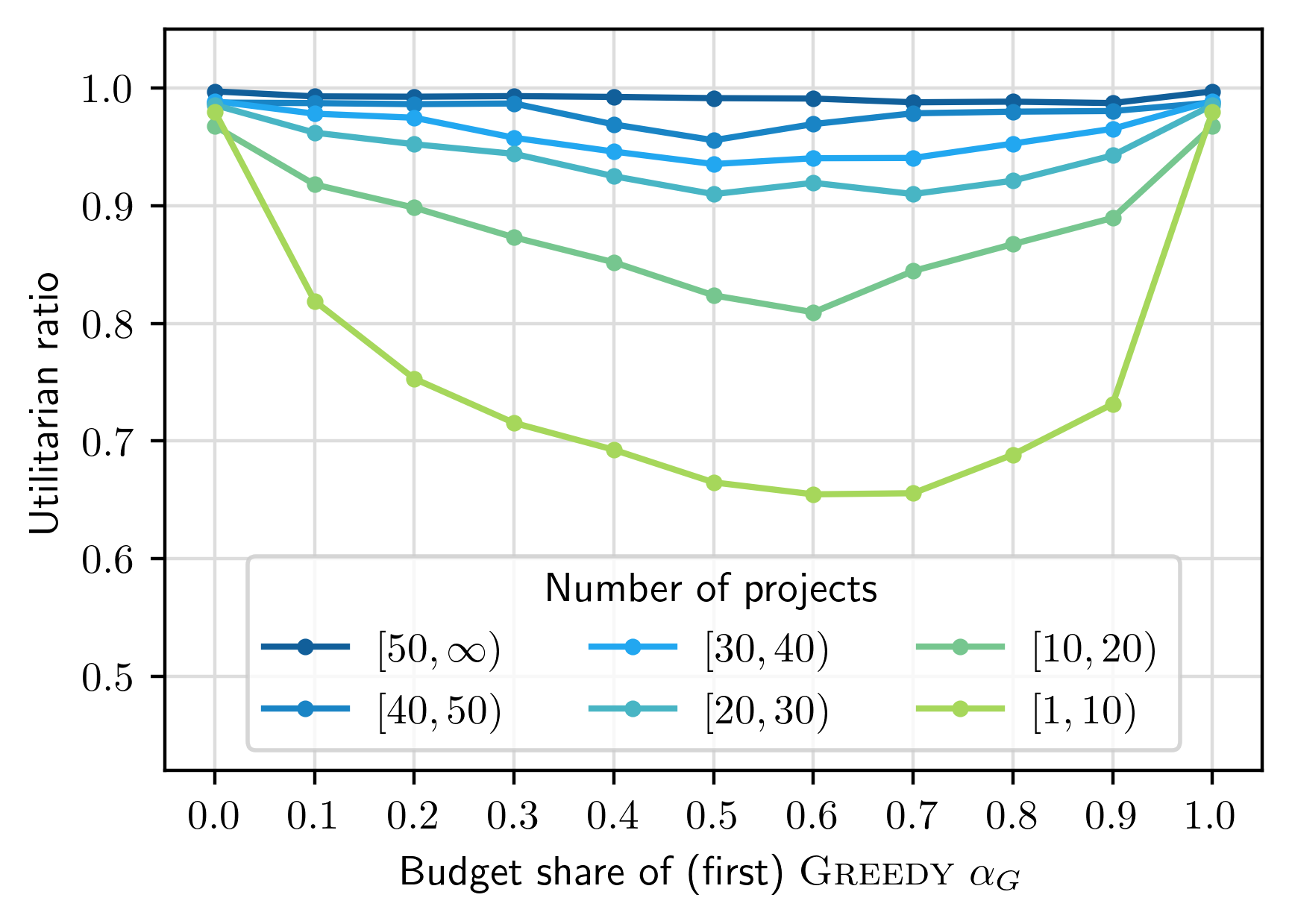
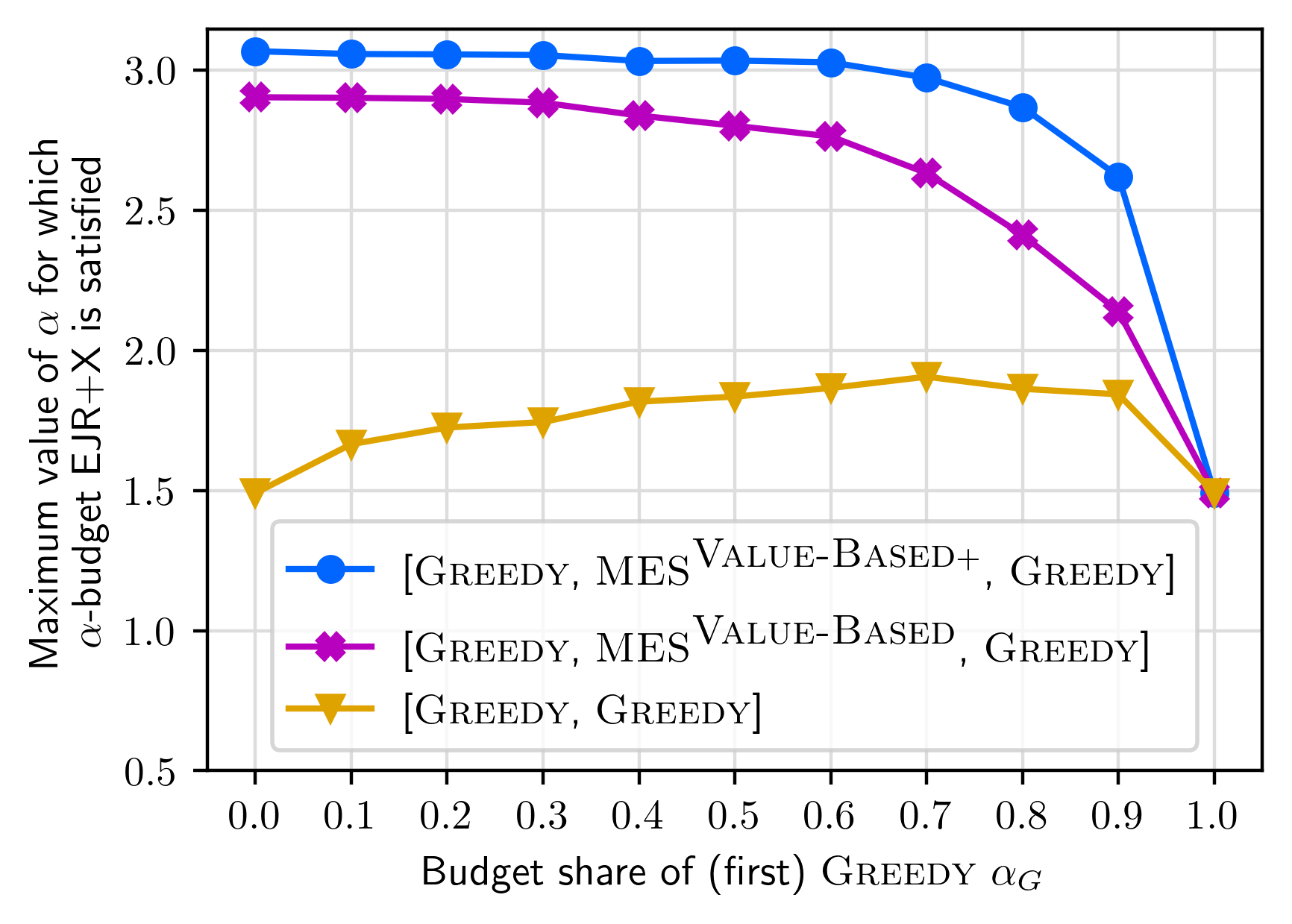
Figure 3: Minimum voter budget share across methods, indicating robust improvements by Value-Based and Equal-Split preallocation.
Extensions and Method Comparisons
The framework accommodates adaptation of PB rules beyond Greedy and MES, including Sequential Phragmén, BOS (Bounded Overspending MES), and Greedy Chamberlin-Courant. Theoretical results extend to multiwinner voting and general additive satisfaction functions. BOS, in particular, shows empirical promise for improved representation and welfare, outperforming MES for some budget splits.
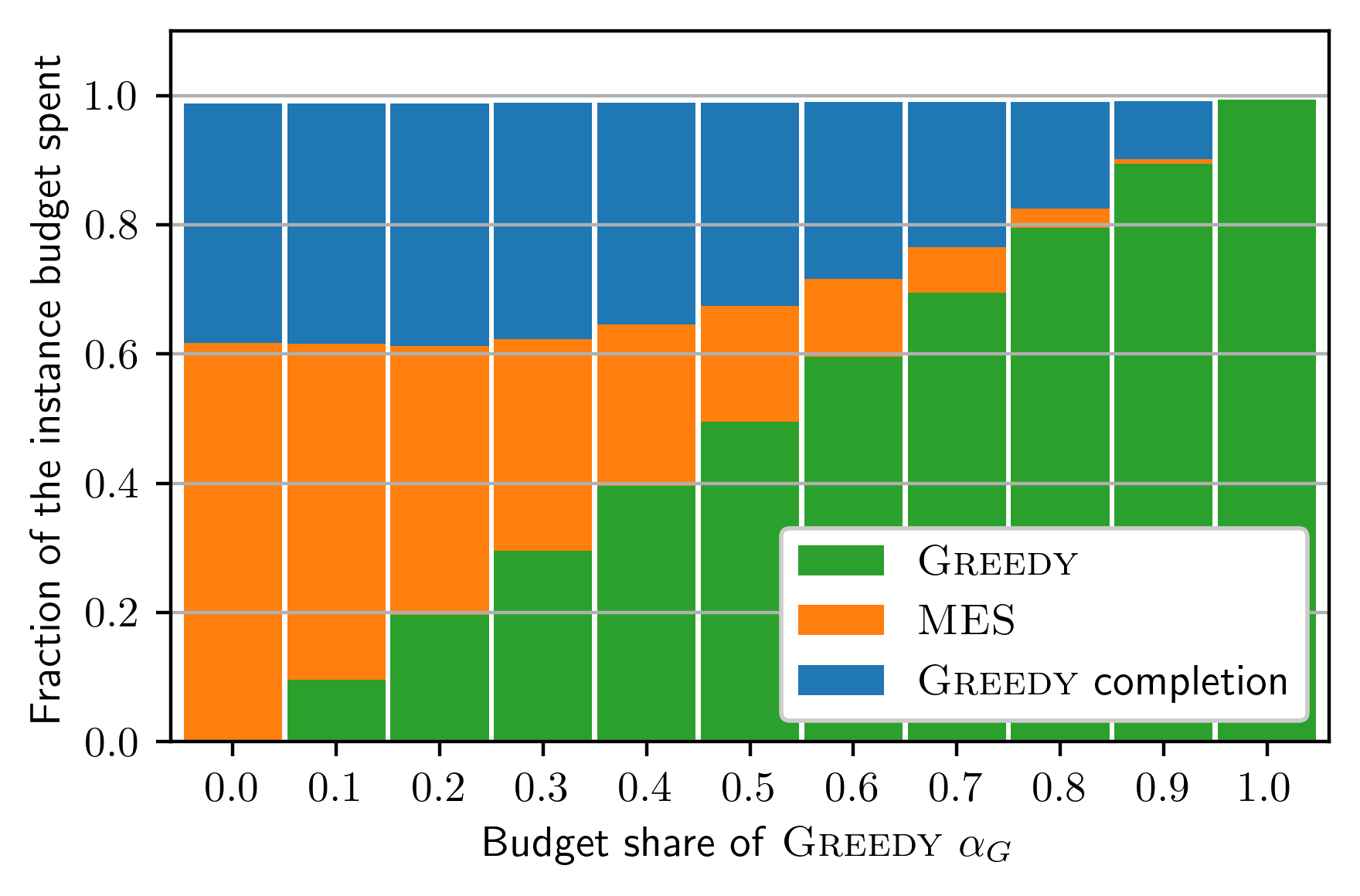
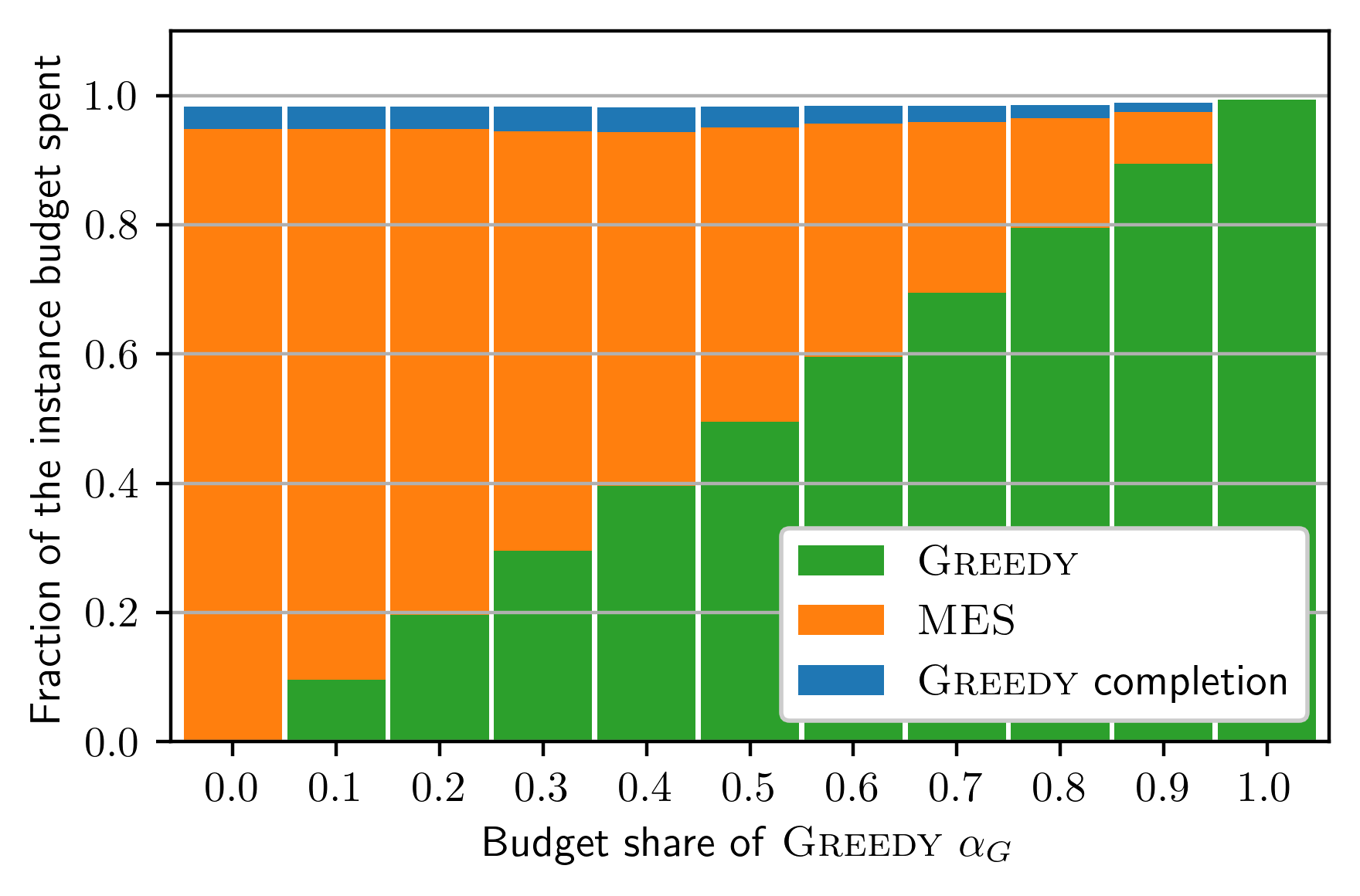
Figure 4: Proportionality and representation achieved by mixed rules using SeqPhragmén, BOS, and GreedyCC.
Practical and Theoretical Implications
The mixed voting rules framework allows for granular trade-offs between efficiency and representation in PB. Practically, this introduces a paradigm that can adapt to dynamic requirements of real-world participatory budgeting—policymakers may select rule sequences and budget allocations tailored to the electorate's preferences or legal constraints. Theoretically, the tight parameterized proportionality bounds and impossibility results guide future PB rule design, emphasizing the importance of value-aware budget allocation.
The empirical gap observed between theoretical guarantees and actual outcomes highlights avenues for further research, particularly around stochastic rule combinations, information-aware preallocation, and voting rule explainability.
Conclusion
The paper rigorously introduces mixed voting rules as a flexible, theoretically sound, and empirically validated framework for participatory budgeting. The synthesis of efficiency and proportionality via sequential rule compositions enables nuanced outcome control, with the Value-Based pre-allocation method setting a new standard for proportionality guarantees in mixed PB rules. Extensions to other rule types, multiwinner settings, and satisfaction functions signal broad applicability and motivate future exploration into explainable, adaptive voting mechanisms and fairness-optimal allocations.

