- The paper presents MCHF, a novel framework that uses pairwise Markov kernels to preserve non-transitive human feedback in model alignment.
- It details explicit convergence rates via the seminorm ||U||⊕, demonstrating improved efficiency over adversarial approaches like NLHF.
- Empirical simulations and theoretical analysis confirm MCHF’s robustness and practical computational benefits in high-dimensional generative models.
Markov Chain from Human Feedback: A Flexible Framework for Preference-Based Alignment
Background and Motivation
Preference alignment is central to fine-tuning generative AI models for deployment in real-world, human-centric applications. Historically, the prevalent paradigm—Reinforcement Learning from Human Feedback (RLHF)—relies on aggregating pairwise human comparison data into a scalar reward model, typically implemented via Bradley–Terry–Luce (BTL) assumptions. Despite its widespread adoption, RLHF suffers from inherent limitations: it cannot capture non-transitive preference cycles or pluralistic, heterogeneous annotator feedback—a significant theoretical deficit in practical settings.
Recent advances such as Nash Learning from Human Feedback (NLHF) address some of these shortcomings by framing alignment as a minimax optimization and directly working with pairwise utilities. NLHF circumvents the scalar reward bottleneck but imposes an adversarial equilibrium and requires optimization over zero-sum objectives, potentially yielding pessimistic distributions and computational challenges.
The paper "A Markov Chain Approach to Preference Alignment" (2606.22652) introduces Markov Chain from Human Feedback (MCHF), which operationalizes alignment via pairwise preference-driven Markov kernels. Instead of reducing preference data to a reward or equilibrium, MCHF iterates model outputs using a transition kernel designed to reflect the empirical preference structure, directly preserving non-transitive interactions.
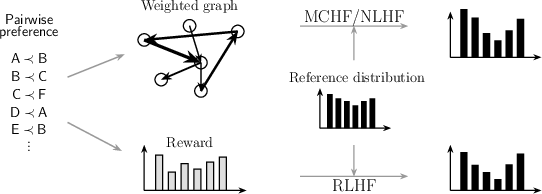
Figure 1: Workflow of alignment: RLHF reduces preference data to scalar rewards, while MCHF and NLHF construct weighted graphs that retain pairwise structure, offering greater flexibility.
The authors define a pairwise utility U(x,y)—the preference for y over x—and introduce a reference distribution μref (typically a pretrained model). The Markov kernel is:
P(x,dy)∝exp(U(x,y))μref(dy)
This kernel enables iterative refinement: starting from μref, subsequent distributions are obtained by repeated application of P.
A critical innovation is the seminorm ∥U∥⊕=g,finf∥U−g⊕f∥∞, measuring the deviation of U from additive/transitive structure. This seminorm quantifies the non-transitive complexity of human preferences—a key determinant of the alignment process.
When U is nearly additive, MCHF and NLHF converge rapidly to the same equilibrium, coinciding with reward-based RLHF. When y0 is large (e.g., highly non-transitive data, Condorcet paradoxes), MCHF leverages the full structure, avoiding unjustified reward reduction.
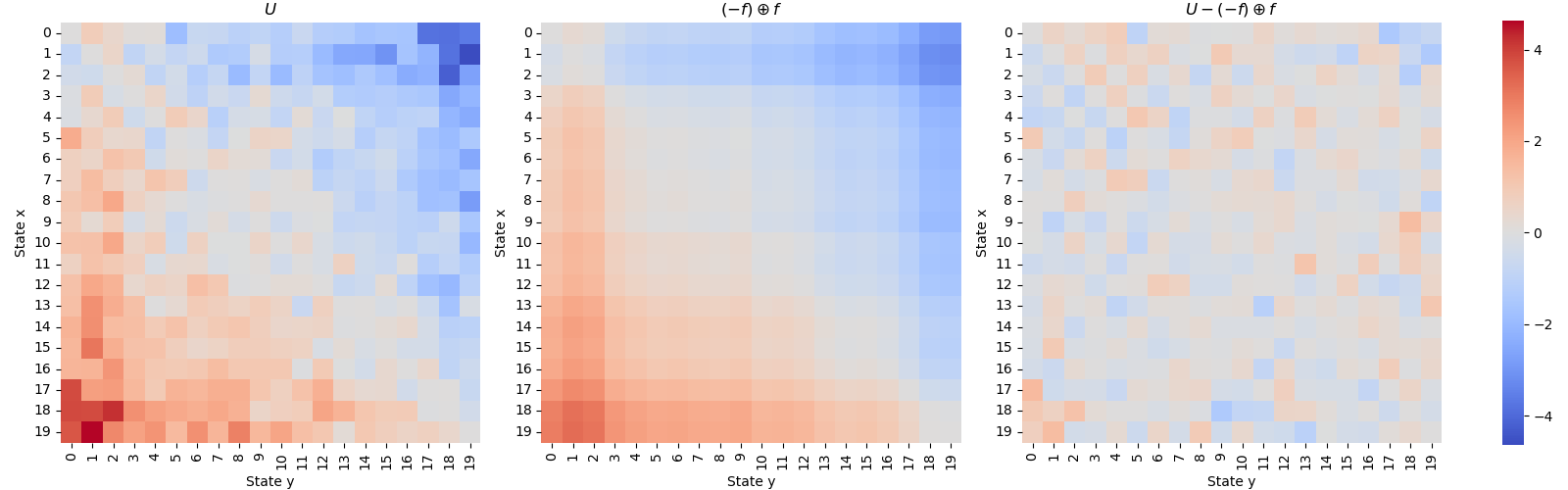
Figure 2: Visualization of utility decomposition: the antisymmetric component of y1 and its deviation from additive structure are explicit.
Theoretical Guarantees and Iterative Dynamics
MCHF’s iterative process is a contraction mapping in TV distance, with rate y2. Remarkably, strong geometric convergence is obtained even in high-dimensional or continuous outcome spaces; the rate adapts not to the naive y3 but to the structurally relevant y4. The contraction is not merely implied; explicit bounds are proven.
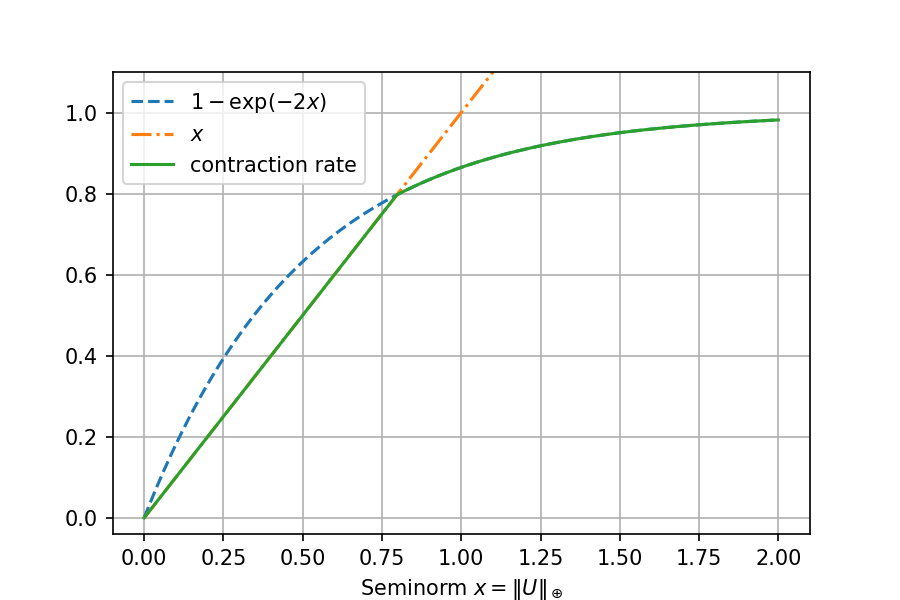
Figure 3: Contraction rate as a function of y5, indicating adaptive convergence speed.
NLHF, when optimized via mirror descent with proper stepsize y6, exhibits equivalent structure-adaptive exponential convergence. The authors provide sharper bounds than prior literature, as existing rates depend on y7. Notably, in practical implementations, exact computation of y8 may require complex y9-LP solvers, but proxy estimates via rectangle or triangle defects are tractable.
In the regime x0, the first iteration of both MCHF and NLHF recovers the RLHF solution using the column-sum reward x1; subsequent iterations incorporate the residual non-transitive component. This result is precise—the deviation from RLHF is x2.
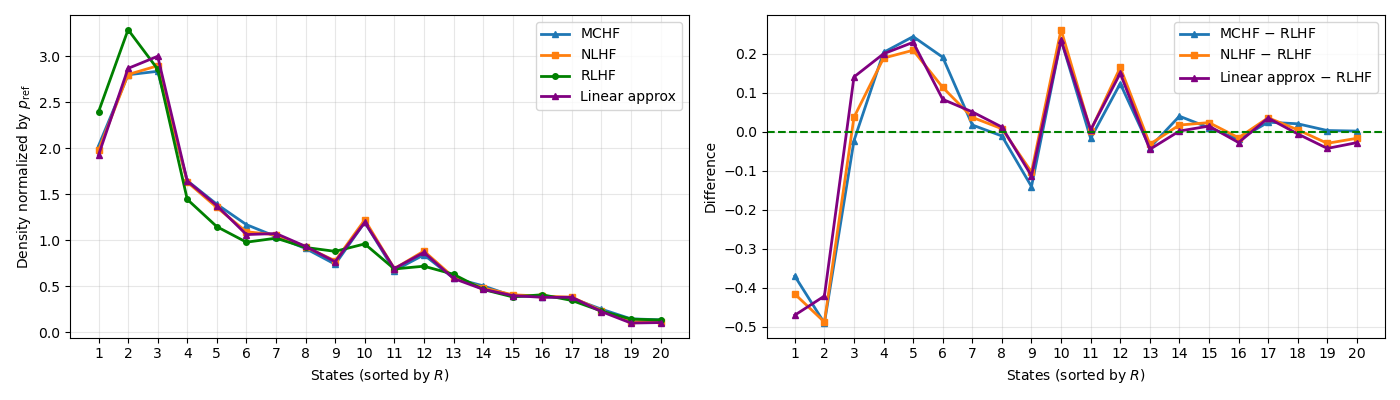
Figure 4: Comparison of equilibrium distributions: MCHF, NLHF, RLHF, and first-order expansion, demonstrating tight agreement in low x3 regime.
Furthermore, simulation studies confirm these asymptotics for both equilibrium and iterative dynamics, reinforcing the theoretical claims.
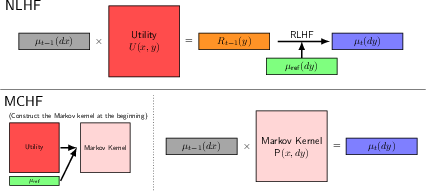
Figure 5: Empirical comparison between MCHF and NLHF iterations for antisymmetric x4, validating theoretical predictions.
Computational and Practical Implications
MCHF stands out as a conditional sampling-based algorithm: once the kernel x5 is implemented, alignment reduces to repeated application of this kernel—no adversarial optimization or geometric mixing required. Inference-time refinement is straightforward: the user can sequentially resample outputs via x6 until satisfaction.
NLHF, by contrast, requires solving KL-regularized minimax problems or sampling from complex geometric mixtures at every iteration, which is a substantial computational burden, especially for high-dimensional generative model outputs.
The coupling analysis in the paper further shows MCHF’s ability to optimize over larger classes of distributions, supporting richer preference extraction and improved inference-time refinement—a fact illustrated via classical non-transitive games (e.g., rock-paper-scissors), where hitting times for desired outputs are provably minimized under MCHF dynamics.
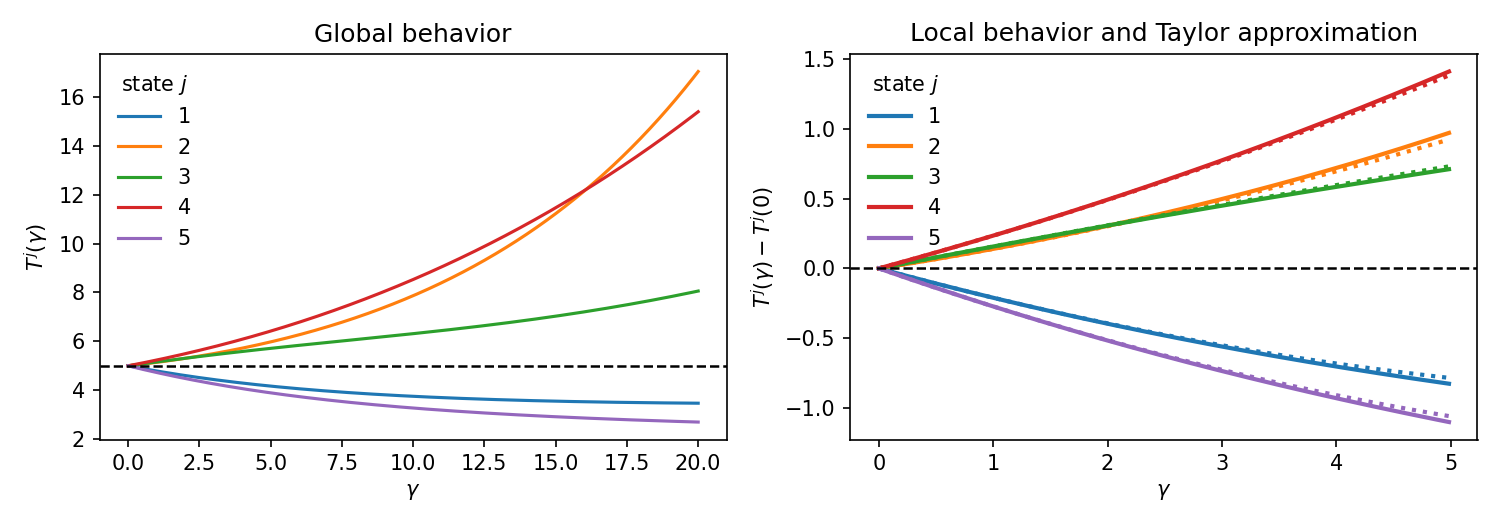
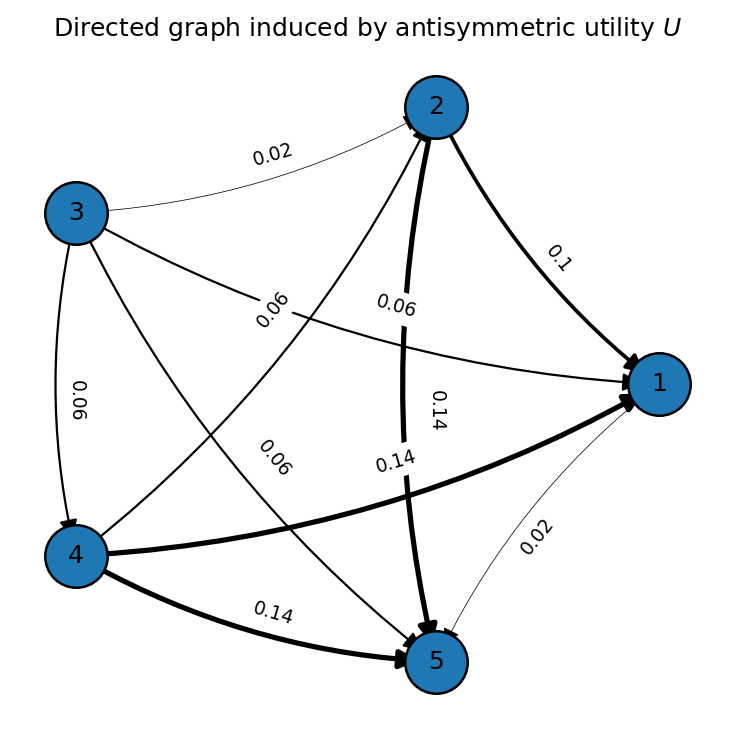
Figure 6: Numerical analysis of hitting times: MCHF refines outputs more efficiently than NLHF, particularly when non-transitive preference structure is strong.
Stability and Robustness
Both MCHF and NLHF exhibit robust Lipschitz stability with respect to perturbations in x7, controlled by x8. Errors induced by estimation noise or updates in the preference model propagate in a quantifiable, bounded way to the aligned distribution, offering clear guarantees for practical alignment scenarios.
Implications, Extensions, and Future Directions
By unifying Markovian, reward-based, and game-theoretic frameworks under a common perturbative and structural lens, this research illuminates previously opaque relationships between RLHF, NLHF, and spectral rank aggregation. The analytic clarity provided by the x9 seminorm and explicit formulas supports both theoretical investigations (e.g., axiomatics in social choice) and practical implementations in large-scale generative model alignment.
Notably, MCHF enables preference-based alignment in settings where reward decomposition is impossible or undesirable—for example, under heterogeneous or cyclic annotator populations, with broad support for pluralistic alignment.
Future challenges include scalable implementation of conditional sampling from μref0, possibly using rejection sampling, SDE-based diffusion models, or Monge–Ampère PDEs, as suggested by contemporaneous literature (2606.22652). Systematic analysis of which utility structures guarantee desirable properties within social choice theory is a promising direction for both theoretical and regulatory AI development.
Conclusion
The Markov Chain from Human Feedback framework delivers a principled, flexible, and computationally efficient approach for aligning generative models with rich, non-transitive human preferences. By bridging reward models and game-theoretic approaches, and by providing explicit convergence rates and robustness guarantees, MCHF establishes a new standard for preference alignment, both theoretically and practically, in the evolving landscape of generative AI.