- The paper demonstrates that JWST spectroscopy identifies LRDs and LBDs as unified AGN viewed at different angles, exhibiting extreme X-ray weakness.
- The paper employs stacked spectra and nebular diagnostics to show that both populations display AGN-excited narrow lines and BLR features analogous to classical quasars.
- The paper finds that low metallicity environments and super-Eddington accretion contribute to the observed emission-line characteristics and ISM coupling.
Spectroscopic Characterization of JWST-Selected “Little Red” and “Little Blue Dots” AGN: AGN Excitation, X-ray Weakness, and Nuclear/ISM Coupling
Introduction and Sample Selection
The proliferation of spectroscopically-identified faint AGN at high redshift, enabled by JWST NIRSpec deep spectroscopy, has revealed two key populations—“Little Red Dots” (LRDs) and “Little Blue Dots” (LBDs). Both display broad Balmer emission but differ in rest-optical SED slope, such that LRDs are optically red and LBDs are blue. Their selection is codified via rest-UV and optical slope cuts alongside compactness criteria, rejecting typical dusty star-forming galaxies and classical AGN contaminants.
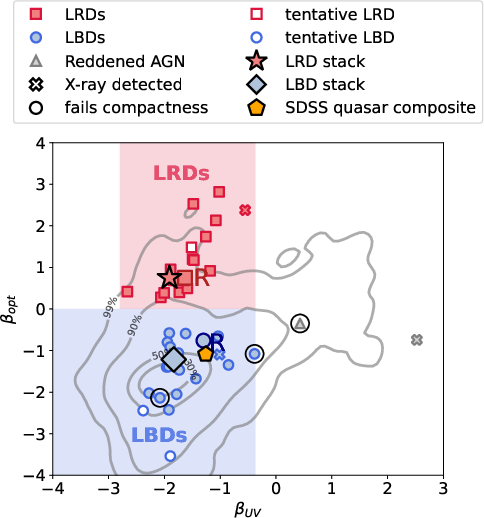
Figure 1: Diagram used for selecting LRDs and LBDs, based on rest-frame optical versus UV slope, illustrating sample placement and selection boundaries.
LBDs and LRDs are compact and mainly X-ray undetected, complicating classical AGN identification. The comparative rarity of LRDs and the photometric indistinguishability of LBDs from star-forming galaxies result in sample-selection biases: LRDs are targeted preferentially, while LBDs are found serendipitously.
Stacked Spectroscopy and Spectral Properties
Stacked JWST/NIRSpec prism and medium-resolution spectra for both LRDs and LBDs exhibit composite features similar in broad continuum shape to normal type 1 quasars, with the notable distinction that LRDs show a pronounced “V”-shaped SED from strong Balmer breaks. The emission-line properties—including broad Balmer lines and prominent [O III]—clearly mark these objects as AGN-dominated, yet with significant physical divergence from classical AGN.
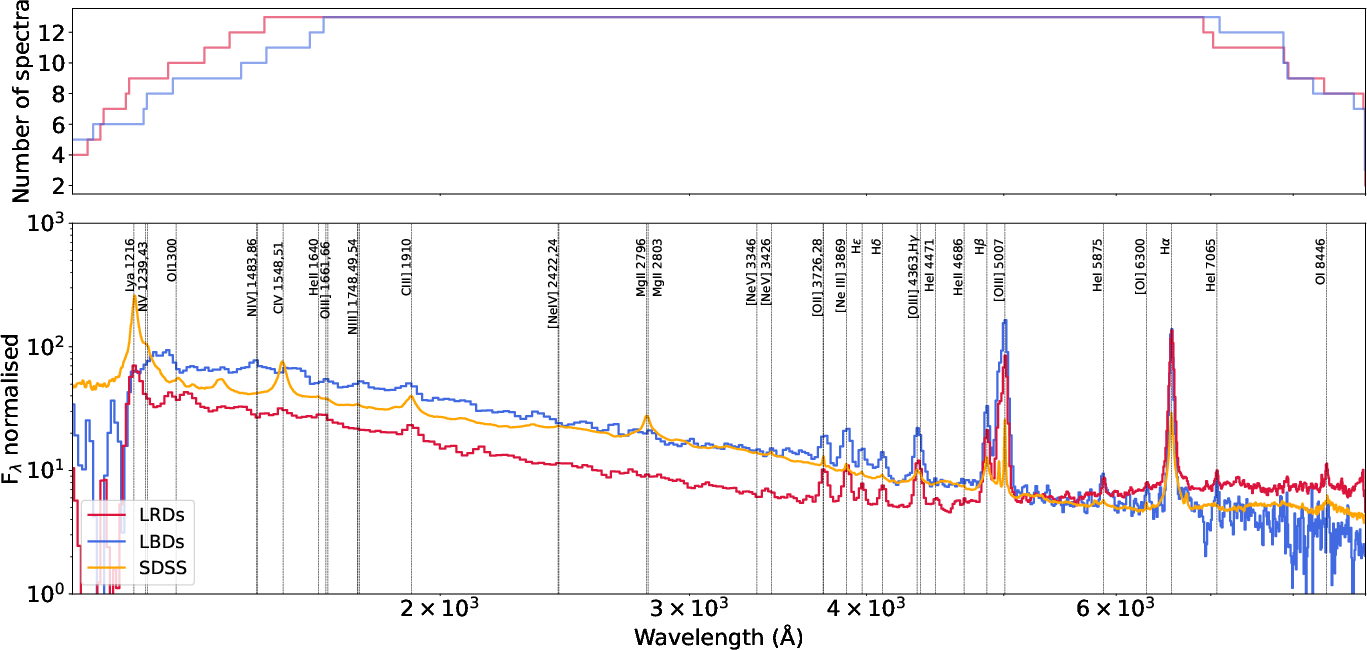
Figure 2: Mean prism-stacked spectra for LRDs and LBDs compared to the SDSS quasar composite. LBDs appear more quasar-like, whereas LRDs display characteristic strong breaks.
X-Ray Properties: Extreme Weakness and Population Implications
A central result is the demonstration of extreme X-ray weakness in both populations. Rigorous stacking analysis, including soft, medium, and hard rest-frame Chandra data, reveals >2–3σ lower Lbol/LX ratios than classical AGN, even after absorption corrections with Compton-thick torus models.
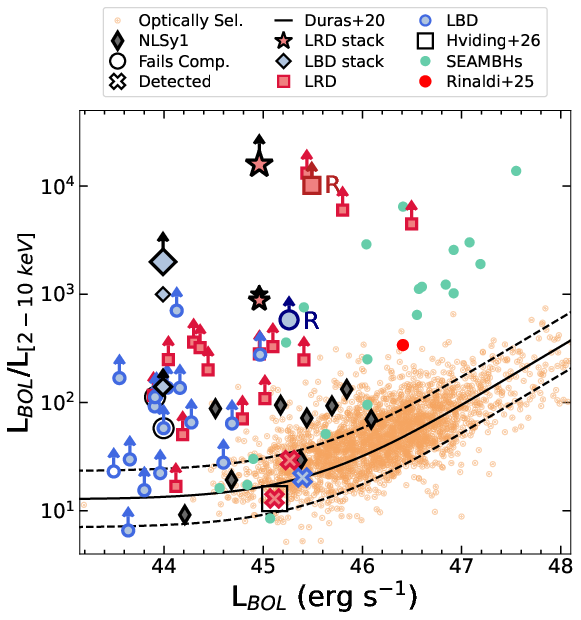
Figure 3: Bolometric-to-X-ray luminosity ratios for LRD and LBD samples, showing strong deviations from normal quasar scaling.
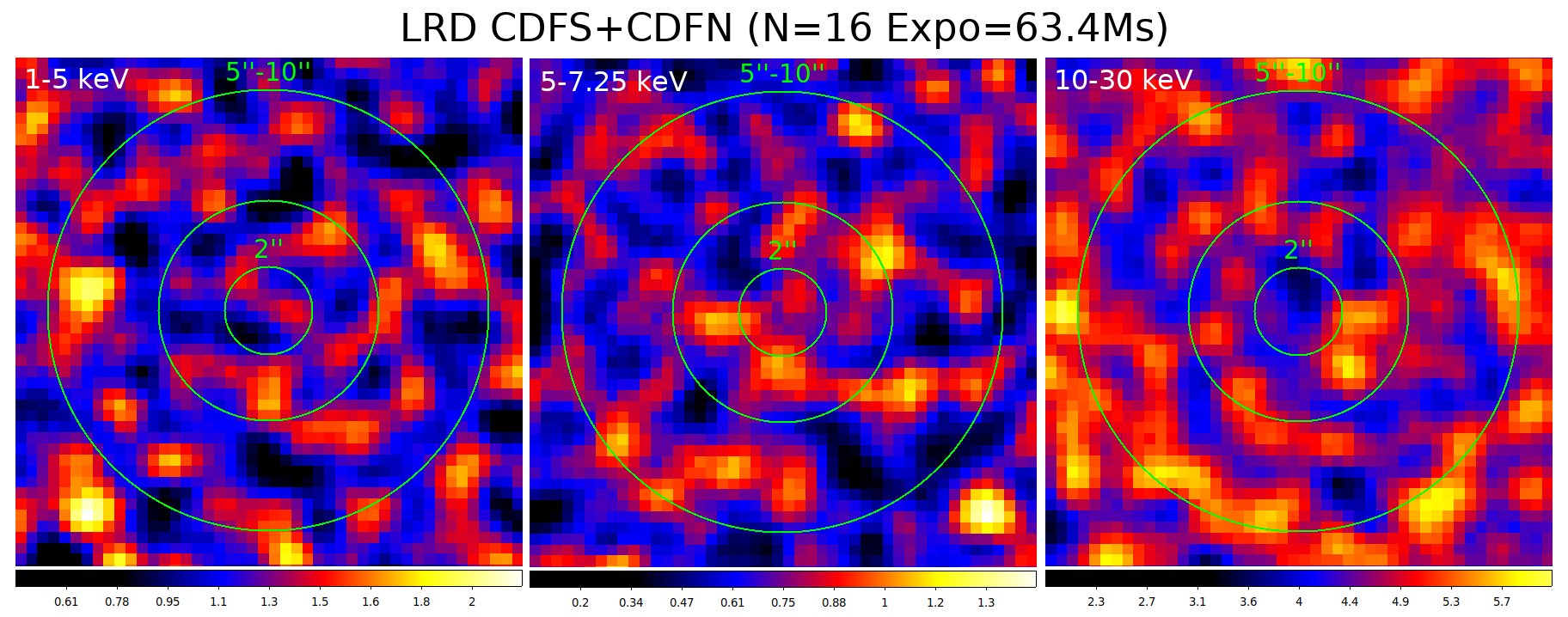
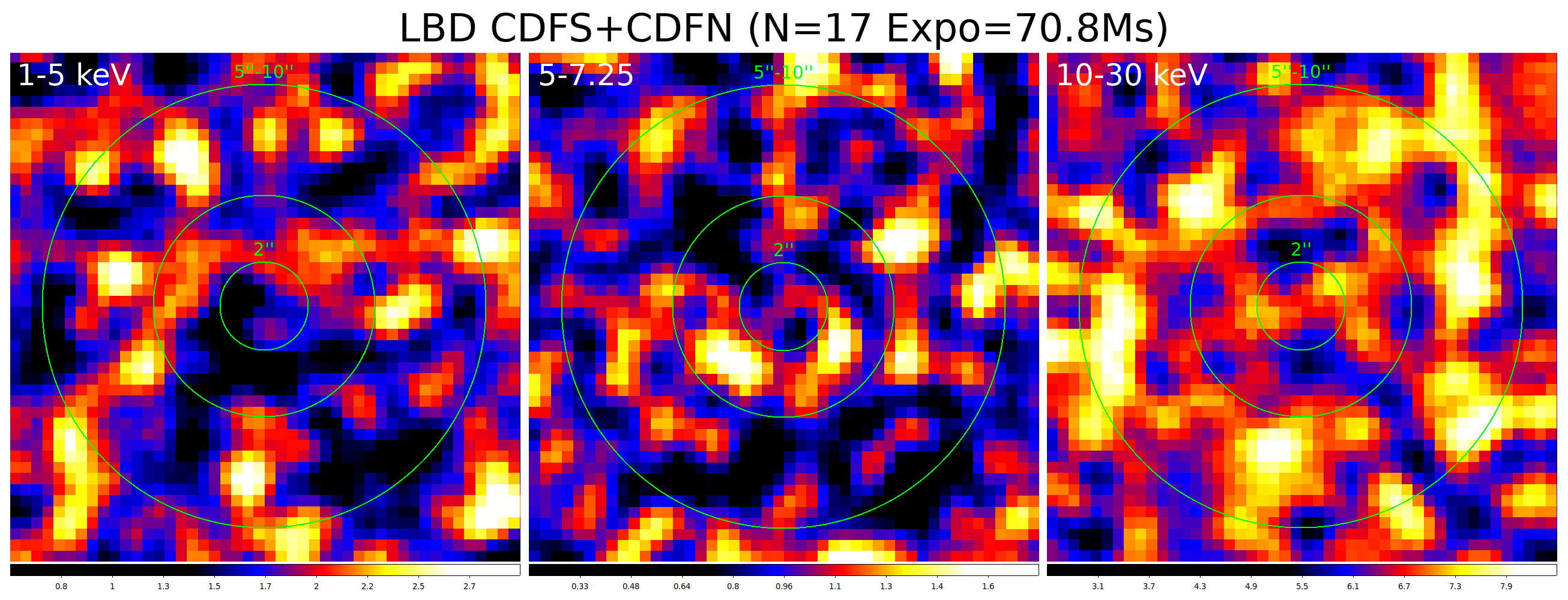
Figure 4: Stacked Chandra images show no significant detection for either LRDs or LBDs in any band.
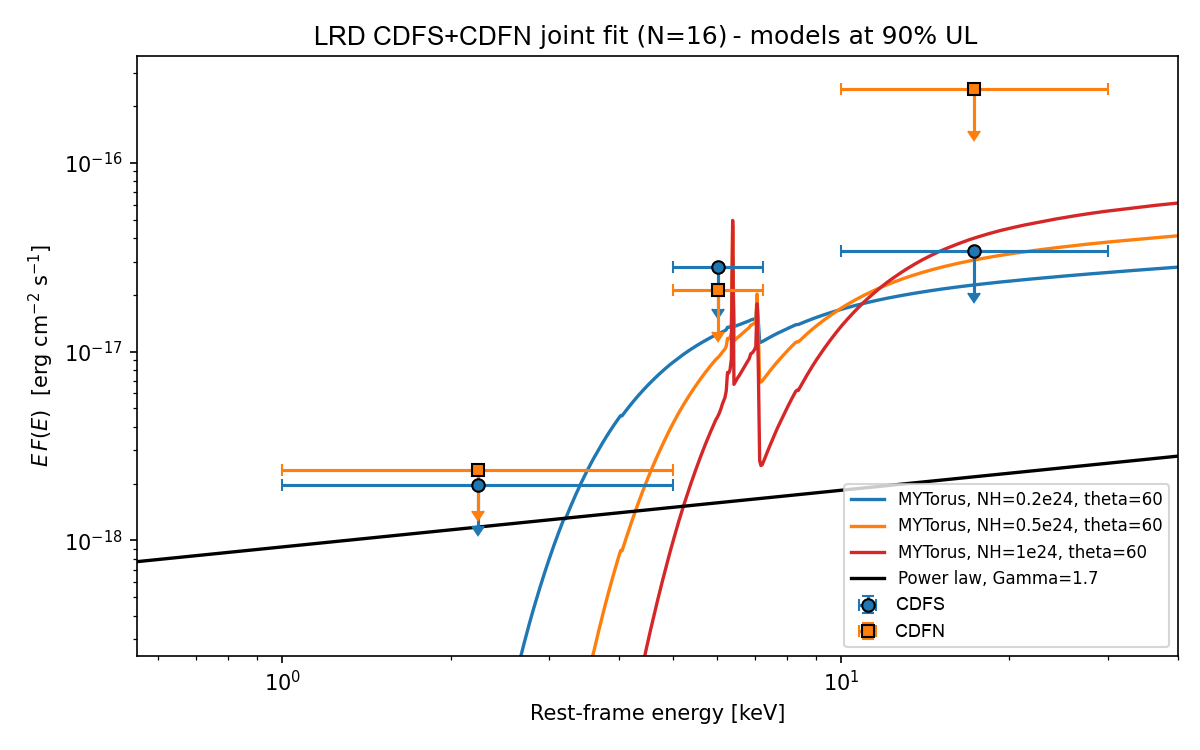
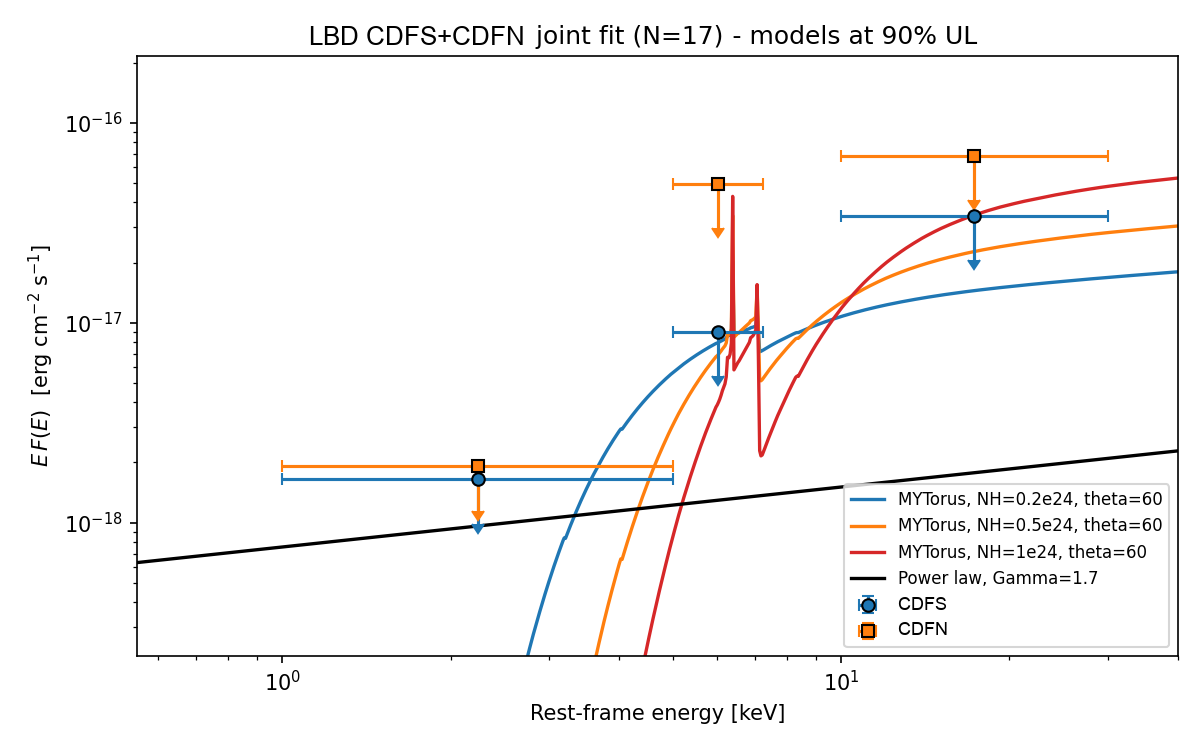
Figure 5: Two-field stacking and spectral model fitting of the Chandra data, constraining the maximal allowed X-ray flux in the context of torus and power-law models.
The few X-ray-detected objects show normal AGN X-ray-to-bolometric corrections if absorption is accounted for Figure 6, suggesting that when lines of sight are open, classical AGN scaling applies; X-ray weakness is thus not uniquely intrinsic but is likely a product of anisotropic emission and/or high obscuration.
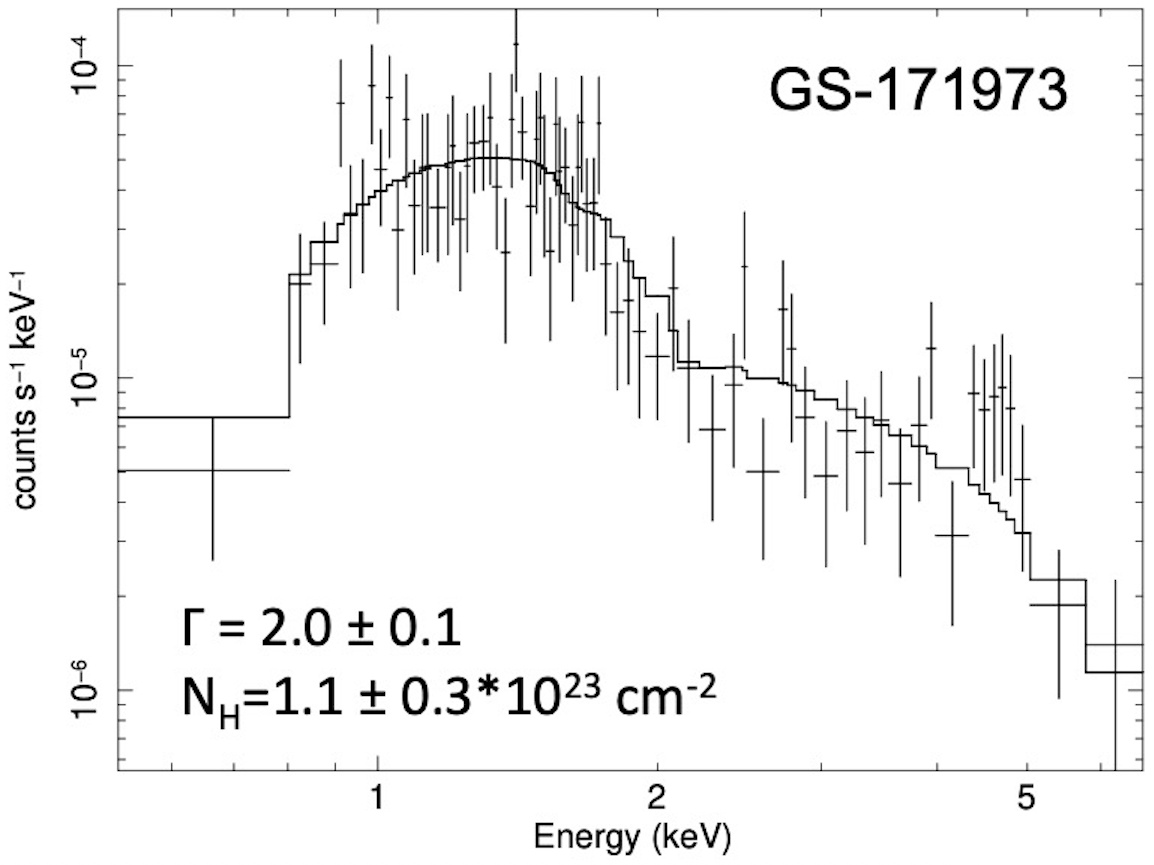
Figure 6: Chandra spectrum and model fit for the rare X-ray detected LRD, with moderate column density and steep photon index.
Nebular Diagnostics: AGN Narrow-Line Region Dominance
LRDs and LBDs reside in the AGN-excitation region of multiple nebular diagnostic diagrams—including BPT ([N II]/Hα vs. [O III]/Hβ), [S II]-VO87, [O I]-VO87, and [O III]4363-auroral-based diagrams—demonstrating that their narrow lines are dominantly AGN-excited, with notable offsets due to low ISM metallicity.

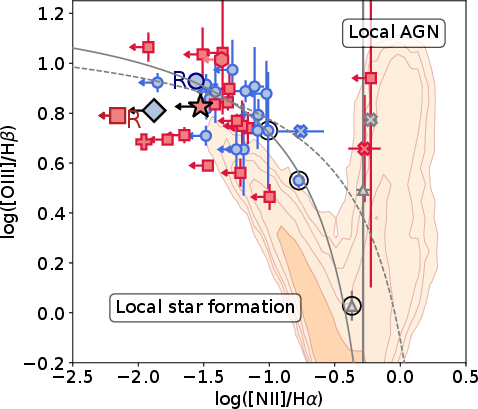
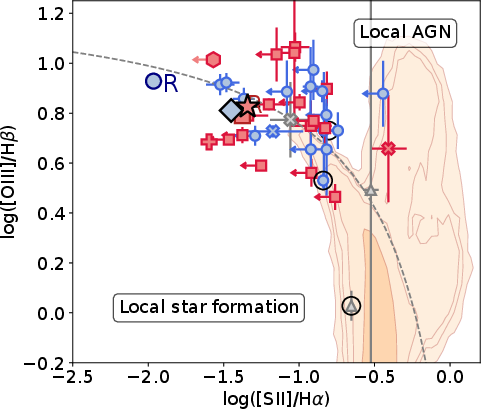
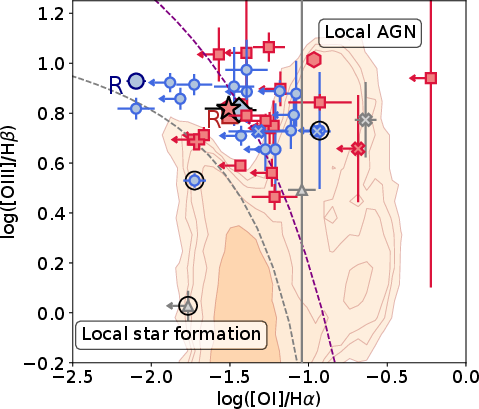
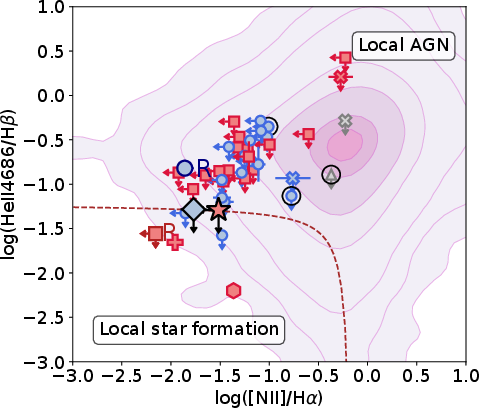
Figure 7: Placement of sample galaxies on standard line-ratio diagrams; both LRD and LBD stacks lie in regions consistent with AGN-excitation, though offset from local AGN due to low metallicity.

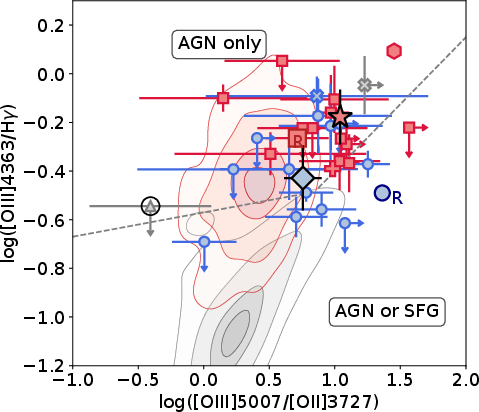
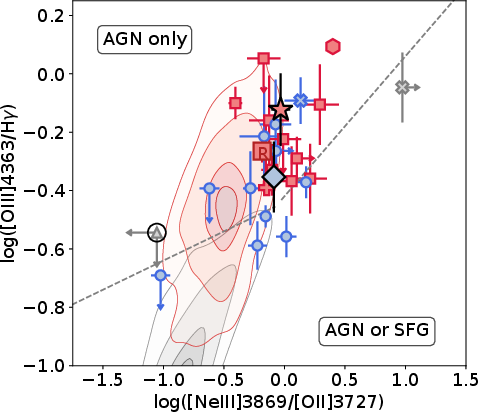
Figure 8: Application of [O III]4363-based new diagnostics: both populations’ stacks lie firmly in the AGN-only regime.
Absence or suppression of high-ionization lines such as He II is universal in the stacks, indicative of a softer ionizing spectrum than standard AGN, and in line with super-Eddington accretion models and numerical predictions for anisotropic disks (cf. [madau_lrds_2026]).
Emission-Line EWs and Broad-Line Region Properties
Both LRDs and LBDs exhibit high broad Hα equivalent widths compared to SDSS quasars, but LRDs systematically present higher EWs and stronger Balmer decrements, extending into the tail of the normal quasar distribution.
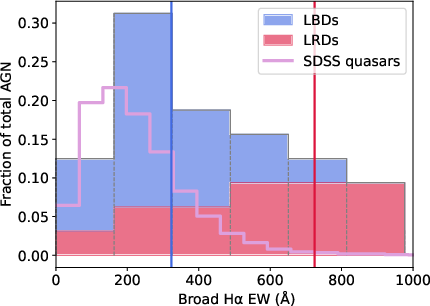
Figure 9: Distributions of broad Hα EWs; both populations are offset above the quasar median, with LRDs extending to higher values.
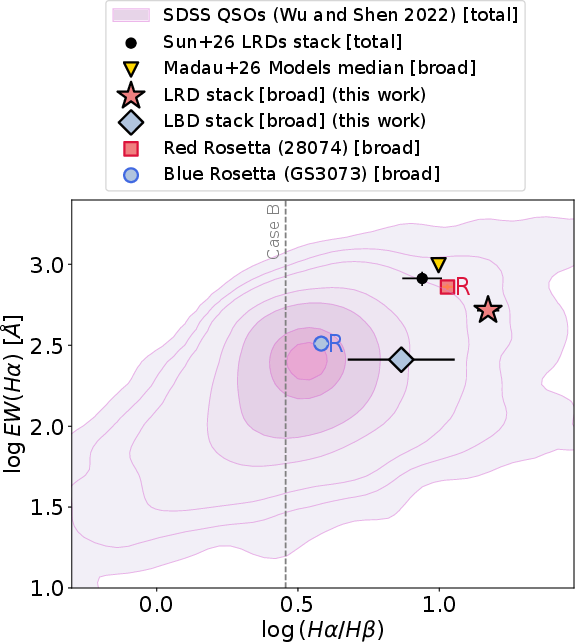
Figure 10: Stack-based comparison of broad Hα EW vs. Balmer decrement, showing that LRDs occupy more extreme values, though still within the overall quasar locus tail.
The apparent lack of a tight correlation between broad Hα EW and Balmer break strength disfavors a scenario where the host galaxy continuum dominates LBDs and not LRDs; rather, both populations are consistent with a scenario of AGN viewed along different lines of sight and with different absorption path lengths.
Lyα Emission and ISM Transparency
LRD stacks and many individual objects show Lyα emission with EWs and kinematics inconsistent with star-formation-driven emitters. In particular, broad Lyα components track the broad Hα wings both in velocity profile and flux fraction—indicative of an origin in the BLR or its immediate vicinity, ruling out a scenario where the AGN is completely buried and no ionizing radiation escapes.
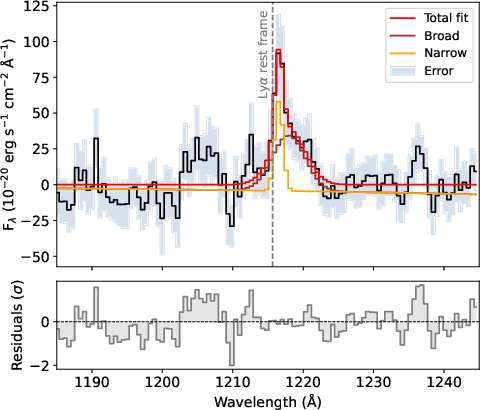
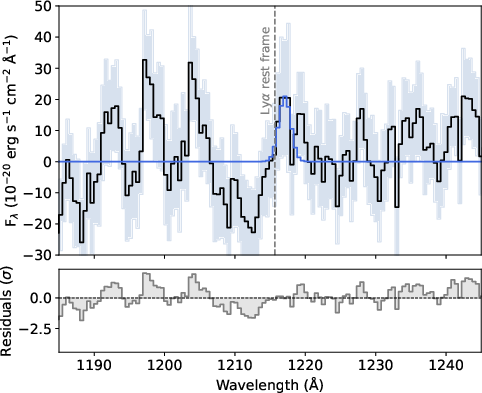
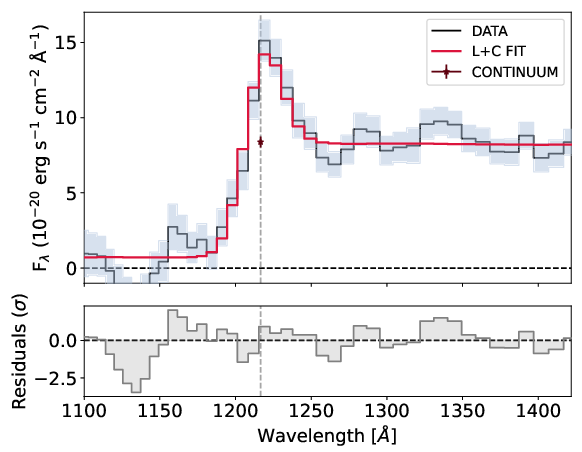
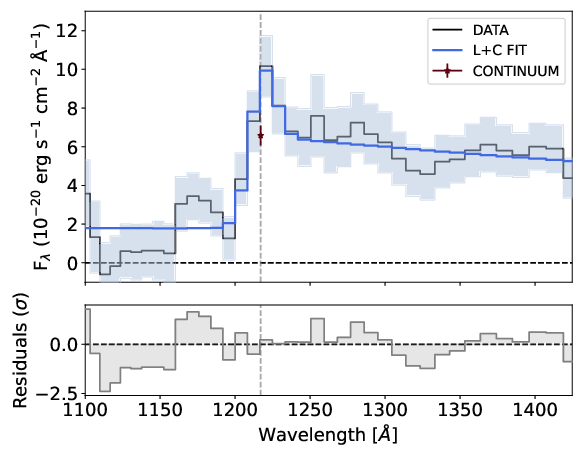
Figure 11: Stacked fits to Lyα for LRDs (left, broad and narrow) and LBDs (right, mostly narrow only).
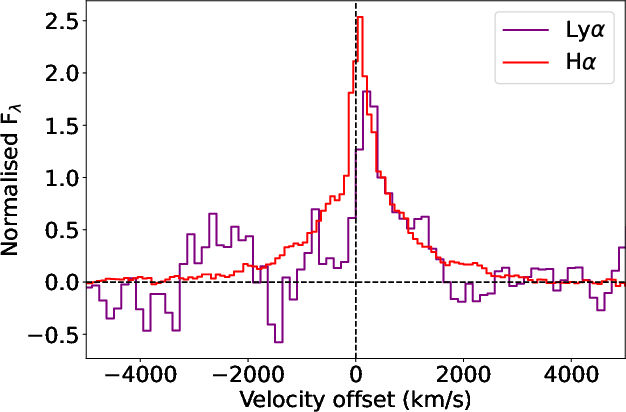
Figure 12: Direct velocity profile comparison for Lyα and Hα in LRDs; the alignment of broad wings is clear.
O I λ8446 and the Nature of the Broad-Line Region
O I λ8446, a tracer of BLR Lyβ fluorescence, is detected in LRD and LBD stacks and individual objects, with both populations following the O I–Hα scaling seen in classical AGN. This finding undermines arguments invoking a fundamentally different excitation or geometrical scenario for LRDs.
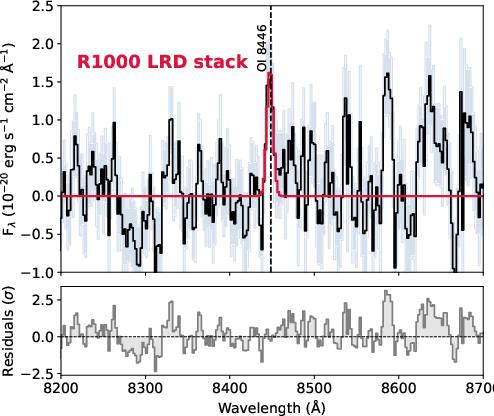
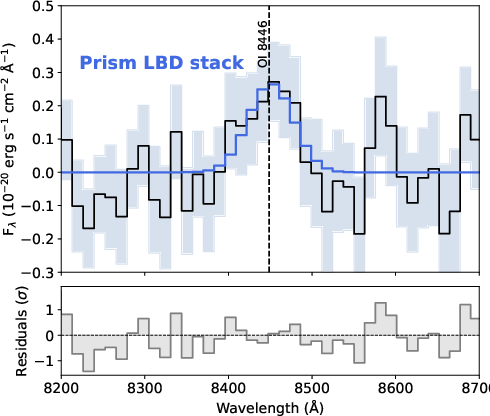
Figure 13: Detections and fits of O I λ8446 in LRD and LBD stacks; broad component is present only in select objects.
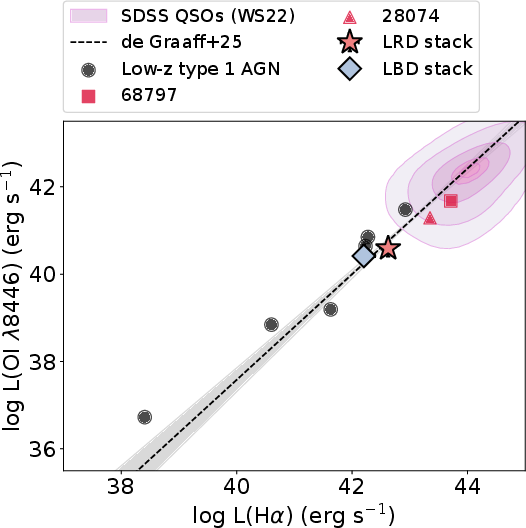
Figure 14: O I λ8446–vs–Hα luminosity for stacks and individual sources compared to AGN; all lie on the standard relation.
Unified Interpretation and Constraints on AGN Structure
The observational convergence for LRDs and LBDs in nebular diagnostics, Lyα, and O I emission, and the similar or continuous distributions of EWs, strongly support the following:
- Both populations are accreting BHs viewed at different angles; LRDs are more heavily obscured (edge-on; dust-reddened), while LBDs are face-on and less extincted.
- The NLR and BLR are evident; anisotropic obscuration accounts for the X-ray and SED distinctions, as in classical AGN unification.
- Scenarios of completely embedded “black hole stars” or spherically symmetric cocoons are contradicted by the detection of AGN-driven narrow lines and broad Lyα/Hα requiring clear sightlines.
- The negligible detection of high-ionization lines is consistent with theoretical predictions of super-Eddington disks with self-shadowed equatorial emission.
- Claims that LRDs are host-galaxy-dominated or require fundamentally different bolometric corrections are disfavored; instead, classical AGN Lbol calibrations apply along unabsorbed sightlines.
Conclusion
This study provides a comprehensive, empirical demonstration that JWST-selected LRDs and LBDs, despite pronounced photometric and SED differences, are fundamentally part of a continuum of AGN with varying sightline-dependent extinction and disk geometry. Both populations’ emission-line spectra, X-ray characteristics, and broad/narrow line ratios are best explained by classical AGN engines undergoing super-Eddington accretion in low-metallicity hosts, with radiative and absorptive anisotropy dominating observable differences.
The implication is that early-universe SMBH growth is occurring under extreme and variable ISM conditions, but most of the underlying physics is consistent with the AGN paradigm. Future work should focus on direct BLR size/luminosity measurements, high-resolution mid/far-IR for dust geometry constraints, and time-domain variability to further clarify the nature of these faint AGN and their evolutionary trajectories.
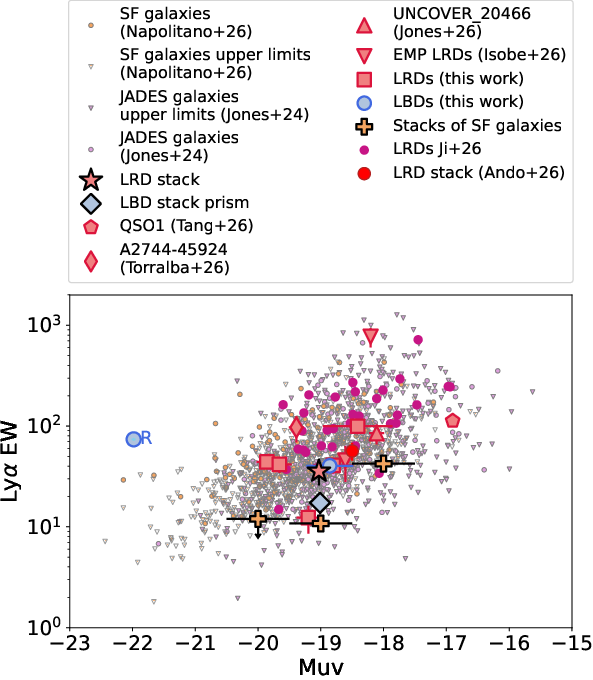
Figure 15: Lyα EW as a function of UV magnitude, showing that LRDs and, to some extent, LBDs exceed typical star-forming galaxies, implying AGN contribution to Lyα.
This study delivers a quantitative, multiwavelength confirmation that "Little Red" and "Little Blue Dots" are low-metallicity, high-accretion AGN fundamentally coupled to their host ISM, with orientation-driven and circumnuclear gas regulating their appearance and X-ray properties (2606.21614).

