- The paper establishes a comprehensive theory of quantum synchronization, linking semiclassical limit cycles with quantum phase locking and measurable nonclassical effects.
- It employs Lindblad master equations and phase-space analyses, notably Wigner functions, to quantify transitions between classical and quantum regimes.
- Experimental validations in trapped ions, cold atoms, and superconducting qubits demonstrate phenomena like synchronization blockade and entanglement-induced synchrony.
Synchronization in the Quantum Regime: Theory, Signatures, and Experimental Realizations
Introduction
The phenomenon of synchronization, defined as the spontaneous emergence of coordinated oscillatory dynamics, is central to the understanding of coordinated activity across physics, chemistry, biology, and engineering. While classical synchronization is well-captured by nonlinear dynamical systems theory, extending these concepts to quantum systems presents significant conceptual and technical challenges due to linear quantum dynamics, absence of classical phase-space trajectories, and the effects of quantum and measurement noise. This work systematically reviews the theoretical frameworks developed for quantum synchronization, highlights genuinely nonclassical signatures predicted and observed, and surveys key experimental advances demonstrating quantum synchrony, including its realization in engineered platforms.
Semiclassical Quantum Synchronization and Limit Cycles
A central organizing principle of classical synchronization is the existence of stable limit cycles in nonlinear dissipative systems, exemplified by the Rayleigh and van der Pol oscillators. Quantization requires an open system description, typically encoded in Lindblad master equations incorporating single-particle gain, single- and two-particle loss, and possible coherent and squeezed drives. The resulting quantum limit cycles are characterized by stationary states whose phase-space structure is captured by the Wigner function. Classical ring-like limit cycles persist in the large mode-occupation regime but become broadened and strikingly altered as quantum fluctuations dominate.
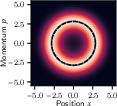
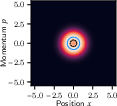
Figure 1: Semiclassical and quantum Wigner distributions for the stationary state of the quantum Rayleigh-van der Pol oscillator display the quantum-to-classical crossover for limit-cycle behavior.
In the deep quantum regime, energy quantization ensures a finite mode occupation even for diverging dissipation, leading to nonvanishing "quantum radii" for limit cycles—a marked departure from the vanishing amplitude of classical dissipative oscillators. This effect is robust, model-independent, and generically prevents the complete suppression of oscillatory behavior.
Quantum Entrainment and Mutual Synchronization
External driving fields can entrain quantum limit cycle oscillators, resulting in phase locking of the quantum oscillator's phase distribution around the applied drive. Squeezing orthogonal to the drive direction reduces the phase uncertainty and can further enhance synchronization fidelity, even in the presence of quantum noise. However, complete entrainment is generically obstructed by quantum fluctuations at low energies, resulting in a broadened phase distribution that is absent in the classical setting.
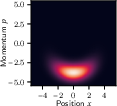
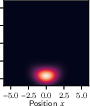
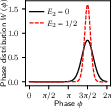
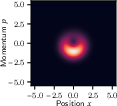
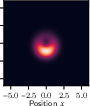
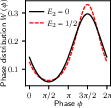
Figure 2: The Wigner distributions and marginalized phase distributions for a driven quantum limit cycle oscillator showcase the role of drive strength, squeezing, and dissipation in synchronization fidelity.
Mutual synchronization in systems of two or more quantum oscillators can be realized through coherent (Hamiltonian) or dissipative couplings. The phase distributions of coupled oscillators bear signatures of in-phase or anti-phase locking, depending on steady-state coherences. Mean-field order parameters generalize the Kuramoto model to the quantum domain. Notably, reactively coupled quantum oscillators can synchronize at lower couplings than their classical noisy counterparts, while dissipative-coupling–induced synchrony requires larger critical couplings.
A complementary approach analyzes synchronization in the time evolution of local observables, without reference to phase-space distributions. Here, synchronization manifests as long-lived, robust oscillations in correlated observables, characterized quantitatively via measures such as the Pearson coefficient. For Markovian quantum dynamics, the spectral structure of the Lindbladian superoperator dictates the possible emergence of stable or metastable synchrony.
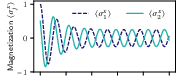
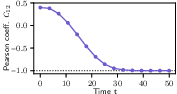
Figure 3: Dynamical stabilization of antisynchronized magnetizations in two collectively damped qubits, with exponential suppression of undesired modes and perfect linear anticorrelation.
The emergence of exact or metastable synchronized oscillations is determined by strong symmetries of the Lindbladian—ensuring the existence of decoherence-free or noiseless subsystems supporting unitary evolution. In realistic settings, weak symmetry breaking leads to metastable synchrony, persisting over timescales determined by the Liouvillian gap and the structure of slow-decaying modes. Perturbative treatments provide analytical access to these lifetimes and conditions.
Quantum Signatures and Nonclassical Synchronization Effects
Quantum synchronization features several phenomena with no classical analogs:
- Persistence of entrainment under extreme dissipation: Due to quantized energy exchange, quantum limit cycles can sustain oscillations even when classical analogs are silenced.
- Synchronization blockade: For identical or resonant quantum oscillators with dissipation, quantum effects can destructively interfere, blocking synchronization precisely where the classical model predicts the strongest effect—a counter-intuitive quantum signature.
- Entanglement-induced synchrony: Stronger-than-classical correlations, including entanglement and mutual information, can emerge during synchronization, especially above threshold couplings (the "entanglement tongue"). This effect can be present or absent depending on the synchronization protocol and system parameters.
These effects are confirmed by Wigner and Husimi Q-function reconstructions, as well as dynamical measures.
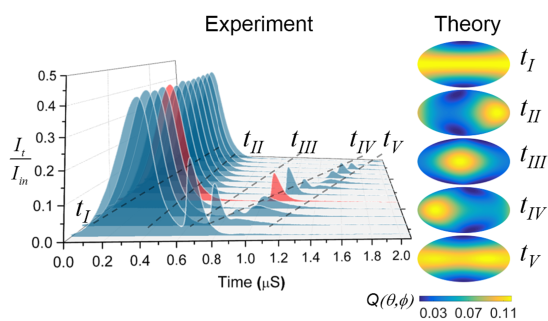
Figure 4: Experimental demonstration of spin-1 87Rb atomic synchronization through drive-induced entrainment, revealed in Husimi Q functions and population dynamics.
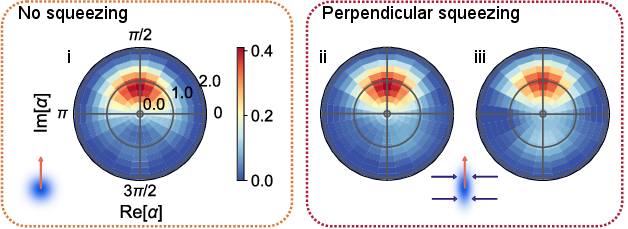
Figure 5: Realization of a quantum van der Pol oscillator with a single trapped 40Ca+ ion, exhibiting phase-locked Wigner distributions and synchronization enhancement via squeezing.
Extensive experimental work confirms these theoretical expectations. Observations in cold atom ensembles, superconducting qubits, nuclear spins, and trapped ions demonstrate robust quantum synchronization, blockade phenomena, and entanglement generation via synchronized dynamics. State tomography of single and two-ion quantum limit cycle oscillators establishes the theoretical connection between Wigner function structure and synchronized motion. Experiments also evidence synchronization transitions in spin networks subject to engineered noise drives.
Many-Body and Networked Synchronization
The scalability of quantum synchronization to many-body and networked settings opens new domains for exploration. Kuramoto-type transitions, synchronization blockades propagated through networks, and the role of underlying graph topology (e.g., presence of decoherence-free clusters) have been characterized. Topological phases can protect synchronized edge states against disorder and amplitude suppression, ensuring robust local synchronization even as global coherent amplitudes vanish in the thermodynamic limit.
Relation to Quantum Time Crystals
Stable quantum synchronization is intimately related to concepts from quantum time crystals, where spontaneous time-translation symmetry breaking yields rigid, persistent oscillatory states in driven-dissipative or closed quantum systems. However, stable quantum synchronization in the dissipative context does not require the thermodynamic limit, nor does it necessitate spontaneous symmetry breaking; instead, it may arise from engineered or measurement-induced symmetries and subspaces.
Implications and Outlook
The theory and experimental realization of quantum synchronization elucidate new aspects of collective quantum behavior, including the emergence of long-lived coherence and entanglement outside equilibrium. These phenomena have prospective implications for quantum communication, network engineering, and quantum-enhanced metrology, where synchronization can facilitate distributed entangled state preparation or clock synchronization resilient to noise and disorder.
The systematic identification of blockades, entanglement thresholds, and topological protection mechanisms offers a structured approach to designing scalable quantum networks and may guide future hardware for quantum information applications. Further open questions include the full classification of Lindbladian spectrum-correlated phenomena, protocols to actively control synchronization (e.g., via quantum measurement and feedback), and the interplay with quantum thermodynamics and non-Markovian environments.
Conclusion
Quantum synchronization extends classical concepts into the genuinely quantum domain, characterized by unique dynamical, entanglement-mediated, and topologically protected phenomena. Rigorous theoretical frameworks, supported by numerics and direct experimental realization, reveal robust signatures and highlight the nontrivial interplay of dissipation, drive, and quantum correlations. The ongoing development of quantum technologies positions synchronization not only as a fundamental phenomenon but also as a resource for next-generation quantum devices and protocols.
(2606.21226)