- The paper introduces CR-GPR, a hybrid method that learns variational Hamiltonian gradients from minimal data, achieving a mean RMSE of 0.222 rad and R² of 0.919.
- It integrates Cosserat rod theory with Gaussian Process Regression to ensure energetic consistency and uncertainty quantification while modeling soft robot dynamics.
- The framework outperforms black-box GP and PINN approaches, consistently achieving non-negative energy dissipation and robust performance across unseen initial conditions.
Learning-Based Modeling of Soft Robots via Cosserat Rod Theory
Background and Motivation
Modeling soft robots with continuum structures presents significant challenges due to strong nonlinearities, high-dimensionality, and unmeasured or difficult-to-characterize constitutive parameters. Traditional approaches based on finite element methods offer high fidelity but are computationally burdensome, restricting their application to control tasks. Reduced-order representations such as Piecewise Constant Curvature and Cosserat rod models provide better computational efficiency while retaining physical interpretability. Cosserat rod theory models a soft robot as a continuous, deformable curve with distributed mass and elasticity, effectively handling compliance and large deformations relevant to soft robotics. However, analytical derivation and parameter identification in Cosserat rod models are nontrivial due to complex nonlinear PDEs.
Energy-based modeling, particularly using port–Hamiltonian (PH) systems and their distributed generalization (dPHS), offers guarantees of energetic consistency and passivity, thus ensuring stability. Yet, constitutive relationship calibration remains an obstacle. Purely data-driven models—including neural networks, Koopman operator-based approaches, and physics-informed neural networks (PINNs)—enable flexible inference but typically lack guaranteed physical consistency, interpretability, and uncertainty quantification.
Proposed Framework: CR-GPR
The paper introduces a hybrid modeling approach—CR-GPR—that incorporates the physical guarantees of Cosserat rod dPHS structure with the flexibility and uncertainty quantification of Gaussian Process Regression (GPR). Rather than inferring the full Hamiltonian, the method learns its variational derivatives (Hamiltonian gradients) directly from observational data, encoding all constitutive nonlinearities without explicit analytical modeling. The CR-GPR pipeline comprises four stages: (1) state-space and input data collection, (2) temporal and spatial derivative estimation via GPR prefiltering, (3) training GPR models for each Hamiltonian gradient component, and (4) simulating the learned nonlinear PDEs within the dPHS structure.
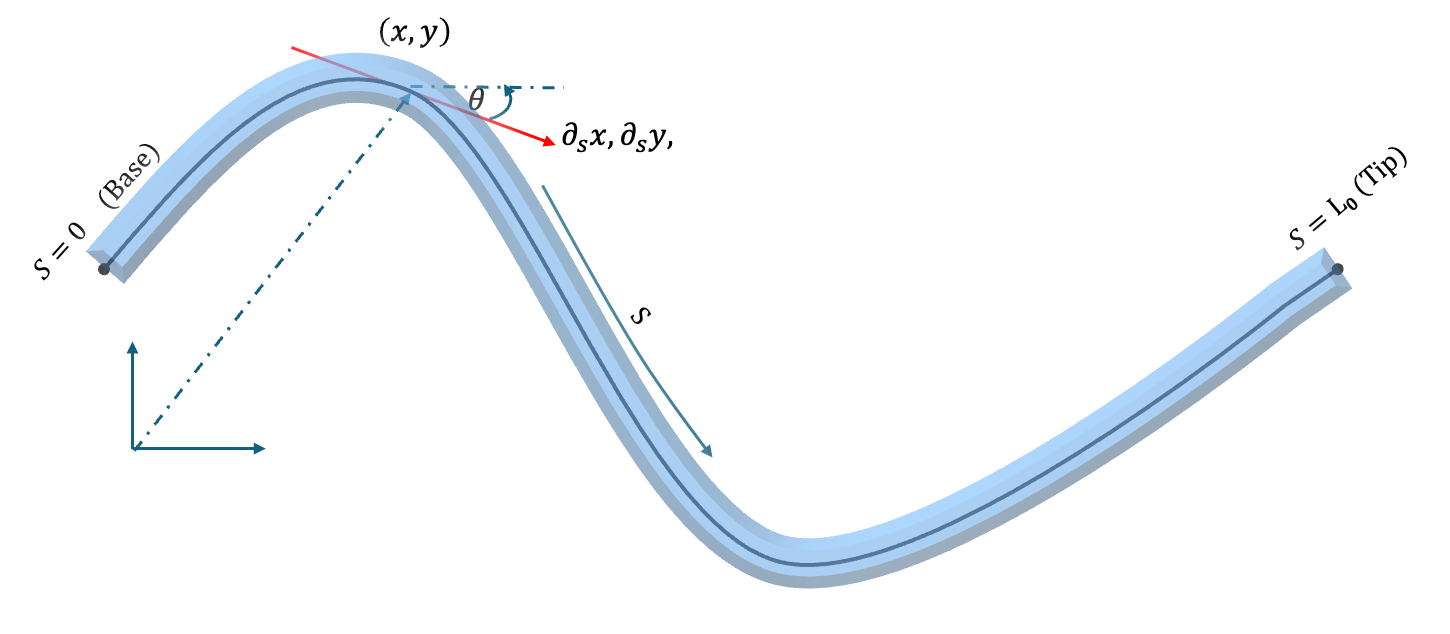
Figure 1: Schematic of a planar Cosserat rod modeling the distributed state variables and geometric configuration of rod-like soft robots.
GPR is chosen for its smoothness prior (which matches expected physical regularity), closed-form predictions for efficient substitution into PDE solvers, and principled uncertainty quantification. The learned gradients are integrated into the dPHS structure, allowing data-adaptive, physically-consistent simulation of rod dynamics.
Numerical Validation and Quantitative Results
The CR-GPR method is validated via simulation studies for a planar Cosserat rod under gravity and damping. The framework is trained on a single trajectory (rod initialized at θ0=85∘) and tested on six unseen initial angles spanning a wide range of configurations. All state variables, including position, orientation, momenta, and their spatial/temporal derivatives, are estimated via GP smoothing, with derivative estimation robust to noise and discretization errors.
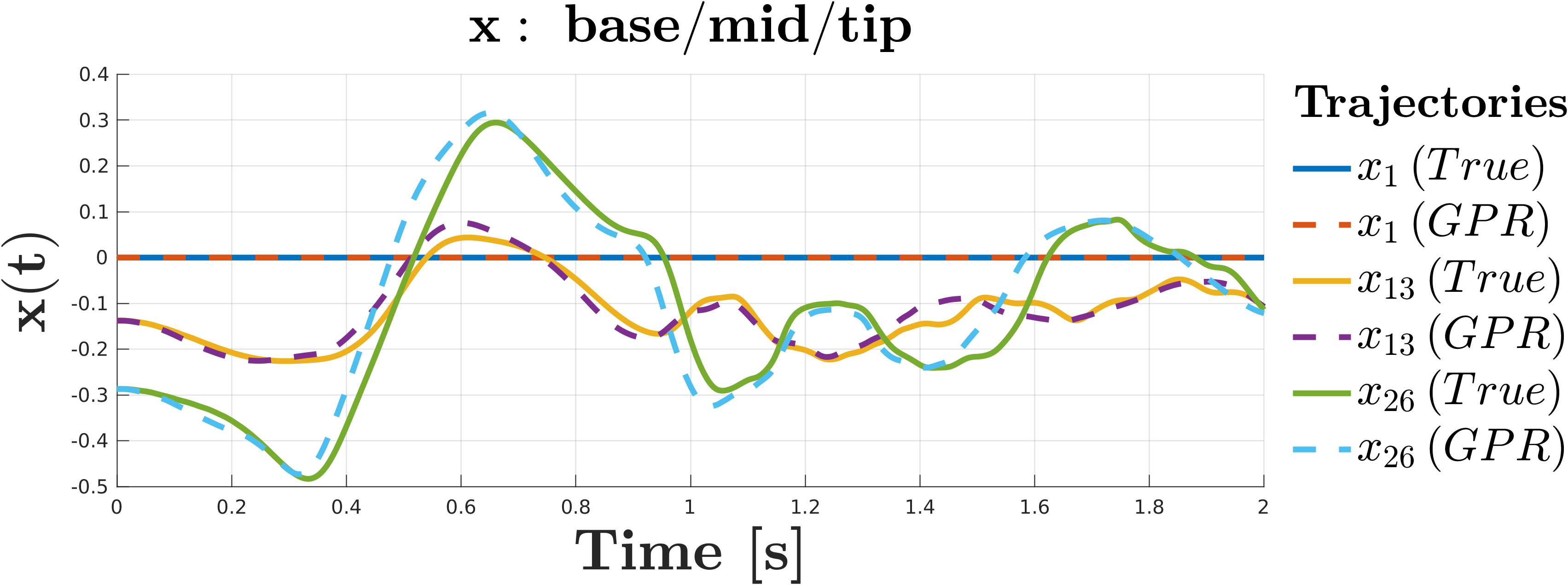
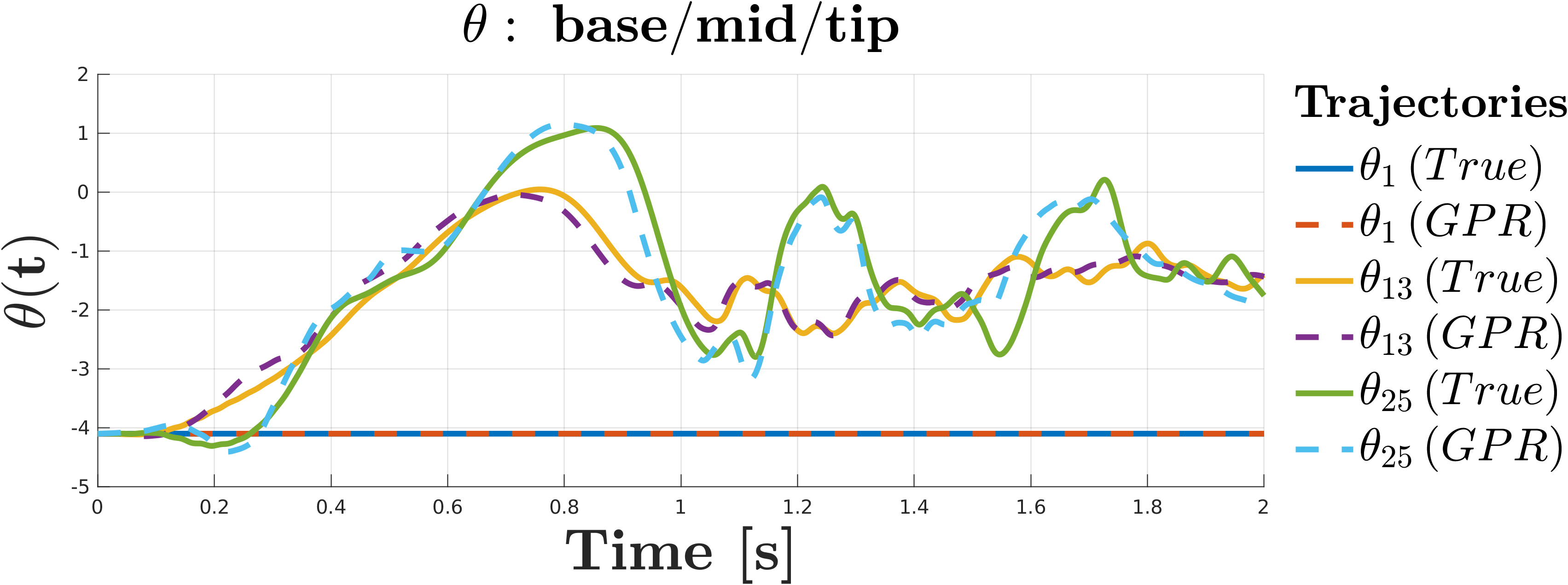
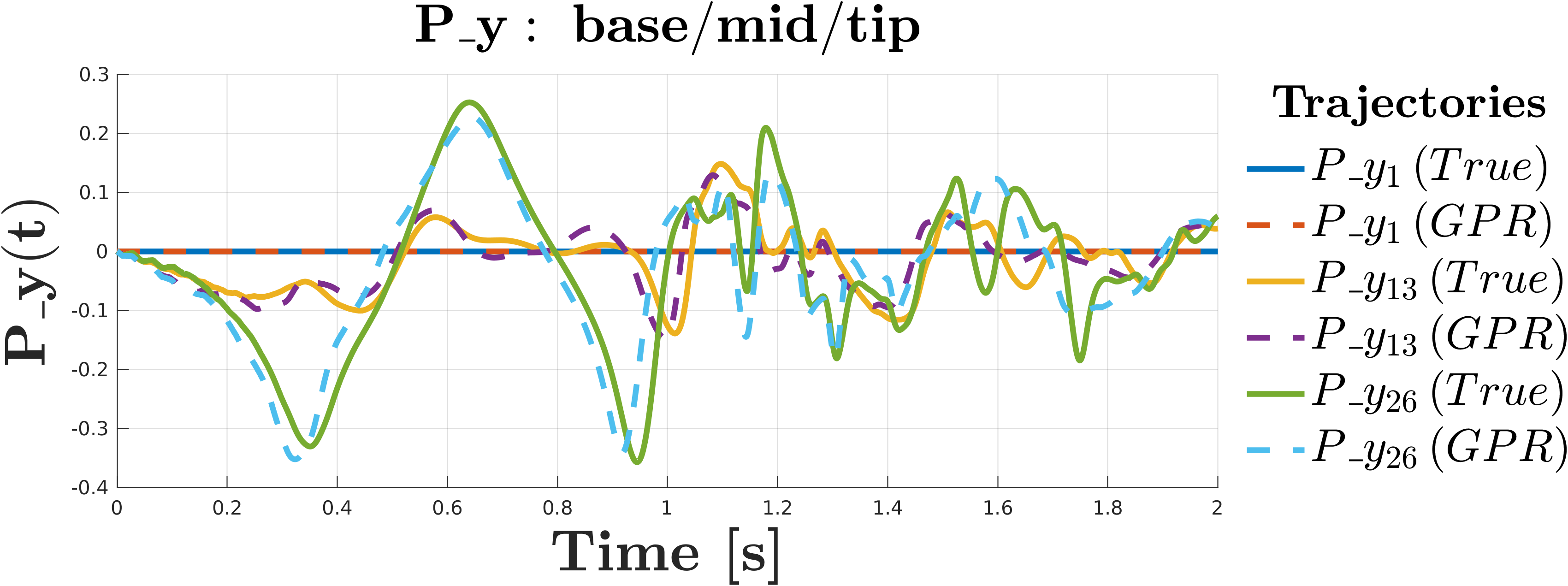
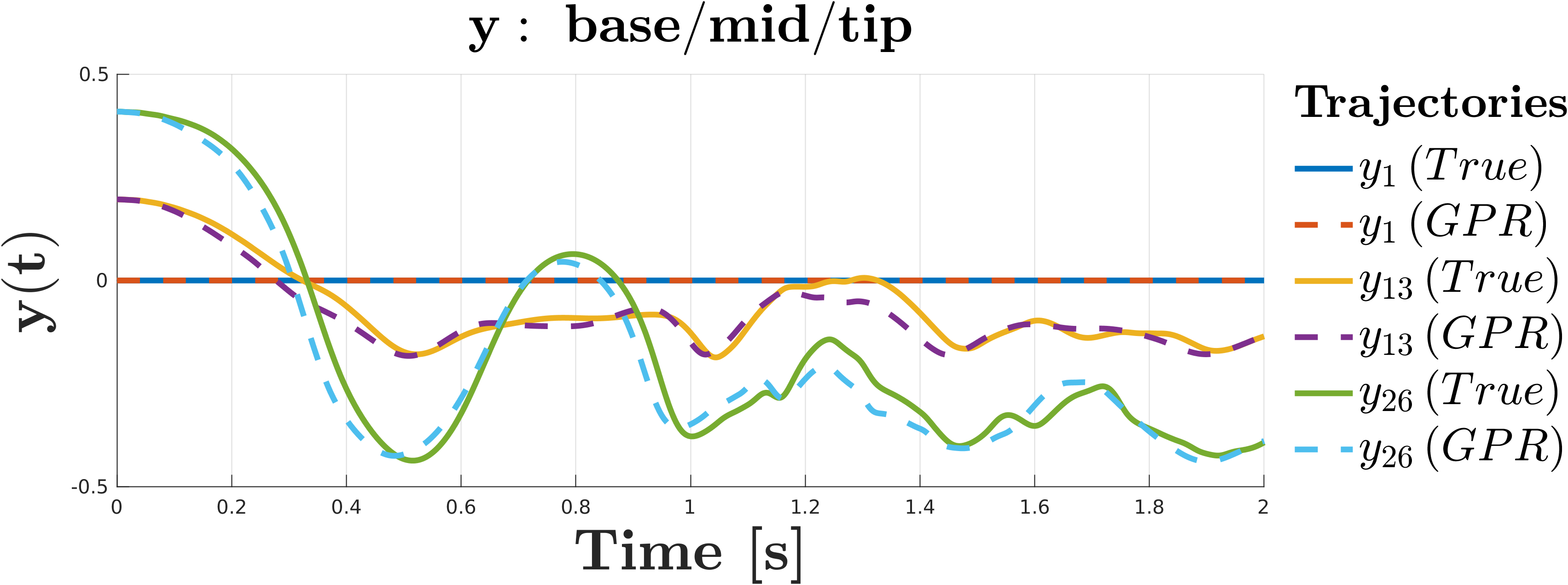
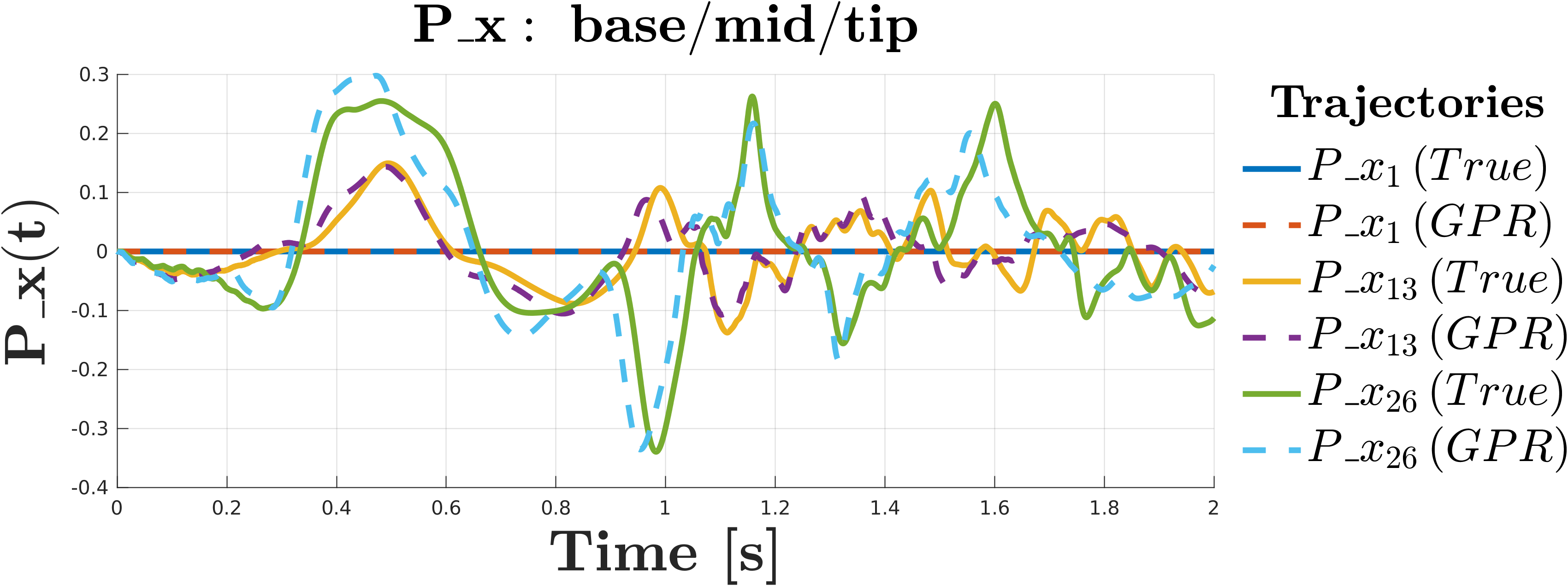
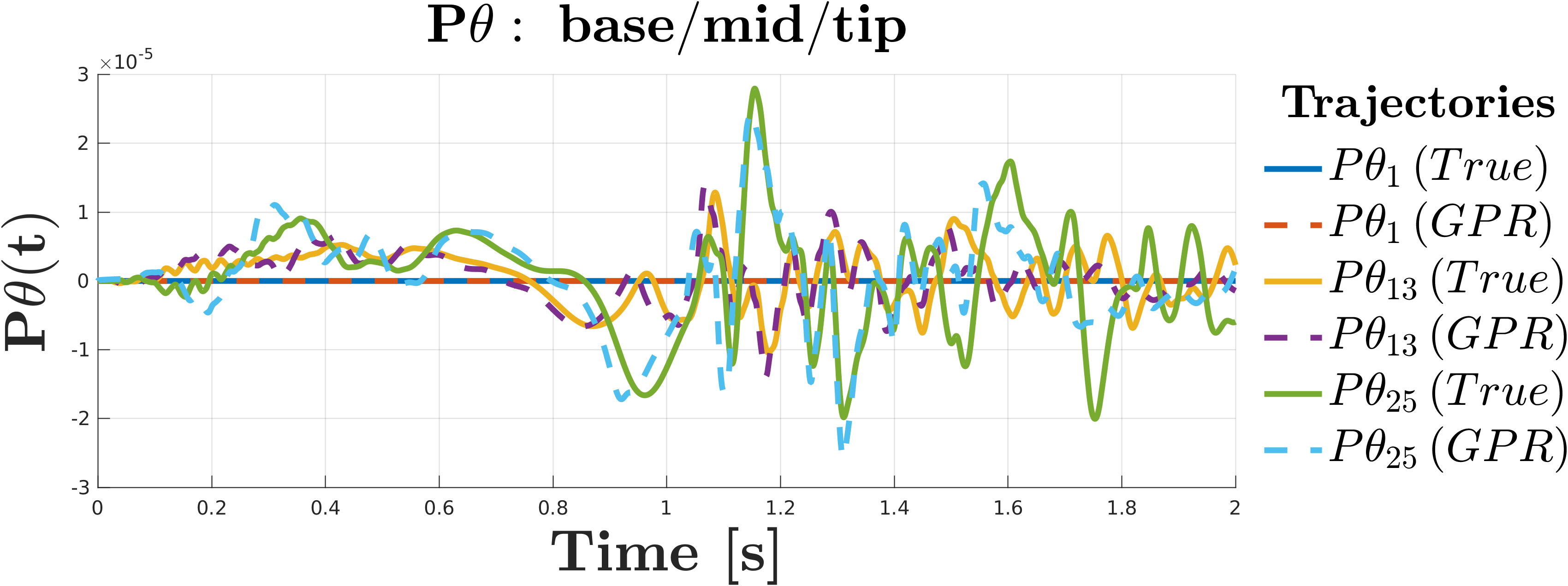
Figure 2: Ground truth vs. CR-GPR simulation overlays at base, mid, and tip nodes for all state variables (θ0=125∘).
Strong numerical results are reported: across all six test angles, CR-GPR achieves a mean RMSE(θ)=0.222 rad and R2=0.919, indicating robust generalization from a single training trajectory. The method maintains energetic consistency, confirmed by strictly non-negative energy dissipation throughout simulation.
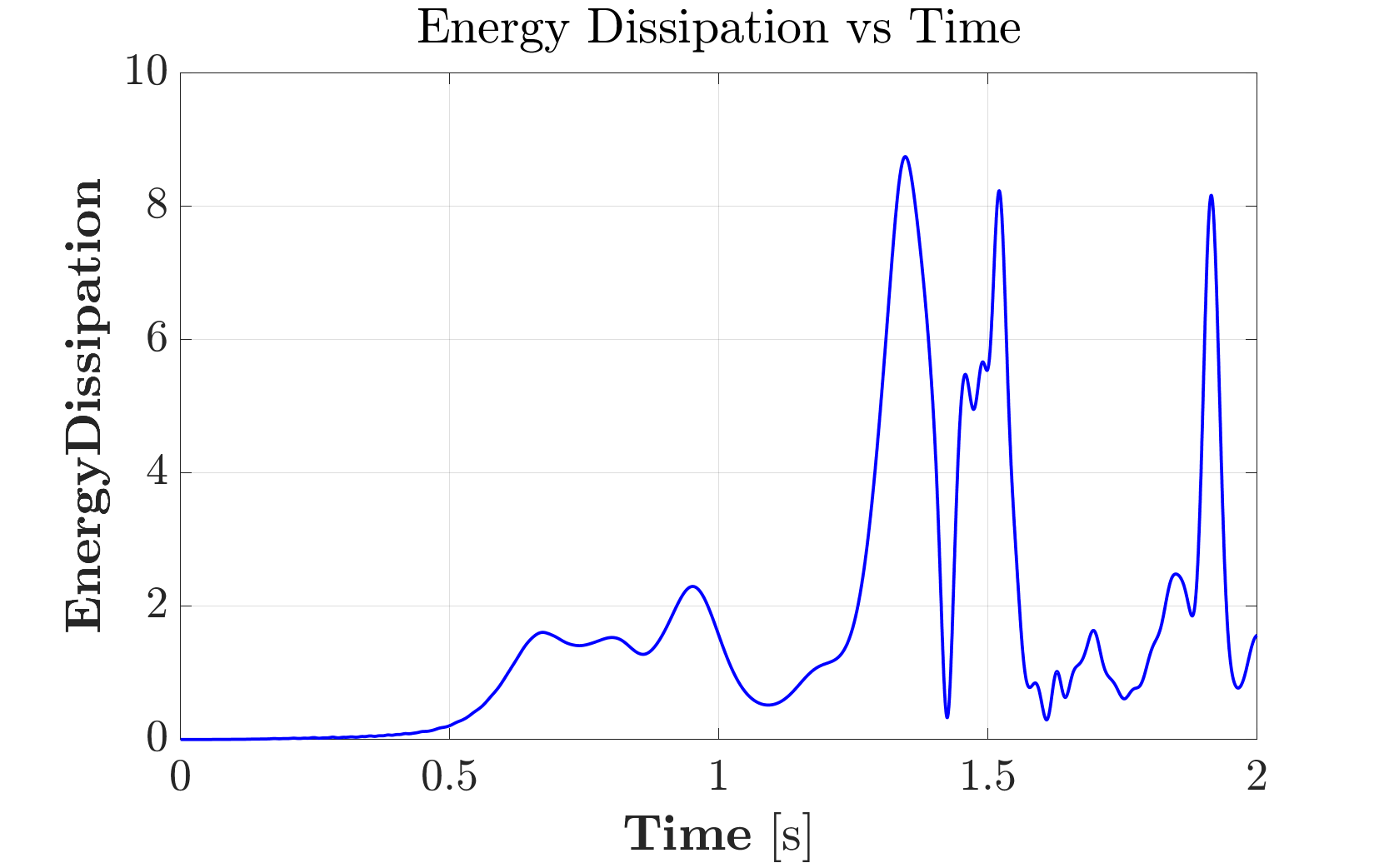
Figure 3: The non-negative energy dissipation confirms the energetic consistency of the CR-GPR model’s learned dynamics.
CR-GPR outperforms black-box GP (20× higher error), single-trajectory PINN (10× higher error), and even PINN trained on 8× more data, demonstrating that port–Hamiltonian inductive bias is more effective than additional training data for generalization and physical fidelity.
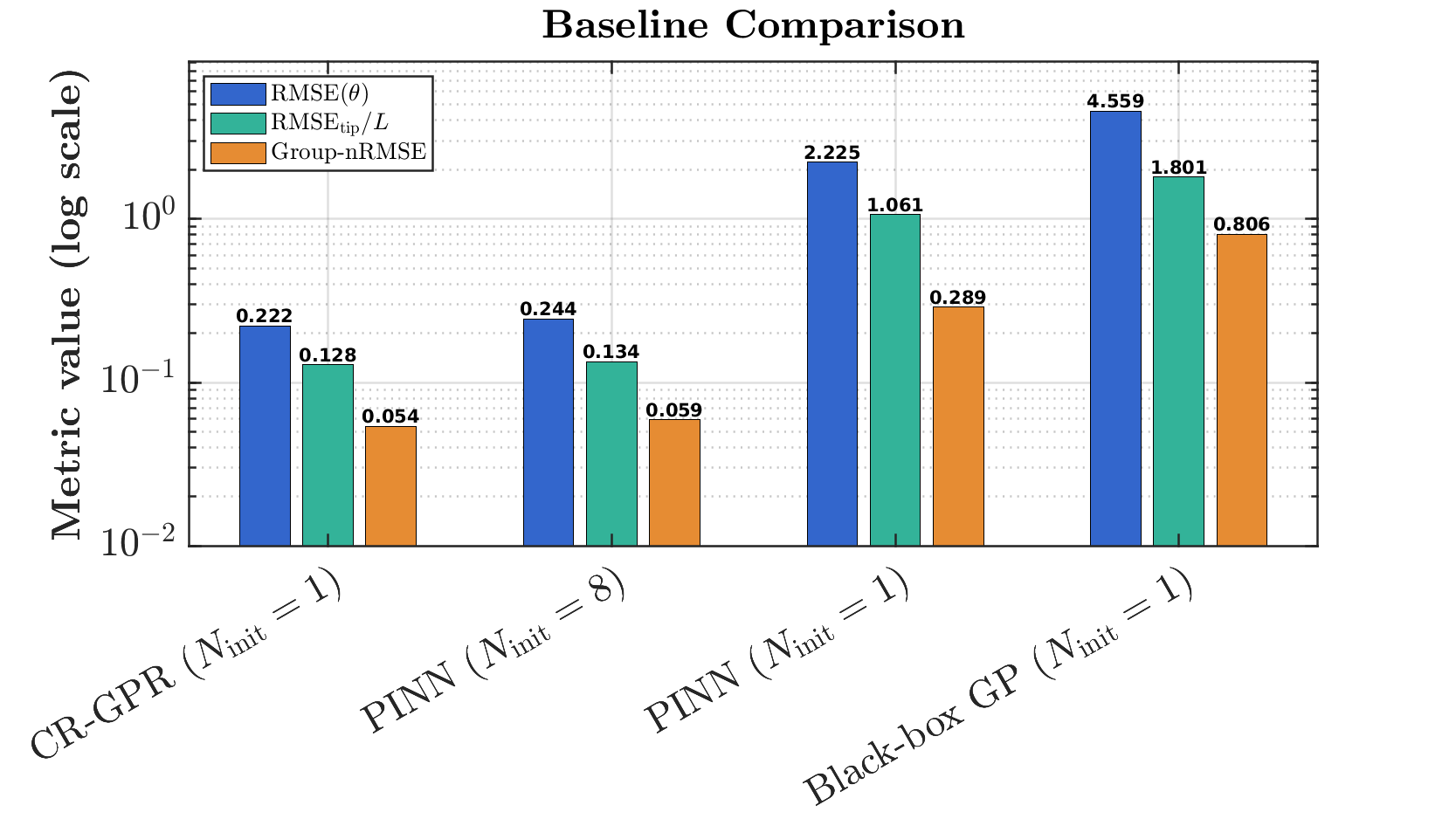
Figure 4: Baseline comparison across six unseen test angles (log scale). CR-GPR achieves lowest segment orientation and tip position errors over all tested conditions.
Uncertainty quantification is achieved via Random Fourier Features (RFF) sampling of the GP posteriors, yielding spatially resolved confidence intervals on rod deformation at unseen configurations. The true trajectory consistently lies within the predicted CI bands, demonstrating reliable probabilistic coverage.
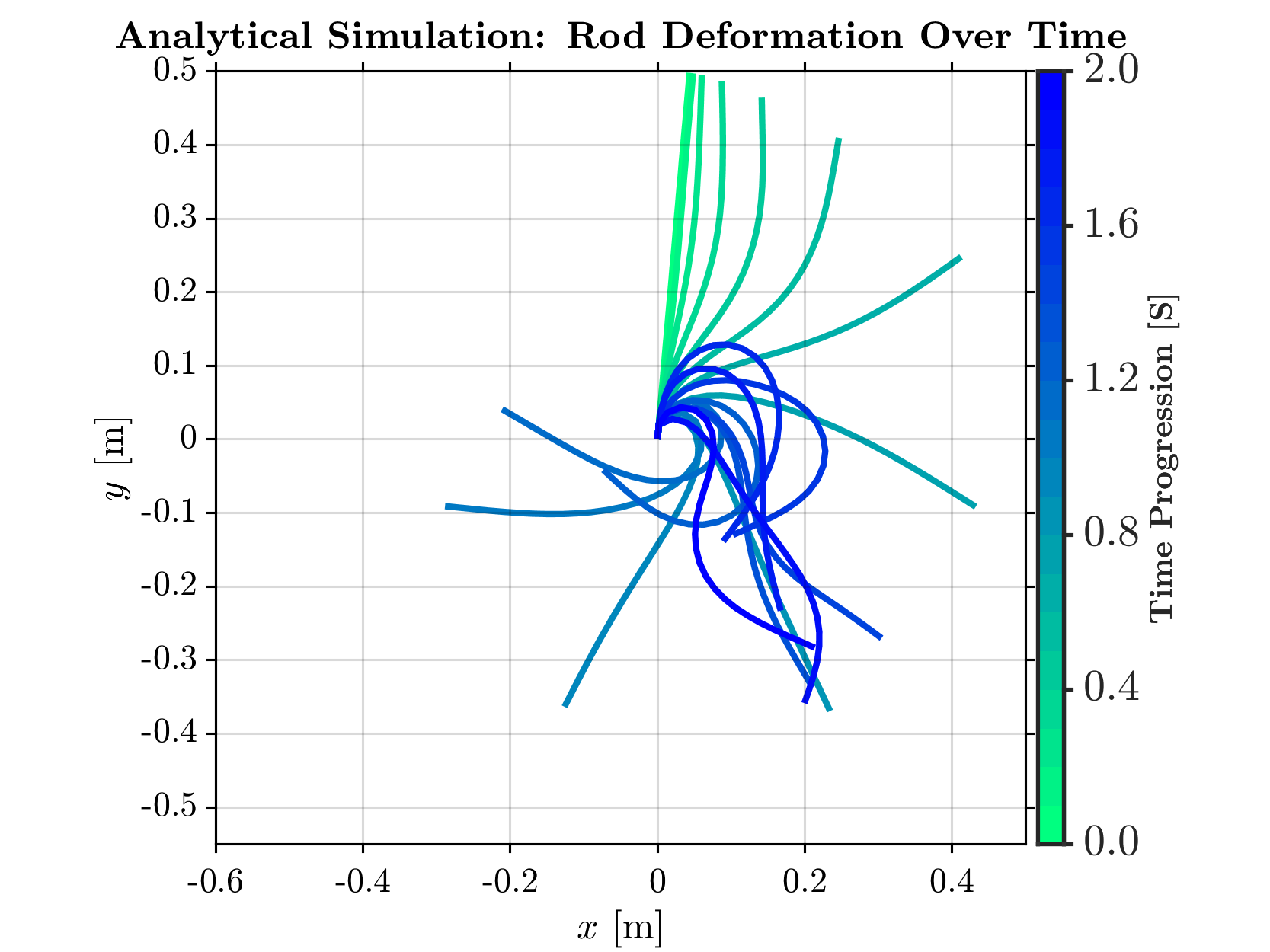
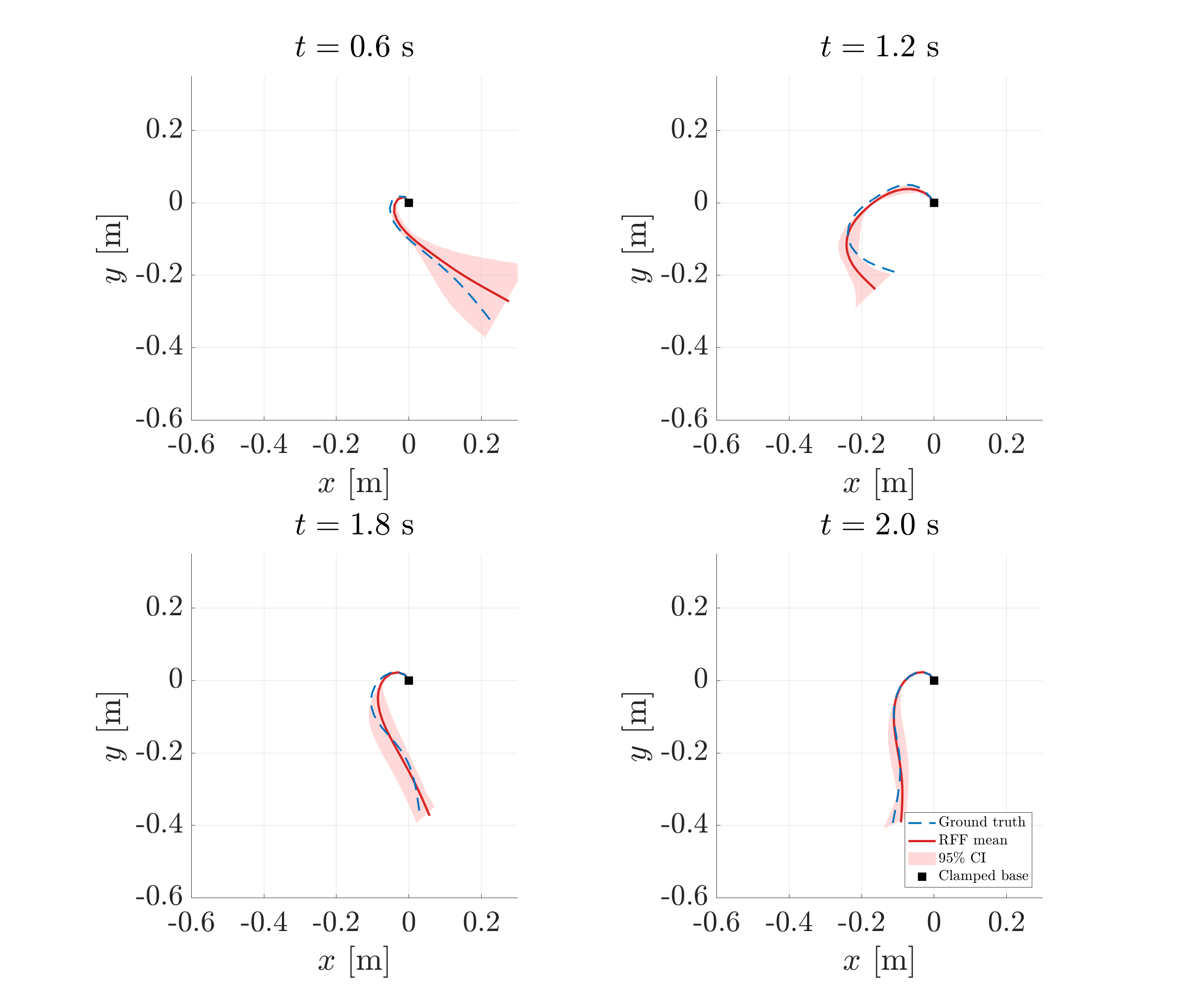
Figure 5: CR-GPR prediction vs. ground truth at unseen test angle θ0=125∘ with 95% confidence interval (shaded). The ground truth is contained within the predicted uncertainty band.
Practical and Theoretical Implications
CR-GPR enables interpretable, energy-consistent learning of distributed dynamics from minimal data, supporting controller design rooted in the port–Hamiltonian paradigm. The strong prior encoded by PH structure permits accurate modeling with very limited data, and uncertainty quantification allows risk-aware control and planning. The framework bridges high-fidelity physics-based models and scalable data-driven approaches, demonstrating scalability to multiple, unseen initial conditions with strict energetic consistency.
From a theoretical perspective, learning variational derivatives within the PH structure constitutes a generic methodology for distributed mechanical systems, extending previously proposed GP–PHS techniques from low-dimensional to PDE-governed systems. The demonstrated superiority over PINNs and black-box GPs across multiple metrics suggests that structured physics priors are indispensable for reliable modeling of soft robots with complex distributed dynamics.
Limitations and Future Directions
CR-GPR’s simulation cost remains moderately high due to repeated GP inference and ODE integration, but promising avenues exist for acceleration via sparse GP approximations. The framework currently focuses on planar rods; extension to three-dimensional Cosserat rod models will introduce further coupling and computational complexity. Additionally, leveraging the learned structure for passivity-based and robust controller synthesis is an immediate prospect.
Conclusion
The CR-GPR framework presents a rigorous methodology for learning soft robot dynamics by integrating Cosserat rod theory and Gaussian Process regression within the port–Hamiltonian system formalism. Empirical results validate its energy consistency, strong generalization from scarce data, and effective uncertainty quantification. The work substantiates the necessity of physics-informed inductive biases for modeling complex continuum robots and opens critical directions for uncertainty-aware control, scalable simulation, and higher-dimensional extensions in soft robotics.