- The paper introduces a physics-guided dual-stream HGNN that decouples x and y directional responses through separate message passing streams.
- It employs FiLM conditioning and 1-D spectral convolution to modulate edge state sequences, achieving significant RMSE reductions over baseline models.
- The DS-HGNN framework demonstrates high sample efficiency and accurately captures both elastic and plastic behaviors in stiffened panels.
Physics-Guided Dual-Stream Heterogeneous GNN for Full-Field Structural Response Prediction in Stiffened Panels
Motivation and Background
Prediction of stress and displacement fields in thin-walled structures, such as stiffened panels found in civil, marine, aerospace, and offshore engineering, is central to design, optimization, and structural assessment. High-fidelity FEA, while accurate, is computationally prohibitive for repeated evaluations across diverse geometries and loading regimes, particularly during iterative optimization. Conventional surrogates (MLPs, CNNs) are insufficient for these structures due to their varying topologies, component heterogeneity, and highly localized field gradients. Recent comparative analyses indicate that HGNNs can model such relational dependence effectively, but existing HGNN variants treat all relations generically and lack explicit structural mechanics inductive biases.
Dual-Stream HGNN Architecture
The DS-HGNN introduces a physics-guided mechanism to surmount limitations of current HGNNs in modeling stiffened panels. It operates on panel-level heterogeneous graph representations:
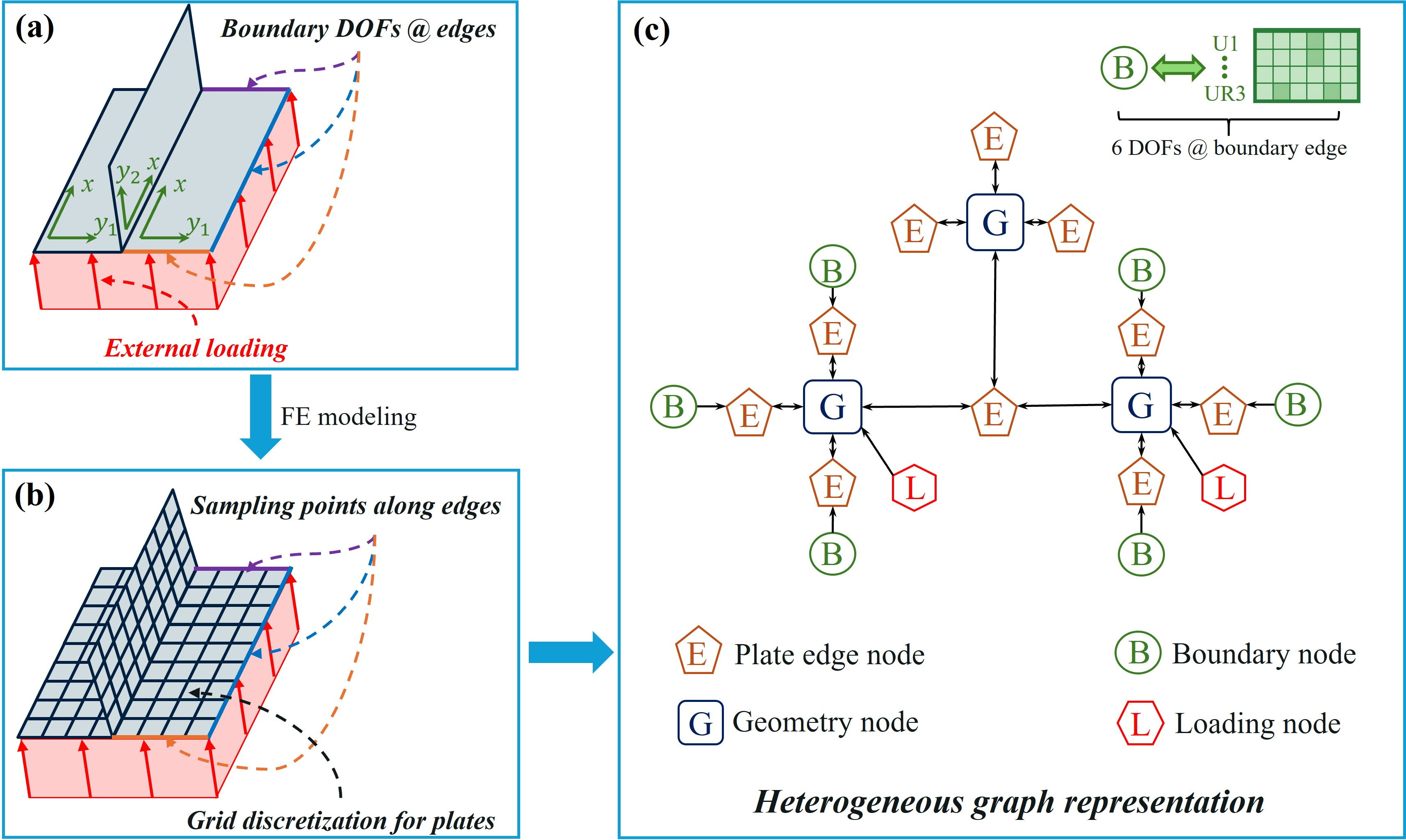
Figure 1: Heterogeneous graph representation of a stiffened panel.
Edge State Initialization
Each edge node is represented as a latent sequence over boundary sampling points, encoded with edge type, position, and boundary kinematics. This initialization ensures explicit injection of physics, facilitating the recovery of spatially heterogeneous boundary effects.
Dual-Stream Message Passing
The architecture processes longitudinal (x) and transverse (y) plate directions as separate streams, shaped by two directional relation sets with cross-stream crosstalk. This decouples direction-dependent response while enabling synaptic exchange across streams, addressing anisotropic field behavior.
FiLM Conditioning and Spectral Convolution
Geometry and loading are modulated via FiLM, directly affecting edge state sequences. Each stream is updated via 1-D spectral convolution blocks, motivated by Fourier Neural Operators (FNO/LPFNO), enabling long-range spatial coupling, multi-scale field reconstruction, and task-adaptive feature transformation.
Spectral–Bypass Low-Rank Readout
Final field prediction leverages a spectral-bypass readout—combining truncated Fourier bases with local interpolation—followed by an outer-product low-rank decoder for field reconstruction. This mitigates over-smoothing and allows for detailed recovery of both global and localized features.
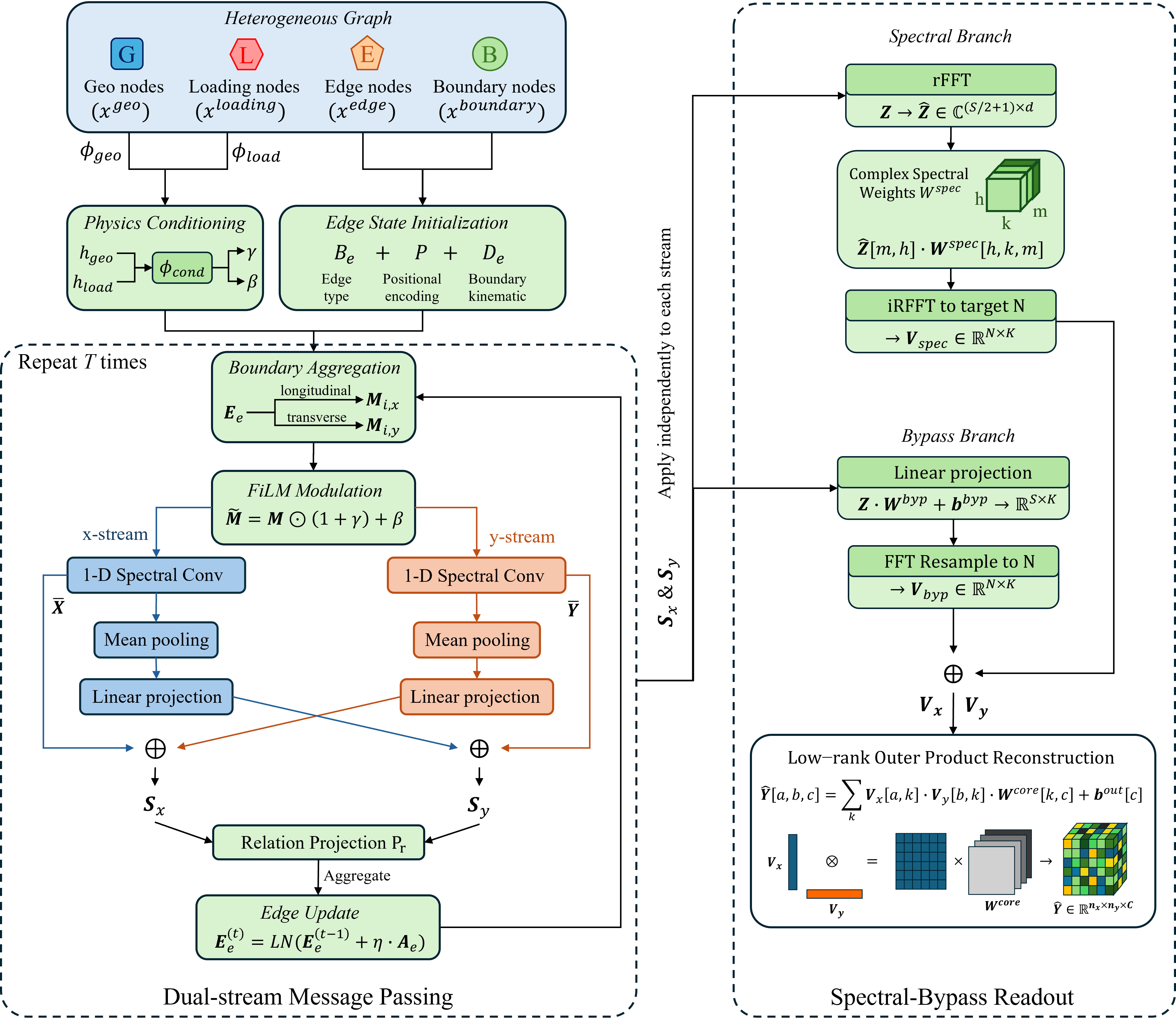
Figure 2: Overview of the DS-HGNN architecture, highlighting edge initialization, dual-stream processing, FiLM modulation, spectral convolution, crosstalk, and outer-product decoding.
Data Preparation
Training and evaluation are performed on panel datasets extracted from three box beam structural cases featuring a wide range of geometries, boundary states, loading types, and material nonlinearities. The panels are represented as heterogeneous graphs, with canonical-grid output for stress and displacement fields. Material models are elastic-plastic steel, with clear representation of yield and post-yield response.
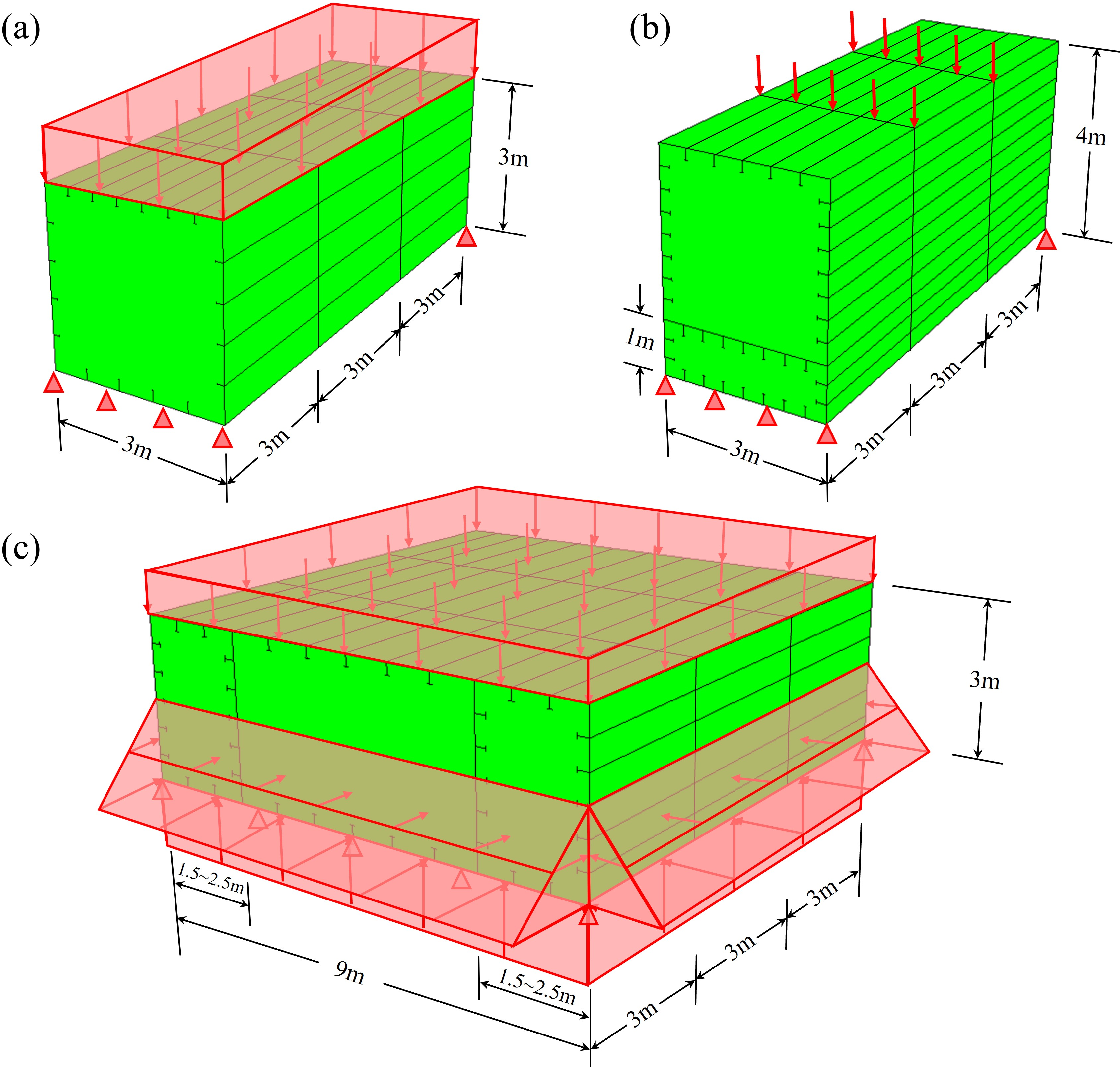
Figure 3: Box beam geometries, loading, and boundary conditions for dataset generation.
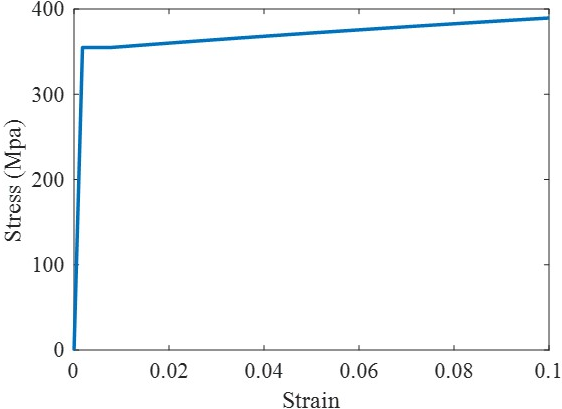
Figure 4: Elastic–plastic steel stress–strain curve used for nonlinear panel behavior.
Experimental Results
Benchmark Comparison
DS-HGNN outperforms six HGNN baselines (RGCN, HINormer, HGT, HeteroConv, SeHGNN, HAN) in standardized RMSE, physical-unit RMSE, and NRMSE. For stress prediction, DS-HGNN achieves $0.140$ standardized RMSE ($6.89$ MPa), a 19.4% reduction over RGCN. For displacement, $0.0889$ ($1.18$ mm), a 31.2% reduction over HINormer. HAN is found inadequate for this domain due to poor attention aggregation on complex relation types.
Sample Efficiency
DS-HGNN matches top benchmarks using 19%–38% fewer FEA samples—critical for expensive data environments.
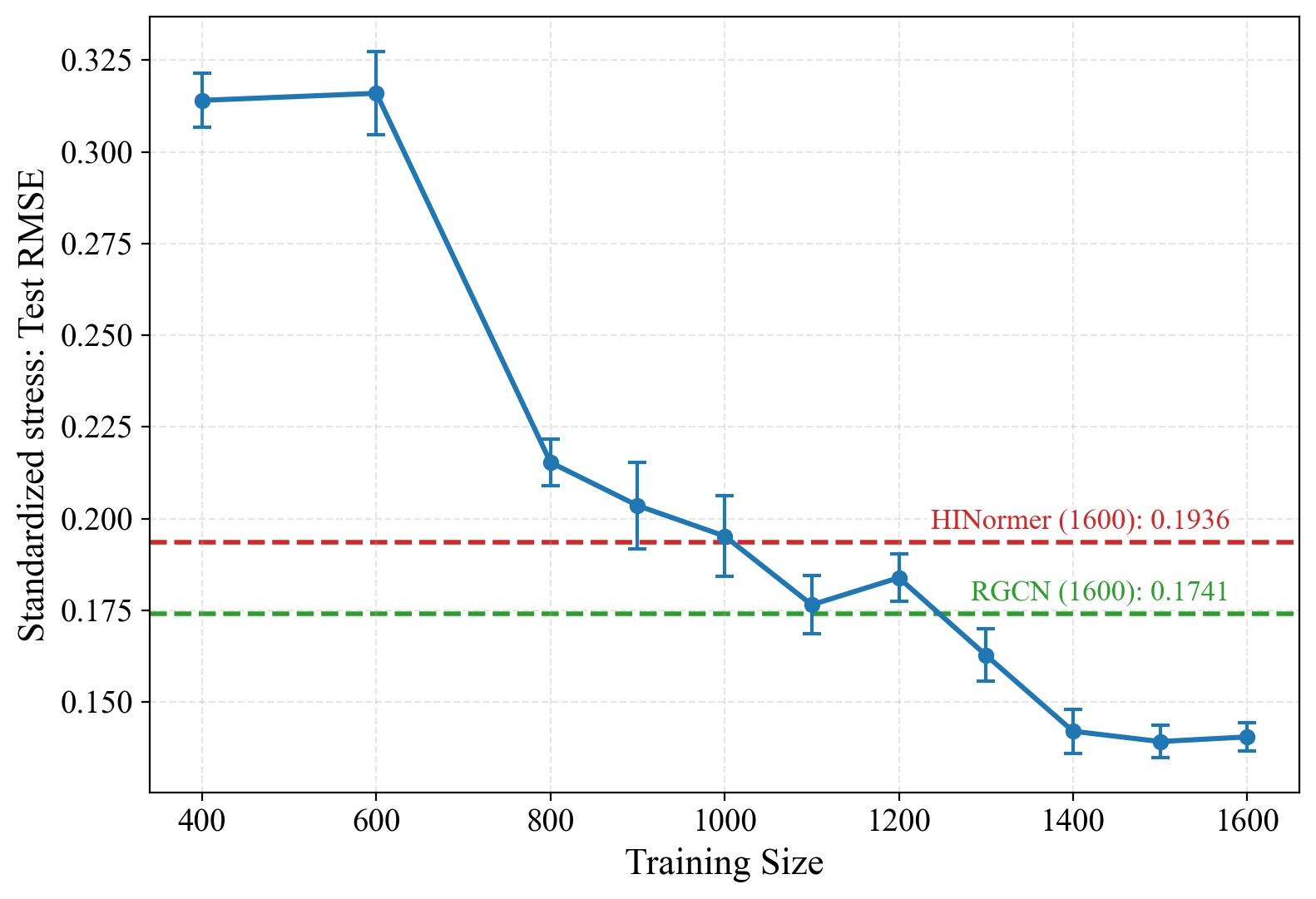
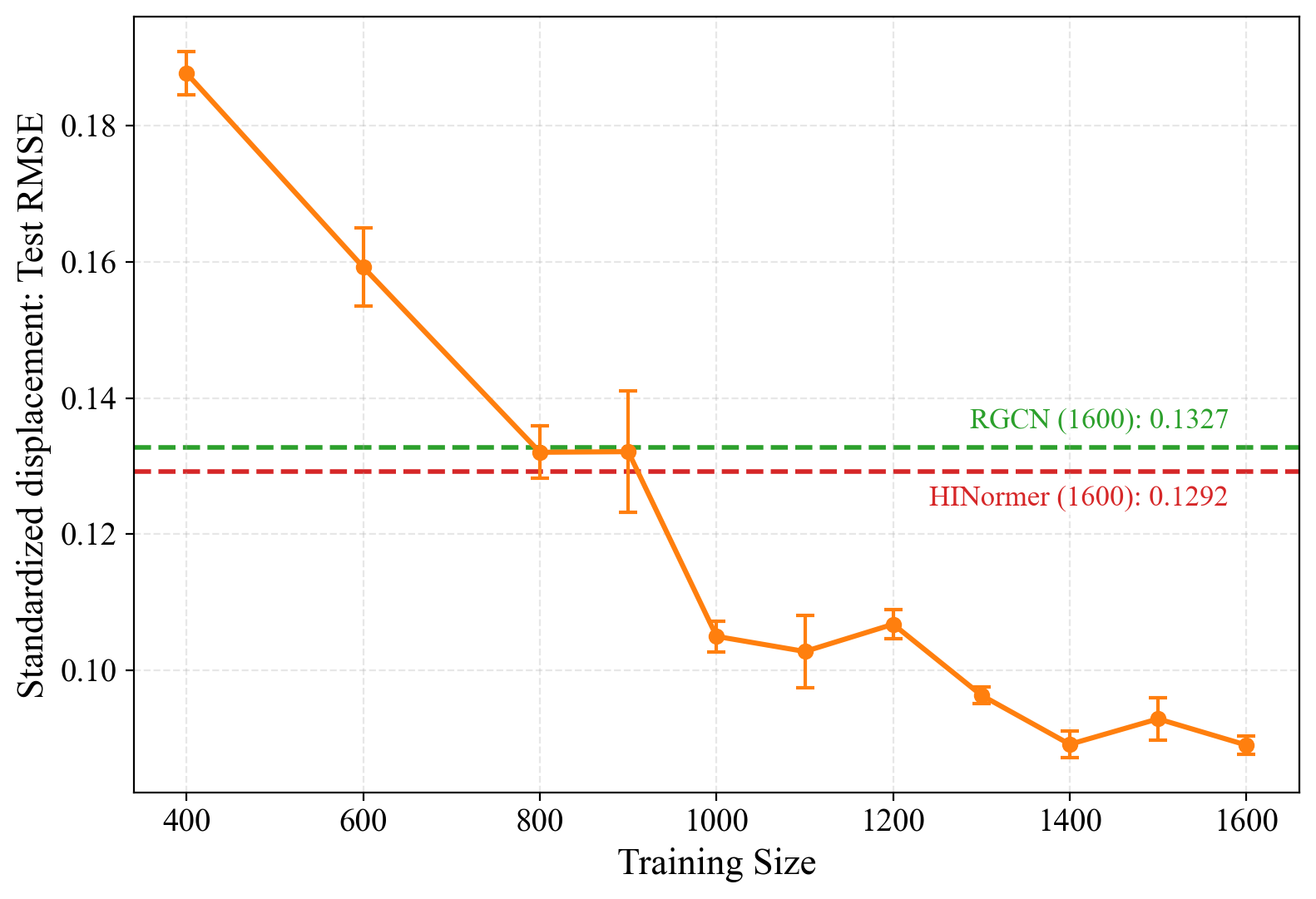
Figure 5: DS-HGNN test RMSE as a function of training set size, illustrating sample efficiency versus RGCN and HINormer.
Architectural Ablations
FiLM conditioning proves indispensable (y0 RMSE when removed); removing spectral or bypass branches and crosstalk also significantly impairs accuracy, confirming the necessity of each architectural element.
Hyperparameter Optimization
Optuna search delineates task-dependent optimal settings: more readout bases and Fourier modes for stress, fewer for displacement, deep message passing (y1), and minimal regularization. This substantiates the architectural flexibility and adaptability of DS-HGNN.
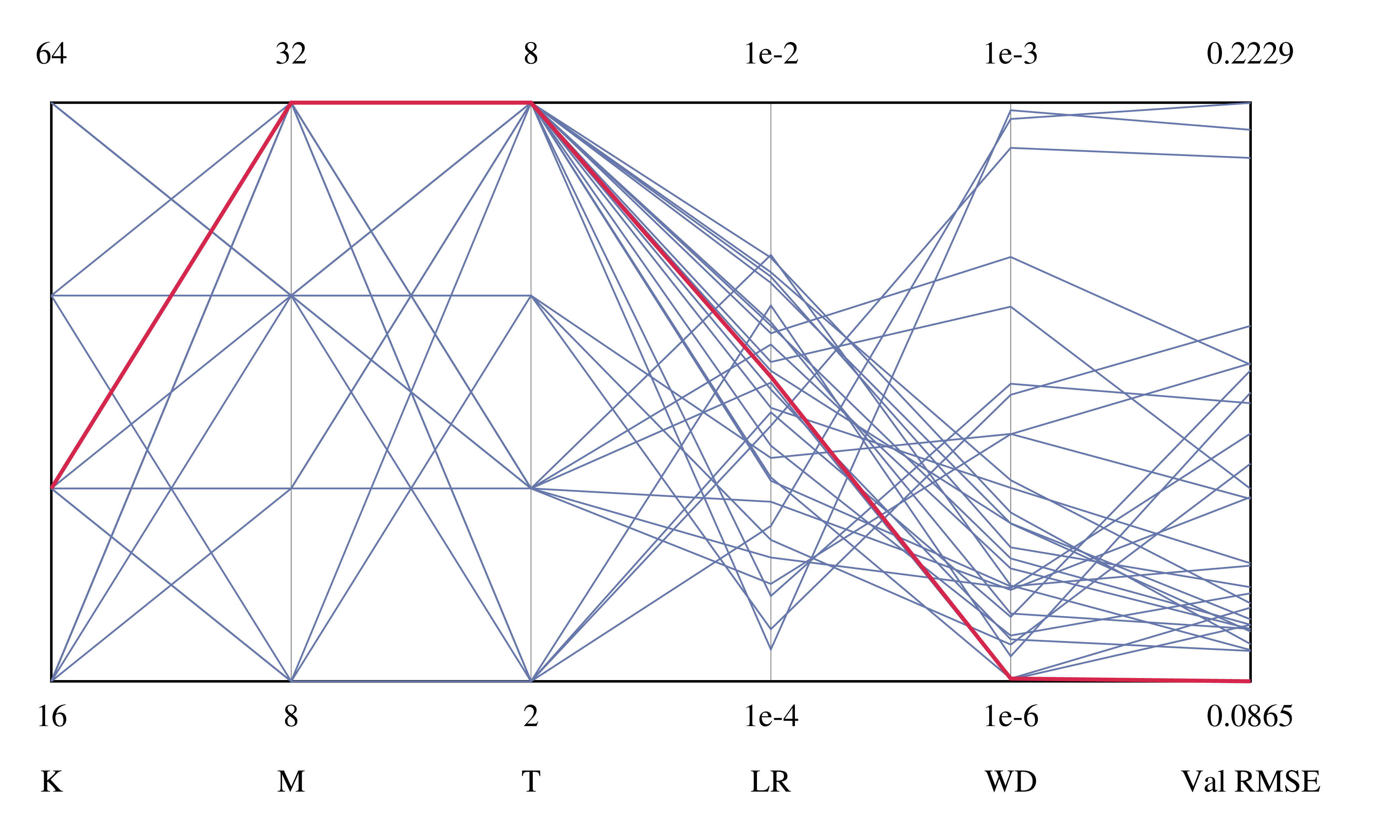
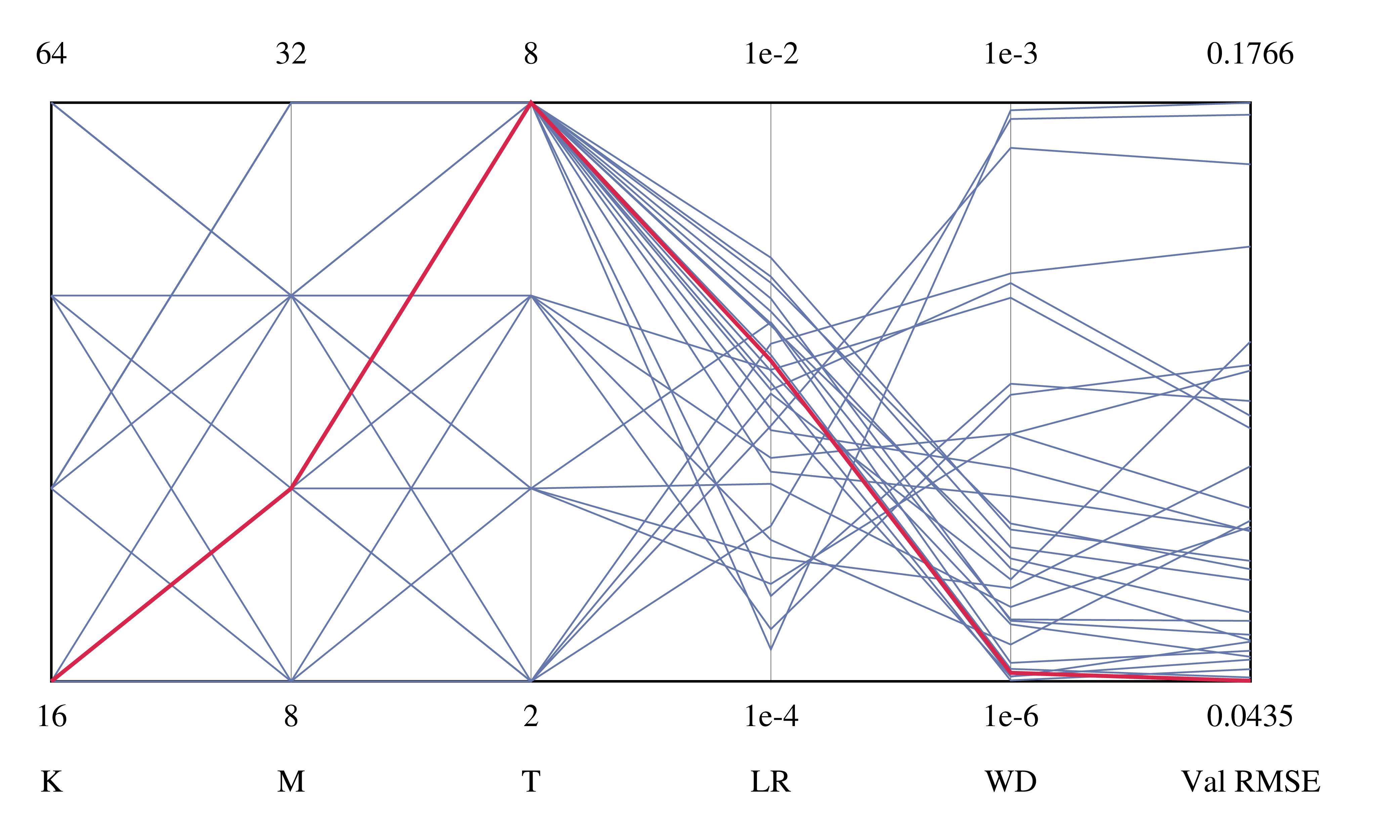
Figure 6: Parallel coordinates plot from hyperparameter search, highlighting task-specific sensitivities.
Qualitative Panel Prediction
In panel-level evaluations, DS-HGNN accurately captures both displacement and stress fields across diverse loading and boundary scenarios, including panels exhibiting strong material nonlinearity. Performance in challenging yielded regions demonstrates explicit capture of yield plateau and post-yield stress features.
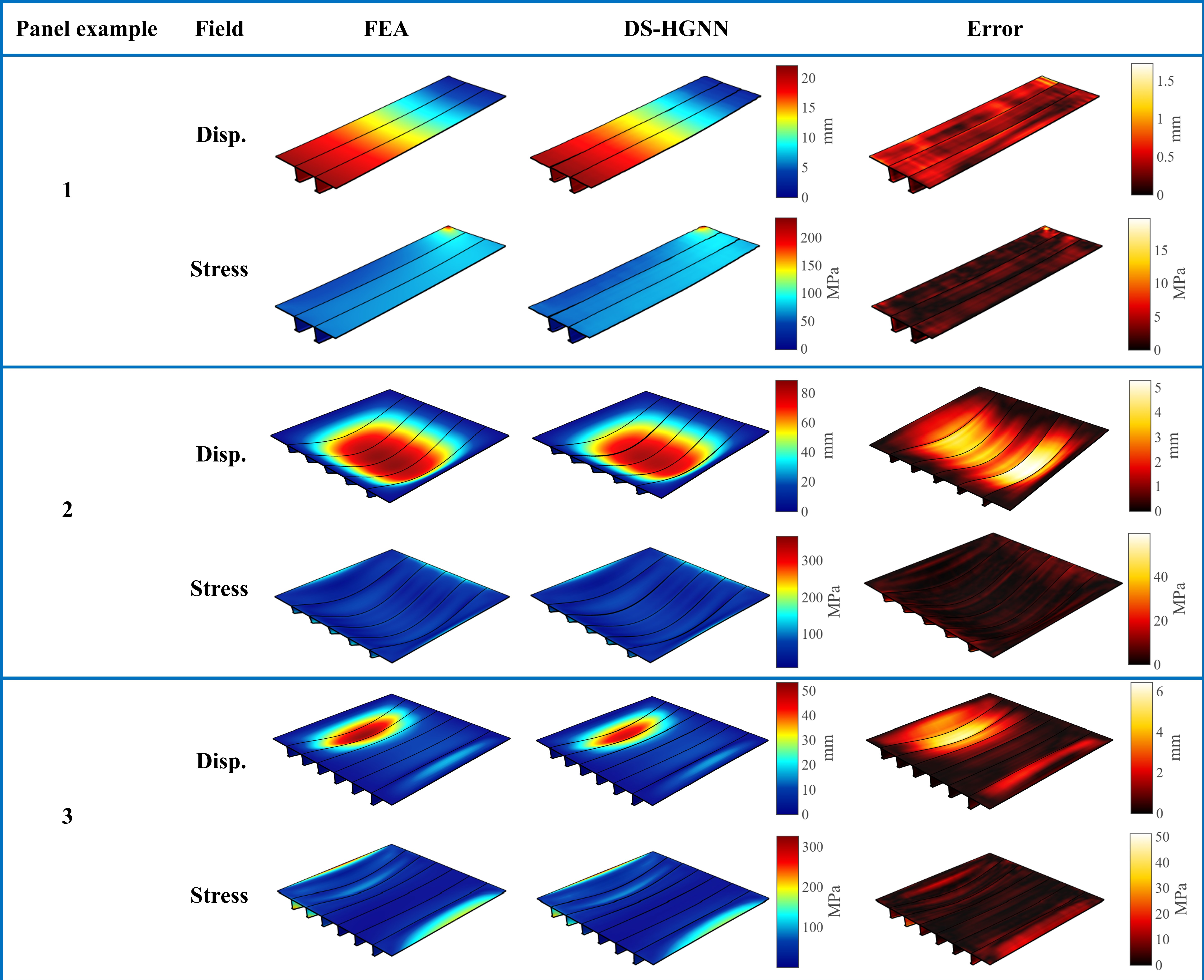
Figure 7: Comparison of predicted stress/displacement fields versus FEA for representative panels.
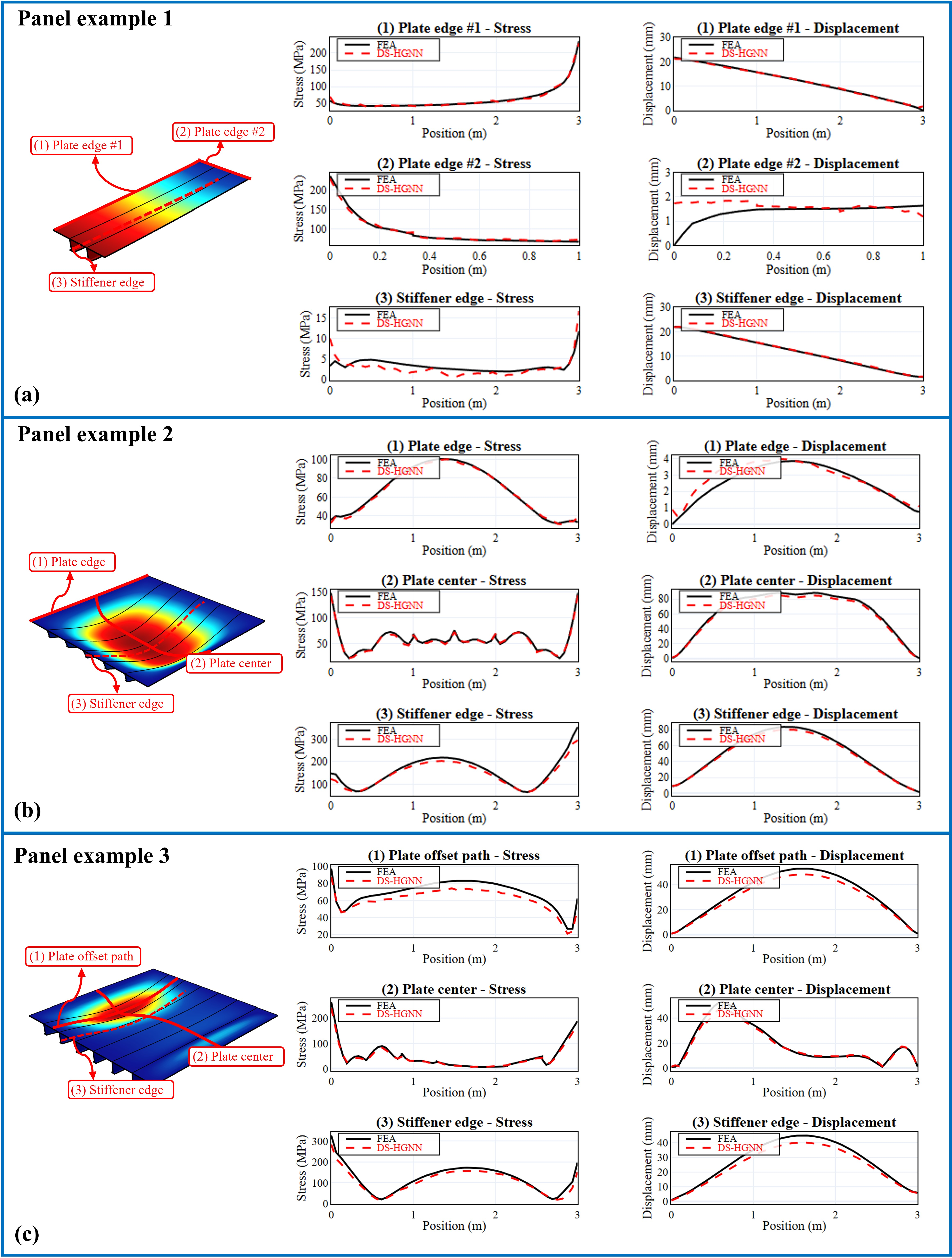
Figure 8: Line comparisons of stress/displacement profiles along typical paths.
Nonlinear Behavior
In datasets composed predominantly of panels exhibiting plasticity (y2), DS-HGNN retains lowest error metrics, demonstrating superior efficacy in nonlinear regimes, surpassing all benchmarks. Yield plateau and stress peaks are quantitatively and qualitatively reproduced.
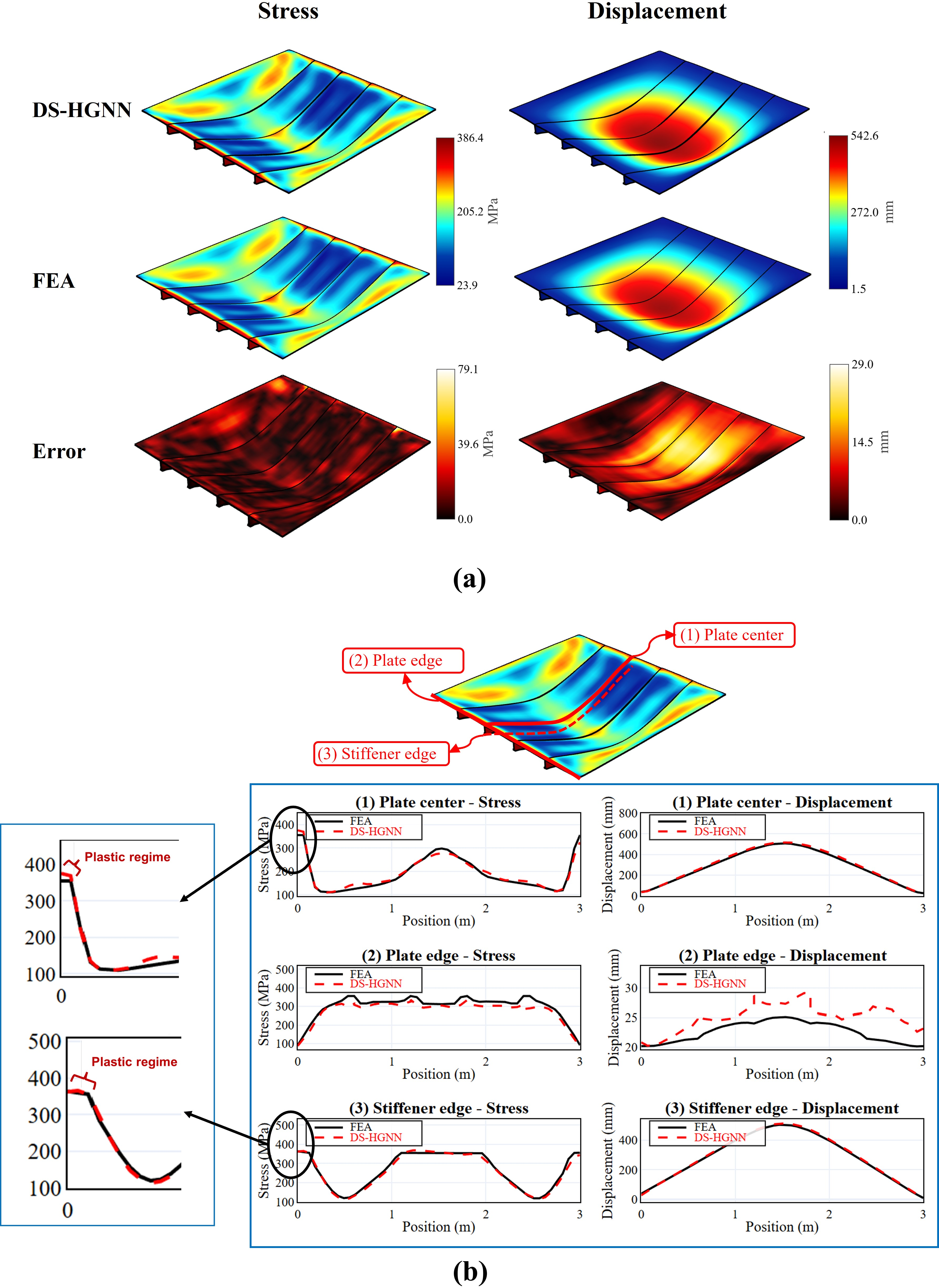
Figure 9: DS-HGNN prediction vs. FEA for a panel in the plastic regime, including stress plateau and post-yield features.
Implications and Future Directions
DS-HGNN establishes a paradigm for data-efficient surrogate modeling of full-field structural response in thin-walled panel assemblies, integrating explicit structural mechanics inductive biases. Practically, this enables orders-of-magnitude acceleration in iterative design and optimization workflows by replacing FEA with high-fidelity neural surrogates.
Theoretically, DS-HGNN’s dual-stream factorization and spectral readout demonstrate that physics-aware graph architectures significantly outperform generic HGNNs in domains with directional anisotropy and strong boundary effects. Future developments may include extension to large-deformation and buckling regimes, adaptation to solid structures with additional directional streams, and integration of semi-supervised or physics-constrained learning to further reduce required FEA data.
Conclusion
The DS-HGNN framework achieves superior accuracy and sample efficiency in full-field prediction for stiffened panel structures under diverse loading and boundary conditions. Its physics-guided edge state initialization, dual-stream message passing, FiLM modulation, and spectral–bypass low-rank readout collectively contribute to detailed reconstruction of elastic–plastic stress and displacement fields. The architecture is robust across both moderate and severely nonlinear regimes, offering strong practical utility for surrogate modeling and theoretical insight into graph-based physics-informed learning.

