- The paper develops an uncertain fixed-effects model for Latin square designs to rigorously handle imprecise or contaminated experimental data.
- The methodology integrates least squares, maximum likelihood, and least absolute deviation estimators to efficiently assess treatment effects and homoscedasticity.
- Numerical simulations show that LSE and LAD outperform MLE in stability and robustness, especially under noise and block-effect fluctuations.
Uncertain Fixed-Effects Modeling for Latin Square Designs: Statistical Estimation and Inference
Motivation and Background
The paper "Analysis of uncertain fixed-effects model for Latin square designs" (2606.20226) addresses the analytical gap in experimental design when observed data lack frequency stability and deviate from probabilistic expectations. Classical fixed-effects models, including those deployed in Latin square arrangements, are fundamentally limited in this context due to their reliance on assumptions underpinning probability theory. These limitations are especially problematic for experimental settings characterized by imprecise, subjective, or contaminated data, a reality common in domains such as education, agriculture, and engineering.
By leveraging uncertainty theory—which introduces uncertain measures satisfying normality, duality, subadditivity, and product axioms—the authors construct a fixed-effects modeling framework tailored for Latin square designs. This theoretical advance enables estimation and hypothesis testing in environments where classical statistical inference would be unreliable or inapplicable.
The core construct is an uncertain fixed-effects (UFE) model for a k×k Latin square design:
ylij=μ+τl+ai+bj+εlij
with ∑l=1kτl=0, ∑i=1kai=0, ∑j=1kbj=0, and εlij∼N(0,σ). Here, εlij is an uncertain variable, not a random variable, reflecting confidence-based distributions rather than empirical frequencies.
This model assumes independence between treatment, row, and column effects, and ignores their interactions, consistent with standard Latin square experimental practice. The disturbance term (error) is modeled as a normal uncertainty distribution, maintaining tractability under uncertainty theory.
Parameter Estimation Methodologies
Three estimation procedures are systematically formulated:
- Least Squares Estimation (LSE): Minimizes the expected squared deviation, yielding closed-form parameter estimators expressible via uncertain expectations. LSE achieves maximum efficiency under structured data with low contamination.
- Maximum Likelihood Estimation (MLE): Solves a Chebyshev regression problem, finding the parameter set that maximizes the joint confidence function. The optimization is posed as a linear program, and the resulting global scale parameter is tightly linked to the maximum absolute residual.
- Least Absolute Deviation Estimation (LAD): Minimizes the expected absolute deviation, translated to an LP via discretization and auxiliary variables. LAD is robust, insensitive to outlier contamination and heavy-tailed disturbances.
Confidence intervals for effects are consistently defined via the inverse uncertainty distribution, Ψ−1(α), with explicit dependence on estimated location and scale parameters.
Homogeneity Testing and Hypothesis Procedures
The paper introduces comprehensive inferential strategies for:
- Standard Deviation Homogeneity: Tests for heteroscedasticity across treatment, row, and column dimensions using abnormal deviation proportions.
- Treatment Effect Testing: Provides robust procedures for both homoscedastic and heteroscedastic scenarios, employing global or local standard deviations as warranted.
- Model Adequacy: Tests adequacy of disturbance distribution and regression fit via proportion of extreme residuals beyond acceptance thresholds.
These protocols allow practitioners to dynamically select the appropriate inferential pathway based on empirical data characteristics.
Numerical Simulation: Comparative Robustness and Efficiency
In extensive simulations, the authors evaluate estimation methods under three scenarios:
- Sensitivity Analysis (Noise Level): All methods maintain unbiasedness as noise increases, but LSE achieves the lowest mean squared error and most stable point estimation. MLE's confidence intervals become excessively inflated under high noise.
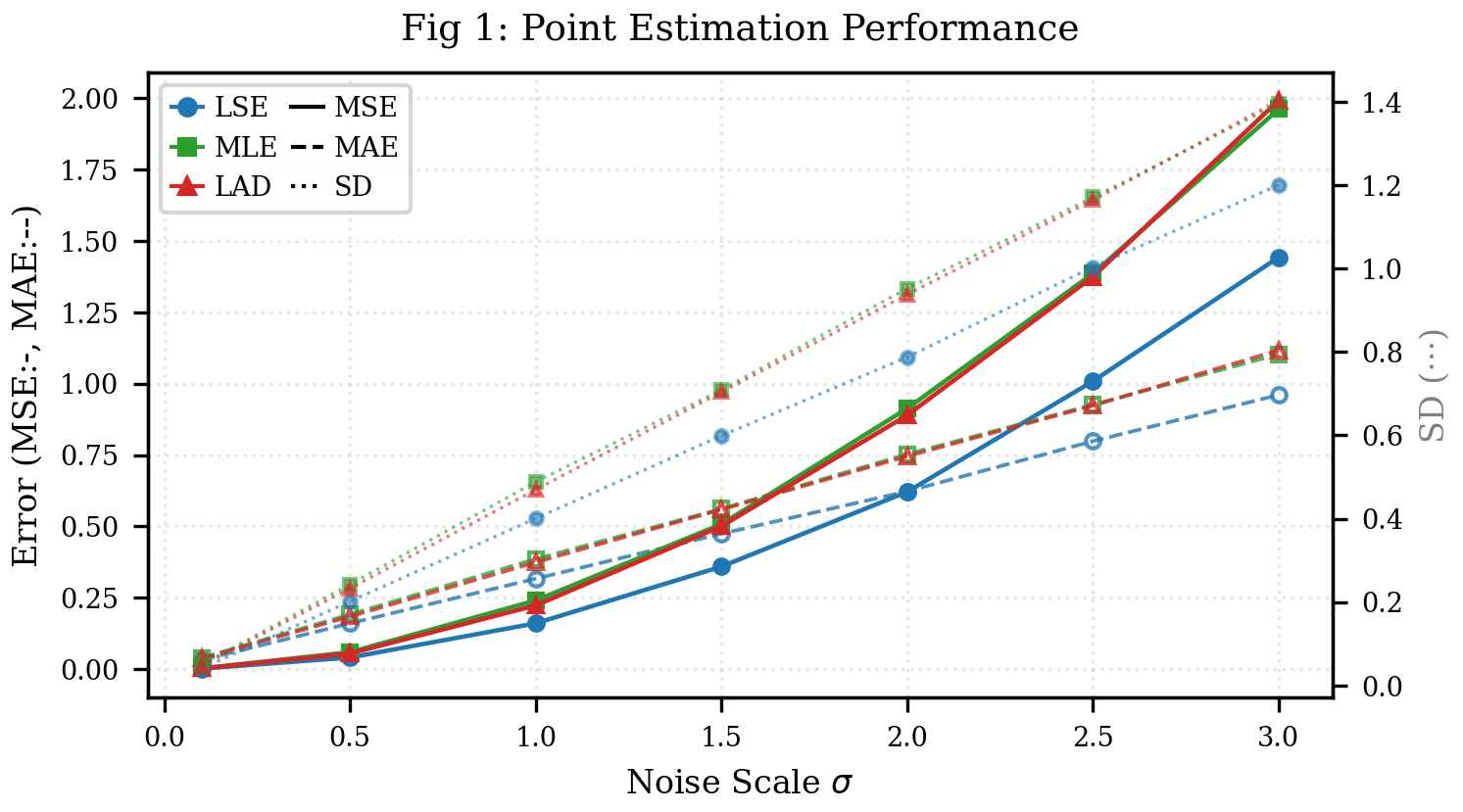
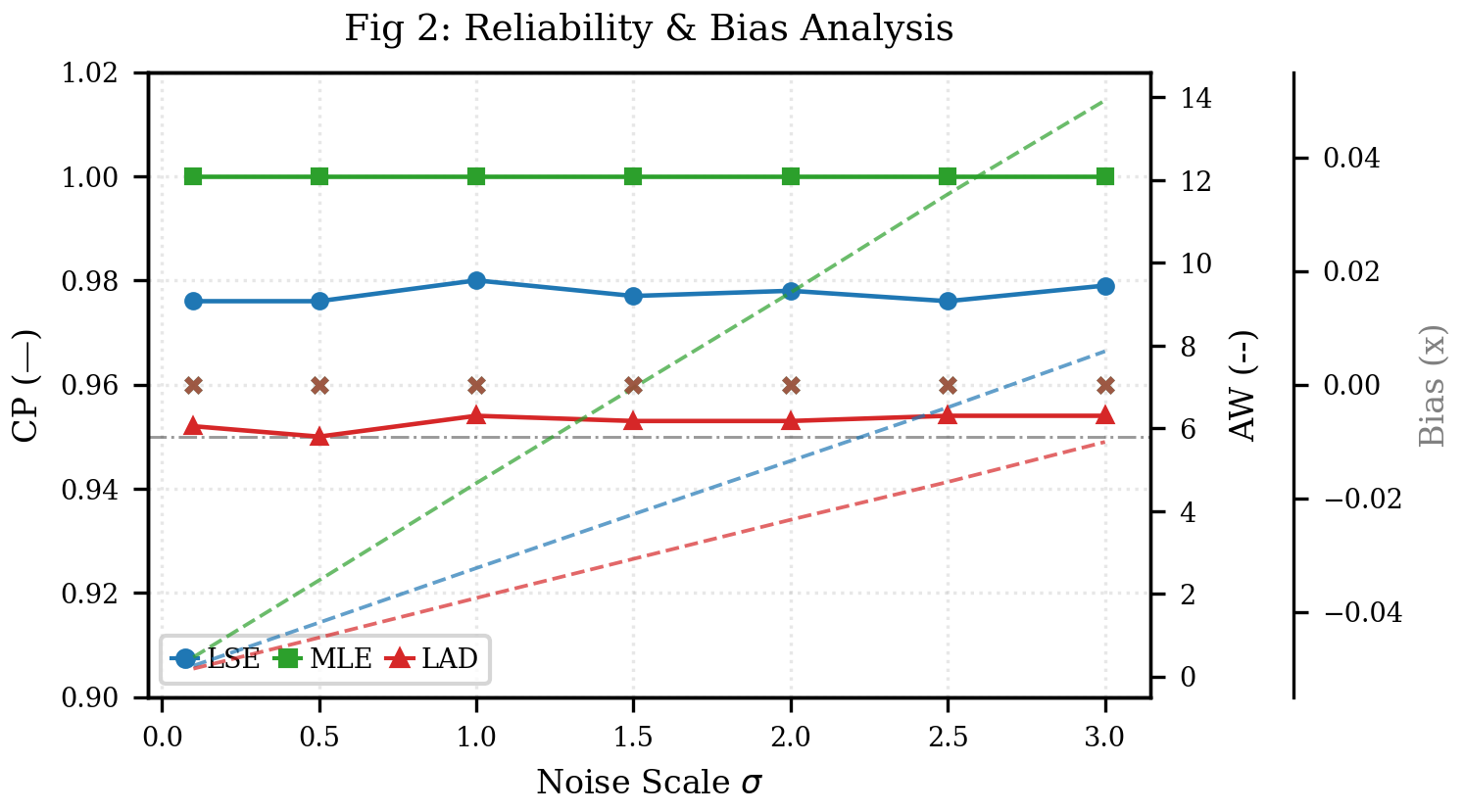
Figure 1: Comprehensive performance comparison of the three estimation methods under varying noise levels.
- Contaminated Data Robustness: LAD exhibits marked superiority over LSE and MLE in presence of outlier contamination, maintaining low MSE and narrow confidence intervals with coverage close to nominal levels. MLE suffers substantial interval inflation.
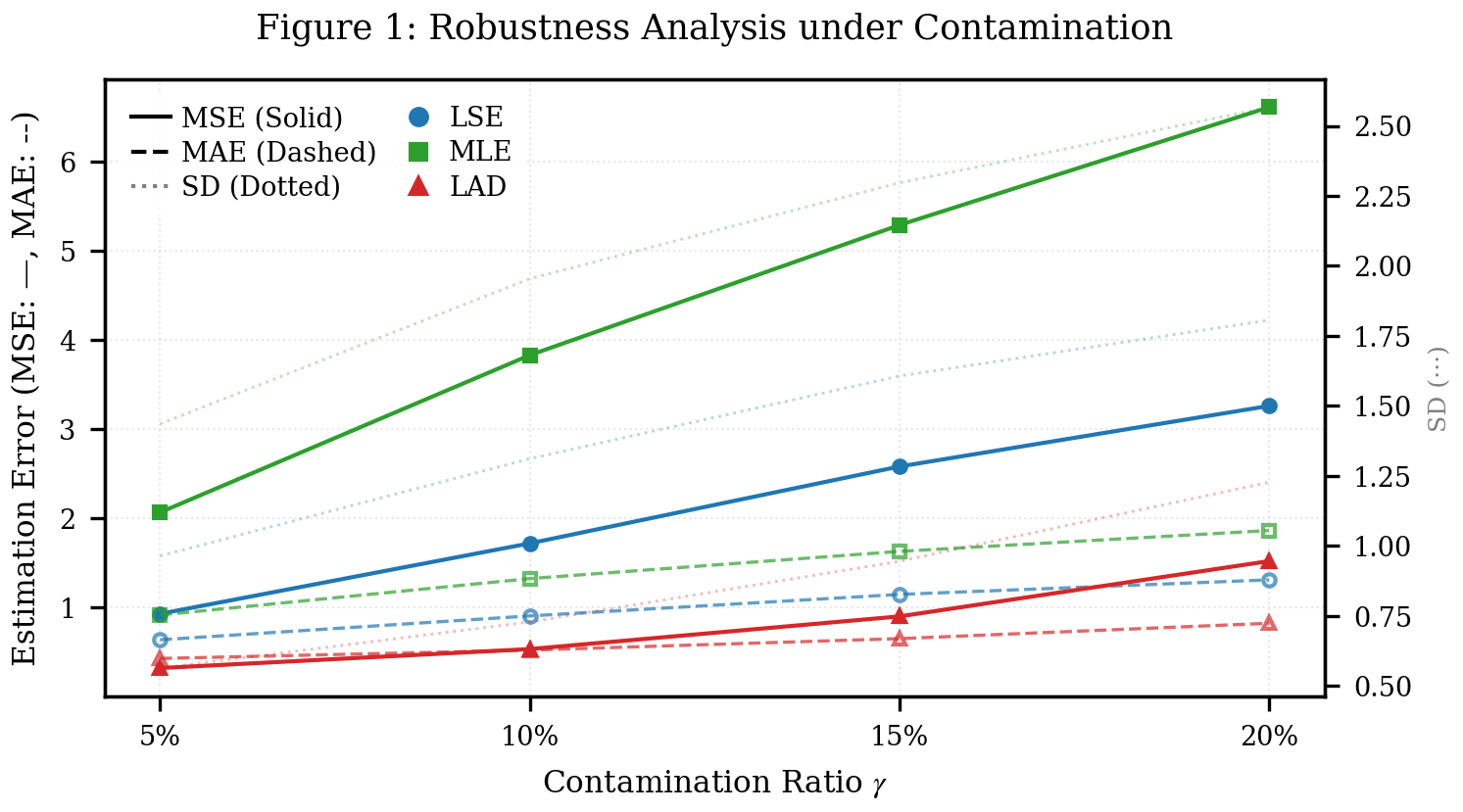
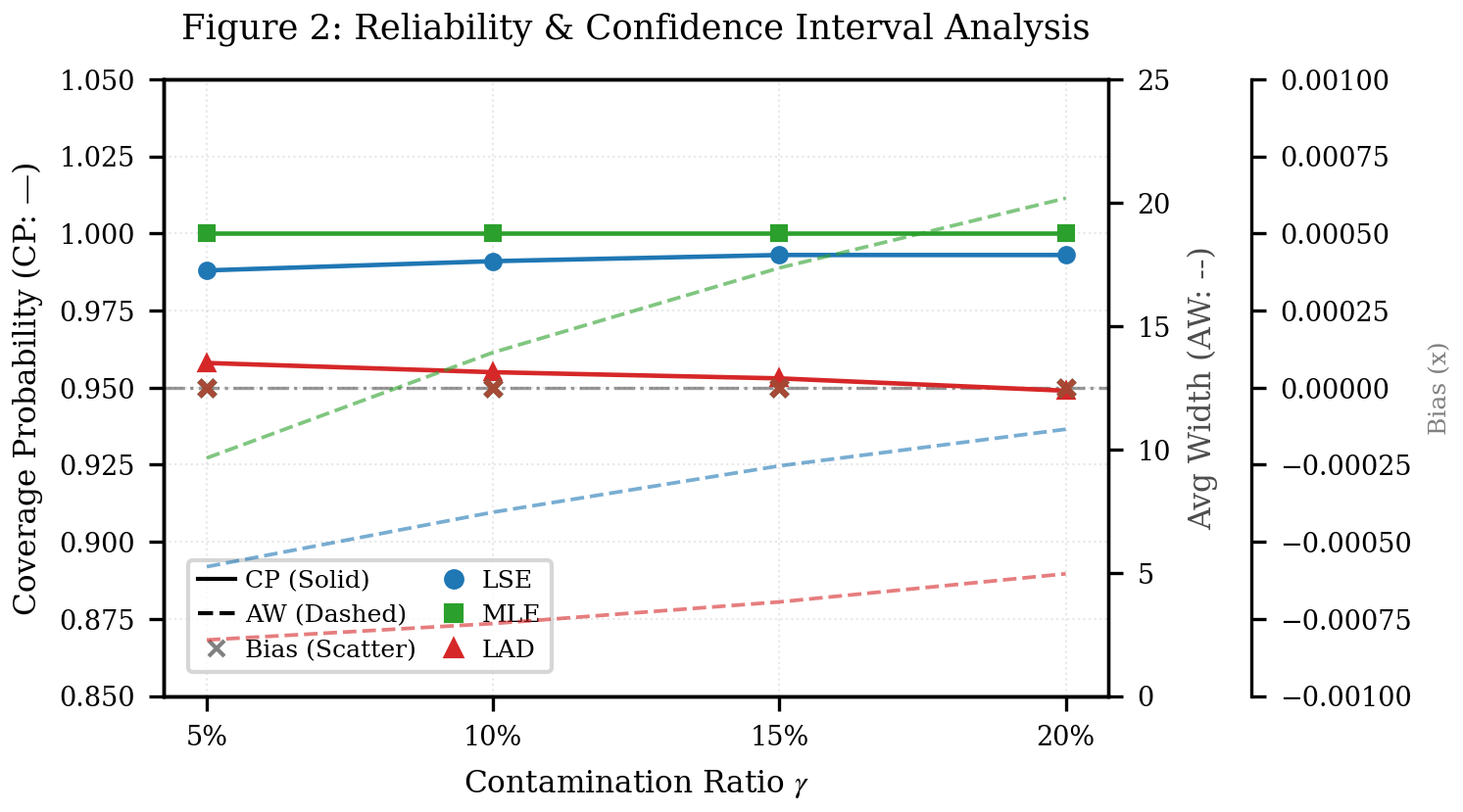
Figure 2: Comparison of the three estimation methods under contaminated noise levels.
- Block-Effect Fluctuations: Under transitions between low- and high-volatility block effects, LSE retains strict unbiasedness and minimal MSE, while LAD ensures the most compact interval estimation and highest coverage efficiency. MLE's inferential conservatism degrades practical utility.
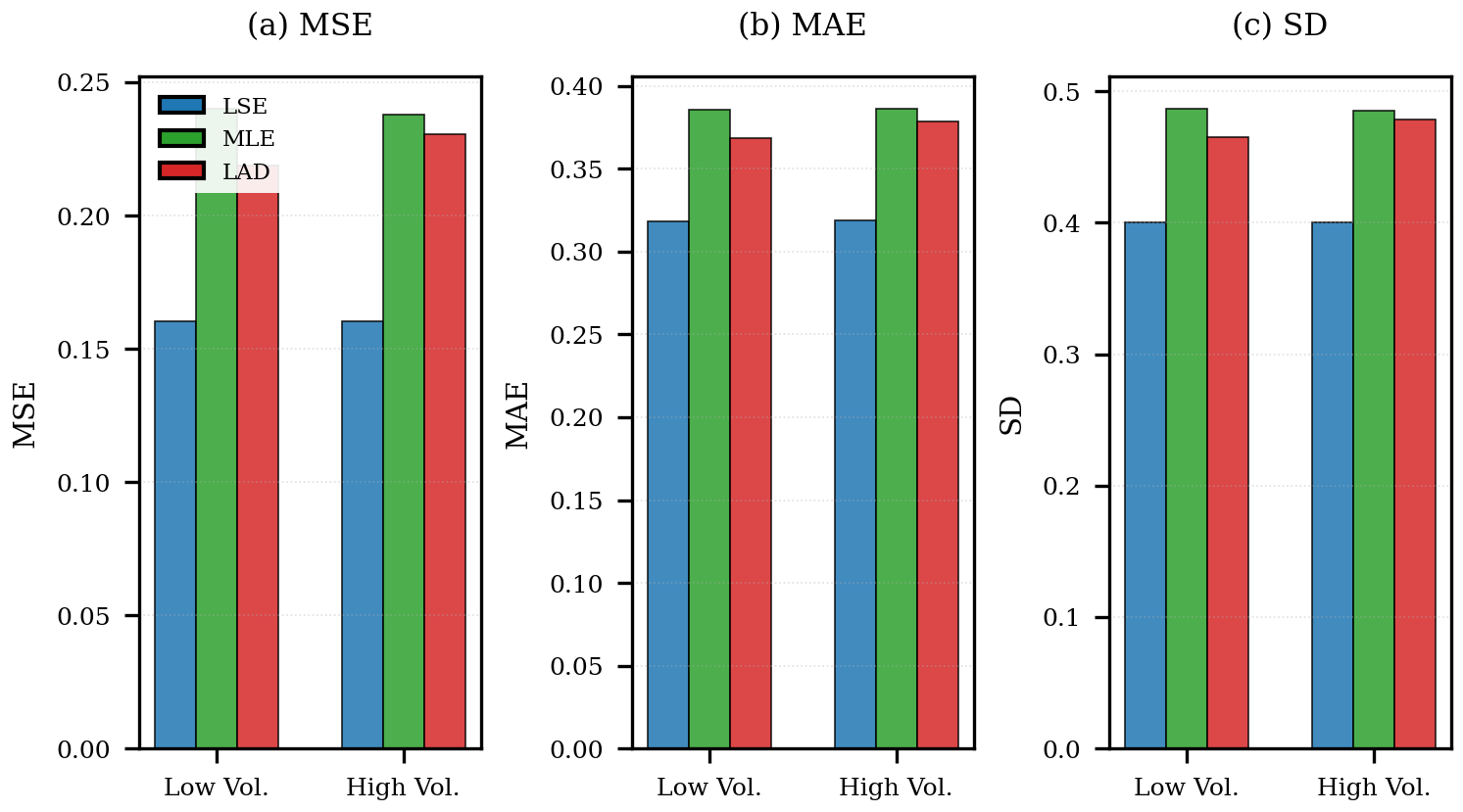
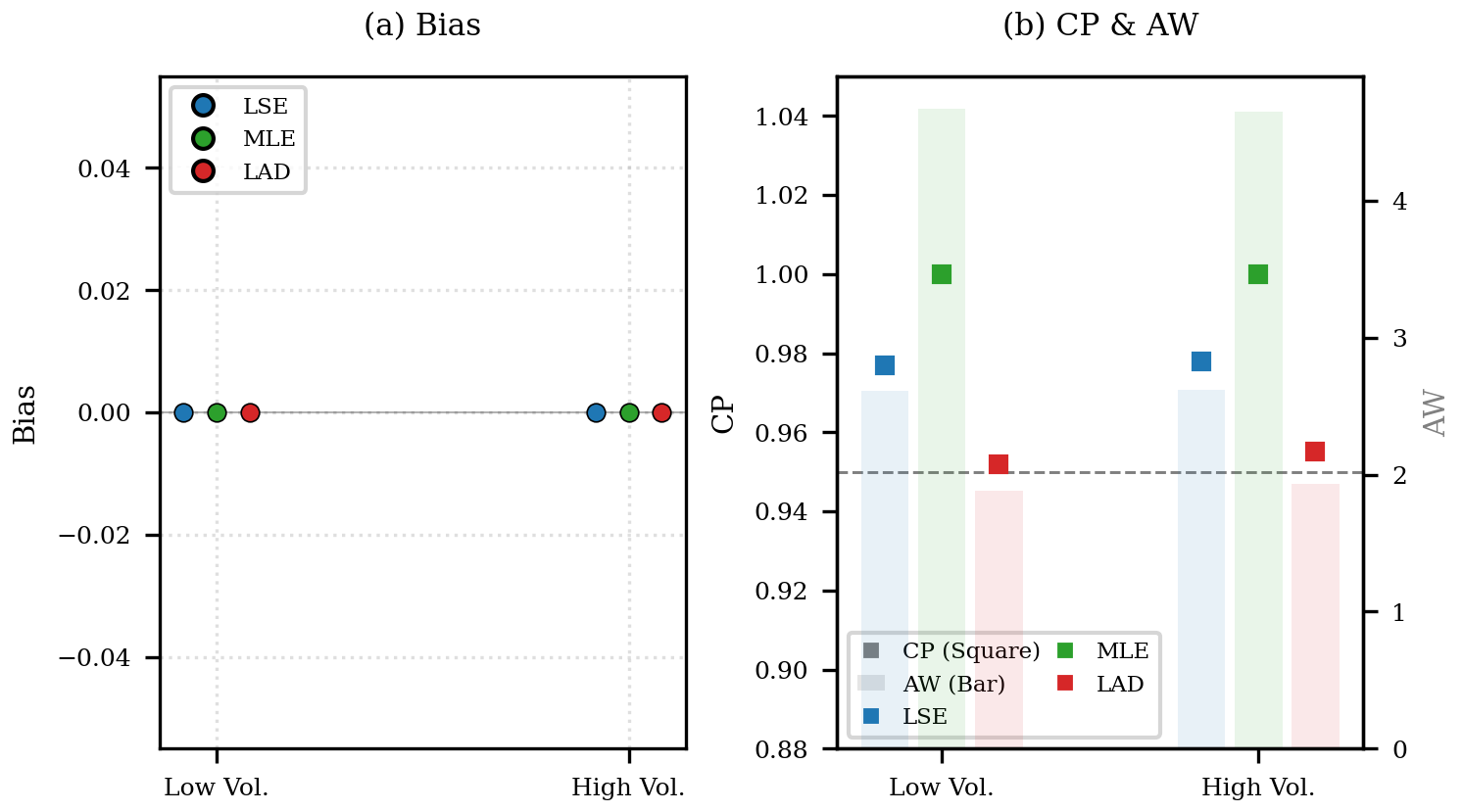
Figure 3: Estimation robustness under varying block-effect fluctuations, showcasing the superiority of LSE and LAD in stability and interval efficiency.
Empirical Demonstration and Case Analyses
Treatment effect testing is demonstrated on simulated and real educational datasets. In both settings, LSE and LAD reliably detect treatment heterogeneity, while MLE—prone to scale inflation and conservative acceptance regions—can fail to register significant effects.
Parameter estimates and scale diagnostics are tabulated for each method, with acceptance intervals for treatment effects corroborating the LAD and LSE conclusions regarding heteroscedasticity and treatment significance.
Practical and Theoretical Implications
The uncertain fixed-effects modeling approach extends classical Latin square analysis into the domain of uncertainty theory, enabling rigorous treatment of imprecise and unstable observational data. LSE is preferred for maximizing statistical efficiency in structured experiments with minimal contamination; LAD provides nonparametric robustness and efficient inferential coverage in contaminated or heavy-tailed scenarios.
Theoretical implications include the formal integration of uncertainty measures into experimental design inference, redefining parameter estimation protocols and hypothesis testing under subjective and incomplete information. Practically, the framework supports robust analysis for educational, agricultural, and engineering applications where classical stochastic assumptions do not hold.
Future Directions
Outstanding issues include adaptation to missing data, extension to more complex experimental arrangements (e.g., Graeco-Latin squares), and theoretical advancement in dynamic parameter updating within uncertain environments. Applications could broaden to recursive experimental design in time-evolving data and non-standard distributional contexts.
Conclusion
This study establishes a principled uncertain fixed-effects model for Latin square designs, advances robust estimation and inference protocols, and demonstrates the methodology's efficacy in both simulation and applied contexts. The approach provides foundational tools for experimental designs in environments characterized by uncertainty, supporting both theoretical expansion and practical deployment across diverse fields of inquiry.