- The paper identifies two warm Jupiters with significant eccentricities, determining precise mass, radius, and orbital parameters through combined TESS photometry and MaHPS radial velocity observations.
- It employs joint transit and RV modeling to reveal sub-Jovian densities and evidence for high-eccentricity migration driven by tidal heating.
- The study refines planet formation models by constraining envelope composition and migration histories, paving the way for future high-resolution atmospheric characterization.
Detection and Characterization of Two Eccentric Warm Jupiters: TOI-2147 b and TOI-6019 b
Introduction
The discovery and characterization of Jupiter-mass exoplanets with orbital periods between 10 and 200 days—so-called warm Jupiters (WJs)—provide key constraints on planetary migration and formation processes inaccessible via either hot Jupiters or the more quiescent population of cold giants. The paper "TOI-2147 b and TOI-6019 b: Two eccentric warm Jupiters detected and characterized with TESS and MaHPS" (2606.20224) presents the detection, mass and radius measurements, and detailed orbital characterization of two such transiting WJs. These planets, both with significant orbital eccentricities and sub-Jovian bulk densities, were identified in TESS photometric monitoring and subsequently confirmed and characterized through high-precision radial velocity (RV) observations from the Manfred Hirt Planet Finder Spectrograph (MaHPS), as well as by ground-based photometric and high-resolution imaging follow-up. The work addresses not only the properties of these planets but also their implications for migration scenarios and internal structure modeling.
Observational Data and Detection Methodology
Both TOI-2147 and TOI-6019 were independently flagged as planet candidates by TESS, displaying periodic transits in the processed light curves. To refine their ephemerides, rule out blend scenarios, and resolve photometric contamination given the large TESS pixel scale, the authors secured ground-based photometry across multiple observatories and filters. High-resolution speckle and diffraction-limited imaging established upper limits on nearby stellar contaminants for robust radius determination.
The planetary nature and dynamical state of these candidates was established with MaHPS, yielding precise RV measurements for both stars over several seasons. The joint transit+RV modeling utilized the juliet framework, incorporating priors from broadband SED modeling and spectroscopic analysis for stellar properties. The light curves and extracted photometry/RV timeseries are characterized by high S/N and cadence.
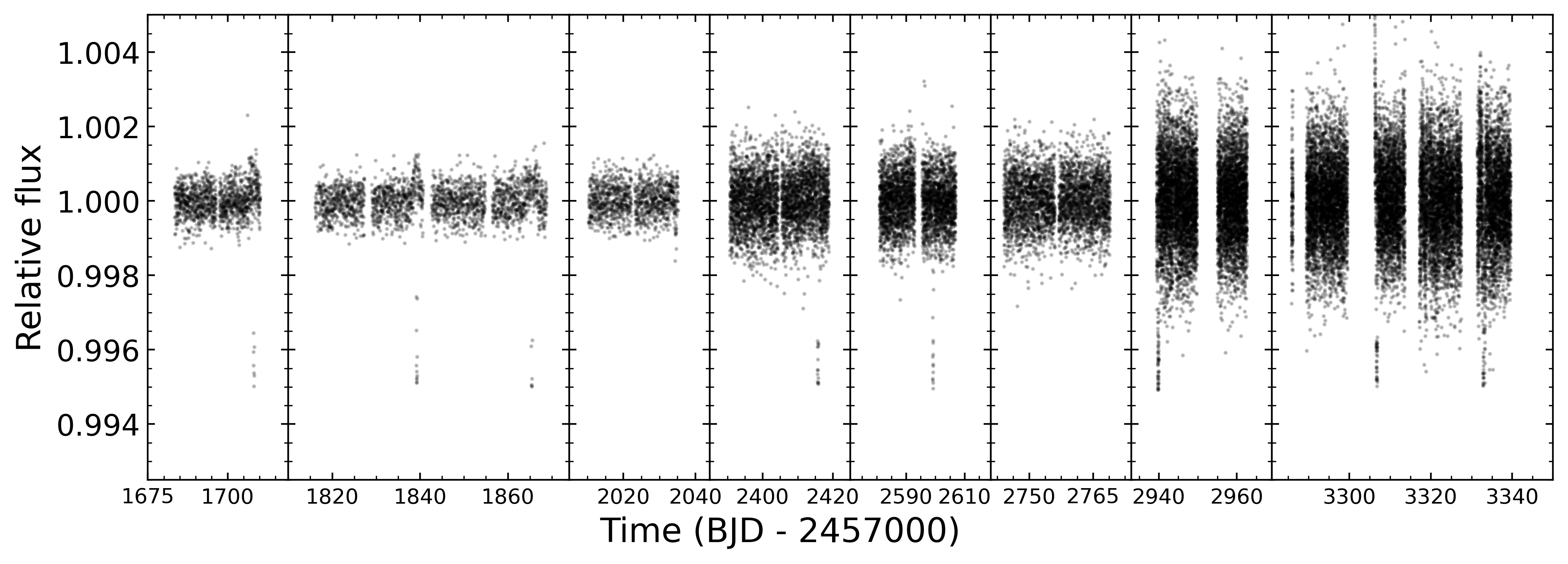
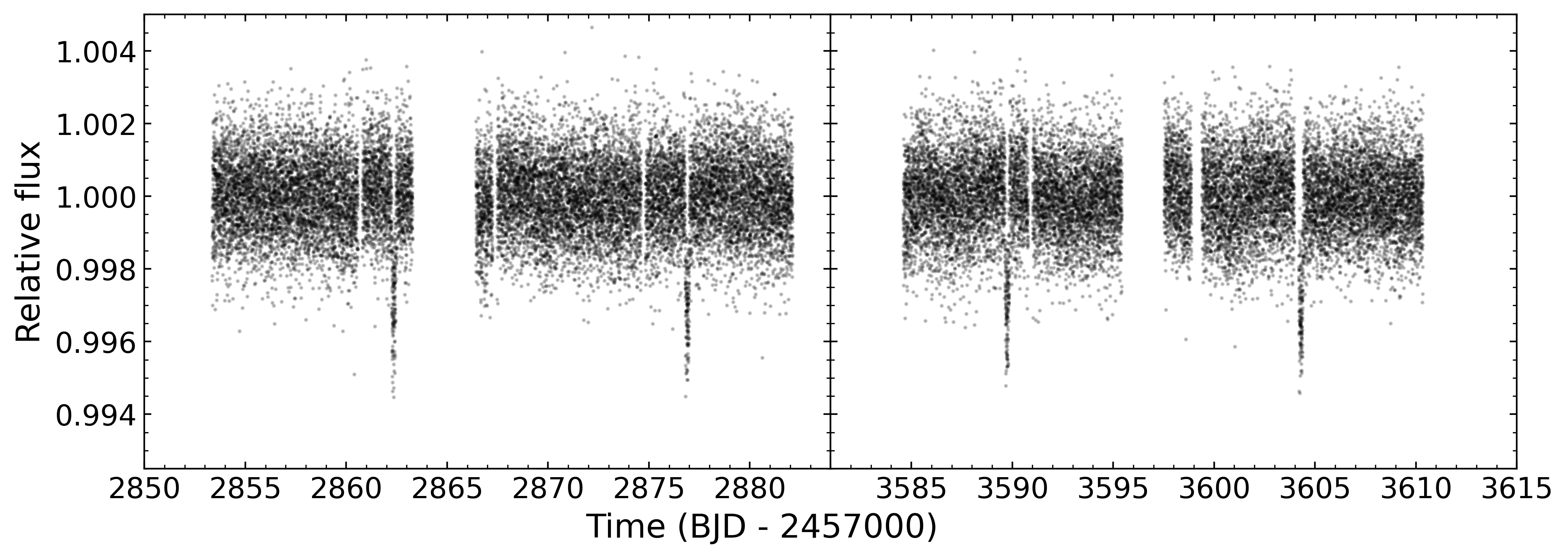
Figure 1: Pre-search Data Conditioning Simple Aperture Photometry (PDCSAP) from TESS light curves for TOI-2147 and TOI-6019, indicating robust periodic transits.
Planetary and Orbital Properties
The joint analysis revealed two inflated warm giants on eccentric short-period orbits. TOI-2147 b has radius 10.5±0.3 R⊕ and mass 116±22 M⊕, orbiting a metal-poor G star with period 26.2 d and eccentricity e=0.29±0.07. TOI-6019 b is more massive and larger (12.3±0.3 R⊕, 149±15 M⊕), orbiting a slightly evolved G-type subgiant every 14.5 d on a highly eccentric orbit e=0.48−0.04+0.05. The statistical evidence in favor of eccentric models in both cases is decisive (ΔlnZ=5 and $35$).
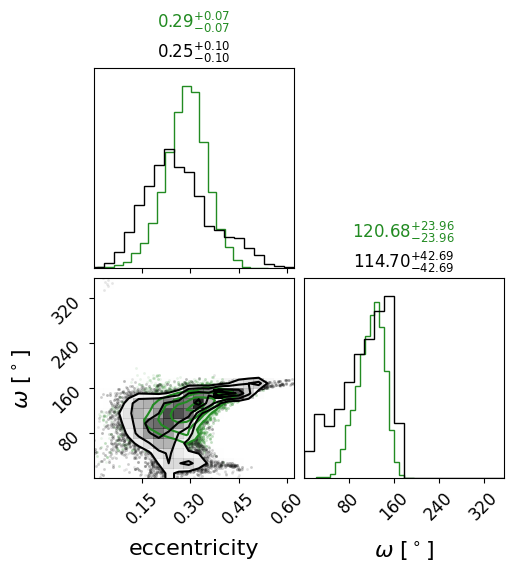
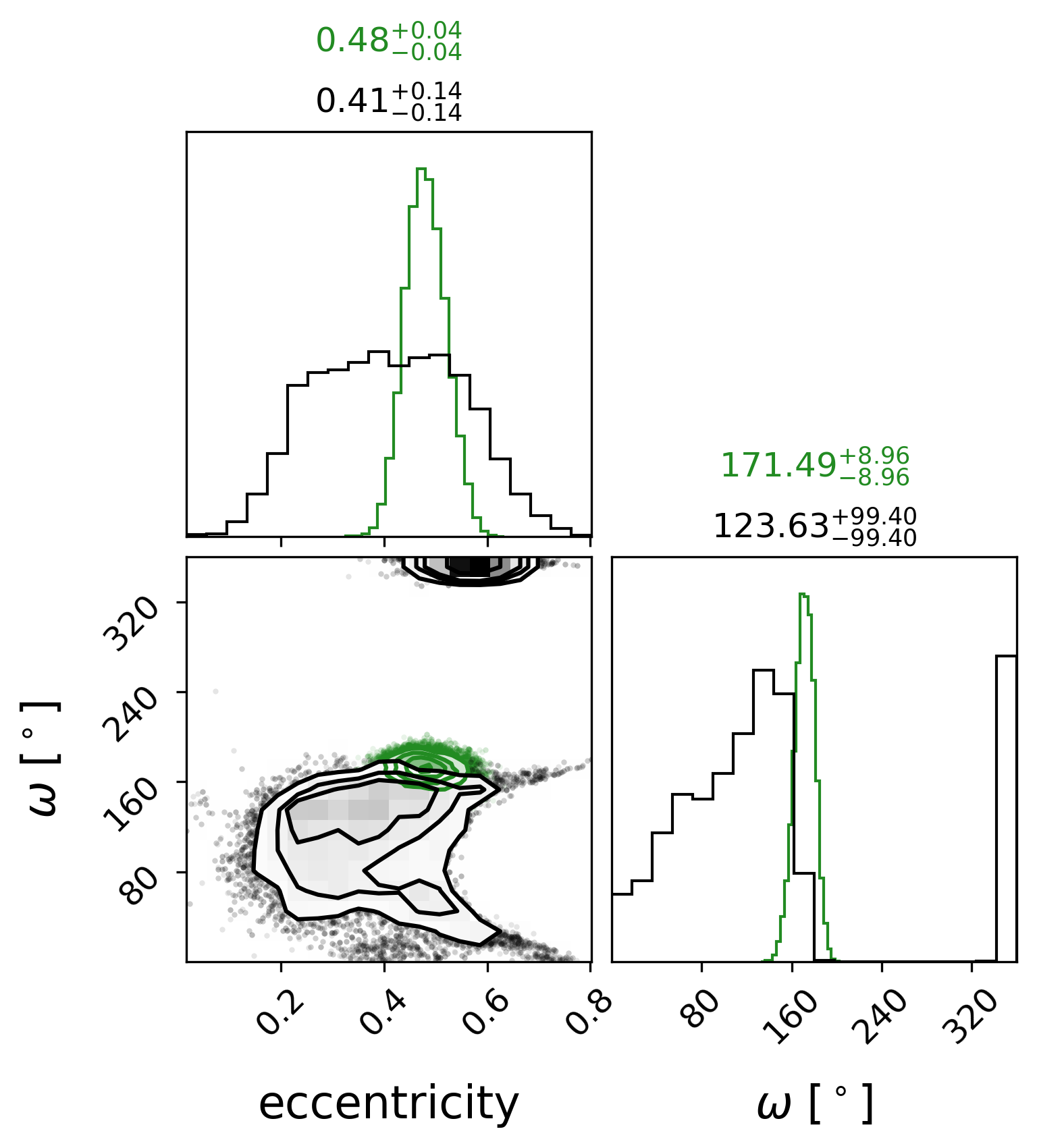
Figure 2: Posterior distributions for eccentricity and argument of periastron from TESS-only and joint photometry+RV fits, showing RV constraints decisively prefer nonzero eccentricity for both systems.
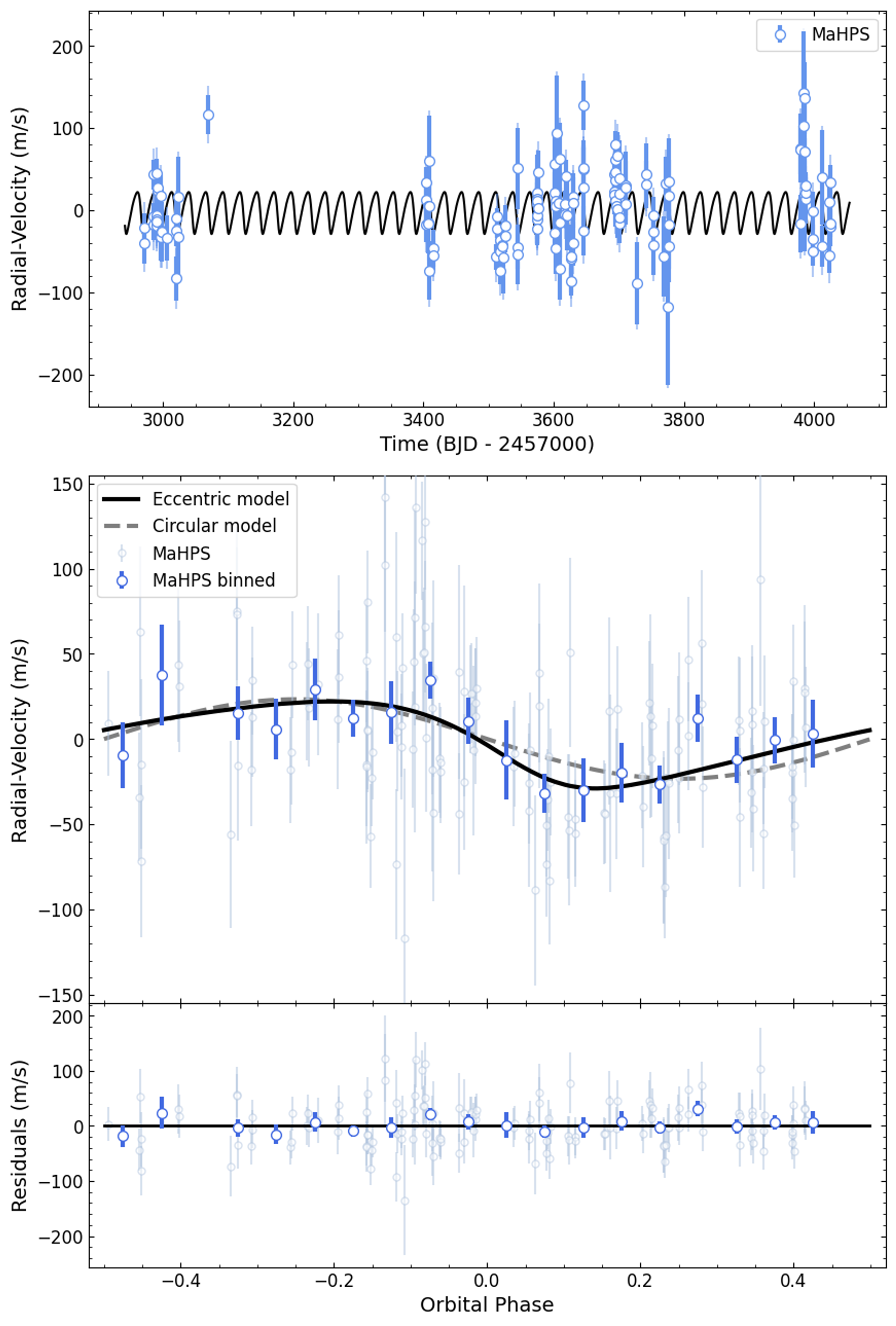
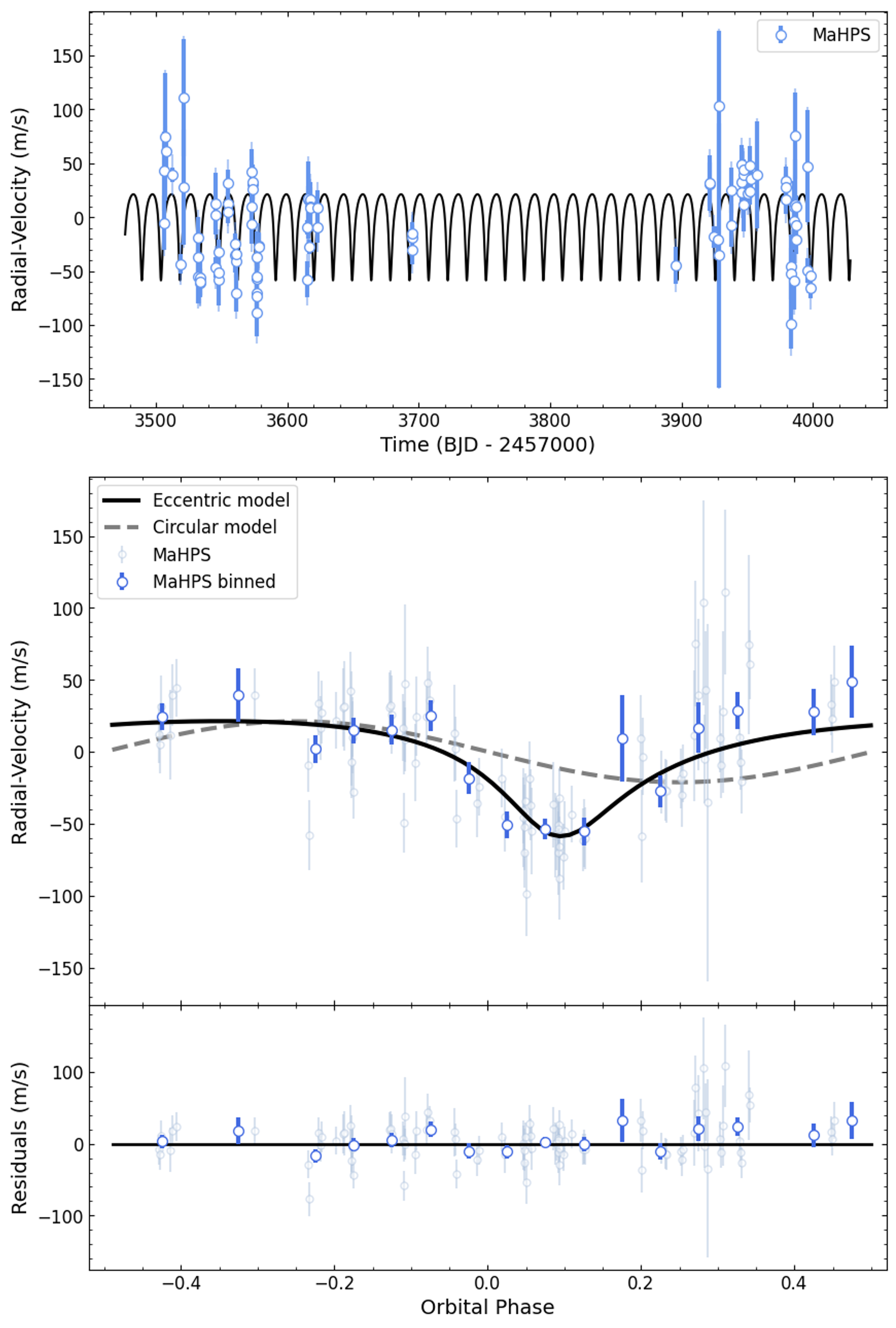
Figure 3: Radial velocity time series, phase-folded RV curves, and residuals for TOI-2147 (left) and TOI-6019 (right) with best-fit eccentric Keplerian models overplotted.
Both planets lie in the regime of sub-Jovian mean density (TOI-2147 b: 550±110 kg m−3; TOI-6019 b: 116±22 M⊕0 kg m116±22 M⊕1), suggesting envelope inflation without tidal destruction or Roche lobe overflow.
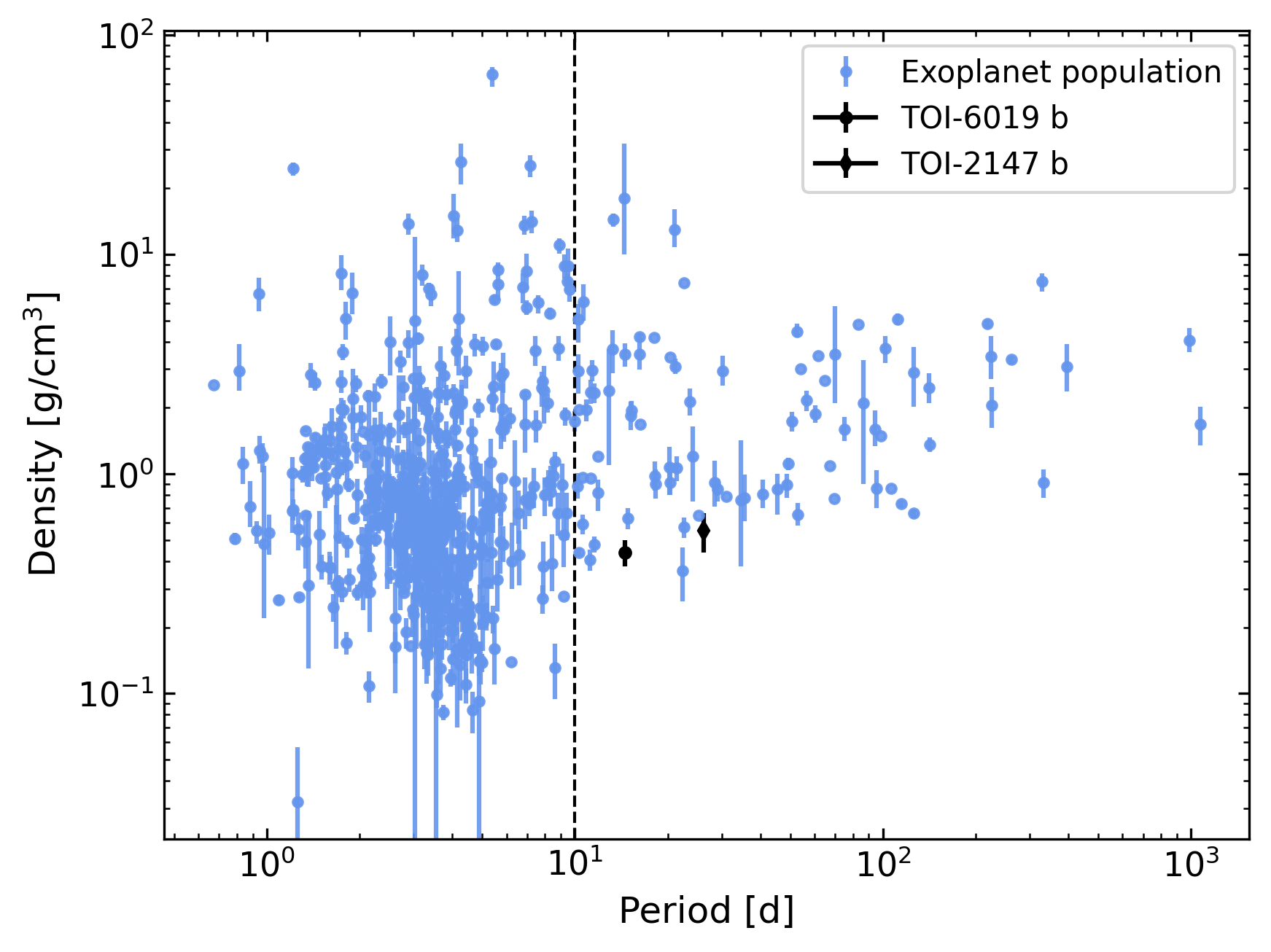
Figure 4: Density-period distribution for Saturn/Jupiter-mass planets with precise mass and radius constraints; TOI-2147 b and TOI-6019 b occupy the mildly inflated, moderately eccentric warm Jupiter locus.
Orbital Architectures and Migration Histories
Searches for additional planetary or massive stellar companions through RV periodograms and transit timing variation (TTV) analyses yielded null results, excepting a faint stellar companion near TOI-6019 but with too large contrast for significant contamination. In the context of the broader WJ population, the distinctly elevated eccentricities and apparently single-planet system architectures of both targets support dynamically-driven migration, most likely involving high-eccentricity excitation via scattering or Lidov-Kozai cycles followed by incomplete tidal circularization.
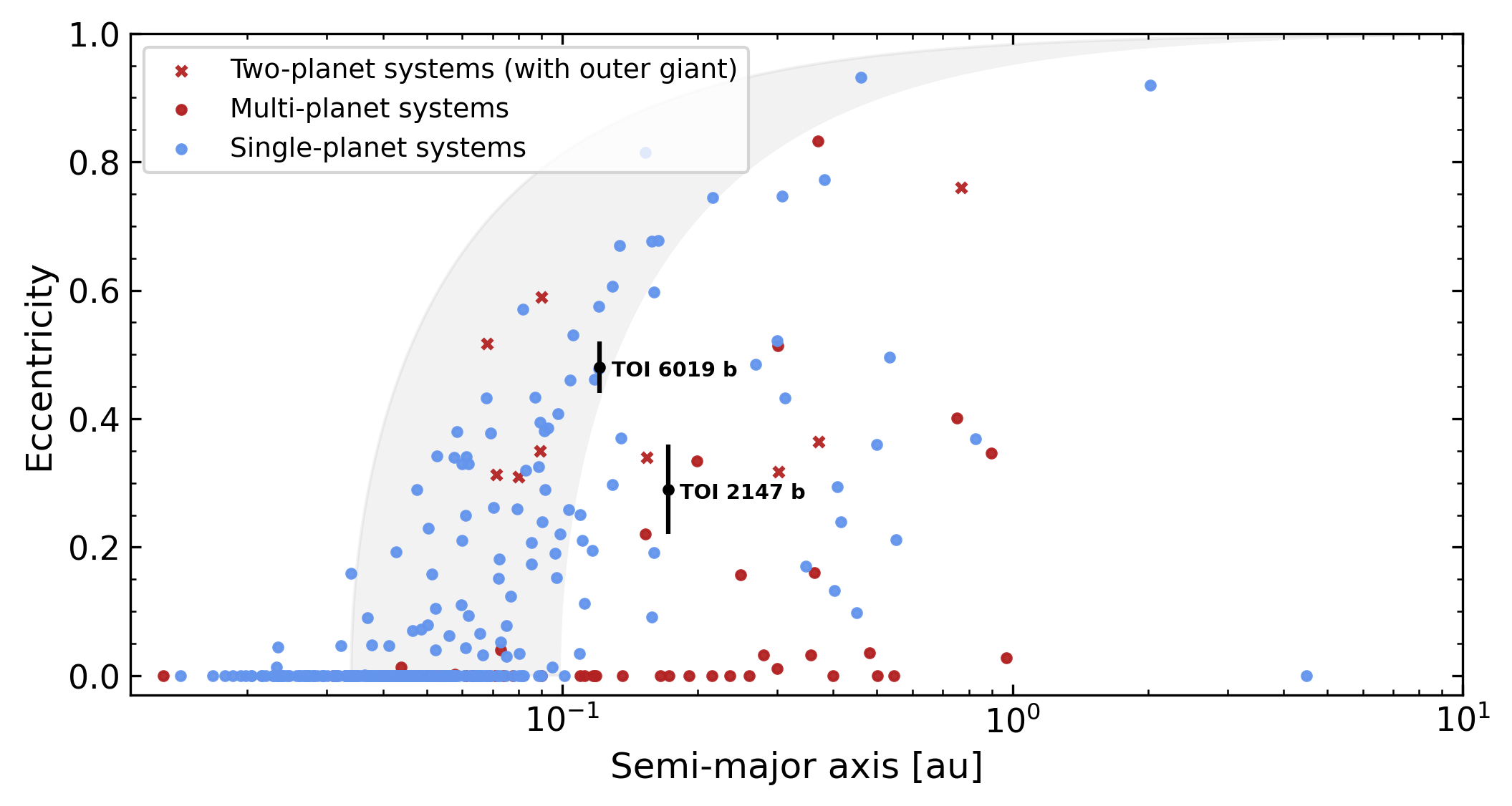
Figure 5: Eccentricity vs. semi-major axis for the giant planet sample, distinguishing single and multi-planet systems; TOI-2147 b and TOI-6019 b are highlighted along tracks expected for stalled high-eccentricity migrators, with TOI-6019 b in the proto-hot Jupiter regime.
Notably, TOI-6019 b's predicted post-circularization semi-major axis (116±22 M⊕2 AU) places it directly in the hot Jupiter population, implying an ongoing high-e migration pathway.
Internal Structure and Envelope Modeling
The authors applied the GASTLI interior structure grid—with layers for core, envelope, and atmospheric metallicity—to constrain the internal compositions. For both planets, the observed radii are inconsistent with models of high atmospheric metallicity unless tidal heating is invoked to explain inflation. When tidal energy dissipation consistent with the measured eccentricities is accounted for, the derived envelope mass fractions decrease significantly, resulting in Saturn-like compositions. This result indicates that models neglecting even moderate levels of tidal heating will systematically overestimate envelope enrichment in eccentric warm Jupiters. This is a strong, quantitative result with implications for bulk composition inferences and planet formation constraints.
Atmospheric Characterization Prospects
Transmission and emission spectroscopy metrics suggest both planets are at the low end of current observability, although TOI-6019 b is favored due to its brighter host, shorter period, and accessible declination. Simulations with the ExoAtmoSim pipeline suggest that atmospheric characterization with current-resolution near-infrared spectrographs (e.g., IGRINS2, 116±22 M⊕3) will not yield robust molecular detections, with stronger performance at 116±22 M⊕4. Thus, these systems exemplify the need for next-generation high-resolution instrumentation and underline the potential for J-band or K-band detection of H116±22 M⊕5O, CO, and CH116±22 M⊕6 features in inflated WJ atmospheres.
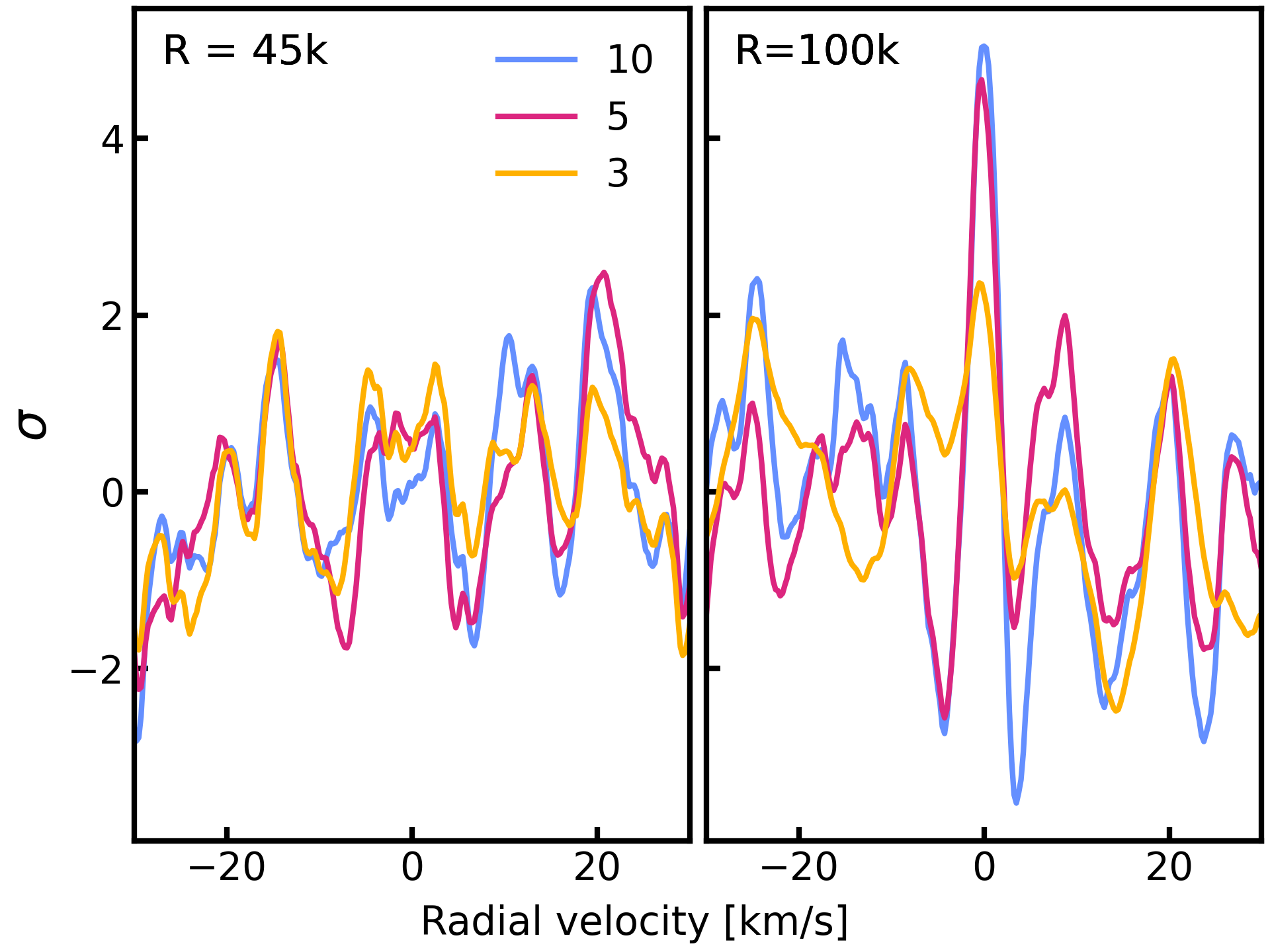
Figure 6: Predicted cross-correlation detection significances for simulated transmission spectroscopy of TOI-6019 b, illustrating the importance of high spectral resolution for atmospheric retrievals.
Implications and Future Directions
This work reinforces several empirical trends and theoretical predictions in the formation and post-formation dynamical evolution of the WJ population:
- Both observed moderate-to-high eccentricities and the absence of detected close planetary companions substantially favor a high-eccentricity migration scenario, at odds with the paradigm linking WJs predominantly to disk or in-situ processes.
- Robust mass, radius, and eccentricity constraints for WJs are essential to disentangle compositional and inflationary degeneracies in interior models, especially given the sensitivity of envelope mass fraction to even mild tidal heating.
- The null detection of additional planets in both RV and TTV data does not definitively exclude smaller/low-mass perturbers, so continued monitoring with improved precision remains valuable for migration channel discrimination.
The publication highlights an observable pathway for identifying WJs undergoing, or having recently undergone, high-e migration via combined RV and photometric constraints. As the transiting WJ sample grows, statistical analysis of eccentricities, densities, and system architectures will further refine our understanding of gas giant migration physics.
Conclusion
The identification and detailed characterization of TOI-2147 b and TOI-6019 b, both moderately-to-highly eccentric, mildly inflated, and apparently solitary warm Jupiters, add important data points to the growing inventory of short-period giant exoplanets. The evidence for stalled high-eccentricity migration, the measured radius inflation partially attributable to tidal heating, and the inference of sub-solar envelope metallicities all contribute critical constraints on planet formation models. Furthermore, these systems serve as benchmarks for envelope modeling methodologies that incorporate dynamical tidal effects. Future high-resolution spectroscopic investigations, especially with the influx of next-generation ELT-class instrumentation, may enable the atmospheric characterization required to resolve outstanding ambiguities in migration, enrichment, and internal structure processes for the warm Jupiter population (2606.20224).