Evolving Dark Energy Is Vacuum Energy After All
Abstract: We investigate a physically motivated model of dynamical dark energy arising from the non-perturbative topological structure of the Quantum Chromodynamics (QCD) vacuum. Unlike conventional dark-energy scenarios, the model does not introduce any new fundamental field or propagating degree of freedom. Instead, the dark-energy density emerges as a global vacuum effect associated with the response of the QCD vacuum to an expanding spacetime, representing a possible paradigm shift in the interpretation of cosmic acceleration. We develop the first comprehensive cosmological implementation of this QCD-induced dark-energy scenario and confront it with current observations, including the latest combination of Planck, ACT and SPT-3G cosmic microwave background measurements, DESI DR2 baryon acoustic oscillation data, and Type Ia supernova samples from Pantheon+ and DES-Dovekie. We compare the model with both the standard $Λ$CDM cosmology and the widely used CPL ($w_0w_a$CDM) parametrization of evolving dark energy. We find that the model provides an excellent fit to the data and reproduces the late-time dark-energy evolution preferred by DESI observations. The inferred cosmological parameters are robust against different implementations of the dark-energy activation mechanism, indicating that the cosmological predictions are largely insensitive to the specific form of the transition. The model naturally predicts an effective phantom-crossing behaviour at intermediate redshifts while remaining free from the theoretical instabilities commonly associated with phantom scalar-field models. Using a combination of goodness-of-fit statistics and Bayesian model-selection techniques, including Akaike and Deviance Information Criteria and Bayesian evidence estimated from Markov Chain Monte Carlo chains, [abridged]
Paper Prompts
Sign up for free to create and run prompts on this paper using GPT-5.
Top Community Prompts
Explain it Like I'm 14
Overview
This paper suggests a new way to think about dark energy—the mysterious “push” that makes the Universe expand faster. Instead of inventing a new particle or field, the authors argue that dark energy can come from the vacuum itself, thanks to how the strong force (the force that holds protons and neutrons together), called QCD, behaves in an expanding Universe. In short: as space stretches, the QCD vacuum slightly changes and releases a tiny, steady “vacuum energy” that acts like dark energy.
What questions did the authors ask?
- Can dark energy be explained without adding new particles or fields?
- If dark energy comes from the QCD vacuum reacting to cosmic expansion, can this idea match what telescopes see?
- Does this approach fit the latest, very precise data better than the standard model (ΛCDM) or common “evolving dark energy” guesses?
How did they study it?
Think of empty space as a special fabric with hidden “knots” and “twists” (that’s the QCD vacuum). In a calm, non-expanding space, these knots balance out. But when the Universe expands, that balance shifts a tiny bit. This shift adds a small extra energy to space—vacuum energy—that can drive cosmic acceleration.
Here are the key ideas, explained simply:
- QCD vacuum as the source: The strong force’s vacuum isn’t plain empty; it has many “topological” states (like different ways to tie a knot). Quantum effects let the vacuum “tunnel” between these states. In an expanding Universe, this tunneling changes very slightly, adding energy to space.
- No new field needed: Unlike many dark energy models that add a new particle or field with its own “pressure,” this effect is global—more like a background setting of space—so it doesn’t wiggle or ripple like normal fields.
- Proportional to expansion rate: The extra vacuum energy scales roughly with how fast the Universe is expanding (the Hubble rate H). That means as the Universe changes, this dark energy gently changes too.
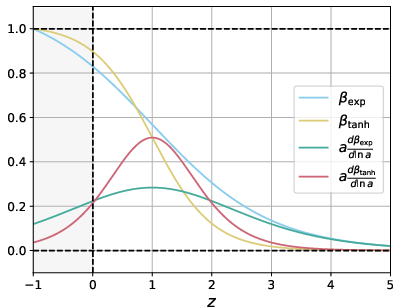
- A “dimmer switch” for early times: To keep early-Universe physics normal, the authors include a smooth switch function, β(z). You can think of β as a dimmer that keeps the effect “off” in the distant past and gradually turns it “on” around recent times, matching when dark energy is observed to dominate.
- Put into a cosmology code and test against data: They built this model into standard cosmology software and compared its predictions to top data sets.
They tested the model against several major observations:
- Cosmic microwave background (CMB) maps from Planck, ACT, and SPT-3G (these are detailed pictures of ancient light from when the Universe was very young).
- Baryon acoustic oscillations (BAO) from DESI DR2 (these are “standard ruler” patterns in galaxy positions).
- Type Ia supernovae brightness catalogs (standard candles that map expansion), including Pantheon+ and DES-Dovekie.
They also used careful statistics that reward good fits but penalize unnecessary complexity (like giving extra points to a simpler explanation that works just as well).
What did they find?
- It fits the data very well: The QCD-vacuum model matches current observations at least as well as, and often better than, the standard ΛCDM model.
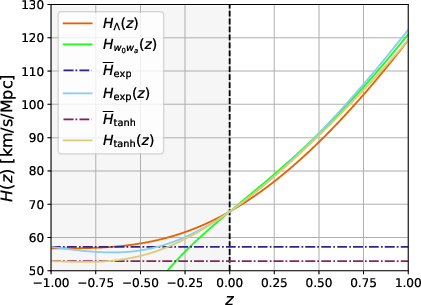
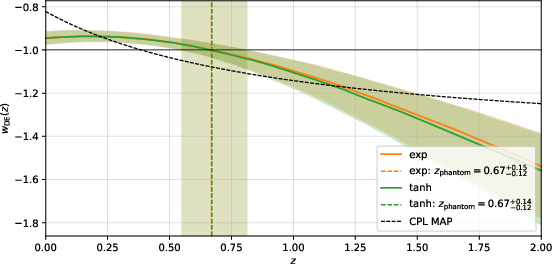
- It matches the “evolving dark energy” hints: Recent DESI measurements suggest dark energy might change over time. This model naturally produces that kind of late-time evolution.
- Safe “phantom crossing” without problems: Many evolving dark energy models that dip below the line w = −1 (called “phantom”) can suffer from theoretical instabilities if they’re made of normal fields. Here, the model can effectively cross that line safely, because it isn’t a physical, rippling field—it’s a global vacuum effect.
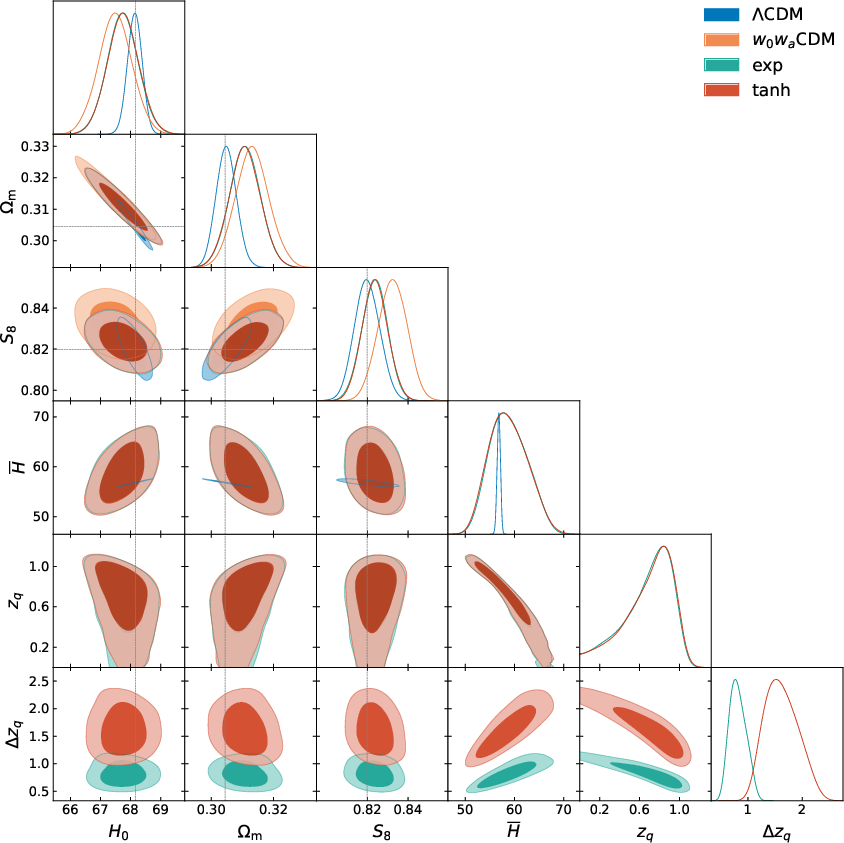
- Robust to details: The results don’t depend much on the exact shape of the “dimmer switch” β(z). That means the core idea—not the fine-tuning—drives the fit.
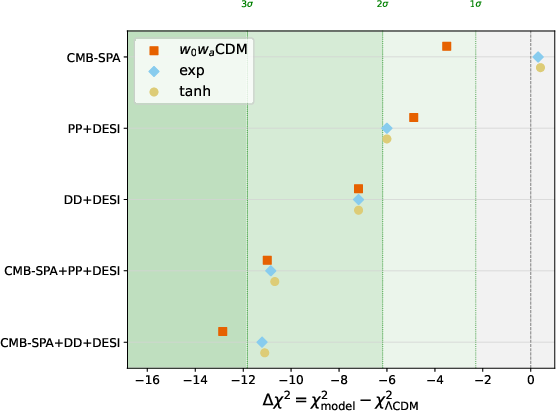
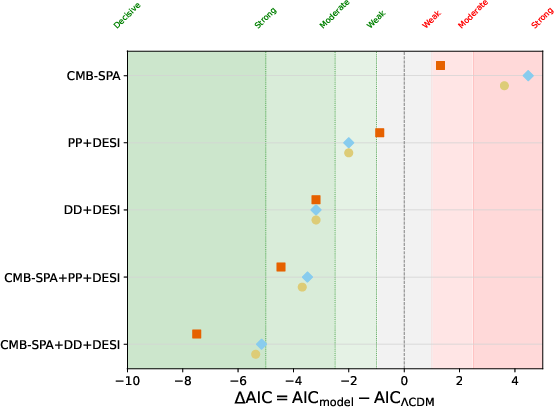
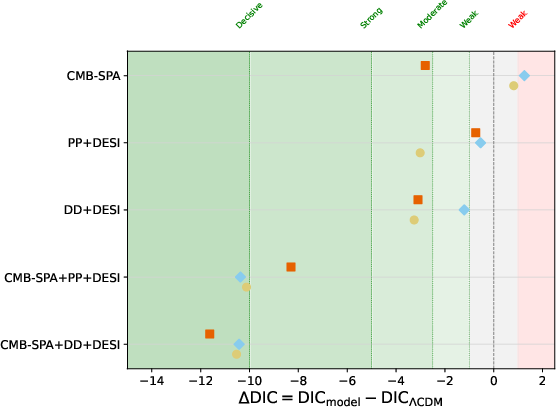
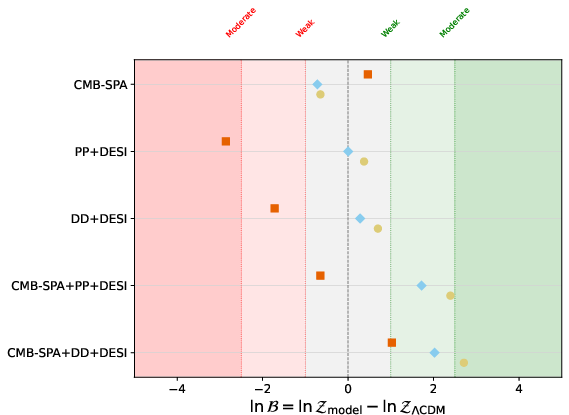
- Strong in model comparison: Using tools like Akaike and Deviance Information Criteria and Bayesian evidence, this model is consistently favored over ΛCDM when all early- and late-time data are combined. Meanwhile, common “parameterized” evolving dark energy models (like the CPL w0–wa form) tend to be less favored once you account for their extra complexity.
Why is this important?
- No new physics “add-ons” needed: It explains cosmic acceleration using known physics (QCD) and the structure of empty space, avoiding the need to invent new particles or exotic fields.
- A natural size for dark energy: The model links the tiny observed dark energy scale to the well-known QCD scale in particle physics, offering a reason why dark energy becomes important “now” in cosmic history.
- Better fits to precise data: As measurements get sharper, a model that both fits well and stays simple is valuable.
What could this mean going forward?
- A new perspective on dark energy: If vacuum energy from QCD really drives cosmic acceleration, it changes how we see the Universe—dark energy would be a property of space’s deep structure, not a new substance filling it.
- Possible lab hints: The authors point to a related idea called the “Topological Casimir Effect,” a tiny vacuum-energy signal that, in principle, could be tested in tabletop experiments. Seeing such an effect would support the topological-vacuum origin of dark energy.
- Next steps: More precise data and improved modeling will test this idea further—especially how the “dimmer switch” turns on over time and how the model behaves across different cosmic eras.
In short, the paper argues that evolving dark energy might actually be vacuum energy from the QCD “knotted” vacuum responding to the expanding Universe—a simple, physically motivated explanation that matches today’s best data and avoids the usual pitfalls of adding new fields.
Knowledge Gaps
Knowledge gaps, limitations, and open questions
Below is a focused list of what remains missing, uncertain, or unexplored in the paper, framed as concrete, actionable items for future research:
- First-principles derivation: Provide a non-perturbative QCD calculation of the vacuum-energy correction directly in a realistic FLRW spacetime with time-varying (beyond the hyperbolic-space and deformed-QCD analogies and beyond lattice results for particle production), including the sign and magnitude of the linear-in- term.
- Microphysical coefficient calibration: Compute the coefficient from QCD (including its dependence on light-quark masses, chiral dynamics, and topological susceptibility) rather than treating it as an effective parameter; quantify theory uncertainties.
- Suppression mechanism from first principles: Derive the early-time suppression factor (encoded here as ) from QCD/topological tunnelling in time-dependent backgrounds, e.g., as a controlled expansion in , and obtain a predictive functional form in terms of , , and possibly higher derivatives.
- Robustness to the choice of : Systematically test a broader class of switch functions beyond the two proposed (e.g., functions of , , or ) and quantify how the inferred cosmological parameters and Bayesian evidence depend on the functional form and smoothness of .
- Model nesting and evidence sensitivity: Because QCD-DE is not nested within CDM, explicitly assess how Bayes factors depend on prior volumes for and on calibration/foreground priors; perform prior-robustness and simulation-based calibration studies.
- Covariant perturbation theory: Develop a consistent perturbation-level treatment of the nonlocal/topological vacuum contribution that respects the Bianchi identities and general covariance, and determine whether (and how) DE perturbations vanish or propagate in linear theory.
- ISW and large-scale CMB signatures: Compute the late-time Integrated Sachs–Wolfe effect and low- CMB anisotropy predictions with the full (perturbation-consistent) model to check for distinctive imprints of a time-varying .
- Growth of structure: Derive and confront predictions for the growth rate , the growth index , and the matter power spectrum with redshift-space distortions, weak lensing shear, and cluster abundance data; assess whether the model can relieve the tension.
- Nonlinear regime and simulations: Explore how the background-only modification impacts nonlinear structure via N-body or emulators (given the absence of DE perturbations) and whether halo statistics, lensing peaks, or voids provide discriminating tests.
- Early-universe constraints: Quantify the allowed early dark energy fraction implied by at recombination and nucleosynthesis; check impacts on , CMB damping tail, and BBN light-element abundances; constrain accordingly.
- Energy–momentum conservation: Explicitly formulate the effective energy-exchange terms implied by (since is time dependent) and verify consistency with the continuity equations for individual components in a gauge-invariant framework.
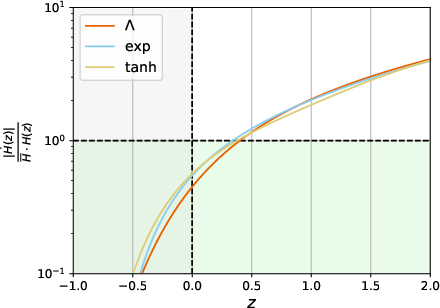
- Phantom-crossing generality: Map the region in where the effective crosses ; determine whether phantom behavior is generic, and identify observable consequences (e.g., distances, growth) that can be used to test it.
- Local/astrophysical constraints: Assess whether the nonlocal vacuum contribution induces any measurable deviations in local systems (e.g., Solar System PPN parameters) or strong-lensing time delays, and clarify why such effects should be absent or suppressed.
- Spatial curvature and extended sectors: Explore degeneracies with nonzero curvature, neutrino masses, and extra relativistic degrees of freedom; test whether the inferred preference for QCD-DE persists in non-flat or extended parameter spaces.
- Reionization prior dependence: Evaluate sensitivity of results to the external prior by varying or removing it and using different low- polarization likelihoods.
- Dataset breadth: Go beyond CMB+BAO+SNe by adding cosmic shear (KiDS/DES/HSC), full-shape galaxy clustering, RSD, cluster counts, and cosmic chronometers to stress-test the model across background and growth observables.
- Direct tension tests: Explicitly include late-Universe distance-ladder constraints (e.g., SH0ES, TRGB, strong-lensing time delays) to quantify whether QCD-DE can raise without degrading CMB and LSS fits.
- Forecasts and discriminants: Provide forecasts for Euclid, Rubin/LSST, Roman, and DESI final data to identify “smoking-gun” observables that distinguish QCD-DE from CDM and CPL () at high significance.
- Effective action formulation: Construct a covariant (possibly nonlocal) effective action or semiclassical gravity framework that reproduces the linear-in- vacuum term and guarantees consistency with renormalization and decoupling.
- Topological Casimir Effect (TCE) predictions: Translate the cosmological mechanism into concrete laboratory predictions for TCE amplitudes and geometrical/material dependencies in Casimir setups; specify signal sizes for feasible experiments.
- Temperature and QCD-phase effects: Investigate whether the QCD confinement transition or finite-temperature effects modify or at early times, and whether relics of these transitions leave observable imprints.
- Topology and anisotropy: If the effect is sensitive to global/topological properties of spacetime, determine whether nontrivial spatial topology or large-scale anisotropy would affect , and confront with CMB topology searches.
- Sign and CP-dependence: Clarify under what conditions the sign of the linear-in- correction could change and whether CP-violating parameters (e.g., ) influence or the vacuum-energy difference.
- Code transparency and cross-validation: Release full implementation details of the CLASS modifications, provide unit tests and benchmarks, and cross-check results with alternative Boltzmann solvers to ensure numerical robustness.
Practical Applications
Overview
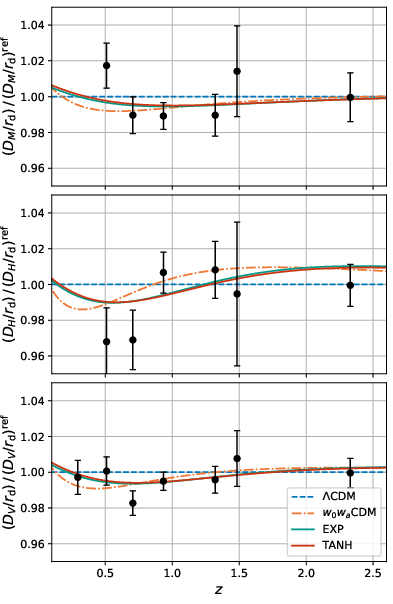
The paper proposes and tests a physically motivated model of dynamical dark energy (DE) arising from non-perturbative, topological properties of the QCD vacuum. It introduces a background-only modification to the Friedmann equation where the DE density scales as a global vacuum response proportional to the Hubble rate, modulated by a monotonic “switch” function β(z) that activates at late times. The authors implement the model in CLASS, confront it with state-of-the-art CMB/BAO/SNe data, find effective phantom-crossing behavior without scalar-field instabilities, and report improved goodness-of-fit and competitive Bayesian evidence versus ΛCDM.
Below are actionable applications grouped by deployment horizon.
Immediate Applications
The following opportunities can be implemented with current tools and datasets:
- Integrate the QCD-induced DE model into cosmological data analysis pipelines (Sector: software/IT, academia)
- Use the modified CLASS module and associated likelihood combinations (“CMB-SPA + DESI + SNe”) to reanalyze existing datasets (Planck, ACT DR6, SPT-3G, DESI DR2, Pantheon+, DES-Dovekie).
- Potential tools/products/workflows:
- A CLASS plug-in for QCD-DE with β(z) families (exp/tanh), wrappers for Cobaya/MontePython, containerized HPC workflows for MCMC and Bayesian evidence estimation, example notebooks for parameter scans (z_q, Δz_q).
- Assumptions/dependencies:
- Background-only DE (no perturbations).
- Validity of linear scaling ρ_DE ∝ H and late-time activation via β(z).
- Dataset handling (calibration priors, low-ℓ polarization priors on τ_reio, cross-experiment correlations as per ACT/SPT/Planck guidelines).
- Survey analysis and optimization using the model’s preferred late-time behavior (Sector: academia, observatories)
- Use predicted phantom-crossing at intermediate redshifts and the adiabaticity criterion to set redshift and precision priorities (e.g., 0.3 ≲ z ≲ 2 for BAO/SNe).
- Workflow:
- Fisher forecasts and mock analyses including QCD-DE to optimize redshift binning and tracer selection in ongoing analyses.
- Assumptions/dependencies:
- The Bayesian-competitive performance found here persists across alternative calibration pipelines and future data releases.
- Adopt combined goodness-of-fit and Bayesian model selection practices in cosmology pipelines (Sector: academia, software/IT)
- Use AIC/DIC and evidence from MCMC chains to balance fit improvements against model complexity.
- Workflow:
- Standardize reporting (Δχ², ΔAIC/ΔDIC, log-evidence) across ΛCDM, CPL (w0waCDM), and QCD-DE, facilitating apples-to-apples comparisons.
- Assumptions/dependencies:
- Reliable evidence estimators (e.g., thermodynamic integration, nested sampling) and consistent prior choices (notably on β parameters).
- Cross-disciplinary “switch function” modeling for activation phenomena (Sector: software/IT, finance, energy, epidemiology)
- Method transfer: apply smooth, monotonic activation functions (e.g., logistic/tanh with z_q, Δz_q) to model regime transitions with principled regularization.
- Potential products:
- A lightweight library of smooth activation functions with interpretable parameters and stability constraints.
- Assumptions/dependencies:
- Appropriate domain-specific validation; the mapping from cosmology’s β(z) to other latent activation processes holds only at the methodological level.
- Education and science communication assets (Sector: education, outreach)
- Use the QCD-DE framework as a case study of “physically motivated” DE without new fields; demonstrate phantom crossing without instabilities.
- Products:
- Interactive visualizations of H(z), w_DE(z), β(z) for teaching; short modules integrating QCD topology and late-time cosmology.
- Assumptions/dependencies:
- Alignment with current curricula; access to open-source code.
- HPC and cloud benchmarking using the QCD-DE pipeline (Sector: software/IT, cloud providers)
- Provide standardized workloads (CLASS + MCMC + evidence estimation) for benchmarking hardware and cloud offerings.
- Products:
- Reproducible containers, datasets, and metrics for throughput/time-to-solution.
- Assumptions/dependencies:
- Clear licensing for likelihoods; sufficient community interest.
- Evidence-based guidance for funding and coordination (Sector: policy/agency management)
- Justify modest investments in combined-likelihood frameworks and cross-survey coordination, given demonstrated sensitivity of late-time analyses to model assumptions.
- Assumptions/dependencies:
- Continued gains from joint Planck/ACT/SPT/DESI/SNe analyses; maintenance of public likelihoods.
Long-Term Applications
These opportunities require further research, scaling, or technological development:
- Tabletop detection of the Topological Casimir Effect (TCE) to test the model’s core mechanism (Sector: AMO/nanophotonics/instrumentation)
- Design high-sensitivity cavity QED/nanophotonic experiments to isolate non-dispersive topological vacuum contributions in electromagnetism.
- Potential products:
- Next-gen Casimir-force metrology setups; collaborative calls bridging AMO and cosmology.
- Assumptions/dependencies:
- Experimental feasibility, control of backgrounds/systematics, and theoretical mapping between TCE measurements and cosmological vacuum effects.
- Technological spinoffs from controlling topological vacuum contributions (Sector: MEMS/NEMS, quantum devices, precision metrology)
- If TCE is measurable and tunable, exploit topological Casimir contributions for actuation, sensing, or force engineering in micro/nanoscale devices.
- Assumptions/dependencies:
- Demonstrated control of topological contributions; material and geometry engineering to amplify signals; safety margins in device integration.
- Next-generation survey strategies targeting QCD-DE signatures (Sector: astronomy/cosmology, observatories)
- Integrate QCD-DE into design/forecast frameworks for Euclid, Rubin/LSST, Roman, DESI extensions, and CMB-S4 to maximize sensitivity to phantom crossing and late-time H(z) curvature.
- Workflows:
- End-to-end simulations with QCD-DE as a hypothesis class; optimization of redshift coverage and tracer combinations.
- Assumptions/dependencies:
- Persistence of the model’s competitive evidence; availability of consistent cross-survey calibrations (photometric/spectroscopic).
- Lattice QCD in curved/expanding backgrounds to compute c_H and validate linear-in-H scaling (Sector: high-energy theory, HPC)
- Develop algorithms and formalisms to compute topological vacuum energy shifts under controlled curved/expanding geometries; quantify suppression beyond adiabatic regime.
- Tools/workflows:
- Extensions to QUDA/Chroma for imaginary H setups; exascale resources; community benchmarks.
- Assumptions/dependencies:
- Theoretical advances in treating non-local/topological contributions on the lattice; sustained compute funding.
- Theoretical development of non-local vacuum energy in cosmology (Sector: academia, theory)
- Build a robust framework linking non-dispersive topological contributions to cosmological observables beyond background (e.g., ISW signatures, growth history) while retaining “no-perturbations” assumptions or identifying subtle observables.
- Assumptions/dependencies:
- New mathematical tools for non-local effects; careful consistency with large-scale structure constraints.
- Policy and funding realignment if QCD-DE is validated (Sector: policy/agency management)
- Shift emphasis from new light-field DE searches to vacuum/topological phenomena; seed interdisciplinary programs across HEP, AMO, and condensed matter; mandate open-likelihood standards for cross-survey reuse.
- Assumptions/dependencies:
- Independent replications of Bayesian advantages; early experimental hints (e.g., TCE) to catalyze investment.
- Standardized libraries for non-local background terms in Boltzmann/simulation codes (Sector: software/IT, academia)
- Provide robust, tested implementations of β(z) families and non-local background modifications across CLASS, CAMB, CCL, CosmoSIS; scenario-forecast dashboards for PIs and survey planners.
- Assumptions/dependencies:
- Maintainer effort; stable APIs; clear licensing.
- Advanced education and laboratory courses on topology–cosmology links (Sector: education)
- Develop capstone labs demonstrating Casimir physics and conceptual TCE analogs; interdisciplinary coursework covering QCD topology, vacuum energy, and cosmology.
- Assumptions/dependencies:
- Availability of safe, affordable lab kits; instructor training.
- Cross-sector modeling of emergent, global-response phenomena (Sector: energy systems, climate modeling, finance)
- Adapt the “global response to background” paradigm and smooth activation functions to model regime shifts (e.g., grid frequency response, climate tipping elements, financial market phases) with parsimonious, evidence-favored models.
- Assumptions/dependencies:
- Domain-specific validation; careful translation of physical assumptions; stakeholder engagement.
Key Model Assumptions and Dependencies (cross-cutting)
- The DE density emerges from non-local, topological QCD vacuum effects, scaling as ρ_DE ∝ H with a late-time switch β(z) ∈ (0,1) approaching 1 in the de Sitter limit.
- Adiabatic approximation at late times; early-time suppression encoded via β(z); results reported as robust to functional choices of β(z) within monotonic families.
- No new propagating degrees of freedom; background-only modification to cosmology; effective phantom crossing without scalar-field instabilities.
- Empirical viability contingent on current combined datasets (CMB-SPA, DESI DR2 BAO, Pantheon+/DES-Dovekie SNe) and on standardized Bayesian evidence comparisons.
- Experimental validation pathway via TCE in controlled AMO/nanophotonic setups; theoretical validation via lattice QCD under effective curved backgrounds.
Glossary
- Adiabatic approximation: The regime where system parameters change slowly compared to the characteristic scale, allowing quasi-static treatment. Example: "We can express this condition as the adiabatic approximation"
- Akaike Information Criterion (AIC): A model selection metric that balances fit quality and model complexity. Example: "including Akaike and Deviance Information Criteria and Bayesian evidence estimated from Markov Chain Monte Carlo chains"
- Baryon acoustic oscillations (BAO): Regular, periodic fluctuations in the density of visible baryonic matter that act as a standard ruler for cosmology. Example: "baryon acoustic oscillations (BAO)"
- Bayesian evidence: The marginal likelihood used to compare models by integrating likelihood over parameter priors. Example: "Bayesian evidence estimated from Markov Chain Monte Carlo chains"
- Bayesian model selection: A framework comparing models using Bayesian evidence, incorporating Occam’s razor via prior volume. Example: "Bayesian model-selection techniques"
- Chevallier-Polarski-Linder (CPL) parametrization: A two-parameter form w(a)=w0+wa(1−a) for dark-energy equation-of-state evolution. Example: "the widely used CPL (CDM) parametrization of evolving dark energy."
- Coincidence problem: The puzzle of why dark energy density is comparable to matter density precisely today. Example: "fine-tuning and coincidence problems"
- Cosmic Linear Anisotropy Solving System (CLASS): A Boltzmann code for computing cosmological observables from linear perturbations. Example: "We modified the Cosmic Linear Anisotropy Solving System (CLASS)"
- Cosmic microwave background (CMB): Relic radiation from the early universe providing a snapshot of conditions at recombination. Example: "cosmic microwave background (CMB)"
- Cosmological constant (Λ): A constant vacuum energy density driving accelerated expansion, with w = −1. Example: "a cosmological constant "
- CMB lensing spectrum: The power spectrum of gravitational lensing of the CMB, probing matter distribution. Example: "the reconstructed CMB lensing spectrum"
- Deceleration parameter: A measure of the cosmic acceleration defined via the rate of change of the Hubble parameter. Example: "the deceleration parameter "
- Deviance Information Criterion (DIC): A Bayesian model comparison metric combining fit and effective model complexity. Example: "including Akaike and Deviance Information Criteria and Bayesian evidence estimated from Markov Chain Monte Carlo chains"
- de Sitter limit: The asymptotic state of exponential cosmic expansion with constant Hubble parameter. Example: "in the de Sitter limit"
- deformed QCD: A weakly coupled modification of QCD enabling controlled analytic studies of nonperturbative effects. Example: "deformed QCD"
- Early dark energy (EDE): Dark energy models that contribute non-negligibly before recombination to alter early expansion. Example: "early dark energy models designed to modify the pre-recombination expansion history"
- Equation of state (EoS): The relation between pressure and energy density, often summarized by w = p/ρ. Example: "equation of state "
- FLRW spacetime: The homogeneous, isotropic cosmological background metric used in standard cosmology. Example: "in an expanding FLRW spacetime"
- Friedmann equation: The key equation relating expansion rate to total energy density in general relativity. Example: "the Friedmann equation takes the form"
- Goodness-of-fit: Statistical assessment of how well a model reproduces observed data. Example: "goodness-of-fit statistics"
- Hubble constant tension: The discrepancy between early- and late-universe measurements of the current expansion rate. Example: "The most prominent example is the Hubble constant tension"
- Hyperbolic spacetime: A negatively curved spatial geometry used as a toy background to study vacuum energy. Example: "the relativistic hyperbolic spacetime "
- k-essence: Dark energy models with non-canonical kinetic terms driving cosmic acceleration. Example: "k-essence constructions with non-canonical kinetic terms"
- ΛCDM: The standard model of cosmology with cold dark matter and a cosmological constant. Example: "The standard cosmological model, CDM"
- Lattice simulations: Numerical evaluations of quantum field theories on discrete spacetime grids. Example: "lattice simulations"
- Markov Chain Monte Carlo (MCMC): Stochastic sampling methods for estimating posterior distributions in Bayesian inference. Example: "Markov Chain Monte Carlo chains"
- Minkowski spacetime: Flat spacetime of special relativity, used as a reference vacuum. Example: "Minkowski spacetime"
- Modified gravity: Theories altering general relativity to explain cosmic acceleration without dark energy. Example: "modified gravity theories"
- Non-dispersive contribution: A component of vacuum energy not associated with propagating modes, tied to topology. Example: "non-dispersive contribution (the contact term in the topological susceptibility)"
- Non-perturbative: Physics not accessible via expansion in a small coupling; requires exact or numerical methods. Example: "non-perturbative topological structure"
- Occam penalty: The Bayesian preference against unnecessarily complex models due to larger prior volume. Example: "the Occam penalty associated with the introduction of additional degrees of freedom."
- Optical depth to reionization: The integrated Thomson scattering probability since reionization affecting CMB polarization. Example: "the parameter , which is the optical depth to reionization"
- Phantom crossing: The evolution of dark energy’s w parameter across the w = −1 boundary. Example: "phantom-crossing behaviour"
- Phantom models: Dark energy theories with w < −1, often plagued by instabilities in field realizations. Example: "phantom models characterized by equations of state below "
- Quadratic-estimator reconstruction: A technique to extract lensing or other signals by combining pairs of modes. Example: "quadratic-estimator reconstructions"
- Quintessence: Dark energy models with a canonical scalar field rolling in a potential. Example: "quintessence scenarios based on canonical scalar fields"
- Running vacuum models: Frameworks where vacuum energy varies with the expansion rate or scale. Example: "running vacuum models"
- Topological Casimir Effect (TCE): A vacuum energy effect arising from topological sectors rather than propagating modes. Example: "Topological Casimir Effect (TCE)"
- Topological sectors: Distinct vacuum configurations labeled by an integer, relevant to QCD vacuum structure. Example: "topological sectors "
- Topological susceptibility: A measure of vacuum response to topological fluctuations in gauge theories. Example: "topological susceptibility"
- Tunnelling transitions: Non-classical transitions between vacuum sectors contributing to vacuum energy. Example: "tunnelling transitions between these sectors"
Collections
Sign up for free to add this paper to one or more collections.