- The paper develops a symmetry-based framework using spin-Laue group analysis to classify sliding-induced altermagnetic and quasi-altermagnetic states.
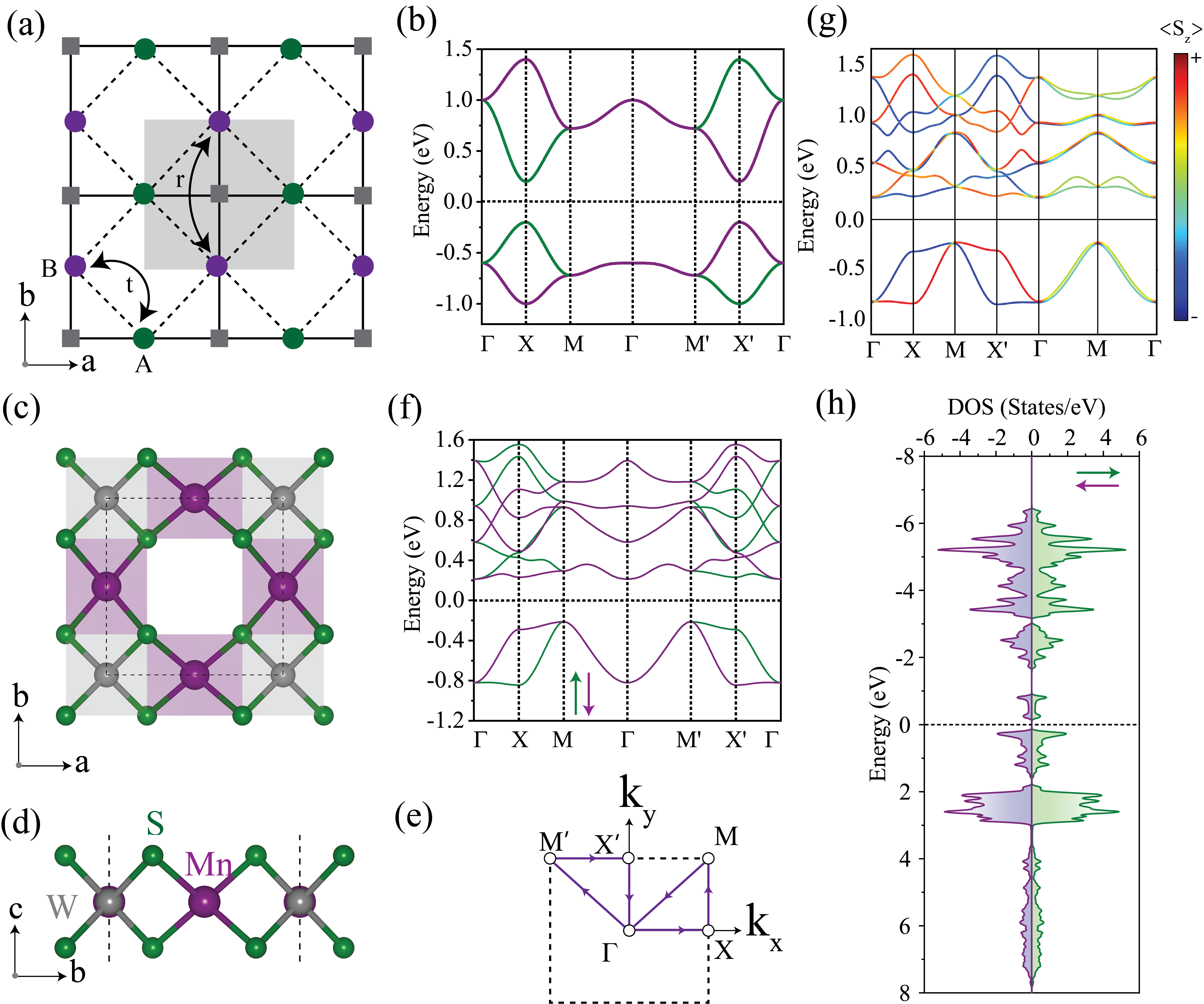
- It employs a minimal Lieb lattice model and DFT+U calculations to validate spin splitting in materials like Mn₂WS₄ and Mn₂WS₂Se₂.
- The study reveals that interlayer sliding enables reversible control of spin degeneracy and valley/spin transport, suggesting new switchable spintronic device concepts.
Interplay of Altermagnetism and Coupled Quasi-Altermagnetic States in Sliding Two-Dimensional Square Lattices
Introduction and Motivation
This work formalizes the classification and mechanisms of altermagnetism and introduces the concept of coupled quasi-altermagnetic states in 2D square-lattice systems with interlayer sliding. Altermagnets are systems with zero net magnetization but exhibit robust, SOC-independent spin splitting throughout the Brillouin zone, enabled by specific spin-group symmetries; they bridge key characteristics between AFMs and FMs. For 2D systems, stacking and sliding-induced symmetry modifications—particularly in square lattices—enable a set of nontrivial magnetic phases beyond conventional altermagnetism.
Symmetry Framework for Sliding-Induced Magnetic Phases
The paper develops a rigorous symmetry-based framework using spin-Laue group analysis to classify sliding-induced bilayer phases:
- Altermagnetic states: Defined by intact symmetry connectors between opposite-spin sublattices, maintaining Γ-point spin degeneracy even in the absence of SOC, e.g., AA and AB stacking.
- Coupled quasi-altermagnetic states: Realized when specific sliding operations (e.g., AC1 and AC2 geometry) break the relevant connectors, resulting in lifted spin degeneracy at Γ despite vanishing net magnetization and preserved overall antiferromagnetic arrangement.
The spin splitting in these quasi-altermagnetic phases is reversible via real-space operations, producing pairs of coupled states with reciprocal valley-spin character. The symmetry analysis, including exclusion of certain connectors (like {τ,P,C2z,Mz}), enables precise delineation of when true altermagnetism is lost.
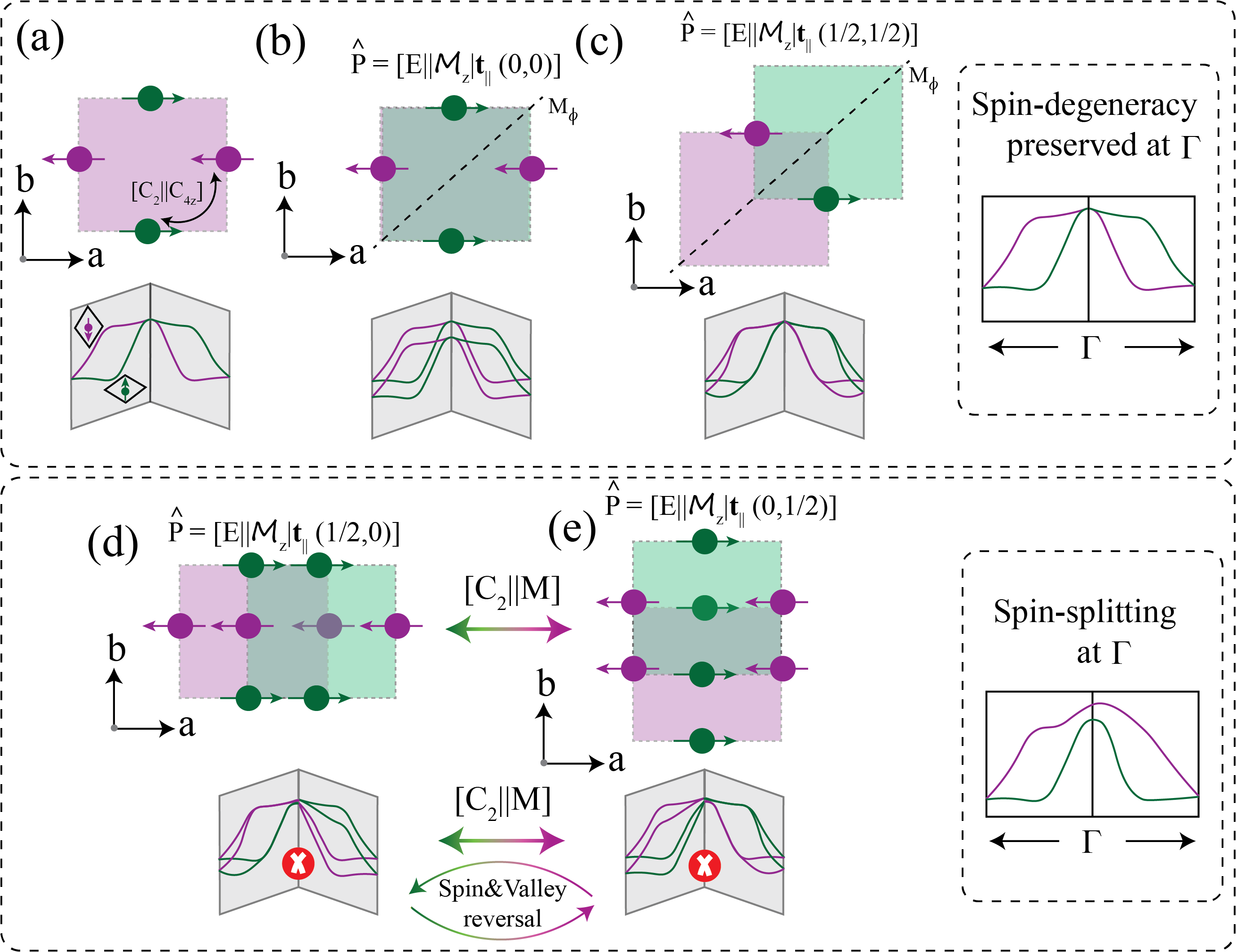
Figure 1: Square-lattice stacking configurations and their symmetry connectors, with sliding directionality and broken/preserved degeneracy at Γ highlighted.
Two-Dimensional Lieb Lattice Model and Material Realization
The authors construct a minimal Lieb lattice model as the canonical platform for 2D altermagnetism. In particular, Mn2WS4 and its Janus derivative Mn2WS2Se10 are chosen as representative materials. The explicit site symmetry and Wyckoff positioning in the Lieb lattice enables:
Further, the authors perform DFT+U calculations (U = 3.0 eV for Mn) to validate electronic structure, spin polarization, and DOS in both monolayer and bilayer variants.
Bilayer Stacking, Sliding and Classification of Magnetic Phases
The paper systematically explores all symmetry-distinct bilayer stacking geometries:
- AA/AB stacking: Preserves altermagnetic phase, maintains 14-point degeneracy and symmetric spin DOS/band edges.
- AC15/AC16 stacking: Induces coupled quasi-altermagnetic states. Here, 17-point degeneracy is lifted, band edges shift oppositely for spin channels, and the valley-spin correspondence reverses upon real-space symmetry transformation.
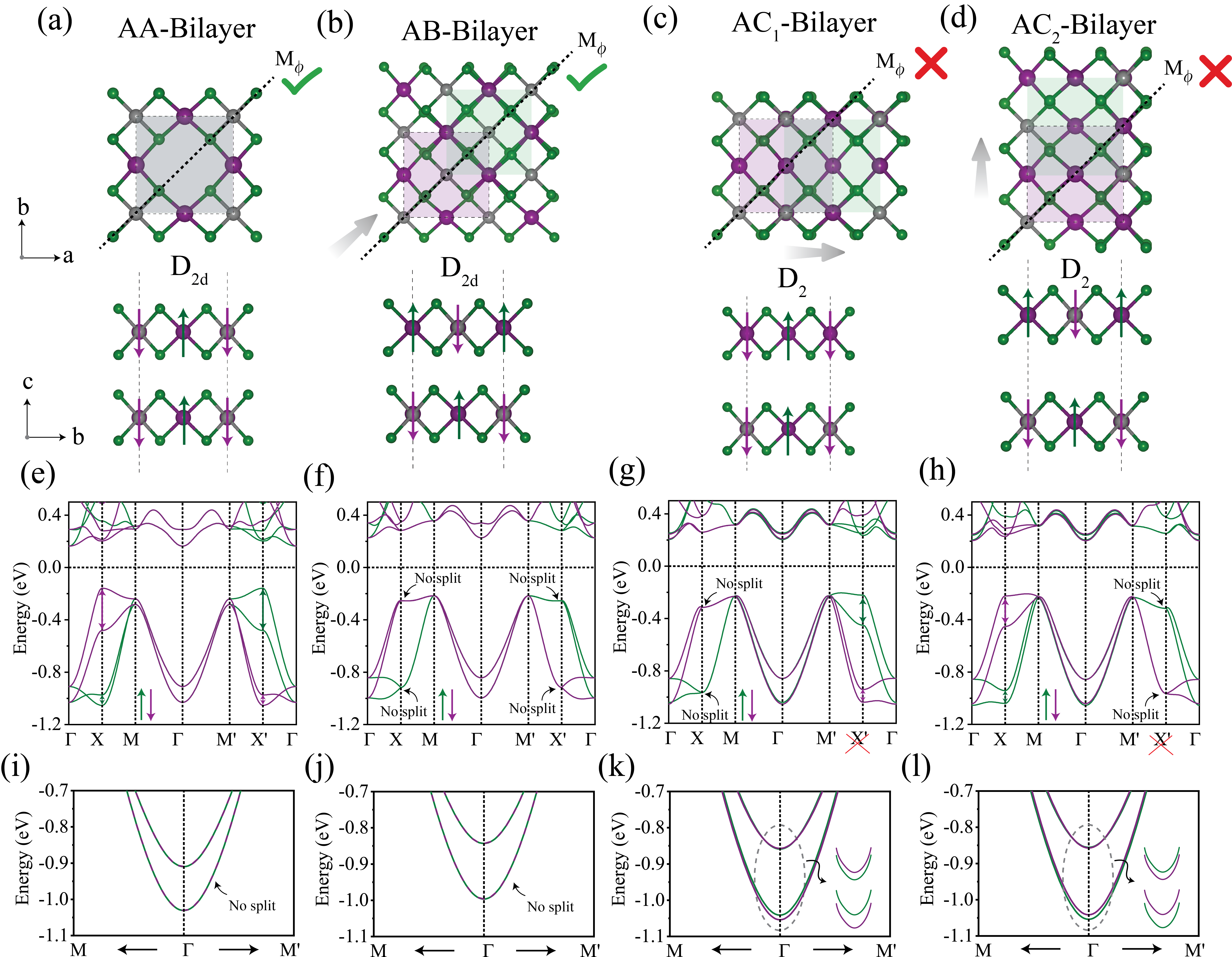
Figure 3: Structural and electronic characteristics of AA, AB, AC18, and AC19 bilayers, with degenerate/split bands at 20 and symmetry markers.
Orbital analysis (Mn 21-projection) reveals that the spin-split bands in these systems are predominantly derived from 22, 23, and 24 orbitals, with filling-dependent contributions tightly correlated to stacking geometry.
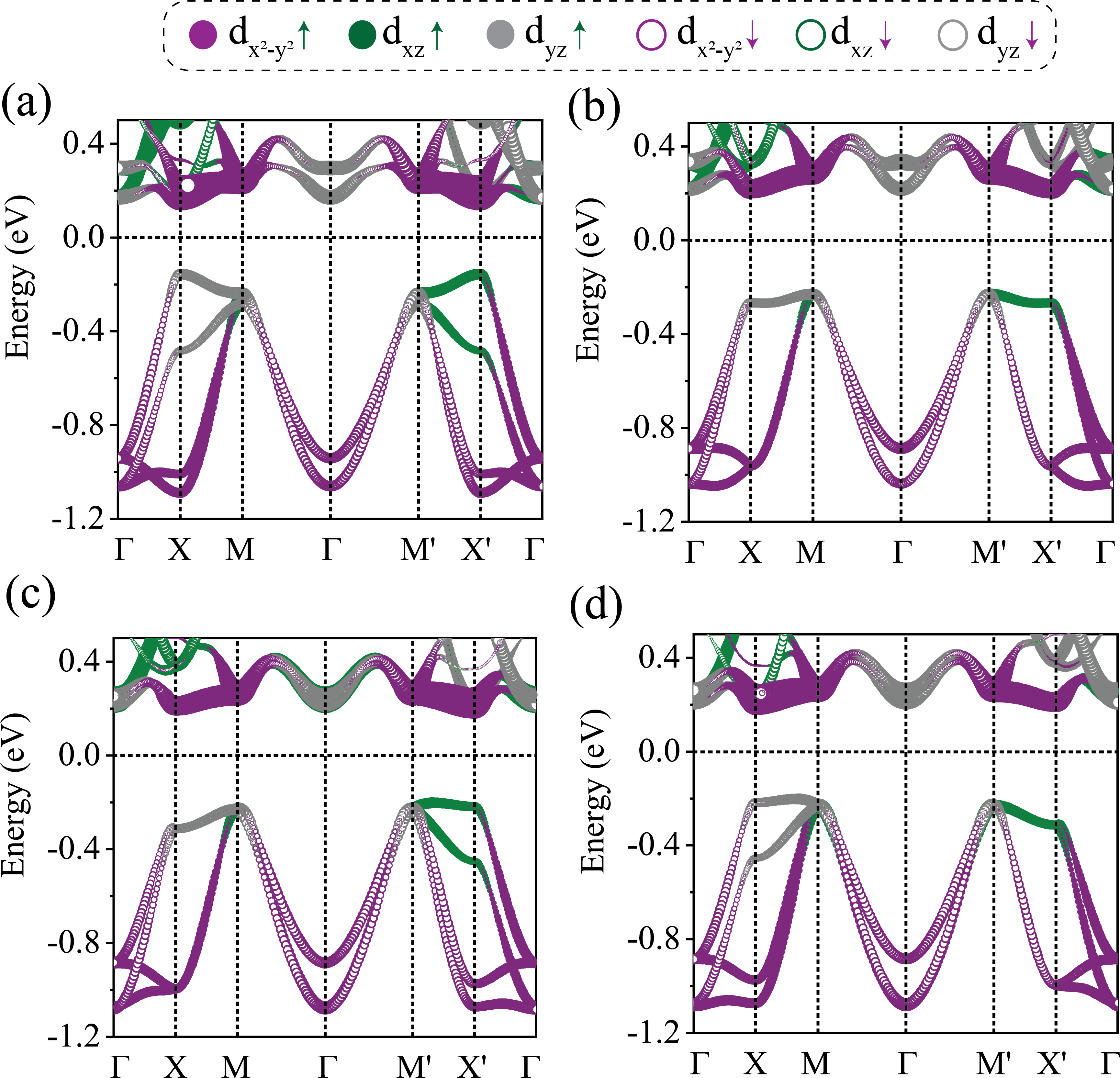
Figure 4: Mn 25-orbital resolved band projections for AA, AB, AC26, and AC27 bilayers, distinguishing spin-resolved orbital weights.
Structural distortion analysis reveals that volume difference in Mn tetrahedra (between spin-up and spin-down sublattices) is absent in altermagnetic AA/AB stacks but significant in AC28/AC29, directly correlating to lifted spin degeneracy.
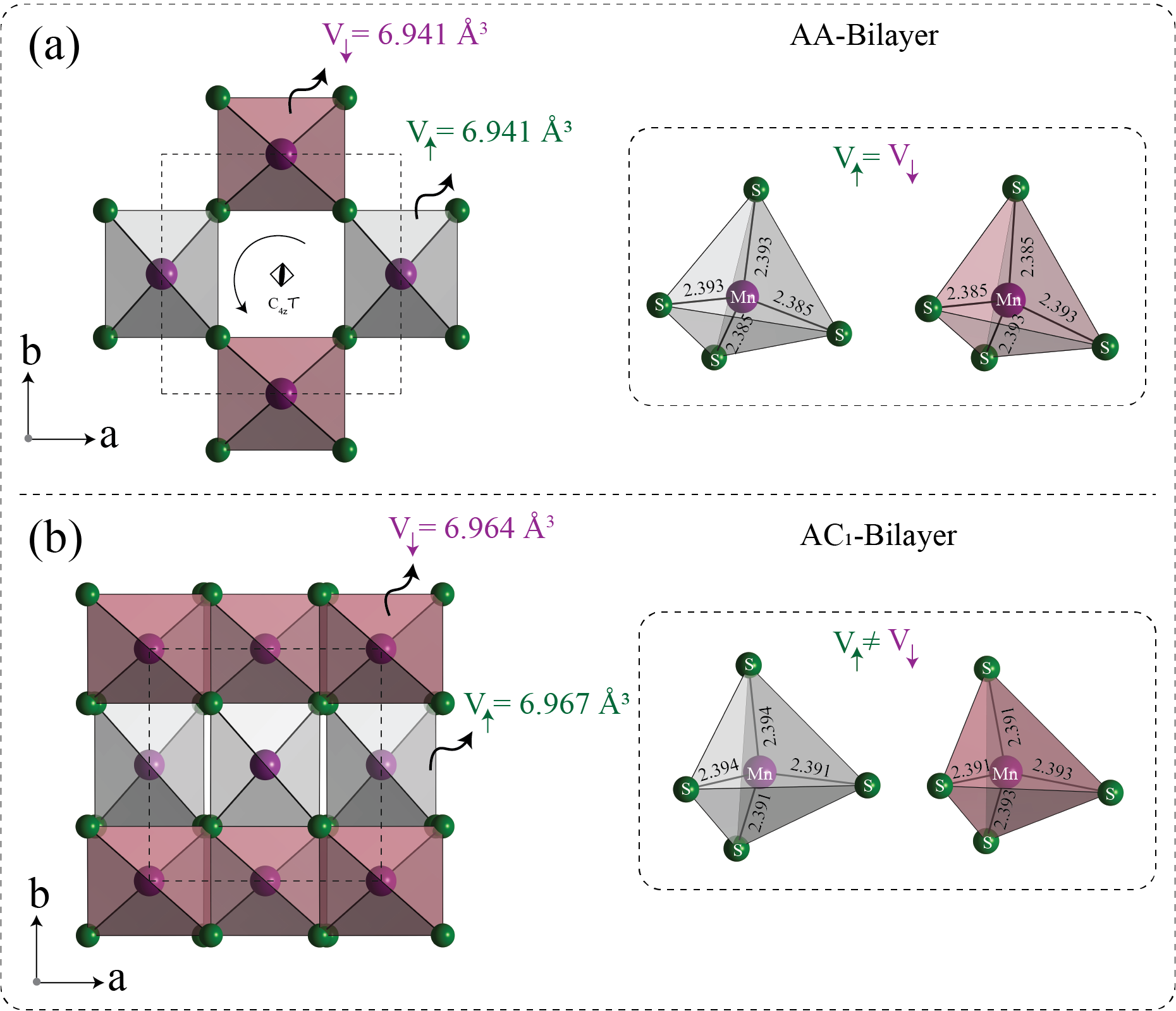
Figure 5: Structural comparison of Mn tetrahedra in AA and ACΓ0 bilayers, highlighting volume mismatch in quasi-altermagnetic phase.
Electronic DOS, Fermi Surface, and Spin Texture Analysis
The spin-resolved DOS profiles unambiguously prove that while AA/AB configurations retain identical spin DOS band edges, ACΓ1/ACΓ2 display opposite shifts, producing asymmetric demagnetization but zero net moment.
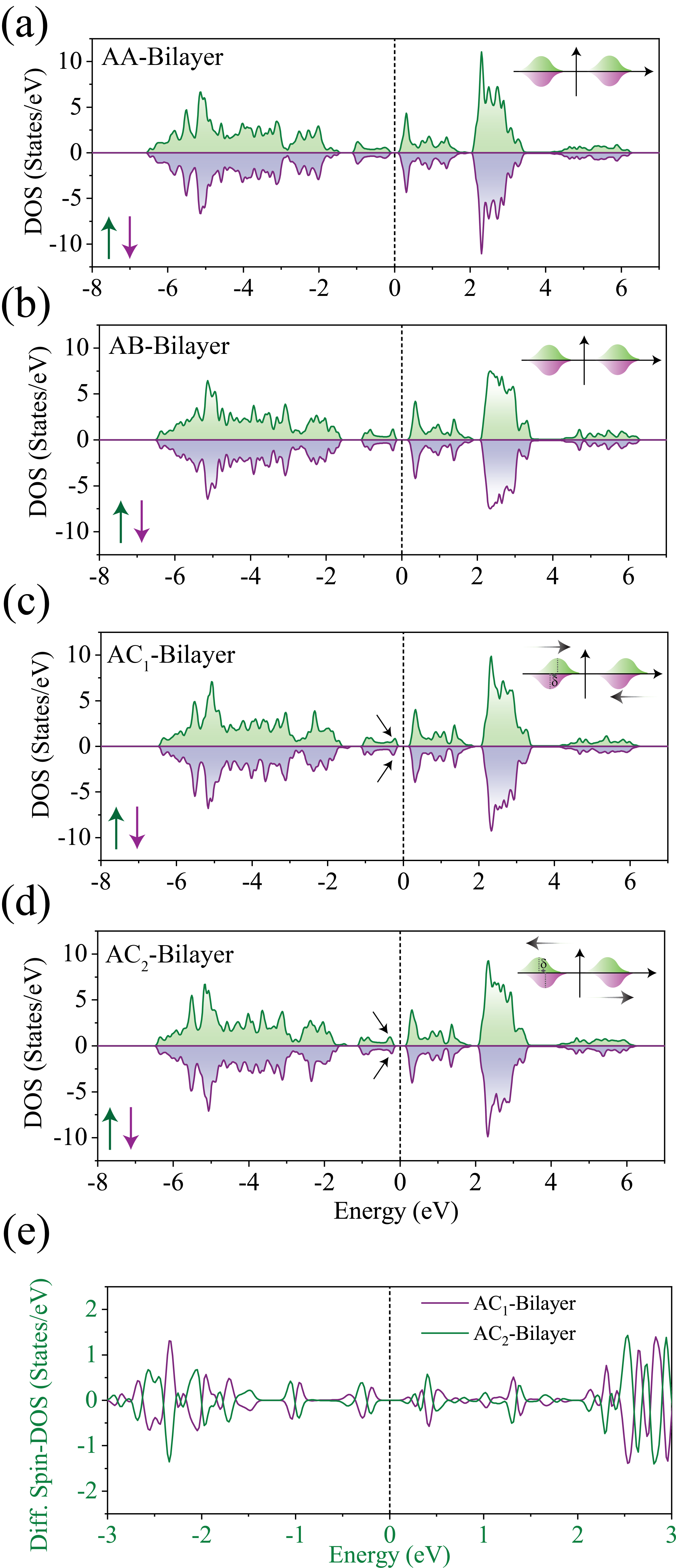
Figure 6: Spin-resolved DOS for AA, AB, ACΓ3, and ACΓ4 bilayers, with schematic band edge shifts and opposite differences in quasi-altermagnetic configurations.
Fermi surface topology further distinguishes the altermagnetic and quasi-altermagnetic phases, showing that while AA has symmetry-related Γ5/Γ6 Fermi surfaces, ACΓ7/ACΓ8 lack connectors between spin channels but remain related by sliding-induced real-space symmetry.
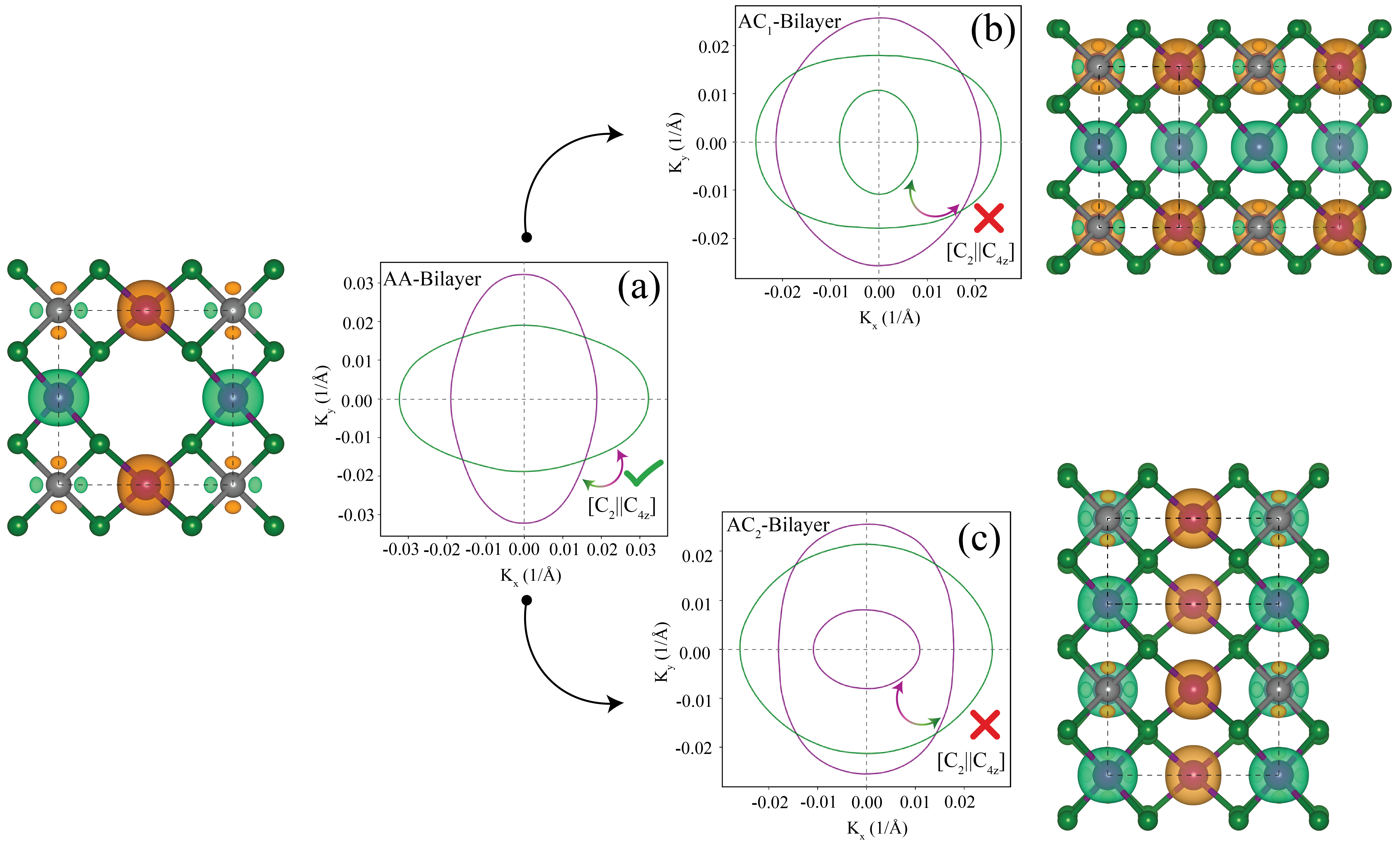
Figure 7: Spin-resolved Fermi surfaces for AA, ACΓ9, and AC{τ,P,C2z,Mz}0 configurations, encapsulating valley-spin reversal under sliding.
Upon SOC inclusion, spin textures predominantly project onto {τ,P,C2z,Mz}1 with negligible in-plane components for AC{τ,P,C2z,Mz}2/AC{τ,P,C2z,Mz}3 states, and degeneracy protected by {τ,P,C2z,Mz}4 symmetry in AA/AB stacks is lifted for quasi-altermagnets.

Figure 8: Spin-resolved band structure and spin texture with SOC for all stacking configurations, revealing dominant out-of-plane spin polarization.
Transport Signatures and Device Implications
Berry curvature in AA/AB is antisymmetric between {τ,P,C2z,Mz}5 and {τ,P,C2z,Mz}6 valleys, resulting in VHE. Quasi-altermagnetic states (AC{τ,P,C2z,Mz}7/AC{τ,P,C2z,Mz}8) exhibit both magnitude and sign reversal in Berry curvature, producing an anomalous VHE and tunable AHC with transport directionality that is fully switchable via sliding. Sliding-induced transitions accomplish control of Hall response and spin-current directionality without external fields.
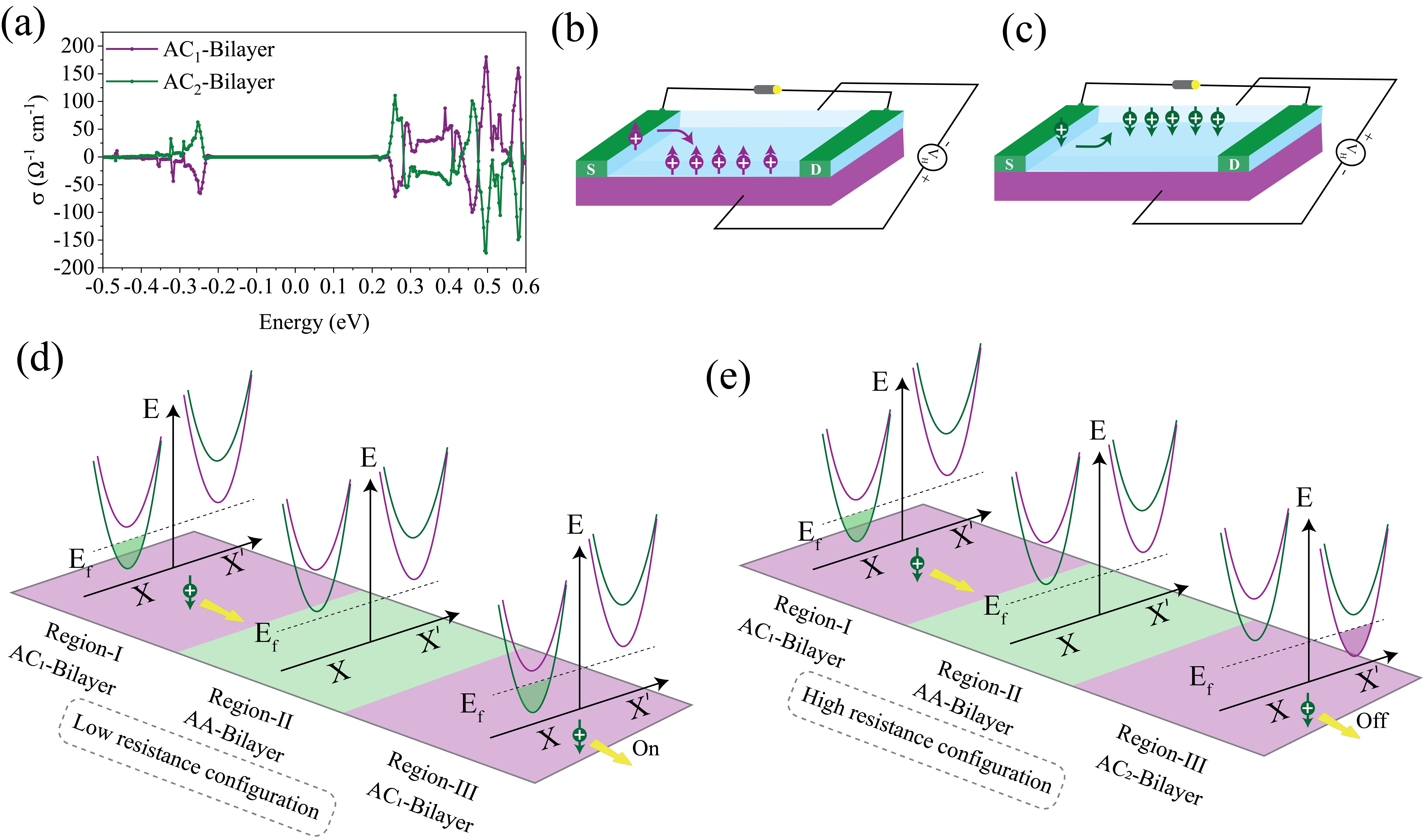
Figure 9: AHC and schematic device architectures leveraging sliding-controlled coupled quasi-altermagnetic states for TMR-like switching.
Proposed device concepts exploit bilayer Mn{τ,P,C2z,Mz}9WSΓ0 to realize low/high resistance states based on parallel/antiparallel configuration of ACΓ1/ACΓ2 electrodes, with AA stack as tunneling barrier, paving the way for contactless (mechanical, sliding-controlled) valley/spintronics memory elements.
Extension to Janus Derivatives and Stacking Engineering

The Janus compound MnΓ3WSΓ4SeΓ5 enables further symmetry manipulation via S/Se substitution and stacking order. Two distinct phases are realized:
Further stacking manipulation (AA vs. AA22) and control of interlayer spin alignment enable precise toggling between altermagnetic, quasi-altermagnetic, and AFM states, with corresponding band structure mapping.
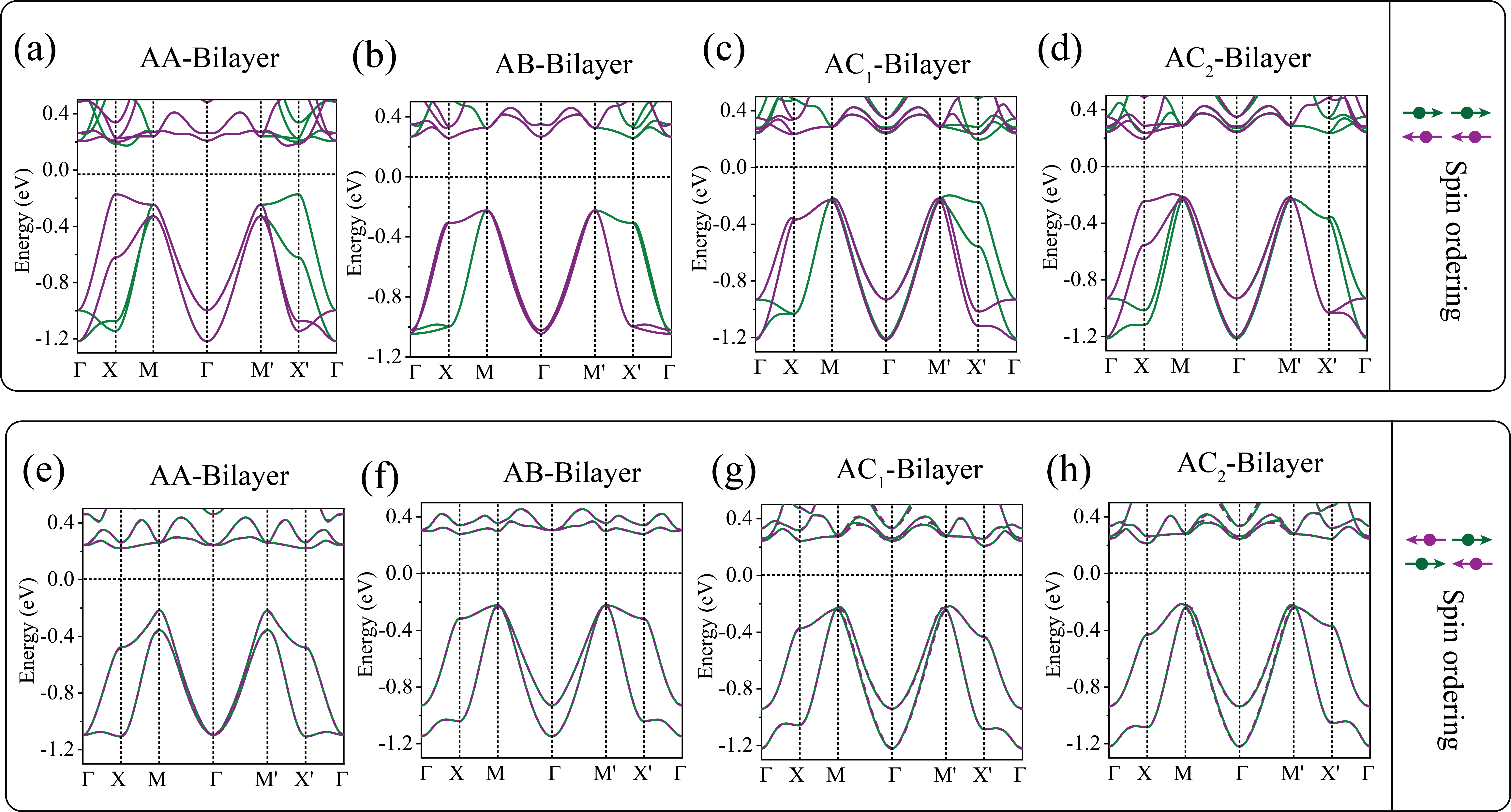
Figure 11: Spin-polarized band structures for Type-II AA Mn23WS24Se25 in various stacking and magnetic configurations.
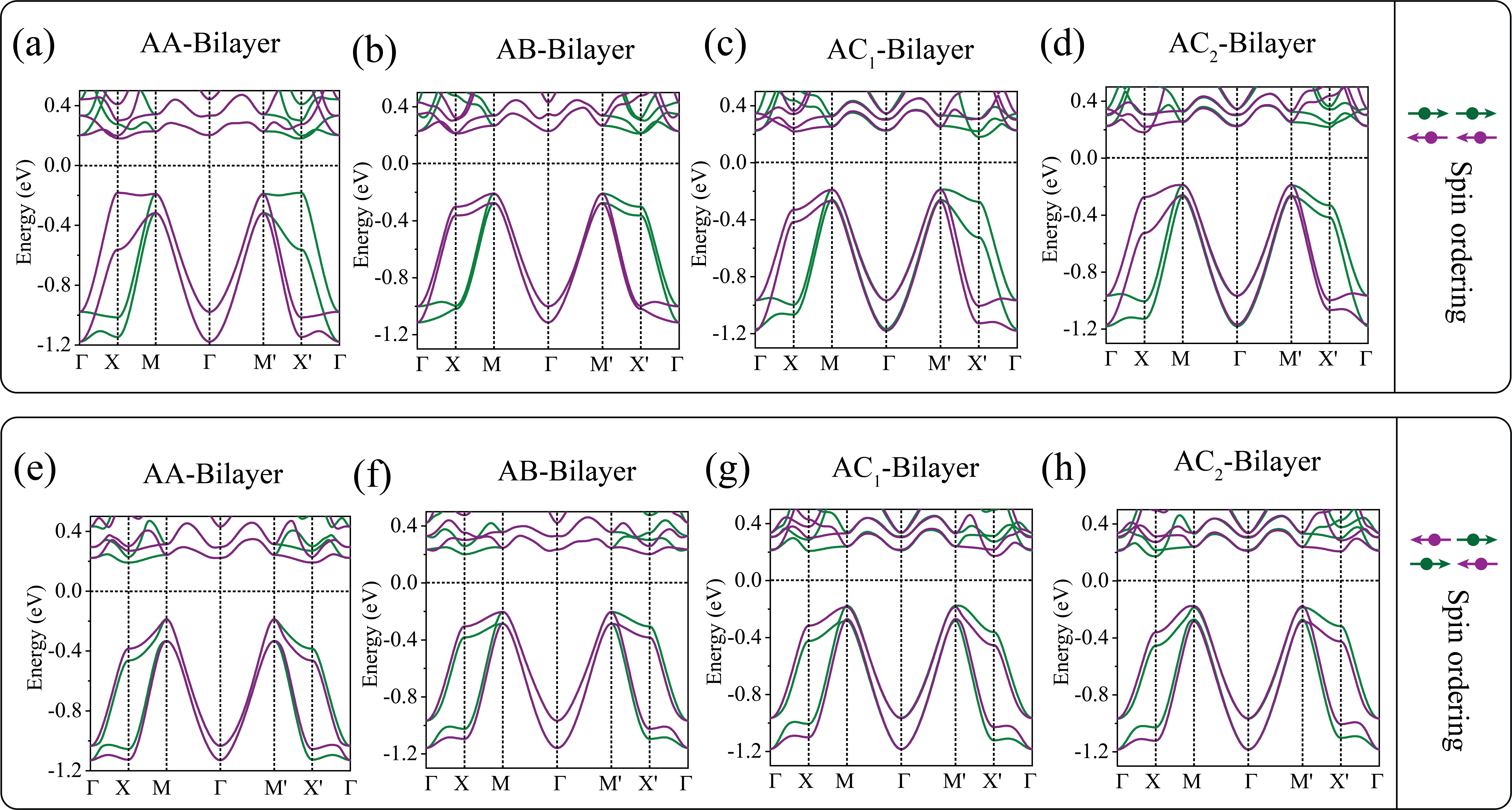
Figure 12: Spin-polarized band structures for Type-II AA26 Mn27WS28Se29, showing stacking-induced quasi-altermagnetic phenomena.
Conclusion
The study provides a symmetry-driven, first-principles validated classification of sliding-induced altermagnetic and coupled quasi-altermagnetic phases in 2D square-lattice systems. The work rigorously establishes the correspondence between real-space stacking, local atomic environment, and reciprocal-space spin splitting, with practical implications for nonvolatile and mechanically switchable spintronic and valleytronic devices. The methodology and theoretical framework are widely extensible to other 2D square-lattice materials. The findings demonstrate that interlayer sliding can induce, reverse, and control spin degeneracy and transport signatures at the 40 point, without requiring external fields or intrinsic polarization. This opens a pathway toward symmetry-engineered spin-electronic phase control and device architectures in next-generation 2D materials.