- The paper presents the first moderate-resolution direct spectroscopy of GJ 504 b, providing unprecedented atmospheric characterization.
- It employs advanced PSF subtraction and complementary retrievals to robustly measure molecular abundances, cloud opacities, and isotopic ratios.
- The study reveals super-stellar carbon and oxygen enrichment alongside significant cloud opacity, supporting core accretion formation models.
Direct Spectroscopy and Atmospheric Characterization of GJ 504 b via JWST/NIRSpec
Introduction
The study presents the first moderate-resolution (R ~ 2,700) direct spectroscopy of the planetary-mass companion (PMC) GJ 504 b, utilizing the NIRSpec IFU aboard JWST, to overcome the long-standing limitation of GJ 504 b's low infrared luminosity precluding ground-based spectroscopic characterization. Leveraging advanced PSF subtraction techniques and an end-to-end atmospheric retrieval framework, the work enables unprecedented measurements of atmospheric parameters, molecular abundances, cloud properties, and isotopologue ratios of GJ 504 b, and advances the broader agenda of linking wide-orbit PMC composition to their mode of formation.
Observational Strategy and Spectral Extraction
Observations were carried out in the 2.9–5.3 μm range using the G395H grating and F290LP filter, with a dual-roll sequence to enable speckle suppression via Angular Differential Imaging (ADI) Figure 1. The companion was detected with high signal-to-noise (S/N>300 in forward modeling, S/N > 10 in ADI for each channel). Two parallel detection and extraction approaches were utilized: BREADS forward modeling delivering optimal molecular-line sensitivity via high-pass filtering (but removing the continuum), and ADI-PSF subtraction providing the requisite continuum information for radiometric calibration.
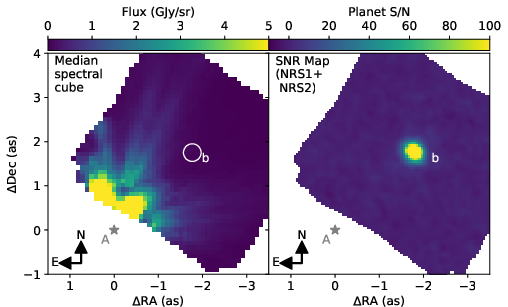
Figure 1: Detection map of GJ 504 b in the JWST/NIRSpec IFU data before and after PSF subtraction, enabling unambiguous localization adjacent to GJ 504 A.
The PSF subtraction workflow and contrast performance are visualized in Figures 2–4. ADI-based subtraction, while enabling continuum recovery, was found to yield contrast limits two orders of magnitude above those delivered by forward modeling, a limitation primarily attributable to spatial undersampling and the point cloud interpolation scheme. Despite this, retrieval combining both approaches allows the joint exploitation of molecular features with robust radiometric anchoring.
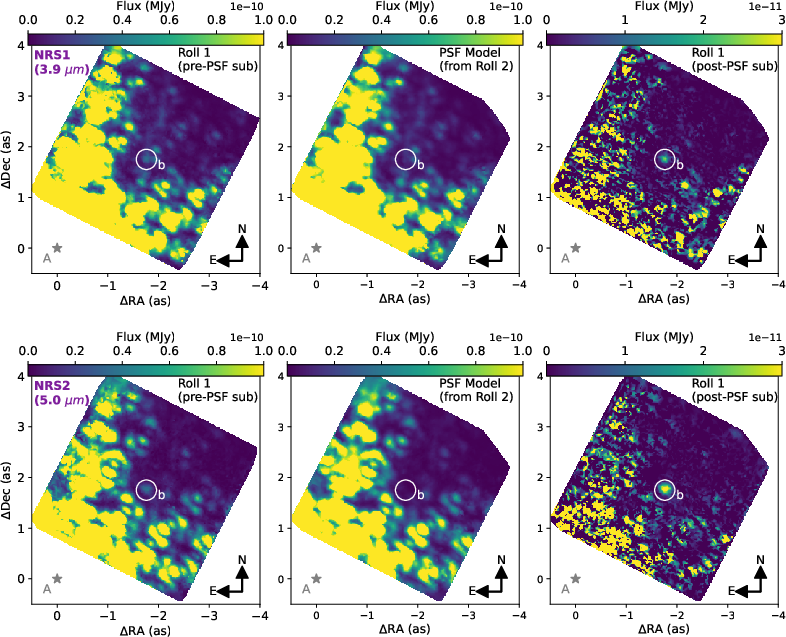
Figure 2: PSF subtraction progression via ADI, illustrating stellar PSF removal and companion emergence at fixed sky position.
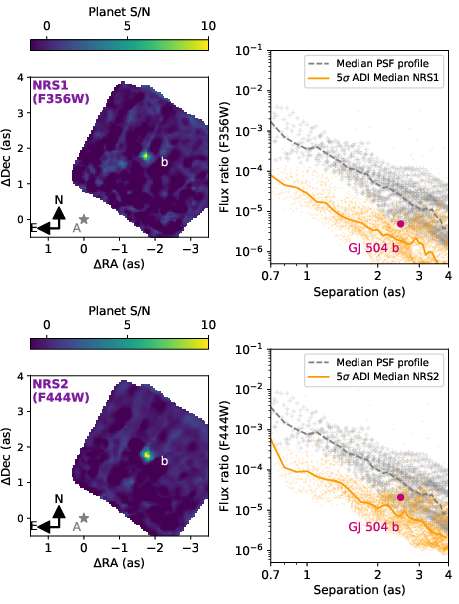
Figure 3: SNR and contrast curves for ADI-based subtraction, with GJ 504 b recovered at SNR > 10 and contrast ≲10−4 for both NIRSpec channels.
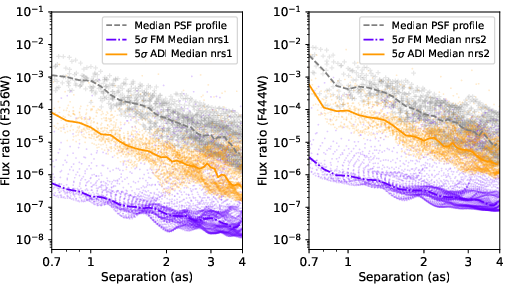
Figure 4: Sensitivity comparison between ADI (orange) and forward modeling (FM, violet): FM achieves >100× lower contrast floor, revealing the persistent impact of residual speckles and interpolation noise in ADI.
Spectral Retrieval and Atmospheric Structure
The extracted post-ADI spectrum displays prominent features of H2O, CO, CH4, CO2, and NH3 Figure 5, with direct detections of several trace isotopologues and refractory species. Retrieval was conducted using petitRADTRANS, incorporating disequilibrium chemistry, vertically constant CO2 and PH3, and a flexible parameterization of cloud decks (MgSiO3, Na2S, MnS, KCl+ZnS). Strong evidence emerged for salt-based cloud opacity.
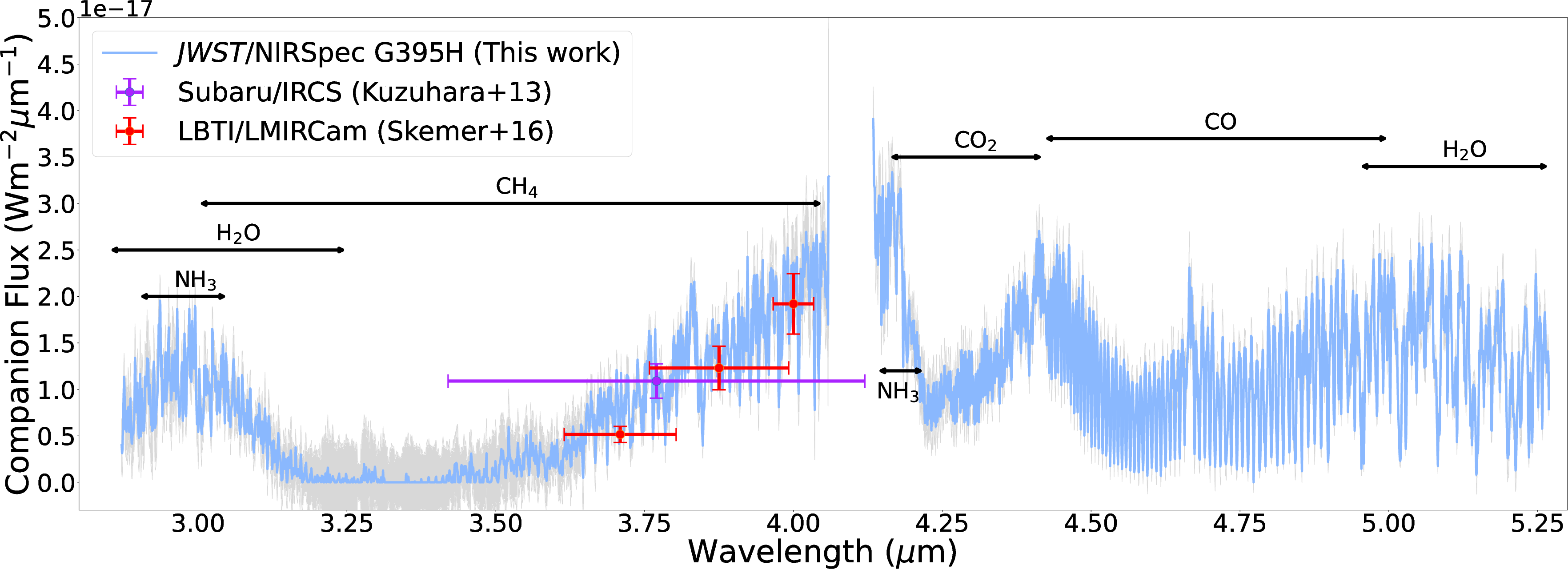
Figure 5: NIRSpec G395H spectrum of GJ 504 b (cyan), with major molecular opacities annotated and photometric anchor points marked.
The cloud model fits (KCl+ZnS, Figure 6) robustly outperformed cloud-free retrievals, both in Bayesian evidence and in delivering P–T profiles consistent with radiative-convective equilibrium rather than isothermal behavior (Figures 8 and 9). The pressure–temperature structures and emission contribution functions (Figures 10 and 11) show cloud decks at ×0 bar suppress deep molecular flux, sharply reducing retrieved abundances between clear and cloudy cases.
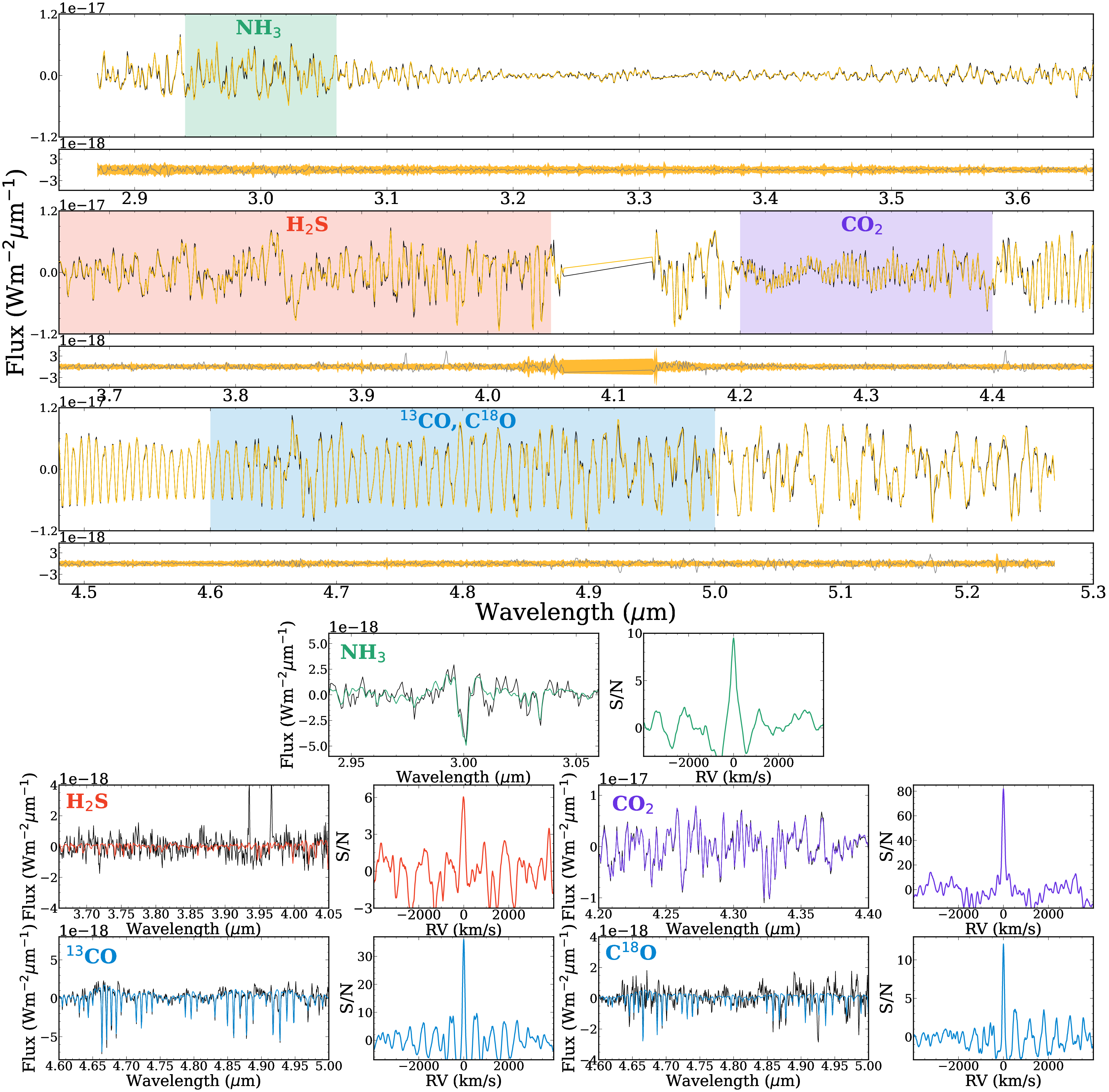
Figure 6: Spline-filtered cloudy model fit (KCl+ZnS) to the NIRSpec spectrum with molecular feature localizations and residual significance overlays via cross-correlation.
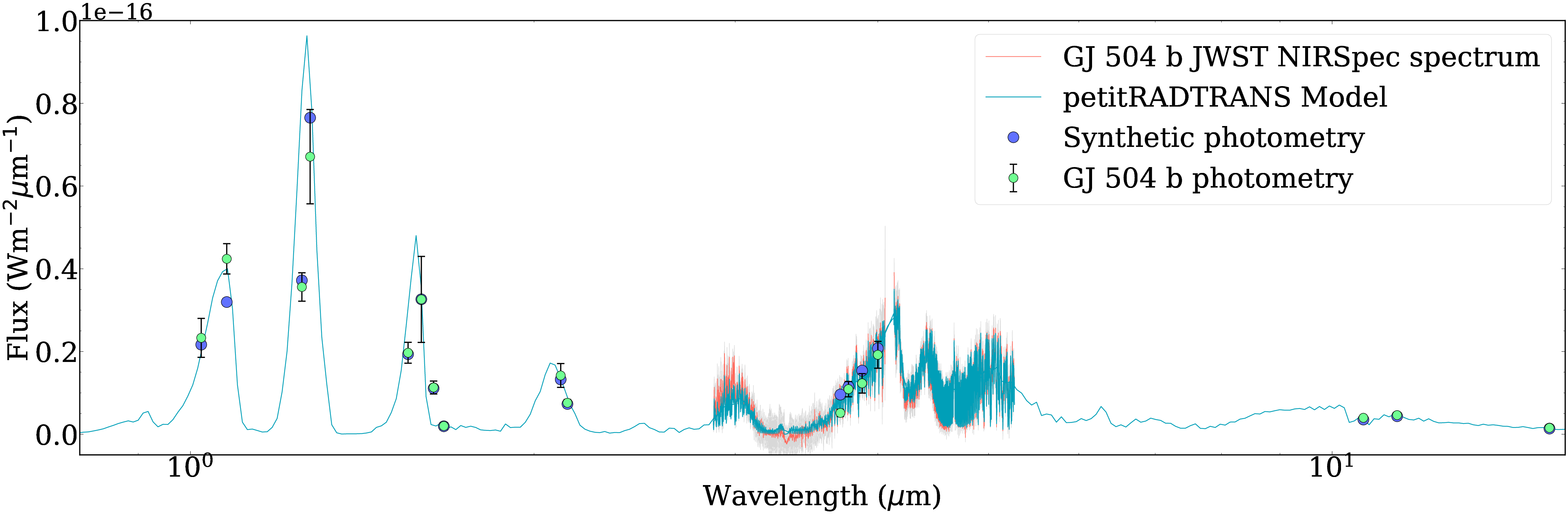
Figure 7: Validation of the cloudy model using photometry and the ADI-extracted NIRSpec spectrum, confirming radiometric consistency.
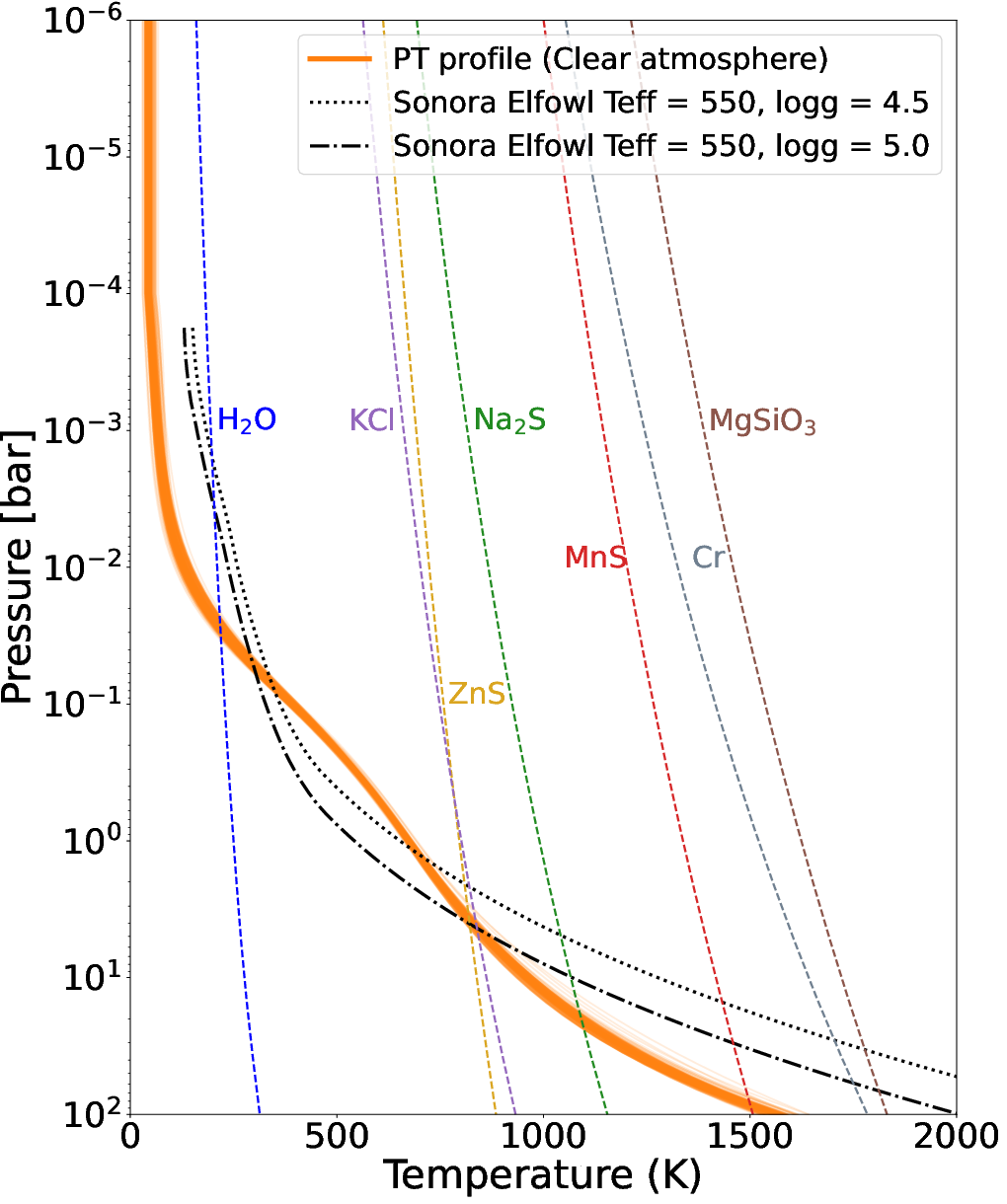
Figure 8: Retrieved P–T profiles in the clear model exhibit significant isothermal regions discrepant with RCE predictions, indicating missing opacity.
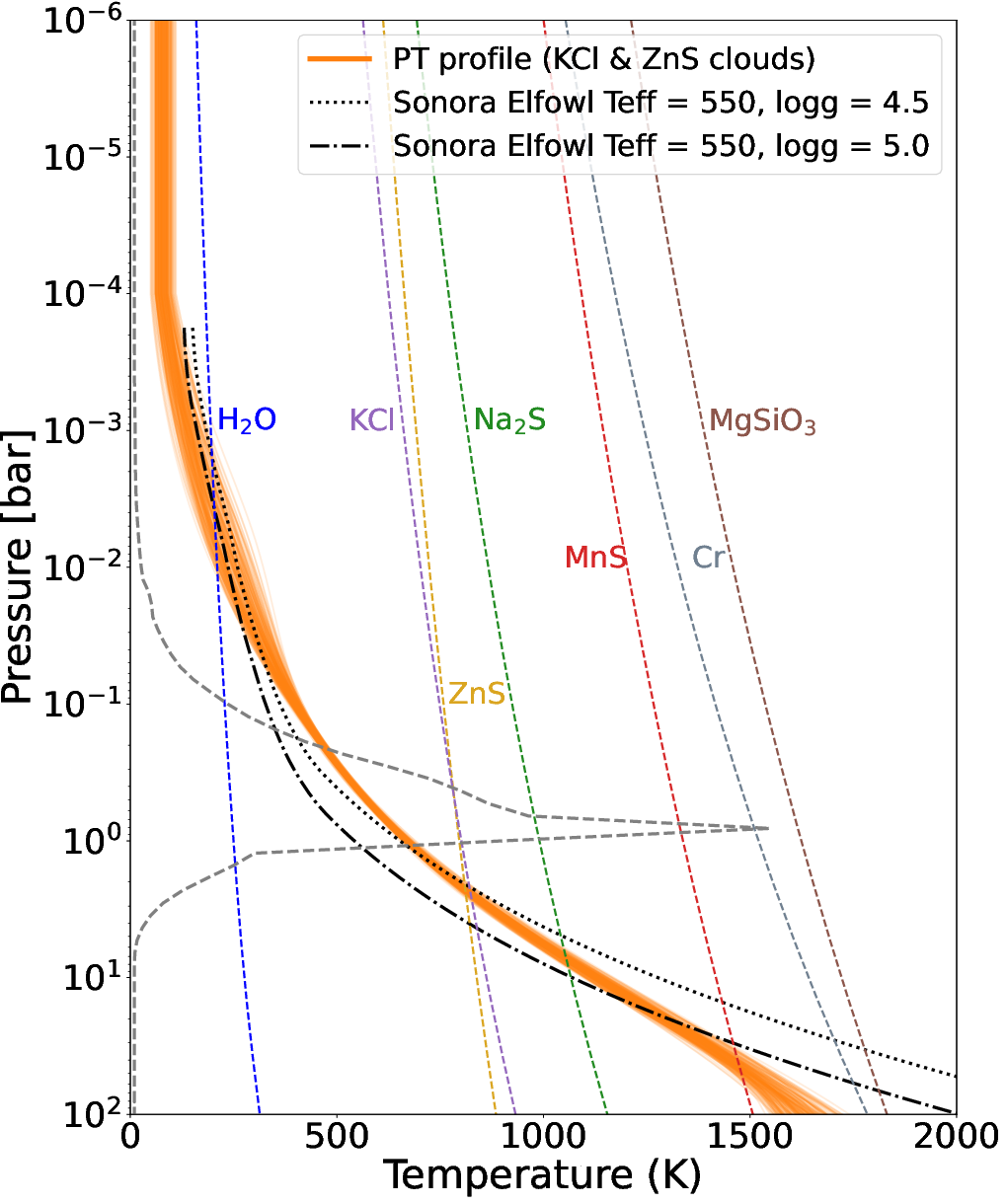
Figure 9: Cloudy model P–T profiles conform closely to RCE models when additional cloud opacity is incorporated at the correct atmospheric depths.
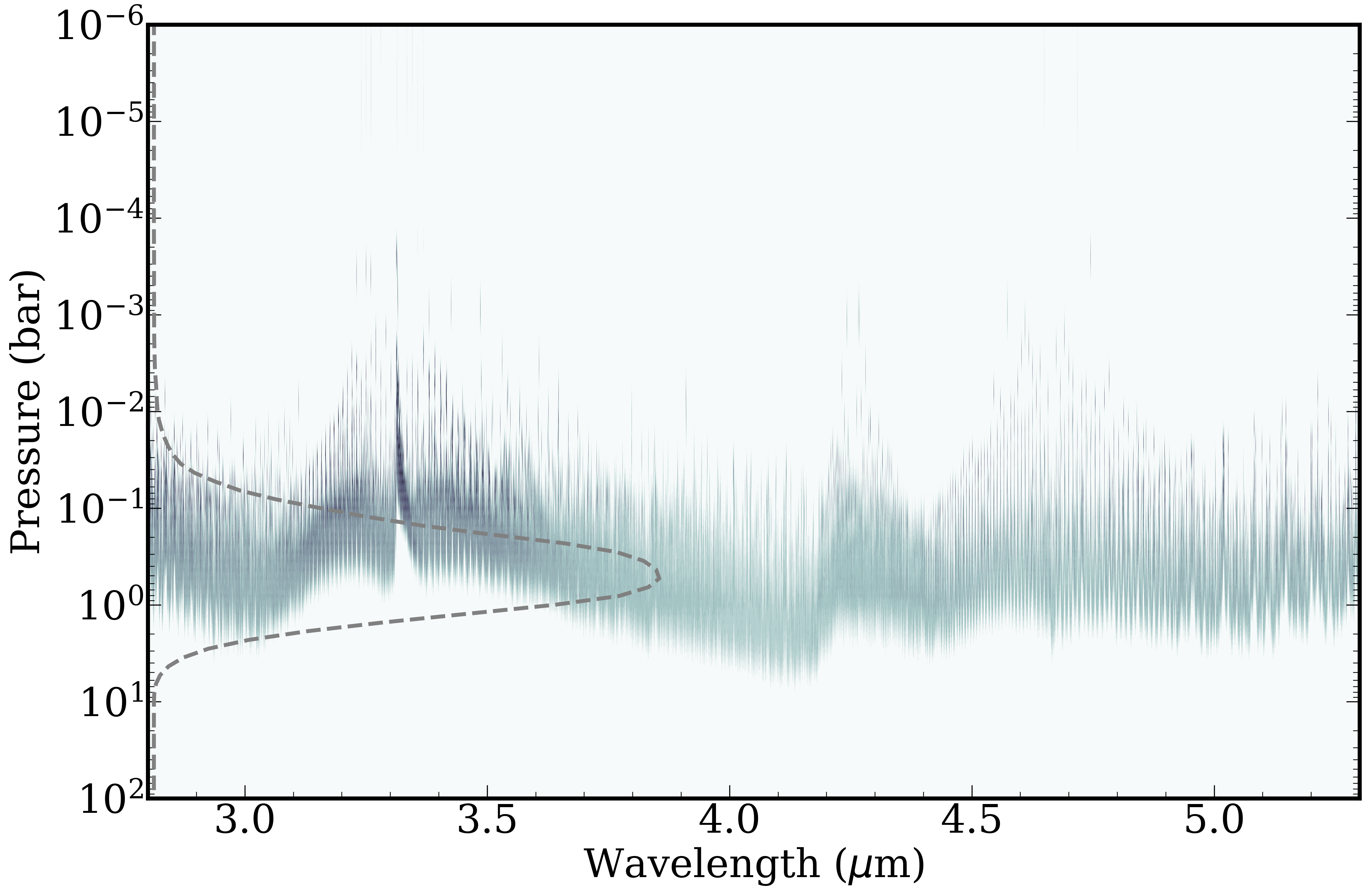
Figure 10: Emission contribution function for clear atmospheres highlighting flux emergence from deep layers.
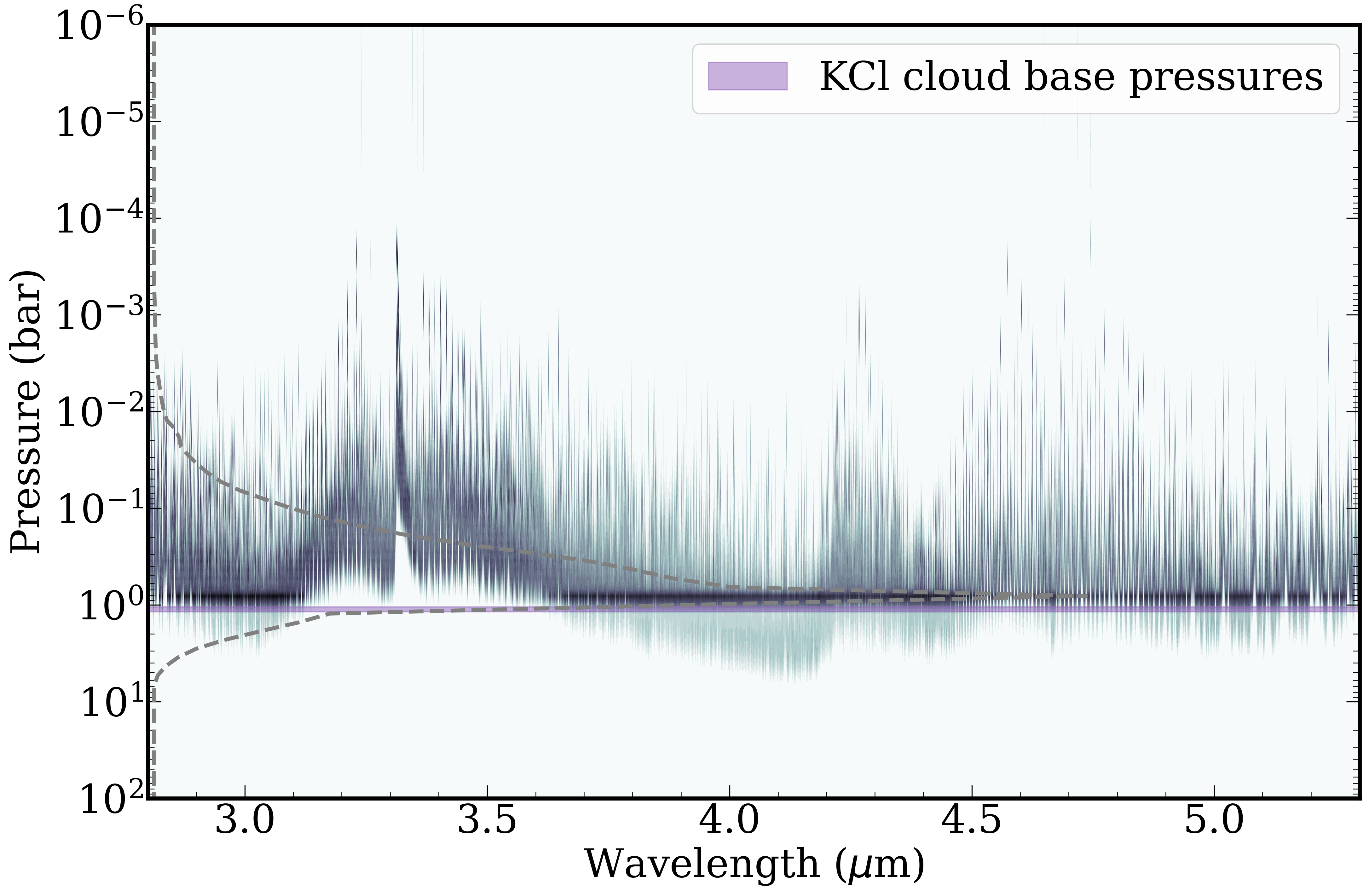
Figure 11: Cloudy model contribution function, demonstrating cloud deck truncation of flux from deep atmospheric layers.
Molecular and Isotopic Composition
Robust molecular detections (×1 for CO×2, ×3 for ×4CO, ×5 for C×6O, ×7 for NH×8) are established with both Bayes factor and CCF diagnostics. A range of other trace species are securely constrained or limited. Retrieved mass mixing ratio profiles Figure 12 demonstrate that equilibrium models substantially underpredict CO and CO×9 and overpredict CH20, NH21, and PH22 at the observed atmospheric conditions.
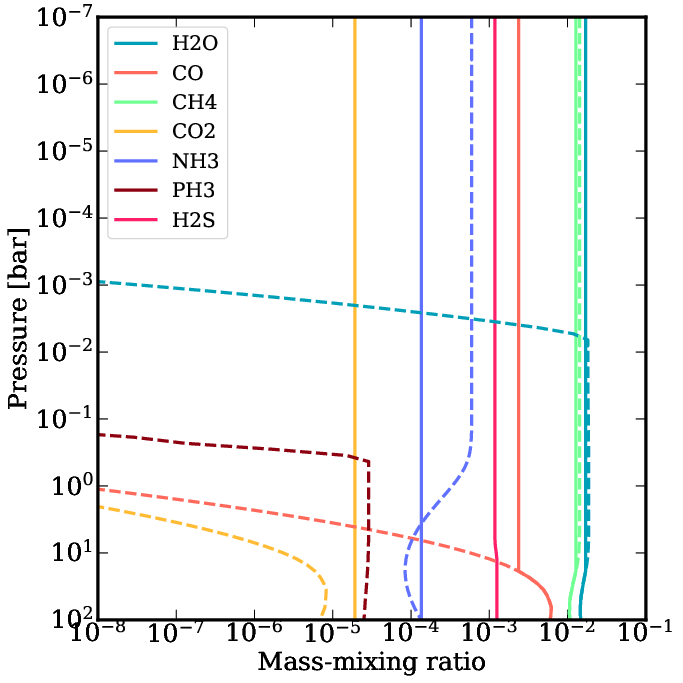
Figure 12: Vertically quenched MMRs for key species under disequilibrium and equilibrium chemistries; CO and CO23 enhancement driven by vertical mixing is essential.
Isotopologue analysis yields 24CO/25CO = 26 and C27O/C28O = 29, congruent with local ISM ratios and similar to other directly imaged substellar objects—indicative of accretion history and regions of planet formation.
Joint photometric and spectroscopic retrievals demonstrate a strong preference for cloudy models, with 40 K and 41. The best-fit surface gravity (42) and radius yield a mass of 43, aligning with evolutionary tracks for ages 44–45 Gyr.
Disequilibrium chemistry parameters are precisely constrained: the vertical mixing coefficient 46 cm47s48 agrees quantitatively with brown dwarfs of similar 49. NH20 abundance is found to be uniformly quenched to high pressures, in line with theoretical expectations.
The atmospheric metallicity [M/H] = 21 is significantly super-stellar, with C/O = 22. Compared to the best available photospheric abundances for GJ 504 A, GJ 504 b is enriched by a factor of 23 in carbon and 24 in oxygen; sulfur appears consistent with the host within 25. This pattern of metal enrichment is consistent with formation via core accretion with substantial gas and moderate solid accretion, with formation likely interior to the CO snowline and without significant large-scale migration, as supported by snowline modeling and orbital separation.
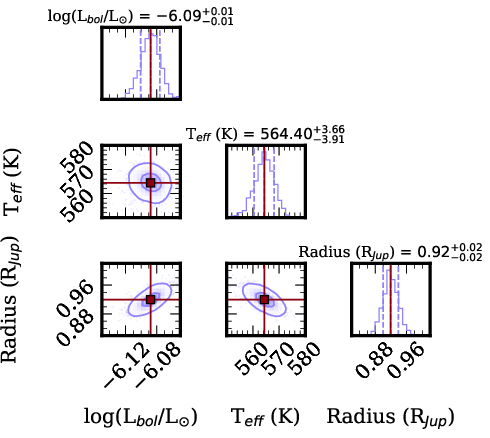
Figure 13: Effective temperature and luminosity posterior for GJ 504 b, supporting an old, massive substellar companion.
Discussion and Implications
The work provides direct confirmation of substantial cloud opacity at mid-IR depths in a ~500 K planetary-mass companion, and further establishes a secure detection of multiple isotopologues and high-order molecules (e.g., CO26, NH27), which are inaccessible to ground-based facilities. The results directly address the mass–metallicity relation and corroborate the non-monotonic dependence of metallicity on giant planet mass at large semi-major axis, as recent theoretical models predict.
Methodologically, the combined forward modeling and classical PSF subtraction approach provides a critical template for future direct spectroscopic characterization of cold, low-luminosity PMCs. Persistent limitations in classical PSF subtraction contrast—rooted in IFU undersampling and interpolation-induced speckle residuals—motivate the development of more sophisticated empirical PSF modeling and integration of high-resolution techniques.
The empirical enrichment patterns in GJ 504 b—super-stellar carbon and oxygen, with nominal sulfur enhancement—are consistent with formation from locally enriched disk gas, with limited solid accretion, i.e., a regime intermediate between classical core accretion and gravitational instability. The data do not support strong solid-driven sulfur enrichment, thus large-scale inward migration from beyond the SO28 or H29S snowlines is disfavored.
These direct spectroscopic methods, and their extension to broader samples, will enable statistically robust population studies of wide-orbit PMCs' atmospheric enrichment, cloud physics, and migration histories in the upcoming era of JWST-MIRI, ELT, and future missions.
Conclusion
This study constitutes the first direct moderate-resolution spectroscopic characterization of GJ 504 b, yielding high-precision measurements of atmospheric parameters, cloud properties, and elemental abundances. The evidence for significant cloud opacity, precise disequilibrium chemistry, and super-stellar carbon and oxygen enrichment distinguishes GJ 504 b as a chemically distinct member of the substellar companion population, with implications for gas giant formation mechanisms and disk chemical evolution. The results robustly demonstrate both the capabilities of JWST/NIRSpec for PMC atmospheric science and the need for further technological advances in high-contrast IFU spectroscopy.