- The paper presents a rigorous perturbative analysis mapping the instability of 5D Gauss-Bonnet black branes onto a Schrödinger equation, with bound states emerging when the potential dips below -1.
- The study derives precise bounds on the Gauss-Bonnet coupling and corresponding boost velocities across scalar, shear, and sound channels to ensure causality and hyperbolicity.
- Numerical integration of quasinormal mode equations confirms that exceeding the conformal collider bounds triggers dynamic instability in the black brane configurations.
Instability Analysis of 5D Gauss-Bonnet Black Branes
Theoretical Framework and Motivation
The paper rigorously interrogates the consistency conditions for five-dimensional Gauss-Bonnet (GB) gravity in the anti-de Sitter (AdS) setting, focusing on black brane solutions and their perturbative stability properties. GB gravity augments Einstein’s general relativity with a quadratic curvature term whose coefficient, denoted λ, encapsulates higher-derivative corrections within string-theoretic effective actions. The field’s prominence in holographic contexts arises from the dual correspondence with strongly coupled conformal field theories (CFTs), and prior literature establishes that GB brane perturbations manifest pathological features—such as loss of hyperbolicity, breakdown of causality, and emergence of superluminal modes—outside specific bounds on λ.
The authors clarify that the mere absence of Ostrogradski instabilities in Lovelock-class theories is insufficient for full dynamical consistency. They delineate the conformal collider bounds, which stem from unitary and causality requirements in the dual CFT. These translate, via holographic anomaly matching, to precise constraints on λ, specifically −367<λ<1009, as well as the narrower hyperbolicity interval −81<λ<81. Exceeding these bounds prompts either bulk or boundary superluminality and, as shown in this work, a short-wavelength instability.
Analytical Construction of Unstable Modes
Employing a detailed perturbative analysis, the authors study linearized metric fluctuations decomposed into scalar (helicity-2), shear (helicity-1), and sound (helicity-0) sectors. These reduce to master equations for gauge-invariant variables Za(x), where a=0,1,2, with x parametrizing the radial coordinate and f(x) the profile function for the black brane background.
The key insight is mapping the instability problem onto a quantum mechanical Schrödinger equation:
−ℏ2dy2d2ψa+Ua(y)ψa(y)=Eψa(y)
where λ0 is an effective potential depending on λ1 (and, hence, λ2), with infinite walls at the AdS boundary and horizon. Instability manifests as bound states with λ3, corresponding to quasinormal modes with purely imaginary frequency and momentum such that λ4.
For each channel, the near-boundary expansion reveals that a dip in the potential below λ5 arises precisely as λ6 breaches the causality bounds. In the scalar channel, for example, the critical threshold occurs at λ7. Analytical expressions for ground-state energies and the required boost velocities to trigger instability are derived and visualized.
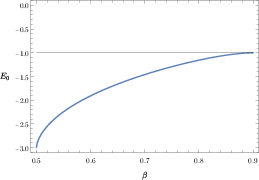
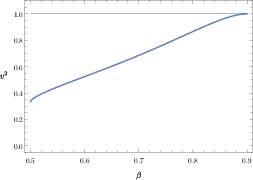
Figure 1: Ground-state energy λ8 and boost velocity squared λ9 versus GB coupling in the scalar channel; instability requires λ0, with corresponding λ1.
Analogous constructions are carried out for shear and sound, detailing the dependence of potential shape and unstable mode emergence on λ2 and the boost velocity. The existence of unstable modes for GB black branes in a boosted frame follows from a covariant stability violation, λ3, corroborated by quantum mechanical estimates and matched with conformal collider constraints.
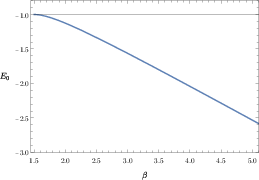
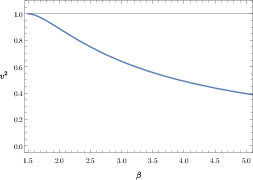
Figure 2: Ground-state energy and required boost velocity in the shear channel, illustrating the onset of instability for λ4.
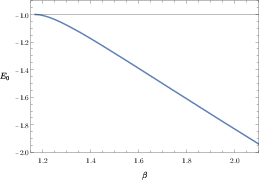
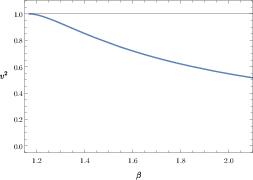
Figure 3: Ground-state energy and boost velocity in the sound channel, with progressive approach to zero at large λ5 as λ6.
Numerical Confirmation and Spectral Continuation
The analytic predictions are verified by numerical integration of the quasinormal mode equations, tracking how the spectrum evolves as λ7 and boost velocity are varied. A salient feature is the disappearance of unstable modes as criticality is reached, observable as a divergence in the boundary-to-horizon amplitude ratio. The authors trace both stable and unstable modes over real and complex λ8, revealing that causality-violating modes at large real momentum are smoothly connected to unstable modes at imaginary momentum via a phase rotation in λ9.
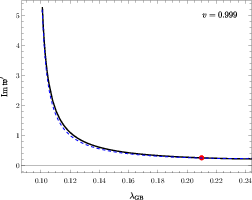
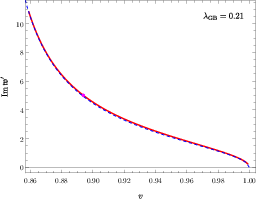
Figure 4: Imaginary part −367<λ<10090 of unstable QNM in the scalar channel for −367<λ<10091, plotted as a function of GB coupling; the red dot marks −367<λ<10092, with corresponding boost dependence.
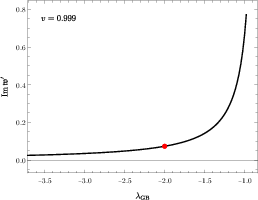
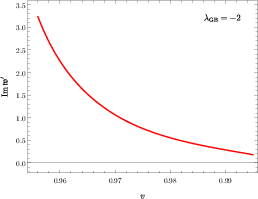
Figure 5: Unstable QNM in the shear channel for −367<λ<10093, illustrating dependence on GB coupling and boost.
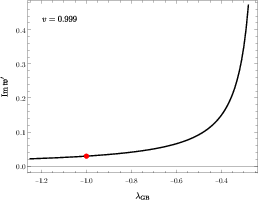
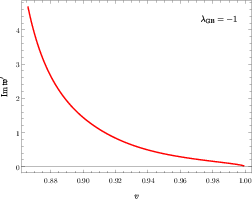
Figure 6: Unstable QNM in the sound channel, demonstrating boost and coupling interplay.
The authors further detail the intricate relationship between GB and Einstein-gravity QNMs, demonstrating that the large-−367<λ<10094 causality-violating modes posited in earlier literature are not new spectral branches but arise from superluminal dispersion of familiar QNMs. This is exemplified by tracing modes in the complex −367<λ<10095-−367<λ<10096 plane, confirming that as −367<λ<10097 crosses threshold values, the stability bound is violated not only for purely imaginary −367<λ<10098 but also for complex −367<λ<10099 away from the imaginary axis.
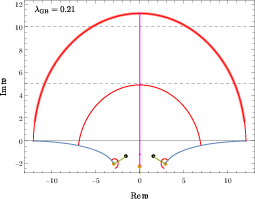
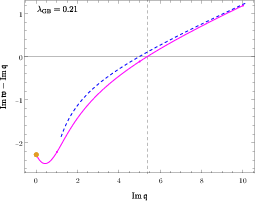
Figure 7: Trajectories of scalar-channel QNMs in the complex plane as GB coupling and momentum are varied; thick red segments mark modes violating covariant stability.
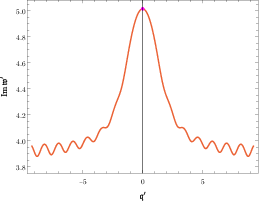
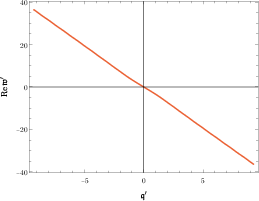
Figure 8: Dispersion of unstable mode in the boosted frame at −81<λ<810 and −81<λ<811, showing maximal instability at zero momentum.
Implications and Future Directions
The study conclusively establishes that all consistent holographic constructions involving GB black branes require the coupling −81<λ<812 to lie within the conformal collider bounds. The instability found is not merely a theoretical curiosity but fundamentally restricts the admissible parameter space for higher-derivative gravity corrections in AdS. The findings invalidate attempts to use GB gravity for dual CFTs outside these bounds, independent of viscosity ratios or other phenomenological arguments.
The formal connection between causality and instability, mapped through Lorentz boosts and spectral continuation, underscores the necessity of covariant stability constraints in any relativistic theory. The demonstration that causality violation translates to dynamical instability in a boosted frame suggests analogous pathologies may exist in other effective field theories with superluminal modes, inviting further investigation.
Spectral swaps analogous to ``level-crossing'' in the QNM landscape are clarified, and the paper points toward systematic WKB analyses for real-momentum causality-violating modes, as well as extensions to hydrodynamic perturbations and nonperturbative effects in thermal correlators. The robust linkage between holographic anomaly constraints and dynamical stability is positioned as a guiding principle for future developments in gravitational effective theories and their AdS/CFT applications.
Conclusion
The paper provides a comprehensive mathematical and numerical analysis of instability in 5D Gauss-Bonnet black branes, precisely delineating the parameter region in which these solutions are consistent with boundary causality and stability. The results reinforce the need for strict adherence to anomaly-based bounds on higher-curvature couplings in holographic models and clarify the deep structural relationship between superluminal propagation and dynamical instability in relativistic systems with higher derivatives. The outlined methodology and detailed spectral tracing open new avenues for exploring stability in more general gravitational settings and for mapping the boundaries of viable holographic duals.

